
CAA News Today
Celebrate Pride with CAA’s LGBTQ+ Article Collection
posted by CAA — June 13, 2019
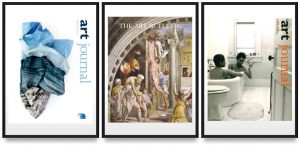
In commemoration of the 50th anniversary of the Stonewall Riots and in celebration of Pride Month, we’ve made a collection of articles from Art Journal and The Art Bulletin focused on LGBTQ+ histories and perspectives free to read and explore online.
These articles will remain open access on Taylor & Francis through August 31, 2019.
We wish to thank Edward Rossa, CAA Summer 2018 intern, for his research on this archive.
Learn more about Art Journal and The Art Bulletin.
News from the Art and Academic Worlds
posted by CAA — June 12, 2019
Want articles like these in your inbox? Sign up: collegeart.org/newsletter
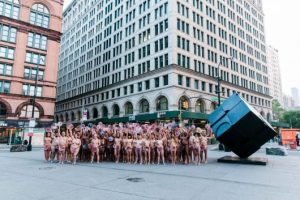
Photo Credit: Fay Fox
Facebook to Meet #WeTheNipple Campaigners Amid Nudity Censorship Row
The company’s announcement comes after a protest outside its New York headquarters, co-organized by the National Coalition Against Censorship and artist Spencer Tunick. CAA is one of over 250 signatories on the NCAC’s open letter to Facebook. (CNN)
‘It’s Helpful to Know All Scales’: Online Spreadsheet Discloses Museum Workers’ Salaries
In a sign of increasing demand for transparency at art institutions, hundreds of arts workers have anonymously shared their salary and employment information in an online spreadsheet. (ARTnews)
Protests at Oberlin Labeled a Bakery Racist. Now, the College Has Been Ordered to Pay $11 Million for Libel.
The verdict comes at a time of heightened scrutiny of free speech on college campuses. (Washington Post)
Stonewall: When Resistance Became Too Loud to Ignore
A look at the exhibitions marking the 50th anniversary of the Stonewall uprising, in conjunction with LGBTQ Pride Month. (New York Times)
Artists in 18 Major US Museums Are 85% White and 87% Male, Study Says
Researchers surveyed the collections of 18 major US museums to quantify the gender, ethnic, and racial composition of the artists represented in their collections. (Hyperallergic)
Biggest Offender in Outsize Debt: Graduate Schools
New data shows that the market for master’s degrees behaves in strange and erratic ways. (New York Times)
The Getty Foundation to Fund the CAA-Getty International Program for a Ninth Year
posted by CAA — June 12, 2019
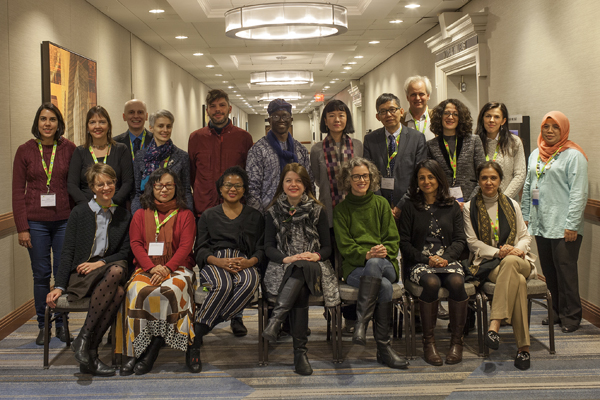
CAA-Getty Scholars at the 2019 Annual Conference in New York. Photo: Ben Fractenberg
The Getty Foundation has awarded CAA a grant to fund the CAA-Getty International Program for a ninth consecutive year. The Foundation’s support will enable CAA to bring twenty international visual-arts professionals to the 108th Annual Conference, taking place February 12-15, 2020 in Chicago. Fifteen individuals will be first-time participants in the program and five will be alumni, returning to present papers during the conference. The CAA-Getty International Program provides funds for travel expenses, hotel accommodations, per diems, conference registrations, and one-year CAA memberships to art historians, artists who teach art history, and museum curators.
The application portal is now open. Grant guidelines and the 2020 application can be found here.
“The Getty Foundation is proud to continue its commitment to the CAA-Getty International Program and offer support that brings together diverse scholars from around the world,” says Joan Weinstein, acting director of the Getty Foundation. “CAA’s dedication to this joint program strengthens the annual conference and builds the field of art history as a global discipline.”
Since the CAA-Getty International Program’s inception in 2012, it has brought over 120 first-time attendees from 46 countries to CAA’s Annual Conference. Historically, the majority of international registrants at the conference have come from North America, the United Kingdom, and Western European countries. The CAA-Getty International Program has greatly diversified attendance, adding scholars from Central and Eastern Europe, Russia, Africa, Asia, Southeast Asia, the Caribbean, and South America. The majority of the participants teach art history, visual studies, art theory, or architectural history at the university level; others are museum curators or researchers.
One measure of the program’s success is the remarkable number of international collaborations that have ensued, including an ongoing study of similarities and differences in the history of art among Eastern European countries and South Africa, attendance at other international conferences, publications in international journals, and participation in panels and sessions at subsequent CAA Annual Conferences. Former grant recipients have become ambassadors of CAA in their countries, sharing knowledge gained at the Annual Conference with their colleagues at home. The value of attending a CAA Annual Conference as a participant in the CAA-Getty International Program was succinctly summarized by alumnus Nazar Kozak, Senior Researcher, Department of Art Studies, National Academy of Sciences of Ukraine “To put it simply, I understood that I can become part of a global scholarly community. I felt like I belong here.”
Read our Member Spotlight with Nazar Kozak.
About the Getty Foundation
The Getty Foundation fulfills the philanthropic mission of the Getty Trust by supporting individuals and institutions committed to advancing the greater understanding and preservation of the visual arts in Los Angeles and throughout the world. Through strategic grant initiatives, it strengthens art history as a global discipline, promotes the interdisciplinary practice of conservation, increases access to museum and archival collections, and develops current and future leaders in the visual arts. It carries out its work in collaboration with the other Getty Programs to ensure that they individually and collectively achieve maximum effect.
CWA Picks for June 2019
posted by CAA — June 11, 2019
CAA’s Committee on Women in the Arts selects the best in feminist art and scholarship to share with CAA members on a monthly basis. See the picks for June below.
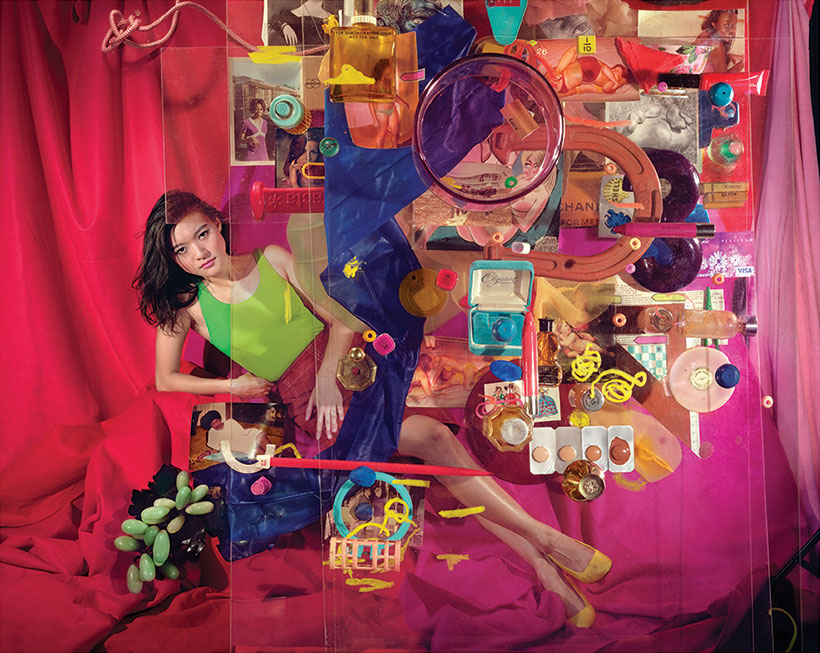
Sara Cwynar, Tracy (Cezanne), 2017. Dye sublimation print. Courtesy of the artist, Cooper Cole, Toronto, Foxy Production, New York. © Sara Cwynar
SARA CWYNAR: IMAGE MODEL MUSE
March 8 – August 4, 2019
Milwaukee Art Museum
Sara Cwynar (b. 1985, Canada) explores both process and the power of the media in a variety of media including photography, collage, book-making and installation. Her first solo exhibition in the US, IMAGE MODEL MUSE at the Milwaukee Art Museum will feature three of her latest films—Soft Film (2016), Rose Gold (2017), and Cover Girl (2018) alongside photographs from her ongoing Tracy series (2008-current). Named for the model in the photographs, the Tracy images acknowledge the history of representation of women with discarded, high-modernist-era designed objects, connecting “the way we treat objects and the way we treat humans,” according to the artist in an Aperture interview. The photographs and films are multi-layered, intricate and deep with eye-catching, bright hues and sharp design, creating bold and successful works aesthetically and substantially. Her films combine these elements with traditions of experimental film and performance video, further questioning issues around imagery and circulation via the internet. Senses and minds are sure to be exercised at this dense exhibit.
JORDAN CASTEEL: RETURNING THE GAZE
May 1 – August 18, 2019
Denver Art Museum
This first major museum exhibition of artist Jordan Casteel (b. 1989, Denver) presents almost thirty paintings, from 2014 to present, showing the artist’s evolving practice and themes from cityscapes and subway scenes to women and local business owners. The oversized portraits with bold colors and intentional heavy contrast exude a clear and bold presence of the individuals and places that perhaps often aren’t paid more than a glance. In Benyam (2018), a trio of individuals at what appears to be a wine bar, look square into the viewers, their poses comfortable but intentional, background details like art on the walls and a plant, wine glasses, lacking much detail, complete the aura of the image, questioning who and what this art is about—those in the painting, those looking, or the moment of looking? Figures depicted sometimes vulnerable, sometimes jovial, always at ease, each one staring deeply at the viewer, presenting an intimate exhibition experience.
SAYA WOOLFALK: EXPEDITION TO THE CHIMACLOUD
March 1 – September 1, 2019
The Nelson-Atkins Museum of Art, Kansas City
Artist Saya Woolfalk (b. 1979, Japan) created ChimaCloud, an alternative digital universe, via an extensive narrative of a fictional race of women she named the Empathics. This exhibition presents an immersive, multi-media experience incorporating themes of cultural hybridization, technology, identity, ceremonial rituals, and science fiction. Especially for this exhibition installation, Woolfalk drew her inspiration directly from the Nelson-Atkins permanent collection, adding a contextual and localized element. “What I hope is to have people feel a little bit distracted…and because they’re so unclear about where they are, they become open…so that, they can take that sense of openness with them into their everyday lives,” said the artist on the museum website. The bright colors, patterns, figures, and lights will likely transport and fulfill the artist’s want.
The 58th International Art Exhibition
May 11 – November 24, 2019
Biennale Arte 2019, Venice, Italy
For the first time in the history of the Venice Biennale half of those artists who contributed to the main exhibition entitled May You Live in Interesting Times, curated by Ralph Rugoff, are women.
Cathy Wilkes
British Pavilion
Cathy Wilkes’ exhibition, featuring new works created for the Biennale Arte 2019 in Venice, occupies the six rooms of the British Pavilion. The viewers are invited to a space filled with melancholy, stillness, and breath-taking natural Venetian daylight. Visiting Venice Biennale can be an overwhelming experience, with the abundance of artworks, the crowds, the queues and the discussions heard almost everywhere. Wilkes, with her characteristic sensibility and attention to the minutiae of matter, created an intimate space that seems to stand still. She stripped the Pavilion of any adornments and insisted on natural light soaking in. The sculptural installations are accompanied by prints and paintings changing hues and tones with the daily and nightly transformations of light. Those variations in colors and textures brought together into intimate relationships and juxtapositions are subtle and interconnected. Wilkes created a space filled with loss but also hope, invoking a sense of daily rituals, scattered across the rooms, disrupted but also complete.
Renate Bertlmann
Austrian Pavilion
For the first time in the history of Austrian contribution to the Venice Biennale, a female artist widely acclaimed in the international feminist avant-garde, Renate Bertlmann, was selected for a solo exhibition in the Austrian Pavilion. Her installation, entitled Discordo Ergo Sum (I disagree, therefore I am), playing on the Descartesian philosophical principle ‘Cogito Ergo Sum’ (I think, therefore I am), is an ironic statement and a subversion of established sociopolitical hierarchies and dichotomies, also within the art world. The artist appropriates a rich vocabulary of social symbols and reviews them from a feminist position encouraging multitude and diversity. At the heart of the exhibition Bertlmann installed a grid of 312 glass roses (hand blown in Murano) out of which protrude razor sharp blades. This is accompanied by a series of works exploring body images and a piece in front of the pavilion, Amo Ergo Sum (I love, therefore I am), which raise issues concerning the transformative potential of art, and gender violence.
New in caa.reviews
posted by CAA — June 07, 2019
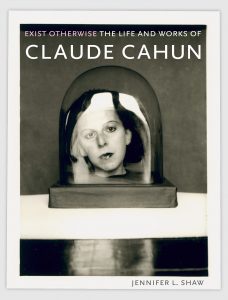

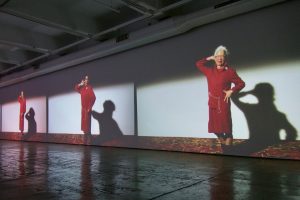
Erin Silver discusses Jennifer L. Shaw’s Exist Otherwise: The Life and Works of Claude Cahun. Read the full review at caa.reviews.
Megan Driscoll reviews Henry Taylor: The Only Portrait I Ever Painted of My Momma Was Stolen, with contributions by Zadie Smith, Sarah Elizabeth Lewis, Charles Gaines, and Rachel Kaadzi Ghansah. Read the full review at caa.reviews.
John Muse delves into the exhibition Suzanne Bocanegra: Poorly Watched Girls. Read the full review at caa.reviews.
Affiliated Society News for June 2019
posted by CAA — June 06, 2019
Affiliated Society News shares the new and exciting things CAA’s affiliated organizations are working on including activities, awards, publications, conferences, and exhibitions.
Interested in becoming an Affiliated Society? Learn more here.
American Society of Appraisers
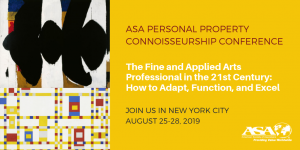
The 2019 ASA Personal Property Connoisseurship Conference – NY will be held at the Marriott Marquis centered in the heart of New York City. With a focus on The Fine and Applied Arts Professional in the 21st Century: How to Adapt, Function and Excel, this intensive three-day conference will provide hard-to-obtain insights into key topics and issues facing personal property appraisers and other art industry professionals. Connect with experts, scholars, and allied professionals from across North America. Presenting speakers include individuals from the industry media, specialty auction houses, galleries, museums, and academia, among others. Register here: http://www.appraisers.org/Education/conferences/personal-property-conference
Association of Art Museum Curators (AAMC)
ASSOCIATION OF ART MUSEUM CURATORS FOUNDATION
Join us this June for a series of three webinars that will restructure and rethink how we consider the topic of management. By focusing on Navigation, Environment and Advancement, the webinars will break with the traditional hierarchical and vertical manner in which conversations around management are typically approached. Each program will present dialogues relevant to all career stages, and will consider ways in which the topic can impact sense of self, well-being, and personal success.
Webinar 1: Navigation – June 11, 2019
Webinar 2: Environment – June 18, 2019
Webinar 3: Advancement – June 25, 2019
Organized and hosted by the AAMC Foundation the series is open to all, with AAMC members receiving discount admission. Limited space is available, register today!
ASSOCIATION OF ART MUSEUM CURATORS (AAMC) & AAMC FOUNDATION
AAMC members are invited to Submit a Session Proposal for the 2020 AAMC & AAMC Foundation Conference, slated for May 2 – 5, 2020 in Seattle, WA. We are seeking proposals on the topic of advancing curatorial work and art organizations beyond traditional and perceived thresholds and boundaries. In selecting this topic, we anticipate dialogues reconsidering linear narratives, challenging concepts of borders, investigating social and cross cultural interactions, and engaging in activism.
We request proposals considering the full spectrum of interpretations, looking at possible topics holistically and not solely through the curatorial lens. Sessions should propose discussions acknowledging community, which involves our workplace colleagues and partners; donors and sponsors; visitors and neighbors; for-profit arts sector; and more. As with all our programming, the proposals should be inclusive and welcoming of a diverse audience. Review the full guidelines and submit your session proposal before 5PM ET on Monday, June 24, 2019.
ASSOCIATION OF ART MUSEUM CURATORS FOUNDATION
Applications are open for AAMC Foundation’s Mentorship Program, which gives early- to mid-career curators opportunities to advance their professional development, learn about important issues in the field, share ideas and cultivate strong bonds with peers, and develop a working relationship with a senior curator. The program’s goal is to advance the skills, experience and knowledge needed to succeed in a curatorial career, not specifically develop a singular curatorial or scholarly project. All Mentees are provided funding to accommodate program components, including travel and other benefits, which are outlined in greater detail here. A group of curator jurors will select ten mentees for 2019-2020 Program, with Mentees and Mentors announced this July.
Applications are due by 12PM ET on Tuesday, June, 25, 2019. Click here to learn more and submit your application today!
Association for Latin American Art (ALAA)
ALAA Awards
In addition to the annual book award, ALAA announces two new awards. See the links for details.
ALAA-Arvey Foundation Book Award
ALAA-Arvey Foundation Exhibition Catalogue Award
International Association of Word and Image Studies (IAWIS)
CFP for the 2020 Conference in Luxembourg: https://waterandsea2020.uni.lu/program/
American Institute for Conservation
Following a successful Annual Meeting in Connecticut, we are looking forward to our 2020 Annual Meeting in Salt Lake City! The theme will be “Conservation – Reactive and Proactive.” The call for papers will open later this summer, please continue to check our site for updated information.
If you are interested in learning more about conservation and supporting the essential work performed by conservators and preservation professionals, become a Friend of Conservation! Friends receive exclusive insights into conservation, including tips on preserving personal collections, and sustain key programs that promote the preservation of all cultural heritage. Learn about the benefits of being a Friend and how you can help save the art and artifacts that keep our memories alive. Support the Foundation for Advancement in Conservation through www.culturalheritage.org/friends.
International Sculpture Center
Sculpture magazine is thrilled to announce its new website. Go to www.sculpturemagazine.art for reviews, features, news, videos, and other daily content.
Attend workshops, studio tours, and network with artists at the 29th International Sculpture Conference in Portland, OR. Registration opens June 11th at www.sculpture.org/portland19.
Society of Architectural Historians
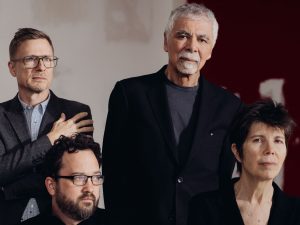
Photo: Geordie Wood, courtesy of DS+R
The Society of Architectural Historians will present the inaugural SAH Change Agent Award to the partners of the New York architecture firm Diller Scofidio + Renfro—Elizabeth Diller, Ricardo Scofidio, Charles Renfro and Benjamin Gilmartin—at a reception at the Century Club in midtown Manhattan on July 17. The award recognizes DS+R for their innovative, paradigm-shifting work, which takes an interdisciplinary approach to design with a focus on cultural and civic projects. Proceeds benefit SAH educational programs and publications, and the ongoing restoration SAH’s landmark headquarters, Charnley-Persky House (1891–1892), designed by Adler and Sullivan with Frank Lloyd Wright.
Nominations for the SAH Publication Awards and the SAH Award for Film and Video are open through July 31. The Publication Awards recognize the most distinguished publications in architectural history, urban history, landscape history, preservation, and architectural exhibition catalogues. The SAH Award for Film and Video was established in 2013 to recognize annually the most distinguished work of film or video on the history of the built environment.
The SAH Board of Directors seeks nominations for the 2020 class of SAH Fellows, those professionally active or retired individuals who have distinguished themselves by a lifetime of significant contributions to the field of architectural history. Deadline August 1.
The SAH Nominating Committee seeks your nominations for five new SAH Board members and a Second Vice President who will begin their terms after the Seattle annual conference in April/May 2020. Deadline August 1.
Graduate students and emerging scholars are invited to apply for the SAH Study Program Fellowship to attend the SAH Field Seminar to Japan, December 6–18. The tour will be led by Ken Tadashi Oshima. The fellowship covers the single occupancy price of the tour and includes a travel stipend. Deadline August 2.
SECAC
On behalf of the SECAC Nominating Committee, First Vice-President Lawrence Jenkens announced that the 2019 SECAC election results have been finalized. The following members have been elected to the SECAC Board of Directors for a three-year term of appointment. For Arkansas, Dito Morales, Associate Professor of Art History at the University of Central Arkansas, was re-elected to a second term. For Florida, Jeff Schwartz, Dean of Undergraduate Studies and Associate Vice-President of Academic Affairs at Ringling College of Art and Design was elected to his first term. For Mississippi, Elise Smith, Professor of Art History and Sanderson Chair of Arts and Sciences at Millsaps College in Jackson, Mississippi, was elected to her first term. Smith previously served on the SECAC Board of Directors from 2000 to 2006. For Tennessee, Christina Renfer Vogel, Assistant Professor of Painting and Drawing at the University of Tennessee at Chattanooga and 2019 SECAC Conference Co-Director, was elected to her first term. For the First At-large Seat, Dennis Ichiyama, Purdue Univeristy Professor of Graphic Design emeritus, was re-elected to a second term. The SECAC Nominating Committee thanks all members who ran for Board seats this year.
Association of Greek Art Historians (EEIT)
The Association of Greek Art Historians (EEIT) hosted a number of distinguished speakers in the context of its 2019 Lecture Series. The aim of the series is to engage a broader audience and promote the discipline of art history in the wider public sphere in Greece. The topics ranged from global art history to the art of the periphery, addressing theoretical and methodological issues of contemporary relevance. Concurrently, novel interpretations of modernism were proposed from the vantage points of both the center, a eurocentric perspective, and the periphery, the lens of the ‘european other.’ James Elkins, E.C. Chadbourne Professor at the School of the Art Institute of Chicago, talked about the “The End of Diversity in Writing about Art” (January 11, 2019, Benaki Museum, 138 Pireos St., Athens, Greece). Elkins proposed that despite recent interest in global artistic production, writing about art is primarily characterized by a hegemony of western theoretical discourses and related practices. Mark Crinson provided an enhanced reading of modernist architecture through the ideals of internationalism in a lecture entitled “Babel as Modernism” (April 11, 2019, Athens School of Fine Arts, Athens, Greece). Mark Crinson is professor of architectural history at Birbeck, University of London and president of the European Architectural History Network (EAHN). Matthew Rampley shared initial thoughts and material related to the European Research Grant project Continuity / Rupture: Art and Architecture in Central Europe 1918-1939 that he is currently leading from Masaryk University in Brno in the Czech Republic. The lecture was entitled “A Legacy of Empire? Art and Architecture in Central Europe after 1918” and examined how ‘modernist’ art was deployed in Central Europe to create and enforce national identities at the aftermath of the collapse of the Habsburg Empire after the First World War. (May 17, 2019, National Hellenic Research Foundation, Athens, Greece).
Design Incubation
Calls for Participation: Design Incubation Upcoming Events
Call for Entries: 2019 Communication Design Educators Awards
An international juried competition of communication design research, practice, teaching, and service. Expand the design record, promote excellence, and share knowledge in the discipline. Submit your creative work, published research, teaching, and service. Nominations are accepted until July 31, 2019. Entries are currently being accepted until August 31, 2019.
Visit the 2019 Design Incubation Communication Design Educators Awards announcement to read about our distinguished jurors.
Colloquium 6.1: Quinnipiac University, Call for Submissions
Call for design research presentation abstracts. Deadline: Saturday, July 6, 2019. Hosted by Courtney Marchese and the School of Communications.
School of Communications
Quinnipiac University
Sat, October 5, 2019
10:00 AM – 5:30 PM
A Day of Writing
Come spend an uninterrupted day working on a writing project. Participants will spend the day writing or conducting preliminary work on a writing project. The Day of Writing is open to design faculty and to those working in related fields.
Quinnipiac University
October 6th 2019
10:00am –4:00pm
The Design Incubation Residency at Haddon Avenue Writing Institute 2019
Rolling acceptances until Sept 30, 2019. Only 14 seats are available for this event. This 3-day residency allows researchers and scholars time to work on existing writing projects or to start a new writing project. It offers participants concentrated time to work on writing projects and the opportunity to take advantage of one-on-one consultations with event facilitator Maggie Taft.
Haddon Avenue Writing Institute
2009 W. Haddon Ave, Chicago Illinois
October 25-27, 2019
Visual Resources Association
Approximately 200 information professionals gathered in LA’s Little Tokyo for the VRA conference from March 26-29, 2019: http://www.vraweb.org/conferences/vra2019/. Many conference presentations have been uploaded to SlideShare at https://www.slideshare.net/VisResAssoc and photographs from the events can be found at https://www.flickr.com/groups/vra_events/. The VRA’s journal of professional practice is expecting articles based on conference presentations to be in the June issue of the VRA Bulletin, which is now an open access online journal, see: https://online.vraweb.org/vrab/
Visual Resources Association (VRA) is a multidisciplinary organization dedicated to furthering research and education in the field of image management within the educational, cultural heritage, and commercial environments. For more information on VRA: http://vraweb.org/.
Call for Proposals
The Visual Resources Association’s 2020 Annual Conference will be held in Baltimore, Maryland from Tuesday, March 24th through Friday, March 27th, 2020 at the Royal Sonesta Harbor Court Baltimore.
Presenting at the VRA Conference provides you with the opportunity to see how your ideas, research, work, and passion connect to those of other dedicated professionals while building networks and friendships in an open, collaborative environment.
Click here to access the conference proposal form.
The VRA Executive Board is soliciting proposals for papers, sessions, special interest/user groups, and workshops for the 2020 program until Friday, July 19th. All proposals are welcome, and if you have other conference ideas or suggestions that do not fit the conference proposal form, please reach out to the Vice President for Conference Program, Sara Schumacher. Please note a call for Lightning Round presenters will go out in the fall/winter, so that we can better accommodate recent innovations and activities, as well as, students and emerging professionals.
A paper is an individual idea submission, which will be reviewed for possible grouping into a session. Your ideas, whether they come to us alone or in a group, are equally valued in the Board’s proposal and selection process.
- A session is a maximum 60-minute moderated panel, usually consisting of no more than 3 presenters each, speaking for 15 to 18 minutes, followed by a brief facilitated question and answer period. If you feel your session topic requires more time, consider dividing it into two sessions, consisting of a Part I and a Part II.
- A special interest/user group is a 60-minute informal, community -driven, facilitated group discussion on topics related to a specific segment of the VRA membership.
- A workshop is a 2, 4, or 8-hour workshop to develop skills and experience in the field of visual resources with hands-on activities.
What should you propose?
Past conference schedules can give you an idea of the range of topics presented in previous years or read through the list below of suggested topics compiled from the 2019 post-conference survey responses to find inspiration. Please, do not be afraid to deviate and propose something new or highlight an area of concern that you feel has not been adequately addressed previously, as you may find new collaborators and colleagues. Moderators may put out calls for presenters within a proposed topic before or after the submission of a proposal. The VRA Executive Board will be looking for articulate and concise submissions with lists of presenters, but submissions without presenter lists are encouraged as well.
Suggested topics:
- Coding (PHP, Python, SQL, etc.)
- Community Outreach
- Copyright/Intellectual Property
- Digital Asset Management, Digital Curation, Digital Preservation, etc.
- Digitization (Workflows, Digital Capture and Imaging Technologies)
- Digital Scholarship and Digital Humanities
- Diversity, Equity, Inclusion, Cultural Competencies, Social Justice
- Project Management (Communication, Grant writing, Prioritization, Leadership, etc.)
- Linked Data
- Materials/Objects collections
- Metadata/Cataloging Ethics (Decolonizing vocabularies, Radical cataloging)
- Storytelling and Oral History
- Technologies (GIS and mapping, 3D imaging, etc.)
- Tools: Open Source, Evolution, Future Trends
- Workplace cultures and professional transitions (academic departments, libraries, cultural heritage institutions, archives, corporate, etc.)
Please contact the Vice President for Conference Program, Sara Schumacher at vpcp@vraweb.org with any questions or concerns.
Again, the proposal deadline is Friday, July 19th, 2019. Click here to access the conference proposal form.
Association for Textual Scholarship (ATSAH)
Members’ Publications and Events May 2019
Publications
Bosch, Lynette M.F. Demi. Skira Publishers, 2019.
Bosch, Lynette M.F. ” The Cuban-American Exile Vanguardia: Towards a Theory of Collecting Cuban-American Art, ” Picturing Cuba: Art, Culture and Identity on the Island and the Diaspora. University of Florida Press, 2019.
Bosch, Lynette M.F “Before 1962: Mannerism and Historiography,” Renaissance Society of America Annual Conference, Toronto, Canada (2019).
Bosch, Lynette M.F. Curator, SUNY Geneseo, “Cuban-American Art and Cultural Identity,” April 3-May 4, 2019
Bosch, Lynette M.F. Curator, Binghmaton University, “Visions and Imagination: Cuban-American and Argentinian Art,” January 31-March 14, 2019.
Carrara, Eliana “Vasari e Ammannati nel Cantiere della Villa Medicea di Castello: Due Disegni del Metropolitan Museum of Art in New York,” in Opus Incertum (2018) pp. 44-53 | ISSN 2239-5660 (print) ISSN 2035-9217 (online) ; DOI: 10.13128/opus-23045 www.fupress.com/oi, pp. 44-53.
Cheney, Liana De Girolami, ““Edward Burne-Jones’s The Mirror of Venus: Physical and Intangible Female Beauty,” Journal of Literature and Art Studies, Vol. 19, No. 1 (January 2019):98-122.
Cheney, Liana De Girolami, “An Alchemical Heaven: The Studiolo Ceiling of Francesco I de’ Medici,” in Esotericism in Europe, ed. Lilian Zirpolo. Ramsey, NJ: Zephyrus Scholarly Publications, 2019, pp. 21-52.
Cheney, Liana De Girolami, “Giorgio Vasari’s Celestial Utopia of Whimsy and Joy: Constellations, Zodiac Signs and Grotesques,” Journal of Cultural and Religious Studies, Vol. 7, No. 1 (January 2019):1-31.Levin, William R. (Centre College, emeritus) has published online the entry for Jacobs Hall, the mid-19th-century
Italianate centerpiece of the Kentucky School for the Deaf in Danville, Kentucky, in the Society of Architectural Historians’ SAH Archipedia Classic Buildings (http://sah-archipedia.org/buildings/KY-01-021-0035). This ongoing national project, issued by the University of Virginia Press, provides detailed information on and photographs of the 100 most important structures in each state in an attractive and easy-to-use format equipped with abundant cross-referencing tools. An illustrated booklet by the author, published in 2014, contains expanded historical and architectural information on Jacobs Hall.
Levin, William R. “Jacobs Hall, Danville, Kentucky.” In SAH Archipedia Classic Buildings. Charlottesville: University of Virginia Press for the Society of Architectural Historians, Chicago, 2017. http://sah-archipedia.org/buildings/KY-01-021-0035.
Levin, William R. “The Bigallo Triptych: A Document of Confraternal Charity in Fourteenth-Century Florence.” Confraternitas 29, no. 1 (Spring 2018): 55-101.
Levin, William R. “Art as Confraternal Documentation: Homeless Children and the Florentine Misericordia in the Trecento.” In A Companion to Medieval and Early Modern Confraternities, edited by Konrad Eisenbichler, 433-457. Brill’s Companions to the Christian Tradition, vol. 83. Leiden, The Netherlands: Koninklijke Brill NV, 2019.
Passignat, É. Traductions, transferts méthodologiques et construction d’une histoire de l’art internationale: quelques cas français et italiens, in « Dire presque la même chose ». L’histoire de l’art et ses traductions (XIXe-XXIe siècles), eds. Adriana Sotropa and Myriam Metayer, Rennes, PUR, 2019: 121-138.
Passignat, É. La sculpture encadrée. Observations sur l’encadrement dans les ensembles sculptés italiens du XVIe siècle, in Jeux et enjeux du cadre dans les systèmes décoratifs à l’époque moderne, edited by Nicolas Cordon et alii, Rennes, PUR (June 2019).
Passignat, É. Book review of: Elisabetta Calderoni, Raccontare gli Antichi. Le Imagini di Vincenzo Cartari [premessa di B. Basile, Ariccia, Aracne editrice, 2017] Giornale storico della letteratura italiana (CXCVI, anno 2019, Fasc. 654 – 2° trimestre).
Passignat, É. Giorgio Vasari, Vita di Pierino da Vinci, scultore, commented by É. Passignat, in G. Vasari, Le vite de’ più eccellenti pittori, scultori e architettori, critical edition by Enrico Mattioda, Alessandria, Edizioni dell’Orso, Volume 4, forthcoming [Fall 2019].
Passignat, É., Giorgio Vasari, Vita di Cristofano Gherardi, detto Doceno, dal Borgo San Sepolcro, pittore, commented by É. Passignat, in G. Vasari, Le vite de’ più eccellenti pittori, scultori e architettori, critical edition directed by Enrico Mattioda, Alessandria, Edizioni dell’Orso, Volume 4, [Fall 2019].
Ricci, Patricia Likos, Professor of the History of Art and Director of the Fine Arts Department at Elizabethtown College presented the paper “On the Englishness of the American Renaissance” at Society of Architectural Historians 72nd International Conference, Providence, Rhode Island, in 2019.
Ricci, Patricia Likos published “The Inquiring Eye: Scientific Illustration and the Production of Knowledge,” a chapter in A Companion to Illustration (Blackwell, 2019).
Awards and Recognition
ATSAH Scholar Committee Awarded to Dr. Damiano Acciarino of the Università di Ca’Foscari Venezia and University of Toronto, Canada, the 2019 ATSAH Scholar Grant for outstanding research on Renaissance antiquarianism published in Lettere sulle Grottesche (Rome: Aracne, 2018).
Liana De Girolami Cheney was awarded the Albert Nelson Marquis Lifetime Achievement Award.
Additional Board to ATSAH
ATSAH announces a new Editorial Board
Damiano Acciarino, Università Ca’ Foscari Venezia
Pino Cascione, Università di Ado Moro, Bari, Italy
Karen Goodchild, Wofford College
Brian Steele, Texas Tech University
Katherine Powers, Fullerton University
Emilie Passignat, Independent Scholar, Florence
Lynette M.F. Bosch, State University of New York-Geneseo
Charles Burroughs, State University of New York-Geneseo
Andrzej Piotrowski, University of Minnesota
Yael Even, University of Missouri, St. Louis
In Memoriam
Sarah Jordan Lippert (1975-2019), Associate Professor of Art History at the University of Michigan-Flint, Director of the Society for Paragone Studies, Editor-in-Chief of its journal Paragone: Past and Present passed away on April 24, 2019. She was the author of numerous books and articles including the newly published The Paragone in Nineteenth-Century Art (Routledge 2019), along with Going Back to the Beginning of Things: The Ancient Origins of the Arts of France (Taylor and Francis, UK 2018), and The Temporality of Imitation in the Works of Moreau and Gérome (Tauris, UK, 2017): https://umflint.academia.edu/SarahLippert/Books
News from the Art and Academic Worlds
posted by CAA — June 05, 2019
Want articles like these in your inbox? Sign up: collegeart.org/newsletter
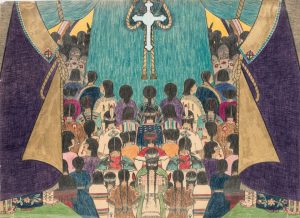
Portion of Mary Sully’s The Indian Church (1938-45), on view in Hearts of Our People: Native Women Artists at the Minneapolis Institute of Art. Collection of Philip J. Deloria.
Native American Women Artists Finally Get Their Due in New Minneapolis Exhibition
Women made ninety percent of the Native American art you see in museums, but you might never know it. (The Art Newspaper)
MFA Bans Two Patrons After Students Of Color Say They Were Subjected To Racist Comments
The incident has sparked a wider conversation about how encyclopedic museums—rooted in European colonialism—can transform into institutions that reflect communities outside their walls. (WBUR)
Related: Racism At The MFA Doesn’t Shock Me. I Grew Up In Boston
Universities Try to Catch up to Their Growing Latinx Populations
Like many US colleges, Indiana University Northwest is seeing a sharp rise in Latinx students—but support for them is lagging. (The Hechinger Report)
Two Transgender Activists Are Getting a Monument in New York
Part of New York City’s effort “to fix a glaring gender gap in public art,” a monument honoring Marsha P. Johnson and Sylvia Rivera will be erected in Greenwich Village. (New York Times)
Four Years of College, $0 in Debt: How Some Countries Make Higher Education Affordable
Read responses from around the globe. (New York Times)
‘There Were Women Working Then, Too’: How Dia Director Jessica Morgan Is Breaking Open the (Male) Canon of Postwar Art
An interview with director Jessica Morgan on her vision for the Dia Art Foundation’s future. (artnet News)
International Review: Heaven and Earth in Chinese Art by Yiqian Wu
posted by CAA — June 04, 2019
Exhibition Review: Heaven and Earth in Chinese Art: Treasures from the National Palace Museum, Taipei, February 2 –May 5, 2019, Sydney, Australia
The following article was written in response to a call for submissions by CAA’s International Committee. It is by Yiqian Wu, a graduate student at the University of Sydney.
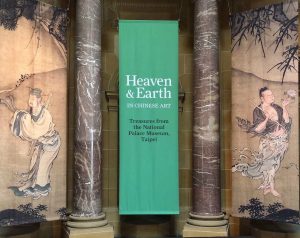
Figure 1. Exhibition banner. The Art Gallery of New South Wales, Sydney, Australia. February 5—May 5, 2019. Photo: Yiqian Wu.
How should we humans perceive our relationship with nature? An ancient Chinese perspective of the human/nature relationship was offered by Heaven and Earth in Chinese Art: Treasures from the National Palace Museum, Taipei (Fig. 1), which was recently exhibited at the Art Gallery of New South Wales, Sydney, Australia. This exhibition offered the viewer a rare opportunity to closely examine eighty-seven Chinese national treasures with the themes of “Heaven and Earth,” “Seasons,” “Places,” “Landscape,” and “Humanity.”
This article focuses on three works of arts drawn from the themes of “Heaven and Earth,” “Seasons,” and “Landscape,” and explores how each one exemplifies the Chinese philosophical concept of tian ren he yi (天人合一), unity or harmony between heaven, nature, and humanity.
1. Humanity is joined with heaven and earth
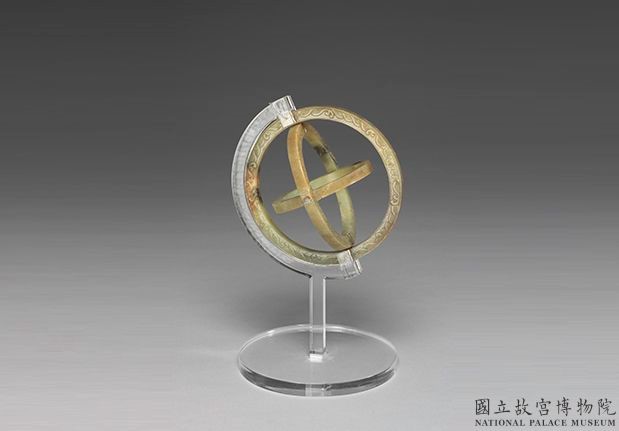
Figure 2: Tri-Ring symbolizing Heaven, Earth, and Humanity, Ming dynasty (1368–1644 CE), jade, nephrite, outer diameter 4 1/2 in. (11.75 cm). The Art Gallery of NSW, Sydney, Australia. Photo: The collection of National Palace Museum, Taipei.
Under the theme “Heaven and Earth” a jade object titled Tri-Ring symbolizing Heaven, Earth and Humanity (Fig. 2) presented the viewer with the ancient Chinese worldview of human/nature relationships. The three individual rings, representing heaven, earth, and humanity, are interlocked by a mortise and tenon joint, allowing each ring to rotate on its axis line. For instance, this tri-ring constructs a globe when unfolded and becomes three concentric rings when laid flat.
Curator Cao Yin explains that the inner ring represents heaven, as it is carved with the motif of the sun, clouds, and stars. The outer ring, decorated with mountains and oceans, represents the earth. The middle ring, depicting the motif of the dragon to symbolize emperors, represents the human world led by emperors.
The rotation of the tri-ring symbolizes the dynamics of energy flowing and exchanging among three powers of the universe. And the interlocked connection between three rings implies the mutual restraint of power between heaven, earth, and humanity. The arrangement of three rings reflects the ancient Chinese belief that humans mediate between heaven and earth and are the central component of the ecosystem.
2. Humanity adapts to the changes of nature
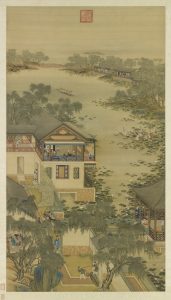
Figure 3: “The sixth month” from The Twelve Lunar Months, Qing dynasty (1644–1911 CE), hanging scroll, ink and paint on silk, 126 x 50 in. (320 × 127.6 cm). The Art Gallery of NSW, Sydney, Australia. Photo: The collection of National Palace Museum, Taipei.
Under the theme of “Seasons,” a scroll painting from the Qing dynasty displays how ancient Chinese people adapted themselves to June, one of the hottest months in the Northern Hemisphere (Fig. 3). Since animals prefer to hide in the shade to avoid the heat of June, this month was also called by ancient Chinese as fu yue (伏月, the month of hiding). Since June is also the season for the blossom of lotus flowers, he yue (荷月, the month of the lotus) was another name for June in ancient China. As the painting shows, people enjoy various recreational activities to reduce the heat, such as enjoying the breeze in a pavilion or going fishing and picking lotus flowers by riding boats on the pond.
Seasonality is a natural phenomenon that signifies the irresistible power of nature in regulating human lives. The ancient Chinese people believed that adapting to the change of seasons could result in a good harvest and personal health. In order to positively respond to nature, they divided twelve lunar months into twenty-four divisions of the solar year in their traditional calendar. Each solar term corresponds to relevant folk customs, including the timing of agricultural activities and recipes for seasonal food therapy. These cultural traditions emphasize the important role of nature in guiding everyday lives of human beings and suggest that people benefit from adapting to seasonal variation.
3. Nature is humanity’s spiritual homeland
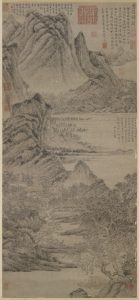
Figure 4: Attributed to Wang Meng (1308–1385 CE), Fishing in Reclusion on a Flowering River, Yuan dynasty (1279–1368 CE), hanging scroll, ink on paper, 51 x 23 in. (129 × 58.3 cm). The Art Gallery of NSW, Sydney, Australia. Photo: The collection of National Palace Museum, Taipei.
Shan-Shui (山水, mountains and water) is a Chinese term for landscape. These two Chinese characters present the essence of the theme “Landscape” in this exhibition. In Chinese culture, mountains and water are not only the key components of natural landscape, but also the spiritual home for literati and recluses.
Liu Yinxing defines recluses as those politically exiled intellectuals living in times of war and regime change, who abandon themselves to the peace and tranquility of natural landscape. Wang Meng’s landscape painting (Fig. 4) portrays a recluse’s dreamland, in which he befriends the mountains and river. As pointed out by Liu Chengzhang, Wang Meng spent decades as a recluse. As a Han ethnic painter living in the Yuan dynasty ruled by Mongolians, Wang Meng possibly regarded himself as a political refugee and sought comforts and transcendence in nature, his spiritual homeland.
As the caption explains, the painting’s poetic imagery, such as chains of mountains, a river, peach blossoms, and a fisherman, were derived from The Peach Blossom Spring (桃花源记), a prose text written by the Six Dynasties recluse and poet Tao Yuanming. In keeping with Tao’s rendering of the ideal world, Wang Meng manifested the seamless fusion of human beings and nature by immersing the body of the human figure within the boundless beauty of nature. The relationship between the tiny human figures and the sublime landscape conveys the human being’s great reverence for nature and expresses Wang Meng’s (the reclusive painter’s) desire of being detached from the mundane world and returning to his spiritual homeland, nature.
In conclusion, the exhibition Heaven and Earth in Chinese Art: Treasures from the National Palace Museum, Taipei presented to a predominantly Western audience three main ways that ancient Chinese people pursued their harmonious relationship with nature: emphasizing that humans live in unison with nature, humans will thrive by responding to seasonal variation, and nature offers humans a spiritual home.
New in caa.reviews
posted by CAA — May 31, 2019
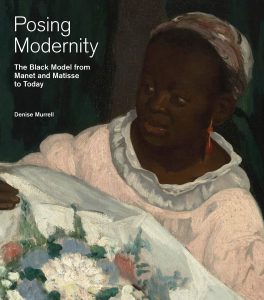
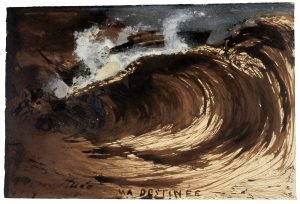
Michele Valerie Ronnick reviews Posing Modernity: The Black Model from Manet and Matisse to Today by Denise Murrell. Read the full review at caa.reviews.
Jason Nguyen writes about Stones to Stains: The Drawings of Victor Hugo, edited by Cynthia Burlingham and Allegra Pesenti. Read the full review at caa.reviews.
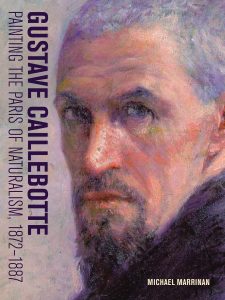
Elizabeth Benjamin explores Gustave Caillebotte: Painting the Paris of Naturalism, 1872–1887 by Michael Marrinan. Read the full review at caa.reviews.
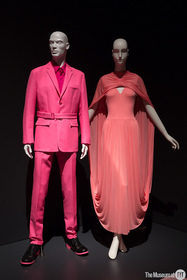
Hazel Clark reviews Pink: The History of a Punk, Pretty, Powerful Color by Valerie Steele. Read the full review at caa.reviews.
News from the Art and Academic Worlds
posted by CAA — May 29, 2019
Want articles like these in your inbox? Sign up: collegeart.org/newsletter
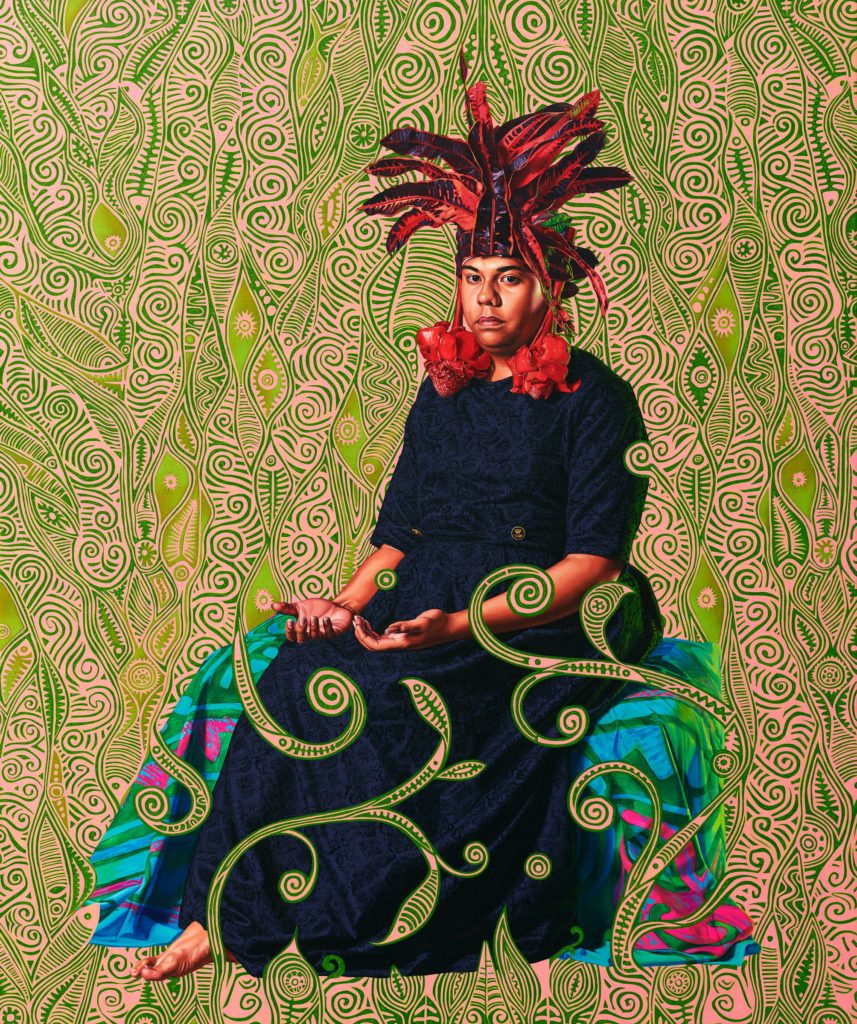
Kehinde Wiley, Portrait of Moerai Matuanui, 2019. Courtesy Templon, Paris & Brussels, © 2019 Kehinde Wiley, via artnet News
Artist Kehinde Wiley’s Latest Paintings Are a Progressive Riposte to Paul Gauguin’s Primitivist Portraits of Tahitians
“My job as a looker, as a creator, as a thinker, is to somehow imagine a newness within that bankrupt vocabulary.” (artnet News)
Last-Minute Tenure Threat
A professor’s future at the University of Mississippi was uncertain as the statewide governing board debated his social media record. (Inside Higher Ed)
Decolonizing and Diversifying Are Two Different Things: A Workshop Case Study
A helpful explainer focused on decolonial pedagogical tools, adapted from a CAA 2019 workshop. (Art History Teaching Resources)
Want to Help Struggling College Students? Support the Low-Paid Staff Who Teach Them
A case for why untenured faculty are a 2020 campaign issue. (ThinkProgress)
Craft, Queer Art, and the Canon: Sheila Pepe on Moving Through the Margins
An interview with former CAA board member Sheila Pepe on art, queerness, and craft. (Artspace)
Smarthistory’s Expanding the Renaissance Initiative
A new initiative will work towards art histories that “do not present European art as superior and help to weaken the binary western/non-western paradigm.” (Smarthistory)