CAA News Today
Member Spotlight: Meet the New Co-Editors-in-Chief of The Art Bulletin!
posted by CAA — August 01, 2025
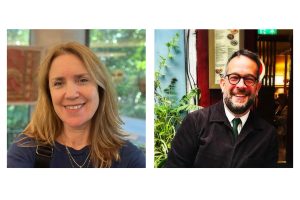
The Art Bulletin is pleased to announce its new co-editors, Maya Stanfield-Mazzi and Stephen Whiteman. CAA News is happy to introduce them here and has asked them a few questions to help members, readers, and future contributors get to know them a little better. Welcome Stephen and Maya!
Can you tell our members about your current academic posts and research interests?
Maya Stanfield-Mazzi: I am professor of art history at the University of Florida, where I have taught since 2008. I specialize in Latin American art, especially that of the Andean region during the autonomous and colonial eras. I have long been interested in textiles as expressions of Indigenous epistemologies, and the ways in which textile makers responded to outside influences from Europe and Asia. Departing from my past work on Catholic art patronage, my current book project considers secular visual culture in the mining city of Potosí, Bolivia, to chart early modernity within a colonial and multiethnic context. I am also interested in issues of cultural heritage and the ways in which art history as a discipline can be employed to preserve tangible resources and engage the broader public for current-day benefits.
Stephen Whiteman: I am professor in the art and architecture of China at the Courtauld Institute of Art, University of London, where I have taught since 2019. Prior to that, I taught at the University of Sydney for five years. I am also a Trustee of the Association for Art History, CAA’s peer organization in the United Kingdom. My research addresses questions of landscape, territory, and social and ethnic identity in China from roughly 1500 to the present. I am very engaged with digital methods in art history, as well as the potential for new approaches to the field afforded by digital alternatives to long-form writing. I am also interested in connected histories of art and architecture in China and Asia and the prospects of art history outside the construct of modern nation-states.
What is your vision for The Art Bulletin during your term as editors-in-chief?
We are excited and honored for the opportunity to steward one of the leading journals in our field during a challenging period. We are deeply invested in The Art Bulletin’s tradition of publishing art historical scholarship of the highest quality and maintaining the journal’s investment in the highest standards for editing and production. We look forward to building upon the work of previous editors in broadening the journal’s reach, demystifying its editorial processes, and working toward greater inclusivity in both authorship and readership. As scholars with expertise in two very distinct non-European fields, we are also interested in the opportunity to further extend The Art Bulletin’s voice and reach beyond its traditional ground and in ways that reflect the growth and evolution of the field over recent decades.
At the same time, we are acutely aware of the pressures that surround research, academia, and cultural institutions today. We want The Art Bulletin not just to be a journal of record, but also one that engages in ongoing conversations, within and beyond the discipline. What does art history have to contribute to the debates of today? How can art historians contribute to critical conversations or offer new perspectives on pressing issues? While we are not aiming to politicize The Art Bulletin, we hope that each issue will be one that readers want to read now, as well as in the future.
What motivated you to become E-I-Cs of The Art Bulletin? Why together? How does your research and public scholarship dovetail with your vision for the journal?
We are excited for the bird’s-eye view of the discipline that the co-editorship will offer. We both understand editorship of The Art Bulletin as an opportunity for service to the discipline. Likewise, we see editing as a form of mentorship. As such, we were each motivated by an interest in helping to shape the field through expanding opportunity, supporting research and professional development, and standing up for principles we share: academic freedom, the importance of research and the search for knowledge, and the essential role of art history and the humanities today. We were both excited about the possibilities of co-editorship. The collaborative arrangement has obvious practical advantages, but more importantly, we valued the broader perspective that two people working in different areas of the field necessarily brings to the role.
And finally, what are each of you reading/viewing these days? What is inspiring you—within and outside of the field?
SW: Within the field, I am finding a lot of inspiration in work that I feel stretches the boundaries of Chinese art and of the discipline more generally. This ranges from research on art and architecture beyond the major cultural centers of China, such as Xinjiang, Guangzhou, and Shandong, to work engaging new archives, non-Chinese languages, transcultural histories, and objects and spaces that lie outside the received canon. Away from work, I have been reading a great deal of fiction, including by authors whose narratives explore issues of identity, displacement, and relocation, such as Yvonne Owuor, Gerald Murnane, and Elif Shafak. As a migrant myself, albeit one who has moved by choice and from a privileged global position, I find much to think about in these books as I grapple with my own sense of place and seek to understand the larger experience of contemporary global migration of which I am a tiny part.
M S-M: In my research area I am struck by the current dialectic between mobility and groundedness. Scholars are showing the vast expanses across which images have traveled and their great potential for resignification, while others (often by looking closely at the archaeological record) are able to identify local narratives that arise from commitments to shared, and often very deep, pasts. Recently I have been inspired by the Beninese students featured in the 2024 film Dahomey, who passionately articulate the importance of historical artifacts for their own shared identities. With students increasingly using AI tools to express themselves, I am committed to fostering individual expression and, for art history, deepening our understanding of the nature of original research and thinking.
Register for CAA Summer Publishing Webinars!
posted by CAA — June 10, 2024
This summer, CAA will hold webinars in response to an influx of requests for guidance on and advice about academic publishing. Organized and moderated by Christy Anderson, Editor-in-Chief of The Art Bulletin and professor of the History of Architecture at University of Toronto, a panel of publishing experts will discuss and answer audience questions on the topics of turning longer research into an article and responding to readers reports and revisions. Our aim is to help demystify the academic publishing process, expand access to publishing education and professional development, and ultimately increase diversity in publishing.
July 31, 2–4 p.m. ET
In Print: From the Archive to the Essay
Getting Your Research Into Print
Shaping a large amount of research into a powerful essay can be more difficult than writing a book. A successful article needs a strong argument, clear organization, and effective use of images. In this workshop we will discuss some guidelines on developing an essay for The Art Bulletin or other journals. Join Christy Anderson, the Editor-in-Chief of The Art Bulletin and other scholars for a roundtable discussion with time for your questions.
August 7, 2–4 p.m. ET
Contending with Critique: How to Effectively Respond to Readers’ Reports
Each essay in The Art Bulletin has been through multiple revisions in response to comments from readers and the editor. If you are asked to ‘revise and resubmit’ how do you respond to readers’ reports? This workshop will demystify the peer review process and help you to incorporate the best of the advice into your writing.
Publishing webinars are free for CAA members and students.
Non-member registration is $15 per webinar or $20 to register for both.
Not currently a member of CAA? Join for $8 per month to attend both summer publishing webinars for free and receive discounted CAA Annual Conference registration!
Publishing webinars sponsored in part by:
Call for Editor-in-Chief, The Art Bulletin
posted by CAA — March 11, 2024
The Art Bulletin Editorial Board invites nominations and self-nominations for the position of editor-in-chief for a three-year term—July 1, 2025–June 30, 2028—with service as incoming editor designate from July 1, 2024–June 30, 2025, and as past editor from July 1, 2028–June 30, 2029.
The candidate should have published substantially in the field and may be an academic, museum-based, or independent scholar; institutional affiliation is not required. The Art Bulletin features leading scholarship in the English language in all aspects of art history as practiced in the academy, museums, and other institutions. From its founding in 1913, the quarterly journal has published, through rigorous peer review, scholarly articles and critical reviews of the highest quality in all areas and periods of the history of art.
Working with the editorial board, the editor-in-chief is responsible for the content and character of the journal. Each issue has approximately 150 editorial pages, not including book and exhibition reviews, which are the responsibility of a reviews editor. The editor-in-chief reads all submitted manuscripts, refers them to appropriate expert referees for peer review, provides guidance to authors concerning the form and content of submissions, and makes final decisions regarding acceptance or rejection of articles for publication. The editor-in-chief also works closely with the CAA staff in New York, where production for The Art Bulletin is organized. This is a half-time position. CAA provides financial compensation to the editor’s institution, usually in the form of course release or the equivalent, for three years. The editor is not compensated directly. The term includes membership on the Art Bulletin Editorial Board.
The editor-in-chief attends the Art Bulletin Editorial Board’s three meetings each year and submits an annual report to the CAA Board of Directors.
Candidates must be current CAA members and should not be serving on the editorial board of a competitive journal or on another CAA editorial board or committee. The Art Bulletin also encourages nominations from two-person editorial teams representing divergent and/or complementary fields and approaches. Editors may not publish their own work in the journal during the term of service. Candidates should have a willingness to explore webinars and podcasts, and conduct other outreach activities.
Nominators should ascertain their nominee’s willingness to serve before submitting a name; self-nominations are also welcome. Interested applicants—both self-nominated or nominated by someone else—should submit a CV and a cover letter in one PDF document to Eugenia Bell, Editorial Director.
Deadline: Monday, May 6.
The Art Bulletin Seeks An Editorial Board Member
posted by CAA — March 11, 2024
CAA invites nominations and self-nominations for one (1) individual to serve on The Art Bulletin Editorial Board for a four-year term, July 1, 2024–June 30, 2028. The ideal candidate has published substantially in the field and may be an academic, museum-based, or independent scholar; institutional affiliation is not required. The Art Bulletin features leading scholarship in the English language in all aspects of art history as practiced in the academy, museums, and other institutions.
The editorial board advises The Art Bulletin Editor-in-Chief and assists by seeking authors, articles, and other content for the journal; performs peer review and recommends peer reviewers; may propose new initiatives for the journal; and may support fundraising efforts on the journal’s behalf. Members also assist the editor-in-chief to keep abreast of trends and issues in the field by attending and reporting on sessions at the CAA Annual Conference and other academic conferences, symposia, and events in their fields.
The Art Bulletin Editorial Board meets three times a year, with meetings in the spring and fall (remote) plus one at the CAA Annual Conference in February (board members pay travel and lodging expenses to attend the conference in February. Members of all editorial boards volunteer their services to CAA.)
Candidates must be current CAA members in good standing and should not be serving on the editorial board of a competitive journal. Members may not publish their own work in the journal during the term of service. CAA encourages applications from colleagues who will contribute to the diversity of perspectives on The Art Bulletin Editorial Board and who will engage actively with conversations about the discipline’s engagements with differences of culture, religion, nationality, race, gender, sexuality, and access. Nominators should ascertain their nominee’s willingness to serve before submitting a name; self-nominations are also welcome. Interested applicants—both self-nominated or nominated by someone else—should submit a CV and a cover letter as a single PDF document by Monday, May 6 to Eugenia Bell, Editorial Director.
The Art Bulletin Seeks Editorial Board Members
posted by CAA — March 21, 2023
**THESE POSITIONS HAVE BEEN FILLED. NOMINATIONS ARE CLOSED**
CAA invites nominations and self-nominations individuals to serve on The Art Bulletin Editorial Board for a four-year term, July 1, 2023–June 30, 2027.
The ideal candidate has published substantially in the field and may be an academic, museum-based, or independent scholar; institutional affiliation is not required. The Art Bulletin features leading scholarship in the English language in all aspects of art history as practiced in the academy, museums, and other institutions.
The editorial board advises The Art Bulletin Editor-in-Chief and assists by seeking authors, articles, and other content for the journal; performs peer review and recommends peer reviewers; may propose new initiatives for the journal; and may support fundraising efforts on the journal’s behalf. Members also assist the editor-in-chief to keep abreast of trends and issues in the field by attending and reporting on sessions at the CAA Annual Conference and other academic conferences, symposia, and events in their fields.
The Art Bulletin Editorial Board meets three times a year, with meetings in the spring and fall plus one at the CAA Annual Conference in February. The spring and fall meetings are held by teleconference. Members pay travel and lodging expenses to attend the conference in February if held in person. Members of all editorial boards volunteer their services to CAA without compensation.
Candidates must be current CAA members in good standing and should not be serving on the editorial board of a competitive journal. Members may not publish their own work in the journal during the term of service. CAA encourages applications from colleagues who will contribute to the diversity of perspectives on The Art Bulletin Editorial Board and who will engage actively with conversations about the discipline’s engagements with differences of culture, religion, nationality, race, gender, sexuality, and access. Nominators should ascertain their nominee’s willingness to serve before submitting a name; self-nominations are also welcome. Interested applicants—both self-nominated or nominated by someone else—should submit a CV and a cover letter as one PDF document to Eugenia Bell, Editorial Director, ebell@collegeart.org.
Deadline: April 30, 2023
The Art Bulletin Seeks Reviews Editor
posted by CAA — March 21, 2023
**THESE POSITIONS HAVE BEEN FILLED. NOMINATIONS ARE CLOSED**
Reviews Editor Opening
The Editorial Board of The Art Bulletin seeks nominations and self-nominations for the position of reviews editor for a three-year term July 1, 2024–June 30, 2027 (with service as incoming reviews editor designate July 1, 2023–June 30, 2024). The Art Bulletin, published quarterly by CAA, features leading scholarship in the English language in all aspects of art history as practiced in the academy, museums, and other institutions.
Candidates should be art scholars with stature in the field and experience in editing book and/or exhibition reviews; institutional affiliation is not required. Candidates should be published authors of at least one book.
The reviews editor is responsible for commissioning all book and exhibition reviews in The Art Bulletin. He or she selects books and exhibitions for review, commissions reviewers, and determines the appropriate length and character of reviews. The reviews editor also works with authors and CAA’s editorial director in the development and preparation of review manuscripts for publication. He or she is expected to keep abreast of newly published and important books and recent exhibitions in the fields of art history, criticism, theory, visual studies, and museum publishing. This is a three-year term, which includes membership on the Art Bulletin Editorial Board.
The reviews editor attends the three annual meetings of the Art Bulletin Editorial Board held three times a year: in the spring and fall plus one at the CAA Annual Conference in February. The fall and spring meetings are currently held by teleconference. Members are expected to pay travel and lodging expenses to attend the conference in February. Members of all editorial boards volunteer their services to CAA without compensation. The reviews editor submits an annual report to CAA’s Board of Directors.
Candidates must be current CAA members in good standing and should not be serving on the editorial board of a competitive journal or on another CAA editorial board or committee. CAA encourages applications from colleagues who will contribute to the diversity of perspectives on the Art Bulletin Editorial Board and who will engage actively with conversations about the discipline’s engagements with differences of culture, religion, nationality, race, gender, sexuality, and access. Nominators should ascertain their nominee’s willingness to serve before submitting a name; self-nominations are also welcome. Please email a letter describing your or your nominee’s interest in and qualifications for appointment, a CV, and your contact information to Eugenia Bell, Editorial Director, at EBell@collegeart.org.
Deadline: April 30, 2023. Finalists will be interviewed on the afternoon of Friday, May 5.
Craig Houser, author of Chapter 5: “The Changing Face of Scholarly Publishing: CAA’s Publication Program.”
posted by CAA — December 09, 2021
As part of CAA’s 10-year anniversary celebration of its publication The Eye, the Hand, the Mind: 100 Years of the College Art Association, chapter authors reflect on their contributions and how their impressions of the field have changed. Our second video in the series features Craig Houser, who wrote Chapter 5, “The Changing Face of Scholarly Publishing: CAA’s Publication Program.”
Craig Houser is the director of the MA in Art History and its concentration in Art Museum Studies at the City College of New York. His scholarship has addressed institutional politics related to studio art and art history, as well as issues in gender and sexuality in modern and contemporary art.
CAA 2021: A look back on the past year’s programming, publications, and opportunities
posted by CAA — November 30, 2021
CAA has produced this reel with a compilation of events, scholarship, programs, and initiatives CAA from the last year. See below for a full list of each item (in order of appearance in the video) with links to learn more.
Programming:
CAA’s first virtual Annual Conference
Mariam Ghani in conversation with Laura Anderson Barbata
In Conversation with Dr. Nancy Odegaard
Theresa Avila, Annual Conference Program Chair in conversation with Meme Omogbai
An Inaugural Evening with CAA Distinguished Awardees and Artists
CAA Then & Now: Reflections on the Centennial Book and the Next Century
Karen Leader, author of Chapter 12: Advocacy
Opportunities:
Publication, travel, and support grants
Publications and Publications Programming:
Artist Project, Elana Mann for Art Journal Open
Roundtable discussion for Art Journal Open, Holding Space…
Art Journal and The Art Bulletin
caa.reviews book and exhibition reviews
caa.reviews’s dissertation roster, 2020
Global Programs
CAA-Getty International Program
CAA-Getty 10-Year International Program online publication
Podcasts
CAA Conversations by CAA’s Education Committee
CAA’s 110th Annual Conference will take place in Chicago from February 17-19, followed by virtual live sessions to be held in Zoom from March 3-5. For more information and to register go to this link.
Announcing the Appointment of Two New Editors for CAA Publications
posted by CAA — July 23, 2021
We’re pleased to announce the appointment of two new editors for CAA publications: Christy Anderson, was selected to be Editor-in-Chief of The Art Bulletin. Balbir Singh will take the post as Reviews Editor of Art Journal. They begin their three-year terms July 1, 2022. Learn more about their work below.
EDITOR BIOGRAPHIES
Christy Anderson | Incoming Editor-in-Chief of The Art Bulletin
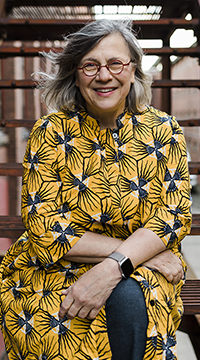 Christy Anderson is an architectural historian with a special interest in the buildings of Renaissance and Baroque Europe. Professor Anderson has taught at Yale University, the Courtauld Institute, MIT, and the University of Toronto. At Yale she received a Morse Faculty Fellowship as well as numerous teaching prizes. She received her Ph.D. from the School of Architecture at the Massachusetts Institute of Technology. As a Kress Fellow at the Courtauld Institute of Art and later as a Research Fellow at Worcester College, Oxford University, she studied the annotations made by the English architect Inigo Jones (1573–1652) in his collection of treatises and humanist literature. This work on literacy, architectural language, and the construction of the professional architect appeared in her book Inigo Jones and the Classical Tradition (Cambridge, 2006).
Learn more about The Art Bulletin.
Balbir Singh | Incoming Reviews Editor of Art Journal
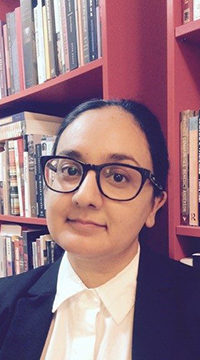 Balbir Singh’s scholarship focuses on the convergence of racial, gendered, and religious embodiment, with migration and policing under violent conditions of imperial and domestic security technologies. She is at work on her first book, “Militant Bodies: Violence and Visual Culture under Islamophobia,” which is rooted in questions that center post-9/11 racial and religious hyper-policing of Muslims and Sikhs, especially as they relate to bodily comportment and the donning of religious garments. Additionally, she is beginning research on a second book project — “Whose Terror? Vexed Attachments and the Contradictions of Freedom.”
Apply to Serve on CAA’s Editorial Boards!
posted by Allison Walters — February 19, 2021
This time of year, members have the opportunity to provide an important contribution to CAA’s four journals—either by serving as a volunteer member of an editorial board or by applying to be an editor-in-chief or reviews editor.
Below are 14 opportunities to help shape the editorial vision of CAA’s publications.
Any member may self-nominate for the following positions or (after ascertaining interest) nominate another member. For more information, please click on the links below. You may apply for more than one position. The deadline for all applications is April 15, 2021. Terms of service vary, but they all begin July 1, 2021.
The Art Bulletin: 2 Editorial Board members
The Art Bulletin: Editor(s)-in-Chief
Art Journal/AJO: 1 Editorial Board member
Art Journal: Reviews Editor
caa.reviews: 2 Editorial Board members
caa.reviews Council of Field Editors: 7 openings
Early Modern European Art (North)
Latin American Art
Medieval Art
Precolumbian Art
Exhibitions New York
Exhibitions Northwest US
Exhibitions Southeast US