CAA News Today
Art History Teaching Resources Seeks Lesson Plans
posted by Christopher Howard — August 14, 2014
Do you have a great lesson plan you want to take some time to codify and share? Funded by a Samuel H. Kress Foundation grant for digital resources, Art History Teaching Resources (AHTR), a peer-populated platform for instructors and a collectively authored online repository of art-history teaching content, seeks contributors for specific subject areas in the art-history survey. This is the second call for participation (the first went out in early 2014).
AHTR is particularly interested the following sections in art and architecture for publication in early fall 2014:
- Jewish and Early Christian Art and Architecture
- Byzantine Art and Architecture
- Islamic Art and Architecture
- Chinese Art and Architecture (early/pre-1279)
- Chinese Art and Architecture (after 1279)
- Japanese Art and Architecture (early)
- Japanese Art and Architecture (modern)
- Korean Art (early)
- Korean Art and Architecture (modern)
- Art and Architecture of Africa
- Early Medieval Art in Europe
- Romanesque Art and Architecture
- Gothic Art and Architecture
- Art of Pacific Cultures
- Eighteenth- and Early-Nineteenth-Century Art in Europe and North America
- Eighteenth- and Nineteenth-Century Sculpture
- Twentieth-Century Sculpture
AHTR is also interested in receiving proposals for thematic art-history survey lesson plans. The editors have already received plans that engage with, for example, “Race and Identity” and “Transnationalism and Citizenship.” Please propose a thematic plan germane to the survey-level class.
For each content area, AHTR seeks lecture and lesson plans similar to those developed for its sections on the Americas (pre-1300) and Feminist Art. (Please see a great example here.) Full template guidelines will be given for the sections to be included in each plan; writers will be expected to review and amend their plan (if necessary), once edited by AHTR. These plans, which will be posted to the AHTR website in fall 2014, are supported by $250 writing grants made possible by the Kress award.
AHTR is looking for contributors who:
- Have strong experience teaching the art-history survey and strong interest in developing thoughtful, clear, and detailed lesson plans in particular subject areas
- Are committed to delivering lecture content (plan, PowerPoint, resources, activities) for one to two (a maximum of two) content areas in a timely manner. Each content area will be supported by a $250 Kress writing grant.
- Are able to make a September deadline for submission and an early October deadline for any edits.
- Want to engage with a community of peers in conversations about issues in teaching the art-history survey
AHTR’s intention is to offer monetary support for the often-unrewarded task of developing thoughtful lesson plans, to make this work freely accessible (and thus scalable), and to encourage feedback on them so that the website’s content can constantly evolve in tandem with the innovations and best practices in the field. In this way, AHTR wants to encourage new collaborators to the site—both emerging and experienced instructors in art history—who will enhance and expand teaching content. It also wishes to honor the production of pedagogical content at the university level by offering modest fellowships to support digital means of collaboration among art historians.
Please submit a short, teaching-centered CV and a brief statement of interest that describes which subject area(s) you wish to tackle to teachingarthistorysurvey@gmail.com. These initial texts should be delivered to AHTR in September 2014. Collaboration on content for further subject areas will be solicited throughout 2014.
Wix.com Webinar on Creating a Strong Online Presence
posted by CAA — February 03, 2014
Creating a strong online presence is the key to a successful career. During this special workshop for CAA, to be held on Wednesday, February 5, 2014, 3:00–4:00 PM EST, representatives from Wix.com will go over the fundamentals for creating a personal online brand. They will also explain how to choose the best social channels, visual branding, and website creation with Wix.com, a no-code, visual drag-and-drop editor that uses the latest HTML5 technology to help you build the best website possible. With Wix you can have a beautiful, free website in just a few hours.
Join a Live Video Chat and Q&A about CAA’s Annual Conference
posted by CAA — January 23, 2014
Join CAA this Monday for a live video chat and Q&A about the upcoming Annual Conference in Chicago.
WHEN: Monday, January 27, 2014, 3:00 PM (EST)
WHERE: RSVP and watch online here
Want to learn the ins and outs of CAA’s 102nd Annual Conference in advance so you can make the most of the four-day event? Join us online this Monday for a live, interactive Google+ Hangout to get practical tips and advice, as well as answers to all your questions! Whether you’re a job seeker, a first-time attendee, or still trying to decide whether to attend, this event will be a valuable resource for anyone hoping to learn more about the Chicago conference.
In addition to covering the basics of how to register and navigate the conference, this Hangout will cover many frequently asked questions, including:
- How do I choose among the hundreds of great sessions and events?
- What resources are available for students and emerging professionals?
- What’s the best way to make new professional contacts?
- What is the dress code? What do I need to bring with me?
- What are this year’s “can’t miss” events and sessions?
- How can the free mobile app and social media enhance my experience?
Submit your questions in advance to conferenceqs@collegeart.org or on Twitter with the hashtag #CAAConferenceQ.
The presenters will be:
- Emmanuel Lemakis, Director of Programs, CAA
- Lauren Stark, Manager of Programs and Archivist, CAA
- Paul B. Jaskot, Professor, Art History, DePaul University; Past President, CAA
- Jacqueline Francis, Professor, Visual and Critical Studies, Painting and Drawing, California College of the Arts; Vice President for Annual Conference, CAA
- Sabina Ott, Professor, Fine Art, Columbia College Chicago; Board of Directors, CAA
- Laurel O. Peterson, Doctoral Candidate, History of Art, Yale University
Not free on Monday? Don’t worry! The conversation will be archived on CAA’s YouTube page, where you can also watch our last Hangout on CAA’s publishing grant program.
caa.reviews Now Publishing as an Open-Access Journal
posted by Christopher Howard — January 16, 2014
 CAA and Routledge are pleased to announce that caa.reviews, an online journal of book and exhibition reviews in the visual arts, is now open access. Born digital in 1998, caa.reviews fosters intellectual and creative engagement with critical issues in art history, museum scholarship, curatorial studies, and studio practice. Published on a continual basis, the content of caa.reviews—assessing scholarly books and catalogues, art exhibitions in museums and galleries around the world, academic conference and symposia, thematic essays, and more—is now freely available to all interested readers worldwide.
Becoming an open-access journal greatly enhances the reach and impact of caa.reviews, which averages approximately 150 texts a year covering all areas and periods of art history and visual studies. Readers will also be able to access several thousand reviews published since the journal’s inception. caa.reviews also publishes a list of recently published books in the arts and a compilation of dissertation titles—both completed and in progress—from graduate programs in the United States, Canada, and Great Britain.
“By offering an open-access caa.reviews, CAA can now share the expertise of its authors across a broad international spectrum of readers. Because the publication provides critical analyses of recent scholarly publications and exhibitions, caa.reviews can introduce the world to a broad range of scholarly, artistic, and curatorial projects,” said Anne Collins Goodyear, president of the CAA Board of Directors.
Earlier this year, Routledge and CAA began a new copublishing partnership. Routledge will now publish and distribute CAA’s journals, The Art Bulletin and Art Journal—both in print and online—and provide a platform for the online journal, caa.reviews. Start exploring caa.reviews today by visiting www.caareviews.org.
About Taylor & Francis Group
Taylor & Francis Group partners with researchers, scholarly societies, universities, and libraries worldwide to bring knowledge to life. As one of the world’s leading publishers of scholarly journals, books, ebooks, and reference works, Taylor & Francis offers content that spans all areas of Humanities, Social Sciences, Behavioural Sciences, Science, Technology, and Medicine.
From a network of offices in Oxford, New York, Philadelphia, Boca Raton, Boston, Melbourne, Singapore, Beijing, Tokyo, Stockholm, New Delhi, and Johannesburg, Taylor & Francis staff members provide local expertise and support to our editors, societies and authors and tailored, efficient customer service to our library colleagues.
For more information, please contact Tara Golebiewski, journals marketing associate for Taylor & Francis Group.
Live Video Chat and Q&A about CAA’s Publishing Grants
posted by CAA — January 13, 2014
 WHEN: Wednesday, January 15, 3:00 PM (EST)
WHERE: RSVP and watch online here
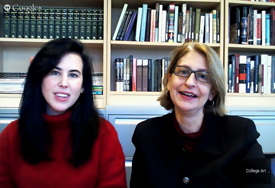
Whether you’re in the middle of a grant application or just thinking about applying, this live Google Hangout will be a valuable resource for you.
The College Art Association offers a robust program of publishing grants to authors and publishers of scholarly books in art history, visual studies, and related subjects. Join CAA’s director of publications Betty Leigh Hutcheson and editorial manager Alex Gershuny to get practical tips and advice about CAA’s grants, as well as answers to all your questions! You’ll also hear from former juror Susan Higman Larsen (Director of Publishing and Collections Information, Detroit Institute of Arts) about how the awards committee evaluates proposals, and from past grant recipient Karl Whittington (Assistant Professor, Ohio State University) about his experience of the application process.
Submit your questions in advance to caabook@collegeart.org or on Twitter with the hashtag #caapubgrants. Meiss/Mellon Author’s Book Award, the Millard Meiss Publication Fund, and the Wyeth Foundation for American Art Publication Grant.
Learn more about CAA’s publishing grants at www.collegeart.org/publications/pgrants. The spring deadline for the Meiss/Mellon Author’s Book Award and the Millard Meiss Publication Fund is March 15, 2014. The deadline for the Wyeth Foundation for American Art Publication Grant is September 15, 2014. This event will cover all three grants.
Art History Teaching Resources Seeks Lesson Plans
posted by Christopher Howard — January 08, 2014
Do you have a great lesson plan you want to take some time to codify and share? Following a recently awarded Kress grant for digital resources, Art History Teaching Resources (AHTR), a peer-populated platform for instructors that is home to a constantly evolving, collectively authored online repository of art-history teaching content, seeks contributors for specific subject areas in the art-history survey.
AHTR is particularly interested the following sections in art and architecture for publication in early spring 2014:
- Ancient Egyptian
- Ancient Aegean
- Ancient Greek
- Ancient Etruscan and Roman
- Proto-Renaissance and Fourteenth Century Italian Renaissance
- Fifteenth-Century Italian Renaissance
- Fifteenth-Century Northern Renaissance
For each content area, AHTR seeks lecture and lesson plans similar to those developed for its sections on Prehistory and Prehistoric Art in Europe and Art of the Ancient Near East. These plans, which will be posted to the AHTR website in early 2014, are supported by $250 writing grants made possible by the Kress award.
All parts in the art-history survey, however, will eventually need to be populated. If your area of interest is not listed above, AHTR is still interested in hearing from you. Let us know which area(s) you’d like to cover: a full list can be found under Survey 1: Prehistory to Gothic and Survey 2: Renaissance to Modern and Contemporary. In addition, we welcome suggestions on how to fill the gaps in these chronologies.
AHTR is looking for contributors who:
- Have strong experience teaching the art-history survey and strong interest in developing thoughtful, clear, and detailed lesson plans in particular subject areas
- Are committed to delivering lecture content (plan, PowerPoint, resources, activities) for one to two (a maximum of two) content areas in a timely manner. Each content area will be supported by a $250 Kress writing grant
- Want to engage with a community of peers in conversations about issues in teaching the art-history survey
AHTR’s intention is to offer monetary support for the often-unrewarded task of developing thoughtful lesson plans, to make this work freely accessible (and thus scalable), and to encourage feedback on them so that the website’s content can constantly evolve in tandem with the innovations and best practices in the field. In this way, AHTR wants to encourage new collaborators to the site—both emerging and experienced instructors in art history—who will enhance and expand teaching content. It also wishes to honor the production of pedagogical content at the university level by offering modest fellowships to support digital means of collaboration among art historians.
Please submit a short, teaching-centered CV and a brief statement of interest that describes which subject area(s) you wish to tackle to teachingarthistorysurvey@gmail.com. These initial texts should be delivered to AHTR in February 2014. Collaboration on content for further subject areas will be solicited throughout 2014.
Wix.com Webinar on Creating a Strong Online Presence
posted by CAA — January 07, 2014
Creating a strong online presence is the key to a successful career. During this special workshop for CAA, to be held on Wednesday, February 5, 2014, 3:00–4:00 PM EST, representatives from Wix.com will go over the fundamentals for creating a personal online brand. They will also explain how to choose the best social channels, visual branding, and website creation with Wix.com, a no-code, visual drag-and-drop editor that uses the latest HTML5 technology to help you build the best website possible. With Wix you can have a beautiful, free website in just a few hours.
Smarthistory Call for Essays
posted by Christopher Howard — October 31, 2013
Khan Academy’s mission is a free world-class education for anyone, anywhere. In September 2013, the academy had ten million unique visitors overall. For the art-history content alone, Khan anticipates more than two million visitors from around the globe for the fall 2013 semester. Let’s make sure strong, global art-history content is well represented.
If you are interested in contributing your expertise in the form of short introductory essays to help make art history accessible to a global audience, Smarthistory could really use your help. The website’s founders, Steven Zucker and Beth Harris, seek art historians, archaeologists, and conservators in many areas of study; they have a particular need for specialists in African, Asian, precolonial American, and Pacific art.
Smarthistory has created an interactive list of topics, a Trello Board, with an eye toward supporting introductory art-history courses. If something important is missing, please let Zucker and Harris know! Once you’ve decided on a topic, send an email to Zucker and Harris (along with your CV). If everything is in order, you will be added to the Trello Board, so you can claim that topic.
Here are the essay guidelines:
- Length: 800–1,000 words
- Writing style: informal, experiential, contextual
- Content: for teaching (not original research)
As a general rule, Smarthistory looks for the narratives a great professor tells his or her class to make students fall in love with a particular subject or work of art.
All accepted contributed content is published on both khanacademy.org and smarthistory.khanacademy.org. All content is published with a Creative Commons attribution and noncommercial license. You remain the owner of your content, and your contribution is always attributed.
Report on Part-Time Faculty in Art History and Studio Art
posted by Linda Downs — June 07, 2013
The more information that is made available on critical issues in the field, the greater a case can be made for advocacy to promote change. One of the major challenges for the visual-arts field is ensuring that all faculty are properly supported so that they may provide outstanding teaching, research and creative work. It is estimated that over 70% of faculty at colleges and universities in the United States are now hired on a contingent bases. This upward trend began in the 1970s and appears to dominate the future.
Data on working conditions of part-time faculty is not easily available since the funding for the National Study on Postsecondary Faculty at the Department of Education was discontinued in 2003. Data on art history, studio art, and art education faculty is even more difficult to obtain since visual arts and performing arts faculty were historically aggregated together by the Department of Education.
In response to the lack of data, the Coalition on the Academic Workforce, http://www.academicworkforce.org/ comprising twenty six academic associations including CAA, organized an extensive survey. The report on this survey was published in June 2012 http://www.academicworkforce.org/CAW_portrait_2012.pdf. Of the 20,000 part-time faculty participating in the survey, 1,034 were CAA members. The data they contributed has been compiled and is now available [http://www.collegeart.org/pdf/CAA-CAWContingentFacultySurvey.pdf].
Some of the major findings from the art historians, artists and art educators indicate that: 1) part-time faculty in the visual arts field have a slightly higher salary rate than the median; 2) there are gender disparities in salaries within the visual arts; and 3) resources and benefits provided by institutions are two to three times lower for visual-arts faculty than the full sample of respondents.
What is CAA doing to address these issues? The Board adopted the Guidelines for Part-Time Faculty in 2004. The Professional Practices Committee under the chairmanship of Jim Hopfensperger and an ad hoc committee led by Tom Berding and CAA board member, John Richardson are working to update these guidelines to respond to present needs in order to provide standards for the field.
Several CAA annual conference sessions have been devoted to resources for administrators and part-time faculty. At the 2013 New York Annual Conference, a panel which included John Curtis from the American Association of University Professors and Rosemary Feal from the Modern Language Association, among others, provided valuable resources for networking among part-time faculty. An example is organizations such as CAW that are actively addressing workforce issues and state and national government advocacy. These resources can be found at http://www.collegeart.org/resources/contingentfaculty.
The CAA Board has organized a planning task force of members to address critical issues in the field over the next five years. The profound changes in the structure of faculty, teaching formats, digital research, publishing and creative work are some of the greatest challenges identified. The members of the task force welcome your comments in shaping how CAA can address these and other major issues of our profession. Please send your ideas and comments to CAA at nyoffice@collegeart.org.
I would like to thank Peter Bucchianeri at Harvard University for compiling the data and writing the report on the responses of CAA member respondents to the contingent faculty survey.
Updated Directory of Affiliated Societies
posted by Lauren Stark — May 23, 2013
The Directory of Affiliated Societies, a comprehensive list of all seventy-six groups that have joined CAA as affiliate members, has just been updated. Please visit the directory to view a single webpage that includes the following information for each group: name, date of founding, size of membership, and annual dues; a brief statement on the society’s nature or purpose; and the names of officers and/or contacts for you to get more details about the groups or to join them. In addition, CAA links directly to each affiliated society’s homepage.