
CAA News Today
News from the Art and Academic Worlds
posted by Christopher Howard — November 23, 2016
Each week CAA News summarizes eight articles, published around the web, that CAA members may find interesting and useful in their professional and creative lives.
Trump and the Arts: Evita, Huge Towers, and a Snub for Warhol
For the arts world, the question is essentially the same as the one being asked everywhere right now, across the political spectrum: “What will a President Donald J. Trump mean for me?” The answer from artists, museums, theaters, actors, writers, musicians, and the movie and television industry is: “Your guess is as good as mine.” (Read more from the New York Times.)
How to Fix the Art World, Part 1
Last August ARTnews embarked on an epic project: finding out what inhabitants of the art world think is wrong with their world and how they would fix it. In the ensuing months ARTnews spoke with more than fifty individuals—artists and curators, critics and historians, art dealers and an art-fair director—to gather a range of perspectives. (Read more from ARTnews.)
An Era for Women Artists?
Nearly half a century has passed since Linda Nochlin posed her question “Why Have There Been No Great Women Artists?” Now we face it again, as a new wave of all-women exhibitions revives the question and suggests a new answer. (Read more from the Atlantic.)
The Ballet of White Victimhood: On Jordan Wolfson, Petroushka, and Donald Trump
The white body, through its repetition in a history of art that is largely painted white itself, has become an easy and lazy signifier for a universal body, for a metaphorical body, one that becomes symbolic and slippery, that can always be more than its mere representation. The nonwhite body has greater difficulty in attaining this metaphorical bounty. (Read more from Artspace Magazine.)
“Decolonization Is Not a Metaphor”: Artists Space Steps out of Analysis and into Action
Amid all the election paraphernalia of the past few months, some bold stickers have been appearing across New York City. With white text on a red background, they demand: “Decolonize This Place.” At Artists Space Books and Talks, the home base of Decolonize This Place through December 17, the “source” is more complicated than any one person, location, or idea. (Read more from ARTnews.)
Thinking outside the Pipeline
Many faculty diversity initiatives are predicated on the pipeline theory: that getting more minority students to enroll in PhD programs eventually will lead to gains in numbers of professors from underrepresented backgrounds. The pipeline theory has long had its critics, who point to other problems within the academic recruitment, hiring, and retention system. A new study seeks to back up such criticisms with hard data. (Read more from Inside Higher Ed.)
Impostor Syndrome Is Definitely a Thing
Impostor syndrome is the feeling that you don’t belong—in graduate school or in your first academic or alt-ac job—and it’s more common that you might think. It makes people believe that they aren’t good enough, smart enough, or deserving enough. (Read more from the Chronicle of Higher Education.)
Ugly Consequences of Complaining about “Students These Days”
Sometimes we do need to vent. It isn’t easy teaching students who don’t come to class prepared, seem to always want the easiest way, are prepared to cheat if necessary, don’t have good study skills, and aren’t interested in learning what we love to teach. At some point, though, venting morphs into complaining, and what we say about students becomes what we think about them. (Read more from Faculty Focus.)
Member Partner Designers and Books’ Kickstarter Campaign
posted by CAA — November 22, 2016
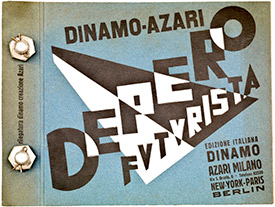 Depero Futurista, Dinamo-Azari, Milan, Italy, 1927, artist’s book bound with bolts, 32 x 24.2 cm. © 2016 Artists Rights Society (ARS), New York / SIAE Rome. Photo by Adam Reich
One of our Member Partners, Designers and Books, recently launched a Kickstarter campaign to raise funds to bring a classic design book back to life.
In 1927 Italian futurist artist Fortunato Depero developed what is still considered the first avant-garde artist book: Depero Futurista, commonly known as the Bolted Book. In an edition of fewer than 1,000 copies, this book is celebrated for its daring experiments in typography, innovative ideas about graphic design, and reinvention of the concept of the printed book (and yes– its binding is two steel bolts!).
You can explore this wonderful book, page by page, on the Bolted Book website.
Designers and Books is partnering with the Center for Italian Modern Art in New York and the MART Museum of modern and contemporary art of Trento and Rovereto to produce the first exact facsimile of Depero Futurista. The facsimile will include an accompanying readers’ guide, featuring essays from a variety of experts, original unpublished materials from the Depero archives at MART, and translations of selected pages of the book.
Your Kickstarter pledge toward this important piece of art and design history will be rewarded with an exact copy of The Bolted Book, the readers’ guide, and full acknowledgement of your support.
The least expensive Kickstarter reward tier currently available for a copy of the book is $141 (including US shipping). Acknowledging the special relationship of this book to the CAA community Designers and Books is making it available for a special price: $109 (plus shipping of $14 for a total of $123)——for a savings of $18.
Since this price is not available to the general public, here is how CAA members can secure a copy of the book for this special price:
1) Go to bit.ly/BoltedBook-Kick
2) Next to the video, click “Back This Project”
3) Click “Make a pledge without a reward”
4) Enter $123 and click “continue”
5) Log in or sign up, then complete the pledge as directed
6) Please email info@designersandbooks.com indicating your name, shipping destination, and the code “CAA.”
You will then receive a confirmation that you are registered for this special offer.
CAA Restatement of Values, November 2016
posted by CAA — November 22, 2016
For more than one hundred years, the College Art Association (CAA) has been dedicated to the creative process through making and thinking about art and how it affects our past, present, and future. We do this through scholarship, publications, convenings, research, and professional development for artists, designers, and art historians. As a member-driven association, we are committed to intellectual rigor, peer review, inclusion, and diversity. We uphold these values by engaging everyone, nationally and internationally; all races, ages, abilities, religions, citizenships, ethnicities, gender expressions, and sexual orientations. We defend academic freedom as forcefully as we reject discrimination, bigotry, sexual assault, and violence against the vulnerable.
As scholars, artists, and educators, we expect the same exactitude from leaders in education, cultural institutions, and, in particular, government. We will continue to advocate in no uncertain terms for an inclusive climate that fosters intellectual honesty, transparency, and human engagement.
Suzanne Preston Blier
Executive Director
Hunter O’Hanian
Finalists for the 2017 Morey and Barr Awards
posted by Christopher Howard — November 22, 2016
CAA is pleased to announce the 2017 finalists for the Charles Rufus Morey Book Award and two Alfred H. Barr Jr. Awards. The winners of the three prizes, along with the recipients of nine other Awards for Distinction, will be announced in late January and presented during Convocation in conjunction with CAA’s 105th Annual Conference in New York, taking place February 15–18, 2017.
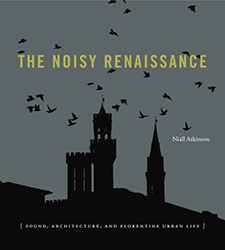 Charles Rufus Morey Book Award
The Charles Rufus Morey Book Award honors an especially distinguished book in the history of art, published in any language between September 1, 2015, and August 31, 2016. The three finalists for 2017 are:
- Niall Atkinson, The Noisy Renaissance: Sound, Architecture, and Florentine Urban Life (University Park: Pennsylvania State University Press, 2016)
- Elizabeth Kindall, Geo-Narratives of a Filial Son: The Paintings and Travel Diaries of Huang Xiangjian (1609–1673) (Cambridge, MA: Harvard University Asia Center, 2016)
- Kishwar Rizvi, The Transnational Mosque: Architecture and Historical Memory in the Contemporary Middle East (Chapel Hill: University of North Carolina Press, 2015)
 Alfred H. Barr Jr. Award
The Alfred H. Barr Jr. Award for museum scholarship is presented to the author(s) of an especially distinguished catalogue in the history of art, published between September 1, 2015, and August 31, 2016, under the auspices of a museum, library, or collection. The five finalists for 2017 are:
- Ruth Fine, ed., Procession: The Art of Norman Lewis (Philadelphia: Pennsylvania Academy of the Fine Arts, in association with the University of California Press, 2015)
- Barbara Haskell and Harry Cooper, Stuart Davis: In Full Swing (Washington, DC: National Gallery of Art; New York: Whitney Museum of American Art; New York: DelMonico Books, 2016)
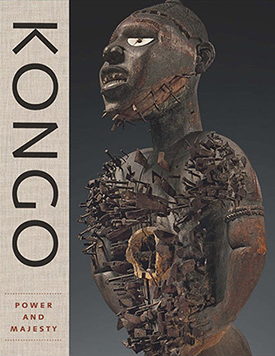
- Alisa LaGamma, Kongo: Power and Majesty (New York: Metropolitan Museum of Art, 2015)
- Helen Molesworth, ed., Kerry James Marshall: Mastry (Chicago: Museum of Contemporary Art, Chicago; New York: Skira Rizzoli, 2016)
- Adrian Sudhalter, Dadaglobe Reconstructed (Zürich: Kunsthaus Zürich/Scheidegger & Spiess, 2016)
 Alfred H. Barr Jr. Award for Smaller Museums, Libraries, Collections, and Exhibitions
In 2009, CAA established a second Barr award for the author(s) of catalogues produced by smaller museums, libraries, and collections with an annual operating budget of less than $10 million. The five finalists for the second Barr award for 2017 are:
- Zdenka Badovinac, Eda Čufer, and Anthony Gardner, eds., NSK from “Kapital” to Capital: Neue Slowenische Kunst—An Event of the Final Decade of Yugoslavia (Ljubljana, Slovenia: Moderna galerija; Cambridge, MA: MIT Press, 2015)
- Geoffrey Batchen, Emanations: The Art of the Cameraless Photograph (New Plymouth, New Zealand: Govett-Brewster Art Gallery; New York: DelMonico Books, 2016)
- Andreas Marks, ed., Tōkaidō Texts and Tales: Tōkaidō “gojūsan tsui” by Kuniyoshi, Hiroshige, and Kunisada (Gainesville: University Press of Florida, 2015)
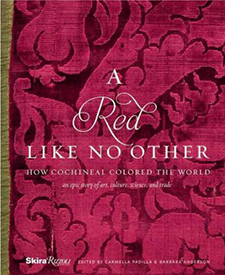
- Carmella Padilla and Barbara Anderson, eds., A Red Like No Other: How Cochineal Colored the World (New York: Skira Rizzoli, in association with the Museum of International Folk Art, 2015)
- Valérie Rousseau, Art Brut in America: The Incursion of Jean Dubuffet (New York: American Folk Art Museum, 2015)
The presentation of the 2017 Awards for Distinction will take place on Wednesday evening, February 15, 5:30–7:00 PM, at the New York Hilton Midtown in Manhattan. The event is free and open to the public. For more information about CAA’s Awards for Distinction, please contact Katie Apsey, CAA manager of programs.
Complimentary Conference Registration + $250 Scholarship
posted by CAA — November 21, 2016
with support from
Registration is in full swing for the 2017 Annual Conference in New York, February 15-18.
We are always listening to what our members want and seeking out the benefits to fit your needs. That is why we have partnered up our sponsors, multinational publisher, Routledge, Taylor & Francis, and art materials specialist, Blick Art Materials, to create a student scholarship fund to assist CAA Student Members with conference costs.
Routledge, Taylor & Francis Student Scholarship
CAA’s Annual Conference Partner Sponsor, Routledge, Taylor & Francis will award four (4) CAA Student Members with complimentary registration and an additional $250 in scholarship money to help with conference expenses such as travel, housing, or meals. Receipts will be required for reimbursement.
Blick Art Materials Student Scholarship
CAA’s Annual Conference Presenter Sponsor, Blick Art Materials will also fund conference registration fees for four (4) CAA Student Members. No travel expenses are available.
Criteria for the Scholarship
Awardee will be chosen by lottery on the following criteria:
- Individuals must be registered for the Annual Conference by the Early Registration deadline
- Individuals must be current CAA student members (proof of student status will be required by the 8 winners chosen)
- Individuals cannot receive conference registration or travel reimbursement from their institution or employer
What does this mean for you? It means register today for the 2017 Annual Conference before the Early Registration deadline for a chance to be one of the lucky 8 CAA Student Members to receive one of these scholarships. Recipients will be randomly selected by CAA and announced in mid January.
We look forward to seeing you in New York!
Staff Interview: Doreen Davis
posted by CAA — November 21, 2016
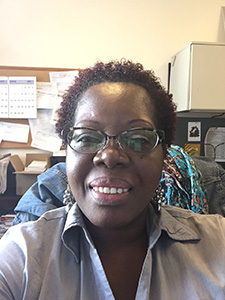 In our first staff interview, we spoke with Paul Skiff, assistant director for Annual Conference. Continuing in the staff interview series, we spoke with Doreen Davis, who currently holds the record for longest-serving CAA staff member.
How long have you worked at CAA?
Twenty-six years.
What do you do at CAA?
I am the manager of member services.
What does CAA mean to you?
CAA has many meanings, but the greatest meaning to me is that it represents the opportunity for me to grow, for me to share what I have learned, for me to plant the seed of possibilities and leave behind a bigger, better organization than the one I first started working for. CAA will always be the organization that challenged me to be better and to have the flexibility to make our members feel that we are not just an organization. We are their partner for as long as they are members, whether active or lapsed.
Can you talk about one of your favorite member moments?
One member was very dissatisfied on several occasions and continued to be very mean on the phone. Even after I resolved her membership issues, she did not say “thank you” but instead hung up. The conference was approaching, and I am usually stationed at the “Problem Information Booth.” I hoped and prayed that I would not see her at the conference, because she would definitely come to that booth. Well, I was not so lucky. She showed up and, after reading my badge, said, “Hi Ms. Davis, I am so and so. I want to apologize for my behavior—it was so unlike me. I was going through a rough period, but thank you for your patience and your help.” I responded, “You are very welcome, and enjoy the conference.” Whew!
What do you like best about the arts and working in the arts?
I love that art can transcend time, and if art is good it will last forever. I also love that we can have an unlimited number of interpretations of art. Everyone sees or hears roughly the same thing, but each of us has our own opinion of it. Our experiences in life help shape our opinions of art. No two people experience the exact same thing, so our interpretations are bound to vary. I love working for the arts because I see how my efforts positively affect people in need. Nonprofits are a great place to maximize your mental talents along with your compassion.
Do you have a favorite moment from the Annual Conference each year?
One of my favorite moments was encountering a job seeker who had an interview, but because she was not a current member she was not allowed in the Interview Hall to meet with the employer. I gave her an individual-membership brochure with an application and walked her into the hall. She took it and thanked me. I said to myself, maybe she will join. She came back later and informed me that the interview went well. I said, “Congrats!” I forgot all about her until a few months later, when she sent me an email telling me she had been hired. Because of that, she took out a membership!
New in caa.reviews
posted by CAA — November 18, 2016
Mary Manning visits Sargent: Portraits of Artists and Friends at the Metropolitan Museum of Art. The exhibition “presents ninety-two works that depict members of the artist’s vast social circle” and shows how Sargent’s “personal relationships and growing prestige afforded him substantial access to creative personalities who would influence his understanding of the arts.” Read the full review at caa.reviews.
Angelina Lucento reviews Hyperrealism: When Reality Becomes an Illusion, an exhibition at the State Tretyakov Gallery in Moscow. The show illustrates how the photo-realist members of the Union of Artists of the USSR used painting “to examine the role of the technologies of reproduction and transmission on the perception of the postwar socialist body and the spaces of its existence.” Read the full review at caa.reviews.
Grace Lees-Maffei provides a summary of design history in the essay “Design History: The State of the Art.” The author sketches “the history of design history for those unfamiliar with it, including the international spread of the subject,” and focuses “on the current state of the field with reference to several key topics and work currently in progress.” Read the full review at caa.reviews.
caa.reviews publishes over 150 reviews each year. Founded in 1998, the site publishes timely scholarly and critical reviews of studies and projects in all areas and periods of art history, visual studies, and the fine arts, providing peer review for the disciplines served by the College Art Association. Publications and projects reviewed include books, articles, exhibitions, conferences, digital scholarship, and other works as appropriate. Read more reviews at caa.reviews.
News from the Art and Academic Worlds
posted by Christopher Howard — November 16, 2016
Each week CAA News summarizes eight articles, published around the web, that CAA members may find interesting and useful in their professional and creative lives.
Donald Trump, Taste, and the Cultural Elite
It’s said that taste defines us. The music I like lets you know, to some degree, what kind of person I am. Yet though this year’s presidential election has raised issues of racism, sexism, and classism, not much has been said about taste, and the role it may or may not have played in getting Donald Trump to the White House. (Read more from the Washington Post.)
Now, More Than Ever, Designers Must Transform America
Thoughtful design, whether it’s a logo, an object, or a well-organized protest, has always had the ability to effect political change. And yet, in days following the election, the power of design felt—at least momentarily—diminished. Graphic design didn’t affect the outcome. (Read more from Wired.)
The Obligation to Explain
One of the striking aspects of the controversy around Kelley Walker’s exhibition at the Contemporary Art Museum in Saint Louis is how many important issues it raises: the perilous state of race relations; the dilemmas that arise when one person’s freedom of speech is perceived as hate speech; whether white artists can tackle the subject of black experience without engaging in cultural appropriation; and the extent to which social media pressures museums to bring more transparency to their curatorial process. (Read more from Artcritical.)
Iconic Ancient Sites Ravaged in ISIS’s Last Stand in Iraq
Recently released satellite imagery of archaeological sites around the northern Iraqi city of Mosul has revealed extensive destruction at two capital cities of ancient Mesopotamia, according to researchers with the American Schools of Oriental Research Cultural Heritage Initiatives. (Read more from National Geographic.)
The Future of the Tiny Liberal-Arts College
At first glance, it sounds like a grim affair: a group of fifteen presidents from the country’s tiniest liberal-arts institutions met in New York in June, even amid experts’ predictions of small-college mergers and closings. Attendees who were at the meeting report the mood was far from somber, though. (Read more from Inside Higher Ed.)
Crash and Burn
Your course plan looked great on paper. It passed departmental faculty review. Perhaps it even integrated some progressive pedagogical experimentations. In sum, the class held real promise. But when it got to the classroom, your first-run of the course was received with far less enthusiasm than you anticipated. (Read more from Art History Teaching Resources.)
Auditioning for the Role of Colleague
Far too many graduate students earnestly prepare for their job talk as if the talk itself is what matters most. It was not until a casual meeting with a member of my dissertation committee in her cozy office that I learned the secret to delivering a great job talk: nothing matters more than how you manage the Q&A portion. (Read more from Vitae.)
Makeover Mania: Inside the Twenty-First-Century Craze for Redesigning Everything
In theory, the redesign begins with a problem. The problem might be specific or systemic or subjective. A logo makes a company’s image feel out of date. A familiar household object has been overtaken by new technology. A service has become too confusing for new users. The world is, after all, full of problems. (Read more from the New York Times Magazine.)
The Artist as Entrepreneur
posted by CAA — November 14, 2016
 New York Foundation for the Arts, 20 Jay Street, Seventh Floor, Brooklyn, NY 11201
Participants: 60
Pricing: $50
Date: Tuesday, February 14, 2017
9:30 AM – 4:00 PM
This Valentine’s Day, the College Art Association (CAA) and the New York Foundation for the Arts (NYFA) are showing their love for artists by partnering to offer professional development programming, “The Artist as Entrepreneur,” the day before the CAA Annual Conference. This day-long event has been customized to fit the needs of CAA artist members but is open to all artists. It allows participants the opportunity to attend part of the CAA Annual Conference with a ticket to a session of their choice. Participants are also welcome to join numerous conference events that are open to the public.
NYFA’s “The Artist as Entrepreneur” is a course that teaches the fundamental principles of sustainability—and ultimately profitability—in the arts. This includes topics such as strategic planning, finance, and marketing. Additional material is drawn from NYFA’s popular textbook which accompanies this curriculum, The Profitable Artist (Allworth Press, 2011). The structure is a blend of formal lectures, breakout groups, and one-on-one meetings. Participants work through a flexible and dynamic “action plan,” which provides a blueprint for their practice or specific projects. Each receives specific feedback from experts in the field as well as their peers in the course.
Register for “The Artist as Entrepreneur.”
First come, first served.
To learn more about NYFA Learning, please see a list of programs on their website.
New in caa.reviews
posted by CAA — November 11, 2016
Andy Campbell visits Black Sheep Feminism: The Art of Sexual Politics at the Dallas Contemporary. Consisting of artworks, mostly from the 1970s, by Joan Semmel, Anita Steckel, Betty Tompkins, and Cosey Fanni Tutti, the exhibition “unapologetically centralize[s] representations of the embodied experiences of (heterosexual) sex and eroticism.” Read the full review at caa.reviews.
Jeremy George reads At Home with the Sapa Inca: Architecture, Space, and Legacy at Chinchero by Stella Nair. “A critical addition to Andean studies,” the book discusses the Inca royal estate at Chinchero, Peru, and “examines the experiential aspects of this site in relation to indigenous ideologies of space and the built environment.” Read the full review at caa.reviews.
Jeannie McKetta discusses Jackson Pollock: Blind Spots at the Dallas Museum of Art. The exhibition spotlights an overlooked period of Pollock’s career: his “black paintings” made between 1951 and 1953. The works were negatively received at the time, but the show “contextualizes the monochromes by displaying them among a few of Pollock’s earlier paintings and experimental ink drawings.” Read the full review at caa.reviews.
Caa.reviews publishes over 150 reviews each year. Founded in 1998, the site publishes timely scholarly and critical reviews of studies and projects in all areas and periods of art history, visual studies, and the fine arts, providing peer review for the disciplines served by the College Art Association. Publications and projects reviewed include books, articles, exhibitions, conferences, digital scholarship, and other works as appropriate. Read more reviews at caa.reviews.