CAA News Today
Join the caa.reviews Council of Field Editors
posted Apr 12, 2017
caa.reviews invites nominations and self-nominations for individuals to join its Council of Field Editors, which commissions reviews within an area of expertise or geographic region, for a term ending June 30, 2020. An online journal, caa.reviews is devoted to reviewing books, museum exhibitions, and projects relevant to art history, visual studies, and the arts.
The journal seeks field editors for books in the following subject areas: digital humanities; Early Modern Iberian and Colonial Latin American Art; nineteenth-century art; and Early Modern and Southern European Art. The journal also seeks a field editor for exhibitions in the Northeast. Candidates may be artists, art or design historians, critics, curators, or other professionals in the visual arts; institutional affiliation is not required.
Working with the caa.reviews editor-in-chief, the editorial board, and CAA’s staff editor, each field editor selects content to be reviewed, commissions reviewers, and reviews manuscripts for publication. Field editors for books are expected to keep abreast of newly published and important books and related media in their fields of expertise, and field editors for exhibitions should be aware of current and upcoming exhibitions (and other related projects) in their geographic regions. The Council of Field Editors meets annually at the CAA Annual Conference. Field editors must pay travel and lodging expenses to attend the conference.
Candidates must be current CAA members and should not currently serve on the editorial board of a competitive journal or on another CAA editorial board or committee. Nominators should ascertain their nominee’s willingness to serve before submitting a name; self-nominations are also welcome. Please send a statement describing your interest in and qualifications for appointment, a CV, and your contact information to: caa.reviews Editorial Board, College Art Association, 50 Broadway, 21st Floor, New York, NY 10004; or email the documents to Deidre Thompson, CAA publications assistant. Deadline: May 1, 2017.
News from the Art and Academic Worlds
posted Apr 12, 2017
Each week CAA News summarizes eight articles, published around the web, that CAA members may find interesting and useful in their professional and creative lives.
Artists Are Luring Their Peers and Predecessors Out of Obscurity and Back into the Spotlight
Beyond the economy of galleries, fairs, and auction rooms, there is an alternative artist-to-artist network rooted in relationships based on aesthetic influences and mutual appreciation. In recent years, artists with some degree of success and visibility have gone out of their way to bring attention to lesser-known peers and predecessors. (Read more from ARTnews.)
Eleven Female Art Professors and Teachers on Their Favorite Women Artists
Continuing the Cut’s series celebrating women in the arts and expanding on the National Museum of Women in the Arts’ social-media campaign to get their followers to name #5WomenArtists, New York has asked female art professors and teachers to name the woman artist they admire the most. (Read more from New York.)
How Art Has Depicted the Ideal Male Body throughout History
In the history of masculinity, it is money rather than muscle that tends to be articulated. Class or status has been the determining factor in the defining of male exemplars. Be it in the East or West, the epitome of a handsome man has generally been an idealized version of an upper-class individual, an archetype that has itself changed over time. (Read more from Artsy.)
Art History’s Image Problem
“If you are going to study sixteenth-century French art, more power to you. I support the arts … but you are not going to get a job,” declared Sam Clovis, Donald Trump’s campaign cochair in an interview last May. Clovis was outlining the would-be president’s education policy, and art history served as a prime example of the kind of major that student loans, he argued, should not underwrite. (Read more from Inside Higher Ed.)
More Vibrant Tales of Obsolete Pigments
After its first installment on obsolete pigments, Hyperallergic had only hit the tip of the curious history of vanished colors. Below are a few more pigments that have mostly gone out of favor, due to them being hazardous to the health of their manufacturers or artists, having a shortage of their weird material, or advances in technology replacing them with synthetics. (Read more from Hyperallergic.)
How a Browser Extension Could Shake Up Academic Publishing
The Gates Foundation started its own open-access publishing platform, which the European Commission may replicate. The Open Access Button, a tool that helps researchers gain free access to articles, will be integrated into existing interlibrary-loan arrangements. Another initiative, called Unpaywall, is a simple browser extension that could help alter the status quo of scholarly publishing. (Read more from the Chronicle of Higher Education.)
Understanding Our Strengths and Weaknesses as Teachers
Every teacher has strengths and weaknesses. Have you ever tried to list yours? Doing so is a worthwhile activity. I’d recommend doing it in private with a favorite libation—only one, because there is a need to be thoughtful and honest. (Read more from Faculty Focus.)
Interviewing for New Hires
Because our organizations are small, vertical promotion is often difficult, if not impossible. Today, it is more common for younger people to expect to have multiple jobs at an ever earlier stage of their careers. Finding the right people for open positions in a highly competitive job market is critical to our success as organizations. (Read more from Barry’s Blog.)
Institutional News
posted Apr 12, 2017
Read about the latest news from CAA’s institutional members.
Institutional News is published every two months: in February, April, June, August, October, and December. To learn more about submitting a listing, please follow the instructions on the main Member News page.
April 2017

The Kansas City Art Institute in Missouri has accepted a $10 million gift to build a state-of-the-art student residence hall on campus. The visionary gift, made by an anonymous donor via the Greater Kansas City Community Foundation, will be used as the catalyst for a plan to create a new residence hall, dining facility, student services, and studios for academic programs—all of which will be designed specifically for the contemporary student in art and design.
The Metropolitan Museum of Art in New York announced its adoption of a new policy: all images of public-domain artworks in the museum’s collection are now available for free and unrestricted use. This updated policy uses the Creative Commons Zero designation and updates the Met’s 2014 Open Access for Scholarly Content initiative.

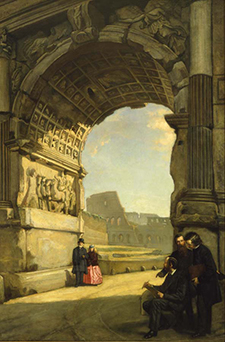 George Peter Alexander Healy, Frederic Edwin Church, and Jervis McEntee, The Arch of Titus, 1871. Bequest of Dr. J. Ackerman Coles, 1926. 26.1260
The Newark Museum in Newark, New Jersey, has been awarded a Bank of America Art Conservation Project grant for the conservation of the 1871 oil painting The Arch of Titus by George Peter Alexander Healy, Frederic Edwin Church, and Jervis McEntee. The grant program enables nonprofit museums throughout the world to conserve historically or culturally significant works of art that are in danger of deterioration.
The Pennsylvania Academy of the Fine Arts in Philadelphia has accepted a $350,000 grant from the Connelly Foundation for advancing the museum’s community educational outreach. The new Connelly Foundation Community Education Center, located in the academy’s historic landmark building at 118 North Broad Street, will host many of the academy’s ongoing programs for students, educators, families, and adults and be used for rotating exhibitions of community artwork, giving the school’s diverse audiences a voice within the museum.

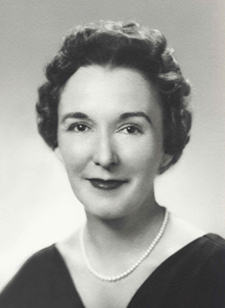 Elizabeth Terry Seaks (photograph provided by the Winterthur Museum, Garden, and Library)
The Winterthur Museum, Garden, and Library in Winterthur, Delaware, has accepted a new bequest commitment in furniture conservation. The newly endowed position will be named the Elizabeth Terry Seaks Furniture Conservator, in honor of the late mother of Terry G. Seaks, a respected collector and economist who made the position possible.
Grants, Awards, and Honors
posted Apr 11, 2017
CAA recognizes its members for their professional achievements, be it a grant, fellowship, residency, book prize, honorary degree, or related award.
Grants, Awards, and Honors is published every two months: in February, April, June, August, October, and December. To learn more about submitting a listing, please follow the instructions on the main Member News page.
April 2017


Anna Arabindan-Kesson, assistant professor of African American studies and of art and archeology at Princeton University in Princeton, New Jersey, has accepted a 2017 ACLS Collaborative Research Fellowship from the American Council of Learned Societies. Her project, in partnership with Mia L. Bagneris, is called “Beyond Recovery: Reframing the Dialogues of Early African Diaspora Art and Visual Culture, 1700–1900.”
Mia L. Bagneris, assistant professor of art at Tulane University in New Orleans, Louisiana, has won a 2017 ACLS Collaborative Research Fellowship from the American Council of Learned Societies. Her project, in partnership with Anna Arabindan-Kesson, is titled “Beyond Recovery: Reframing the Dialogues of Early African Diaspora Art and Visual Culture, 1700–1900.”
Laura Anne Kalba, associate professor of art at Smith College in Northampton, Massachusetts, has earned a 2017 Frederick Burkhardt Residential Fellowship from the American Council of Learned Societies. She will be in residence at the Department of Anthropology at the University of California, Irvine, during the 2018–19 academic year to work on “Currencies: Symbolism and Signification in the Golden Age of Finance Capital.”

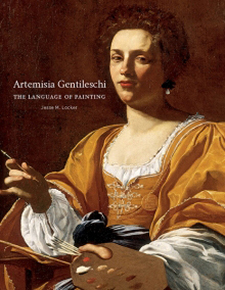
Jesse Locker has received the 2016 Helen and Howard R. Marraro Prize in Italian History from the Society for Italian Historical Studies for his book Artemisia Gentileschi: The Language of Painting (New Haven: Yale University Press, 2015).

 Alexander Nemerov
Alexander Nemerov, Carl and Marilynn Thoma Provostial Professor in the Arts and Humanities at Stanford University in California, has been chosen to deliver the sixty-sixth A. W. Mellon Lectures in the Fine Arts at the National Gallery of Art in Washington, DC. His talks will take place on March 26, April 2, 9, 23, and 30, and May 7, 2017.
Julia B. Rosenbaum, associate professor of art history at Bard College in Annandale-on-Hudson, New York, has received a 2017 Frederick Burkhardt Residential Fellowship from the American Council of Learned Societies. She will be in residence at the Charles Warren Center for American History at Harvard University during academic year 2019–20 to work on “Unruly Bodies? Portraying Science and Citizenry in Post–Civil War America.
CAA Presents a Fair Use Workshop in Richmond
posted Apr 10, 2017
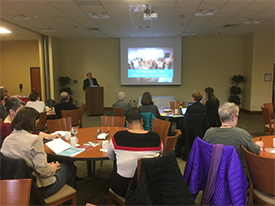
Peter Jaszi speaks to participants at a fair use workshop in Richmond, Virginia, March 24, 2017.
On Friday, March 24, the University of Richmond Museums, Virginia, hosted a CAA Fair Use Workshop, co-sponsored with the Virginia Museum of Fine Arts Statewide Program, and made possible with a grant from the Andrew W. Mellon Foundation. Elizabeth Schlatter, CAA Vice President for the Annual Conference, and Deputy Director and Curator of Exhibitions at the University of Richmond Museums, led the planning effort to bring over 40 artists, museum professionals, archivists, professors, librarians, and communications experts to the daylong workshop.
The program was led by Hunter O’Hanian, CAA’s Executive Director, and Peter Jaszi, Professor of Law at American University, and one of the two lead principal investigators on the project. After a round of introductions by attendees, Jaszi began the day with an introduction to the doctrine of fair use, followed by a presentation by O’Hanian about CAA’s four-year fair use initiative and the methodology employed to develop the Code of Best Practices in Fair Use for the Visual Arts. The workshop continued with a focus on fair use in art museums, including when it can be invoked in exhibition projects, publishing, and online activities. During a working lunch, Jaszi and O’Hanian led discussions on reliance on fair use in teaching, publishing, and making art, and concluded the day with a discussion about fair use in libraries and archives.
Catherine G. OBrion, the Librarian-Archivist at the Virginia State Law Library, wrote afterwards, “I have a much better understanding of the legal standing of fair use, its intent, and how I can defend relying on it to my in-house counsel and others….One of the most useful workshops I’ve attended.” The workshop was followed by a reception at the University Museums for all CAA members in the local area.
CAA executive director O’Hanian also met with two University of Richmond classes the day before, one a museum studies seminar and the other a class on contemporary art and theory. The undergraduates benefited from O’Hanian’s advice on curating exhibitions, organizing public programs, surviving and thriving as a visual artist, and applying for artists’ residency programs.
New in caa.reviews
posted Apr 07, 2017
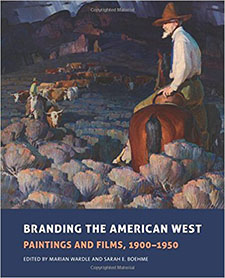 Matthew Hauske reviews Branding the American West: Paintings and Films, 1900–1950, edited by Marian Wardle and Sarah E. Boehme. This “lavishly illustrated exhibition catalogue” provides “a substantive conversation” about “the works and the legends of the Taos Society of Artists.” The book’s “spirit of scholarly collaboration and cross-pollination is perhaps its greatest strength.” Read the full review at caa.reviews.
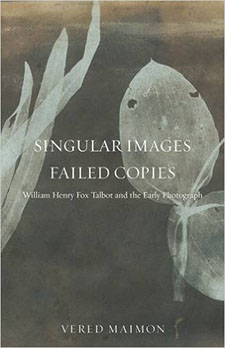 Katharine Steidl reads Singular Images, Failed Copies: William Henry Fox Talbot and the Early Photograph by Vered Maimon. The author investigates the artist’s “connection to early photography” and, “with the help of postmodern critical theory . . . questions established genealogies and canonical histories of photography.” The volume is ultimately “highly recommended to Talbot scholars.” Read the full review at caa.reviews.
Emma Chubb visits She Who Tells a Story: Women Photographers from Iran and the Arab World, organized by the Museum of Fine Arts, Boston. The “participating artists are all women” with ties to “the wide expanse of land between Morocco and Iran,” and the exhibition “contributes an important chapter to this history, one that centers on the rich conceptual, formal, and political engagements of these photographers.” Read the full review at caa.reviews.
Conference Submissions for CAA 2018
posted Apr 07, 2017
Projects and Proposal Deadlines April 17 and 24
The Annual Conference Committee invites proposals of interest to its members and varied audiences. Submissions that cover the breadth of current thought and research in art and art practice, art and architectural history, theory and criticism, studio art, pedagogical issues, museum and curatorial practice, conservation, design, new media, and developments in technology are encouraged.
To submit a proposal, individuals must be current CAA members. All session participants, including presenters, chairs, moderators, and discussants, must also be current individual CAA members. Please have your CAA Member ID handy as well as the member IDs of any and all participants as this is a required field on the submission form. Please note that institutional member IDs cannot be used to submit proposals. If you are not a current individual member, please renew your membership or join CAA.
All session participants must also register for the conference. Online registration for CAA 2018 will begin October 2, 2017. Early conference registration will end December 15, 2017 and advance conference registration will end on February 7, 2018. Early and advance conference registration fees will not change from CAA 2017, New York.
The Annual Conference Committee will accept the following proposals for review: Complete Sessions, Sessions Soliciting Contributors, and Individual Paper/Project proposals. All sessions will be 90 minutes in length at CAA 2018. Please plan accordingly. For full details on the submission process for the conference, please review the information below and on the individual submission pages.
PROPOSAL SUBMISSION TYPES
Session Soliciting Contributors
SUBMISSION DEADLINE: April 17, 2017
The Session Soliciting Contributors option allows a submission for a full session (90 minutes in length) with yet-to-be identified speakers and papers/projects. If selected, such sessions will be included in the call for participation (CFP) which opens June 30.
Individual Paper/Project
SUBMISSION DEADLINE: April 17, 2017
Individual Paper/Project proposals (15 minutes in presentation length) may be submitted for review. No specific theme is required. The Annual Conference Committee will review and select paper/project proposals based on merit and group approved submissions into Composed Sessions of up to four participants. A liaison from the Annual Conference Committee will be identified for each Composed Session to assist with the format and to help identify a session chair or moderator.
Complete Session
SUBMISSION DEADLINE: April 24, 2017
The Complete Session option allows a submission for a complete panel (90 minutes in length) pre-formed with participants and papers/projects chosen in advance by session chairs. This session requires advance planning and information gathering by the chair(s).
Affiliated Societies
SUBMISSION DEADLINE: April 24, 2017
Each Affiliated Society may submit either one Complete Session proposal (90 minutes in length) pre-formed with participants and papers/projects chosen in advance or one Session Soliciting Contributors proposal (90 minutes in length) to be included in the CFP which opens June 30. A note of approval from the Affiliated Society chair must accompany the submission. This session will be guaranteed and will be identified as an Affiliated Society session in all CAA publications.
Subsequent proposals by Affiliated Society members may be submitted separately by individuals, but are subject to peer review by the Annual Conference Committee and must be submitted via the Complete Session, Session Soliciting Contributors, or Individual Paper/Project submissions forms described above. These submissions are not guaranteed and, if selected, will not be labeled or identified as Affiliated Society sessions in CAA publications.
CAA PIPS Committees
SUBMISSION DEADLINE: April 24, 2017
CAA PIPS committees may submit either one Complete Session proposal (90 minutes in length) pre-formed with participants and papers/projects chosen in advance or one Session Soliciting Contributors proposal (90 minutes in length) to be included in the CFP which opens June 30. A note of approval from the committee chair must accompany the submission. This session will be identified as a committee session in all CAA publications.
Subsequent proposals by committee members may be submitted separately by individuals, but are subject to peer review by the Annual Conference Committee and must be submitted via the Complete Session, Session Soliciting Contributors, or Individual Paper/Project submissions forms described above. These submissions are not guaranteed and, if selected, will not be labeled or identified as committee sessions in CAA publications.

GENERAL SUBMISSION GUIDELINES
- All sessions will be 90 minutes in length at CAA 2018. Please plan accordingly.
- All session proposals must be completed and submitted online.
- To submit a proposal, individuals must be current CAA members. All session participants, including presenters, chairs, moderators, and discussants, must also be current individual CAA members. Please have your CAA Member ID handy as well as the member IDs of any and all participants as this is a required field on the submission form. Please note that institutional member IDs cannot be used to submit proposals. If you are not a current member, please renew your membership or join CAA.
- All session participants must also register for the conference. Online registration for CAA 2018 will begin October 2, 2017. Early conference registration will end December 15, 2017 and advance conference registration will end on February 7, 2018. Early and advance conference registration fees will not change from CAA 2017, New York.
- CVs are required for panel proposals where the chair and, if applicable, the co-chair are known.
- Session and paper/project abstracts should be no more than 250 words in length.
- The accuracy of information entered into the proposal form (e.g. spelling of names, affiliations, titles) is important as it will be pulled directly from this database for conference publications such as Abstracts 2018 and the conference website.
- The Annual Conference Committee makes its selections solely on the basis of merit and works to create a balanced program. Where proposals overlap, CAA reserves the right to select the most considered version or, in some cases, to suggest a fusion of two or more versions from among the proposals submitted.
- If their proposals are accepted, CAA members may participate in session panels in consecutive years.
- For more information about session proposals for the 2018 Annual Conference, please contact Katie Apsey, CAA manager of programs, at 212-392-4405 or Tiffany Dugan, CAA director of programs, at 212-392-4410.
KEY DATES
- February 27 – Call for Annual Conference session and paper/projects proposals begins
- Proposal Submission Deadlines for CAA 2018:
-
- April 17 – Proposal submission deadline for Sessions Soliciting Contributors
- April 17 – Proposal submission deadline for Individual Paper/Projects
- April 24 – Proposal submission deadline for Complete Sessions
- April 24 – Proposal submission deadline for Affiliated Societies and CAA PIPS Committees
- May 15 – Call for Professional Development Workshop Proposals begins
- June 19 – Notifications sent regarding approved sessions for CAA 2018
- Key dates for approved Sessions Soliciting Contributors included in the Call for Participation (CFP):
-
- June 30 – CFP for approved Sessions Soliciting Contributors announced (includes Poster Sessions)
- August 14 – Paper/Project submission deadline to chairs of Sessions Soliciting Contributors; deadline for Poster Session submissions
- August 28 – Session chairs send notifications to participants selected from CFP; Poster Session notifications sent
- September 18 – Deadline for all chairs to submit final abstracts and website listings to CAA
- October 2 – Online conference registration opens
- December 15 – Early conference registration closes
- February 7 – Advance conference registration closes
People in the News
posted Apr 07, 2017
People in the News lists new hires, positions, and promotions in three sections: Academe, Museums and Galleries, and Organizations and Publications.
The section is published every two months: in February, April, June, August, October, and December. To learn more about submitting a listing, please follow the instructions on the main Member News page.
April 2017
Academe
Ira Goldberg, executive director of the Art Students League in New York, has resigned from his post.

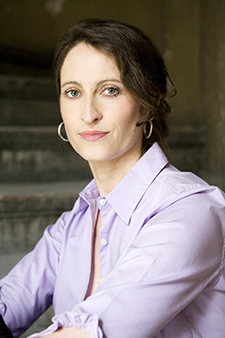 Cordula Grewe
Cordula Grewe has accepted a position as associate professor with tenure in the Department of Art History at Indiana University Bloomington, where she will teach European art between 1700 and today.
Alex Kitnick has been given the title of Brant Foundation Fellow in Contemporary Arts at Bard College’s Center for Curatorial Studies in Annandale-on-Hudson, New York.

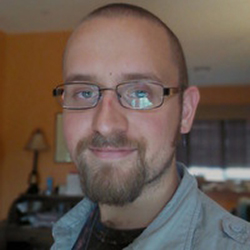 Jonathan Morgan
Jonathan Morgan has become an adjunct professor of art at Lone Star College in the Woodlands, Texas.
Sheila Rae Neal has been named adjunct instructor at Munson-Williams-Proctor Arts Institute in Utica, New York.

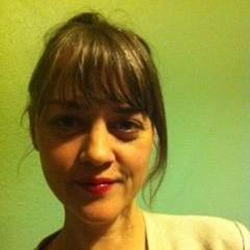 Jennifer Rissler
Jennifer Rissler has been appointed dean and vice president of academic affairs at the San Francisco Art Institute in California.
Museums and Galleries
Esther Bell, previously curator in charge of European paintings at the Fine Arts Museum of San Francisco in California, has been named Robert and Martha Berman Lipp Senior Curator for the Sterling and Francine Clark Art Institute in Williamstown, Massachusetts.
Makeda Best, formerly assistant professor in visual studies at the California College of the Arts in Oakland and San Francisco, California, has been named Richard L. Menschel Curator of Photography at the Harvard Art Museums in Cambridge, Massachusetts.

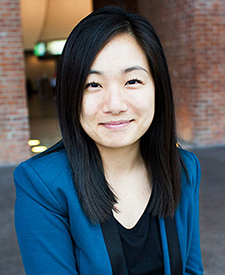 Connie H. Choi
Connie H. Choi, formerly assistant curator of American art at the Brooklyn Museum in New York, has been appointed associate curator of the permanent collection at the Studio Museum in Harlem, also in New York.
Joey Orr, formerly Andrew W. Mellon Postdoctoral Curatorial Fellow at the Museum of Contemporary Art in Chicago, Illinois, has been appointed Andrew W. Mellon Assistant Curator for Research for the Spencer Museum of Art at the University of Kansas in Lawrence.
James Merle Thomas, professor of global contemporary art at Temple University’s Tyler School of Art in Philadelphia, Pennsylvania, has been appointed executive director of Vox Populi, also in Philadelphia.
Organizations and Publications

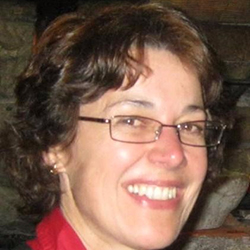 Conny Bogaard
Conny Bogaard has been appointed executive director of the Western Kansas Community Foundation in Garden City, Kansas.
Douglas Dreishpoon, chief curator emeritus for the Albright-Knox Art Gallery in Buffalo, New York, has been appointed director of the Helen Frankenthaler Catalogue Raisonné, a project organized by the Helen Frankenthaler Foundation in New York.
How to Submit a Sharp Proposal for CAA 2018
posted Apr 07, 2017
We are enjoying spring break as much as you are, but we also know that CAA has upcoming deadlines for proposing a session or paper for the 106th Annual Conference in Los Angeles, February 21–24, 2018.
In this video, Hunter O’Hanian, executive director of CAA, and Tiffany Dugan, director of programs, discuss what makes a great Conference proposal. We think your submission should contain clear writing, and your idea should be thoughtful. We want you to be accurate and complete when using the submission portal also.
The Annual Conference Committee, comprised of regional representatives, members of the Board, and CAA members at large, are in search of proposals that reflect the breadth and variety of our discipline and field, and demonstrate the expertise and curiosity of our membership also. Especially welcome are proposals from artists and on subjects in art before 1800.
The deadlines to propose a session or paper for the 2018 Annual Conference in Los Angeles are April 17 and April 24, 2017. Full details are available on the submissions website.
Exhibitions Curated by CAA Members
posted Apr 06, 2017
Check out details on recent shows organized by CAA members who are also curators.
Exhibitions Curated by CAA Members is published every two months: in February, April, June, August, October, and December. To learn more about submitting a listing, please follow the instructions on the main Member News page.
April 2017

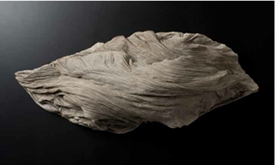 Yoshio Ikezaki, The Earth Breathes–Mind Landscape no.12, 2008 (artwork © Yoshio Ikezaki)
Jacki Apple. Yoshio Ikezaki: Elements 1991–2016. Alyce de Roulet Williamson Gallery, Art Center College of Design, Pasadena, California, March 16–May 28, 2017.

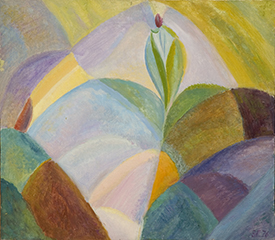 Elena Gritsenko, Landscape, 1976, oil on canvas. Norton and Nancy Dodge Collection of Nonconformist Art from the Soviet Union (photograph by Jack Abraham)
Anna Rogulina. A Vibrant Field: Nature and Landscape in Soviet Nonconformist Art, 1970s–1980s. Jane Voorhees Zimmerli Art Museum, Rutgers University, New Brunswick, New Jersey, March 4–July 30, 2017.
Jane A. Sharp. “Thinking Pictures”: Moscow Conceptual Art in the Dodge Collection. Jane Voorhees Zimmerli Art Museum, Rutgers University, New Brunswick, New Jersey, September 6–December 31, 2016.
Julie J. Thomson. Begin to See: The Photographers of Black Mountain College. Black Mountain College Museum and Arts Center, Asheville, North Carolina, January 20–May 20, 2017.

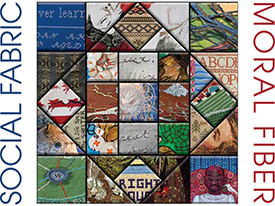 Invitation card for Social Fabric / Moral Fiber
Michaelann Tostanoski and Leila Daw. Social Fabric / Moral Fiber. Gallery West, Suffolk County Community College, Selden, New York, February 14–March 30, 2017.

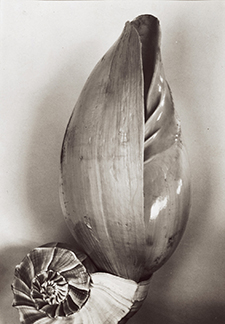 Edward Weston, Two Shells, 1927, gelatin-silver print, Norton Simon Museum, Blue Four Galka Scheyer Collection, PH.1953.609b
Gloria Williams. Maven of Modernism: Galka Scheyer in California. Norton Simon Museum, Pasadena, California, April 7–September 25, 2017.