CAA News Today
News from the Art and Academic Worlds
posted Apr 05, 2017
Each week CAA News summarizes eight articles, published around the web, that CAA members may find interesting and useful in their professional and creative lives.
Live Drawing Videos on Instagram Are Giving Users a Peek into the Creative Process
With the capability to create and share livestreams, sixty-second videos, and Stories, creatives have a new world of opportunity to demystify artmaking, to facilitate virtual studio visits, and to grow their followings. Moreover, artists can set themselves up for commissions and projects—and drawing is proving to be a ripe medium through which to accomplish this. (Read more from Artsy.)
The Exhilarating Return
Having recently returned from my own sabbatical, I wonder whether there are some downsides to the sabbatical’s luster—in particular, the larger view that it obscures. In our efforts to reverence sabbatical, we may fail to give proper due to its mighty counterpart, the return. This is a mistake. (Read more from Inside Higher Ed.)
The Community-College Side Hustle
“Side hustle” is a term I had never heard until a few months ago, and now suddenly I’m seeing it everywhere, most recently in an advertisement for Uber drivers. It refers to having a second source of income in addition to one’s main job. That’s a concept professors have embraced, probably ever since there have been professors. (Read more from Vitae.)
The Art of “No”
Early in my career, I struggled to say no. I was asked to serve on committee after committee, to evaluate fistfuls of manuscripts and grants, and to perform dozens of other tasks, large and small. I said yes, often because of genuine interest but other times out of a sense of guilt or obligation—and sometimes out of fear of reprisal if I refused. (Read more from the Chronicle of Higher Education.)
Penn Museum Shows Artifacts Curators Are Fighting to Save in Syria and Iraq
Many American museums have been closely monitoring the ongoing destruction of heritage sites in Syria and Iraq, but few have had boots on the ground. Curators and researchers at the Penn Museum have been on the frontlines of the battle to safeguard cultural heritage in conflict zones; they recently organized an exhibition illustrating how high the stakes are. (Read more from the Art Newspaper.)
A Hushed Departure at the Met Museum Reveals Entrenched Management Culture
The recent discovery of a looming $40 million deficit that forced the Metropolitan Museum of Art to cut staff, trim its exhibition schedule, and postpone a heralded $600 million expansion are signs that the system is showing cracks. Now, details about dysfunction in the digital-media department reveal additional consequences of the museum turning a blind eye to problems. (Read more from the New York Times.)
Paper Warping When Painting with Acrylics
When water is applied to paper, the fibers can soak up liquid and expand. This may create the infamous buckles and cockles that can be the bane—or joy—of those who paint with water media. (Read more from Just Paint.)
Was Banksy Caught on Camera at a Mall in Israel?
Several British tabloids ran stories last weekend showing footage captured with a mobile phone camera by an anonymous woman who claims to have caught the elusive Bristol-born artist in action, working on a show that’s slated to open to the public inside a mall in Herzlyia, Israel. (Read more from Artnet News.)
Books Published by CAA Members
posted Apr 04, 2017
Publishing a book is a major milestone for artists and scholars—browse a list of recent titles below.
Books Published by CAA Members appears every two months: in February, April, June, August, October, and December. To learn more about submitting a listing, please follow the instructions on the main Member News page.
April 2017

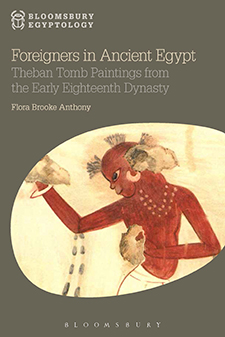
Flora Brooke Anthony. Foreigners in Ancient Egypt: Theban Tomb Paintings from the Early Eighteenth Dynasty (1550–1372 BC) (New York: Bloomsbury Academic, 2017).

Jacki Apple. Yoshio Ikezaki: Elements 1991–2016 (Pasadena, CA: Art Center College of Design, 2017).

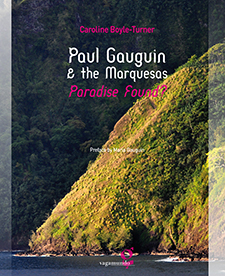
Caroline Boyle-Turner. Paul Gauguin and the Marquesas: Paradise Found? (Pont-Aven, France: Éditions Vagamundo, 2016).

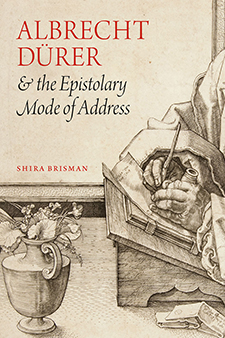
Shira Brisman. Albrecht Dürer and the Epistolary Mode of Address (Chicago: University of Chicago Press, 2016).

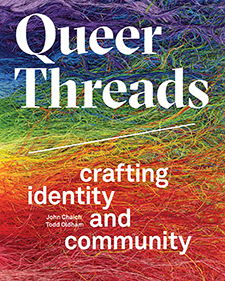
John Chaich and Todd Oldham. Queer Threads: Crafting Identity and Community (New York: AMMO Books, 2017).

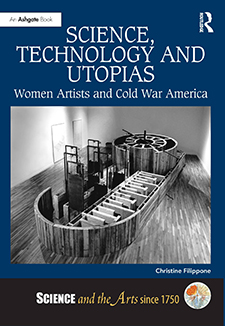
Christine Filippone. Science, Technology, and Utopias: Women Artists and Cold War America (New York: Routledge, 2017).

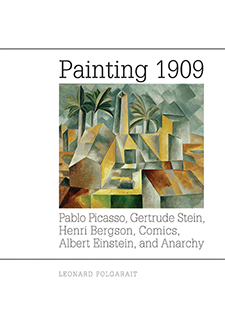
Leonard Folgarait. Painting 1909: Pablo Picasso, Gertrude Stein, Henri Bergson, Comics, Albert Einstein, and Anarchy (New Haven: Yale University Press, 2017).

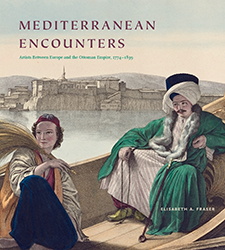
Elisabeth A. Fraser. Mediterranean Encounters: Artists between Europe and the Ottoman Empire, 1774–1839 (University Park: Pennsylvania State University Press, 2017).

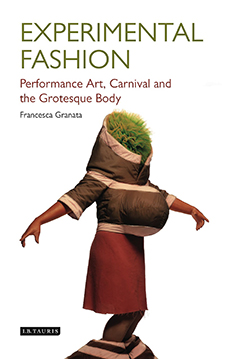
Francesca Granata, Experimental Fashion: Performance Art, Carnival, and the Grotesque Body (London: I. B. Tauris, 2017).

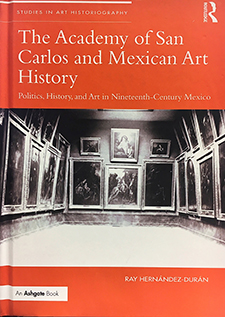
Ray Hernández-Durán. The Academy of San Carlos and Mexican Art History: Politics, History, and Art in Nineteenth-Century Mexico (New York: Routledge, 2016).

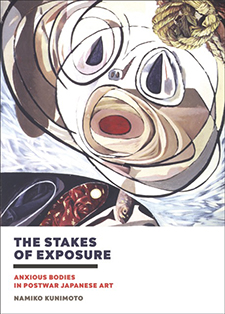
Namiko Kunimoto. The Stakes of Exposure: Anxious Bodies in Postwar Japanese Art (Minneapolis: University of Minnesota Press, 2017).

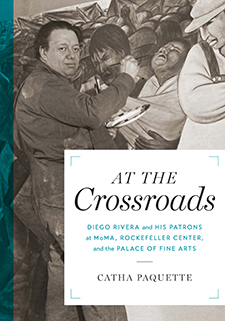
Catha Paquette. At the Crossroads: Diego Rivera and His Patrons at MoMA, Rockefeller Center, and the Palace of Fine Arts (Austin: University of Texas Press, 2017).

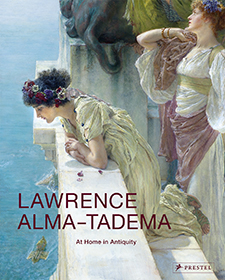
Elizabeth Prettejohn and Peter Trippi, eds. Lawrence Alma-Tadema: At Home in Antiquity (New York: Prestel, 2016).

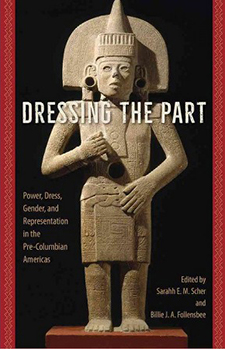
Sarahh E. M. Scher and Billie J. A. Follensbee, eds. Dressing the Part: Power Dress, Gender, and Representation in the Pre-Columbian Americas (Gainesville: University Press of Florida, 2017).
Jane A. Sharp, ed. Thinking Pictures: The Visual Field of Moscow Conceptualism (New Brunswick, NJ: Zimmerli Art Museum, 2016).

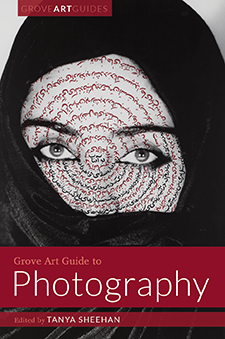
Tanya Sheehan, ed. Grove Art Guide to Photography (New York: Oxford University Press, 2017).


Victoria Surliuga. Ezio Gribaudo: The Man in the Middle of Modernism (New York: Glitterati, 2016).

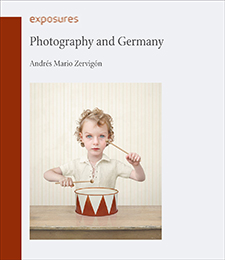
Andrés Mario Zervigón. Photography and Germany (London: Reaktion Books, 2017).
Solo Exhibitions by Artist Members
posted Apr 03, 2017
See when and where CAA members are exhibiting their art, and view images of their work.
Solo Exhibitions by Artist Members is published every two months: in February, April, June, August, October, and December. To learn more about submitting a listing, please follow the instructions on the main Member News page.
April 2017
Mid-Atlantic

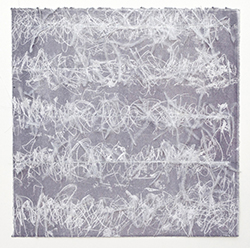 Jaz Graf, Traces of Absence (violet), 2014, monotype, faux feather plumes, pencil, and thread on paper, 15 x 15 in. (artwork © Jaz Graf)
Jaz Graf. Paul Robeson Galleries, Engelhard Hall, Rutgers University, Newark, New Jersey, September 6, 2016–July 31, 2017, Articulations. Prints, handmade paper, and mixed-media drawings.
Midwest

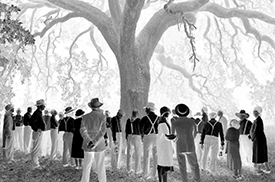 Ken Gonzales-Day, The Lynching of “Spanish Charlie,” Santa Rosa, CA (Inverted), 2016, C-print (artwork © Ken Gonzales-Day)
Ken Gonzales-Day. Minnesota Museum of American Art, Saint Paul, Minnesota, January 19–April 16, 2017. Ken Gonzales-Day: Shadowlands.
Northeast
Pat Adams. Bennington Museum, Bennington, Vermont, April 1–June 18, 2017. Gatherum of Quiddities: Paintings by Pat Adams. Painting.

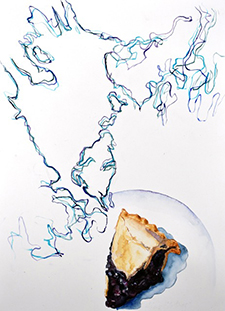 Lucinda Bliss, Borders Over Pie: Passamaquoddy Bay, 2016, graphite pencil and watercolor on paper, 14 x 10 in. (artwork © Lucinda Bliss)
Lucinda Bliss. Common Street Arts, Waterville, Maine, January 11–February 25, 2017. Tracking the Border: An Interrogation of Political, Natural, and Interior Borders.
Dear Volunteers (Tra Bouscaren and John Schlesinger). AC Institute, New York, March 7–31, 2017. Dear Volunteers. Neon, Styrofoam, painted photographs cast in resin, lab clamps, rebar, and interactive video.
2017 TERRA FOUNDATION FOR AMERICAN ART INTERNATIONAL PUBLICATION GRANT WINNERS
posted Apr 03, 2017
 CAA is pleased to announce the 2017 recipients of the Terra Foundation for American Art International Publication Grant. This program, which provides financial support for the publication of book-length scholarly manuscripts in the history of American art, is made possible by a generous grant from the Terra Foundation for American Art. For this grant, “American art” is defined as art (circa 1500–1980) of what is now the geographic United States.
“This year’s publication grant recipients demonstrate once again how this program serves the mission of advancing and internationalizing scholarship on American art,” says Francesca Rose, Program Director for Publications at the Terra Foundation for American Art. “Whether by funding translations or supporting original research in languages other than English and publications by early-career U.S. scholars, the 2017 publication grants allow for the dissemination of important scholarship to the global Americanist community. In addition, providing for travel to the CAA Annual Conference facilitates participation by non-U.S. authors in U.S. professional networks.”
The six Terra Foundation grantees for 2017 are:
- Philippe Artières, Attica, USA, 1971, Le Point du Jour
- Emily Burns, Transnational Frontiers: The Visual Culture of the American West in the French Imagination, 1867–1914, University of Oklahoma Press
- Sophie Cras, The Artist as Economist: Art and Capitalism in the 1960s, Yale University Press
- Kenji Kajiya, Formless Modernism: Color Field Painting and 20th-Century American Culture, University of Tokyo Press
- Kate Lemay, Triumph of the Dead: The American War Cemeteries in France, University of Alabama Press
- ShiPu Wang, The Other American Moderns, Pennsylvania State University Press
Two non-US authors of top-ranked books have also been awarded travel funds and complimentary registration for CAA’s 2018 Annual Conference in Los Angeles; they also received one-year CAA memberships.
The two author awardees for 2017 are:
- Sophie Cras
- Kenji Kajiya
“The Terra Foundation award is unique in that it supports publishers in the United States and abroad and also provides funds for authors of award-winning books to attend the CAA Annual Conference,” says Betty Leigh Hutcheson, Director of Publications at CAA. “Scholars outside the United States who receive travel grants can expand their networks, gain exposure to new ideas, meet publishers at the Book and Trade Fair, and apply to present papers at the conference. The success of the Terra Foundation program is grounded in the high quality of manuscripts CAA receives each year and our ability to financially support these projects. CAA has played a vital role in this process for the past three years, which is particularly gratifying as we see awarded projects reach completion.”
About CAA
The College Art Association is the world’s largest professional association for artists, art historians, designers, arts professionals, and arts organizations. CAA serves as an advocate and a resource for individuals and institutions nationally and internationally by offering forums to discuss the latest developments in the visual arts and art history through its Annual Conference, publications, exhibitions, website, and other programs, services, and events. CAA focuses on a wide range of advocacy issues, including education in the arts, freedom of expression, intellectual-property rights, cultural heritage and preservation, workforce topics in universities and museums, and access to networked information technologies. Representing its members’ professional needs since 1911, CAA is committed to the highest professional and ethical standards of scholarship, creativity, criticism, and teaching.
About the Terra Foundation for American Art
Established in 1978, the Terra Foundation for American Art is dedicated to fostering the exploration, understanding, and enjoyment of the visual arts of the United States. With financial resources of more than $350 million, an exceptional collection of American art from the colonial period to 1945, and an expansive grant program, it is one of the leading foundations focused on American art, supporting exhibitions, academic programs, and research worldwide.
We’ve Got Your Back, We Want You Back
posted Apr 01, 2017
Dear Friends,
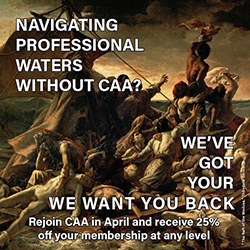 We want to get as many former members to rejoin in the month of April as we can. We’ve heard you, through surveys and our Annual Conference, through emails and phone calls. We know that the economy of higher education is changing. We know it can be hard to find a department position or a museum gig or publish your groundbreaking work. Rejoining the largest professional organization supporting art historians and visual artists is one step you can make to help you thrive in the field. Our impact as an organization and as a profession depends on our membership.
Rejoin during the month of April and we will take 25% off your CAA membership (offer excludes Life Membership level). That means you will be able to attend our next Annual Conference in Los Angeles in February 2018 for a reduced rate. You will receive our publications (Art Journal or The Art Bulletin) delivered to your home. You will have access to the online career center, with over 430 jobs and opportunities listed. You will get discounts on car rentals, health insurance, magazine subscriptions, and more.
But most importantly, you will be a member of the professional organization setting the lead on issues of fair hiring practices, academic freedoms, publishing standards, and connecting visual arts professionals across subjects, practice, and geography regions.
Offer valid from April 1-April 30, 2017 to individuals whose membership has lapsed in the past five years. Log in to your CAA account to view the discount code. Code will be visible after log in from April 1-April 30, 2017.
New in caa.reviews
posted Mar 31, 2017
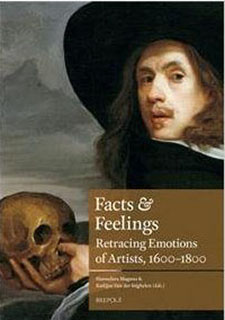 Stephanie S. Dickey reads Facts and Feelings: Retracing Emotions of Artists, 1600–1800, edited by Hannelore Magnus and Katlijne Van der Stighelen. The book’s goal “is not to gauge the expression of emotion in art, but instead to plumb the emotions of artists themselves.” Interestingly, “the visual record is mostly avoided in favor of documentary sources that find artists in emotionally charged situations.” Read the full review at caa.reviews.
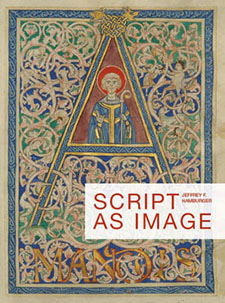 Eric Palazzo discusses Jeffrey F. Hamburger’s Script as Image, “a deeply engaging book, or rather a lengthy essay, on the ‘double page’ in the illuminated manuscripts of the Middle Ages.” The author starts “by exploring the possibility of considering writing as an image,” and “his approach focuses on a new exploration of the common nature of the written word and image” in visual culture. Read the full review at caa.reviews.
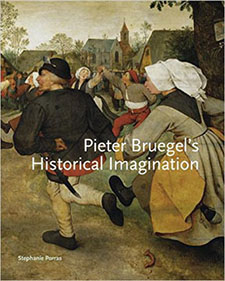 Arthur J. DiFuria reviews Pieter Bruegel’s Historical Imagination by Stephanie Porras. The “well-written, beautifully produced book” brings “a supremely important aspect of Bruegel’s art” to light, offering “a carefully considered take on his notion of the Netherlandish past” and portraying him “as an erudite artist who formulated a Netherlandish antiquarian vernacular.” Read the full review at caa.reviews.
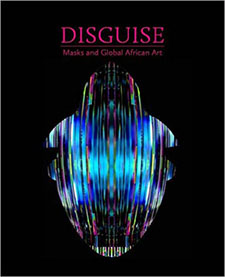 John P. Bowles examines the exhibition Disguise: Masks and Global African Art, curated by Pamela McClusky and Erika Dalya Massoquoi. The show and catalogue question “how African cultural traditions circulate and influence global contemporary art,” arguing that “the artists of ‘global Africa’ have begun to address this issue, changing how we understand African art.” Read the full review at caa.reviews.
CWA Picks for April 2017
posted Mar 30, 2017
Each month, CAA’s Committee on Women in the Arts selects the best in feminist art and scholarship. The following exhibitions and events should not be missed. Check the archive of CWA Picks at the bottom of the page, as several museum and gallery shows listed in previous months may still be on view or touring.
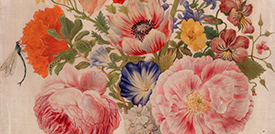
Maria Sibylla Merian, Chinese Vase with Roses, Poppies and Carnations, ca. 1670–1680 (photograph © Staatliche Museen zu Berlin, Kupferstichkabinett / Dietmar Katz)
Maria Sibylla Merian and the Tradition of Flower Illustration
Kupferstichkabinett, Berlin
Matthäikirchplatz, 10785 Berlin, Germany
April 7–July 3, 2017
Städel Museum in Frankfurt
Schaumainkai 63, 60596 Frankfurt am Main, Germany
October 11, 2017–January 14, 2018
Academic conference
University of Amsterdam
ARTIS Library, Plantage Middenlaan 45-45A, 1018 DC Amsterdam, Netherlands
June 7–9, 2017
In commemoration of the three hundredth anniversary of the death of the German-born illustrator and naturalist Maria Sibylla Merian, the Kupferstichkabinett in Berlin (April 7–July 2, 2017) and Städel Museum in Frankfurt (October 11–January 14, 2018) are sponsoring a joint show of approximately 150 of her works on paper and vellum. Known for her exquisite depictions of flowers and insects, Merian had an international reputation in her lifetime. Her illustrated texts include a volume of engravings of flora and fauna she produced while on a scientific expedition to the Dutch colony of Surinam in 1699. As a complement to this exhibition, the University of Amsterdam is sponsoring an academic conference titled “Changing the Nature of Art and Science: Intersections with Maria Sibylla Merian” (June 7–9, 2017), where her contributions to the history of printmaking, natural history, and botanical art will be honored.
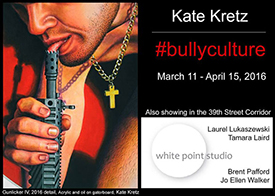
Invitation for Kate Kretz’s #bullyculture
Kate Kretz: #bullyculture
39th Street Gallery and Corridor Exhibition Space
Gateway Arts Center, 3901 Rhode Island Ave, Brentwood, Maryland
March 11–April 15, 2017
#bullyculture represents the first phase of an ambitious in-progress series that Kate Kretz commenced in 2011 and will conclude later this year. In her quest to find the common denominator to all the crimes against women, children, “minorities,” animals, and the earth, she has produced a large corpus of works on paper, sculpture, paintings, textiles, and mixed media. Some of the themes she explores in this series include “trophy hunting, VIP culture and ‘the 1%’, corporate destruction of the earth, rape culture and sexual entitlement, the fetishization of guns and their use for intimidation.” The artist, who has received numerous awards and grants, including the Southeastern College Art Conference’s 2016 award for Outstanding Artistic Achievement and a position on the Fulbright Specialist Roster through 2021, will be giving a lecture on April 1.
Shagha Ariannia: Who Sings the Nation-State?
Vincent Price Art Museum
East Los Angeles College, 1301 Avenida Cesar Chavez, Monterey Park, CA
March 18–June 10, 2017
A little over fifteen years ago, and one week after 9/11, Shagha Ariannia and her family arrived to Los Angeles as migrants from Iran. Ariannia has mined this particularly potent history of travel, place-finding, and identity-in-transit throughout her artistic career by, for example, annotating her family’s photographic archives in a series called What would America/Iran do without Iran/America? (2012). This solo exhibition focuses on a series of works Ariannia has been creating using national anthems from various countries (Iran and the United States included, among many others). In this way she takes seriously the titular question posed by Gayatri Spivak and Judith Butler in their 2007 dialogue Who Sings the Nation-State? As Butler says in that text, in regard to hearing the US national anthem sung in Spanish in the streets of Los Angeles, “The monolingual requirement of the nation surely surfaces in the refusal to hear the anthem sung in Spanish, but it does not make the anthem any less sing-able in that or any other language” (60).
Nina Katchadourian: Curiouser
Blanton Museum of Art
200 E. Martin Luther King Jr. Blvd., Austin, TX
March 12 – June 11, 2017
A few years ago I recall seeing a dozen or so clickbait-y articles written about Nina Katchadourian’s Lavatory Self-Portraits in the Flemish Style, a series in which the artist constructed toilet-paper and neck-pillow costumes during long-haul flights and photographed herself wearing them in the tiny, and poorly lit, spaces of onboard lavatories. This midcareer survey—the artist’s first touring museum exhibition—promises to flesh out Katchadourian’s wide-ranging work. The Flemish lavatory portraits, for example, are only one piece of a larger series of works using the airplane as studio space (Seat Assignment, 2010–ongoing). One of the works on display, and one of her most well-known, is the video Accent Elimination, wherein the artist hired a speech coach to teach her parents (both foreign born) to speak in a “standard” American accent, and, in turn, to teach her how to speak with her parents’ accent. Her collaborations with her family, other artists, international agencies, and even animals are potent reminders that the activity of art is almost never a solitary endeavor, and her interest in quotidian acts of creativity suggests that art can be found anywhere. One just has to know how to look.
May Stevens: Alice in the Garden
Ryan Lee Gallery
515 West 26th Street, New York, New York
February 23–April 8, 2017
May Stevens, a celebrated activist committed to the civil rights, antiwar, and feminist movements, used painting to combat social injustice and to revise women’s history throughout her seventy-year career. The exhibition Alice in the Garden comprises several large-scale paintings depicting Alice Dick Stevens, her elderly mother, during the final years of her life.
From 1983 and 1990, Stevens turned her attention to her mother and producing the five-panel painting Alice in the Garden (1988–89). “The mural-like images confront the viewer with the massive figure of Alice—fleshy, fragile, and vulnerable. In her hands, Alice manipulates flowers—dandelions Stevens had playfully thrown at her during an afternoon visit.”
In a conversation with the art historian Patricia Hills, Stevens explained the importance of Alice as a subject: “For me I think it means I want her [Alice] to be known, even for the individual person that she is, but it also means that I want people like that not to be forgotten. For me she’s not just a single person, because we all know this person. We all know her and we may become her. She’s a problem. As aging is a problem, as illness is a problem, as being a woman who does not fulfill herself is a problem.” (Patricia Hills, May Stevens [San Francisco: Pomegranate, 2005], 45.)
Today May Stevens, now 92, lives with Alzheimer’s disease in a memory-loss facility in New Mexico. She has received numerous awards including ten MacDowell Colony residencies, the Women’s Caucus for Art Lifetime Achievement Award (1990), a Guggenheim fellowship in painting (1986), a National Endowment for the Arts Fellowship in painting (1983), an Andy Warhol Foundation residency (2001), and CAA’s own Distinguished Artist Award for Lifetime Achievement (2001).
Terrains of the Body: Photography from the National Museum of Women in the Arts
Whitechapel Gallery
77-82 Whitechapel High St, London
January 18–April 16, 2017
Featuring over seventeen contemporary artists working across mediums, Terrains of the Body: Photography from the National Museum of Women in the Arts assembles an impressive collection from Washington, DC, for display across the water in London. “By turning their camera to women, including themselves, these artists embrace the female body as a vital medium for storytelling, expressing identity and reflecting individual and collective experience.”
Many works in the display extend the scope of 1970s feminist art, including performance and video. This display celebrates their legacy today. Moving between photography’s ability to document and tell stories, these works present women as creator and subject of their work. Several artists in the exhibition, including Nan Goldin and Daniela Rossell, photograph women in expansive series that appear documentary in nature. Other artists include Marina Abramović, Rineke Dijkstra, Anna Gaskell, Charlotte Gyllenhammar, Candida Höfer, Icelandic Love Corporation, Mwangi Hutter, Kirsten Justesen, Justine Kurland, Nikki S. Lee, Hellen van Meene, Shirin Neshat, Eve Sussman and the Rufus Corporation, Janaina Tschäpe, and Adriana Varejão.
News from the Art and Academic Worlds
posted Mar 29, 2017
Each week CAA News summarizes eight articles, published around the web, that CAA members may find interesting and useful in their professional and creative lives.
Women’s Movement Impacts Spending on Art Supplies
The week before the Women’s March, sales of poster boards in the US were up 33 percent and foam boards by 42 percent versus the same week last year. Sales of easel pads/flip charts also grew, as did tools used to assist in making the poster messages, including paint markers, specialty markers, and permanent markers. (Read more from NPD Group.)
Gender Gap Persists at Largest Museums
When the director of the Metropolitan Museum of Art steps down in June, the top job at the biggest art museum in the US will be up for grabs. A woman faces long odds of landing that job, to judge from a study from the Association of Art Museum Directors. “The Ongoing Gender Gap in Art Museum Directorships” shows that just one of the nation’s thirteen largest museums is led by a woman. (Read more from the New York Times.)
Meet Art Girl Army, a Group of Female Creatives Fighting for Equal Opportunity
When Sydney Lowe invited a few girlfriends over to her small Brooklyn apartment in 2014, she didn’t know she was starting an army. Today she is the founder of Art Girl Army, a fast-growing collective of women creatives—including those who are gender nonconforming, transgender, and genderqueer—who make art, films, graphics, and music. And while they might not be armed with weapons, they certainly have missions. (Read more from Artsy.)
Seeking Grants: More Than Money
The need to succeed at getting grants is a continuing part of faculty life at research institutions. Watching the process leaves some graduate students and postdocs convinced that they want no part of it. The stakes seem so high. But bringing in outside funding is the only way to sustain an independent research-driven career in an academic setting. (Read more from Inside Higher Ed.)
Virtual Reality in the Art-History Classroom
I recently become fascinated with virtual reality and the realism I experience by viewing through a small boxlike device—in this case, Google Cardboard. I wondered if there could be connections made between virtual reality and my art-history survey course for students at Mount Saint Mary College. (Read more from Art History Teaching Resources.)
The American Government Is Searching for Its Own Lost Art
They are not America’s art police. There are no midnight raids, covert surveillance, or undercover operations. Most everything is done through cordial emails, polite phone calls, and, if necessary, civil court. While glamour is not top priority, make no mistake—the United States government wants its art back. (Read more from Atlas Obscura.)
Art Attack: Why Do People Try to Destroy Museum Masterpieces?
On March 18, a man “with no fixed abode” slashed Thomas Gainsborough’s The Morning Walk with a screwdriver at London’s National Gallery. He was quickly detained and the damage appears to be fixable—the paint was cut, but the screwdriver did not pierce the supporting canvas. Conservators are brilliant surgeons, and the scars should be invisible by the time they are done. (Read more from Salon.)
Dealing with Disrupters
As obstructionist protests of controversial speakers spread, some say the future of the trend depends on how colleges and universities respond—namely what, if any, disciplinary action they take against participants. But just what action to take, and when, is tricky business. (Read more from Inside Higher Ed.)
Laura Weigert Reviews Anne Teresa De Keersmaeker’s Work/Travail/Arbeid
posted Mar 27, 2017
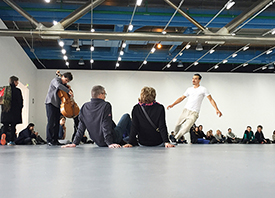
Anne Teresa De Keersmaeker, Work/Travail/Arbeid, performed by Rosas at the Centre Georges Pompidou, Paris, February 26–March 6, 2016 (choreography © Anne Teresa De Keersmaeker; photograph © Laura Weigert)
caa.reviews is pleased to announce the publication of a new multimedia reviews project on the Scalar platform: Anne Teresa De Keersmaeker’s Work/Travail/Arbeid by Laura Weigert. Weigert’s review of Work/Travail/Arbeid’s ten-day performance at the Centre Georges Pompidou in Paris from February 26 to March 6, 2016, is the starting point for this project, which also includes a conversation between De Keersmaeker and Weigert. The project features media explorations of the performances of Work/Travail/Arbeid at WIELS Contemporary Art Centre in Brussels and Tate Modern in London. The site will present additional media following Work/Travail/Arbeid performances at the Museum of Modern Art in New York from March 29 through April 2, 2017.
New in caa.reviews
posted Mar 24, 2017
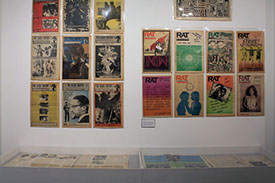 Katharine J. Wright reviews Realize Your Desires: Underground Press from the Library of Stefan Brecht, an exhibition at Printed Matter. It “brings to light an expansive private collection of underground newspapers dating from the mid-1960s through the early 1970s” and “proves both timely and enlightening” by providing “a rare glimpse into America’s troubled past.” Read the full review at caa.reviews.
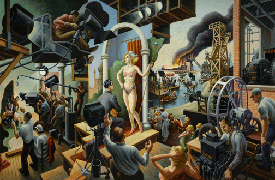 Stephen Caffey discusses the exhibition American Epics: Thomas Hart Benton and Hollywood, organized by the Peabody Essex Museum and Amon Carter Museum of American Art, and its catalogue. Featuring the artist’s best-known works “along with less familiar paintings,” the show “situates Benton’s artistic practice within the trajectories of two venerable traditions: the literary epic and the cinematic blockbuster.” Read the full review at caa.reviews.
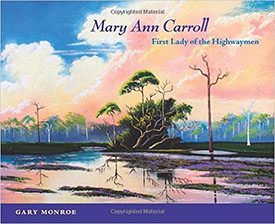 Betty J. Crouther reads Mary Ann Carroll: First Lady of the Highwaymen by Gary Monroe. The author “builds Carroll’s story around her Highwaymen associations as well as quotations sprinkled generously throughout the text.” Although “readers will be grateful to Monroe for bringing attention to Carroll, they will also be frustrated that he documents so little.” Read the full review at caa.reviews.