CAA News Today
Affiliated Society News for January 2017
posted Jan 15, 2017
Association of Academic Museums and Galleries
The Association of Academic Museums and Galleries (AAMG) welcomes a new board member, Jamaal B. Sheats. Sheats is the director and curator of the Fisk University Galleries and assistant professor in the Fisk University Art Department. He has simultaneously maintained a strong and consistent exhibition record for nearly fifteen years in galleries across the nation and abroad. Most recently, Sheats curated Carl Van Vechten: Depth of Field; Selections from the Fisk University Galleries and the John Hope and Aurelia E. Franklin Library Collection and Origins of Influence: The Alfred Stieglitz Collection of Modern Art at the Carl Van Vechten Art Gallery at Fisk University. He also completed a commission for the National Museum of African American Music. In 2015, Sheats organized the exhibition Topography at Tinney Contemporary Art Gallery in Nashville, Tennessee.
Sheats was commissioned to create Eight Octives for Music City Center in 2013. In addition to his appointments at Fisk, active art-making, exhibitions, and curatorial projects, he is the owner of Sheats Repoussé and the Charlotte Art Project. He continues to receive accolades for his work. In 2016 his exhibitions Origins of Influence and Topography were voted by the editors of the Nashville Scene as “Best Art Comeback” and “Best Group Exhibit,” respectively. Sheats has also been featured in the Boston Globe, the New York Times, Numbers, and Nashville Arts Magazine, as well as several other arts journals, newspapers, and magazines.
To support his commitment to the arts and art education, Sheats is active in the arts community and holds positions on the Frist Center for the Arts Education Council, the “To Share a Legacy” HBCU Alliance, the Nashville Conference on African-American History Culture planning committee, and the “Plan to Play” Steering Committee for the Metro Parks and Recreation. He is a board member of the Arts and Business Council also.
Sheats obtained his BA degree in art from Fisk University and an MFA degree with a concentration in studio art from the School of the Museum of Fine Art, Boston, and Tufts University, where he also completed a postgraduate teaching fellowship. Sheat was a teaching artist-in-residence at the Nashville Public Library.
View the complete list of AAMG board members.
Association of Art Historians
The Association of Art Historians’ (AAH) 2017 annual conference and art-book fair will take place April 6–8, 2017, at Loughborough University. The keynote speakers are: Amelia Jones, Robert A. Day Professor in Art and Design and Vice Dean of Critical Studies at the Roski School of Art and Design at the University of Southern California in Los Angeles, who will speak on “Intimate Relations: Queer Performance in Art History”; and Mark Hallett, director of studies at the Paul Mellon Center for Studies in British Art, who will address “Interactive Landscapes: From Thomas Gainsborough to George Shaw.”
The conference will celebrate the expansive spectrum of histories, theories, and practices that characterize art-historical research today. Internationally, the field of art history is eclectic and inclusive, reaching across geopolitical, cultural, and disciplinary divides to extend an understanding of the visual and material culture of many diverse periods and places. Loughborough University is engaged with art history, contemporary practice, and visual culture, linking arts-based research with advances in design, technology, media, and communication, centered on the development of more sustainable and equitable global communities. Full details and register information can be found on the AAH website.
New Media Caucus
The New Media Caucus (NMC) will be sponsoring a series of programs during CAA’s upcoming 2017 Annual Conference. Programs include panels, the annual showcase, and a membership business meeting where important news about NMC will be announced. More information can be found online.
The annual NMC business meeting will take place on Thursday, February 16, 1:30–3:00 PM. All members are invited. We will gather to discuss new developments and initiatives for the growth of our organization. Next is NMC’s panel, “Other Media: Decolonizing Practices and Cyborg Ontologies,” to be held 3:30–5:00 PM. The session will be followed at 7:00 PM with the NMC showcase in the Lang Auditorium at Hunter College, Main Campus, 695 Park Ave at 68th Street, New York, NY 10065. The showcase is a highlight of NMC’s events at CAA and will feature presentations by twenty new media artists who will talk about their current research. The showcase is followed by a public reception. On Friday, February 17, NMC has scheduled three events in the CAA Media Lounge: “Roundtable: New Media Futures” at 10:30 AM; “Game Studies at 20” at 1:30 PM; and “Between Biology and Art” at 3:30 PM.
Renaissance Society of America
The Renaissance Society of America (RSA) will hold its sixty-third annual meeting at the Palmer House Hilton Hotel in Chicago from March 30 to April 1, 2017. Some two hundred art-history sessions are featured in the program, as well as a plenary lecture by Paul Hills, professor emeritus at the Courtauld Institute of Art, taking place on Saturday, April 1, at noon. The conference program is available online, as well as information about fees and other practicalities.
Meanwhile, the society is sponsoring a session on “Early Modern Senses and Spaces” at the CAA Annual Conference in New York, scheduled for Wednesday, February 15, at 10:30 AM in Sutton Parlor South, 2nd Floor. RSA’s executive director plans to attend and hopes to see many RSA and CAA members there.
RSA offers numerous fellowships for art historians, including Samuel H. Kress Research Library Fellowships, Samuel H. Kress Mid-Career Research and Publication Fellowships in Renaissance Art History, the RSA-Kress Carlo Pedretti Fellowship in Leonardo da Vinci Studies, and our own RSA Fellowships. The next deadline for applications will be in fall 2017.
The winter 2016 issue of Renaissance Quarterly (vol. 69, no. 4) includes an article on “Vicenzo Danti’s Deceits,” coauthored by Michael Cole and Diletta Gamberini.
RSA is pleased to announce that James Shulman, senior fellow at the Andrew W. Mellon Foundation and former president of Artstor, has joined RSA’s executive board in July 2016 as a counselor.
Society for Photographic Education
Registration is open for the Society for Photographic Education’s (SPE) fifty-fourth national conference, “Family Values,” taking place March 9–12, 2017, in Orlando, Florida. Connect with artists, educators, and photographers from around the world for programming that will fuel your creativity—four days of presentations, industry seminars, and critiques to engage you! Explore an exhibits fair featuring the latest equipment, processes, publications, and photography/media schools. Participate in one-on-one portfolio critiques and informal portfolio sharing, and take advantage of student volunteer opportunities to receive a full rebate on admission. Other highlights include a print raffle, a silent auction, mentoring sessions, film screenings, exhibitions, receptions, a dance party, and more! The guest speakers are Renee Cox, LaToya Ruby Frazier, and Jerry Uelsmann. Preview the conference schedule and register online. Preregistration ends on February 17, 2017. Don’t wait, register today!
Society of Historians of East European, Eurasian, and Russian Art and Architecture
Members of the Society of Historians of East European, Eurasian, and Russian Art and Architecture (SHERA) took an active part in the forty-eighth convention of the Association of Slavic, East European, and Eurasian Studies in Washington, DC, organizing several panels and roundtable discussions. At the membership meeting held during the convention, matters of importance to the life of the organization were discussed, such as the upcoming conference in Venice in October 2017; possible replacement of a listserv communication platform with a network-based one; reelection of officers; and distribution of prizes and awards.
At CAA’s Annual Conference in February 2017, SHERA will sponsor the following double session: “Emerging Scholars: Politics and the Collective in East European and Russian Art: Part I,” taking place on Wednesday, February 15, 2017, at 10:30 AM in West Ballroom, 3rd Floor; and “Emerging Scholars: Russian Artists and International Communities: Part II,” to be held on Friday, February 17, 2017, at 8:30 AM in Sutton Parlor South, 2nd Floor. Both sessions will be chaired by Alice Isabella Sullivan, a PhD candidate at the University of Michigan in Ann Arbor.
Visual Resources Association
The Visual Resources Association (VRA) has opened registration for its thirty-fourth annual conference, to be held March 28–April 1, 2017, in Louisville, Kentucky. Early-bird rates are good through February 28. Registration will continue online at the full rate until March 17, then continue onsite the week of the conference. Current members will be prompted to log in with MemberClicks ID-password through the registration form, while nonmembers will have the opportunity to join or register through the same single form. The payment structure for workshops is new: one workshop is included in the registration fee, and any additional workshops are $15 each. You can submit multiple conference registration forms. This may be helpful if using multiple forms of payment (institutional credit card for registration and personal card for tours, for example).
Check the conference schedule for event details and updates. Workshops and tours fill up fast and are on a first-come, first-served basis. Once the enrollment limits are reached, registration for them closes. If there is something you are really interested in, it is best to act early. Contact VRA’s secretary, Jasmine Burns, with any questions or registration changes. The conference website includes information about rates and date ranges for registration, the welcome letter from VRA president Jen Green, tips for travel to and from Louisville and the Marriott Hotel, and more.
New in caa.reviews
posted Jan 13, 2017
 Michael Yonan visits Wordplay: Matthias Buchinger’s Drawings from the Collection of Ricky Jay at the Metropolitan Museum of Art. The artist “was born without legs or hands” and created micrography, “a technique whereby minutely drawn words create an image.” The “small but excellent” exhibition managed to “illuminate the life of a little-known historical figure” and “examine a historically significant art form.” Read the full review at caa.reviews.
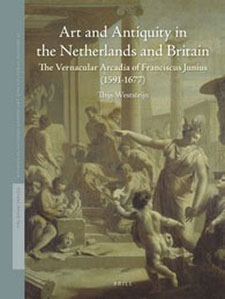
Margit Thøfner reviews Art and Antiquity in the Netherlands and Britain: The Vernacular Arcadia of Franciscus Junius (1591–1677) by Thijs Weststeijn. This “well-researched, thoughtful, and timely” book argues “for the seminal role” played by Junius’s The Painting of the Ancients in Three Books “within the history of early modern Netherlandish art theory and also in the broader European tradition.” Read the full review at caa.reviews.
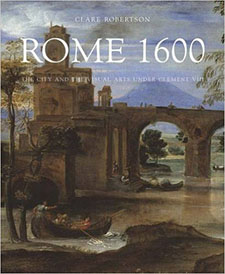 Jeffrey Fraiman reviews Clare Robertson’s Rome 1600: The City and the Visual Arts under Clement VIII. It is a “comprehensive study of the plenitude of projects commissioned by various patrons” in the “tumultuous and transforming” time during the reign of Clement VIII. The publication “transports readers to Rome circa 1600” and “will surely inspire valuable new directions in research.” Read the full review at caa.reviews.
caa.reviews publishes over 150 reviews each year. Founded in 1998, the site publishes timely scholarly and critical reviews of studies and projects in all areas and periods of art history, visual studies, and the fine arts, providing peer review for the disciplines served by the College Art Association. Publications and projects reviewed include books, articles, exhibitions, conferences, digital scholarship, and other works as appropriate. Read more reviews at caa.reviews.
Pearson at the CAA Conference
posted Jan 12, 2017
 The Pearson Art team is excited to be a part of the upcoming CAA Conference in New York City!
Come Visit Us at the Booth!
Stop by Pearson’s booth #505/507 to take part in our student-lead Revel demonstrations. All demo participants will be entered into a raffle to win the grand prize of an iPad mini! While at the booth you will also be able to see the new 6th edition of Stokstad & Cothren’s Art History.
Please join us in honoring the memory of Art History’s lead author, Marilyn Stokstad, at our booth reception at 3:00 pm on Friday, February 17th. We will also be hosting a Manhattan’s for Marilyn reception following the Marilyn Stokstad: A Memorial Roundtable session at 5:30 pm later that same day. All are welcome to attend.
In addition, Pearson is proud to announce the Marilyn Stokstad Graduate Student Scholarship which has been created to help pass on Marilyn’s legacy to the next generation of Art History teachers. We will have more details on this opportunity for your students available at the booth.
Participate in a Focus Group
On Thursday, February 16th & Friday, February 17th, we will be hosting a series of focus groups. We’re looking to connect with faculty members who specifically teach Art History survey courses. Each session is 90 minutes and participants will receive a $100 honorarium. Light snacks and refreshments will be served.
Interested in signing up? Please complete this brief survey to RSVP.
Space is limited so please reply right away if you are able to attend. We will try to accommodate as many respondents as possible.
Thank you and we are looking forward to seeing you in New York City!
Sincerely,
The Pearson Art Team
News from the Art and Academic Worlds
posted Jan 11, 2017
Each week CAA News summarizes eight articles, published around the web, that CAA members may find interesting and useful in their professional and creative lives.
How to Start a Gallery in Your Apartment
As commercial real estate balloons in cities like New York and London, and art galleries professionalize, limiting the freedoms artists are given within their spaces, artists, art professionals, and collectors have begun to make use of living space—be it an entire apartment, a guest bedroom, or even a walk-in closet—to put on the shows they want to see. (Read more from Artsy.)
Bad Times Make Great Art: Worry Less about the Art and More about the Artists
On election night a murmur started just as the last gasp faded, “Well at least we can expect some great art.” It didn’t take long for the fatalistic statement to acquire a predictive tone, eventually a waft of desperation was detectable and, ultimately, shrill fiat. The art of protest is provocative, no question. It’s often brave, usually fierce, sometimes compelling, and occasionally inspirational. (Read more from Salon.)
In the Aftermath of Oakland’s Tragedy, How Museums Can Better Serve Local Arts and DIY Venues
Museums and art institutions have largely remained distant from the Ghost Ship incident in Oakland. This perpetuates the assumption that warehouse spaces are fringe—and even irrelevant—to the formal art world. In fact, the reality is quite the opposite. (Read more from Smithsonian Magazine.)
The Ten Technologies Defining Art Right Now
Ways of making and seeing, both new and old, have defined the art in 2016 every bit as much as the hot topics under exploration. Artnet News looks back at a year of exhibitions, biennials, and art fairs to identify the ten practices that stood out as significant in helping expand the definition of what art can be, as well as dying technologies that are revisited before becoming obsolete. (Read more from Artnet News.)
Layering and Mixing with Iridescent and Interference Acrylic Paints
We’ve all seen iridescent and interference effects when viewing soap bubbles, oil slicks, flower petals, bird feathers, and more. They are common in the natural world. If they are somewhat less common in artwork, it might simply be that they still represent new and unexplored possibilities for most people, even after being part of the artists’ palette for many decades at this point. (Read more from Just Paint.)
How Can We Minimize Grade Changes?
One of the most consequential lessons I learned last semester happened after it was over. Five days after the semester ended, the emails started coming in. I’m sure you get them too: the earnest and pleading requests (sometimes polite, sometimes not) for better grades. I responded with my general policy (I only change grades if I’ve made a mistake; I round to the nearest whole number), and that seemed to satisfy most students. But one student was a tougher nut to crack. (Read more from Vitae.)
An Idiosyncratic Timeline of “Attempts to Fix the Art World”
The term “the artworld” itself seems to date only to 1964, but this timeline goes all the way back to 1793, when the revolutionary regime in France turned a certain royal palace in Paris into a public museum. The history here is selective, to be sure, but half the fun of these things is working up righteous high dudgeon over what’s been included and excluded. (Read more from ARTnews.)
How Do We Make American Museums Multilingual?
Which languages should institutions prioritize? Should choices be based on current patrons or on visitors they’d like to reach? How fully should the selected languages be incorporated into the museum: Wall text? Audio? Catalogues? Tours? Ancillary programming? Outreach? (Read more from Hyperallergic.)
2017 Recipients of CAA’s Awards for Distinction
posted Jan 09, 2017
CAA announces the recipients of the 2017 Awards for Distinction, which honor the outstanding achievements and accomplishments of individual artists, art historians, authors, conservators, curators, and critics whose efforts transcend their individual disciplines and contribute to the profession as a whole and to the world at large.
CAA will formally recognize the honorees at a special awards ceremony to be held during Convocation at the 105th Annual Conference in New York, on Wednesday, February 15, 2017, at 5:30 PM. See the conference website for full details.
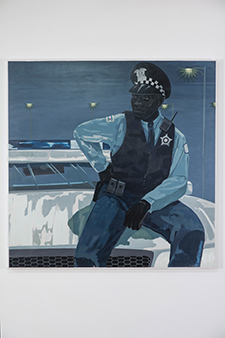
Kerry James Marshall, Untitled (policeman), 2015, acrylic on PVC panel, 60 x 60 inches, 60 9/16 x 60 1/2 x 2 3/4 inches (framed) © Kerry James Marshall. Courtesy of the artist and Jack Shainman Gallery, New York.
Among the winners this year is Kerry James Marshall, recipient of the 2017 CAA Artist Award for Distinguished Body of Work. In his 35-year career painting and making art, Marshall has depicted the African American experience through a medium that has often overlooked the lives of black Americans. His current retrospective at the Met Breuer, titled “Kerry James Marshall: Mastry” (October 25, 2016–January 29, 2017), brings together nearly 80 works by Marshall. Holland Cotter in The New York Times wrote of the show glowingly: “Mr. Marshall has absorbed enough personal history, American history, African-American history and art history to become one of the great history painters of our time.”
Kerry James Marshall biography
Faith Ringgold, the winner of the 2017 CAA Distinguished Artist Award for Lifetime Achievement, is widely considered one of the most influential living African American artists. Born in Harlem in 1930, she is an artist, feminist, activist, and educator who makes use of a variety of media, including painting, quilts, sculpture, performance, and children’s books. Civil Rights, racial justice, feminism, and art history are consistent themes. Ringgold earned BS and MA degrees in art from the City College, the City University of New York, and taught in the NYC public school system for almost twenty years. Since the 1970s Ringgold has been an activist and cofounder of several feminist and antiracist organizations, along with artist Poppy Johnson, art critic Lucy Lippard, and her daughter Michelle Wallace, among others.
Full list of 2017 CAA Awards for Distinction recipients
Charles Rufus Morey Book Award
Kishwar Rizvi
The Transnational Mosque: Architecture and Historical Memory in the Contemporary Middle East
University of North Carolina Press
Alfred H. Barr Jr. Award
Ruth Fine, ed.
Procession: The Art of Norman Lewis
Pennsylvania Academy of the Fine Arts, in association with the University of California Press
Alfred H. Barr Jr. Award for Smaller Museums, Libraries, Collections, and Exhibitions
Carmella Padilla and Barbara Anderson, eds.
A Red Like No Other: How Cochineal Colored the World
Skira Rizzoli, in association with the Museum of International Folk Art
Arthur Kingsley Porter Prize
Christine I. Ho
“The People Eat for Free and the Art of Collective Production in Maoist China”
The Art Bulletin, September 2016
Frank Jewett Mather Award for Art Criticism
Laura U. Marks
Hanan al-Cinema: Affections for the Moving Image
MIT Press
Distinguished Feminist Award
Joan Marter
Art Journal Award
Amy A. DaPonte
“Candida Höfer’s Türken in Deutschland as ‘Counter-publicity’”
Art Journal, Winter 2016
Distinguished Teaching of Art Award
Virginia Derryberry
Distinguished Teaching of Art History Award
Patricia Mainardi
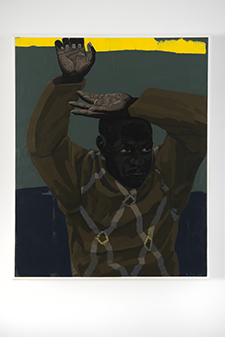
Kerry James Marshall, Untitled (Looking Man), 2016, acrylic on PVC panel, 30 1/2 x 24 1/2 inches, © Kerry James Marshall. Courtesy of the artist and Jack Shainman Gallery, New York.
Artist Award for Distinguished Body of Work
Kerry James Marshall
Distinguished Artist Award for Lifetime Achievement
Faith Ringgold
CAA/American Institute for Conservation Award for Distinction in Scholarship and Conservation
Tom J. S. Learner
Morey and Barr Award Finalists
CAA recognizes the 2017 finalists for the Charles Rufus Morey Book Award and the Alfred H. Barr Jr. Awards for their distinctive achievements:
Charles Rufus Morey Book Award Finalists
- Niall Atkinson, The Noisy Renaissance: Sound, Architecture, and Florentine Urban Life, Pennsylvania State University Press
- Elizabeth Kindall, Geo-Narratives of a Filial Son: The Paintings and Travel Diaries of Huang Xiangjian (1609–1673), Harvard University Asia Center
Alfred H. Barr Jr. Award Finalists
- Helen Molesworth, ed., Kerry James Marshall: Mastry, Museum of Contemporary Art, Chicago, and Skira Rizzoli (honorable mention)
- Barbara Haskell and Harry Cooper, Stuart Davis: In Full Swing, National Gallery of Art, Whitney Museum of American Art, and DelMonico Books
- Alisa LaGamma, Kongo: Power and Majesty, Metropolitan Museum of Art
- Adrian Sudhalter, Dadaglobe Reconstructed, Kunsthaus Zürich and Scheidegger & Spiess
Alfred H. Barr Jr. Award for Smaller Museums, Libraries, Collections, and Exhibitions Finalists
- Andreas Marks, ed., Tōkaidō Texts and Tales: Tōkaidō “gojūsan tsui” by Kuniyoshi, Hiroshige, and Kunisada, University Press of Florida (honorable mention)
- Zdenka Badovinac, Eda Čufer, and Anthony Gardner, eds., NSK from “Kapital” to Capital: Neue Slowenische Kunst—An Event of the Final Decade of Yugoslavia, Moderna galerija and MIT Press
- Geoffrey Batchen, Emanations: The Art of the Cameraless Photograph, Govett-Brewster Art Gallery and DelMonico Books
- Valérie Rousseau, Art Brut in America: The Incursion of Jean Dubuffet, American Folk Art Museum
Contact
For more information on the 2017 Awards for Distinction, please contact Tiffany Dugan, CAA director of programs. Visit the Awards section of the CAA website to read about past recipients.
New in caa.reviews
posted Jan 06, 2017
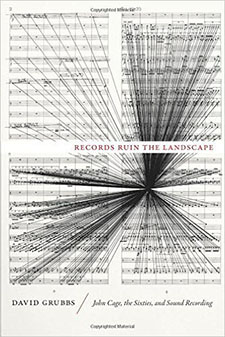 Peter Gena reads Records Ruins the Landscape: John Cage, the Sixties, and Sound Recording by David Grubbs. In this “excellent and meticulously researched book,” Grubbs examines “several early recordings along with a number of post-Cagian minimalists and free improvisers.” The volume is “highly recommended and a must-read for anyone probing new music and recordings.” Read the full review at caa.reviews.
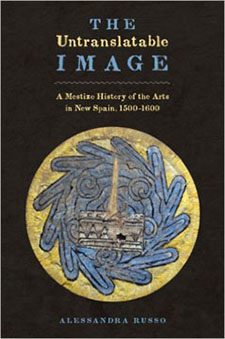 Eloise Quiñones Keber reviews Alessandra Russo’s The Untranslatable Image: A Mestizo History of the Arts in New Spain, 1500–1600. The author “extends and deepens her excursions into the creative and cultural dynamics of the art forms of early colonial New Spain” while advocating “their necessary place in contemporaneous Renaissance and early modern art history” in this “learned, insightful, and challenging” study. Read the full review at caa.reviews.
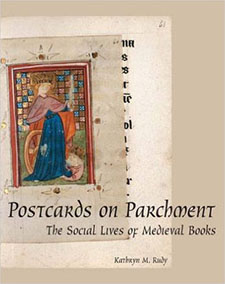 Sonja Drimmer examines Postcards on Parchment: The Social Lives of Medieval Books by Kathryn M. Rudy. Over the course of “three hundred riveting pages,” Rudy establishes “a new category of late medieval object, which she terms ‘parchment painting.’” The book is full of “intrepid flights of scholarship” and “like the manuscripts that it revives,” it “is prodigious with riches.” Read the full review at caa.reviews.
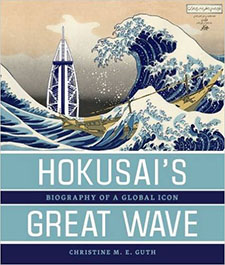 Gennifer Weisenfeld discusses Christine Guth’s Hokusai’s Great Wave: Biography of a Global Icon. “A landmark in multidisciplinary scholarly sophistication,” the volume “examines the long and storied history of one Japanese artwork as it has circulated around the world being imagined, reimagined, and reimaged, thereby fusing the local and global across time.” Read the full review at caa.reviews.
caa.reviews publishes over 150 reviews each year. Founded in 1998, the site publishes timely scholarly and critical reviews of studies and projects in all areas and periods of art history, visual studies, and the fine arts, providing peer review for the disciplines served by the College Art Association. Publications and projects reviewed include books, articles, exhibitions, conferences, digital scholarship, and other works as appropriate. Read more reviews at caa.reviews.
News from the Art and Academic Worlds
posted Jan 04, 2017
Each week CAA News summarizes eight articles, published around the web, that CAA members may find interesting and useful in their professional and creative lives.
Everything We Know about Whether and How the Arts Improve Lives
The platitudes are on the lips of every arts supporter, ready to be recalled at the first sign of a public hearing or potential funding cut. “The arts are essential—a necessity, not a luxury.” “The arts help kids learn.” “The arts are the foundation of the knowledge economy.” It feels good to say those things, but are they true? (Read more from Createquity.)
Networking the Humanities through Open Access, Open Source, and Not for Profit
Last month the Modern Language Association, in partnership with three other learned societies, launched the beta version of the expanded and now interdisciplinary Humanities Commons—a nonprofit network where humanities scholars can share their work in a social, open-access repository, discuss ideas, collaborate on common interests, and store research and teaching materials. (Read more from the Scholarly Kitchen.)
Eleven All-Important Things to Do before Leaving Art School
Graduating from art school means transitioning from the comfort of campus-provided studio space, access to production facilities, and a climate of constant feedback, criticism, and support to, well, having zero of those things. Abstaining from these perks cold-turkey can feel like quite the plunge—but luckily you can do a few things during your last semester to prepare for entering the “real world” as an artist. (Read more from Artspace Magazine.)
An Audit Nightmare Turned Artist Victory
American businesses sometimes lose money. Those losses create a tax shelter for other income. While the tax code explicitly provides this incentive for businesses—to encourage investment for growth and to allow for unpredictable events—losses that go on for too long tend to draw IRS scrutiny. The artist Susan Crile spent eight years in tax court defending her right to take losses. (Read more from Art F City.)
We Need a New Kind of Feminist Art
A quote that the Brooklyn Museum curator Catherine Morris often turns to is one by the artist and writer Emily Roysdon. “We are not protesting what we don’t want,” Roysdon once said about her queer activism, “we are performing what we want.” The idea of creating the world you want to live in, on a microcosmic level, is one that’s central to feminist theory, the history and methodology of which is closely intertwined with queer and civil-rights activism. (Read more from Artsy.)
The Gulf Art War
In 2005, in the gilded lobby of the Emirates Palace hotel in Abu Dhabi, the crown prince Mohammed bin Zayed al Nahyan described his vision for Saadiyat Island, a $27 billion development not far from the city’s downtown. Saadiyat, which Emiratis refer to as “the island of happiness,” would include luxury hotels, Marbella-style villas, and a boutique shopping quarter. Most important was a vast cultural district, and a new Guggenheim was to be a centerpiece of this effort. (Read more from the New Yorker.)
A Digital Billboard in Chicago Raises Questions about Art in the Public Sphere
Flashing brightly for a few seconds at a time, the black-and-white mugshot of an unnamed African American male loomed against the Chicago skyline, interrupting the mundane ads—for sandwiches, lawyers, Hondas—that shared space on the same digital billboard. I only just glimpsed it, peering from an overpass, but the haunting image has lingered with me ever since. (Read more from ARTnews.)
Is the Traditional Art Gallery Dead?
For the past several months, Artspace’s editors have persistently investigated the novel challenges and opportunities that the twenty-first century holds for the venerable brick-and-mortar gallery system, which has been shaken by both the shifting market and the disruptive power of the internet. Along the way, we’ve spoken at length to artists, dealers, advisors, and art-fair directors in an effort to take the pulse of the industry. (Read more from Artspace Magazine.)
Saturday Symposia Sessions
posted Dec 29, 2016
A day-long series of panels on subjects of importance to the membership and the wider visual-arts community, called Saturday Symposia Sessions, will take place at the 2017 Annual Conference in New York on February 18. The four topics in this special programming are: “Museums,” “The Design Field,” “International Art History,” and “Interventions in the Future of Art History.”
The “Museums” rubric opens with a session called “Cultural Preservation and Its Publics.” Next, the Design History Society, one of CAA’s eighty affiliated societies, will facilitate a discussion on “Beyond Boundaries: Art and Design Exhibitions as Transnational Exchange from 1945.” Laura Flusche, executive director of the Museum of Design Atlanta, has found three artists—Sheryl Oring, Patricia Cronin, and Susan Stockwell—to explore “Museums, Artists, and Social Change.” Ending the track is “Preservation by Other Means,” a session lead by Chad Elias and Mary K. Coffey, both of Dartmouth College, that will examine contemporary art and the destruction of cultural heritage.
For “The Design Field,” the 2017 conference will feature “Making Objects Speak: Speculative Design, Critical Making, and the Internet of Things,” led by Gwyan Rhabyt of California State University, East Bay. Following that will be “Design and Science: Catalyzing Collaborations,” chaired by Leslie Atzmon of Eastern Michigan University. Wrapping up the track is a session put together by Andrew DeRosa of Queens College, City University of New York, and Laura Scherling from Columbia University’s Teachers College, called “Ethics in Design.”
Several sessions will address “International Art History.” Nazar Kozak of the National Academy of Sciences of Ukraine will chair “Holy Images on the Move.” Next, Ittai Weinryb of the Bard Graduate Center will lead a conversation with eight panelists about “Future of the Research Institute.” Shortly after that is “Global Conversations IV” chaired by David J. Roxburgh of Harvard University. This talk about “Transnational Collaborations and Interdisciplinary”, is the fourth and final session in a series taking place throughout the conference to celebrate five years of the CAA-Getty International Program. The last session for “International Art History” is titled “Figures and Formations of Civic Space”; four speakers are scheduled to give presentations.
For conference attendees wishing to make “Interventions in the Future of Art History,” CAA recommends following this symposium track. Karen J. Leader of Florida Atlantic University and Amy K. Hamlin of St. Catherine University will chair four sessions: “The Pragmatism in the History of Art,” “Art History Plays with Food,” “Art History as Table, Not Tower: A Practical Conversation about Diversity,” and “What Have You Done for Art History Lately? 2017 Edition.” The fifth session in the “Interventions” rubric—with the timely topic of “Defining and Exploring Socially Engaged Art History”—will be led by Cindy Persinger from California University of Pennsylvania and Azar M. Rejaie from the University of Houston, Downtown.
For full descriptions of the Saturday Symposia Sessions and lists of all speakers and the titles of their presentations, please visit the conference website.
Top News in 2016 from the Art and Academic Worlds
posted Dec 28, 2016
As 2016 comes to a close, CAA would like to wish a safe and happy holiday season to its members, subscribers, partners, and other professionals in the visual arts. As we reflect on the past twelve months, the association would like to offer readers a look at the most accessed articles in the weekly CAA News email from the past year.
I Survived My First Year on the Tenure Track, but I’m Ready to Bail!
Now that I’ve survived my first year in a tenure-track position at a small liberal-arts college, all I want to do is curl up in a ball. A nonacademic position is opening up in my hometown. If I got the job, I’d still have adjunct faculty status and be able to supervise grad students. I’d also probably get a 30- to 50-percent salary increase. (Read more from Vitae.)
Advice for the Newly Tenured
I would love to share with you the three biggest mistakes that I observe newly tenured faculty members make. If you know what those mistakes are, then you are not only far less likely to make them, but you also have the opportunity to experiment with new ways of thinking and working that will help you to truly enjoy your tenured status. (Read more from Inside Higher Ed.)
How Many Hours a Week Should Academics Work?
How many hours do you work in a week? Many academics feel overworked and exhausted by their jobs. But there is little evidence that long hours lead to better results, while some research suggests that they may even be counterproductive. (Read more from Times Higher Education.)
The Disappearing Humanities Jobs
The arrival of annual reports on the job market in various humanities fields this year left many graduate students depressed about their prospects and professors worried about the futures of their disciplines. This week, the American Academy of Arts and Sciences released several new collections of data that show that these declines, part of a continuing pattern, are far more dramatic when viewed over a longer time frame. (Read more from Inside Higher Ed.)
Publish or Be Damned
The London office of Yale University Press has been a leading publisher of art history in the English language. When we heard of a new book planned by a leading scholar in the field, we expected to learn that Yale had pledged to publish it. When a bright graduate finished his or her dissertation, we hoped that Yale would publish it. (Read more from the Burlington Magazine.)
Racially Charged St. Louis Contemporary Art Museum Show Sparks Outrage
Racially charged works at a Contemporary Art Museum in Saint Louis exhibition have some calling for boycotts and the resignation of the museum’s chief curator. The museum has opted to build walls around the controversial pieces of art. The show will remain up and visitors will have access to all of the work. (Read more from Fox 2 News.)
Learning from My Teaching Mistakes
As a professional failed academic, I get asked if my decisions in graduate school were to blame for my failures. The answer is, of course, yes and no. Similar to anyone else with a PhD who isn’t delusional or lying, my relationship with my doctorate contains multitudes of defeats. And now, six years after I finished, I’ve got some perspective on both what I screwed up and what I didn’t. (Read more from Vitae.)
Syllabus Adjunct Clause
Here is a sample adjunct clause that can be inserted into any syllabus for courses taught by temporary faculty. Please keep in mind that since situations differ from school to school—and even from department to department—the following may not be universally applicable as written. Therefore, if you decide to use it, make the necessary changes to accurately reflect your own situation. (Read more from School of Doubt.)
When Students Won’t Do the Reading
Is there a more common lament among college instructors than “Why won’t students just do the reading?” It’s an important and difficult question. In my experience, many students understand, at least in the abstract, that the reading is important. (Read more from Inside Higher Ed.)
Why You Weren’t Picked
There are two major downsides to not getting that tenure-track job you applied for. The second one is the less obvious but may be the more pernicious in the long run: no one will tell you why you weren’t chosen. (Read more from the Chronicle of Higher Education.)
Why Most Academics Will Always Be Bad Writers
For at least a generation, academics have elaborately and publicly denounced the ponderous pedantry of academic prose. So why haven’t these ponderous pedants improved, already? The critics would say the ponderous pedants are doing it on purpose. (Read more from the Chronicle of Higher Education.)
Balancing the Books at Yale University Press in London
A letter signed by over 290 academics, curators, and writers expressed a “sense of shock at the restructuring of Yale University Press in London, particularly as it affects the renowned art books department.” Having learned that two commissioning editors were to be made redundant, the signatories asked for reassurance about Yale’s commitment to scholarly art publishing and for the rationale for the changes. (Read more from Apollo.)
How to Be an Unprofessional Artist
No one likes being called an amateur, a dilettante, a dabbler. “Unprofessional” is an easy insult. The professional always makes the right moves, knows the right thing to say, the right name to check. Controlled and measured, the professional never sleeps with the wrong person or drinks too much at the party. (Read more from Momus.)
Make No Mistake, Art History Is a Hard Subject. What’s Soft Is the Decision to Scrap It
In the UK, art history A-level is to be scrapped in 2018. The decision taken by the exam board AQA seems related to the Conservative government’s policy of ranking subjects by perceived relative difficulty, using an analogy of “soft” and “hard” that may be designed to belittle students and teachers who have apparently taken the easy way out. (Read more from Apollo.)
Essential PhD Tips: Ten Articles All Doctoral Students Should Read
If you’re still deciding whether to study for a doctorate, or even if you’re nearing the end of your PhD and are thinking about your next steps, we’ve selected ten articles that you really should take a look at. They cover everything from selecting your topic to securing a top job when your years of hard graft come to an end. (Read more from Times Higher Education.)
How to Become a Curator
Start out as an artist instead. In school, you’re always saddled with organizing the group shows, buying the beer, placating fellow artists’ fears, making the invitations, composing the checklist, finding the funding, contacting the press, inviting the audience. Your entire art practice becomes a smudgy line between curating and art, and you grow to feel strange and unnecessary. (Read more from Momus.)
Donald Trump, Taste, and the Cultural Elite
It’s said that taste defines us. The music I like lets you know, to some degree, what kind of person I am. Yet though this year’s presidential election has raised issues of racism, sexism, and classism, not much has been said about taste, and the role it may or may not have played in getting Donald Trump to the White House. (Read more from the Washington Post.)
Black Arts Community Expresses Outrage with Kelley Walker
“This is a mess, and I’m uncomfortable,” said Kat Reynolds as she spoke before the capacity crowd at the Contemporary Art Museum on September 22. The panel of artists and educators—who spoke during the Critical Conversations talk presented by Critical Mass for the Visual Arts—didn’t hold back from voicing their disdain about the art that hung in the very space where the discussion was taking place. (Read more from the St. Louis American.)
What Learning People Really Think about Lecturing
Is there really a war on lecturing going on across higher education? Do learning professionals want to kill the lecture? Read Christine Gross-Loh’s “Should Colleges Really Eliminate the College Lecture?” and you would be forgiven in thinking that there is and that we do. The problem is that her description of the current climate bears little resemblance to reality. (Read more from Inside Higher Education.)
Gallery Defends Kelley Walker, Artist under Fire in St. Louis Exhibit
The New York City–based gallery representing the artist Kelley Walker has responded to the controversy surrounding a racially charged exhibition at the Contemporary Art Museum in Saint Louis, but with a statement that raises more questions than it answers. (Read more from Riverfront Times.)
Should Colleges Really Eliminate the College Lecture?
Despite the increased emphasis in recent years on improving professors’ teaching skills, such training often focuses on incorporating technology or flipping the classroom, rather than on how to give a traditional college lecture. It’s also in part why the lecture—a mainstay of any introductory undergraduate course—is endangered. (Read more from the Atlantic.)
What Happens When a Museum Closes?
Four recently dissolved cultural institutions—the Museum of Biblical Art in New York, the Fresno Metropolitan Museum of Art and Science in California, the Corcoran Gallery of Art in Washington, DC, and the Higgins Armory Museum in Massachusetts—each offer a lesson in how to weather the complex process of closing a museum. (Read more from Artsy.)
Artiquette: Ten Mistakes Not to Make While Promoting Your Art
How do you make it in the art world? It’s a magical formula that involves, talent, drive, grit, and the ability to promote oneself. Unfortunately, talking up your own artwork, projects, and ideas can be a delicate balancing act. To help you walk that line, Artnet News has rounded up a list of mistakes to avoid in self-promotion. (Read more from Artnet News.)
Six Things to Keep in Mind When Applying for Art Grants
With governments cutting funding for the arts, it is getting harder for artists and art institutions to obtain art grants, fellowships, or scholarships. The professional grant writer Ethan Haymovitz has put together a list of things to keep in mind when writing your application. (Read more from Art Report.)
Getting beyond the Anecdote: Research and Art-History Pedagogy
Pedagogical innovations abound in art-history classrooms. National and regional conferences increasingly feature panels of inspirational examples and case studies. These sessions are well attended by instructors eager for new, proven ideas to improve their teaching. The speakers assure this audience of improved student engagement and efficacy at achieving learning outcomes with this or that innovation. But how can they prove it? (Read more from Art History Teaching Resources.)
This Art Historian Teaches FBI Agents and Surgeons How to See
Amy Herman teaches people how to see. Her tools of choice are famous artworks from major art institutions all over the world. Her typical pupils? Cops, FBI officers, medical students, and first responders. Herman teaches a class that helps people fine-tune their observational skills—which often prove critical in solving a crime or conducting open-heart surgery. (Read more from Fast Company.)
Five Strategies Successful Artists Follow to Thrive in Their Careers
As a gallery owner, I’ve been particularly interested in watching the careers of artists who have built strong sales of their work. These artists are able to generate sales that allow them to devote all of their time to their art. They have found ways to make a successful living while at the same time pursuing their passion. (Read more from Red Dot Blog.)
Five Time-Saving Strategies for the Flipped Classroom
I often hear comments like “The flipped classroom takes too much time,” “I don’t have time to devise so many new teaching strategies,” “It takes too much time to record and edit videos,” and “I don’t have time to cover everything on the syllabus.” I also hear “I tried to flip my class, but it was exhausting; so I quit.” If these comments sound familiar, it might be helpful to create margins in your flipped classroom. (Read more from Faculty Focus.)
How Do I Get My Foot in the Art World?
I’m a recent grad and want to learn more about the art world, so hopefully, one day, I can work in the arts. I didn’t major in art, but I took several art history and art classes and really loved them. I also love going to galleries and museums. Could you give me some suggestions on how to learn more? (Read more from Burnaway.)
Help Desk: Getting Paid for Curatorial Work
I’m a professional curator with over a decade of experience, mostly as a salaried professional. I’d like to do more freelance work, but curators seem to get paid nothing, absurdly little, or astronomical sums. How can I actually get paid for the work I do? (Read more from Daily Serving.)
Museums Are Keeping a Ton of the World’s Most Famous Art Locked Away in Storage
Most of Georgia O’Keeffe’s work is in storage. Nearly half of Pablo Picasso’s oil paintings are put away. Not a single Egon Schiele drawing is on display. Since the advent of public galleries in the seventeenth century, museums have amassed huge collections of art for society’s benefit. But just a tiny fraction of that art is actually open for people to view and enjoy. (Read more from Quartz.)
University of Chicago Strikes Back against Campus Political Correctness
The anodyne welcome letter to incoming freshmen is a college staple, but the University of Chicago took a different approach: it sent new students a blunt statement opposing some hallmarks of campus political correctness, drawing thousands of impassioned responses, for and against, as it caromed around cyberspace. (Read more from the New York Times.)
On Not Reading
The activity of nonreading is something that scholars rarely discuss. When they—or others whose identities are bound up with books—do so, the discussions tend to have a shamefaced quality. Blame “cultural capital”—the sense of superiority associated with laying claim to books that mark one’s high social status. (Read more from the Chronicle Review.)
Medieval Scots Used Art the Way We Use Social Media
Medieval Scots once gave each other postcard-sized artworks to forge social bonds, in the same way we post pictures on social media today, according to new research. The “postcards on parchment”—whose painted images included patron saints, the Virgin Mary and child, and highly decorated lettering—revealed status, allegiances, and values among the wealthy classes in the fourteenth and fifteenth centuries. (Read more from the Scotsman.)
Art Journal: Winter 2016 Issue
posted Dec 26, 2016
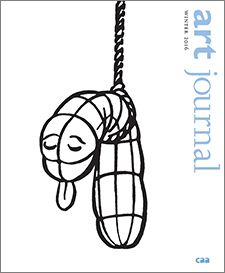 Rolando del Fico, last seen in 1970s Italian gay underground comics, is resurrected in the Winter 2016 issue of Art Journal. A project by the Catalan artist Francesc Ruiz revives the irrepressible character, picaresque hero of myriad amorous adventures, in a visual tribute replete with Rolando’s thought-bubble iconography of salamis and cherubs in various states of excitement.
Other features in the issue explore little-examined aspects of more familiar bodies of work. Amy DaPonte analyzes the portraits of Turkish immigrants central to the early work of the German photographer Claudia Höfer. Liz Linden investigates the overlooked presence of the textual in the works Douglas Crimp gathered in 1977 for the watershed exhibition Pictures.
In the Reviews section, Lauren Richman reviews two exhibitions of work by the midcentury American photographer Lee Miller, along with their catalogues. The artist Liam Gillick considers a book by Dave Beech that grapples with the relation between art and capitalism in the contemporary neoliberal moment. Christa Noel Robbins assesses David J. Getsy’s book that sees the sculpture of the 1960s through the lens of transgender and “transformable” bodies. Finally, Kent Minturn reviews Pierre Leguillon’s book on the experimental typography of Jean Dubuffet—a significant compendium of the work that is also a work of art history.
CAA sends print copies of Art Journal to all institutional members and to those individuals who choose to receive the journal as a benefit of membership. The digital version at Taylor & Francis Online is currently available to all CAA individual members regardless of their print subscription choice.