
CAA News Today
News from the Art and Academic Worlds
posted Dec 23, 2015
Each week CAA News publishes summaries of eight articles, published around the web, that CAA members may find interesting and useful in their professional and creative lives.
Academics: Forget about Public Engagement, Stay in Your Ivory Towers
Academics are constantly encouraged to engage with the public more often, but this advice ignores the way that specialized knowledge already affects civic life. Specialization has social importance—but often only after decades of work. It is time for us to reassess what we mean by public scholarship. We must recognize the value of the esoteric knowledge, technical vocabulary, and expert histories that academics produce. (Read more from the Guardian.)
Give Your Syllabus an Extreme Redesign for the New Year
Do you ever feel like you want to get more out of your syllabus? Sure, it plays center stage during the first day of class, but does it really have to end there? Perhaps it’s a matter of presentation. (Read more from GradHacker.)
Built-In Self-Assessment: A Case for Annotation
If we want students to be critical thinkers, we must routinely and explicitly give them structured practice opportunities to critically examine their own thinking. Squeezing two or three metacognitive activities into a hectic semester teaches students that such reflection is only for special occasions. Rather, student self-evaluation should be a daily course routine. (Read more from Faculty Focus.)
Virtual-Reality Lab Explores New Kinds of Immersive Learning
For students attending class via webcam or video lecture, the video is two dimensional, and the audio doesn’t sound as it would if they were in a real classroom. Ramani Duraiswami, a computer-science professor and cofounder of the start-up company VisiSonics, thinks virtual-reality technology could help the experience feel more immersive. (Read more from the Chronicle of Higher Education.)
Dual Careers, One Academic
I’ve seen a lot written and discussed about the so-called two-body problem, as universities take on the challenge of dual-career couples coming into a new position. It’s a particularly important issue in my field, as the majority of married women in it are married to men in the field. The problem is that I’m not one of them, as I married someone whose career is outside academia. (Read more from Tenure, She Wrote.)
Swiss Artists Program Laptop to Make Random Purchases from the Dark Web
It’s unlikely that police will swoop down on a south London art gallery and apprehend a laptop that is busy making random purchases from a secretive part of the web known as the dark net. Then again, it depends what the automated shopping bot known as Random Darknet Shopper chooses to buy online and have delivered to the gallery. (Read more from the Independent.)
New Site Lets You Report Facebook and Other Networks When They Censor Art
Nudity in art has been around for thousands of years, but Facebook still can’t take it. The social-media site has blocked users like Frédéric Durand-Baïssas for sharing paintings, including Gustave Courbet’s L’Origine du Monde. Though some people have protested by creating Facebook groups like Artists Against Art Censorship, recording every instance of censorship—let alone fighting back—is next to impossible. (Read more from Hyperallergic.)
Art History, Feminism, and Wikipedia
What might the internet’s most popular general reference and free-access encyclopedia (not to mention the fifth-largest website in the world) offer a centuries-old academic discipline? How might its participatory model—the fact that anyone can access and edit most of its articles—generate new stakeholders in and audiences for our field? (Read more from Art History Teaching Resources.)
Solo Exhibitions by Artist Members
posted Dec 22, 2015
Solo Exhibitions by Artist Members
See when and where CAA members are exhibiting their art, and view images of their work.
Solo Exhibitions by Artist Members is published every two months: in February, April, June, August, October, and December. To learn more about submitting a listing, please follow the instructions on the main Member News page.
December 2015
Abroad

Patricia Cronin. Chiesa di San Gallo, 56th Venice Biennale Collateral Event, Venice, Italy, May 6–November 22, 2015. Shrine for Girls, Venice.

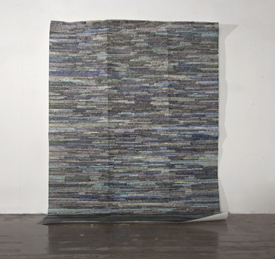 Lindsey Landfried, Recursive, 2015, acrylic on folded paper, 70 x 96 in. (artwork © Lindsey Landfried)
Lindsey Landfried. Kwadrat Gallerie, Berlin, Germany, October 17–November 14, 2015. Scripture. Drawing installation.
Mid-Atlantic

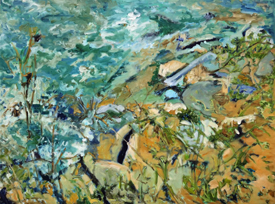 H. K. Anne, Rainy Spring, 2014, Leesburg, VA, 2015, oil on canvas, 45 x 58 in. (artwork © H. K. Anne; photograph by Suzanne K. Serway)
H. K. Anne. George Washington University, Virginia Science and Technology Campus, Enterprise Hall, Ashburn, Virginia, September 16–December 31, 2015. Goose Creek, the Four Seasons. Oil painting.
Midwest
Sharon Louden. Tweed Museum of Art, University of Minnesota, Duluth, Minnesota, October 22, 2015–May 29, 2016. Windows. Site-specific multimedia installation.
Northeast
Craig Drennen. Temporary Storage Gallery, Gallery 104, Brooklyn, New York, September 8–October 9, 2015. New Mistress vs. Old Athenians. Painting and mixed media.

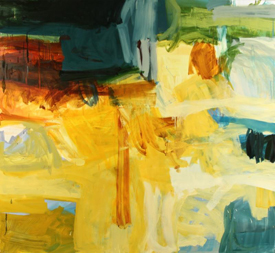 Michael Rich, The Desert Places, 2014, oil and wax on canvas. 64 x 70 in. (artwork © Michael Rich)
Michael Rich. Candita Clayton Gallery, Pawtucket, Rhode Island, September 24–October 15, 2015. Large Scale! New and Recent (Big) Paintings. Painting.
South

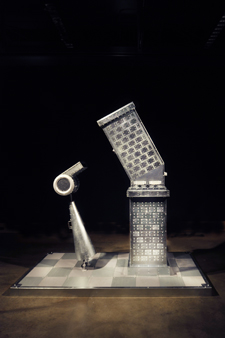 Michael Aurbach, Cassandra, 2016, mixed media, 96 x 96 x 48 in. (artwork © Michael Aurbach)
Michael Aurbach. Vanderbilt University Fine Arts Gallery, Nashville, Tennessee, January 14–March 3, 2016. The Last Laugh: Selections from Michael Aurbach’s Secrecy Series. Sculpture.
West
Ellen Carey. M+B, Los Angeles, California, November 6, 2015–January 16, 2016. Ellen Carey: Polaroid 20 x 24 Self-Portraits. Photography.

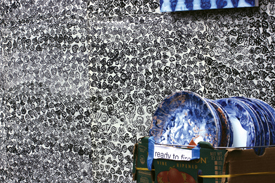 Julie Green, studio view of Wallpaper, Embarrassment of Dishes, and My New Blue Friends, 2015, sumi ink on mulberry paper, kiln-fired porcelain, and egg tempera airbrushed on panel, dimensions variable (artwork © Julie Green)
Julie Green. Upfor, Portland, Oregon, November 5–December 19, 2015. My New Blue Friends. Painting.

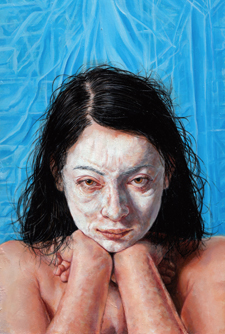 Steven Labadessa, hijikata 1, 2015, oil on copper, 12 x 7¾ in. (artwork © Steven Labadessa)
Steven Labadessa. COS Art Gallery, College of the Sequoias, Visalia, California, October 6–30, 2015. Steven Labadessa: Hallucinatory Realism. Painting, drawing, and mixed media.
Conference Registration Extended to January 6, 2016!
posted Dec 18, 2015
UPDATE: CONFERENCE REGISTRATION HAS BEEN EXTENDED TO WEDNESDAY, JANUARY 6, 2016.
The clock is ticking! Early Conference Registration Rates end December 21, 2015! Submit your Individual Registration Information to attend the largest gathering of visual arts professionals! This year, don’t miss Tania Bruguera, the chairs of the NEA and NEH, MacArthur Fellows LaToya Ruby Frazier and Rick Lowe, and much more!
 We are very pleased to invite you to join us for the College Art Association’s Annual Conference. The 104th Annual Conference will be held in Washington, DC at the Washington Marriott Wardman Park Hotel from Wednesday, February 3 to Saturday, February 6, 2016. As the world’s largest international forum for professionals in the visual arts, the conference offers more than 200 sessions, panel discussions, roundtables, and meetings on topics in current art scholarship and practice. Join more than 4,000 artists, art historians, designers, museum directors and curators, arts administrators, and educators in networking opportunities and the exchange of ideas and information between colleagues from across the globe. We invite you to join us.
This year’s highlights include Convocation Keynote address by Cuban installation and performance artist, Tania Bruguera; Opening Night Reception at the Katzen Center at American University; and the Fourteenth Annual Distinguished Scholar session honoring Richard J. Powell, John Spencer Bassett Professor of Art and Art History and Dean of Humanities at Duke University.
Additional highlights include the NEA and NEH 50th Anniversary Presentation Lecture with Jane Chu, Chair of the NEA, in conversation with William “Bro” Adams, Chairman of the NEH; the Annual Distinguished Artists’ Interviews with Joyce Scott, artist of social commentary on racism, sexism and violence, in conversation with George Ciscle, Curator-in-Residence of MICA; and conversation between two MacArthur “genius” fellowship recipients, Rick Lowe (2014) and LaToya Ruby Frazier (2015); Jarl Mohn; National Public Radio CEO and President, will speak on the visual arts and the public; a special tribute to Linda Nochlin, Lila Acheson Wallace Professor of Modern Art at New York University; and the Book and Trade Fair with over 120 publishers, art materials manufacturers, and services in the arts, and much more.
 The 2016 CAA conference will also host ARTspace, a conference within the conference. ARTspace is programmed by artists, and tailored to the interests and needs of artists. It is open to all attendees and includes the Annual Artists’ Interviews mentioned above, Media Lounge, and ARTexchange.
CAA has arranged for a curator-led tour of “Marvelous Objects: Surrealist Sculpture From Paris to New York” at the Hirshhorn Museum and Sculpture Garden; a US Capitol Building Tour; a tour of the Kogod House and Art Collection (Donor Circle and Life Members only); a tour of the Glenstone Museum, a Charles Gwathmey-designed private museum housing prime examples of Post-WWII works; and tours of DC-based artist studios and galleries.
 CAA members receive substantial discounts on conference registration. For those members who are not eligible for CAA’s discounted memberships, the best overall value on combined membership and conference registration is with the Premium or Donor Circle level membership. CAA members at the Basic level planning to attend the Annual Conference are encouraged to upgrade to the Premium level, which when combined with the discounted conference registration will provide the greatest value. To upgrade your membership please email us or call 212.691.1051, ext. 1 with any feedback or questions.
CAA’s partners are offering exclusive discounts on airfare, car rentals, train travel, and hotel rooms to all conference attendees. Book now and save even more. It is strongly encouraged that you reserve your accommodations at one of the official Conference Hotels. Please note that CAA commits to a block of rooms at these hotels on behalf of its members and has a financial obligation to fill those blocks. Please help us avoid potential penalties and control costs for future events by staying at one of the official hotels.
We look forward to seeing you in DC!
People in the News
posted Dec 17, 2015
People in the News lists new hires, positions, and promotions in three sections: Academe, Museums and Galleries, and Organizations and Publications.
The section is published every two months: in February, April, June, August, October, and December. To learn more about submitting a listing, please follow the instructions on the main Member News page.
December 2015
Academe
Adair Rounthwaite has been appointed assistant professor of art history in the School of Art, Art History, and Design at the University of Washington in Seattle. The position is tenure track.

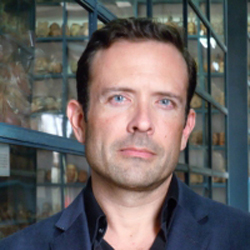 Michael Schreffler
Michael Schreffler, formerly a faculty member in the Department of Art History at Virginia Commonwealth University in Richmond, has joined the Department of Art, Art History, and Design at the University of Notre Dame in Indiana as associate professor of the art and architecture of Spain and Latin America in the sixteenth and seventeenth centuries.
Museums and Galleries
Cassandra Albinson has been appointed the new Margaret S. Winthrop Curator of European Art at the Harvard Art Museums in Cambridge, Massachusetts.
Christopher Atkins, coordinator of the Minnesota Artists Exhibition Program at the Minneapolis Institute of Art since 2009, has joined the Minnesota Museum of American Art in Saint Paul as curator of exhibitions and public programs.

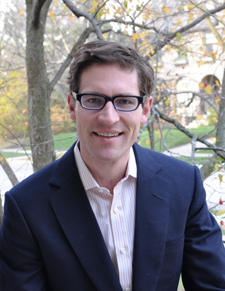 Ethan Lasser
Ethan Lasser has been named head of the Division of European and American Art at the Harvard Art Museums in Cambridge, Massachusetts. He was also promoted to Theodore E. Stebbins Jr. Curator of American Art—the first person to hold this endowed position.
Anne Manning, formerly deputy director for education and interpretation at the Baltimore Museum of Art in Maryland, has been appointed director of education and interpretive programs at the Nelson-Atkins Museum of Art in Kansas City, Missouri.
James Meyer, associate curator for the National Gallery of Art in Washington, DC, has been hired to serve as deputy director and chief curator of the Dia Art Foundation in New York.
Leslee Katrina Michelsen has left her position as head of curatorial research for the Museum of Islamic Art in Doha, Qatar. She is now a curatorial consultant for UNESCO Afghanistan.
Peter Nesbett, formerly associate director for programs at the Pew Center for Arts and Heritage in Philadelphia, Pennsylvania, has been appointed executive director of the Washington Project for the Arts in Washington, DC.
Stephen Pinson, formerly Robert B. Menschel Curator of Photography for the New York Public Library, has joined the Metropolitan Museum of Art in New York as curator of photography.
Elizabeth M. Rudy, who has been with the Harvard Art Museums in Cambridge, Massachusetts, since 2011, has been named the new Carl A. Weyerhaeuser Associate Curator of Prints.
Rachel Saunders has been named Abby Aldrich Rockefeller Associate Curator of Asian Art in the Division of Asian and Mediterranean Art at the Harvard Art Museums in Cambridge, Massachusetts. She is the first to hold this endowed position.
Emily Stamey, previously curator of contemporary art at the Scottsdale Museum of Contemporary Art in Arizona, has become curator of exhibitions at the University of North Carolina’s Weatherspoon Art Museum in Greensboro.

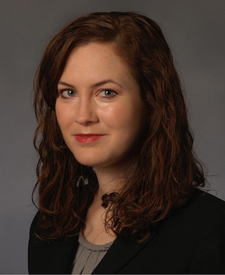 Elizabeth Varner
Elizabeth Varner has left her position as executive director of the National Art Museum of Sport in Indianapolis, Indiana. She is now staff curator at US Department of the Interior in Washington, DC.

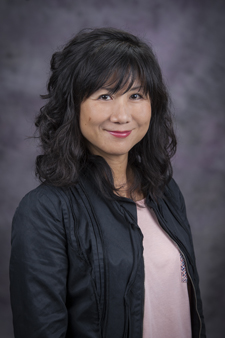 Aileen June Wang
Aileen June Wang has joined the Marianna Kistler Beach Museum of Art, part of Kansas State University in Manhattan, as associate curator. Prior to the appointment she was assistant professor of art history at Long Island University Post in Brookville, New York.
Gregory Wittkopp, director of the Cranbrook Art Museum and the Cranbrook Center for Collections and Research, both in Bloomfield Hills, Michigan, since 2011, has stepped down from the museum position. He will continue to lead the center.
Organizations and Publications

 Tanya Sheehan
Tanya Sheehan, associate professor of art and chair of the Art Department at Colby College in Waterville, Maine, has been appointed guest editor of the Smithsonian Institution’s Archives of American Art Journal.
Institutional News
posted Dec 17, 2015
Institutional News
Read about the latest news from institutional members.
Institutional News is published every two months: in February, April, June, August, October, and December. To learn more about submitting a listing, please follow the instructions on the main Member News page.
December 2015
The University of Virginia in Charlottesville has received a $30,000 grant from the National Endowment for the Arts for the testing and implementation of a prototype for digitizing artist’s books by a group of curators, artists, critics, and scholars.
CAA 2016 Board of Directors Election
posted Dec 17, 2015
READ ABOUT CANDIDATES RUNNING FOR CAA’S BOARD OF DIRECTORS — VOTING BEGINS IN JANUARY 2016
The 2015 Nominating Committee has selected the following slate of six candidates for election to the CAA Board of Directors for the 2016-2020 term. Voting begins in early January 2016. Please go to CAA’s website to read each candidate’s statement, biography, and endorsement – and watch their video comments – before casting your vote. The candidates are:
- Dina Bangdel Associate Professor & Director, Art History Program, Virginia Commonwealth University in Qatar
- Carma Gorman Associate Professor & Assistant Chair, Department of Art and Art History, University of Texas at Austin
- N. Elizabeth Schlatter Deputy Director and Curator of Exhibitions, University of Richmond Museums, Richmond
- Andrew Schulz Associate Dean for Research & Associate Professor, College of Arts and Architecture, Pennsylvania State University
- Roberto Tejada Cullen Distinguished Professor, Departments of English and Art History, University of Houston
- Anuradha Vikram Lecturer, Graduate Public Practice, Otis College of Art and Design, Los Angeles
About the Board
The Board of Directors is charged with CAA’s long-term financial stability and strategic direction; it is also the Association’s governing body. The Board sets policy regarding all aspects of CAA’s activities, including publishing, the Annual Conference, awards and fellowships, advocacy, and committee procedures.
About the Election
CAA members may vote for no more than four (4) candidates (which may include one write-in candidate who must be a CAA member). The four candidates receiving the most votes will be elected to the Board. CAA members may cast their votes and submit their proxies online only. CAA holds the Board election on its own website. To vote, members will need only to log into their CAA member account.
All voting must take place prior to 5:00 p.m. EST on Wednesday, February 3, 2016. The results of the Board election will be announced at CAA’s Annual Business Meeting which is to be held at 5:30 p.m. EST at the start of Convocation at the Annual Conference in Washington on Wednesday, February 3, 2016 in the Marriott Ballroom, Salon 2, Lobby Level at the Washington Marriott Wardman Park Hotel, 2660 Woodley Road, NW., Washington, D. C. 20008. CAA’s President, DeWitt Godfrey, will preside.
Questions? Contact Vanessa Jalet, executive liaison, at (212) 392-4434 or vjalet@collegeart.org
News from the Art and Academic Worlds
posted Dec 16, 2015
Each week CAA News publishes summaries of eight articles, published around the web, that CAA members may find interesting and useful in their professional and creative lives.
Confronting America’s Shameful Mass Incarceration with Art
Yoko Ono and Chris Burden are known for challenging the relationship between the art and the audience. The thirty-three-year-old performance artist Lech Szporer does this, too. But, unlike the hard-to-define nature of his antecedents, Szporer’s The Cage Project and its kin clearly express their purpose, and the performances are accompanied by actions that the larger public can more easily recognize as real. (Read more from the New Yorker.)
Help Desk: Culture and Compensation
The problem: sincere offers, from sweet, well-intended people, to show my work without compensation. The result: my polite refusal is taken as a slight, and I’m thought of as ungrateful. These people think they are doing me a favor and are confused when their request is turned down. What I’d like to have access to: an article written for the layperson that elucidates the situation. (Read more from Daily Serving.)
For Art to Flourish and Leave Its Trace
Art museums pledge to collect, display, study, interpret, and conserve works of art because those objects provide rich and soulful echoes of who we are. How will art made using interactive, decidedly variable, hastily obsolescent high-tech media fare? Digital and computer-based artworks are an active force behind retooling the museum and expanding methods of stewardship. (Read more from the Voices of Contemporary Art Journal.)
Researchers Observe Effects of Art on the Brain
When it comes to art, beauty may be in the eye of the beholder, but some scientists now are looking for it in bursts of brain waves. Seeking a biological basis for our response to art, researchers from the University of Houston recorded the electrical brain activity from 431 gallery visitors last year as they explored an exhibit of works by the conceptual artist Dario Robleto at the Menil Collection. (Read more from the Wall Street Journal.)
Influencing How Students Discuss Content
When students are talking with each other about content, many of us worry. We’ve all heard less-than-impressive exchanges. For example, four students are in a group discussing three open-ended questions about two challenging readings. In less than five minutes, they’re already on question three. Or, they’re working with clickers, supposedly exchanging ideas about a problem, but the group has already decided on one member’s solution. (Read more from Faculty Focus.)
Thoughts about Ashgate and Libraries
By now you are probably aware of the ongoing discussion about the fate of Ashgate Publishing, which was acquired by Informa last summer. Over the years Ashgate has increasingly become a respected venue for art historians, especially younger scholars publishing their early books on diverse and often groundbreaking topics that were organized—as the press matured—into a variety of interesting series. (Read more from the ARLIS/NA Collection Development SIG Blog.)
Breaking It to Your Family
We often discuss the effects of the tenure track on faculty lives. Much like the military, family members are also “drafted” into the academic lifestyle. Last month, we discussed how to break it to yourself that tenure does not mean less work. Here, we address this hard fact as it relates to families. The reality is that, even after gaining tenure, you may well face a relentless and often invisible set of career demands that can confuse and frustrate family members. (Read more from Inside Higher Education.)
Academic Job Hunts from Hell: Inappropriate, Hostile, and Awkward Moments
A doctoral student on the job market described a truly uncomfortable moment during a campus visit. An assistant professor giving her a campus tour stopped in front of an office filled with packing boxes and gestured inside, stating with a wistful air, “This is mine, or rather was. They are firing me; hence the opening.” Then he stood there, waiting for her reaction. My informant was so shocked that she responded, “That’s nice….” (Read more from the Chronicle of Higher Education.)
ARIAH’s East Asia Fellowship Program
posted Dec 15, 2015
The Association of Research Institutes in Art History (ARIAH), a consortium of museums and research centers based in North America or affiliated with North American institutions, has established a new program that will strengthen intellectual connections among art-history disciplines in different regions of the world. With generous support from the Andrew W. Mellon Foundation, the Getty Foundation, and the Terra Foundation for American Art, ARIAH’s East Asia Fellowship Program will enable twelve scholars from countries in East Asia to conduct research at ARIAH member institutes on any topic in the visual arts. The project is funded for a three-year period, beginning in 2016, with four fellowships offered each year.
The East Asia Fellowship Program is open to scholars of art history from Japan, Mongolia, the People’s Republic of China (including Hong Kong and Macau), Taiwan, and South Korea. Each fellow will be hosted by an ARIAH member institute and have the opportunity to travel to other research centers during the three- to four-month fellowship period. Fellowships will be awarded through an open, competitive application process. One fellowship per year, supported specifically by the Terra Foundation, will focus on research topics related to the art of the United States before 1980. Topics for all other fellowships will be open, as long as they can be supported by research on the collections of the host institute. The deadline for the first of three rounds of fellowships is December 31, 2015.
“It’s impossible to overstate how important material support, not to mention encouragement, from the Mellon, Getty, and Terra foundations has been for launching this program,” said Jon Mogul, chair of ARIAH and assistant director for research and academic initiatives at the Wolfsonian–Florida International University in Miami Beach, Florida. “Art history and visual studies, like other academic fields, thrive when scholars who come from different traditions and view their subject through different lenses have the chance to learn from one another. The birth of this program really underscores just how essential these three foundations are to sustaining an ecosystem in which such intellectual interchange among art historians from different regions of the world can happen more and more routinely.”
The East Asia Fellowship Program grew out of a successful project that ARIAH designed in the late 1990s which brought art historians from Mexico, Central and South America, and the Caribbean to ARIAH member institutes. The Latin American program was part of larger process that yielded longer-term results and fostered increased collaboration and intellectual exchange among academic disciplines in Latin American countries.
ARIAH conceived of and developed the new program to encourage a similar intellectual, cross-cultural exchange between scholars and to establish lasting professional connections. The fellows will work side by side with curators, librarians, and fellows from other areas of research. Among the twenty-seven member organizations of ARIAH are the Metropolitan Museum of Art and the Getty Research Institute. The largest concentration of members can be found in the Smithsonian museums in the Washington, DC, area.
Peter Lukehart, associate dean of the Center for Advanced Study in the Visual Arts at the National Gallery of Art in Washington, DC, said that East Asia is “a geographic region from which, historically, there have been fewer applications” to the programs of ARIAH’s member institutes. “Consequently, the rich resources of these institutes are not known or available to scholars who might otherwise benefit from them. ARIAH hopes that encounters between scholars and administrators at ARIAH institutes will lead to future collaboration and interchange between fellows and their hosts. “Given the increasingly global nature of the discipline of art history,” Lukehart said, “these goals seem especially urgent.”
Grants, Awards, and Honors
posted Dec 15, 2015
CAA recognizes its members for their professional achievements, be it a grant, fellowship, residency, book prize, honorary degree, or related award.
Grants, Awards, and Honors is published every two months: in February, April, June, August, October, and December. To learn more about submitting a listing, please follow the instructions on the main Member News page.
December 2015
Carol Becker, dean of faculty for Columbia University’s School of the Arts in New York, has received the Dayawait Modi Award for Art, Culture, and Education, given by Arts for India.
Henry Colburn, who recently completed a doctorate in the Interdepartmental PhD Program in Classical Art and Archaeology at the University of Michigan in Ann Arbor, has been awarded the ProQuest Distinguished Dissertation Award from the university’s Rackham Graduate School for the superior quality of his 2014 dissertation, “The Archaeology of Achaemenid Rule in Egypt.”
Craig Drennen, assistant professor of painting and drawing at Georgia State University in Atlanta, has accepted a fall 2015/winter 2016 residency at the MacDowell Colony in Peterborough, New Hampshire.
Barbara Foster, an artist based in Oakland, California, has received a spring 2016 residency at Playa in Summer Lake, Oregon.

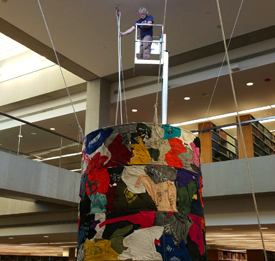 Greg Hull at work during an IUPUI student art installation
Greg Hull, professor of sculpture in the Herron School of Art and Design at Indiana University–Purdue University Indianapolis, has been awarded a Transformational Impact Fellowship from the Arts Council of Indianapolis.

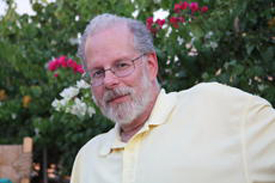 Larry A. Silver
Larry A. Silver, James and Nan Wagner Farquhar Professor of History of Art at the University of Pennsylvania in Philadelphia, has been named a Phi Beta Kappa Visiting Scholar for the 2015–16 academic year.
Noah Simblist has won a 2015 Exhibition Grant from Artis for an exhibition, False Flags, he is organizing for Pelican Bomb in New Orleans, Louisiana, to take place in March 2016.
Exhibitions Curated by CAA Members
posted Dec 15, 2015
Check out details on recent shows organized by CAA members who are also curators.
Exhibitions Curated by CAA Members is published every two months: in February, April, June, August, October, and December. To learn more about submitting a listing, please follow the instructions on the main Member News page.
December 2015
Alexandra Keiser. Archipenko: A Modern Legacy. Palmer Museum of Art, Pennsylvania State University, University Park, Pennsylvania, September 22–December 13, 2015.
Valérie Rousseau. Art Brut in America: The Incursion of Jean Dubuffet. American Folk Art Museum, New York, October 13, 2015–January 10, 2016.