CAA News Today
Books Published by CAA Members
posted Apr 15, 2015
Publishing a book is a major milestone for artists and scholars—browse a list of recent titles below.
Books Published by CAA Members appears every two months: in February, April, June, August, October, and December. To learn more about submitting a listing, please follow the instructions on the main Member News page.
April 2015


David Bethune. Wynwood: Street Art of Miami (Miami: Bethune, 2015).

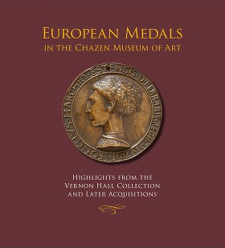
Maria F. P. Saffiotti Dale, ed. European Medals in the Chazen Museum of Art: Highlights from the Vernon Hall Collection and Later Acquisitions (Madison, WI: Chazen Museum of Art, in association with the American Numismatic Society, 2014).

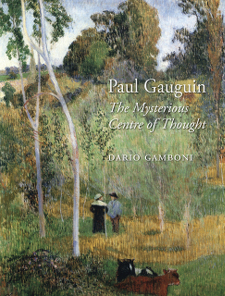
Dario Gamboni. Paul Gauguin: The Mysterious Centre of Thought (London: Reaktion, 2014).


Patricia Eichenbaum Karetzky. Chinese Religious Art (Lanham, MD: Lexington Books, 2014).


Sarah Krawcheck. Extreme Dessert Makeovers: Gluten Free and Beyond (Createspace.com, 2014).

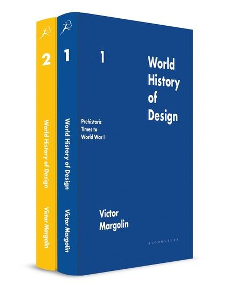
Victor Margolin. World History of Design, 2 vols. (London: Bloomsbury, 2015).

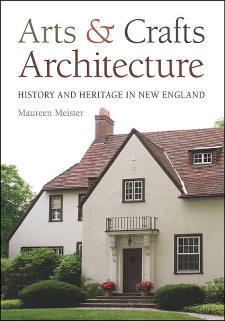
Maureen Meister. Arts and Crafts Architecture: History and Heritage in New England (Hanover, NH: University Press of New England, 2014).

Kristel Smentek. Mariette and the Science of the Connoisseur in Eighteenth-Century Europe (Burlington VT: Ashgate, 2014).
News from the Art and Academic Worlds
posted Apr 15, 2015
Each week CAA News publishes summaries of eight articles, published around the web, that CAA members may find interesting and useful in their professional and creative lives.
Modest Gains in Faculty Pay
First the good news: full-time faculty member salaries grew somewhat meaningfully year over year: 1.4 percent, adjusted for inflation, according to the American Association of University Professors’ Annual Report on the Economic Status of the Profession. Not adjusted for inflation, that’s about 2.2 percent across ranks and institution types, and 3.6 percent for continuing faculty members in particular. (Read more from Inside Higher Ed.)
For the Humanities, Some Good News Is Mixed with the Bad
In an otherwise grim picture of the field of humanities, there are still a few bright spots: financial support for academic research in the humanities, which is typically dwarfed by spending to support other fields, has increased in recent years, and there are signs of rising interest in the humanities at the high school and community-college levels. Those are some of the findings in a report released by the American Academy of Arts and Sciences. (Read more from the Chronicle of Higher Education.)
Facing Facts: Artists Have to Be Entrepreneurs
In order to be a successful—a word that I grapple with constantly—performing artist, you need to understand business fundamentals, and disseminating this information is crucial. How do you run a crowdfunding campaign that doesn’t make your friends block you on Facebook? How do you identify and brand (ugh … brand) your work? How do you really figure out who your audience is? (Read more from Howl Round.)
Mind the Gap: Art Museum Education, Academia, and the Future of Our Field
Dana Carlisle Kletchka of the Palmer Museum of Art delivered this keynote address at the National Art Education Association’s national convention last month after being honored by that organization as National Museum Education Art Educator of the Year. (Read more from Art Museum Teaching.)
Art Collectors Weigh Title Insurance
When you buy a piece of art, can you be sure it’s really yours? Many collectors don’t always feel certain on that score. They worry in some cases that after they make a purchase someone will show up, maybe years later, and claim the art was stolen at some point in the past—ultimately leaving the new owner empty handed, without the art or the money paid for it. That’s one reason many art advisers and lawyers recommend title insurance, which can at least partially protect a collector’s financial interests if a piece of art has to be surrendered. (Read more from the Wall Street Journal.)
Crystal, AIG Offer Conceptual Art Insurance for Private Clients
Crystal & Co., a strategic risk and insurance advisor, has partnered with AIG Private Client Group to create a new insurance product for private clients with collections of Conceptual art. A certificate is provided by the artist to authenticate an item and without this, the piece is considered worthless. Therefore, if the certificate was lost or damaged, the item may have lost most of its value, according to Crystal & Co. (Read more from the Insurance Journal.)
A Guide to Thesis Writing That Is a Guide to Life
How to Write a Thesis, by Umberto Eco, first appeared on Italian bookshelves in 1977. For Eco, the playful philosopher and novelist best known for his work on semiotics, there was a practical reason for writing it. Up until 1999, a thesis of original research was required of every student pursuing the Italian equivalent of a bachelor’s degree. Collecting his thoughts on the thesis process would save him the trouble of reciting the same advice to students each year. (Read more from the New Yorker.)
Your Teaching Headspace
After my job talk, I was focusing on people’s questions about my scholarship during the Q&A period—and deeply in my “research headspace”—when all of a sudden someone asked: “What is your approach to teaching and how do you teach X concept?” He wasn’t asking how my research informs my teaching. He was just asking about my teaching. Isn’t that a strange question in a job talk Q&A? (Read more from Vitae.)
Committee on Women in the Arts Picks for April 2015
posted Apr 10, 2015
Each month, CAA’s Committee on Women in the Arts selects the best in feminist art and scholarship. The following exhibitions and events should not be missed. Check the archive of CWA Picks at the bottom of the page, as several museum and gallery shows listed in previous months may still be on view or touring.
April 2015
Nina Bunjavec: Out of the Fatherland
Art Gallery of Ontario
317 Dundas Street West, Toronto, Ontario, Canada M5T 1G4
December 13, 2014–summer 2015
The Canadian graphic novelist Nina Bunjevac, in her work Fatherland, explores the influence of extremism and ideologies on her own family and personal history. Now on view at the Art Gallery of Ontario, Out of the Fatherland is a selection of drawings from Bunjevac’s tale of the patriarch of her family—a member of the radical nationalist group Freedom for Serbian Fatherland—as told through the memories of her mother, sister, and grandmother, among other relatives. In the painstakingly detailed panels Bunjevac reflects on her mother’s flight from her husband back to Yugoslavia with her two daughters in 1975, the history and political climate of Yugoslavia, and the death of her father while assembling a bomb in a Toronto garage two years later. Bunjevac was three at the time of her father’s death.
The graphic novel, as Bunjevac explains, is two parts in order to reflect the “duality presented in the book: maternal – paternal, nationalist – communist, old country – new country.” At times drawing directly from childhood photographs, the artist said it resembled detective work, where she would scan images, and through enlarging them discover hidden history. During an NPR interview Bunjevac revealed how an overexposed photograph of her grandmother, who was in an abusive relationship, once darkened, exposed a black eye, and subsequently the photographers desire to mask it. Bunjevac takes these frozen records of violence and forced smiles, and with her pen reveals sociopolitical issues at play on both a personal and national stage while maintaining her role as the neutral narrator. Fatherland follows Bunjevac’s debut graphic novel, Heartless (2012), which features Zorka, a depressed, alcoholic, chain-smoking antiheroine.
Lori Vrba: The Moth Wing Diaries
Daylight Project Space
121 West Margaret Lane, Hillsborough, NC 27278
March 27–May 22, 2015
The photographer Lori Vrba describes her work as “reeking Southern woman.” In her new exhibition at Daylight Project Space, and in her forthcoming book The Moth Wing Diaries (published by Daylight Books), Vrba edited photographs from four projects—Drunken Poet’s Dream, Piano Farm, Safekeeping, and My Grace Is Sufficient—into a monograph that addresses “themes of memory, providence, revival and dreams … [exploring a] sense of conflict and ultimate peace with the Southern terrain.”
Vrba’s work oscillates between dreamlike scenes and reflections of innocence and confrontational moments. In the photograph Orchid from My Grace is Sufficient, a woman stands naked, the frame dipping only so far as to expose a partial breast. She clenches an orchid in her hand. The model’s face and identity is obscured by what appears to be a sheer silken fabric, keeping the viewer from knowing her.
Vrba’s work has been compared to that of Sally Mann, a comparison, Vrba says, that almost made her cry. She admires and is influenced by Mann, but while both often photograph their children, the difference between the two artists, Vrba explains, is that her own work is entirely autobiographical. The landscapes she choses, either the Southern rolling hills or the body landscapes of her human models, is a means to explore internal tensions via her visual sensitivities and ultimately her femininity, intimacy, and vulnerability. Working in a traditional darkroom, Vrba has a love of printmaking that is reflected in the rich warmth and sultriness of her toned images. Unapologetic about her style, Vrba writes, “my work is inherently feminine … and has a traditionally beautiful aesthetic without apology.”
A larger selection of photographs from The Moth Wing Diaries will be on view at the Catherine Courturier Gallery in Houston, Texas, in June.
Cat Del Buono: Voices
Museum of Contemporary Art, North Miami
Joan Lehman Building, 770 NE 125th Street, North Miami, FL 33161
April 14–19, 2015 (panel discussion on April 18 at 4:00 PM)
The Miami artist Cat Del Buono is bringing her video installation Voices to the Museum of Contemporary Art in North Miami for a short exhibition and panel discussion. Voices, created with a New Works Grant from Baang & Burne Contemporary, is a multichannel video installation focusing on domestic violence. Each small video monitor exposes only the lips of an anonymous domestic violence survivor as she recounts her personal experience of abuse for the unknown audience. Upon entry into the installation each voice is heard simultaneously, creating a “symphony of unrecognizable words.” Not until the viewer stands intimately close to a single monitor does the story of that woman become clear.
Filmed in Miami, New York, Connecticut, Los Angeles, Washington, DC, and Chicago, Voices brings stories from women of all ages and ethnicities to the viewer. “As a society, we must not allow the epidemic of domestic violence and those who are affected by it to remain an invisible and inaudible crowd of statistics,” Del Buono said in an exhibition statement.
Del Buono has a history of work aimed at raising awareness on women’s issues, as well as body image. In her work Beauty Box, during Art Basel Miami Beach in 2014, Del Buono and the Refemme team invited women and men into their “medical” tent to receive individualize beauty consultations. Instead of prescribing ways to improve, participants were complimented as part of the project’s “social interruption.”
Voices will cap its short stay at MoCA North Miami with a panel discussion moderated by Bonnie Berman of WLRNand featuring a victim’s advocate from the Lodge Miami, an abuse survivor, and Adrienne Von Lates from MoCA.
Anicka Yi: You Can Call Me F
The Kitchen
512 West 19th Street, New York, NY 10011
March 5–April 11, 2015
The Kitchen’s gallery is transformed into a forensic laboratory in which Anicka Yi’s You Can Call Me F proposes a parallel between society’s increasing paranoia—private and public—regarding hygiene and contagion with the longstanding patriarchal fear of feminism and strength of female networks.
During 2014–15, Yi (b. Seoul, 1971) has been developing new projects as a visiting artist at MIT Center for Art, Science, and Technology (CAST). For You Can Call Me F, the New York–based artist gathered biological information from one hundred women in order to cultivate the idea of the female figure as a viral pathogen that suffers external attempts to be both contained and neutralized.
Following her trilogy Divorce, Denial,and Death, in which Yi privileged scent, memory, and other aspects of the “avisual” over physical components, You Can Call Me F is based in the visual language of quarantine tents, a context that allows a translucent view, at the same time that intends to protect the fragile ecosystems within. Yi’s feminist approach focuses in the impact of the politics and subjectivities of smell on our empathic understanding of each other.
Curated by Lumi Tan, the project was possible by collaborative efforts from a hundred contributing women—some listed at the exhibition, some anonymous donors—as well as scientist and researchers, including: Tal Danino, MIT postdoc in synthetic biology; the biologist Patrick Hickey; and the provision of scent analysis and formulation by Air Variable, a scent fabrication company founded in 2014 by Sean Raspet that focuses exclusively on olfactory and chemistry-related art and design projects.
Camille Henrot: The Pale Fox
Westfälischer Kunstverein
Rothenburg 30, 48143 Münster, Germany
February 21–May 10, 2015
Westfälischer Kunstverein presents The Pale Fox, the first large-scale solo exhibition in Germany by the New York–based French artist Camille Henrot (b. 1978). This traveling exhibition (Münster, London, Copenhagen, and Paris) has been coproduced by four European institutions and was ranked by the Guardian as among the ten best art shows of the year.
The Pale Fox is borrowed character from an anthropological study, published by Griaule and Dieterlen in 1965, that reflects on the incorporation of several different cultures, as well as astronomical, mathematical, and philosophical systems of thought and beliefs in the West African Dogon tribe’s mythology. In this system, the character of the Pale Fox represents disorder and chaos not only as a transgression but also as a necessary condition for creativity. Based in a cycle from which accumulation and excess become productive again, and her interest in disorder as a fertile foundational principle for creative practice and formulation of knowledge, Henrot understands the fox as a potential model for our primitive selves, as well as a symptom of our digital age in which humans driven by curiosity and impatience.
Populating a highly constructed and meditative environment with images and objects, Henrot conceived this installation as a sort of a domestic atmosphere in which she orders and arranges more than four hundred photographs, bronze sculptures, books, watercolors, and drawings that were bought on eBay, borrowed from museums, or found or produced by Henrot. In the artist’s words, there is “an excess of principles” in The Pale Fox, a pathological and almost erotic “cataloguing psychosis” that allows the potential for disorder to return. Through this compulsive superimposition, the artist intends to make sense of our shared desire to understand the world intimately through the objects that surround us. A video produced by a seemingly hidden camera at the exhibition opening evidences audience engagement toward personal reconstructions of the multilayered environment of narratives.
Channa Horwitz: Counting in Eight, Moving by Color
KW Institute for Contemporary Art
Auguststrasse 69, 10117 Berlin, Germany
March 15–May 25, 2015
The KW Institute for Contemporary Art in Berlin presents Counting in Eight, Moving by Color, the first comprehensive solo exhibition of Channa Horwitz (1932–2013). Many of the works on view, including a selection of construction drawings and documentary materials have never been shown before. The exhibition features representative works from all phases of Horwitz’s career, providing an introduction to her oeuvre and insight into key series of her creative process, such as the Language Series, Sonakinatography, Rhythms,and Structures. Some of her central works were reconstructed based on the plans that the artist made herself for her own future.
Departing from a system of notation based on the number eight, Horwitz developed a visual language in the late 1960s that achieved freedom based in the restriction to a few simple rules. Searching for a simple yet universal language, she created variations of complex systems resembling musical scores that allow movements to be visualized by means of color schemes and graphic scales. Since then, each of her works has been based on the numbers one through eight, while each number is assigned an specific color code, in this way designing structures that translate spatial-temporal relations into drawings, paintings, and multimedia sculptures.
The comprehensive exhibition at KW retraces the development that led Horwitz from figurative painting to conceptual abstraction, linking her creative practice to her contemporary minimal and conceptual artists. The display includes a large number of the compositions from “Sonakinatography” (her new term combining the Greek words for “sound,” “movement,” and “writing/recording”), which are perhaps the artist’s most well-known works to date. Despite her creative commitment, Horwitz lived and worked in complete seclusion from the midsixties until the 2000s, and her work was rarely exhibited. She seemed to have just begun her artistic career when she passed away at the age of 81. Sadly Horwitz did not live to see the overwhelming international recognition that her oeuvre gained at the last Venice Biennale.
CAA’s Webinar on Fair Use in Scholarship Is This Friday, April 10!
posted Apr 09, 2015
Register now for the next webinar in CAA’s series on fair use in the visual arts meeting this Friday, April 10 at 1 PM EDT. Join the lead principal investigators of CAA’s new Code of Best Practices in Fair Use for the Visual Arts, Patricia Aufderheide, university professor in the School of Communication at American University and Peter Jaszi, professor of law in the Program on Information Justice and Intellectual Property at American University’s Washington College of Law, for an in-depth look at the Code’s section on fair use in analytic writing. Registration for the live event is free and open to the public thanks to a generous grant from the Andrew W. Mellon Foundation.
A video recording of the first webinar held on March 27th, “An Introduction to CAA’s Code of Best Practices in Fair Use for the Visual Arts,” is now available for CAA members. To access, log into your CAA account and click on the “Webinars” link in the left-hand navigation. Recordings of each webinar in the series will be made available to members the week following the event.
CAA will issue Certificates of Participation to those who attend all five webinars in the series. Registration secures you a spot in all four remaining webinars, however you may attend any number of the remaining webinars through this registration. The webinars will cover the following topics:
April 10, 2015, 1:00-2:00 PM (EDT): Fair Use in Scholarship
May 15, 2015, 1:00-2:00 PM (EDT): Fair Use in Teaching and Art Practice
May 29, 2015, 1:00-2:00 PM (EDT): Fair Use in Museums and Archives
June 5, 2015, 1:00-2:00 PM (EDT): Fair Use in the Visual Arts: A Review
News from the Art and Academic Worlds
posted Apr 08, 2015
Each week CAA News publishes summaries of eight articles, published around the web, that CAA members may find interesting and useful in their professional and creative lives.
Almost One Third of Solo Shows in US Museums Go to Artists Represented by Just Five Galleries
Nearly one third of the major solo exhibitions held in American museums between 2007 and 2013 featured artists represented by just five galleries, according to new research. The Art Newspaper analyzed nearly 600 exhibitions submitted by 68 museums for its annual attendance-figures survey and found that 30 percent of prominent solo shows featured artists represented by Gagosian, Pace, Marian Goodman, David Zwirner, and Hauser and Wirth. (Read more from the Art Newspaper.)
How to Navigate the Art World
The art world can feel like that first time you walk into a high-end luxury store: everything is out of your reach, you’re not quite sure where to start, and there are a whole lot of venomous people judging your every move. Enter Roger White, author of the delicious new book The Contemporaries: Travels in the 21st Century Art World. Astute and conversational, White’s writing unveils the current state of the art academy, the studio, and the art market through the careers of the artists Dana Schutz, Mary Walling Blackburn, and Stephen Kaltenbach. (Read more from the Daily Beast.)
Artists, Not Judges, Should Decide Fair Use
This piece will focus on two implications of the Cariou and Sconnie Nation analyses: (1) the inherently factual nature of “fair use” analysis; and (2) fair use as an affirmative defense. “Fair use” started as a judge-made remedy to technically correct legal conclusions that led to absurd results, a practice commonly known as “equity.” Generally, and in the case of “fair use,” equity requires a court to make a significant factual investigation so as to demonstrate why the technical law should not apply. (Read more from the Center for Art Law.)
White Lies? Fibs? Tall Tales? Just Tell the Truth
Certainly, there are a lot of things that you might be reluctant to tell the truth about that don’t seem so terrible, such as one’s age. It may be embarrassing for some artists to be older and starting out, or to have not ever sold any work or to not have academic degrees in studio art or to not have any real exhibition history. (Read more from the Huffington Post.)
How the Tax Code Hurts Artists
With tax day looming, you can practically hear the cries of creative professionals across the country. That’s because the tax code hits many right where it hurts, by penalizing them for the distinctive way they make money. The biggest offender is still the alternative minimum tax, despite the American Taxpayer Relief Act of 2012, which brought long-overdue reform. (Read more from the New York Times.)
English-Only PhDs
What does it mean to be a doctor of philosophy in the sciences? What skills do we expect PhDs to possess? One thing you have to leave off that list: the ability to read or communicate in a language other than English. Nearly all US doctoral programs in the sciences have dropped their foreign-language requirement. (Read more from Vitae.)
An Illustrated Guide to Arthur Danto’s “The End of Art”
In an obituary for the New York Times, Ken Johnson described Arthur Danto as “one of the most widely read art critics of the Postmodern era.” Danto, both a critic and a professor of philosophy, is celebrated for his accessible and affable prose. Despite this, his best-known essay, “The End of Art,” continues to be cited more than it is understood. What was Danto’s argument? Is art really over? And if so, what are the implications for art history and art making? (Read more from Hyperallergic.)
AHTR Reports on AP Art History (Part II)
The second of two-part series on AP Art History, this post examines the revised curriculum for art history that will go into effect later this year, its intended outcomes, and its relevance to art historians at all educational levels. The post also identifies new resources developed specifically for the new curriculum, as well as others that are appropriate for both secondary and university-level instruction in art history. (Read more from Art History Teaching Resources.)
Update on CAA Task Forces
posted Apr 06, 2015
Task forces are established on occasion by the CAA Board of Directors to carry out research, address issues that are critical to the academic visual arts and art museums and require a limited commitment of time. There are currently seven task forces at CAA that have been established by the Board of Directors.
Task Force on Fair Use
Established in October 2012, this task force is cochaired by Jeffrey Cunard, CAA Counsel and Managing Partner of the Washington, DC, office of Debevoise & Plimpton LLP, and Gretchen Wagner, former General Counsel, ARTstor, and former member, Committee on Intellectual Property. Its twelve members have been overseeing a four-year fair use initiative supported by an initial grant from the Kress Foundation and a generous grant from the Andrew W. Mellon Foundation. Led by the efforts of Peter Jaszi and Patricia Aufderheide of American University, the first two years included interviews with 100 artists, art historians, curators, editors, librarians, publishers; a survey of 2,000 CAA members; and discussions with another 100 visual arts professionals. Based on the consensus developed through this process, the Code of Best Practices in Fair Use for the Visual Arts was published in February 2015 and presented to the CAA membership at the Annual Conference. Over the next two years the task force will assist in the dissemination of the Code through webinars, presentations at conferences, and in small meetings of professionals in the visual arts. The project will be completed in December 2016.
Download the Resolution to Form Task Force to Develop Fair Use Guidelines.
Task Force on Advocacy
Established by the Board in February 2015, this task force is chaired by Jacqueline Francis, Associate Professor, Visual and Critical Studies, California College of the Arts. The task force is charged with prioritizing CAA members’ critical advocacy issues.
Download the Resolution for a Task Force on Advocacy.
Task Force on the Annual Conference
Established by the Board in February 2015, this task force is chaired by Suzanne Preston Blier, CAA Vice President for the Annual Conference and Allen Whitehill Clowes Chair of Fine Arts and of African and African American Studies at Harvard University. The task force is charged with evaluating the structure, format, and technologies of the Annual Conference to facilitate information exchange, presentation of creative work, and professional support of members.
Download the Resolution for a Task Force on the Annual Conference.
Task Force on Committees
Established by the Board in October 2014, this task force is chaired by Charles A. Wright, CAA Vice President for Committees and Professor and Chair, Department of Art, Western Illinois University. The task force is charged with reviewing the nine Professional Interest Practices and Standards (PIPS) committees of CAA in order to ensure that the 2015–2020 Strategic Plan priorities, the structure of the committees, and the organization best meet the needs of CAA members.
Download the Resolution for a Task Force on Professional Interests, Practices and Standards Committees.
Task Force on Design
Originally established by the Board in May 2014 and recently reconfigured, the task force is chaired by Jim Hopfensperger, CAA Board Member and Professor of Art, Western Michigan University. The task force is charged with addressing and making recommendations on how to increase the sessions on design at the Annual Conference, engage designers as members, and address guidelines specific to designers.
Download the Resolution to Form a Task Force on Design.
Task Force to Develop Guidelines for Evaluating Digital Art and Architectural History for Promotion and Tenure
Established by the Board in October 2014 and supported by funds from the Andrew W. Mellon Foundation, this joint task force of CAA and the Society of Architectural Historians (SAH) is co-chaired by DeWitt Godfrey, President, CAA and Professor of Art and Art History, Colgate University; and Ken Breisch, SAH President and Assistant Professor, School of Architecture, University of Southern California. The Mellon grant supports a research assistant, Alice Lynn McMichael, Graduate Center Digital Fellow and Digital Dissertations Liaison, The Graduate Center, CUNY and Adjunct Assistant Professor, Hunter College; and a statistician, Raym Crow, Chain Bridge Group. The task force charge is to develop guidelines for digital art and architectural history for use in promotion and tenure.
Task Force on Governance
Established by the Board in October 2014, this task force is chaired by DeWitt Godfrey, CAA President and Professor of Art and Art History, Colgate University. The charge is to review the structure and transparency of Board of Directors’ responsibilities to better serve and communicate with CAA members.
Download the Resolution for a Task Force on Governance.
Art History Teaching Resources Seeks Thematic Lesson Plans
posted Apr 02, 2015
Do you have a great thematic lesson plan you want to take some time to codify and share? Funded by a Samuel H. Kress Foundation grant for digital resources, Art History Teaching Resources (AHTR), a peer-populated platform for instructors and a collectively authored online repository of art-history teaching content, seeks contributors for specific thematic subject areas in the art-history survey. This is the third and final call for participation (the first two went out in 2014).
AHTR is particularly interested thematic content, for publication in fall 2015. The following areas are suggestions—ideas for other thematic lesson plans are welcomed and you can see examples of existing lesson plans that engage thematically with, for example, “Race and Identity” and “Globalism and Transnationalism.” Please propose a thematic plan germane to the survey-level class.
Possible themes include but are in no way limited to: Art and Labor, “High” vs. “Low,” Violence, Nature, Manufacture and Industrialization, Queer Art, Globalization, Beyond Europe, Death, Power, Materials, Age, Art Markets, Sex, the Gaze
For each content area, AHTR seeks lecture and lesson plans similar to those developed for its thematic section on Feminism and Art. Full template guidelines will be given for the sections to be included in each plan; writers will be expected to review and amend their plan (if necessary), once edited by AHTR. These plans, which will be posted to the AHTR website in fall 2015, are supported by $250 writing grants made possible by the Kress award.
AHTR is looking for contributors who:
- Have strong experience teaching the art-history survey and strong interest in developing thoughtful, clear, and detailed lesson plans in particular thematic areas
- Are committed to delivering lecture content (plan, PowerPoint, resources, activities) for one to two (a maximum of two) thematic content areas in a timely manner. Each content area will be supported by a $250 Kress writing grant
- Are able to make a September deadline for submission and an early October deadline for any edits
- Want to engage with a community of peers in conversations about issues in teaching the art-history survey
AHTR’s intention is to offer monetary support for the often-unrewarded task of developing thoughtful lesson plans, to make this work freely accessible (and thus scalable), and to encourage feedback on them so that the website’s content can constantly evolve in tandem with the innovations and best practices in the field. In this way, AHTR wants to encourage new collaborators to the site—both emerging and experienced instructors in art history—who will enhance and expand teaching content. The website also wishes to honor the production of pedagogical content at the university level by offering modest fellowships to support digital means of collaboration among art historians.
Please submit a short, teaching-centered CV and a brief statement of interest that describes which thematic subject area(s) you wish to tackle to teachingarthistorysurvey@gmail.com by April 15, 2015. These initial texts should be delivered to AHTR in June or July 2015.
News from the Art and Academic Worlds
posted Apr 01, 2015
Each week CAA News publishes summaries of eight articles, published around the web, that CAA members may find interesting and useful in their professional and creative lives.
Why Experts Are the Last People You Want to Include in Creative Brainstorming
In a team setting, certain kinds of experts often wield power over the rest of the group, setting an example for junior teammates to follow. Ironically, these same experts often lose their ability to think up and weigh the wildly creative solutions that can lead to team breakthroughs. Smart beginners resent them for that. (Read more from Fast Company.)
The Long, Twisted History of Glitch Art
Nick Briz, a Chicago-based artist, educator, and organizer, has defined “glitch” as “an unexpected moment in a system that calls attention to that system, and perhaps even leads us to notice aspects of that system that might otherwise go unnoticed. Glitch art, then, is anytime an artist intentionally leverages that moment, by either recontextualizing or provoking glitches.” The glitch draws back the curtain on our sleekest devices and virtual constructs to reveal raw pixels and code, a surreal landscape of unformed possibilities. (Read more from the Kernel.)
Am I an Activist?
A few months ago, I was on a conference panel about activism at the junior faculty level. Apparently when you ask people about activism in my field of religious studies, my name pops up, which baffles me. Am I an activist? I wouldn’t give myself that label. (Read more from Vitae.)
Just How Important Is Color?
When was the last time you thought about color? Save for the occasional breathtaking sunset, or “The Dress” phenomenon last month, how often do you consciously stop and think about the specific shades of the world around you? Unless you’re a fashion designer, painter, or an interior decorator, it’s probably something you take for granted. A recent video by Valspar Paint highlights just how awe-inspiring color really is. (Read more from Pacific Standard.)
Rights to Scholarly Work
For many years, Ohio State University had an understanding with its faculty: the institution might claim intellectual-property rights to innovations, inventions, and patentable research, but scholarly works belonged to professors alone. Now a new draft intellectual-property policy is threatening that agreement in the eyes of some faculty members. The ongoing debate has implications for defining scholarly work in the digital age and for just how much of an academic’s work—digital or not—his or her institution can claim to own. (Read more from Inside Higher Ed.)
Precious Art Analyzed without Damage Using New Laser Technique
Precious works of art in need of preservation or authentication could in future be studied using a new laser technique, developed by a collaboration of British and Italian scientists, that can analyze layers of paint without causing any damage to the object itself. This new technique will be of real benefit to curators of cultural heritage who need to preserve and authenticate precious works of art without harming them. (Read more from Phys.org.)
O Adjunct! My Adjunct!
I spent half of my undergraduate career figuring out what I didn’t want to do. I started off in the journalism program, switched to literature, was undecided for a few panicked, free-floating months, and studied photography for a time. But the spring of my sophomore year, I enrolled in a fiction-writing workshop with an instructor named Harvey Grossinger. What I didn’t know at the time—and what I wouldn’t figure out for the better part of the next decade—was that Harvey was an adjunct. He didn’t tell us, and I didn’t know to ask. As an undergraduate, I never heard the term. (Read more from the New Yorker.)
Lip-Syncing to the Academic Conversation
From the moment they begin doing research, scholars are told to connect their work to “the conversation.” They should stay on top of scholarship in their field, responding to the critiques of their contemporaries as well as the dogma of their disciplines. But what happens when that conversation takes place behind a pay wall through which you cannot afford to pass? What happens when your work ignites a dialogue that you can no longer follow? (Read more from Vitae.)
Report from Arts Advocacy Day 2015
posted Mar 31, 2015
Hillary Bliss is CAA development and marketing manager.

Last week CAA sent two representatives to participate in the twenty-eighth annual Arts Advocacy Day in Washington, DC. Anna Cline, CAA development and marketing assistant, and I joined 550 grassroots advocates representing forty-eight states to lobby for strong public policies and increased funding for the arts. CAA also supported the event, which is organized by Americans for the Arts, as a national cosponsor.
Monday, March 23
Cline and I attended a full day of training that included legislative and political updates, in-depth briefings on our three primary “asks” (more on those later), and facts and figures to make a compelling case for the arts. We also heard an inspiring keynote address by Jane Chu, the recently appointed chairman of the National Endowment for the Arts (NEA). A role-play demonstration for congressional visits was incredibly helpful in illustrating how advocacy teams can manage the varying personalities and political agendas of senators, representatives, and their staffs to communicate clear messages and secure commitments of support in the form of caucus enrollment or letters addressing particular funding levels or policy positions. The most important takeaway was to strategically couple facts and figures—whether they be economic impact reports, matching-fund statistics, or art education’s effect on drop-out rates and SAT scores—with personal stories to create memorable and meaningful visits with legislators.
The three primary issues for Arts Advocacy Day were:
NEA Funding: We sought support for a $155 million budget for the NEA in the fiscal year 2016 Interior Appropriations bill. The broad reach and impact of the NEA can not be overstated: the agency awards approximately 2,300 grants per year to organizations in every US congressional district, reaches more than 38 million people through live art events, and helps to leverage roughly $600 million in matching funds from other state, local, and private sources. Closer to home, CAA has received support from the NEA every year since 2010 for ARTspace, a free and open component of the Annual Conference.
Arts in Education: We urged Congress to support $30 million for the Arts In Education (AIE) programs in the fiscal year 2016 Labor-Heath and Human Services-Education appropriations bill and retain it as a distinct grant competition for programs that strengthen the arts as a core academic subject of learning. Consolidation into an appropriations bill would risk compromising the program. We also sought support for retaining the arts in the definition of core academic subjects and for strengthening equitable access to the arts in the reauthorization of the Elementary and Secondary Education Act (ESEA).
Tax Reform: Since many arts organizations operate as nonprofit entities, tax reform regarding charitable giving is a critical issue. We asked Congress to preserve incentives for donations by protecting full value tax deductions for all forms of charitable gifts; we also advised against the adoption of “caps” or “floors” for deductions. We also urged Congress to make the IRA charitable rollover permanent so that donors can achieve the greatest impact with their planned giving. We also asked representatives to support the Artist-Museum Partnership Act, which would allow artists to take an income tax deduction for the fair market value of their work when they donate it to charitable collecting institutions.
There was no shortage of issues this year: advocates addressed arts in health, net neutrality, protection of wireless technology for the arts and media, and visa processes for foreign guest artists in short training sessions throughout the day. You can download American’s for the Arts’ 2015 Congressional Arts Handbook for facts and figures on all of these issues.
Closing the prelude to Arts Advocacy Day was the Nancy Hanks Lecture on Arts and Public Policy, this year given by the television writer and producer Norman Lear at the John F. Kennedy Center for Performing Arts. You can view Lear’s moving lecture, introduced by the hip-hop recording artist Common, on YouTube.

Tuesday, March 24
The packed Congressional Arts Kick-Off on Tuesday marked the official start of Arts Advocacy Day on Capitol Hill and featured speakers such as Representative Louise Slaughter (D-NY) and Representative Leonard Lance (R-NJ), cochairs of the Congressional Arts Caucus. Senator Tom Udall of New Mexico received the Congressional Arts Leadership Award in recognition of his distinguished service on behalf of the arts.
Cline and I were on separate advocacy teams representing the New York City area that included undergraduate and graduate students and representatives from arts organizations such as Actors’ Equity Association, Fractured Atlas, POV, and others. We met with the offices of Representatives Carolyn Maloney (NY-12), Grace Meng (NY-6), Jerrold Nadler (NY-10), Lee Zeldin (NY-1), Peter T. King (NY-2), Steve Israel (NY-3), Kathleen Rice (NY-4), Gregory W. Meeks (NY-5), and Hakeem Jeffries (NY-8). Overall the meetings went extremely well. Our groups were able to address the key public policy and funding issues mentioned above, as well as to communicate the work of CAA and its members.
In a visit with Nadler’s office, Cline thanked the congressman for his vigorous efforts to pass the American Royalties Too (ART) Act, which would ensure that visual artists are compensated when their original artwork is resold; she also offered CAA’s continued support for this legislation. Though a meeting was originally scheduled with a member of his staff, Rep. Israel met with my team to discuss the NEA budget. As a member of the House Committee on Appropriations—and more specifically, the Subcommittee on Interior, Environment, and Related Agencies, which covers the NEA budget—Israel spoke about the budget process and stated that its current proposal includes $155 million for the NEA. Time will tell what the final approved NEA budget will be.

Visiting the congressional office buildings reinforces the fact that senators and representatives work for you. I noticed a marked difference in visits to representatives for whom we had a constituent on our team. Multiple staffers told us that they needed more vocal support for the arts to pass the legislation and public-funding increases we were requesting, so I encourage you to contact your legislators and express your support. Americans for the Arts has a useful site that includes not only information on issues and supporting materials like facts and figures, but also links to tools for finding and contacting your legislator.
Images
The US Capitol Building in Washington, DC (photograph by Hillary Bliss)
Senator Tom Udall of New Mexico accepting his Congressional Arts Leadership Award at the Congressional Arts Kick-Off event (photograph by Hillary Bliss)
My advocacy team after meeting with Representative Steve Israel. From left to right: Lawrence Lorchack, Actors’ Equity Association; Lynn Koos, New York University; Representative Steve Israel; Alison Ribellino, Towson University; Mary An, POV; and Linni Deihl, Andrew Anzel, and Haven G. Mitchell-Rose, New York University (photograph by Hillary Bliss)
News from the Art and Academic Worlds
posted Mar 25, 2015
Each week CAA News publishes summaries of eight articles, published around the web, that CAA members may find interesting and useful in their professional and creative lives.
Median Salaries of Tenured and Tenure-Track Professors at Four-Year Colleges, 2014–15
The median base salaries of tenured and tenure-track professors at four-year colleges increased by 2 percent in 2014—a rate of salary growth that was down a tenth of a percent from the previous year, according to the results of an annual survey from the College and University Professional Association for Human Resources. (Read more from the Chronicle of Higher Education.)
Help Desk: Put the Artist First
In the role of writer and curator, I find myself playing bureaucratic middleman between artists and the public, or between artists and institutions. When I get an idea for an exhibition or written feature, the appropriate order of things often gets confusing for me. Should I first approach the artists with the idea, to make sure they are willing and able to participate, or should I discuss the project with the institution or publication, to be sure it gets green-lit? (Read more from Daily Serving.)
Museums Turn to Technology to Boost Attendance by Millennials
Art museum attendance dipped 5 percent from 2002 to 2012, according to the National Endowment for the Arts. Museumgoers 75 and older were the only age group to increase over that period. The guardians of posterity must be concerned about the future, no matter how long the lines may be. Curators worry most about millennials. How do static galleries of canvas and artifact engage a generation raised on the reactive pleasures of right swipes and hyperlinks? How do you sell Goya when Game of Thrones is a click away? (Read more from the New York Times.)
Taking Note: More Resources for Arts Data-Miners
The nation’s museums and libraries are taking prodigious steps to bring their most prized collections of artistic and cultural heritage online. But what about the data concerning those institutions? If we increasingly have the chance to view a painting, piece of sculpture, or rare manuscript from any location, then how easy is it to access basic stats about those items, to run them through analysis without cumbersome software, and to create visualizations that can be shared on multiple platforms? (Read more from the National Endowment for the Arts.)
Dimensions: Expanded Measures of Textiles
The contributions to this issue of Art Practical explore making and process in several ways—through elemental fibers, woven structures, and cloth’s capacity to hold color. Sonya Clark employs the most elemental of fibers—hair—in her essay, while Rebecca Gates’s exploratory text reveals how certain artists employ the warp and weft of a woven textile to create works that are simultaneously aural and visual experiences. (Read more from Art Practical.)
Museums Unite in Campaign to Save Massive Land Art Project
American museums—including the Los Angeles County Museum of Art, the Museum of Modern Art, the Institute of Contemporary Art in Boston, and the Walker Art Center—are campaigning for the conservation of Basin and Range, the stretch of the land surrounding Michael Heizer’s City. Michael Govan, director of LACMA, said, “The extraordinary Basin and Range landscape by itself is worth protecting. Michael Heizer’s art must be protected too. Together, the environment and the artwork comprise one of the nation’s greatest natural and artistic treasures.” (Read more from the Art Newspaper.)
A Report on AP Art History (Part I)
The College Board has released a significant revision of the curriculum for Advanced Placement (AP) Art History that goes into effect in 2015–16. This presents the opportunity to encourage greater exchange between secondary and university educators who have developed innovative teaching methods that can be effective at any level of art-historical study. (Read more from Art History Teaching Resources.)
How to Improve the Job Search Process, from the Perspective of a Candidate
Job openings are both a blessing and a curse. Search committees spend their time and energy reading through applications, selecting candidates, and making choices. But, no matter the stress that current faculty members are under, the applicants are under more. Each of us applicants is applying for dozens of jobs, possibly year after year. (Read more from Tenure, She Wrote.)