CAA News Today
Meet the 2023 CAA Annual Conference Kress Travel Grant Recipients
posted Jan 30, 2023
Recognizing the value of the exchange of ideas and experience among art historians, the Kress Foundation is offering support for scholars participating as speakers at the 2023 CAA Annual Conference. The scholarly focus of the papers must be European art before 1830.
Samuel H. Kress Foundation CAA Annual Conference Travel Fellows 2023
Presentation: “Ordering the Ground: Ornamental Parterres and the Emergence of Academic Botany”
Session: Making Green Worlds (ca. 1450–1700)
Lauren Cannady, University of Maryland, College Park
Rather than the depiction of scholarly work taking place in Sébastien Leclerc’s engraved headpiece for Denis Dodart’s Mémoires pour servir à l’histoire naturelle des plantes (1676), it is a scene of the direct observation of nature glimpsed through a window that is most striking. Three men stand in an arabesque-patterned parterre to more closely examine the individual plants that compose the garden. One uses his walking cane to point out a specimen—literally embedded in the undulating scrollwork of the parterre—to his companions. This ornamental plantation—or manner of “ordering of the ground” as Francis Bacon lamented in his essay “Of Gardens” (1625)—reflects the dominant style of contemporary aristocratic pleasure and academic botanic gardens across northern Europe. Such impositions of formal, physical order on the natural world, however, belie the acknowledged chaos of seventeenth-century natural history. Bacon, among others, contended that empirical observation could best be used to make sense of the “many things in nature [that] have been laid open and discovered,” including organic material from around the world collected by Europeans in the name of colonialism. The renewed emphasis on empiricism did little, however, to rectify linguistic confusion and imprecise nomenclature, particularly pressing issues for the emerging field of botany. As a repository for nonnative flora and living laboratory for the production of naturalist knowledge, the patterned garden proved a visibly reliable way to order the natural world in early modern Europe.
Presentation: “’ A “New World” for Profit: Christopher Columbus’s Search for Gold on Genoese Silver”
Session: Making Green Worlds (ca. 1450–1700)
Jillian Laceste, Boston University
A seventeenth-century silver vase made by the Flemish silversmith Gio Aelbosca Belga for Agostino Pallavicino, the future doge of Genoa, depicts a moment of encounter between Christopher Columbus and Indigenous Americans. The vessel emphasizes a one-sided transaction by showing Indigenous figures greeting the explorer with gifts at the shore of the Atlantic. While painted Columbian artworks created in early modern Genoa treat the explorer’s arrival as a heroic maritime feat or moment of introduction of Christianity into the Americas, silver vessels such as Aelbosca’s differ because they depict Columbus’s journey for Cipangu—a land rich with gold—on the surface of silver, a precious metal crucial to Spanish colonization of the Americas. This paper will analyze the subject matter and material to address the presentation of Europe’s fertile “New World” contained within Aelbosca’s vessel. By connecting it to the history of the Americas—in particular Columbus’s failed search for gold but eventual outpouring of silver—I argue that this vase offers a view of the Americas that emphasizes not only its novelty and foreignness but also its utility for mining and profit.
Presentation: “Architectural Drawing, Information Management, and Early Modern Science: Wendel Dietterlin Drafts the Architectura (1593–98)”
Session: Drawing (New) Stories
Elizabeth Petcu, University of Edinburgh
This paper surveys the massive corpus of drawings associated with Wendel Dietterlin’s 1593–98 Architectura treatise to establish how architectural drawing in sixteenth-century Europe came to model practices for managing visual information in scientific research. To craft the Architectura drawings, Dietterlin and his assistants wielded tactics of annotation, bricolage, folding, and copying that had long aided architects in stimulating creativity, exposing problems, saving materials, enhancing productivity, facilitating communication, and documenting progress. I compare the 164 known Architectura drawings—among the largest surviving bodies of Renaissance architectural treatise drawings—to botanical and geological drawings in the collections of physician Felix Platter and natural historians Conrad Gessner and Ulisse Aldrovandi to show that natural philosophers (i.e. early modern scientists) came to derive similar benefits from such drawing techniques. I argue that Dietterlin’s tactics for orchestrating his Architectura’s wealth of visual information attests that, by 1600, techniques of visual research originating in architectural drawing circulated freely between makers of architectural drawings and natural philosophers. I thereby expose how makers of architectural drawings and natural philosophers in Europe began to exchange and codevelop parallel, empirical methods for forming knowledge.
Presentation: “Problematising the Notion of ‘Eastern European Art’: Two Case Studies of a Multiplicity”
Session: What is Eastern European Art?
Marta Zboralska, University of Oxford
Radek Przedpełski, Trinity College Dublin
This presentation aims to challenge the ontological assumption of there being a monolithic ontological entity such as “Eastern European art,” dialectically elaborated in its opposition to “Western art,” which then needs to be put on the map in an IRWIN-like gesture. We propose two case studies that problematize such an assumption, arguing instead that starting on the ground and unfolding an analysis from there might offer a more fruitful art-historical path of inquiry. We shall demonstrate that the model of a case study enfolds multiple frameworks of reference cutting across the East/West dichotomy, such as the immediately local or the regional on the one hand, or the long durée of the Anthropocene on the other.
The first case study will outline a media archaeology of Tatar timber mosques/minarets on the territories of the former Grand Duchy of Lithuania, showing how these under-researched media blend aniconism with local contexts and engage a continuum of artefacts and practices including muhir tableaux, hramotka (talismans), siufkanie (sorcery), and fał (divination). This case study argues that these architectural artworks explode the concept of “Eastern Europe(an art).” Instead, they open up a liminal space conjoining Islamicate architecture, Turkic animism, the “Long Baroque” of the Polish-Lithuanian Commonwealth as well as the vernacular regional traditions of timber building construction and ornamentation.
The second case study will zoom in on the ideas of Polish writer Witold Gombrowicz to consider the issue of regional artistic identity. As noted by literary scholar Anita Starosta, Gombrowicz refused the binary choice of either affirming Polishness or aspiring to Europeanness. Instead, it was within the periphery’s “not quite-ness” that the writer located the potential to “reveal Europe’s immaturity.” Looking at Diary by the American appropriation artist Sherrie Levine, a 2019 work inspired by Gombrowicz, this case study will argue for embracing the incompleteness of “Eastern Europe” as an area of art-historical enquiry.
Presentation: “‘Narrating’ the Landscape: Pictorial and Aesthetical Inventiveness to Portray the Essence of Nature”
Session: Eighteenth-Century Atmospheres: Science, Politics, Aesthetics
Marie Beaulieu Orna, France
Leaving the port of Naples for Sicily in 1777, the connoisseur Richard Payne Knight (1750–1824) wrote in his travel diary: “The infinite variety of tints were all harmonized together by that pearly hue, which is particular to that climate. (This tint very particularly marks Claude Lorraine’s Coloring). As we advanced into the open sea, the colours and forms seemed to sink into the Atmosphere and grow gradually indistinct, till at last the Sun withdrew its rays and left all in darkness.” Disclosing the term “atmosphere” in its literal meaning, Knight’s remark paradoxically reveals the fundamental role of optical theories and their interpretation in artistic practice in giving rise to the figurative essence of this same word, or to “spreading the tone” as Coleridge expressed it in Biographica Literaria (1817). Following Knight’s example, certain late eighteenth-century British landscapists aimed at conveying their personal impression felt upon observing the natural scenery, especially by handling color in travel sketches. Their Grand Tour became an artistic and aesthetical laboratory, into which they experimented with materials and processes in order to depict exotic landscapes with sensibility, intended for “polite” amateurs. The specific training these artists as well as these amateurs shared contributed to relate their mutual perception of nature and to develop this specific sense of “atmosphere.” This paper intends to demonstrate this artistic and aesthetical pivotal turn, embedded in the British contemporary scientific and philosophical context.
Presentation: “Imperial Materials: Extracting White Marble during the 18th and 19th Centuries”
Session: The Extractive Nineteenth Century
Amalie Skovmøller, University of Copenhagen
Since antiquity, white marble has been extracted from quarries centered in the Mediterranean, and transported to workshops to be crafted into sculpture and architectural decoration. While marble extracting activities declined following the collapse of the Roman Empire, they resumed with new intensity during the eighteenth century, peaking in nineteenth as quarries were sought out throughout Europe, Scandinavia, and in the US. Intertwined with Imperial policies, ideas about aesthetics and nation building, white marble assumed the role as prime material for high art and monumental embellishment. Traditionally studied as an omnipresent, abstract material with little regard to the complex infrastructures framing its extraction, the role of white marble consumption in relation to histories of colonialism remains peripherally explored. This paper centers on the intense marble extraction initiated by the Danish king Frederik V (1723–1766), when the Danish Empire included all of Norway. The king initiated expeditions into Norwegian territories to locate new sources of white marble, and the quarries established at Fauske, near Oslo, and in Hordaland secured the desired stones, which were extracted in thousands of blocks and shipped to Copenhagen. This paper explores the sculptures and architectural decoration in Copenhagen, deriving from the intense exploitation of Norwegian resources, as representing the Imperial ideologies, extractive capitalism, and colonial expansion politics of the Danish Empire during the latter eighteenth century. In doing so, the paper also touches upon the global economics and ideologies of marble extraction and circulation taking place throughout Europe and the US during the eighteenth and nineteenth centuries.
Presentation: “Byzantine Embroideries and the Entangled Visual Traditions of Eastern Europe”
Session: What is Eastern European Art?
Catherine Volmensky, The University of British Columbia
A late-Byzantine liturgical veil shows the recumbent figure of the dead Christ. Referred to as the aër-epitaphios of John of Skopje, this red silk textile is lavishly embroidered with gold, metallic, and silk threads. Similar types of embroidered veils were found in monasteries and churches throughout the Byzantine empire and its religious sphere. Drawing on a theory of line, this paper discusses the entangled artistic, religious, and economic networks of workshops and patrons shared between Thessaloniki, Mount Athos, and the regions of the Balkan Peninsula. Through this methodology, this paper traces the movement of images across spaces and media and provides a new approach to late and post-Byzantine textiles to demonstrate the vibrant and multifaceted connectivity between the regions of Eastern and Southern Europe. The role of the patron is also questioned in the context of the economic value of silk and gold-figure embroidery during the fourteenth through sixteenth centuries, emphasizing the position of elite women patrons in the Balkans, and how they have been examined or overlooked in previous scholarship. Since the intersection of lines create networks, this methodology also emphasizes a nonhierarchical approach to works created within Byzantium’s religious sphere. The emphasis on communication and interconnected structures offers a grounded methodology with which to examine gold-figure embroidery created and used in religious spaces of the Balkan Peninsula, Thessaloniki, and Mount Athos.
Presentation: “Begarelli, Model for Algardi? Renaissance Clay Modelling as a Precedent of Baroque Marble Sculpting”
Session: The Essence of Things? Limits and Limitlessness in Early Modern Sculpture
Lucia Simonato, Scuola Normale Superiore, Italy
In her monograph on Alessandro Algardi, Jennifer Montagu intuited the influence of Antonio Begarelli’s model on the works of art by the Bolognese Baroque sculptor. Yet, a systematic study of this possible relationship has not followed this intelligent opening. Begarelli was a sculptor who until his death in 1565 made monumental statues in Emilia and in Lombardy, using almost exclusively white-painted terracotta—a choice, according to Vasari, criticized by Michelangelo, who would have said in front of his works: “If this clay were to become marble, woe to the ancient statues!” Reassessing Begarelli as a model for Algardi poses not only an issue of intermediality in the transmission of formal solutions, but also a question on matter’s expressive possibilities. To what extent did the Renaissance terracotta, with its easier naturalistic adhesion and its dynamic spatial conception, offer a model to Baroque marble figuration? How did the dialogue with Begarelli shape Algardi’s use of terracotta modelling within his artistic process as compared, for example, to Bernini’s? This paper will focus on these issues.
In addition, the Samuel H. Kress Foundation has provided funds for alumni of the program to return and take part in our vast network of both international and North American scholars:
- Iro Katsaridou, Greece, 2022
- Tomasz Grusiecki, Canada, 2015
- Halyna Kohut, Ukraine, 2020
- Angeliki Pollali, Greece, 2014
Meet the 2023 CAA Annual Conference Edwards Support Grant Recipients
posted Jan 30, 2023
Meet this year’s grant recipients and find information about their presentations at the conference and their corresponding session below. Dozens of other support grants were given to CAA members through the Presidents Council of CAA and the “Pay it Forward” initiative.
CAA TRAVEL GRANT IN MEMORY OF ARCHIBALD CASON EDWARDS, SENIOR, AND SARAH STANLEY GORDON EDWARDS
The CAA Support Grant in Memory of Archibald Cason Edwards, Senior, and Sarah Stanley Gordon Edwards was made possible by Mary D. Edwards. The grant supports women who are emerging scholars at either an advanced stage of pursuing a doctoral degree or who have received their PhD within the two years prior to the submission of the application.
Amanda Gutierrez, Concordia University
Presentation: “Walking away from the Western Flâneuse, moving forward to perspectives from the Global South”
Session: The Art of Walking
This presentation frames a critique to the concept of the Flâneuse, which reduces the walking experience of all women into a hegemonic Western perspective, not considering the ontologies of violence that women and LGBGT+2 bodies from the Global South experience every day. Women’s safety cannot exist where gender violence, war, political conflicts, and economic crises are present. Therefore, reflecting on the privilege and political conditions needed to walk safely and with freedom is essential. Considering the colonial implications of industrialized countries holding infrastructural and economic power is also critical, as is reflection on the creation of safe public spaces for citizens. We also need to consider that racialized immigrants living in Western countries hold additional risks in confronting racist bias experiences in the public spaces due to their race, ethnicity, gender, and citizenship status. Understanding these political dimensions, these questions arise:
Are we aware of these political implications when romanticizing the Flâneuse as a universal agent of walking freedoms in public space? Is this figure of agency excluding many women and non-conforming bodies who cannot experience these freedoms under political crises? Can we think of other subaltern figures besides the Flâneuse to consider the walking experiences of women and LGBGT+2 in the Global South?
This paper will reflect on these questoins while looking at examples of collectives from India, such as Blank Noise and Women Walk at Midnight as well as the artistic practices of BIPOC feminist artists approaching walking as a form of resistance and enunciation.
Sila Ulug, The University of Chicago
Presentation: “The Blind Man(et): On the Aesthetics of the Blind Man after European Painting” Session: The Art of the Periodical
The Blind Man (1917) is a two-issue magazine published by Henri-Pierre Roché; Marcel Duchamp; and Beatrice Wood in coordination with the First Annual Exhibition of the Society of Independent Artists in New York. The Blind Man introduced Duchamp’s Fountain (1917) to the public as a photograph by Alfred Stieglitz, shortly after it was physically disappeared. My presentation examines The Blind Man against a history of rejected, Modernist painting. I demonstrate that The Blind Man distinguishes itself from contemporaneous magazines affiliated with the New York avant-garde in three notable respects: (1) its multiple levels of self-referentiality; (2) its direct address of the reader in multiple figurative roles; and (3) its concomitant incorporation and rejection of the reader as part of its dramatic world. I suggest that the incongruence of The Blind Man’s representational scheme can be resolved when examined against the work of Édouard Manet, especially as its reception aesthetics take after those of Diego Velazquez’s Las Meninas (1656). Positioning The Blind Man alongside critical terms associated with the reception of work by Manet and others who exhibited in the 1863 Salon des Refusés suggests that The Blind Man may have aspired to the condition of tableau, while remaining a morceau to the public.
Elia Alba and Postcommodity to Participate in Annual Artists’ Interviews at CAA’s 111th Annual Conference
posted Jan 19, 2023
CAA is pleased to announce that this year’s Annual Artists’ Interviews will feature Elia Alba and Postcommodity!
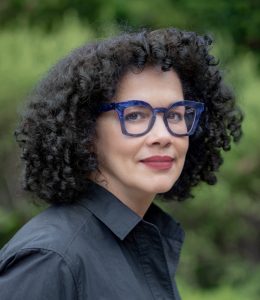
Photo: Michael Palma Mir
Elia Alba was born in Brooklyn to parents who immigrated from the Dominican Republic in the 1950s. She is a multidisciplinary artist whose artistic practice is concerned with the social and political complexity of race, identity, and the collective community. She received her Bachelor of Arts degree from Hunter College in 1994 and completed the Whitney Independent Study Program in 2001. She has exhibited throughout the United States and abroad, including at the Studio Museum in Harlem, El Museo del Barrio, Stedelijk Museum, Amsterdam, Science Museum, London, Smithsonian Museum of Art, National Museum of Art, and Reina Sofía, Madrid. Awards include the Studio Museum in Harlem Artist-in-Residence Program in 1999; Pollock-Krasner Foundation Grant in 2002; Joan Mitchell Foundation Grant in 2002 and 2008; Anonymous Was a Woman Award in 2019; and Latinx Artist Fellowship in 2021. Her work is in the collections of the Smithsonian Museum of Art, El Museo del Barrio, and Lowe Art Museum. Her work has been reviewed in The New York Times, Artforum, ArtNews, and Forbes, among others. Her book, Elia Alba, The Supper Club (2019) brings together artists, scholars, and performers of diasporic cultures through photography, food, and dialogue to examine race and culture in the United States. She was part of the curatorial team for El Museo del Barrio’s critically acclaimed exhibition, Estamos Bien: La Trienal 20/21. She lives and works in the Bronx.
Postcommodity is an interdisciplinary art collective comprised of Cristóbal Martínez (Mestizo), and Kade L. Twist (Cherokee). Postcommodity’s art functions as a shared Indigenous lens and voice to engage the assaultive manifestations of the global market and its supporting institutions, public perceptions, beliefs, and individual actions that comprise the ever-expanding, multinational, multiracial, and multiethnic colonizing force that is defining the twenty-first century through ever-increasing velocities and complex forms of violence. Postcommodity works to forge new metaphors capable of rationalizing our shared experiences within this increasingly challenging contemporary environment; promote a constructive discourse that challenges the social, political, and economic processes that are destabilizing communities and geographies; and connect Indigenous narratives of cultural self-determination with the broader public sphere.
Postcommodity are the recipients of grants from the Joan Mitchell Foundation (2010), Creative Capital (2012), Art Matters (2013), Native Arts and Cultures Foundation (2014), Mid Atlantic Arts Foundation (2017), Ford Foundation Art of Change Fellowship (2017–18), Harker Fund of the San Francisco Foundation (2018–19), Native Arts and Cultures Foundation Shift Award (2021), and Hewlett 50 Arts Commissions (2022). The collective has been exhibited nationally and internationally, including at Contour: 5th Biennial of the Moving Image, Mechelen, Belgium; Nuit Blanche, Toronto; Adelaide International 2012, Adelaide, Australia; 18th Biennale of Sydney, Sydney; Scottsdale Museum of Contemporary Art; 2017 Whitney Biennial; Art in General, New York; documenta 14; 57th Carnegie International, Pittsburgh; Desert X, Coachella Valley, CA; Art Institute of Chicago; LAXART, Los Angeles; Minneapolis Institute of Art; Remai Modern Museum, Saskatoon, Canada. Their historic Land Art installation Repellent Fence occurred at the US/Mexico border near Douglas, Arizona and Agua Prieta, Sonora, Mexico. The collective was awarded the Fine Prize for From Smoke and Tangled Waters, They Carried Fire Home, commissioned for the 57th Carnegie International.
Postcommodity acknowledges the important contributions of its previous collaborators: Steven Yazzie (2007–2010), Nathan Young (2007–2015), Raven Chacon (2009–2018), Adam Ingram-Goble (Game Remains), Andrew McCord (If History Moves at the Speed of Its Weapons, Then the Shape of the Arrow is Changing, and Promoting a More Just, Verdant and Harmonious Resolution), Annabel Wong (Dead River) and Existence AD (Dead River).
CAA’s Annual Artist Interviews will be held on Friday, February 17, 4:30–7 p.m. ET, in Grand Ballroom East.
The 111th CAA Annual Conference will be held February 15–18, 2023 at the New York Hilton Midtown. Register now!
CAA Issues Statement On Hamline University Termination of Dr. Erika López Prater
posted Jan 18, 2023
CAA has been following the termination of Professor Erika López Prater at Hamline University. As of last Friday, the Board of Trustees at the university has been engaged in a review of institutional policies, including those focused on academic freedom and inclusion. CAA strongly urges the Board and the administration to uphold the tenets of academic freedom with respect to Dr. López Prater for their public statements that have defamed and damaged her person and her professional reputation.
Academic freedom is a core principle of both Hamline University’s mission and CAA’s charter, and Dr. López Prater’s termination is a tacit rejection of everything that principle stands for in higher education. Beyond an infringement on academic freedom, Hamline’s actions are a dangerous precedent of academic administrators endorsing one side of a religious controversy.
Hamline University’s characterization of Dr. López Prater’s action as “Islamophobic” contradicts widely held definitions of the term from prominent public interest advocacy groups, including the national organizations CAIR (Council on American-Islamic Relations), and MPAC (Muslim Public Affairs Council). Dr. López Prater met and exceeded pedagogical standards for teaching by providing advance written and verbal notice of the intention to illustrate her lecture with two images of the Prophet Muhammed. Additionally, the images she used are historic and symbolic works of art of significance, essential to teaching the long and rich art history of Islam.
CAA calls upon Hamline University, President Fayneese Miller, and AVP David Everett to apologize to Dr. López Prater formally and publicly. Furthermore, this would be the appropriate time to affirm their commitment to both the informed pedagogy that Dr. López Prater demonstrated, and the academic freedom to pursue truth that all professors should expect. CAA speaks on behalf of a membership base that is facing increasingly precarious standards of employment—which is the very reason Hamline University was so easily able to terminate Dr. López Prater. Amends would be made if they recommitted to a tenure-line position for the teaching of art history.
Additional Signatories:
American Sociological Association
Other Statements of Support:
Academic Freedom Alliance (AFA)
Mesa (Middle Eastern Studies Association)
Michael S. Roth, President of Wesleyan University, to give keynote address at CAA’s 111th Annual Conference Convocation
posted Jan 17, 2023
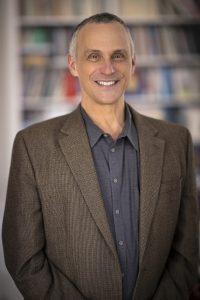
Michael S. Roth, President of Wesleyan University.
We are thrilled to announce that Michael S. Roth, President of Wesleyan University, will give the keynote address at CAA’s Convocation during the organization’s 111th Annual Conference.
Michael S. Roth ’78 became the sixteenth president of Wesleyan University in 2007, after having served as Hartley Burr Alexander Professor of Humanities at Scripps College, Associate Director of the Getty Research Institute, and President of the California College of the Arts. At Wesleyan, Roth has overseen the launch of such academic programs as the Allbritton Center for the Study of Public Life and the Shapiro Center for Writing as well as four new interdisciplinary colleges that emphasize advanced research and cohort building in the areas of the environment, film, East Asian studies, and integrative sciences. Under his leadership, Wesleyan experienced its most ambitious fundraising campaign in its history, raising more than $482 million, primarily for financial aid. Roth has undertaken several initiatives that have energized the curriculum and helped to make a Wesleyan education more affordable and accessible to students from under-represented groups, creating a supportive and diverse campus community that inspires students to achieve their personal best.
Author and curator (most notably of the exhibition Sigmund Freud: Conflict and Culture, Library of Congress, 1998–99), Roth describes his scholarly interests as centered on “how people make sense of the past.” His 2015 book Beyond the University: Why Liberal Education Matters (Yale University Press) has been a powerful tool for students, their families, faculty, and policymakers who are wrestling with the future of higher education in America. It was recognized in 2016 with the American Association of Colleges and Universities’ Frederic W. Ness award for a book that best illuminates the goals and practices of a contemporary liberal education. Roth’s newest book, Safe Enough Spaces: A Pragmatist’s Approach to Inclusion, Free Speech, and Political Correctness (Yale University Press), addresses some of the most contentious issues in American higher education, including affirmative action, safe spaces, and questions of free speech. Roth regularly publishes essays, book reviews, and commentaries in the national media and in scholarly journals. He continues to teach undergraduate courses and has offered MOOCs through Coursera, most recently, “How to Change the World.”
CAA’s Convocation will be held on Wednesday, February 15, 6:30–8 p.m. ET, in Grand Ballroom East.
The CAA 111th Annual Conference will be held February 16–18, 2023 at the New York Hilton Midtown. Register now!
CWA Picks: Winter 2023
posted Jan 12, 2023
The CAA Committee on Women in the Arts (CWA) Winter Picks include exhibitions and events that explore language through form, abstraction, the archive, and narrative. The artists included in this season’s picks investigate language and how it shapes our vision and experience of the world. They also reveal the systems of power embedded within language and how it often acts as a mediator.
Put It This Way: (Re)Visions of the Hirshhorn Collection
Hirshhorn Museum and Sculpture Garden
Until August 31, 2023
Put It This Way includes almost a century of work from fifty women and nonbinary artists in the Hirshhorn’s collection. The exhibit presents a range of media from the twentieth and twenty-first centuries, with a particular emphasis on the Hirshhorn’s mission to highlight global voices.
Caroline Kent
Until January 28, 2023
Figge Art Museum
Language and invented vocabulary made up of geometric shapes, marks, and colors are central to Caroline Kent’s practice. Her work challenges the viewer to consider how the indecipherable might play a role in their understanding of the world.
The Age of Roe: The Past, Present, and Future of Abortion in America
Until March 4, 2023
Conference: “The Age of Roe: The Past, Present, and Future of Abortion in America”
Friday January 27, 2023
This two-day conference at Harvard Radcliffe Institute will explore how Roe v. Wade and its aftermath shaped the United States and the world beyond it for nearly half a century. The conference will include lectures and panel discussions from experts in constitutional law, historians, health policy advocates, and other scholars. An accompanying exhibition curated by Mary Ziegler, Martin Luther King Jr. Professor of Law, UC Davis School of Law, will also be on view through March 4, 2023.
Until April 23, 2023
re:collection includes the work of five artists—Ali Cherri, Nicole Cherubini, Lily Cox-Richard, NIC Kay, and SANGREE—whose work reconsiders the Tufts University collection. Specifically, the artists explored about 200 objects from the fifth century BCE to the seventh century CE, including early Greco-Roman ceramics, stone carvings, pre-Columbian vessels, jewelry, and textiles. The exhibition has a range of approaches, from performance and installation to sculpture and painting.
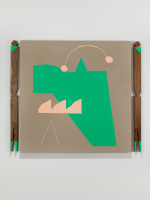
Valiant postures/A ruse! A ruse!
2021
Acrylic on Belgian linen, acrylic on walnut
63 × 74 × 2 1/2 in
CAA 2023 Board of Directors Election: Vote Now!
posted Dec 22, 2022
As a CAA member, voting is the best way to shape the future of your professional organization. Thank you for taking the time to vote!
The CAA Board of Directors is comprised of professionals in the visual arts who are elected annually by the membership to serve four-year terms (or, in the case of Emerging Professional Board members, two-year terms). The Board is charged with CAA’s long-term financial stability and strategic direction; it is also the Association’s governing body. The board sets policy regarding all aspects of CAA’s activities, including publishing, the Annual Conference, awards and fellowships, advocacy, and committee procedures. For more information, please read the CAA By-laws on Nominations, Elections, and Appointments.
MEET THE CANDIDATES
The 2022–23 Nominating Committee has selected the following candidates for election to the CAA Board of Directors. Click the names of the candidates below to read their bios/personal statements and CVs before casting your vote.
BOARD OF DIRECTORS CANDIDATES (FOUR-YEAR TERM, 2023–2027)
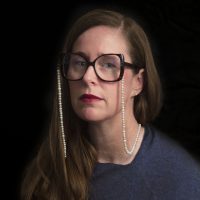
Associate Dean of Academic and Student Affairs, College of Visual Arts and Design
University of North Texas (Denton, TX)
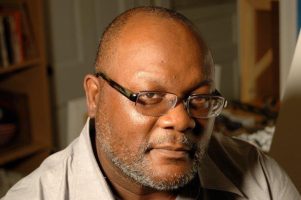
Associate Professor of Painting, Department of Art
Mississippi State University (Starkville, MS)

Associate Professor & Director of Art History
VCUarts Qatar (Doha, Qatar)
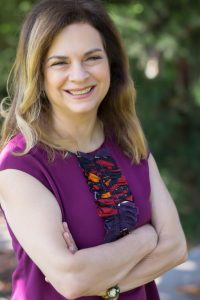
Curator of exhibition Lucio Fontana’s Ceramics,
Peggy Guggenheim Collection (Milan, Italy)
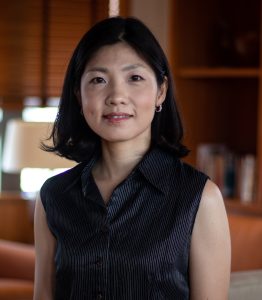
Associate Professor of Art History & Head of Arts & Humanities Major
Yale-NUS College (Singapore)
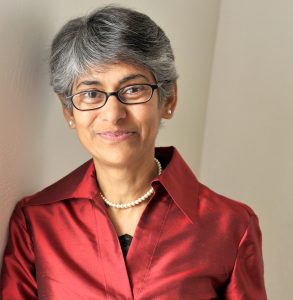
Associate Professor in Visual Communication Design, Department of Art, Art History & Design
University of Notre Dame (Notre Dame, IN)
EMERGING PROFESSIONALS BOARD OF DIRECTORS CANDIDATES (TWO-YEAR TERM, 2023–2025)
PhD Candidate, David Driskell Fellow
Institute for Doctoral Studies in the Visual Arts (Portland, ME)
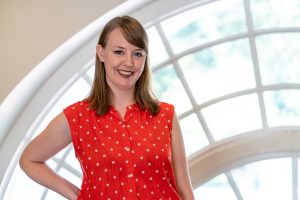
Ph.D. Candidate, Art and Architectural History
University of Virginia (Charlottesville, VA)
CAA members must cast their votes online. The deadline for voting is 5 p.m. ET on Thursday, February 16, 2023.
The elected individuals will be announced at CAA’s Annual Business Meeting to be held from 1–2 p.m. ET on Friday, February 17, 2023.
Questions? Contact Maeghan Donohue, Chief of Staff and Manager, Strategic Planning, Diversity & Governance (mdonohue@collegeart.org).
Emerging Professional Director Candidate: Lauren Van Nest
posted Dec 22, 2022
Statement
My name is Lauren Van Nest and I am a doctoral candidate at the University of Virginia (UVA) studying the art and architecture of medieval Europe. My dissertation examines the relationships crafted between objects of imperial patronage in the Ottonian Empire, their ritual environments, and the bodies of their patrons. I research the ways in which artistic materials—their form, aesthetics, symbolism—transmit concepts of divinity and power across media and iconographies. My work has been supported by a twelve-month fellowship from the Deutscher Akademischer Austauschdienst (German Academic Exchange Service) in affiliation with the Georg-August-Universität Göttingen in Göttingen, Germany. Additionally, I have been awarded research grants by the Virginia Museum of Fine Arts (VMFA), Center for Global Inquiry + Innovation, and UVA Graduate School of Arts & Sciences. I received my undergraduate degree from the University of North Carolina-Chapel Hill (B.A.) and a graduate degree from the University of Toronto (M.A.).
I would define my duty as a College Art Association (CAA) board member as a commitment to service towards the community via cultivation and advocacy. I am passionate about developing and promoting programming that creatively adapts to the pressures facing the visual arts today and continues to make the arts more accessible to wider audiences. As the Emerging Professional Director on the Board of Directors, I would bring my own enthusiasm for the visual arts alongside my skills in project management, communicating complex ideas, and collaboration. As an organization drawing together diverse and vibrant professionals, CAA is uniquely positioned to advocate for the value of the arts nationally and internationally. During my term, I will develop robust advocacy strategies that not only promote continued federal and public funding of the arts, but also attend to the needs of CAA members through grants and workshops. I envision CAA as a partner to its individual members, navigating the various obstacles facing aspiring as well as established visual arts professionals.
I have served in international organizations during my graduate career, including the Medieval Academy of America (MAA) and the International Center of Medieval Art (ICMA). It is in these roles that I have coordinated mentorship programming, produced podcasts, and organized roundtables on topics related to graduate and early career professionalization. I am also committed to engaging with digital humanities projects that analyze and document the history of academic institutions, namely universities (Land and Legacy) and organizations (ICMA Oral History Project). With CAA, I am able to harness my previous and future interests to contribute to the goals of the organization.
Emerging Professional Director Candidate: Carolyn Jean Martin
posted Dec 22, 2022
Statement
I am honored to be nominated as a candidate for Emerging Professional Director. Having been introduced to CAA at the start of my graduate school education, membership has been a sustaining source of knowledge, professional growth, and collaboration. If selected, I will utilize the platform to assist in strengthening the commitment of the CAA mission for diverse practices and practitioners, as well as maintaining an international presence. Students and emerging professionals, as they continue to move the art world in dynamic directions, are a critical part of those commitments and vital to the growth of CAA. As someone whose educational pursuits include art practice, art history, and the philosophy of aesthetics I seek to continue and expand upon the efforts that make CAA the place where diverse, intersecting practices converge in a sustained global conversation. Additionally, previously serving on the Student and Emerging Professionals committee facilitated an understanding of the spaces where opportunities for growth and development can take place – particularly for undergraduate and graduate student membership.
Now, more than ever, as global politics reflect isolationist worldviews and the creative arts are fighting to stay alive in colleges and universities, an international organization such as CAA is perfectly poised as the platform for arts professionals to come together for ongoing conversations, to strategize, and harness the collective power of the arts as an agent of change. If provided an opportunity to serve on the board as Emerging Professional Director I bring energy and excitement to build upon the work currently being executed at CAA that makes use of the technological innovations gained over the past two years that will ensure a variety of options for engagement throughout the year, and further aid in the democratization of access to scholarship and networking opportunities across practice and borders.
Board of Directors Candidate: Neeta Verma
posted Dec 22, 2022
Bio
Neeta Verma situates herself within the porous discipline of Visual Communication Design. Her areas of research and teaching explore the critical use of design as a tool for social equity and justice. Her work focuses on systemic social issues examined through the lens of power and privilege, and the examination of power structures within social ecologies. She teaches Social Design at the intersection of social innovation and collaborative practices, and Visualization of Data which investigates the aesthetics, ethics, and politics of representation. Her current research projects examine youth violence in urban contexts locally and the design of conducive environments for the visually impaired in India. She received her MFA from Yale University. She currently holds faculty fellowships at the Center for Social Concerns, the Liu Institute for Asia & Asian Studies, Pulte Institute for Global Development at the University of Notre Dame. She is also appointed as an affiliate faculty forThe Initiative on Race and Resilience. Her professional design practice of over twenty-five years has focused exclusively on museums, cultural organizations, not-for-profits, and educational institutions. Selected clients include the American Red Cross, Cooper-Hewitt Design Museum, Liberty Science Center, The New York Botanical Garden, The New York Public Library, the Whitney Museum of American Art, and The Wildlife Conservation Society. She is the recipient of the Nehru-Fulbright Fellowship. She is also the recipient of several design awards that include the Core77 Design Awards, Graphis, A’Design Awards, International Design Awards, GDUSA, and the Design Incubation Teaching Award. She has been an invited speaker and has presented her research at both national and international conferences. She currently serves on the SEGD Academic Task Force and is a member of the Pluriversal Working Group of the Future of Design Education.