
CAA News Today
Final Report of the Task Force on Annual Conference Technologies
posted Mar 05, 2013
Submitted by: Jacqueline Francis, Vice President for Annual Conference
February 17, 2013
This report is a revised and updated version of the preliminary report delivered to the Board of Directors at its October 28, 2012 meeting. It is offered in four parts:
A. The Task Force Origins and Goals
B. Relevant Task Force Discussions and Findings
C. Future Research and Considerations
D. The Task Force’s Accomplishments and Recommendations
The Task Force members:
Jacqueline Francis, California College of the Arts; Vice President for Annual Conference; Chair
Anne Collins Goodyear, National Portrait Gallery, Smithsonian Institution; CAA President and past-VP for Annual Conference
Randall Griffin, Southern Methodist University; CAA VP for Publications
Patricia McDonnell, Wichita Art Museum; CAA VP for External Affairs
Sabina Ott, Columbia College Chicago; CAA Board Member
Emmanuel Lemakis, CAA Director of Programs
Lauren Stark, CAA Manager of Programs and Archivist
Michael Goodman, CAA Director of Information Technology
Paul Jaskot, De Paul University; CAA Past-president
Bruce Robertson, University of California–Santa Barbara; CAA Past-VP for Annual Conference
Katherine Behar, Baruch College
Conrad Gleber, LaSalle University
Mark Tribe, Brown University
On behalf of CAA, I thank the Task Force members for their service to our organization.
A. The Task Force Origins and Goals
Discussion began in December 2011. The initial meeting was chaired by Anne Collins Goodyear, then Vice President for Annual Conference. At this early stage, Task Force members considered historical perspectives on the Conference, offered by Bruce Robertson, the first CAA Vice President for Annual Conference, and CAA’s Director of Programs, Emmanuel Lemakis. In this collegial and productive discussion, the possibility of providing new member benefits whether via live stream and interactive broadcasts or as a post-conference recorded archive (audio and/or video) arose right away. It was useful to be reminded by CAA Director of Information Technology, Michael Goodman, that our organization’s technology infrastructure is mostly used for communication. For this reason, video recording sessions would require CAA to find volunteers to undertake the task, hire new personnel to do so, or contract outside service providers. Starting in January 2012, the Task Force researched, reviewed, and reported on available information technology strategies. The Task Force considered current strategies in use by other learned societies and professional organizations that regularly host conferences and symposia, and by cultural institutions whose goals resonate, overlap, and are coeval with CAA’s.
B. Relevant Task Force Discussions and Findings
1. Distributing Annual Conference Sessions
Presently CAA members can purchase audio recordings of conference sessions whose participants agree to be recorded. Initially, the product was audiocassettes, and presently, CDs and MP3s (digital) are available. Other available technologies include podcasts in MP4 (Quick Time files), Flash Video format which delivers video on the Internet, Windows Media Video/WMV format for streaming (constant delivery provided to a user), and webcasts (media presentation streamed live or distributed on demand on the Internet). Live streaming and video sharing of conference sessions were at the center of many Task Force discussions.
The benefits of distributing session proceedings online during the conference and in its aftermath include:
- a. offering content to CAA members, including those who attended the sessions and simply want to revisit their subjects, and those who did not attend at all;
- b. attracting new members to CAA who may not ever attend a conference, such as those living outside of the U.S. and/or persons with limited resources;
- c.- generating revenue by making online content a membership benefit;
- d.- expanding and broadening its audience by providing some or all of our online content for free.
- e.- documenting conference proceedings and session participation, which, in the UK is regarded as active research that is assessed in academic promotion and tenure cases, and other performance reviews.
Of course, there are many challenges around recording and webcasting content:
- a. the costs of streaming and delivering high quality visual recordings and limited CAA resources for undertaking this expense at present. The hourly rate for professional videographers in New York is at least $500/hour.
- b. Fair Use limitations for broadcasting modern and contemporary art presented in Power Point, Keynote, Prezi, and other presentation formats. [Fair Use is a limitation and exception to federal copyright laws that allow one to use a text, image, recording, etc., without the permission of the copyright holder.]
There are companies that webcast conference and symposium presentations,c.amplifying (as one website proclaimed) these events. Among the prominent video hosting sites are Vimeo, Art Babble, and YouTube. Making use of these sites, the Institute of Fine Arts (New York University), the National Gallery of Art, the Getty Research Institute, and the Arts & Humanities Research Council (United Kingdom) presently offer streamed and/or recorded content online. All are committed to this kind of programming because it has increased their visibility.
The Getty’s strategy in developing policy that allows it to distribute its event online is exemplary. Advised by its attorneys, the Getty has scripted a release form that each guest speaker must sign; this document informs guest speakers that their presentations may be visually recorded and distributed on Getty sites, which included its YouTube channel, Facebook page, social media sites that might carry the Getty name, and the getty.edu website. In addition, the Getty posts signs in its auditorium, advising the audience members at events that they may appear in video, still photography, etc., and on Getty websites. The Getty’s approach to recording speaker presentations that include works of art is to shoot around such images.
Following the Getty’s model, CAA might visually record session participants (and not any of the presented images prepared by panelists) who agree to be recorded. Major public sessions at the conference—the convocation, the distinguished scholar session, artist interviews—could be streamed live with presented images relegated to the background or not shot at all. CAA Counsel Jeffrey P. Cunard has confirmed that there would be no issue in visually recording (1) session speakers who have signed release forms, (2) separate Power Points (text only) presented, and (3) the work of an artist who is speaking. The costs of live streaming and recording sessions will be considered, including the possibility of contracting with a company which could both visually record and host captured media on its own server. Investigating the costs of such undertakings remains to be done, and the decision regarding prioritization for future Annual Conference’s falls to the board, in consultation with the executive director.
C. Future Research and Considerations
1. Conference Technologies
- a. CAA could organize and sponsor another session using Skype (or another innovative presentation technology that allows distance participation).
- b. CAA might investigate the possibility of a conference “app” that might make the gathering easier to navigate for participants, re: finding sessions, making use of the conference space, etc.
- c. CAA might weigh the benefits of (a) launching the splash/landing page for the conference further in advance of the gathering, and (b) revising the page with the goal of highlighting certain events.
- d. CAA might consider holding electronic roundtables.
- e. CAA could encourage greater use of social networking services and platforms, e.g., Twitter, Tumblr, etc., at the conference and in the lead-up to it. CAA Board members might host blogs based on their particular interests and affiliations, and interest groups within CAA might take up blogging. To create a stream of comments generated and carried forth by a conference session, CAA might add a Twitter hashtag to each session, or to a limited number of sessions related to particular interest groups. (Notably, artists place great importance on facilitating relationships in sessions.) Hashtags might be published in the conference program or announced at the start of a session. Overall, tweeting, which is like taking notes, gives people a feeling of belonging to a social network, and would signal a change in CAA’s relationship with conference participants.
- f. CAA could consider a price for access to conference recordings. Access might be a benefit of conference registration, set as a charge for non-registrants, or granted following a pay-per-view price for a single recording or a package of recordings downloaded from a CAA-branded website. A disclaimer stating that the quality of the recorded media will vary might be necessary.
- g. Regarding streaming and recorded technology under consideration, CAA might have to accept some loss of control over them for it will not be possible to review all conference media slated for distribution. While CAA strives to provide and distribute high quality recordings to members, determining, assessing, and meeting that standard are responsibilities that our body might share with session participants, including session chairs.
- h. CAA could pursue the prospect of live streaming several sessions that will be distributed either on our website or on another server.
- i. CAA might consider a universal opt-in format for consent related to recording sessions and distributing them. That is, by agreeing to participate in the conference, all participants (presenters and audiences) would agree to be recorded, photographed, etc., and have their images used on CAA sites. Those who do not agree to any or all of these terms would have to submit forms stating their refusal by a set, pre-conference deadline.
2. Post-Conference Documentation of Conference Sessions
CAA’s identity is that of a member organization, and it can further capitalize on its capacity to facilitate relationships within our community. Specific to the visual recording of conference sessions, a Task Force member suggested this design for implementation:
- a. Session chairs could self-document (visual and audio recording, distribution of papers and presentations, setting up URL links, etc.) and post the media to a website they design and control.
- b. The CAA website could provide links to the session websites with abstracts and biographical information about the participants.
Some strategies for implementation:
- a. CAA requests, encourages or requires participation in such documentation.
- b. CAA starts small and works to support the initiative through outside funding.
- c. CAA make copyright issues the session chairs’ responsibility.
Participation in the visual recording of conference events for distribution may be low at first and may require CAA support to reach 100%. Without question, increasing the availability of the conference sessions will be a benefit to members. It also will influence creative, scholarly, and professional interest groups who exist outside of CAA and include individuals who have not or do not attend the Annual Conference. There is unlimited potential for CAA to facilitate the development of new networks and relationships.
3. Digital Communication and Distribution of Scholarship
Digital content is still being driven by individual members. CAA must continue to investigate the benefits and challenges of digital communication and distribution of scholarship using such technologies. The Modern Language Association (MLA) has recently established a new Office of Scholarly Communication with the goal of using digital platforms to promote member communication. MLA’s model of membership privileges openness, rather than the conventional closed dynamic of scholarly associations. A key benefit of membership is the opportunity to use MLA resources to find and communicate with likeminded scholars. Previously, a benefit of MLA membership was sharing one’s work with a relatively small number of people in attendance at an annual conference, or through publication in a journal (itself conceived as a benefit of membership). Now, MLA members will be able communicate with each other throughout the year, and publish digitally through MLA Commons, an open-source, blog-like platform that is being developing in partnership with the City University of New York Academic Commons (and with the support of the Andrew W. Mellon Foundation). MLA believes that the open practices and flexible network of MLA Commons will cultivate the best scholarship.
D. The Task Force’s Accomplishments and Recommendations
1. Accomplishments
- a. There will be a CAA Board-sponsored session at the 2013 conference on participatory art, curated by Task Force member Mark Tribe and led by Pablo Helguera. A New York based artist, Helguera is an author and multi-disciplinary artist working in unconventional formats, including experimental symposia, audio recordings, exhibition audio-guides, and nomadic museums.
- b. THATCamp CAA (in association with Columbia University and Smarthistory at Khan Academy) will be held on Monday, February 11, 2013 and Tuesday, February 12, 2013. This unconference will be an informal, discussion-based, collaborative meeting to be held at Macaulay Honors College (35 West 67th Street, NY). Attendance is free. THATCamp CAA focuses on digital art history scholarship and is open to those with an active interest in that area. Seventy-five participants were accepted on a first-come, first-served basis. A limited number of Kress Fellowships were made available for graduate students to help defray travel costs to THATCamp CAA. Lastly, there will be a CAA Board sponsored session at the 2013 Conference dedicated to the findings and outcomes of THATCamp CAA.
- c. There is wireless access at the 2013 Conference (NY) in all session rooms; our 2014 Conference (Chicago) also will offer this benefit for participants. CAA director of programs, Emmanuel Lemakis, deserves special recognition for negotiating with Hilton New York Hotel representatives for this perk.
- d. CAA is negotiating with a New York-area university to have student videographers record two to three sessions at the 2013 Conference. Session participants will permit video recording of themselves at the podium (but not their images as presented in Keynote, Power Point, Prezi, etc.). These videos will be made available after the conference. (See Task Force Recommendations section below.)
2. Recommendations
- a.. In 2013 CAA should undertake a pilot project to present two to three visual recordings of Conference sessions on Vimeo. Key CAA staff, the CAA President, and the VP for Annual Conference should review the recordings. High quality video should be uploaded to Vimeo by mid-March 2013 and promoted on CAA’s website.
- b.. Post-2013 conference, CAA should apply for a grant to fund a three-year initiative to research and present best practices of live streaming, audio and video recording, and archiving records of scholarly and professional presentations in which Fair Use is an issue. Grant requests could be made to the Kress Foundation and to the Andrew W. Mellon Foundation to position CAA as an organization well-suited to create a model for streaming online content. Our grant application should stress both the benefits to CAA and to the cultural sector in which we operate, especially in working out costs and other challenges to presenting images that are under copyright.
3. Budget items may include the following:
- (a) a temporary employee’s salary to professionally visually record a limited number of sessions, upload video to a media hosting site, and pursue image permissions used in a limited number of conference sessions, starting in 2014;
- (b) production costs related to streaming, visual recording, archiving, and posting conference videos for online distribution, live stream or on demand;
- (c) the costs of contracting with recording company that would visually record CAA sessions and host the recordings on its server;
- (d) research on permissions costs to session speakers to reproduce images at conference sessions/events starting in 2014 Conference and extending to 2017.
- e. CAA should identify a suite of conference sessions, presentations, and events suitable for live streaming and video recording, and secure participants’ permission to record, broadcast, and/or archive their discussions (and not their images), starting with the 2014 Conference. The cost of doing so should be recouped from conference fees.
- f. Four sessions at the 2014 Conference—selected in advance by CAA executive director, deputy director, director of programs, director of information technology, director of membership, development, marketing, CAA President, CAA Vice President for Annual Conference—should be streamed live during the conference and made freely available. Cost of doing so should be recouped from conference fees. The Task Force suggests streaming the conference’s keynote speaker’s address and the distinguished scholar session.
- g. The unconference format should be part of the 2014 Conference, and might be organized around the topic of contemporary artists’ use and engagement with emergent technologies. This unconference could be scheduled to run concurrently with the Annual Conference; limited to 60-75 participants in the THATCamp format, the unconference would not compete with the Annual Conference.
- h. CAA should encourage the growth of interest blogs and assign hashtags to our conference sessions. Task Force members recently attended conferences and symposia where social media enhanced the event for participants. The CAA director of programs will contact museum professionals and information management experts who have organized and/or used Twitter in conference settings, and the Annual Conference Committee will investigate the viability of the hashtag proposal.
- i. New technology is created regularly and must be continuously discussed and considered for adoption. A Board-sponsored session at the conference is an appropriate Fostering sustainable and ongoing review of conference In addition to harvesting ideas introduced or technologies tried in conference sessions soon after the forum for such discussion technologies should be the charge of the Annual Conference Committee, which would add some members with expertise in this area and comprise a subcommittee annual meeting’s conclusion, the subcommittee would evaluate older technologies to determine if modifications are necessary or if they have outlived their usefulness.
News from the Art and Academic Worlds
posted Feb 27, 2013
Each week CAA News publishes summaries of eight articles, published around the web, that CAA members may find interesting and useful in their professional and creative lives.
The Inclusion in Governance of Faculty Members Holding Contingent Appointments
The report that follows was prepared by a joint subcommittee of the American Association of University Professors’ Committee on Contingency and the Profession and the Committee on College and University Governance. Approved by both parent committees, the report was adopted as policy by the AAUP Council at its November 2012 meeting. (Read more from the American Association of University Professors.)
Cooper-Hewitt Announces Publication of White Paper on Socially Responsible Design
The Cooper-Hewitt, National Design Museum has announced the publication of a white paper, Design and Social Impact: A Cross-Sectoral Agenda for Design Education, Research, and Practice, along with a panel discussion on the paper’s findings and proposals. The paper is an outgrowth of the 2012 Social Impact Design Summit at the Rockefeller Foundation, which was hosted by Cooper-Hewitt and other groups to discuss strategies and actions to advance the field of socially responsible design—one term that refers to the practice of design for the public good, especially in disadvantaged communities. (Read more from the Cooper Hewitt, National Design Museum.)
The Art of Technology
John Maeda, president of the Rhode Island School of Design, remembers the night his Japanese-born father attended a parent–teacher conference in Seattle. The teacher gushed, “John excels at both art and math.” Later, he overheard his father proudly tell a customer at his tofu store, “John—he’s good at math.” Four decades later—at a time when economists, corporate executives, and politicians talk about the need for national excellence in science and engineering—Maeda is still trying to ensure that the arts aren’t forgotten. (Read more in the National Journal.)
3D-Printing Pen Turns Doodles into Sculptures
Free yourself from the tyranny of paper and boring 2D. With a $75 pen you can draw in thin air. The 3Doodle pen, developed by start-up company WobbleWorks, works much like a handheld 3D printer. It contains a mains-powered heater that melts the plastic beads used in such printers. (Read more in the New Scientist.)
Art School Panels Highlight Issues in Contemporary Art
On Saturday, the Yale School of Art hosted its first series of panels featuring students, curators, and professional artists discussing issues in contemporary art. The day of panels—which covered everything from the role of the internet in art making to how the camera phone has changed photography—was meant to foster discussion in a public setting about ideas that students had been dealing with in their mandatory first-semester “Critical Practice” class. (Read more in the Yale Daily News.)
The Geography of America’s Freelance Economy
Writing in the Atlantic back in 2011, Sara Horowitz, the founder of Freelancers Union, dubbed the “freelance surge” the “Industrial Revolution of our time”—as significant a shift in employment patterns as has been seen since the transition from agriculture to industry in the 1800s. A recent report estimates that there are about 17 million full-employed freelancers, or independent workers, a number than swells to more than 40 million, roughly a third of the workforce, when you include temps, part-timers, contractors, contingent workers, and those who are underemployed or work without employer-sponsored health insurance, 401Ks, or FLEX accounts. (Read more in the Atlantic.)
What Happened to Arts Students When the Fees Went Up?
When tuition fees tripled last year, with many universities setting their rates at the highest possible amount of £9,000, arts professionals in the country held their breath. Would the introduction of higher fees create a “dearth of training for people who don’t have independent wealth or rich parents,” as actor Clare Higgins put it? The truth is, it’s still hard to pinpoint the impact of last year’s fee rises. (Read more in the Guardian.)
Art Gallery Sued Again over Sale of Paintings
The once esteemed gallery Knoedler & Company has been sued five times since late 2011 by former clients who said it sold them forged paintings procured from a little-known Long Island dealer. Now the shuttered gallery is being sued by an investor who says paintings from the same dealer are genuine and that Knoedler did not do enough to sell them. (Read more in the New York Times.)
2013 Annual Conference Report
posted Feb 27, 2013
CAA hosted its 101st Annual Conference from February 13 to 16, 2013, at the Hilton New York in midtown Manhattan. This year’s program included four days of presentations and panel discussions on art history and visual culture, Career Services for professionals at all stages of their professional lives, a Book and Trade Fair, and a host of special events throughout the region. Preceding the Annual Conference was CAA’s first THATCamp, an “unconference” on digital art history that took place at Macaulay Honors College, City University of New York.
Attendance
Close to six thousand people from throughout the United States and abroad—including artists, art historians, students, educators, curators, critics, collectors, and museum staff—attended the conference.
Sessions
Conference sessions featured presentations by artists, scholars, graduate students, and curators who addressed a range of topics in art history and the visual arts. In total, the conference offered over two hundred sessions, developed by CAA members, affiliated societies, and committees.
Career Services
Career Services included four days of mentoring and portfolio-review sessions, career-development workshops, and job interviews with colleges, universities, and other art institutions. Approximately 230 interviewees and forty mentors participated in Career Services.
Book and Trade Fair
This year’s Book and Trade Fair presented 110 exhibitors—including participants from the United States, the United Kingdom, Turkey, Belgium, Mexico, Hong Kong, Germany, Poland, Ukraine, and Canada—that displayed new publications, materials for artists, digital resources, and other innovative products of interest to artists and scholars. The Book and Trade Fair also featured book signings, lectures, and demonstrations, as well as three exhibitor-sponsored program sessions on art materials and publishing.
ARTspace and ARTexchange
ARTspace, a “conference within the conference” tailored to the needs and interests of practicing artists, presented programming free and open to the public, including this year’s Annual Artists’ Interviews with Mira Schor and Janine Antoni. Over three hundred people attended this extraordinary event.
ARTspace also featured four days of panel discussions devoted to visual-arts practice, opportunities for professional development, and screenings of video work curated and produced by graduate students from the New York region. Programmed by CAA’s Services to Artists Committee, ARTspace was made possible in part by a generous grant from the National Endowment for the Arts.
ARTexchange, an open-portfolio event in which CAA artist members displayed drawings, prints, photographs, small paintings, and works on laptop computers, took place on Friday, February 15. Nearly fifty artists participated in ARTexchange this year.
Convocation and Awards
More than five hundred people attended CAA’s Convocation and presentation of the annual Awards for Distinction, which honor the outstanding achievements and accomplishments of individual artists, art historians, authors, conservators, curators, and critics whose efforts transcend their individual disciplines and contribute to the profession as a whole and to the world at large. The recipients of the 2013 awards are:
- Ellsworth Kelly, Distinguished Artist Award for Lifetime Achievement
- Elaine Sturtevant, Artist Award for Distinguished Body of Work
- T. J. Clark, Distinguished Lifetime Achievement Award for Writing on Art
- Hal Foster and Claire Bishop, Frank Jewett Mather Award
- Harmony Hammond and Martha Rosler, Distinguished Feminist Award
- Mary K. Coffey, Charles Rufus Morey Book Award
- Philipp Kaiser and Miwon Kwon, Alfred H. Barr Jr. Award
- Joanne Pillsbury, Miriam Doutriaux, Reiko Ishihara-Brito, and Alexandre Tokovinine, Alfred H. Barr Jr. Award for Smaller Museums, Libraries, Collections, and Exhibitions
- Buzz Spector, Distinguished Teaching of Art Award
- June Hargrove, Distinguished Teaching of Art History Award
- Lance Mayer and Gay Myers, CAA/Heritage Preservation Award for Distinction in Scholarship and Conservation
- Yukio Lippit, Arthur Kingsley Porter Prize
- Julia Bryan-Wilson, Art Journal Award
Robert Storr of Yale University delivered the keynote address. His provocative address will be posted on CAA’s website in the coming weeks.
Special Events
Following Convocation, the Solomon R. Guggenheim Museum hosted CAA’s Opening Reception on Wednesday evening, February 13. Hundreds of attendees gathered to celebrate the conference while enjoying a preview of the exhibition Gutai: Splendid Playground.
CAA celebrated the one hundredth anniversary of The Art Bulletin and the fifteenth anniversary of caa.reviews after the Annual Members’ Business Meeting on Friday, February 15.
Thank You
Members of CAA’s Board of Directors and staff would like to extend their gratitude to all conference funders and sponsors, attendees, volunteers, and participants; the organization’s committees and award juries; the Hilton New York staff; NYC and Company; the museums and galleries that opened their doors to conference attendees free of charge; and everyone involved in helping to make the 101st Annual Conference such a tremendous success!
Save the Date
CAA’s 102nd Annual Conference will be held in Chicago, Illinois, February 12–15, 2014.
About CAA
The College Art Association is dedicated to providing professional services and resources for artists, art historians, and students in the visual arts. CAA serves as an advocate and a resource for individuals and institutions nationally and internationally by offering forums to discuss the latest developments in the visual arts and art history through its Annual Conference, publications, exhibitions, websites, and other events. CAA focuses on a wide range of issues, including education in the arts, freedom of expression, intellectual-property rights, cultural heritage and preservation, workforce topics in universities and museums, and access to networked information technologies. Representing its members’ professional needs since 1911, CAA is committed to the highest professional and ethical standards of scholarship, creativity, criticism, and teaching.
Thanks to 2013 Career Services Mentors and Leaders
posted Feb 26, 2013
CAA wishes to thank the artists, scholars, curators, critics, educators, and other professionals in the visual arts who generously served as mentors for the Artists’ Portfolio Review, Career Development Mentoring, Mock Interview Sessions, and Professional Development Roundtable Discussions. The organization also appreciates the work of the leaders of the Professional-Development Workshops and the speakers at Orientation.
Orientation
Michael Aurbach, Vanderbilt University; and David M. Sokol, University of Illinois, Chicago (emeritus).
Artists’ Portfolio Review
Michael Bzdak, Johnson & Johnson; Susan Canning, College of New Rochelle; Sandra Dupret, Fleming College; Diane Edison, University of Georgia; Peter Kaniaris, Anderson University; Jason Lahr, University of Notre Dame; Suzanne F. W. Lemakis, Center for Culture: Department of Fine Art, Citibank; Sharon Lippman, Art Without Walls; Craig Lloyd, College of Mount St. Joseph; George Lorio, Delaware State University; Lenore Malen, Parsons the New School for Design; Sarah Mizer, Virginia Commonwealth University; Marilyn Murphy, Vanderbilt University; Judith Pratt, Judith Pratt Studio; John Silvis, New York Center for Art and Media Studies; and Steve Teczar, Maryville University of St. Louis.
Career Development Workshop
Edward Aiken, Syracuse University; Susan Altman, Middlesex County College; Karen Atkinson, California Institute of the Arts; Michael Aurbach, Vanderbilt University; Roann Barris, Radford University; Brian Bishop, Framingham State University; Kevin Concannon, Virginia Tech; Jeffery Cote de Luna, Dominican University; James Farmer, Virginia Commonwealth University; Reni Gower, Virginia Commonwealth University; Richard Heipp, University of Florida; Jim Hopfensperger, Western Michigan University; Dennis Ichiyama, Purdue University; Mitch Kern, Alberta College of Art and Design; Carol Krinsky, New York University; Craig Lloyd, College of Mount St. Joseph; Sharon Louden, independent artist; Heather McPherson, University of Alabama, Birmingham; Jo-Ann Morgan, Western Illinois University; Mark O’Grady, Pratt Institute; Morgan Paine, Florida Gulf Coast University; Doralynn Pines, Metropolitan Museum of Art (retired); Judith Pratt, Judith Pratt Studio; David Raizman, Drexel University; Paul Ryan, Mary Baldwin College; Dinah Ryan, Principia; Greg Shelnutt, Clemson University; Gerald Silk, Tyler School of Art, Temple University; John Silvis, New York Center for Art and Media Studies; Joe Thomas, Kennesaw State University; Larry Thompson, Samford University; Ann Tsubota, Raritan Valley Community College; Charles Wright, Western Illinois University; Barbara Yontz, St. Thomas Aquinas College; and Annie Storr, Corcoran Gallery of Art.
Professional-Development Roundtable Discussions
Michael Aurbach, Vanderbilt University; Diane Edison, University of Georgia; Peter Kaniaris, Anderson University; and Leo Morrissey, Winston-Salem State University.
Mock Interview Sessions
Lynne Allen, Boston University; Anne Bertrand-Dewsnap, Marist College; Steven Bleicher, Coastal Carolina University; Karen Blough, State University of New York, Plattsburgh; Susan Bowman, Rowan University; Maria Ann Conellu, Brooklyn College, City University of New York; Sara Dismukes, Troy University; Carole Garmon, University of Mary Washington; Randall C. Griffin, Southern Methodist University; Bertha Gutman, Delaware County Community College; Kim Hartswick, Brooklyn College, City University of New York; Richard Heipp, University of Florida; Carolyn Henne, Florida State University; Janet Hethorn, University of Delaware; Dennis Y. Ichiyama, Purdue University; Matt King, Virginia Commonwealth University; Andrea Kirsh, Independent Scholar and Rutgers University; Cory Knedler, University of South Dakota; Sandy Lane, Metropolitan State University of Denver; David LaPalombara, Ohio University; David Chapman Lindsay, Texas Tech University; Tom Loeser, University of Wisconsin, Madison; Greg Martino, Pennsylvania Academy of Fine Arts; Donna M. Meeks, Lamar University; Rebecca Nolan, Savannah College of Art and Design; Charlotte A. Norman, Columbus College of Art and Design; Ravi S. Rajan, Purchase College, State University of New York; Kirstin Ringelberg, Elon University; Katherine Sullivan, Hope College; Karen Wirth, Minneapolis College of Art and Design; David Yager, University of California, Santa Cruz.
Brown-Bag Lunches and Sessions
Hazel Antaramian-Hofman, California State University, Fresno; Steven Bleicher, Coastal Carolina University; Amanda Hawley Hellman, Emory University; David Chapman Lindsay, Texas Tech University; Laurel Peterson, Yale University; and Amelia Winger-Bearskin, Vanderbilt University.
Professional-Development Workshops
Susan Altman, Middlesex County College; Michael Aurbach, Vanderbilt University; Barbara Bernstein, Rhode Island School of Design and Virginia Center for the Creative Arts; Steven Bleicher, Coastal Carolina University; Micha Cárdenas, University of Southern California; Barbara Chin, ITHAKA; Mika Cho, California State University, Los Angeles; Stacy Miller, Parsons the New School for Design; Gigi Rosenberg; David M. Sokol, University of Illinois, Chicago (emeritus); Blaise Tobia, Drexel University; and Angie Wojak, School of Visual Arts.
Solo Exhibitions by Artist Members
posted Feb 22, 2013
See when and where CAA members are exhibiting their art, and view images of their work.
Solo Exhibitions by Artist Members is published every two months: in February, April, June, August, October, and December. To learn more about submitting a listing, please follow the instructions on the main Member News page. This section is not an exhibition calendar: artists may submit information for shows that have taken place within the past six months for publication.
February 2013
Mid-Atlantic

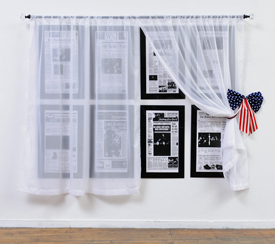 Marcia Annenberg, No News Is Good News, 2012, mixed media, 60 x 74 in. (artwork © Marcia Annenberg)
Marcia Annenberg. Bernstein Gallery, Woodrow Wilson School of Public and International Affairs, Princeton University, Princeton, New Jersey, December 17, 2012–February 14, 2013. News/Not News. Mixed media.

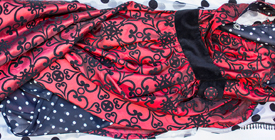 Maria Creyts, detail of Anne-Marie, 2013, archival digital photograph, 17 x 50 in. (artwork © Maria Creyts)
Maria Creyts. College Art Gallery, University Hall, Fairleigh Dickinson University, Teaneck, New Jersey, January 8–February 8, 2013. Bespoken. Photography, photo-frieze, and fashion.

 Tom McGlynn, Survey 14, 2012, acrylic and gouache on wood panel, 30 x 40 in. (artwork © Tom McGlynn)
Tom McGlynn. Hamilton Square, Jersey City, New Jersey, December 7, 2012–March 25, 2013. Very Much Like (Pictures of Nothing). Painting.

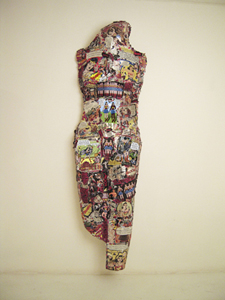 Linda Stein, Justice for All 698, 2010, acrylicized metallic paper, archival inks, and mixed media, 79 x 40 x 9 in. (artwork © Linda Stein)
Linda Stein. Bogigian Art Gallery, Wilson College, Chambersburg, Pennsylvania, March 31–April 30, 2013. The Fluidity of Gender: Sculpture by Linda Stein. Sculpture.
Midwest

Kate Gilmore. Museum of Contemporary Art, Cleveland, Ohio, March 16–June 9, 2013. Kate Gilmore: Body of Work. Video and sculpture.
Northeast

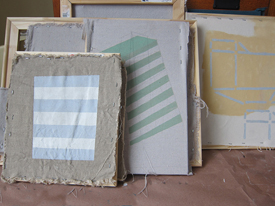 Invitation image for Sharon L. Butler’s exhibition Precisionist Casual
Sharon L. Butler. Pocket Utopia, New York, January 8–February 17, 2013. Precisionist Casual. Painting.
Cora Cohen. Guided by Invoices, New York, February 15–March 16, 2013. The Responsibility of Forms. Painting.

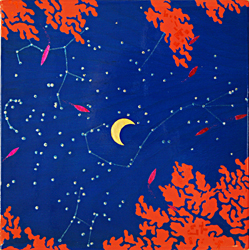 Leila Daw, Scorpio and the Sea, 2012, mixed media on wood, 9 x 9 in. (artwork © Leila Daw)
Leila Daw. Gallery West, Suffolk County Community College, Michael J. Grant Campus, State University of New York, Brentwood, New York, January 31–March 14, 2013. Leila Daw: Remember How You Got Here. Mixed media.
Sharon Lee Hart. Charles C. Thomas Gallery, Porteous Building, Maine College of Art, Portland, Maine, October 19–December 17, 2012. Sanctuary: Portraits of Rescued Farm Animals. Photography.

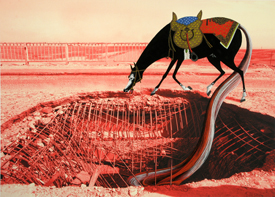 Susanne Slavick, Replenish, 2010, gouache on archival digital print on Hahnemühle, 10 x 14 in. (artwork © Susanne Slavick)
Susanne Slavick. Accola Griefen Gallery, New York, December 7, 2012–January 12, 2013. Wrought. Mixed media.

 Tova Snyder, Italian Roofscape #40, 2006, acrylic on canvas, 36 x 44 in. (artwork © Tova Snyder)
Tova Snyder. Casa Italiana Zerilli-Marimò, New York University, New York, February 27–March 29, 2013. Italian Roofscapes. Painting.

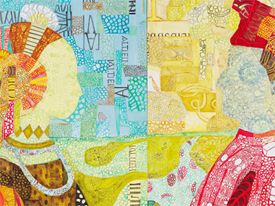 Esmé Thompson (artwork © Esmé Thompson)
Esmé Thompson. Courthouse Gallery, Lake George, New York, January 19–February 22, 2013. Esmé Thompson. Painting, sculpture, and installation.

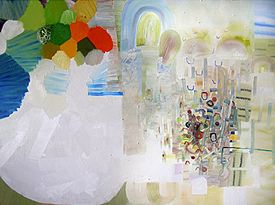 Josette Urso, WhisperSand, 2012, oil on canvas, 36 x 48 in. (artwork © Josette Urso)
Josette Urso. Kathryn Markel Fine Arts, New York, February 7–March 9, 2013. Snow Day. Painting.

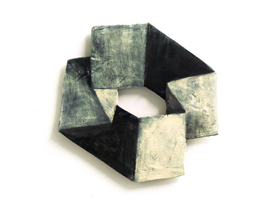 Leah Wolff, Impossible Shape 8a, 2012, clay and underglaze, 7½ x 7½ in. (artwork © Leah Wolff)
Leah Wolff. Scaramouche, New York, November 11 2012–January 13, 2013. Leah Wolff: It’s Been Hours. Ceramic sculpture and drawing.
South

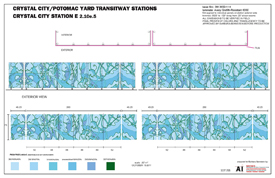 Barbara Bernstein, design for Crystal City Station, 2012, film on laminated glass (artwork © Barbara Bernstein)
Barbara Bernstein. Arlington Arts Center, Arlington, Virginia, December 1, 2012–March 30, 2013. Connections. Plans and maquettes for a public art commission for seven stations of the Virginia Transit System.
Heather Deyling. Roy C. Moore Gallery, Gainesville State College, Gainesville, Georgia, November 1–28, 2012. Imminent Overgrowth. Installation and painting.

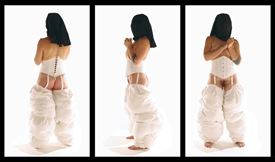 Lauren Kalman, Spectacular (Tit), 2012, 3 video stills of high-definition digital video loop (artwork © Lauren Kalman)
Lauren Kalman. Redux Contemporary Art Center, Charleston, South Carolina, January 25–March 3, 2013. Spectacular. Sculpture and video.
West

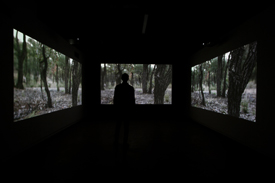 Dawn Roe, installation view of Goldfields, 2012, 3-channel high-definition video installation, 5:29 min. (artwork © Dawn Roe; photograph by Screen Space, Melbourne, VIC, Australia)
Dawn Roe. Gray Box Media Space, White Box, University of Oregon, Portland, Oregon, February 7–March 23, 2013. Dawn Roe: Goldfields. Video installation.

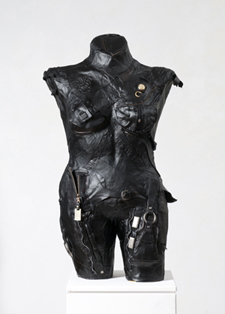 Linda Stein, Defender 696, 2010, leather, metal, and mixed media, 38 x 22 x 14 in. (artwork © Linda Stein)
Linda Stein. Robert Graves Gallery, Wenatchee Vallery College, Wenatchee, Washington, January 2–March 14, 2013. The Fluidity of Gender: Sculpture by Linda Stein. Sculpture.
News from the Art and Academic Worlds
posted Feb 20, 2013
Each week CAA News publishes summaries of eight articles, published around the web, that CAA members may find interesting and useful in their professional and creative lives.
Move Over Galleries: Artists Sign with Agents
The British artist Stuart Semple has signed a contract for worldwide representation with the fashion agency Next Management, a move that highlights again how the traditional artist–gallery relationship is changing. Several artists, including Damien Hirst and Keith Tyson, have agents or managers who provide financial advice and handle their business dealings with galleries, but Semple says his collaboration will more closely resemble relationships in the music industry, where managers act as a buffer between their acts and the outside world, helping to promote their work and negotiate their projects. (Read more in the Art Newspaper.)
Help Desk: Art Consultant
I was just approached by an art consultant who asked me “how I normally work with art consultants.” I think what the person wanted to know is how I want to divide sales, like a percentage ratio, and I just don’t know what is normal. I tried to find online standards for art consultant–artist relationships that develop without a gallery being involved, but everything was all over the place and contradictory. (Read more at Daily Serving.)
The Humanities, Unraveled
Let me start with the bad news. It is not even news anymore; it is simply bad. Graduate education in the humanities is in crisis. Every aspect, from the most specific details of the curriculum to the broadest questions about its purpose, is in crisis. It is a seamless garment of crisis: if you pull on any one thread, the entire thing unravels. Read more in the Chronicle of Higher Education.)
Four Common Misconceptions on Creative Thinking in Research
Research is a creative activity. In essence, to solve your research question, you will need to take a step outside the boundaries of current knowledge. If you are expected to develop a new theory as part of your research, you certainly need to get your creative juices flowing. When we read the work of great scientists, it sometimes seems as if they possess of some extraordinary tweak in their brain that makes them capable of taking a visionary leap and pushing their field to new advances. In reality, however, all creative solutions are simply the result of a long process of trying, researching, and chewing at the end of pencils. Read more at Inside Higher Ed.)
Fire at Pratt Institute Destroys Studios and Artwork of Students
Maria De Los Angeles, a twenty-four-year-old student at Pratt Institute, has an admissions interview at Yale University’s graduate art school next month and was planning to show the officers there some of her one hundred paintings and three hundred prints. But in last Friday’s early hours, a fast-moving fire ravaged the top two floors of the historic main building at the private art, design, and architecture college in Brooklyn, destroying dozens of art studios and the precious works they contained. (Read more in the New York Times.)
Will You Lose Your Museum Job to a Robot?
OK, maybe not to a robot, but to increasingly sophisticated automation. This question is prompted by a report released last month by the Associated Press forecasting the effect of technology on the economy and employment. The thesis of the authors is that the world is experiencing the first real “jobless recovery” in history, as we bounce back from the great recession of 2008. They argue that the millions of jobs that went away in the past few years not only are not coming back, even more jobs will be lost as automation takes over more work. (Read more at the Center for the Future of Museums.)
A Critic’s Take on Arts and Entrepreneurship
“Arts entrepreneurship” certainly isn’t an oxymoron, unless your definition of art is so narrow that any business success disqualifies it—the attitude of the stereotypical rock snob for whom the little-heard indie debut is always better than the major-label follow-up. On the other hand, the conflict between art and commerce is age old, and there’s no question pandering to an audience can undermine artistic quality. But there’s no magic formula for striking the balance. (Read more in Audience Wanted.)
Sotheby’s Sued over Caravaggio Attribution
Sotheby’s is being sued for damages over a work it attributed to a “follower” of Caravaggio that sold at auction in London to the late collector and scholar Denis Mahon in 2006, for a hammer price of £42,000. Mahon subsequently identified the painting as a work “by the hand of Caravaggio” and obtained an export license for it that gave an estimated selling price of £10 million, according to a claim filed at London’s High Court of Justice. (Read more in the Art Newspaper.)
CAA Seeks Nominations for 2014–18 Board Service
posted Feb 18, 2013
CAA seeks nominations and self-nominations from individuals interested in shaping the future of the organization by serving on the Board of Directors for the 2014–18 term. The board is responsible for all financial and policy matters related to the organization. It promotes excellence in scholarship and teaching in the history and criticism of the visual arts, and it encourages creativity and technical skill in the teaching and practice of art. CAA’s board is also charged with representing the membership on issues affecting the visual arts and the humanities.
Candidates must be current CAA members. Nominations and self-nominations should include the following information: the nominee’s name, affiliation, address, email address, and telephone number, as well as the name, affiliation, and email address of the nominator, if different from the nominee. Please send all information by mail or email to: Vanessa Jalet, Executive Liaison, College Art Association, 50 Broadway, 21st Floor, New York, NY 10004. Deadline: April 1, 2013.
People in the News
posted Feb 17, 2013
People in the News lists new hires, positions, and promotions in three sections: Academe, Museums and Galleries, and Organizations and Publications.
The section is published every two months: in February, April, June, August, October, and December. To learn more about submitting a listing, please follow the instructions on the main Member News page.
February 2013
Academe

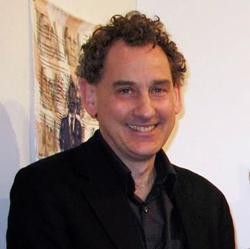 Peter Chametzky
Peter Chametzky, formerly professor of art history and director of the School of Art and Design at Southern Illinois University in Carbondale, has been appointed professor of art history and chair of the Department of Art at the University of South Carolina in Columbia.

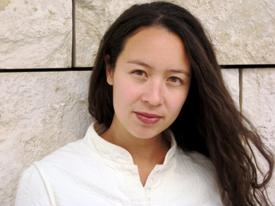 Irene V. Small
Irene V. Small, formerly an assistant professor in art history at the University of Illinois in Urbana-Champaign, has joined the faculty of the Department of Art and Archaeology at Princeton University in Princeton, New Jersey.
Museums and Galleries
Austen Barron Bailly, previously head of the American Art Department at the Los Angeles County Museum of Art in California, has been named George Putnam Curator of American Art at the Peabody Essex Museum in Salem, Massachusetts.
Susan L. Beningson has joined the Brooklyn Museum in New York as assistant curator of Asian art. She will help with a major reinstallation of the museum’s permanent galleries of Asian and Islamic art, scheduled to open in 2015.
Katherine A. Bussard, associate curator of photography at the Art Institute of Chicago in Illinois, has been named Peter C. Bunnell Curator of Photography at the Princeton University Art Museum in Princeton, New Jersey. She will begin work at the museum on April 15, 2013.

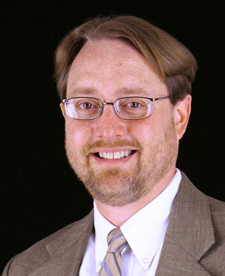 Nicholas Capasso
Nicholas Capasso, deputy director of curatorial affairs at the deCordova Sculpture Park and Museum in Lincoln, Massachusetts, has become the new director of the Fitchburg Art Museum in Fitchburg, Massachusetts.

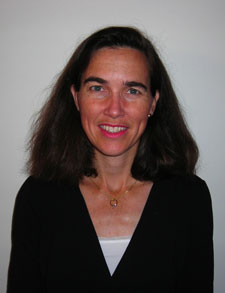 Anne Collins Goodyear
Anne Collins Goodyear, associate curator of prints and drawings for the Smithsonian Institution’s National Portrait Gallery in Washington, DC, and president of the CAA Board of Directors, has been appointed codirector of the Bowdoin College Museum of Art in Brunswick, Maine. She will lead the institution with her husband, Frank H. Goodyear III.

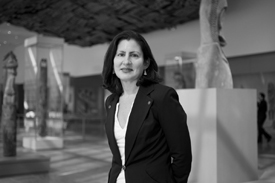 Alisa LaGamma
Alisa LaGamma has joined the Metropolitan Museum of Art in New York as curator in charge of the Department of the Arts of Africa, Oceania, and the Americas. On April 1 she will succeed Julie Jones, who is retiring at the end of March 2013.

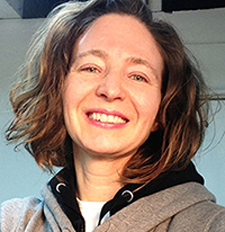 Lauren K. O’Neal
Lauren K. O’Neal, a faculty member of the Graduate Arts Administration Program at Boston University in Massachusetts, has been appointed director of the Lamont Gallery at Phillips Exeter Academy in Exeter, New Hampshire.
Lynn Orr, curator in charge of European art for the Fine Arts Museums of San Francisco in California, has left her position after twenty-nine years of service.

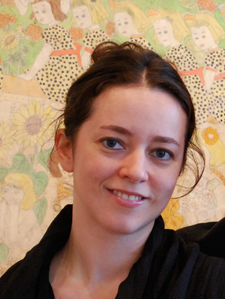 Valérie Rousseau
Valérie Rousseau, an independent curator and scholar, has been chosen to serve as curator of twentieth-century and contemporary art at the American Folk Art Museum in New York.
Institutional News
posted Feb 17, 2013
Read about the latest news from institutional members.
Institutional News is published every two months: in February, April, June, August, October, and December. To learn more about submitting a listing, please follow the instructions on the main Member News page.
February 2013
The Dallas Museum of Art in Texas has announced that it will offer free admission to all visitors and also initiate a rewards-for-participation system. A new online software system will enable visitors to track their museum-related activity and communicate their experiences with the museum.
The Indianapolis Museum of Art in Indiana has received a $190,000 grant from the National Endowment for the Humanities for a project called “Documenting Modern Living: Digitizing the Miller House and Garden Collection,” which includes correspondence, drawings, blueprints, textile samples, and photographs that chronicle the design, construction, and maintenance of the Miller House and Garden in Columbus, Indiana.
Parsons the New School for Design in New York has opened a new academic center in Paris, France, opening in summer 2013. Called Parsons Paris, the center will offer undergraduate, graduate, and study-abroad programs.
The Rhode Island School of Design Museum in Providence has received a $250,000 gift from the Champlin Foundations to help complete ongoing improvements to the Eliza G. Radeke Building. The Champlin funds match an anonymous challenge from a large national foundation.
The Spencer Museum of Art in Lawrence, Kansas, has received a gift from Marilyn Stokstad, distinguished professor emerita of art history at the University of Kansas, to endow the museum’s directorship, a position she once held.
The Yale University Art Gallery in New Haven, Connecticut, has opened the new Kubler-Thompson Gallery of Indo-Pacific Art, enabled by the generosity of Thomas Jaffe, a Yale alumnus, after a renovation and expansion project. The first installation features selections from Jaffe’s promised gift of ethnographic sculptures and Indonesian textiles.
Results of the 2013–17 Board of Directors Election
posted Feb 15, 2013
The CAA Board of Directors welcomes four newly elected members, who will serve from 2013 to 2017:
- Constance Cortez, Associate Professor of Art History, Texas Tech University
- Jennifer Milam, Professor of Art History, University of Sydney
- Sheila Pepe, Artist and Acting Assistant Dean for Academic Affairs, School of Art and Design, Pratt Institute
- John Richardson, Professor and Chair of the Department of Art and Art History, Wayne State University
Anne Collins Goodyear, CAA board president, announced the election results during the Annual Members’ Business Meeting, held on Friday, February 15, at the 101st Annual Conference in New York.
The Board of Directors is charged with CAA’s long-term financial stability and strategic direction; it is also the association’s governing body. The board sets policy regarding all aspects of CAA’s activities, including publishing, the Annual Conference, awards and fellowships, advocacy, and committee procedures.
For the annual board election, CAA members vote for no more than four candidates; they also cast votes for write-in candidates (who must be CAA members). The four candidates receiving the most votes are elected to the board.