CAA News Today
Recent CAA Advocacy
posted Jun 18, 2012
CAA’s advocacy efforts this year addressed a wide range of issues of critical importance to the visual arts, from the necessity of artists to have affordable health-insurance options, to the ethical treatment of animals in works of art, to the ins and outs of copyright law and museum practices. Below is a summary of eleven issues to which CAA has been committed during the past twelve months.
In June 2011, CAA filed an amicus brief in the case of Golan v. Holder, which the United States Supreme Court began hearing in October. The issue raised in Golan v. Holder is whether Congress, after enacting the Uruguay Round Agreements Act of 1994, could legally remove tens of thousands—if not millions—of foreign works from the public domain and bring them back into copyright. Consistent with the First Amendment, the brief argued that those works should remain freely available. On January 18, 2012, the Supreme Court affirmed a lower court’s previous decision, 6–2. In short, foreign works formerly in the public domain in the US can have their copyrighted status reinstated.
In December 2011, CAA signed onto a statement from the Association of Art Museum Directors that opposed the pending sale of a fifty percent stake in the Alfred Stieglitz Collection of Modern American and European Art at Fisk University in Nashville, Tennessee. Since 2005 the school had been attempting to sell the collection, donated by Georgia O’Keeffe (who specified that it never be sold or broken up). “Such an action,” stated the letter, “would violate a core professional standard of AAMD and of the museum field, which prohibit[s] the use of funds from the sale of works of art for purposes other than building an institution’s collection.” Nevertheless, the Tennessee Supreme court did not block the sale to Crystal Bridges Museum of American Art in Bentonville, Arkansas, on April 25, 2012. The university and museum will share the collection on a three-year rotating basis, with the museum helping to conserve the collection.
CAA board and staff members represented the organization at two events this spring in Washington, DC: Anne Collins Goodyear, then-incoming board president, and Linda Downs, CAA executive director and chief executive officer, attended Humanities Advocacy Day in March; and Judith Thorpe, an outgoing board member, and Helen Bayer, CAA marketing and communications associate, went to Arts Advocacy Day in April. The goal of both days was to support continued federal funding through the National Endowment for the Humanities and the National Endowment for the Arts, and to articulate to Congress the vital importance of the humanities and the arts in higher education. The National Humanities Alliance’s annual meeting coincided with Humanities Advocacy Day. Goodyear and Downs have offered a summary of this important event.
At the request of People for the Ethical Treatment of Animals (PETA), CAA investigated the use of homing pigeons in Jon Rubin’s interactive artwork, Thinking about Flying (2012), on view this year at the Museum of Contemporary Art in Denver, Colorado. The piece invites museum visitors to take home a bird, placed in a cardboard box, for a day before releasing it, so that it may fly back to the museum. CAA confirmed the humanitarian treatment of the birds by the artist and museum and notified PETA of the findings.
In April, CAA investigated the complaint raised by several artists who lent work to the 2010 World Festival of Black Artists and Cultures in Senegal that was not returned due to a dispute with an art shipper in Dakar. CAA determined that the situation did not need the organization’s assistance.
Michael Fahlund, CAA deputy director, testified on behalf of the organization at an oversight hearing convened by New York City’s Committee on Cultural Affairs, Libraries, and International Intergroup Relations on January 25, 2012, regarding increasing access to affordable health insurance for artists. Even though CAA is an international organization, its office is in the state of New York; presently the healthcare industry is regulated state by state. Fahlund proposed that CAA be given “employer status” in relation to its members living in New York State in order to provide health-insurance options for them. The committee’s discussions are ongoing.
CAA monitored a federal bill, the Research Works Act (H.R. 3699), that was introduced in the US House of Representatives on December 16, 2011, by Rep. Darrell Issa (R-CA) and cosponsored by Rep. Carolyn Maloney (D-NY)— chairman and member, respectively, of the House Committee on Oversight and Government Reform. The legislation would prohibit federal agencies from mandating free access to scholarly articles submitted to a scientific or scholarly publication without the consent of the publisher. This act primarily addresses science and technology publications but, if enacted, could affect art and humanities publications as well. Many learned societies who are publishers oppose the legislation, and CAA board members have begun discussing the issue and are paying close attention to the legislation’s development.
Representing CAA, Fahlund contributed his expertise to a National Coalition Against Censorship committee that developed Museum Best Practices for Managing Controversy, published in May. The document offers guidance for institutions to turn controversial situations into learning experiences for their public. The committee comprised representatives from the American Association of Museums, the Association of Art Museum Directors, the Association of Art Museum Curators, Columbia University, Arizona State University, the University of Washington, and the New School. CAA’s Museum Committee is reviewing the guideline and will present it for adoption at the CAA board meeting on October 28, 2012.
Fahlund also worked with a liability insurance broker, Herbert L. Jamison and Co. LLC, and Philadelphia Insurance Companies, and with two CAA members, Barbara Buhler Lynes and Nancy Mowll Mathews, to establish comprehensive, affordable liability insurance for art historians and artists who authenticate works of art. Such insurance would help defend against a damaging financial loss that could occur from alleged mistakes or negligence. CAA does not administer the insurance but acts as a referral to the insurance company; in a brief article from this past January, Fahlund offers helpful loss-prevention tips for the art professional to avoid potential workplace liabilities.
Last month CAA signed onto a letter from the Association of Art Museum Directors sent to Congress, urging legislators to pass the Foreign Cultural Exchange Jurisdictional Immunity Clarification Act (S. 2212), a proposed law that would shield a loaned work of art from a non-US collection from being seized by anyone with a claim to legal ownership while the art is on display in the country. According to the letter, the US has “long provided the crucial legal protection that helps make loans from foreign museums possible” through the Department of State, until a 2004–8 lawsuit involving heirs of Kasimir Malevich and the City of Amsterdam weakened those protections. The House passed the bill (H.R. 4086), which the Senate is now debating.
As a member of the Coalition on the Academic Workforce, a group that addresses workforce issues in higher education, CAA helped to prepare and administer a 2010 survey on contingent-faculty issues. The results have been tabulated and will be distributed soon. More than one thousand CAA members filled out the survey. [June 20 update: the survey results have been published.]
Founded as an advocate for the visual arts in higher education, CAA actively engages matters of public policy, litigation, and activism at the local, state, federal, and international levels. For further information, visit the Advocacy section of the website. If you have questions or have advocacy issues you would like to bring to the attention of the CAA board, please contact Anne Collins Goodyear, CAA president, and Linda Downs, CAA executive director and chief executive officer, at info@collegeart.org.
People in the News
posted Jun 17, 2012
People in the News lists new hires, positions, and promotions in three sections: Academe, Museums and Galleries, and Organizations and Publications.
The section is published every two months: in February, April, June, August, October, and December. To learn more about submitting a listing, please follow the instructions on the main Member News page.
June 2012
Academe

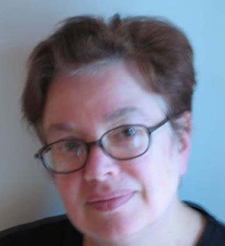 Ellen K. Levy
Ellen K. Levy, an artist, writer, and former CAA president, has joined the faculty of the Institute for Doctoral Studies in the Visual Arts in Portland, Maine, as special advisor on art and sciences.
Museums and Galleries

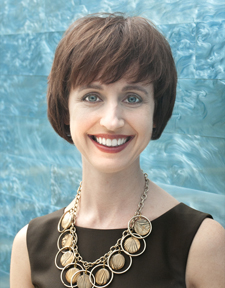 Colette Crossman (photograph by Rick Hall)
Colette Crossman, administrator of arts and programs for the Jack S. Blanton Museum of Art of the University of Texas at Austin, has been appointed curator of exhibitions at the museum.

Karen Sherry, previously associate curator of American art at the Brooklyn Museum in New York, has been named curator of American art at the Portland Museum of Art in Oregon.
Institutional News
posted Jun 17, 2012
Read about the latest news from institutional members.
Institutional News is published every two months: in February, April, June, August, October, and December. To learn more about submitting a listing, please follow the instructions on the main Member News page.
June 2012

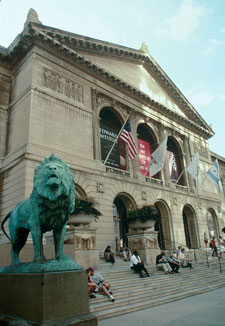 South view of the Michigan Avenue façade of the Art Institute of Chicago (photograph provided by the Art Institute of Chicago)
The Art Institute of Chicago in Illinois, on behalf of the School of the Art Institute of Chicago, has been awarded a $40,000 grant from the National Endowment for the Arts to support the Teacher Institute in Contemporary Art at the school, an enrichment program for high school art teachers to engage with the art community of Chicago.

The Baltimore Museum of Art in Maryland has been granted $65,000 from the National Endowment for the Arts to support the reinstallation of its American art collection into newly refurbished galleries, originally designed in 1929 by John Russell Pope.
The Brooklyn Museum in New York has won two bronze 2012 MUSE awards: in the category of Interpretative Interactive Installations for the exhibition Vishnu: Hinduism’s Blue-Skinned Savior; and in the Online Presence category for the website of the exhibition Split Second: Indian Paintings (2011).

California State University, Long Beach, has been awarded Best Show in a University Art Gallery by the United States section of the International Art Critics Association for Perpetual Motion: Michael Goldberg (2010).
Cornell University in Ithaca, New York, is the recipient of a $45,000 grant from the National Endowment for the Arts in support of a program called Objects and Their Makers: New Insights at the Herbert F. Johnson Museum, which aims to introduce students to the arts of Africa, China, Japan, Tibet, and Southeast Asia, and to Precolumbian and Native American art.
The Currier Museum of Art in Manchester, New Hampshire, has been granted a $50,000 award from the National Endowment for the Arts to support the online publication of the museum’s collection of European and contemporary art.
The Dallas Museum of Art in Texas has recently launched a new website application called DMA Dashboard, which offers the public access to real-time museum statistics such as financial data, fundraising, and building operations.


The Getty Conservation Institute in Los Angeles, California, has launched the Conserving Modern Architecture Initiative, an international effort that aims to “increase knowledge for the field and develop new tools to assist practitioners,” according to Tim Whalen, the institute’s director. The initiative’s first project is the long-term conservation of the Eames House in Los Angleles, built by Charles and Ray Eames in 1949.
The J. Paul Getty Museum in Los Angeles, California, has won a 2012 MUSE award, receiving a silver award in the category of Audio Tours and Podcasts for Demons, Angels, and Monsters: The Supernatural in Art (2011). The museum also earned an honorable mention in the category of Applications and APIs for The Life of Art: Context, Collecting, and Display (2012).
The Solomon R. Guggenheim Museum in New York has been awarded the second-place prize for Best Thematic Museum Show in New York by the United States section of the International Art Critics Association for Chaos and Classicism: Art in France, Italy, and Germany, 1918–1936 (2010–11).
The Indianapolis Museum of Art in Indiana has received a $100,000 grant from the National Endowment for the Arts to support the documentation and conservation of the museum’s Western European design collection, a project that is in tandem with moving the collection to a newly designed 9,000-square-foot gallery. The museum has also won a bronze 2012 MUSE award in the category of Public Outreach for its campaign XLVI Reasons to Visit the Indianapolis Museum of Art.
Kennesaw State University in Kennesaw, Georgia, has received a $15,000 grant from the National Endowment for the Arts to aid a multimedia installation by the artist Matt Haffner for display in the lobby of the visual-arts building. A $3 million addition to the Kennesaw State University Art Museum and Galleries was recently approved by the University System of Georgia’s board of regents. The new 9,200-square-foot space, to open in March 2013, will house the university’s art collection and an interdisciplinary research center.
Kent State University in Kent, Ohio, has been awarded a $35,000 grant from the National Endowment for the Arts for an exhibition at the Kent State University Museum, called Shifting Paradigms of Identity: Creative Technology and Fashion, which will address how changing technology affects fashion.
Massachusetts College of Art and Design in Boston has received a $50,000 award from the National Endowment for the Arts to support scholarships for high school juniors and seniors to attend a four-week intensive summer art program.
The Mead Art Museum at Amherst College in Amherst, Massachusetts, has received a $1 million matching endowment grant from the Andrew W. Mellon Foundation in support of an initiative to integrate the museum’s collection into the college curriculum and to endow the position of coordinator of college programs. A stipulation of the grant calls for Amherst to raise a matching $1 million within three years.
The Menil Collection in Houston, Texas, has been awarded the second place in the category of Best Monographic Museum Show Nationally by the United States section of the International Art Critics Association for Kurt Schwitters: Color and Collage (2010–11).
The Metropolitan Museum of Art in New York has been awarded first place in the category of Best Architecture or Design Show by the United States section of the International Art Critics Association for Alexander McQueen: Savage Beauty (2011). The museum also won first place for Best Historical Museum Show Nationally for The Steins Collect: Matisse, Picasso, and the Parisian Avant-Garde (2012).
Michigan State University in East Lansing has been awarded a $40,000 grant from the National Endowment for the Arts to expand the reach of the Michigan Traditional Arts Program. In addition to documenting traditional artists and folk-art events, the program will enhance its online resources and use of social media to help connect folk artists, audiences, and other cultural workers.
Mount Mercy University in Cedar Rapids, Iowa, is the recipient of a $30,000 grant from the National Endowment for the Arts to support the conservation and documentation of William Lightner’s Our Mother of Sorrows Grotto, an outdoor environment and shrine made up of semiprecious stones, cement, and mosaics, built between 1929 and 1941.
The Museum of Fine Arts, Boston, in Massachusetts has received $80,000 from the National Endowment for the Arts to support two components of the museum’s Korean Collection Access Initiative—the publication of a catalogue and the reinstallation of the Korean art collection into a new 1,200-square-foot gallery.
The Museum of Modern Art in New York has been awarded first place in the category of Best Thematic Museum Show in New York by the United States section of the International Art Critics Association for On Line: Drawing through the Twentieth Century (2010–11). The museum has also won a gold 2012 MUSE award in the Public Outreach category for its interactive ad campaign “I went to MoMA and….”
The National Council on Education for the Ceramic Arts, based in Erie, Colorado, has accepted a $40,000 grant from the National Endowment for the Arts to assist exhibitions related to its 2013 national conference, to be held in Houston, Texas. An additional exhibition will take place in Santa Fe, New Mexico, to coincide with the forty-fifth general assembly of the International Academy of Ceramics.
The National Palace Museum in Taipei City, Taiwan, has won a gold 2012 MUSE award in the category of Multimedia Installations for the exhibition Along the River, During the Ching-ming Festival (2009).
The National Portrait Gallery of the Smithsonian Institution in Washington, DC, has received a first-place award from the United States section of the International Art Critics Association for the Best Thematic Museum Show Nationally for Hide/Seek: Difference and Desire in American Portraiture (2010–11).
The National Portrait Gallery in London, England, has recorded its highest-ever attendance figure for a single year, with 2 million museum-goers in 2011.
The Nelson-Atkins Museum of Art in Kansas City, Missouri, has received $100,000 from the National Endowment for the Arts for the digitization of its collection of more than 8,400 photographs ranging from 1839 to the present day.
The Neuberger Museum of Art, part of Purchase College, State University of New York, in Purchase, New York, has been awarded second place by the United States section of the International Art Critics Association for Best Thematic Museum Show Nationally for The Deconstructive Impulse: Women Artists Reconfigure the Signs of Power, 1973–1999 (2011).
Pacific Northwest College of Art in Portland, Oregon, has received a $30,000 grant from the Collins Foundation in support of an initiative called Persist and Thrive, which seeks to diversify the student body and provide mentoring services and academic support for students from underrepresented backgrounds.
The Philadelphia Museum of Art in Pennsylvania has received a 2012 Philadelphia Exhibitions Initiative Grant from the Pew Center for Arts and Heritage. The museum will use the $250,000 grant to fund an exhibition for fall 2013, called Dancing around the Bride, devoted to Marcel Duchamp and his influence on John Cage, Merce Cunningham, Jasper Johns, and Robert Rauschenberg.
Pratt Institute in Brooklyn, New York, has earned a $30,000 grant from the National Endowment for the Arts to aid the school’s community outreach program, Design Initiative for Community Empowerment. The program provides a platform for underserved Brooklyn high school students to learn about design through guided studio work, public exhibitions, and studio visits.
The San Diego Museum of Art in California has received a $15,000 grant from the National Endowment for the Arts to support an artist’s residency for teenagers from the culturally diverse neighborhood of southeast San Diego. The residency will consist of visits to local art museums and also provide studio space and instruction from professional artists.
The San Francisco Museum of Modern Art in California has received a $375,000 grant from the Getty Foundation to support the Robert Rauschenberg Research Project, an online catalogue scheduled for completion in 2013 that will feature all the artist’s works held in the museum’s permanent collection. The project is part of a larger initiative to digitize museum catalogues, spearheaded by the Getty Foundation, called the Online Scholarly Catalogue Initiative.
The School of the Art Institute of Chicago in Illinois has received an award from the United States section of the International Art Critics Association for Best Show Involving Digital Media, Video, Film, or Performance for Yael Bartana: A Declaration, held at the Gene Siskel Film Center on March 10, 2011.
Scripps College in Claremont, California, has won a grant of $10,000 from the National Endowment for the Arts to support the offsite conservation of seven Chinese textiles from the sixteenth and seventeenth century in its Ruth Chandler Williamson Gallery.
Syracuse University Library in Syracuse, New York, has received more than 1,350 digitized documents, letters, and images from the Archives of American Art for its recently launched Marcel Breuer Digital Archive.
UB Anderson Gallery at the University of Buffalo in New York has been declared a 2012 MUSE award winner, receiving a silver Honeysett and Din Student Award for the touch-based website component of a permanent installation, Cravens World: The Human Aesthetic.
The Edwin A. Ulrich Museum of Art at Wichita State University in Wichita, Kansas, has been awarded $100,000 from the National Endowment for the Arts to restore a 1978 mural by Joan Miró that decorates the museum’s façade.
The University of the Arts in Philadelphia, Pennsylvania, has won a $15,000 grant from the National Endowment for the Arts to support a juried design/building competition called Something from Nothing: Eco-ventions for Urban Landscapes. The competition seeks proposals that reimagine derelict and underused urban spaces.
The University of Massachusetts in Amherst has earned $100,000 from the National Endowment for the Arts to support an exhibition and related programming devoted to the legacy of W. E. B. DuBois at the University Museum of Contemporary Art. The exhibition commemorates the 150th anniversary of the Emancipation Proclamation and will examine DuBois’s influence on social and political movements throughout the twentieth century.
The University of Michigan at Ann Arbor has received a $55,000 grant from the National Endowment for the Arts to update the University of Michigan Museum of Art with multimedia tools that will enhance visitors’ experience of the collection.
The University of Oregon in Eugene has been awarded a $40,000 grant from the National Endowment for the Arts to support an apprenticeship program called Preserving and Sustaining Oregon’s Cultural Traditions, which connects master folk artists to apprentices.
The University of Rochester in Rochester, New York has been granted $15,000 from the National Endowment for the Arts. The school will use the funds to conserve paintings and drawings by Carl W. Peter in the collection of the Memorial Art Gallery.
The University of South Florida in Tampa has been awarded a $75,000 grant from the National Endowment for the Arts to support the development of a traveling exhibition, UnCommon Practice: Graphicstudio, organized in partnership with the Tampa Museum of Art and the University of South Florida Contemporary Art Museum. The exhibition documents the forty-five-year history of the Graphicstudio at the university.
The Walker Art Center in Minneapolis, Minnesota, has received a gold 2012 MUSE award in the category of Online Presence for its new website, launched in late 2011.
The Walters Art Museum in Baltimore, Maryland, has won a grant from the National Endowment for the Humanities for $265,000 to support the digitization of 113 medieval Flemish manuscripts, including eighty Books of Hours prayer books. Since 2008, the museum has received two other grants for the purpose of digitizing their manuscript collection.
The Whitney Museum of American Art in New York has received $1.5 million from the Henry Luce Foundation. The grant will assist the museum’s relocation in 2015 to a new Renzo Piano–designed building in Manhattan’s Meatpacking District. The funds will also go toward the Whitney’s Collections Documentation Initiative, an effort to further document its permanent collection before the move. The United States section of the International Art Critics Association has awarded a first-place prize for the Best Monographic Museum Show in New York to the Whitney for Paul Thek: Diver (2010–11), and second-place prize for Glenn Ligon: AMERICA (2011). Last, the Whitney has won a silver 2012 MUSE award in the category of Education and Outreach for its interactive website, For Kids, and a bronze 2012 MUSE award for Video, Film, and Computer Animation for the Vlog Project, comprising short videos that feature deaf museum educators discussing contemporary art in American Sign Language.
Winterthur Museum, Garden, and Library in Winterthur, Delaware, has received a $50,000 award from the National Endowment for the Arts to support a digitization project that will document 4,000 works on paper, including eighteenth-century maps, watercolors, drawings, and silhouettes.
The Worcester Art Museum in Worcester, Massachusetts, has been awarded $20,000 from the National Endowment for the Arts to aid a project called Teen Artists @ WAM, in which students take classes with artist mentors and compete to make large-scale installations with the assistance of professional artists.
Senate Committee Approves IMLS Funding; Congress Needs to Hear from You
posted Jun 15, 2012
The American Association of Museums (AAM) sent the following email on June 15, 2012.
Senate Committee Approves IMLS Funding; Congress Needs to Hear from You
This week, the Senate Appropriations Committee approved a bill to fund the Institute of Museum and Library Services (IMLS). While the bill would sustain the current $30.8 million for the Office of Museum Services for FY13, this is just the first step in the appropriations process.
The bill faces an uncertain future because it includes funding for implementation of the health care reforms enacted in 2010. In a preview of the difficult budgetary decisions to come, Appropriations Committee Ranking Member Richard Shelby said, “In this grave fiscal climate we should not fund programs we know are going to force our country deeper into debt…. We should not mortgage our children’s future for non-essential, unproven programs.”
AAM President Ford W. Bell urged continued advocacy. “At a time when every federal program is being scrutinized, Members of Congress need to hear from constituents about how IMLS funds are essential to museums and how successful they are in serving our communities,” he said. “Participating in ‘Invite Congress to Visit Your Museum Week’ is a great opportunity to demonstrate our value.”
The bill would provide $158.8 billion in discretionary funding, a $2 billion increase over FY12 levels, which is in line with President Obama’s FY13 budget request. The bill also includes $549 million (level funding) for the Race to the Top initiative, President Obama’s signature competitive grant program, which rewards states for making changes in elementary and secondary education.
Let your Members of Congress know how important funding for the Office of Museum Services is to you!
Invite Congress to Visit Your Museum.
Visit www.speakupformuseums.org to learn more about AAM’s Advocacy for Museums.
Grants, Awards, and Honors
posted Jun 15, 2012
CAA recognizes its members for their professional achievements, be it a grant, fellowship, residency, book prize, honorary degree, or related award.
Grants, Awards, and Honors is published every two months: in February, April, June, August, October, and December. To learn more about submitting a listing, please follow the instructions on the main Member News page.
June 2012
Peter Jonathan Bell, a PhD candidate at the Institute of Fine Arts, New York University, has received the Robert Lehman Pre-Doctoral Rome Prize to study at the American Academy in Rome. Bell will be working on a project titled “The Reinvention of the Bronze Statuette in Renaissance Italy: Presentation, Material, Facture.”
Pat Boas, an artist and graduate of Pacific Northwest College of Art in Portland, Oregon, has been awarded the Bonnie Bronson Fellowship from her alma mater. The fellowship includes the purchase of an artwork for permanent installation at Reed College.
Elizabeth Hill Boone, Martha and Donald Robertson Chair in Latin American Art at Tulane University in New Orleans, has been elected a fellow of the American Academy of Arts and Sciences and a corresponding member of the Academia Mexicana de la Historia.

Bradford R. Collins, associate professor of art history at the University of South Carolina in Columbia, has been listed in the Princeton Review’s 2012 publication The Best 300 Professors.
Sophie Cras, a doctoral candidate at the Université Paris 1 Panthéon-Sorbonne, has been awarded the 2012 Terra Foundation for American Art International Essay Prize for her essay “Art as Investment and ‘Artistic Shareholding’ Experiments in the 1960s,” an examination of how a group of American conceptual artists made money and financial transactions the subject of their work.
Diana H. DePardo-Minsky, assistant professor of art history at Bard College in Annandale-on-Hudson, New York, and a specialist in Italian Renaissance and ancient Roman art and architecture, has been recognized in the Princeton Review’s publication The Best 300 Professors (2012).
Charles Fairbanks, a filmmaker from Eustis, Nebraska, has earned a 2012 fellowship from the John Simon Guggenheim Memorial Foundation. In his recent work Fairbanks documents his involvement with Lucha Libre wrestling in Mexico. He is also collaborating with an indigenous Zoque community in Chiapas, Mexico, on a new film.


Margot Fassler, professor of theology and music at the University of Notre Dame in Indiana, has been named an American Council of Leaned Societies 2012 Digital Innovation Fellow. Fassler’s project proposal is to create a digitized, sounding model of Hildegard of Bingen conception of the cosmos, utilizing the advanced technology of Notre Dame’s Digital Visualization Theater.
Leonard Folgarait, professor of history of art at Vanderbilt University in Nashville, Tennessee, and a scholar of modern art of Latin America, Mexico, Europe, and America, has been listed in the Princeton Review’s The Best 300 Professors (2012).

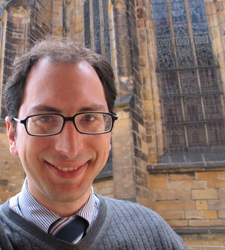 Seth Adam Hindin
Seth Adam Hindin, a historian of medieval art and architecture, has been appointed American Council of Leaned Societies New Faculty Fellow at the University of California, Davis.
Stanya Kahn, a video artist from Los Angeles, California, and an adjunct faculty member in the Department of Intermedia at the University of Southern California, has won a 2012 John Simon Guggenheim Memorial Foundation Fellowship.
Dana Leibsohn, professor of art at Smith College in Northampton, Massachusetts, and Carolyn Dean, professor and associate dean of the arts division at the University of California, Santa Cruz, have been jointly awarded an American Council of Leaned Societies Collaborative Research Fellowship in support of their book project on colonial Spanish America and the art and objects of its indigenous people.
Brenda Longfellow, associate professor of art and art history at the University of Iowa in Iowa City, has been awarded an Andrew Heiskell Post-Doctoral Rome Prize from the American Academy in Rome. Longfellow intends to work on a project called “Past Lives, Present Meanings: Reused Statues in Imperial Rome.”
Camille S. Mathieu, a PhD candidate in art history at the University of California, Berkeley, has been granted a second year at the American Academy in Rome via the Donald and Maria Cox/Samuel H. Kress Foundation Pre-Doctoral Rome Prize. Her project is entitled “Revolutionizing the Antique: French Artists and Artistic Community in Napoleonic Rome, 1803–1819.”

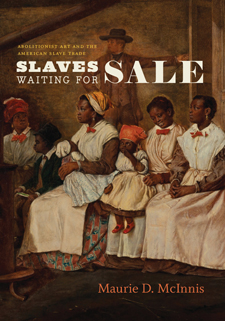
Maurie D. McInnis, professor of American art and material culture at the University of Virginia in Charlottesville, has been awarded the twenty-fourth Charles C. Eldredge Prize for Distinguished Scholarship in American Art for her book, Slaves Waiting for Sale: Abolitionist Art and the American Slave Trade (Chicago: University of Chicago Press, 2011). In conjunction with the award, McInnis will present the Eldredge Prize lecture at the Smithsonian Museum of American Art in Washington, DC, on October 18, 2012.
Kathryn Blair Moore has been appointed an American Council of Leaned Societies New Faculty Fellow in History of Art and Italian Studies at the University of California, Berkeley.
Jennifer W. Reeves, a painter based in Callicoon, New York, has been awarded a 2012 John Simon Guggenheim Memorial Foundation Fellowship.
Conrad Rudolph and Jeantte Kohl, both professors of art history at the University of California, Riverside, and Amit Roy-Chowdhury, a professor in the Department of Electrical Engineering at Riverside, have received a start-up grant from the National Endowment for the Humanities for “FACES: Faces, Art, and Computerized Evaluation Systems,” a project that will test the use of facial-recognition software in the context of art history, with a long-term goal of assisting in the identification of human subjects in portraiture.
Lisa Saltzman, a professor of art history at Bryn Mawr College in Bryn Mawr, Pennsylvania, has received a 2012 John Simon Guggenheim Memorial Foundation Fellowship. Saltzman’s project is entitled “Daguerreotypes: Fugitive Subjects, Contemporary Objects.”
Claudia Sbrissa, a New York–based based artist who works in drawing and collage, has received a residency fellowship from the Constance Saltonstall Art Foundation in Ithaca, New York, for May and June 2012.

 Tanya Sheehan
Tanya Sheehan, assistant professor of art history at Rutgers University in New Brunswick, New Jersey, has been awarded two fellowships for 2012–13: a research fellowship from the Harry Ransom Center at the University of Texas at Austin; and the Beatrice, Benjamin, and Richard Bader Fellowship in the Visual Arts of the Theatre from Harvard University.

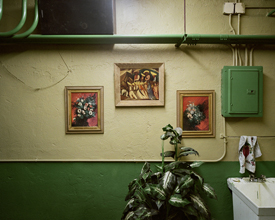 Gesche Würfel, Basement Series, digital C-type print (artwork © Gesche Würfel)
Gesche Würfel, an artist based in New York, has recently been awarded two grants: a Manhattan Community Arts Fund grant from the Lower Manhattan Cultural Council and a Creative Grant from the Northern Manhattan Arts Alliance. Both awards will help her to develop a new photography project, Basement Sanctuaries, which documents how superintendents decorate basements of apartment buildings in upper Manhattan.
Exhibitions Curated by CAA Members
posted Jun 15, 2012
Check out details on recent shows organized by CAA members who are also curators.
Exhibitions Curated by CAA Members is published every two months: in February, April, June, August, October, and December. To learn more about submitting a listing, please follow the instructions on the main Member News page.
June 2012
Nina Gara Bozicnik. Pretty Ugly. Boston Center for the Arts, Boston, Massachusetts, May 18–June 24, 2012.

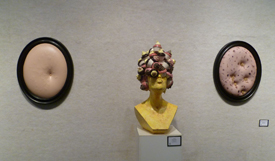 Installation view of Art Lives! Kansas Chapter of the Feminist Art Project
Rachel Epp Buller. Art Lives! Kansas Chapter of the Feminist Art Project. City Arts, Wichita, Kansas, March 30–April 21, 2012.
Katie Cercone. Butter Digger. Cuchifritos Gallery/Project Space, New York, April 14–May 27, 2012.

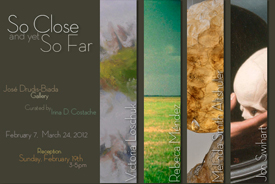 Invitation card for So Close and Yet So Far
Irina D. Costache. So Close and Yet So Far. José Drudis-Biada Art Gallery, Mount Saint Mary’s College, Los Angeles, California, February 7–March 24, 2012.
Susan Dackerman, Jennifer L. Roberts, and Jennifer Quick. Jasper Johns/In Press: The Crosshatch Works and the Logic of Print. Harvard Art Museums, Cambridge, Massachusetts, May 22–August 18, 2012.

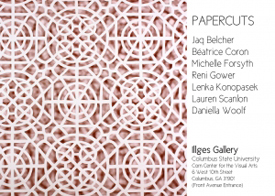 Invitation card for Papercuts: A Poetic Interplay of Light and Shadow
Reni Gower. Papercuts: A Poetic Interplay of Light and Shadow. Norman and Emmy Lou P. Illges Gallery, Columbus State University, Columbus, Georgia, March 22–April 21, 2012.
Kerry Oliver-Smith. 2012 Westmoreland Juried Biennial. Westmoreland Museum of American Art, Greensburg, Pennsylvania, April 28–July 22, 2012.

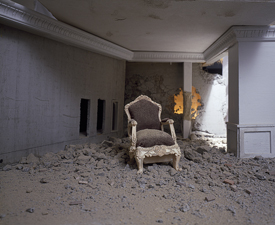 Wafaa Bilal, The Ashes Series, 2009, archival inkjet print mounted on diebond, 38 x 46½ in. (artwork © Wafaa Bilal)
Susanne Slavick. Out of Rubble. Bowling Green University Galleries, Bowling Green, Ohio, September 7–October 7, 2012.
Books Published by CAA Members
posted Jun 15, 2012
Publishing a book is a major milestone for artists and scholars—browse a list of recent titles below.
Books Published by CAA Members appears every two months: in February, April, June, August, October, and December. To learn more about submitting a listing, please follow the instructions on the main Member News page.
June 2012

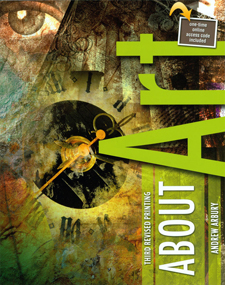
Andrew Stephen Arbury. About Art, 3rd rev. ed. (Dubuque, IA: Kendall Hunt Publishing, 2012).

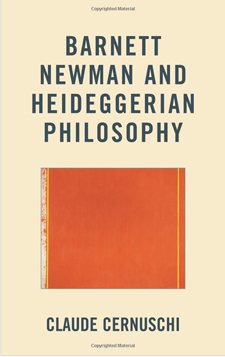
Claude Cernuschi. Barnett Newman and Heideggerian Philosophy (Madison, NJ: Fairleigh Dickinson University Press, 2012).

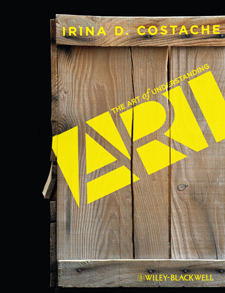
Irina D. Costache. The Art of Understanding Art: A Behind the Scenes Story (Oxford, UK: Wiley-Blackwell, 2012).

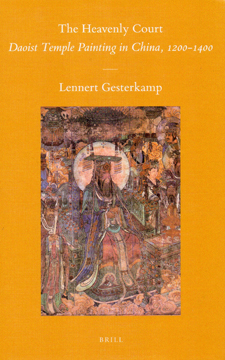
Lennert Gesterkamp. The Heavenly Court: Daoist Temple Painting in China, 1200–1400 (Leiden, the Netherlands: Brill, 2011).

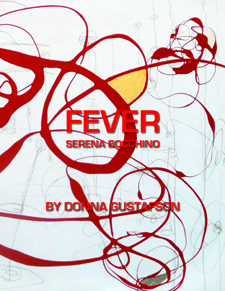
Donna Gustafson. Serena Bocchino: Fever (Milburn, NJ: Greg Smith Exhibit A Fine Art and Editions, 2012).

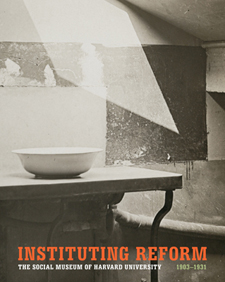
Deborah Martin Kao and Michelle Lamunière, eds. Instituting Reform: The Social Museum of Harvard University, 1903–1931 (Cambridge, MA: Harvard Art Museums, 2012).

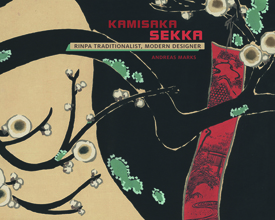
Andreas Marks. Kamisaka Sekka: Rinpa Traditionalist, Modern Designer (San Francisco: Pomegranate, 2012).

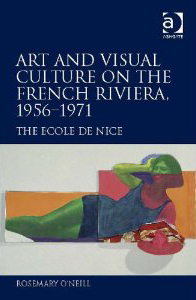
Rosemary O’Neill. Art and Visual Culture on the French Riviera, 1956–1971 (Burlington, VT: Ashgate, 2012).


Donald Preziosi and Claire Farago. Art Is Not What You Think It Is (Oxford, UK: Wiley-Blackwell, 2012).

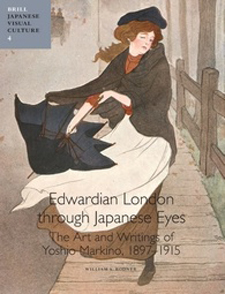
William S. Rodner. Edwardian London through Japanese Eyes: The Art and Writings of Yoshio Markino, 1897–1915 (Leiden, the Netherlands: Brill, 2012).

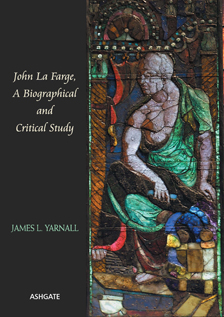
James L. Yarnall. John La Farge, a Biographical and Critical Study (Burlington, VT: Ashgate, 2012).

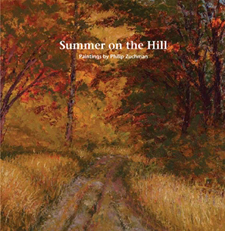
Philip Zuchman. Summer on the Hill: Paintings by Philip Zuchman (New York: Abingdon Square Publishing, 2012).
CAA Seeks Committee Members
posted Jun 13, 2012
Get involved in an issue that you care about! CAA invites members to apply for service on one of its nine Professional Interests, Practices, and Standards Committees. These committees address critical issues in the visual arts in an attempt to deal with, and respond to, the pressing concerns of CAA’s members.
Communicating via listserv throughout the year, each committee takes on the objectives it has set for itself, which include: programming ARTspace at the Annual Conference; establishing best practices, standards, and guidelines; sharing and examining pedagogical practices; examining new and developing technologies; addressing issues critical to emerging professionals as well as concerns of diversity and gender; extending the reach of CAA internationally; and clarifying and debating matters of fair use, copyright, and open access. This vigorous exchange of information reveals common goals and leads to solutions that will help CAA members to weather their changing professional landscape.
Committees are active at the Annual Conference in February, where each presents one or two sessions on a subject of its choosing. These sessions, sometimes collaborations between committees and sometimes dealing with workforce issues, are meant to be of immediate value to CAA members. Also at the conference, the committees hold face-to-face business meetings and discuss the past year’s accomplishments while targeting ideas for future projects. Participation on a committee is an excellent and fruitful way to network with other CAA members, and for some individuals it is a stepping-stone to service on the organization’s Board of Directors.
The public face of several CAA committees appears most visibly at the conference. The Services to Artists Committee, for example, conceives nearly all content and programming for ARTspace, ARTexchange, and the Media Lounge, while the Student and Emerging Professionals Committee organizes events on professional-development issues that take place in the Student and Emerging Professionals Lounge.
Online, the Committee on Women in the Arts publishes the monthly CWA Picks of exhibitions and events related to feminist art and scholarship, among other activities. Last year, the Museum Committee conducted a survey of museum-based members; it also advocates greater access to museum image collections. After conducting a survey of its own, the International Committee warmly welcomed and hosted twenty travel-grant recipients who attended the Los Angeles conference from around the world.
The Professional Practices Committee continues to study, develop, and revise CAA’s Standards and Guidelines, so that these documents, once approved by the CAA board, become authoritative, comprehensive documents for art-related disciplines. The Committee on Diversity Practices is compiling syllabi that consider diversity and inclusiveness in curricula and the classroom. The Committee on Intellectual Property completely updated all intellectual-property information on CAA’s website and continues to monitor the tricky terrain of copyright and fair use, which dramatically affects the work lives of artists and scholars.
Committee members serve three-year terms (2013–16), with at least one new member rotating onto a committee each year. Candidates must be current CAA members and possess expertise appropriate to the committee’s work. Members of all committees volunteer their services without compensation. Committee work is not for the faint of heart; it is expected that once appointed to a committee, a member will involve himself or herself in an active and serious way.
The following vacancies are open for terms beginning in February 2013:
- Committee on Diversity Practices: 2 members
- Committee on Intellectual Property: 5–6 members
- Committee on Women in the Arts: 2 members
- Education Committee: 5 members
- International Committee: 2 members
- Museum Committee: 3 members
- Professional Practices Committee: 3 members
- Services to Artists Committee: 4 members
- Student and Emerging Professionals Committee: 2 members
CAA’s president, vice president for committees, and executive director review all candidates in early November and make appointments in December, prior to the Annual Conference. New members are introduced to their committees during their respective business meetings at the conference.
Nominations and self-nominations should include a brief statement (no more than 150 words) describing your qualifications and experience and an abbreviated CV (no more than 2–3 pages). Please send all materials to Vanessa Jalet, CAA executive liaison. Deadline: October 12, 2012.
June 2012 Issue of The Art Bulletin
posted Jun 13, 2012
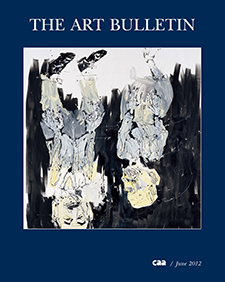 The cover image of the June 2012 issue of The Art Bulletin shows the unmistakable signature style of the contemporary artist Georg Baselitz, who has also written the lead text for the issue’s Notes from the Field. In this section, nine scholars from divergent fields—among them Kirk Ambrose, Elizabeth Edwards, Cordula Grewe, Daniel Heller-Roazen, and Ian McLean—join the artist in writing on the theme of appropriation. The June issue presents the second installment of new features in The Art Bulletin, sections that will continue for several years in the leading publication of international art-historical scholarship. In Regarding Art and Art History, Andrew Hemingway revisits his early fascination with a John Constable painting, Chain Pier, Brighton (1826–27), and describes how the work has shaped his methodological approach to writing art history. Finally, in a wide-ranging interview with Dan Karlholm, the art historian Linda Nochlin discusses her five-decade career.
The June Art Bulletin features four essays that cover a wide range of topics and time periods in the history of art. Sonya S. Lee examines the role of patronage and appropriation in tenth-century Dunhuang through her analysis of the pictorial program of Cave 61 at Mogao in northwestern China. Kishwar Rizvi’s article explores the dynamic relationship between image and text in the 1605 manuscript Shahnama (Book of Kings) and how the folio’s paintings can be viewed as a surrogate portrait of the charismatic king, Shah ‘Abbas. Next, Katherine M. Kuenzli explores the “total work of art” that is Henry van de Velde’s 1914 Werkbund Theater Building and its role in shaping German modernism and national identity before and after World War I. In “Picasso’s First Constructed Sculpture: A Tale of Two Guitars,” Christine Poggi analyzes the artist’s 1912 paper Guitar as a modernist masterpiece unto itself, and not merely as the model for subsequent versions made from sheet metal; Poggi’s essay also features unusual new photographs of several paper sculptures that she discusses.
In the Reviews section, Cammy Brothers assesses Marvin Trachtenberg’s book, Building-in-Time: From Giotto to Alberti and Modern Oblivion, and Diane H. Bodart reviews two books, Joanna Woodall’s Anthonis Mor: Art and Authority and Laura R. Bass’s The Drama of the Portrait: Theatre and Visual Culture in Early Modern Spain. Then, Victor I. Stoichita looks at Michael Fried’s The Moment of Caravaggio, and Jonathan Hay discusses Craig Clunas’s approach to Chinese art history through a reading of five of his recent books on the subject. Finally, Barbara Wittmann reviews two catalogues—The Spectacular Art of Jean-Léon Gérôme (1824–1904) and Reconsidering Gérôme—that accompanied a 2011 exhibition at the J. Paul Getty Museum in Los Angeles and the Musée d’Orsay in Paris.
Please see the full table of contents for June to learn more. CAA sends The Art Bulletin to all institutional members and to those individuals who choose to receive the journal as a benefit of their membership.
The next issue of The Art Bulletin, to be published in September 2012, will feature the art historian Richard Shiff on the concept of interpretation in Regarding Art and Art History, “contingency” as the topic in Notes from the Field, and an interview with the architectural historian James S. Ackerman. The long-form essays will examine iconoclasm and the image as representation in the eighth century, Francesco Rosselli’s engravings and the development of print culture in Renaissance Italy, seventeenth-century Chinese handscroll painting, and the trials of the modern Viennese architect Adolf Loos. The Reviews section will include analyses of books on Giotto, Willem de Kooning, civil rights, photography, and the image of the wind.
REPORT ON THE MEETINGS OF THE EXECUTIVE COMMITTEE AND THE BOARD OF DIRECTORS
posted Jun 12, 2012
The CAA Board of Directors met in New York on Sunday, May 6, 2012, for its spring meeting. One day before, the Executive Committee convened to hear presentations from invited guests. The following report summarizes the contents of these two meetings.
Executive Committee
The Executive Committee meeting featured two invited speakers. The first, Raym Crow of the Chain Bridge Group, presented the first phase of the Publications Analysis, a report that is exploring the online development of CAA’s two print journals. He announced the results from a survey of individual CAA members to determine their interest in receiving online and/or print journals. The majority of members, Crow disclosed, prefer both options. He also offered findings from a thorough financial risk analysis, should institutional online subscriptions cannibalize individual memberships. In the analysis’s next phase, Crow will assess the production costs of The Art Bulletin and Art Journal and compare CAA’s business model to others in academic publishing. The resulting baseline figures will be used to determine the future direction of journal publications. Crow anticipates that it will take about six to eight months to complete this stage.
The second presenter, Gretchen Wagner, general counsel of ARTstor and a member of CAA’s Committee on Intellectual Property, discussed the current state of guidelines for fair use of copyrighted materials in the arts and humanities, including two documents recently created by the Visual Resources Association and the Association of Research Libraries that were endorsed by CAA in February 2012. She described how many academic and professional organizations for library science, video, poetry, and dance have developed fair-use guidelines for their fields; she also talked about OpenCourseWare. Some have noted that US courts increasingly rely on best practices from professional organizations to interpret cases related to fair use. Therefore CAA, which represents key stakeholders—artists, art historians, museum curators, conservators, and art administrators—is uniquely positioned to develop effective guidelines for fair use of copyrighted works of art and other visual material in scholarship, art making, and related activities. (See below for more on this topic.)
Board of Directors
CAA’s incoming board president, Anne Collins Goodyear of the Smithsonian Institution’s National Portrait Gallery, warmly welcomed four recently elected board members: Suzanne Preston Blier, Allen Whitehill Clowes Professor of Fine Arts and Professor of African American Studies, Harvard University; Stephanie D’Alessandro, Gary C. and Frances Comer Curator of Modern Art, Art Institute of Chicago; Gail Feigenbaum, Getty Research Institute; and Charles A. Wright, Professor and Chair, Department of Art, Western Illinois University. The board also accepted the resignation of Jean Miller of the University of North Texas and elected Doralynn Pines, a New York–based independent art historian and consultant to museums and libraries, to fill the remaining two years of Miller’s term. The board also appointed Roger Crum of the University of Dayton (and a CAA board member) to the Nominating Committee.
Teresa Lopez, CAA chief financial officer, presented a balanced operating budget at $4.79 million for fiscal year 2013 (July 1, 2013–June 30, 2014), which the board discussed and approved. She also distributed the organization’s IRS Form 990 for 2011. The board then approved resolution to amend CAA’s statement of investment policy and guidelines to comply with the investment standards for nonprofit corporations under the New York Prudent Management of Institutional Funds Act.
Randall C. Griffin, CAA vice president for publications, presented a resolution to revise the Statement of Conflict of Interest and Confidentiality that addresses proper relationships for CAA jurors and journal editors. The board approved the resolution and adopted the revised statement.
In response to Wagner’s discussion on intellectual property at the Executive Committee meeting, Goodyear presented a resolution to establish a Task Force to Develop Fair-Use Guidelines, which the board reviewed, discussed, and approved. As the resolution states, “CAA believes that it would be appropriate to establish a set of guidelines that would document current fair-use practices in the visual arts with respect to the activities of scholarly publishing, the creation of works of art, and the curation and exhibition of works that include another’s copyrighted works.” The board anticipates that it will take the task force eighteen months to two years to develop the guidelines, using focus groups of CAA members, a community advisory group, and a legal advisory group.
Michael Fahlund, CAA deputy director, and Lauren Stark, CAA manager of programs and archivist, presented an Archives Policy Statement, which the board approved. Over the past two years, Stark has led the establishment of an archive of CAA records, which is available to scholars.
For further information, or if you have questions or have advocacy issues you would like to bring to the board’s attention, please contact Anne Collins Goodyear, board president, and Linda Downs, executive director and chief executive officer, at info@collegeart.org.