
CAA News Today
Strengthening Partnerships with CAA’s Affiliated Societies
posted Apr 09, 2012
The following report was written by Barbara Nesin, president of the CAA Board of Directors, and Judith Thorpe, also a board member.
The third annual meeting of CAA’s affiliated societies was held during the 100th Annual Conference in Los Angeles on Saturday, February 25, 2012. Twenty representatives from the affiliates joined the CAA president, Barbara Nesin, and members of the Board of Directors to review the accomplishments of the past year and to discuss future directions.
Nesin took this opportunity to announce the formation of a Task Force on Affiliated Societies, approved by the board at its October 2011 meeting. Starting in May 2012, the task force will develop recommendations about the best means of working together to achieve common goals and objectives. She thanked Judith Thorpe, a CAA board member, for leading that effort and for assembling a team of committed board members to serve on the task force. Thorpe reviewed the highlights of CAA’s 2010–2015 Strategic Plan that specifically call for affiliated-society engagement, especially through enhanced communications, advocacy, and membership. Nesin also thanked Jean Miller, another CAA board member, for her preliminary research on which the task force can build. The task force will likely conduct a membership survey before making its recommendations.
Nesin also noted the contributions of the affiliates to the Los Angeles conference. There were twenty-three major affiliate-sponsored sessions reviewed and selected by the Annual Conference Committee, in addition to over seventy special sessions and business meetings providing many opportunities for all CAA members to become familiar with the work of the affiliate organizations.
Nesin encouraged greater collaboration between CAA and the affiliates in the future to include activities beyond the conference, currently the center of affiliate activities. With this in mind, a spreadsheet of all affiliated-society conferences and meetings throughout the year was distributed so that CAA board members could plan to attend more of these events. This year CAA participated in the Southeastern College Art Conference, the annual meeting for the Mid-America College Art Association, and the Society for Photographic Education national conference. CAA staff has also increased communications with affiliated-society representatives by making use of the affiliate listserv and by inviting input on a variety of topics. By the same token, Nesin encouraged the affiliates to nominate their members for service on CAA’s committees and board. Those in attendance had the opportunity to ask questions and to share suggestions.
The homepage for the main CAA website was enhanced with an Affiliated Societies tab on the horizontal navigation bar that links directly to the Directory of Affiliated Societies. Each affiliated-society listing contains a link to its own website. Nesin pointed out the importance of keeping the contact information for each organization up to date to be sure that information goes to the right person, who is in turn responsible for sharing information with the leadership and/or members of his or her organization. To keep the directory current, CAA annually seeks updates and solicits announcements and news from the groups every two months; these items appear in the Affiliated Society News section of the CAA website, which is promoted through CAA News.
CAA’s seventy-five affiliated societies, covering a wide range of disciplines, are essential partners in the fulfillment of the organization’s mission to promote the visual arts and their understanding through committed practice and intellectual engagement.
CAA Seeks Publications Committee Member
posted Apr 04, 2012
CAA invites nominations and self-nominations for one member-at-large to serve on its Publications Committee for a three-year term, July 1, 2012–June 30, 2015. Candidates must possess expertise appropriate to the committee’s work.
Meeting three times a year, the Publications Committee is a consultative body that advises the CAA Publications Department staff and the CAA Board of Directors on publications projects. It supervises the editorial boards of The Art Bulletin, Art Journal, and caa.reviews, as well as CAA’s book-grant juries; sponsors a practicum session at the Annual Conference; and, with the CAA vice president for publications, serves as liaison to the board, membership, editorial boards, book-grant juries, and other CAA committees.
The Publications Committee meets three times a year: twice in New York in the spring and fall and once at the CAA Annual Conference in February. CAA reimburses members for travel and lodging expenses for the two New York meetings in accordance with its travel policy, but members pay these expenses to attend the conference. Members of all CAA committees volunteer their services without compensation.
Candidates must be current CAA members and should not be serving on another CAA editorial board or committee. In addition, they may not be individuals who have served as members of a CAA editorial board within the past five years. Nominators should ascertain their nominee’s willingness to serve before submitting a name; self-nominations are also welcome. Appointments are made by the CAA president in consultation with the vice president for publications. Please send a statement describing your interest in and qualifications for appointment, a CV, and your contact information to: Publications Committee, College Art Association, 50 Broadway, 21st Floor, New York, NY 10004; or email the documents to Alyssa Pavley, CAA editorial assistant. Deadline: May 2, 2012.
David Craven: In Memoriam
posted Apr 03, 2012
The following obituary was compiled by the deceased’s family and submitted by Patricia Mathews, professor of art history at Hobart and William Smith Colleges in Geneva, New York, and a member of the CAA Board of Directors.

David Craven
David Lee Craven, distinguished professor of art history at the University of New Mexico in Albuquerque, passed away on February 11, 2012. He was 60 years old. Craven was beloved by all who knew him for his passionate dedication to writing, lecturing, and teaching art history. He is recognized by his peers as one of the most informed and incisive art historians in the world, a leading scholar in twentieth-century art from Latin America, post-1945 art in the United States, and the critical theory and methodology of art history and visual culture. His ten books and over 150 articles have appeared in twenty-five different countries and been translated into fifteen different languages. Craven’s close friend and fellow professor at the University of New Mexico, Susanne Baackmann, recalled his “generous spirit” and remembered that “his love for life and work, two concepts that were synonymous in his mind, was as intense as it was infectious.” He had taught at New Mexico since 1993 and was affiliated with the university’s Latin American and Iberian Institute.
Craven earned a PhD in art history from the University of North Carolina in Chapel Hill in 1979, an MA degree in art history from Vanderbilt University in Nashville, Tennessee, in 1974, and a BA in European history from the University of Mississippi in Oxford, where he graduated magna cum laude in 1972. Fluent in Spanish, German, and French, Craven gave lectures in universities and museums in the United States and internationally, traveling to Russia, Mexico, Spain, Germany, England, and France. His art-history books are respected as authoritative in the field, and many are popular with a general audience, such as the widely read Art and Revolution in Latin America, 1910–1990 (2002), which was nominated for a 2004 Mitchell Prize. His other books include Diego Rivera as Epic Modernist (1997); The New Concept of Art and Popular Culture in Nicaragua since the Revolution in 1979 (1989); Poetics and Politics in the Life of Rudolf Baranik (1997); and Abstract Expressionism as Cultural Critique: Dissent during the McCarthy Period (1999). He recently edited Dialectical Conversions: Donald Kuspit’s Art Criticism (2011) with Brian Winkenweder.

Among the many awards and recognitions Craven received during his long teaching career are a Medal for Excellence from the state of New York in 1991 for his work at Cortland College at the State University of New York, and a Faculty Acknowledgement Award at the University of New Mexico in 2003. In 2007 he was chosen to be the Rudolf Arnheim Professor at Humboldt University in Berlin. Craven won more than fifteen major national and international grants and fellowships from numerous organizations, such as the American Council of Learned Societies, the National Endowment for the Arts, the National Endowment for the Humanities, the Rockefeller Foundation, the Ministerio de Cultura de Espana, and the Instituto Nacional de Bellas Artes de Mexico. His work on Latin and Central American art has earned him the praise of Ernesto Cardenal Martínez, Nicaragua’s minister of culture from 1979 to 1987.
Craven was born in Alexandria, Louisiana, on March 22, 1951, to Peggy and Albert Craven. He lived with his family in Houston, Texas, before moving to Oxford, Mississippi, where his father taught at the University of Mississippi. Craven’s parents encouraged his early interest in art, and he began taking art classes in fourth grade. A gifted athlete, Craven was the star quarterback for the Oxford High School football team and won MVP honors in the 1969 season. He also brought his high school’s basketball team into the state championship.
Craven was preceded in death by his father Albert Craven; his sisters Anita and Peggy Melinda; and his brother Jonathon. He is survived by his mother Peggy Craven; his sister Laura Duncan and her husband Lee, and a niece and nephew, Caroline and Lee Duncan; his brother Brian Craven and his wife Pam and nephews Jonathon, Allen, and Mark Craven; his brother Paul Craven; his niece Edy Dingus and nephew Charles Dingus, and nephew John Phillip Dingus, as well as his dear friends Susanne Baackmann and Hannah Baackmann-Friedlander of Albuquerque, New Mexico.
Audio Recordings from the 2012 Annual Conference
posted Apr 02, 2012
 The 2012 Annual Conference in Los Angeles boasted an incredibly diverse array of sessions. Audio recordings for eighty-three of the panels—including “Picturing Urban Space in Central Europe since 1839,” “Oleg Grabar’s Impact on the Practice and History of Art,” and the two-part “Mobile Art: The Aesthetics of Mobile Network Culture in Place Making”—are now available for sale.
A set of MP3 audio recordings from the Los Angeles conference is available for $199.95 as a DVD-ROM. Individual sessions, available only as downloads, are $24.95 each. Please visit Conference Media to view the list of sessions and to order.
The full range of art history is represented in sessions such as “Exceeding the Limits of Ancient Rome,” “Narrative in Gothic Art,” and “The Interconnected Tenth Century.” Several sessions focus on art and design in the conference city, including “Finish Fetish Sculpture from Los Angeles 1960s–70s: Conservation Dilemmas” and “Pacific Standard Time and Chicano Art: A New Los Angeles Art History.” Topics about contemporary art range from “Flagging: Aesthetic Tactics and Queer Signification” and “Momentum: Women/Art/Technology” to “Conceptual Art as Comedic Practice” and “Toward a Rock and Roll History of Contemporary Art.”
CAA also recorded two popular Centennial sessions: “Seeing Is Doing, Doing Is Teaching,” chaired by Michael Ned Holte, and “‘Reclaiming’ the Studio as a Site of Production,” led by Patty Wickman. Both curators and museum educators will be especially interested in “Live Forever: Performance Art in the Changing Museum Culture” and “‘Your Labels Make Me Feel Stupid’: Museum Labels as Art-Historical Practice.”
Whether you took part in, attended, or missed a particular conference session, these recordings are a must-have for your library, research, or teaching. Listen to them while walking across campus, while driving in your car or using public transportation, or while relaxing in your home.
In addition to the Los Angeles sessions, you can also purchase recordings from the past six conferences: New York (2011), Chicago (2010), Los Angeles (2009), Dallas–Fort Worth (2008), New York (2007), and Boston (2006). See CAA’s Conference Audio section or visit Conference Media for details.
Thanks to Conference Supporters and the Annual Conference Committee
posted Apr 02, 2012
CAA extends special thanks to the supporters of the 100th Annual Conference and Centennial Celebration in Los Angeles. The Getty Foundation awarded CAA a generous grant to support the attendance and participation of twenty international art historians. The National Endowment for the Arts renewed its support of ARTspace, which is organized by CAA’s Services to Artists Committee and includes programming designed by artists for artists. CAA is grateful to the Broad Foundation for providing funding for complimentary Wi-Fi for the Student and Emerging Professionals Lounge and to the Samuel H. Kress Foundation for granting travel fellowships for international conference participants. CAA would also like to thank Art in America, the official media sponsor, and American Airlines, the official conference airline, for their contributions.
This year’s Book and Trade Fair supporters were: Blick Art Materials at the Partner level and ARTstor, Intellect Books, Prestel Publishing, and Rizzoli International Publications at the Sponsor level. The Los Angeles County Museum of Art generously hosted the Centennial Reception, and Pearson presented a $1,000 prize to the recipients of the 2012 Distinguished Teaching of Art and Art History Awards. CAA is also grateful for support from the Westin Bonaventure Hotel and Suites and from Art Platform—Los Angeles.
CAA extends special thanks to the Annual Conference Committee, whose members were responsible for the 2012 program: Sue Gollifer, University of Brighton and vice president for Annual Conference (chair); Sharon Matt Atkins, Brooklyn Museum; Peter Barnett, Metropolitan Museum of Art; Brian Bishop, Framingham State University; Connie Cortez, Texas Tech University; Ken Gonzales-Day, Scripps College; and Sabina Ott, Columbia College Chicago. Regional representatives for the committee were: Stephanie Barron, Los Angeles County Museum of Art; and Margaret Lazzari, University of Southern California.
CAA is grateful to Jacki Apple of the Art Center College of Design and chair of the Services to Artists Committee for programming ARTspace and the Media Lounge, as well as all volunteers and staff members who made the conference possible.
Propose a Paper or Presentation for the 2013 Annual Conference
posted Mar 28, 2012
 The 2013 Call for Participation for the 101st Annual Conference, taking place February 13–16 in New York, describes many of next year’s programs sessions. CAA and the session chairs invite your participation: please follow the instructions in the booklet to submit a proposal for a paper or presentation. This publication also includes a call for Poster Session proposals and describes the eight Open Forms sessions.
Listing more than 120 panels, the 2013 Call for Participation was mailed to all individual and institutional members in late March; you can also download a PDF of the twenty-five-page document from the CAA website immediately.
The deadline for proposals of papers and presentations for the New York conference is May 4, 2012.
In addition to dozens of wide-ranging panels on art history, studio art, contemporary issues, and professional and educational practices, CAA conference attendees can expect participation from many area schools, museums, galleries, and other institutions. The Hilton New York in midtown Manhattan is the conference headquarters, holding most sessions, Career Services, the Book and Trade Fair, ARTspace, special events, and more. Deadline: May 4, 2012.
Contact
For more information about proposals of papers and presentations for the 2013 Annual Conference, please contact Lauren Stark, CAA manager of programs, at 212-392-4405.
Propose a Poster Session for the 2013 Annual Conference
posted Mar 28, 2012
CAA invites individual members to submit abstracts for Poster Sessions at the 101st Annual Conference in New York, taking place February 13–16, 2013. Poster Sessions—presentations displayed on bulletin boards by an individual for small groups—usually include a brief narrative paper mixed with illustrations, tables, graphs, and similar presentation formats. The poster display can intelligently and concisely communicate the essence of the presenter’s research, synthesizing its main ideas and directions. Colorado State University has published useful general information on Poster Sessions.
Poster Sessions offer excellent opportunities for extended informal discussion and conversation focused on topics of scholarly or pedagogical research. Posters are displayed for three days during the conference, so that attendees can view the work even when the authors are not physically present. Poster Sessions take place in a high-traffic area, in close proximity to the Book and Trade Fair and conference rooms.
Proposals for Poster Sessions must include the following:
- Title of Poster Session
- Summary of project, not to exceed 250 words
- Name of presenter(s), affiliation(s), and CAA member number(s)
- A two-page CV
- Complete mailing address and telephone number
- Email address
Proposals are due on May 4, 2012—the same deadline as the regular call for papers for the 2013 conference. Send all materials to Lauren Stark, CAA manager of programs. A working group of the Annual Conference Committee selects Poster Sessions based on individual merit and space availability. Accepted presenters must maintain their memberships through the conference.
Displays must be assembled by 10:00 AM on Thursday, February 14, and cleared by 2:00 PM on Saturday, February 16. Live presentations last ninety minutes and are scheduled during the lunch breaks on Thursday and Friday, 12:30–2:00 PM. During this time, presenters stand by their poster displays while others view the presentation and interact with the presenters.
CAA assigns presenters one freestanding bulletin board (about 4 x 8 feet of display space) onto which they can affix their poster display and other materials, as well as a table to place materials such as handouts or a sign-up sheet to record the names and addresses of attendees who want to receive more information. CAA also provides pushpins or thumbtacks to attach components to the bulletin board on the day of installation.
Printed materials must be easily read at a distance of four feet. Each display should include the title of the presentation (104-point size) and the name of the presenter(s) and his or her affiliation(s) (72-point size). CAA recommends a point size of 16–18 or larger for body text. No electrical support is available in the Poster Session area; you must have your own source of power (e.g., a battery).
Contact
For more information about proposals of Poster Sessions for the 2013 Annual Conference, please contact Lauren Stark, CAA manager of programs, at 212-392-4405.
New Officers for the Board of Directors
posted Mar 27, 2012
At its February 2012 meeting, the CAA Board of Directors chose new officers—four vice presidents and a secretary—from among its members to serve one-year terms, from May 2012 to April 2013. Elected officers (other than the president) hold their positions for one year and may be reelected to a second term. For more information about the election process for officers, please read Article VII, Section 5 of the CAA By-laws.
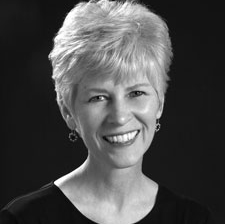 Patricia McDonnell, Vice President for External Affairs
The board reelected Patricia McDonnell, director of the Ulrich Museum of Art at Wichita State University in Kansas, for a second term as vice president for external affairs. A member of the board since 2009, McDonnell will work closely with Linda Downs, CAA executive director, and Nia Page, CAA director of membership, development, and marketing, on fund-raising initiatives and advocacy matters.
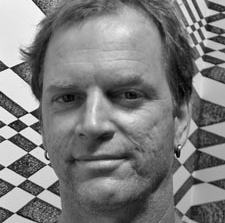 DeWitt Godfrey, Vice President for Committees
DeWitt Godfrey, an artist and associate professor of art and art history at Colgate University in Hamilton, New York, was elected vice president for committees. He will act as a liaison between the board and the nine Professional Interests, Practices, and Standards Committees and coordinate committee work that advances CAA’s goals. A board member since 2009, Godfrey succeeds Maria Ann Conelli, dean of the School of Visual, Media, and Performing Arts at Brooklyn College, City University of New York, who served two terms as vice president for committees. (Conelli has been named secretary; see below.)
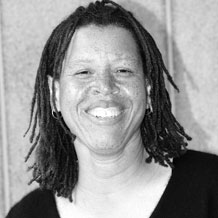 Jacqueline Francis, Vice President for Annual Conference
Jacqueline Francis, professor of art history at California College of the Arts in San Francisco, has been named vice president for Annual Conference. She will chair the Annual Conference Committee, which determines conference programming and content, and work with CAA staff to devise and implement flexible session scheduling and formats for the event. A board member since 2009, Francis succeeds Anne Collins Goodyear, assistant curator of prints and drawings at the National Portrait Gallery, Smithsonian Institution, who served CAA in this position for one year. (Goodyear will become board president in May 2012; see below.)
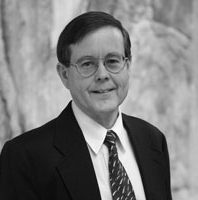 Randall C. Griffin, Vice President for Publications
The board reelected Randall C. Griffin, professor of art history at Southern Methodist University in Dallas, Texas, to a second term as vice president for publications. A member of the board since 2008, Griffin will oversee CAA’s publications program, serve as chair of the Publications Committee, and be a resource for the editorial boards of the three scholarly journals, The Art Bulletin, Art Journal, and caa.reviews.
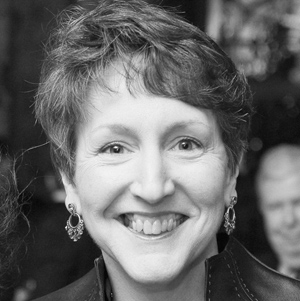 Maria Ann Conelli, Secretary
Maria Ann Conelli, dean of the School of Visual, Media, and Performing Arts at Brooklyn College, City University of New York, has been elected secretary. This officer attends and records minutes for all board and Executive Committee meetings. In addition, the secretary notifies CAA members about the Annual Members’ Business Meeting, held every year at the Annual Conference, and attends and records minutes of this meeting. A board member since 2009, Conelli succeeds DeWitt Godfrey, an artist and associate professor of art and art history at Colgate University, who has become vice president for committees (see above).
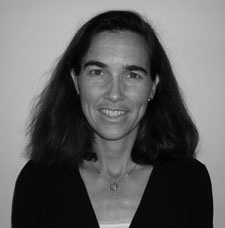 Anne Collins Goodyear, President
In October 2011, the board chose Anne Collins Goodyear, assistant curator of prints and drawings at the National Portrait Gallery, Smithsonian Institution, in Washington DC, to serve as the organization’s next president for a two-year term, beginning May 2012. A member of the board since 2006, Goodyear has served as vice president for external affairs (2007–9), vice president for publications (2009–11), and vice president for Annual Conference (2011–12). She succeeds Barbara Nesin, who has led the board since May 2010.
Key Points from the CAA Membership Survey
posted Mar 26, 2012
The results of CAA’s 2012 membership survey, sent to all active individual members, are now in. Over 1,600 members responded to the survey, which was open from January 25 to February 10, 2012, and the results are very enlightening. Several highlights include these findings:
- Most CAA members (63 percent) joined when they were in graduate school
- Almost half (48 percent) are faculty members at two- and four-year colleges or universities
- The number-one reason why people initially joined CAA was to assist their job search
- Job postings in the Online Career Center are the primary reason why people retain membership, followed by networking opportunities afforded by CAA
- Most CAA members support a greater internet presence for the journals. About 72 percent would like an expanded online version of Art Journal, and 70 percent want to see The Art Bulletin on the web
- Advocacy for the visual arts was voted the most important CAA function, with 67 percent of respondents rating it as “extremely important.” The Annual Conference and the Online Career Center tied for second place, with 58 percent each.
- Only 17 percent of the CAA members who responded participate in CAA’s social networking on Twitter and Facebook
- After CAA’s own publications, the most-read art periodicals by members are Art in America, ARTnews, and Artforum
- The top-three advocacy issues for CAA members are government funding for the arts and humanities, freedom of expression and censorship, and intellectual-property rights (including the cost for image reproduction, fair use, and terms of copyright)
- The majority of write-in comments addressed the costs of membership and the conference, but other recurring themes include the need to broaden CAA’s focus to embrace a wider range of disciplines and areas of interest, the need for further advocacy efforts, and the need for greater support for adjunct faculty
CAA greatly appreciates the feedback of its members.
As a service organization, CAA recognizes that knowing and responding to the professional needs of its constituents is vital to ensuring the effectiveness of the organization. In 2011, CAA contracted the services of an expert consultant, Raym Crow of the Chain Bridge Group, to help determine the future of its publications and membership program. The information gathered in the survey, and the resultant feedback from Crow, will be used by CAA leaders to help determine its priorities and potential directions.
March 2012 Picks from CAA’s Committee on Women in the Arts
posted Mar 23, 2012
 Each month, CAA’s Committee on Women in the Arts produces a curated list, called CWA Picks, of recommended exhibitions and events related to feminist art and scholarship in North Americn and around the world.
The CWA Picks for March 2012 go international with solo exhibitions of work by Rosemarie Trockel in Belgium, Eija-Liisa Ahtila in Sweden, and Kimsooja in France. In the United States, the Museum of Modern Art in New York is hosting a career survey of photographs by Cindy Sherman, arguably one of the most influential artists of the past fifty years. Close at her heels are the Guerrilla Girls, who have taken over two galleries at Columbia College Chicago for their own retrospective, which comprises their important works of art and activism since the 1980s. Rounding out the March picks are a special collaboration between the British artist Rachel Kneebone and the French sculptor Auguste Rodin at the Brooklyn Museum and the graphic production of Sister Mary Corita at the National Museum of Women in the Arts in Washington, DC.
Check the archive of CWA Picks at the bottom of the page, as several museum and gallery shows listed in previous months may still be on view or touring.
Image: Cindy Sherman, Untitled #463, 2007–8, chromogenic color print, 68⅝ x 72 in. (artwork © Cindy Sherman; photograph provided by the artist, Metro Pictures, and the Museum of Modern Art)