CAA News Today
Winter Deaths in the Arts
posted Mar 08, 2011
CAA recognizes the lives and achievements of the following artists, scholars, critics, architects, museum directors, collectors, and other men and women whose work has had a significant impact on the visual arts.
- Maria Altmann, a woman who pursued the restitution of her family’s Gustav Klimt paintings from the Austrian government, died on February 7, 2011, at the age of 94
- Françoise Cachin, a French curator and art historian who specialized in Impressionism and Postimpressionism, died on February 4, 2011, at age 74. She helped found the Musée d’Orsay in Paris and also served as its director when it opened in 1986
- Vlassis Caniaris, an artist based in Athens, Greece, whose work was exhibited across Europe, died in March 2011 at the age of 83. He also served as chair of architecture at the National Technical University in Greece for twenty years
- Robert J. Clark, a longtime professor of art and archaeology at Princeton University and curator of the influential 1972 exhibition The Arts and Crafts Movement in America, 1876–1916, died on January 4, 2011. He was 73
- Edmund de Unger, a Hungarian-born businessman who developed property London and owned a major collection of Islamic fine and decorative art, died on January 25, 2011. He was 92
- B. H. Friedman, a novelist and the author of the biography Jackson Pollock: Energy Made Visible (1972) who started his career in real estate, died on January 4, 2011. He was 84
- Oleg Grabar, a renowned historian of Islamic art and architecture and professor emeritus in the School of Historical Studies at the Institute for Advanced Studies, died on January 8, 2011, at age 81. Grabar won CAA’s Distinguished Lifetime Achievement Award for Writing on Art in 2005, among other others
- Ida Kay Greathouse, director of the Frye Art Museum in Seattle from 1966 to 1993, died on January 6, 2011. She was 105 years old
- Roy Gussow, an abstract sculptor based in New York whose large public works in stainless steel can be seen across the United States, died on February 11, 2011. He was 92
- John Keefe, a curator of decorative arts at the New Orleans Museum of Art in Louisiana since 1983, died on January 31, 2011, at the age of 69. He had organized exhibitions on antique glass, Wedgwood china, Fabergé eggs, and perfume bottles
- Donald Locke, a Guyanese-born British artist who had settled in Atlanta, Georgia, died on December 6, 2010, at the age of 80. He was known for his work in diverse media, including drawing, painting, ceramics, and sculpture
- Loretta Lorance, an architectural historian at the School of Visual Arts who wrote Becoming Bucky Fuller (2009), died on February 26, 2011. She had worked briefly for CAA in 2001 as a book cataloguer while completing her doctorate at the Graduate Center
- Tom Lubbock, a British artist and the chief art critic for the Independent and Independent on Sunday, died on January 9, 2011, at the age of 53
- Alfred K. Moir, a specialist in Italian Baroque art and professor of art history at the University of California, Santa Barbara, died on November 13, 2010. Born in 1924, Moir was instrumental in the growth of the Santa Barbara Museum of Art
- Malangatana Ngwenya, a celebrated African artist and political activist from Mozambique who served in his country’s parliament from 1990 to 1994, died on January 5, 2011. He was 74
- Dennis Oppenheim, an artist whose pioneering work in land, video, body, performance, and installation art in the 1960s and 1970s pushed aesthetic boundaries, died on January 22, 2011, at age 72. In his last fifteen years he had actively pursued outdoor sculpture and public commissions
- Charles O. Perry, an American sculptor trained as an architect whose public works were inspired by mathematics, died on February 8, 2011, at the age of 81. He won the Prix de Rome in 1964 and stayed in Italy for fourteen years to pursue art and architecture
- Milton Rogovin, a socially motivated photographer who documented the lower classes in his adopted hometown of Buffalo, New York, and across the United States, died on January 18, 2011. He was 101
- Paul Soldner, a ceramicist who emerged in California in the 1960s with Peter Voulkos, Ken Price, and John Mason, died on January 3, 2011, at the age of 89. A teacher at Scripps College for many years, he invented a pottery technique called American raku
- David Sorensen, a painter and sculptor based in Montreal who taught at Bishop’s University for nearly twenty years, died on February 17, 2011. He was 73
- Brian Stewart, an unorthodox English curator and the director of the Falmouth Art Gallery in Cornwall, died on December 12, 2010, at age 57. He authored The Dictionary of Portrait Painters in Britain up to 1920 (1997) with Mervyn Cutten and wrote twenty more books on his own
- Ellen Stewart, the founder and artistic director of La MaMA Experimental Theater Club, a landmark venue for progressive theater and performance art in New York, died on January 13, 2011. She was about 91 years old
- Edgar Tafel, an architect who had trained with Frank Lloyd Wright, died on January 18, 2011, at the age of 98. The last surviving member of the Taliesin Fellowship, which first met in 1932, Tafel worked on his own projects across the state of New York and beyond
- Alan Uglow, an British-born, New York–based artist and musician whose work in abstract painting, installation, and photography inspired younger New York artists, died on January 20, 2011. He was 69 years old
- Don Van Vliet, a painter, rock musician, and avant-garde composer best known as Captain Beefheart, died on December 17, 2010, at age 69. He had retired from music in the early 1980s to concentrate on his abstract painting
- Doyald Young, a graphic designer, a logotype developer, and a professor at Art Center College of Design for thirty years, died on February 28, 2011, at age 84. His books include Logotypes and Letterforms (1993), Fonts and Logos (1999), and Dangerous Curves (2008)
Read all past obituaries in the arts on the CAA website.
New Members Join CAA’s Professional Interests, Practices, and Standards Committees
posted Mar 07, 2011
CAA’s nine Professional Interests, Practices, and Standards Committees have welcomed their newly appointed members, who will serve three-year terms, 2011–14. In addition, seven new chairs have taken over committee leadership. New committee members and chairs began their terms last month at the 2011 Annual Conference in New York.
A call for nominations to serve on these committees appears annually from July to September in CAA News and on the CAA website. CAA’s president, vice president for committees, and executive director review nominations in December and make appointments that take effect the following February.
New Committee Members
Committee on Diversity Practices: Julie Levin Caro, Colby College; Yasmin Ramirez, Hunter College, City University of New York; Jordana Moore Saggese, California College of the Arts; and Jacqueline Taylor, University of Virginia. Kevin Concannon of the University of Akron takes over as chair from Renée Ater of the University of Maryland, College Park.
Committee on Intellectual Property: Benjamin Binstock, Cooper Union for the Advancement of Science and Art; and Charlotte Frost, Writtle School of Design. Doralynn Pines, formerly of the Metropolitan Museum of Art (retired), and Christine Sundt of Visual Resources: An International Journal of Documentation will share chair duties, succeeding Kenneth Cavalier, a lawyer based in British Columbia.
Committee on Women in the Arts: Wanda Ewing, University of Nebraska; Donna Moran, Pratt Institute; and Claudia Sbrissa, St. John’s University. Taking over the position of chair from Diane Burko, professor emerita at Philadelphia Community College, is Maria Elena Buszek of the University of Colorado, Denver.
Education Committee: Wayne (Mick) Charney, Kansas State University; Linda Cirocco, Savannah College of Art and Design; Joan Giroux, Columbia College Chicago; James Haywood Rolling, Syracuse University; and Julia Sienkewicz, Auburn University, Montgomery. Rosanne Gibel of the Art Institute of Fort Lauderdale succeeds Richard Tichich of Western Carolina University as chair.
International Committee: Kathryn Brown, Tilburg University; Diane Derr, Virginia Commonwealth University; Gwen Farrelly, Museum of Modern Art; and Geraldine A. Johnson, University of Oxford. Jennifer Milam of the University of Sydney remains the committee chair.
Museum Committee: Helen Burnham, Museum of Fine Arts, Boston; Christa Clarke, Newark Museum; Briley Rasmussen, Los Angeles County Museum of Art; and N. Elizabeth Schlatter, University of Richmond Museum. Karol Ann Lawson of Sweet Briar College assumes chair duties from Jay Clarke of the Sterling and Francine Clark Art Institute.
Professional Practices Committee: Dana B. Clancy, Boston University; Anne McClanan, Portland State University; and Robert Tynes, University of North Carolina, Asheville. Charles Wright of Western Illinois University will continue to serve as chair.
Services to Artists Committee: Sharon L. Butler, Eastern Connecticut State University; Conrad Gleber, La Salle University; Micol Hebron, Chapman University; Julia Morrisroe, University of Florida; and Timothy Nolan, independent artist, Los Angeles. Jackie Apple of Art Center College of Design follows Brian Bishop of Framingham State University as chair.
Student and Emerging Professionals Committee: Hazel Antaramian-Hofman, California State University, Fresno; Steven Bleicher, Coastal Carolina University; Deborah Karpman, University of Montevallo; David Lindsay, Texas Tech University; and Laurel O. Peterson, Yale University. Jennifer Stoneking-Stewart of Lander University succeeds Hilary Batzel of Women’s Studio Workshop as chair.
March Picks from CAA’s Committee on Women in the Arts
posted Mar 04, 2011
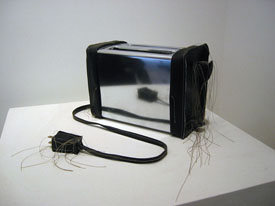 Each month, CAA’s Committee on Women in the Arts produces a curated list, called CWA Picks, of recommended exhibitions and events related to feminist art and scholarship in North America and around the world.
One CWA Pick for March 2011 is a conversation between the artists Yoko Ono and Kara Walker at the Museum of Modern Art in New York, taking place on Tuesday evening, March 8. Another selection is an exhibition at the University of California, Riverside, called Margarita Cabrera: Pulso y Martillo (Pulse and Hammer). On Saturday, March 5, the artist will present Florezca Board of Directors: Performance with Riverside students and faculty. The March picks also include two exhibitions in New York: Maira Kalman: Various Illuminations (of a Crazy World) at the Jewish Museum and Color Moves: Art and Fashion by Sonia Delaunay at the Cooper-Hewitt National Design Museum.
Check the archive of CWA Picks at the bottom of the page, as several museum and gallery shows listed in previous months may still be on view or touring.
Image: Margarita Cabrera, Black Toaster, 2003, vinyl, thread, and appliance parts, 10 x 7 x 10 in. (artwork © Margarita Cabrera; photograph provided by the artist, Walter Maciel Gallery, and the Sweeney Art Gallery)
The Modern Art Iraq Archive Offers New Hope for Lost Works of Modern Art from Iraq
posted Mar 04, 2011
 The newly created Modern Art Iraq Archive (MAIA) is part of a long-term effort to document and preserve the modern artistic works from the Iraqi Museum of Modern Art in Baghdad, most of which were lost and damaged in the fires and looting during the aftermath of the invasion of Iraq by the United States in 2003. As the site shows, little is known about many works, including their current whereabouts and their original location in the museum. The lack of documents about modern Iraqi art prompted the growth of the project to include supporting text. The site makes the works of art available as an open-access database in order to raise public awareness of the many lost works and to encourage interested individuals help document the museum’s original and/or lost holdings.
The MAIA site is the culmination of seven years of work by its project director, Nada Shabout, professor of art history and director of the Contemporary Arab and Muslim Cultural Studies Institute at the University of North Texas in Denton. Since 2003, Shabout has been collecting information on the lost works through intensive research, interviews with artists, museum personnel, and art-gallery owners. Shabout received two fellowships from the American Academic Research Institute in Iraq, in 2006 and 2007, to conduct the first phase of data collection. In 2009, she teamed with colleagues at the Alexandria Archive Institute, a California-based nonprofit organization dedicated to opening global cultural heritage for research, education, and creative works. The team won a Digital Humanities Start-Up Grant from the National Endowment for the Humanities to create a comprehensive archive of works once housed in museum’s galleries. These significant national treasures are displayed in an format that invites worldwide use, including the Iraqi national and expatriate communities. Users are encouraged to help identify and further document individual pieces.
MAIA aims to map the development of modern art in Iraq during the twentieth century and be a research tool to scholars, students, authorities, and the general public. It also strives to raise awareness of the rich modern heritage of Iraq. Furthermore, the creation of an authoritative, public inventory of the collection will not only act as a reminder of its cultural value and thus hopefully hasten its return, but it will also help combat smuggling and black-market dealings of the works.
2011 Annual Conference Summary
posted Mar 02, 2011
The College Art Association recently held its 99th Annual Conference and Centennial Kickoff at the Hilton New York in midtown Manhattan. Taking place February 9–12, 2011, the conference began the organization’s yearlong celebration of its one hundredth anniversary. The program comprised four days of presentations and discussions on art, art history, and visual culture; career-development workshops, mentoring programs, and job interviews with colleges and universities; a Book and Trade Fair featuring publishers of art books and journals, manufacturers of artists’ materials, and providers of various services for artists and academics; and a host of special events throughout the New York area.
Attendance
The New York conference was not only the largest CAA has produced, it was also the best attended. More than seven thousand art professionals from across the United States and around the world—including artists, art historians, students, educators, curators, critics, collectors, and museum staff—came the event.
Sessions
The conference offered more than two hundred sessions, panels, and talks—all developed by CAA’s members, affiliated societies, and committees. These sessions, which featured presentations from participants and institutions across the country and internationally, addressed a wide range of topics. With papers and presentations as manifold as “The Aesthetics of Sonic Spaces,” “Gender and Sexuality in the Art Museum,” and “Civic Performance and the Genesis of the Roman Social Cityscape,” the 2011 conference was highly diverse.
CAA also organized seven special Centennial Sessions in which invited panelists from different corners of the visual arts—among them Mark Tribe, Griselda Pollock, and James Elkins—came together to debate core concepts, such as diversity, experience, feminism, globalization, medium, technology, and tradition.
Career Services
Career Services included three days of mentoring and portfolio-review sessions, workshops and roundtables on professional-development issues, and job interviews. Approximately one hundred schools, academic departments, and institutions conducted interviews at the conference. Workshops addressed such topics as planning for retirement, advice for new instructors, securing a job in the arts, and self-marketing for artists.
Book and Trade Fair
The Book and Trade Fair presented 149 exhibitors, including participants from the United States, Turkey, Spain, England, Scotland, France, Germany, Italy, and Belgium, displaying new publications, artists’ materials, digital resources, and innovative products of interest to artists and scholars. The Book and Trade Fair also featured book signings, lectures, and demonstrations, as well as three exhibitor sessions on artists’ materials and publishing.
ARTspace and ARTexchange
ARTspace, a “conference within the conference” tailored to the needs and interests of practicing artists, presented the Annual Artists’ Interviews with Krzysztof Wodiczko and Mel Chin, as well as wealth of presentations and programming by and for artists. ARTexchange, an open-portfolio event in which artist members displayed their small paintings, drawings, prints, photographs, and work on laptops, hosted over fifty artists this year.
Convocation and Centennial Awards
More than six hundred people attended Convocation and the Centennial Awards Presentation, held at the Hilton New York on Wednesday, February 9. Jim Leach, chairman of the National Endowment for the Humanities, spoke about the importance of the humanities, and eco-art pioneers Newton and Helen Mayer Harrison delivered a lively keynote address.
On the occasion of CAA’s centennial year, the Board of Directors presented four awards to living individuals who have contributed significantly to the advancement of the visual arts in the United States. The recipients of CAA’s four Centennial Awards are:
- Stuart E. Eizenstat, attorney and former US ambassador, Centennial Award for Protecting Art as a Cultural Product, presented by Paul Jaskot of DePaul University
- Agnes Gund, arts advocate and philanthropist, Centennial Award for Service to the Field, presented by Ann Temkin of the Museum of Modern Art
- Philippe de Montebello, former director of the Metropolitan Museum of Art, Centennial Award for Leadership, presented by Linda Downs, CAA executive director
- Dorothy and Herbert Vogel, collectors of contemporary art, Centennial Award for Patronage, presented by Anne Goodyear of the National Portrait Gallery, Smithsonian Institution
Awards for Distinction
Each year CAA recognizes the accomplishments of individual artists, art historians, authors, conservators, curators, and critics whose efforts transcend their individual disciplines and contribute to the profession as a whole and to the world at large. More than four hundred people attended the presentation of the 2011 Awards for Distinction in the Grace Rainey Rogers Auditorium at the Metropolitan Museum of Art on Thursday, February 10.
The recipients of CAA’s 2011 Awards for Distinction are:
- Lynda Benglis, Distinguished Artist Award for Lifetime Achievement
- John Baldessari, Artist Award for Distinguished Body of Work
- Mieke Bal, Distinguished Lifetime Achievement Award for Writing on Art
- Luis Camnitzer, Frank Jewett Mather Award
- Faith Ringgold, Distinguished Feminist Award
- William Itter, Distinguished Teaching of Art Award
- Patricia Hills, Distinguished Teaching of Art History Award
- Molly Emma Aitken, Charles Rufus Morey Book Award for The Intelligence of Tradition in Rajput Court Painting
- Darielle Mason, Alfred H. Barr, Jr., Award for Kantha: The Embroidered Quilts of Bengal
- Yasufumi Nakamori, Alfred H. Barr, Jr., Award for Smaller Museums, Libraries, Collections, and Exhibitions for Katsura: Picturing Modernism in Japanese Architecture
- Ross Barrett, Arthur Kingsley Porter Prize for “Rioting Refigured: George Henry Hall and the Picturing of American Political Violence”
- Kirsten Swenson, Janet Kraynak, Paul Monty Paret, and Emily Eliza Scott, Art Journal Award for “Land Use in Contemporary Art”
- Joyce Hill Stoner, CAA/Heritage Preservation Award for Distinction in Scholarship and Conservation
Centennial Book
CAA introduced The Eye, the Hand, the Mind: 100 Years of the College Art Association, a new book that surveys the impressive history of the organization from 1911 to the present. Susan Ball, executive director emerita, edited the 330-page hardcover book, which was published jointly by CAA and Rutgers University Press.
Special Events
The Metropolitan Museum of Art hosted CAA’s Centennial Reception in the Great Hall and the Temple of Dendur. Hunter College offered its expansive galleries for the CAA Regional MFA Exhibition, which surveyed work by artists from twenty institutions within one hundred miles of New York. The New York Center for Art and Media Studies (NYCAMS) hosted the CAA Regional BFA Exhibition, which featured seventeen undergraduate student artists from seven area BFA programs. Sold-out tours explored the riches of New York’s cultural attractions, from a Chelsea Gallery District excursion to a preview tour of the Museum for African Art.
Save the Date
CAA will conclude its Centennial Celebration at the 100th Annual Conference, to be held February 22–25, 2012, in Los Angeles, California.
About CAA
The College Art Association is dedicated to providing professional services and resources for artists, art historians, and students in the visual arts. CAA serves as an advocate and a resource for individuals and institutions nationally and internationally, offering forums to discuss the developments in art and art history through its Annual Conference, publications, exhibitions, website, and other avenues. CAA focuses on a wide range of issues, including education in the arts, freedom of expression, intellectual-property rights, cultural heritage and preservation, and workforce topics in universities and museums. Representing its members’ professional needs since 1911, CAA is committed to the highest professional and ethical standards of scholarship, creativity, criticism, and teaching.
Audio Downloads from the 2011 Annual Conference
posted Mar 01, 2011
 The 2011 Annual Conference in New York boasted an incredibly diverse array of sessions. Audio recordings for sixty-three of the panels—including “Performative Tendencies,” “Color and Nineteenth-Century American Painting,” and “The Erasure of Contemporary Memory”—are now available for sale.
A set of MP3 audio recordings from the New York conference is available for only $149.95, either as a download or on CD-ROMs. Individual sessions, available only as downloads, are $24.95 each. Please visit Conference Media to view the list of sessions and to order.
The full range of art history is represented in sessions such as “The Afterlife of Cubism,” “The Global Eighteenth Century,” and “(Re)Contextualizing Precolumbian Art in the Twenty-First Century.” CAA also recorded many other popular 2011 sessions, such as “Parallel Practices: When the Mind Isn’t Focused on Art,” which featured the artists Robert Gober, Vija Celmins, Petah Coyne, Janine Antoni, and Philip Taafe, as well as the two-part “Dark Matter of the Art World.” Other topics about contemporary art include “Contemporary Drawing: Purpose, Practice, Performance,” “Textiles and Social Sculpture,” and “The Art of Pranks.” Curators will be especially interested in “Recurating: New Practices in Exhibition Making” and “Artist as Curator.”
Whether you took part in, attended, or missed a particular conference session, these recordings are a must-have for your library, research, or teaching. Listen to them while walking across campus, while driving in your car or using public transportation, or while relaxing in your home.
In addition to the New York sessions, you can also purchase recordings from the past five conferences: Boston (2006), New York (2007), Dallas–Fort Worth (2008), Los Angeles (2009), and Chicago (2010). See CAA’s Conference Audio section for details.
Propose a Paper or Presentation for the 2012 Annual Conference in Los Angeles
posted Feb 28, 2011
 The 100th Annual Conference in Los Angeles—which concludes CAA’s Centennial year—takes place February 22–25, 2012. Listing more than one hundred sessions, the 2012 Call for Participation will arrive in the mailboxes of all individual and institutional members in March; you can also download a PDF of the twenty-four-page document from the CAA website immediately.
The 2012 Call for Participation describes many of next year’s panels and presentations. CAA and session chairs invite your participation: please follow the instructions in the booklet to submit a proposal for a paper. This publication also includes a call for Poster Session proposals and describes the eleven Open Forms sessions.
The deadline for proposals of papers and presentations for the Los Angeles conference is Monday, May 2, 2011.
In addition to dozens of wide-ranging panels on art history, studio art, contemporary issues, and professional and educational practices, CAA conference attendees can expect participation from many area schools, museums, galleries, and other institutions. The Los Angeles Convention Center is the conference headquarters, holding most sessions and panels, Career Services and the Book and Trade Fair, receptions and special events, and more.
Apply for a Spring Grant from the Millard Meiss Publication Fund
posted Feb 24, 2011
CAA is accepting applications for spring 2011 grants through the Millard Meiss Publication Fund. Thanks to a generous bequest by the late art historian Millard Meiss, the twice-yearly program supports book-length scholarly manuscripts in any period of the history of art and related subjects that have been accepted by a publisher but require further subsidy to be published in the fullest form.
The publisher, rather than the author, must submit the application to CAA. Awards are made at the discretion of the jury and vary according to merit, need, and number of applications. Awardees are announced six to eight weeks after the deadline. Please review and follow the application guidelines carefully, as some requirements have changed. Deadline: April 1, 2011.
Winter 2010 Art Journal Published
posted Feb 23, 2011
 The Winter 2010 issue of Art Journal, CAA’s quarterly of modern and contemporary art, has just been published. A benefit of CAA membership, the publication is mailed to those individual members who elect to receive it and to all institutional members.
Included is a collection of essays, called “Land Use in Contemporary Art,” that investigates a new genre of aesthetic practices that redefine and expand on earthworks. Organized by Kirsten Swenson and with texts by Janet Kraynak, Paul Monty Paret, and Emily Eliza Scott, “Land Use” won the 2011 Art Journal Award. In her editor’s introduction, Katy Siegel writes that the above contributors: “eschew the extremely long view taken by Land artists in the 1960s and 1970s…. The more recent generation considered here focuses on a shorter-term history, directly or obliquely addressing modern life’s interaction with nature: airports and the evacuation of rural America, economic injustice in communities along the highway, global tourism and utopia in rural Thailand.”
The Winter 2010 issue also features Kelly Baum’s short essay on Santiago Sierra that includes photographs of the artist’s project, Submission (formerly Word of Fire) from 2006–7, and Jordan Troeller’s exploration of Zoe Leonard’s photographic series, called Analogue. In addition, Chika Okeke-Agulu writes about Who Knows Tomorrow, an exhibition of projects by five African artists, sponsored by the Nationalgalerie in Berlin, that were shown in museums across the city. Okeke-Agulu also interviews Zarina Bhimji, a participating artist whose Waiting (2007) appeared in the Hamburger Banhof. Finally, Michel Oren writes about the activities of the USCO Group, a multimedia art collective from the 1960s.
The Winter 2010 issue publishes two artist’s projects: a centerfold by Fabian Marcaccio titled Black Hole $ Paintant and the final installment of Dailies, Kerry James Marshall’s comic for the inside front and back covers. Among the book reviews are Rachel Haidu’s assessment of Christine Mehring’s recent book on Blinky Palermo and Monica McTighe’s analysis of Kate Mondloch’s Screens: Viewing Media Installation Art.
Art Journal offers a pair of texts from the print publication—David Reed’s “Soul-Beating,” on his relationship to Philip Guston, and Lauren O’Neill-Butler’s review of Lee Lozano: Notebooks 1967–70—on its new website. In celebration of CAA’s Centennial year, the website also highlights Howard Singerman’s “Art Journal at Fifty,” an essay exploring the history of the publication, and “A Baker’s Dozen from the Archives,” thirteen selections from Art Journal and its predecessors, which you can download as PDFs and read.
Solo Exhibitions by Artist Members
posted Feb 22, 2011
See when and where CAA members are exhibiting their art, and view images of their work.
Solo Exhibitions by Artist Members is published every two months: in February, April, June, August, October, and December. To learn more about submitting a listing, please follow the instructions on the main Member News page.
February 2011
Abroad

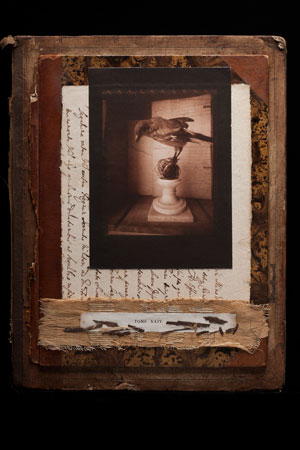 Jesseca Ferguson, Tome XXIV, 2010, pinhole Argyrotype with collaged elements, 12 x 10 x ⅛ in. (artwork © Jesseca Ferguson; photograph by Peter Harris)
Jesseca Ferguson. Fox Talbot Museum, Lacock Abbey, Lacock, Chippenham, United Kingdom, January 2–June 26, 2011. Handmade Pictures by Jesseca Ferguson. Photography
Mid-Atlantic

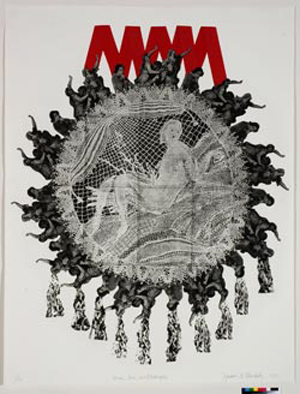 Judith K. Brodsky, Women, Love, Philosophy III, 2000, etching with attached red ribbon,
Judith K. Brodsky. Bernstein Gallery, Robertson Hall, Woodrow Wilson School of Public and International Affairs, Princeton University, Princeton, New Jersey, December 6, 2010–January 6, 2011. Women. Mixed-media printmaking.

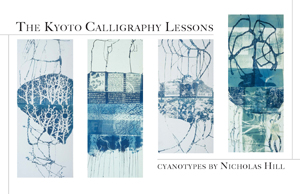 Invitation card for Nicholas Hill’s Kyoto Calligraphy Lessons
Nicholas Hill. NAP Museum and Exhibition Space, Kutztown, Pennsylvania, January 21–March 5, 2011. The Kyoto Calligraphy Lessons: Cyanotypes by Nicholas Hill. Cyanotype.
Midwest

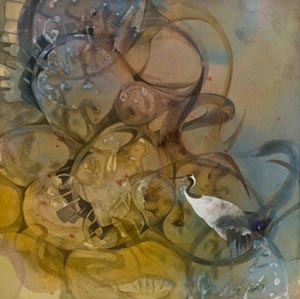 Yueh-Mei Cheng, Shambala, 2007, acrylic on handmade paper, 26 x 26 in. (artwork © Yueh-Mei Cheng)
Yueh-Mei Cheng. Hastings Museum of Natural and Cultural History, Hastings, Nebraska, January 16–March 11, 2011. Visual Chess. Painting.

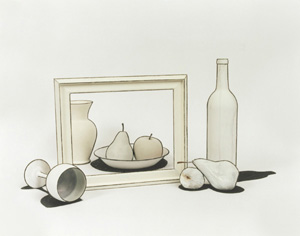 Cynthia Greig, Nature Morte no. 4 (Still Life Inside and Out), 2009, chromogenic development print, 24 x 32 in. (artwork © Cynthia Greig)
Cynthia Greig. Oakland University Art Gallery, Rochester, Michigan, January 7–February 20, 2011. Cynthia Greig: Subverting the (Un)Conventional. Photography and installation.

Rosemary Williams. Soap Factory, Minneapolis, Minnesota, December 18, 2010–February 20, 2011. Belongings. Site-specific video installation.
Northeast

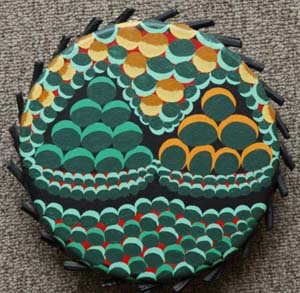 Richmond Ackam, Fruitage, 2003, acrylic on vellum, 10 in. diameter (artwork © Richmond Ackam)
Richmond Ackam. 3rd Floor Gallery, John Jay College of Criminal Justice, City University of New York, New York, January 27–February 20, 2010. Richmond Ackam: “Ackamism.” Painting.
June Blum. Resnick Gallery, Library Learning Center, Long Island University, Brooklyn Campus, Brooklyn, New York, January 24–February 25, 2011. Black and White Paintings: An Overview. Painting.
Margot Lovejoy. Stephan Stoyanov Gallery, New York, February 10–March 13, 2011. Margot Lovejoy: The Confess Project. Installation.

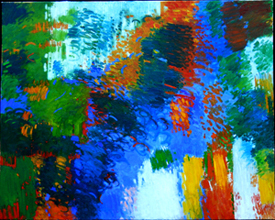 Lorna Ritz, Darkness Falling, 2010, oil on canvas, 40 x 50 in. (artwork © Lorna Ritz)
Lorna Ritz. Trailside Gallery, Northampton, Massachusetts, January 8–February 4, 2011. Darkness Falling. Painting.

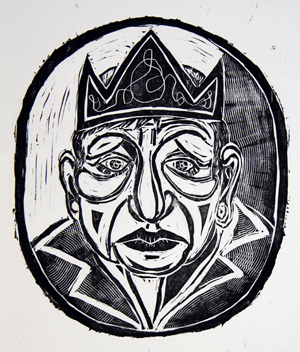 Fay Stanford, Bingo Queen, 2010, woodcut, 18 x 12 in. (artwork © Fay Stanford)
Fay Stanford. SoHo 20 Gallery Chelsea, New York, February 1–26, 2011. Love and Dementia. Woodcut, monoprint, and ink drawing.
South

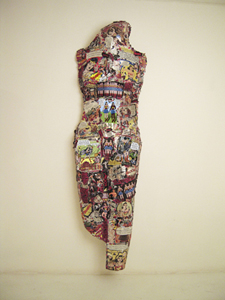 Linda Stein, Justice for All 698, 2010, acrylicized metallic paper, archival inks, and mixed media, 79 x 40 x 9 in. (artwork © Linda Stein)
Linda Stein. Anne Wright Wilson Fine Arts Gallery, Georgetown College, Georgetown, Kentucky, March 3–April 7, 2011. The Fluidity of Gender: Sculpture by Linda Stein. Sculpture.
West

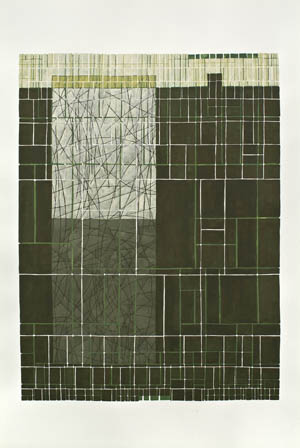 Betsy Lohrer Hall, Horizon II, 2009, gouache on paper, 60 x 42 in. (artwork © Betsy Lohrer Hall; photograph by Gene Ogami)
Betsy Lohrer Hall. El Camino College Art Gallery, Torrance, California, February 14–March 11, 2011. The Spaces In Between. Painting, installation, and performance.