CAA News Today
Coalition on the Academic Workforce Survey on Working Conditions for Contingent Faculty
posted Sep 27, 2010
 Earlier this year, the Coalition on the Academic Workforce (CAW) published an issue brief estimating 72.5 percent of all faculty members at American colleges and universities are contingent, that is, they do not have tenure or are not on the tenure track. Since no comprehensive national data exist for pay scales, benefits, working conditions, and involvement in departmental decision-making—let alone specifics on academic-based artists and art historians, and for university museum researchers—this figure cannot be verified.
For this reason, CAW has developed a Survey of Contingent Faculty Members and Instructors, which will examine compensation and working conditions, among other issues, at the institutional and course levels. The goal of the survey, which is live from September 27 to November 30, 2010, is to gather accurate information so that CAW may advocate more effectively at the local and national level.
As an active CAW member, CAA supports workforce equity through its Standards and Guidelines, advocacy efforts, and data compilation, and it urges all contingent faculty, instructors, and researchers to complete this survey and to alert others to do the same.
Open to full- and part-time teachers, graduate students (remunerated as teaching assistants or employed in other roles), researchers, and postdoctoral fellows, the survey is an excellent opportunity for CAW to count contingent faculty properly and record their working conditions. Survey results will be shared with you once they are compiled. This information will also contribute to a national database that will assist future advocacy work.
CAA specifically requested that the survey include distinct categories for artists, art historians, and related researchers, so that the visual arts will be fully represented. On an individual level, the conclusions drawn may help determine your working conditions in relation to national trends. Results will also inform specific CAA Contingent Faculty Standards and Guidelines, as well as future advocacy by CAA on your behalf.
Take the Survey of Contingent Faculty Members and Instructors now. If you have questions about it or about CAW, please contact Linda Downs, CAA executive director.
Read reactions to the survey in Inside Higher Ed.
Coalition on the Academic Workforce Survey on Working Conditions for Contingent Faculty
posted Sep 27, 2010
Earlier this year, the Coalition on the Academic Workforce (CAW) published an issue brief estimating 72.5 percent of all faculty members at American colleges and universities are contingent, that is, they do not have tenure or are not on the tenure track. Since no comprehensive national data exist for pay scales, benefits, working conditions, and involvement in departmental decision-making—let alone specifics on academic-based artists and art historians, and for university museum researchers—this figure cannot be verified.
For this reason, CAW has developed a Survey of Contingent Faculty Members and Instructors, which will examine compensation and working conditions, among other issues, at the institutional and course levels. The goal of the survey, which is live from September 27 to November 30, 2010, is to gather accurate information so that CAW may advocate more effectively at the local and national level.
As an active CAW member, CAA supports workforce equity through its Standards and Guidelines, advocacy efforts, and data compilation, and it urges all contingent faculty, instructors, and researchers to complete this survey and to alert others to do the same.
Open to full- and part-time teachers, graduate students (remunerated as teaching assistants or employed in other roles), researchers, and postdoctoral fellows, the survey is an excellent opportunity for CAW to count contingent faculty properly and record their working conditions. Survey results will be shared with you once they are compiled. This information will also contribute to a national database that will assist future advocacy work.
CAA specifically requested that the survey include distinct categories for artists, art historians, and related researchers, so that the visual arts will be fully represented. On an individual level, the conclusions drawn may help determine your working conditions in relation to national trends. Results will also inform specific CAA Contingent Faculty Standards and Guidelines, as well as future advocacy by CAA on your behalf.
Take the Survey of Contingent Faculty Members and Instructors now. If you have questions about it or about CAW, please contact Linda Downs, CAA executive director.
Read reactions to the survey in Inside Higher Ed.
Projectionists and Room Monitors Needed for the New York Conference
posted Sep 27, 2010
OCTOBER 28 UPDATE: Because of high demand, applications are not being accepted; please check back in December for more information.
Working as a projectionist or room monitor at the 2011 Annual Conference in New York is a great way to save on conference expenses. All candidates must be US citizens or permanent US residents.
Projectionists
CAA seeks applications for projectionists for conference program sessions. Successful applicants are paid $10 per hour and receive complimentary conference registration. Projectionists are required to work a minimum of four 2½-hour program sessions, from Wednesday, February 9, to Saturday, February 12, and attend a training meeting Wednesday morning at 7:30 AM. Projectionists must be familiar with digital projectors. Please send a brief letter of interest to Lauren Stark, CAA manager of programs. Deadline: January 7, 2011.
Room Monitors
Room monitors are needed for two Career Services mentoring programs (Artists’ Portfolio Review and Career Development Mentoring), several offsite sessions, and other conference events. Successful candidates are paid $10 per hour and receive complimentary conference registration. Room monitors are required to work a minimum of eight hours, checking in participants and facilitating the work of the mentors. Please send a brief letter of interest to Lauren Stark, CAA manager of programs. Deadline: January 7, 2011.
Two Jury Members Needed for the Millard Meiss Publication Fund
posted Sep 23, 2010
CAA seeks nominations and self-nominations for two individuals to serve on the jury for the Millard Meiss Publication Fund through June 30, 2014. The jury awards grants that subsidize the publication of book-length scholarly manuscripts in the history of art and related subjects. It reviews manuscripts and grant applications twice a year and meets in New York in the spring and fall to select awardees. CAA reimburses committee members for travel and lodging expenses in accordance with its travel policy.
Candidates must be current CAA members and should not be serving on another CAA editorial board or committee. Jury members may not themselves apply for a grant in this program during their term of service. Nominators should ascertain their nominee’s willingness to serve before submitting a name. Please send a letter describing your interest in and qualifications for appointment, a CV, and contact information to: Millard Meiss Publication Fund Jury, CAA, 275 Seventh Ave., 18th Floor, New York, NY 10001; or by email to Alex Gershuny, CAA editorial associate. Deadline: October 15, 2010.
Receive Career Advice in CAA’s Conference Mentoring Program
posted Sep 22, 2010
 As a CAA member, you have special access to a diverse range of mentors at Career Services during the 2011 Annual Conference in New York. All emerging, midcareer, and even advanced arts professionals can benefit from one-on-one discussions with dedicated mentors about the presentation of your artwork in digital and physical portfolios, career-management skills, and professional strategies for seeking a job in academia and the art world.
You may enroll in either the Artists’ Portfolio Review or Career Development Mentoring—please choose one. Both sessions are offered free of charge, and conference registration, while encouraged, is not necessary to participate.
Artists’ Portfolio Review
The Artists’ Portfolio Review offers CAA members the opportunity to have digital images or DVDs of their work reviewed by curators and critics in personal twenty-minute consultations. You may bring battery-powered laptops; wireless internet, however, is not available in the room. Sessions are filled by appointment only and are scheduled for Thursday, February 10, and Friday, February 11, 8:00 AM–NOON and 1:00–5:00 PM each day.
All applicants must be current CAA members. Participants are chosen by a lottery of applications received by the deadline; all applicants are notified by email. To apply, download and complete the Artists’ Portfolio Review Enrollment Form, or fill out the form in the 2011 Conference Information and Registration booklet, which will be mailed to CAA members in mid-October. Send the completed form by email to Lauren Stark, CAA manager of programs; by fax to 212-627-2381; or by mail to: Artists’ Portfolio Review, CAA, 275 Seventh Ave., 18th Floor, New York, NY 10001. Deadline: January 7, 2011.
Career Development Mentoring
Artists, art historians, art educators, and museum professionals at all stages of their careers may apply for one-on-one consultations with veterans in their fields. In personal twenty-minute sessions, Career Development Mentoring offers a unique opportunity for participants to receive candid advice on how to conduct a thorough job search, present work (cover letters, CVs, digital images, etc.), and prepare for interviews. Sessions are filled by appointment only and are scheduled for Thursday, February 11, and Friday, February 12, 8:00 AM–NOON and 1:00–5:00 PM each day.
All applicants must be current CAA members. Participants are chosen by a lottery of applications received by the deadline; all applicants are notified by email. To apply, download and complete the Career Development Enrollment Form, or fill out the form in the 2011 Conference Information and Registration booklet, which will be mailed to CAA members in mid-October. Send the completed form by email to Lauren Stark, CAA manager of programs; by fax to 212-627-2381; or by mail to: Career Development Mentoring, CAA, 275 Seventh Ave., 18th Floor, New York, NY 10001. Deadline: January 7, 2011.
Image: Career Development Mentoring at the 2008 Annual Conference in Dallas–Fort Worth (photograph by Teresa Rafidi)
Task Force on Practical Publications Presents Charge and Survey Results
posted Sep 21, 2010
Eager to serve CAA members and curious about the possibility of a new source for earned revenue, CAA recently formed a Task Force on Practical Publications. A committed group of educators, administrators, and staff members has begun studying a potential program devoted to practical publications.
For several years, CAA has considered publishing slim books of an instructional nature devoted to the practical issues so many members face. Questions these publications might address include: What options do scholars have for online publishing? How does someone lead a dual studio-art and art-history department as chair? If I am faced with teaching Baroque or Abstract Expressionism for the first time and it is not my expertise, how do I best tackle this unfamiliar terrain? CAA members confront these and similar problems so often. And we regularly invent ways to resolve them. A program of pragmatic publications that share good solutions or best practices at a modest cost might be a great boon to the field, or so CAA leaders and staff have imagined for some time.
Such programs are already in place at many learned societies, and revenue from sales creates a vital source of organizational income. As CAA maneuvers through a still-unsteady economic climate, it must continue developing new sources of support—earned and contributed—to thrive as an organization. In this context, the Task Force on Practical Publications developed.
This summer, the task force offered an online survey that queried the membership about the perceived viability of this prospective program, as well as a host of related questions. About six percent of CAA members participated, a number within the range of reasonable expectation. A healthy 85 percent of respondents believed that CAA members would purchase this kind of publication, if available, and 65 percent said that they would buy such publications for their own use. Both statistics are impressive, given that people made a positive judgment sight unseen. The responses are also constructive in giving CAA a clearer picture of what needs to be done.
You will learn more about the discoveries and recommendations of the Task Force on Practical Publications on the CAA website in the months to come. Please stay tuned!
Patricia McDonnell is director of the Ulrich Museum of Art at Wichita State University in Kansas and chair of the Task Force on Practical Publications.
Mentors Needed for Career Services at the New York Conference
posted Sep 20, 2010
For the 2011 Annual Conference in New York, CAA seeks established professionals in the visual arts to volunteer as mentors for two Career Services programs: the Artists’ Portfolio Review and Career Development Mentoring. Participating as a mentor is an excellent way to serve the field and assist the professional growth of the next generation of artists and scholars.
Artists’ Portfolio Review
The Artists’ Portfolio Review provides an opportunity for artists to have digital images or DVDs of their work critiqued by professionals in the visual arts. CAA member artists are paired with a critic, curator, or educator for twenty-minute appointments. Whenever possible, artists are matched with mentors based on medium or discipline. Mentors provide an important service to artists, enabling them to receive professional criticism of their work. Art historians and studio artists must be tenured; critics, museum educators, and curators must have five years’ experience. Curators and educators must have current employment with a museum or university gallery.
Interested candidates must be current CAA members and willing to provide at least five successive twenty-minute critiques in a two-hour period on one of the two days of the review: Thursday, February 10, and Friday, February 11, 8:00 AM–NOON and 1:00–5:00 PM each day. Conference registration, while encouraged, is not required to be a mentor. Please send your CV and a brief letter of interest to Lauren Stark, CAA manager of programs. Deadline: December 3, 2010.
Career Development Mentoring
CAA seeks mentors from all areas of art history, studio art, art education, film and video, graphic design, the museum professions, and other related fields to serve in Career Development Mentoring. In this program, mentors give valuable advice to emerging and midcareer professionals, reviewing cover letters, CVs, digital images, and other pertinent job-search materials in twenty-minute sessions.
Interested candidates must be current CAA members and prepared to give five successive twenty-minute critiques in a two-hour period on one of the two days of the session: Thursday, February 10, and Friday, February 11, 8:00 AM–NOON and 1:00–5:00 PM each day. Conference registration, while encouraged, is not required to be a mentor. Art historians and studio artists must be tenured; critics, museum educators, and curators must have five years’ experience. Curators and educators must have current employment with a museum or university gallery.
Career Development Mentoring is not intended as a screening process by institutions seeking new hires. Applications are not accepted from individuals whose departments are conducting a faculty search in the field in which they are mentoring. Mentors should not be attending the conference as candidates for positions in the same field in which mentoring participants may be applying. Please send your CV and a brief letter of interest to Lauren Stark, CAA manager of programs. Deadline: December 3, 2010.
Solo Exhibitions by Artist Members
posted Sep 18, 2010
See when and where CAA members are exhibiting their art, and view images of their work.
To learn more about submitting a listing, please see the instructions on the main Member News page.
September 2010
Abroad

 Deborah Garwood, Evans Pond, July 14, 2007 (part 2 of 2), 2009, selenium-toned gelatin silver print, 15 x 18 in. (artwork © Deborah Garwood)
Deborah Garwood. Fundación Antonio Pérez, Cuenca, Spain, August 6–September 30, 2010. Portrait of a Landscape: Imagery of Evans Pond, 1997–2009. Gelatin-silver and chromogenic prints.

 Vivian Tsao, Bedroom in the Morning, 1982, pastel, 18 x 24¼ in. (45.7 x 62.2 cm) (artwork © Vivian Tsao)
Vivian Tsao. National Museum of History, Taipei City, Taiwan, October 2–November 8, 2009. Paintings by Vivian Tsao. Oil on linen and pastel.
Mid-Atlantic

 Beauvais Lyons, kiosks for The Association for Creative Zoology at the Rhea County Courthouse during the 2010 Scopes Trial Festival in Dayton, Tennessee
Beauvais Lyons. Jefferson Garden, American Philosophical Society, Philadelphia, Pennsylvania, September 10–12 and 16–18. The Association of Creative Zoology. Lithography and taxidermy.
Midwest

 Roger Shimomura, Yellow Terror, 2008, acrylic on canvas, 60 x 72 in. (artwork © Roger Shimomura)
Roger Shimomura. Richmond Center for Visual Arts, Western Michigan University, Kalamazoo, Michigan, October 21–November 24, 2010. Yellow Terror: The Collections and Paintings of Roger Shimomura. Painting and objects.

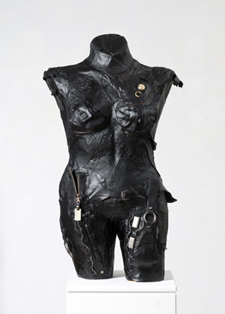 Linda Stein, Defender 696, 2010, leather, metal, and mixed media, 38 x 22 x 14 in. (artwork © Linda Stein)
Linda Stein. Luce Gallery, Cornell College, Mount Vernon, Iowa, September 5–October 3, 2010. The Fluidity of Gender: Sculpture by Linda Stein. Sculpture.

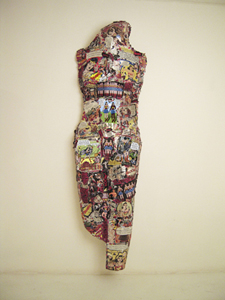 Linda Stein, Justice for All 698, 2010, acrylicized metallic paper, archival inks, and mixed media, 79 x 40 x 9 in. (artwork © Linda Stein)
Linda Stein. P.E.O. Foundation Art Gallery, Cottey College, Nevada, Missouri, October 15–November 20, 2010. The Fluidity of Gender: Sculpture by Linda Stein. Sculpture.
Northeast

 Robert Knight, Untitled (7 hours, 23 minutes, January 1, 2008), 2009, archival inkjet print, 30 x 39 in. (artwork © Robert Knight)
Robert Knight. Gallery Kayafas, Boston, Massachusetts, June 3–July 17, 2010. Sleepless. Photography, audio, and video.

 Robert Knight, Untitled (5 hours, March 16, 2010), 2010, archival inkjet print, 8½ x 11 in., with paired audio recording, 16:27 min. (artwork © Robert Knight)
Robert Knight. Danforth Museum of Art, Framingham, Massachusetts, September 12–November 7, 2010. Sleepless. Photography, audio, and video.

 Richard Minsky, binding for the first American edition of George Orwell’s Nineteen Eighty-Four, 2004, 8½ x 5¾ x 4 in. Yale University Arts of the Book Collection (artwork © Richard Minsky)
Richard Minsky. Robert B. Haas Family Arts Library, Yale University, New Haven, Connecticut, August 2–November 29, 2010. Material Meets Metaphor: A Half Century of Book Art by Richard Minsky. Book art.

 Mimi Oritsky, The Pool #13, 2010, oil on canvas, 24 x 24 in. (artwork © Mimi Oritsky)
Mimi Oritsky. A.I.R. Gallery, Brooklyn, New York, September 8–October 3, 2010. Paintings and Works on Paper. Oil on canvas and graphite and gouache on paper.

 Michael Rich, The Sea and Tulips, 2009, oil and wax on canvas, 68 x 62 in. (artwork © Michael Rich)
Michael Rich. Old Spouter Gallery, Nantucket, Massachusetts, August 13–25, 2010. The Sea and Tulips: New Paintings by Michael Rich. Oil on panel and canvas.

 Marianne Weil, Castelo Velho, 2010, bronze, unique casting, 13 x 9 x 4 in. (artwork © Marianne Weil)
Marianne Weil. Kouros Gallery, New York, September 9–October 2, 2010. Ad Fundum: New Bronze Work. Bronze sculpture.
South

 BiLan Liao, Unnatural Education, 2007, oil on canvas, 40 x 30 in. (artwork © BiLan Liao)
BiLan Liao. Clemens Fine Arts Center, West Kentucky Community and Technical College, Paducah, Kentucky, August 27–September 24, 2009. A Window into Chinese History: Look Back at Chinese History through Five Generations of the Family of BiLan Liao. Oil on canvas.

 Lisa Tubach, Bruise #2, 2010, graphite and gouache on paper, 31 x 23 in. (artwork © Lisa Tubach)
Lisa Tubach. ArtGallery, Norfolk, Virginia, November 20, 2010–January 15, 2011. A Slow Walk through Secrets. Oil on canvas, graphite and gouache on paper, and video.

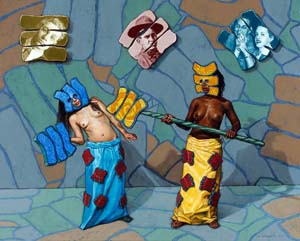 Jeff Whipple, The Ambivalent Genesis of Being, 2010, oil on canvas, 40 x 50 in. (artwork © Jeff Whipple)
Jeff Whipple. 621 Gallery, Tallahassee, Florida, June 4–July 31, 2010. The Ambivalent Genesis of Being. Painting, drawing, sculpture, photography, and video.
People in the News
posted Sep 17, 2010
People in the News lists new hires, positions, and promotions in three sections: Academe, Museums and Galleries, and Organizations and Publications.
To learn more about submitting a listing, please see the the instructions on main Member News page.
September 2010
Academe

 Cameron Cartiere
 has been appointed dean of graduate studies at Emily Carr University of Art and Design in Vancouver, British Columbia.

W. Mick Charney, professor of architectural history at Kansas State University in Manhattan, has been appointed coordinator of the university’s Faculty Exchange for Teaching Excellence for 2010–12.

 Gregg Horowitz (photograph by Diana Pau and provided by Pratt Institute)
Gregg Horowitz, formerly associate professor of philosophy at Vanderbilt University in Nashville, Tennessee, will chair the Social Science and Cultural Studies Department at Pratt Institute in Brooklyn, New York.
Julia Morrisroe has been promoted to associate professor and granted tenure in the School of Art and Art History at the University of Florida in Gainesville.

 Denise Mullen
, an artist and academic art administrator, has been appointed president of the Oregon College of Art and Craft in Portland.

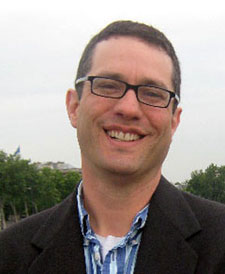 David Raskin
 has been promoted to professor in the Department of Art History, Theory, and Criticism at the School of the Art Institute of Chicago in Illinois.
Michael Yonan has been promoted to associate professor with tenure in the Department of Art History and Archaeology at the University of Missouri in Columbia.

 Steven Zucker (photograph by Lorenzo Ciniglio and provided by Pratt Institute)
Steven Zucker, formerly dean of graduate studies at the Fashion Institute of Technology, State University of New York, has been named chair of the History of Art and Design Department at Pratt Institute in Brooklyn, New York.
Museums

 Brooke Davis Anderson
 has been named deputy director for curatorial planning at the Los Angeles County Museum of Art in California.

 Lynette Roth (photograph by David Johnson)
Lynette Roth, currently Mellon Post-Doctoral Fellow in Modern Art at the Saint Louis Art Museum in Missouri, has been named Daimler-Benz Associate Curator of the Busch-Reisinger Museum, part of the Harvard Art Museums in Cambridge, Massachusetts. She will begin her new position on January 3, 2011.

 Elizabeth Smith (photograph © MCA Chicago 2010)
Elizabeth Smith, formerly chief curator and deputy director of programs at the Museum of Contemporary Art in Chicago, Illinois, has been appointed executive director of curatorial affairs at the Art Gallery of Ontario in Toronto.
Organizations

 Deborah Marrow (photograph by David Albanese and © 2005 J. Paul Getty Trust)
Deborah Marrow has been chosen as interim replacement director and chief executive officer of board of directors of the J. Paul Getty Foundation in Los Angeles, California, following the unexpected death of James E. Wood.

 Jonathan Nelson
, coordinator of the Art History Department at Syracuse University in Florence, has been appointed to the three-year position of assistant director for programs at the Harvard University Center for Italian Renaissance Studies Villa I Tatti, also in Florence.
Institutional News
posted Sep 15, 2010
Read about the latest news from institutional members.
To learn more about submitting a listing, please see the instructions on the main Member News page.
September 2010

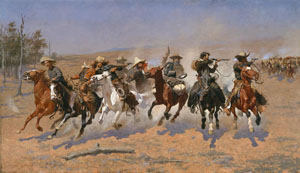 Frederic S. Remington, A Dash for the Timber, 1889, oil on canvas, 48¼ by 84⅛ in. Amon Carter Museum, Fort Worth, Texas. 1961.381 (artwork in the public domain)
The Amon Carter Museum in Fort Worth, Texas, has extended its name. The institution will be known now as the Amon Carter Museum of American Art. The new name does not signify a shift in mission of the museum but rather clarifies what it has been offering since the mid-1960s.

 Sculptures by Roy Lichtenstein and August Rodin in front of the High Museum of Art’s Anne Cox Chambers Wing (left), Wieland Pavilion (back right), and main building (front right) (photograph © 2005 Jonathan Jillyer and provided by the High Museum of Art)
The High Museum of Art in Atlanta, Georgia, has begun a three-year collaboration with Brenau University in Gainesville, Georgia, that will allow for the sharing of resources to further the integration of the arts into Brenau’s educational curriculum. During this pilot initiative, Brenau will have the opportunity to draw on the High’s exhibitions, collections, programs, and staff expertise.
Hunter College, City University of New York, has announced a partnership between the Art Department and the Fundación Cisneros/Colección Patricia Phelps de Cisneros (CPPC) to support the teaching and development of Latin American art at the school. The initiative establishes the Patricia Phelps de Cisneros Professorship in Latin American Art and provides Hunter students with access to CPPC resources, which range from curatorial scholarship and archival material to artworks from the collection that will be made available to the Hunter College Art Galleries for study, exhibition, and publication.

 William Merritt Chase, Woman in White, summer 1902, oil on canvas, 29 x 19 in. Indianapolis Museum of Art, Indiana. Gift of Mrs. Albert E. Metzger in memory of Albert E. Metzger. 45.241 (artwork in the public domain)
The Indianapolis Museum of Art in Indiana has received $200,000 from the National Endowment for the Arts through its Mayors’ Institute of City Design 25th Anniversary Initiative. This program supports creative place-making projects that contribute to the livability of communities and help transform sites into lively, beautiful, and sustainable places with the arts at their core.

 Georges de la Tour, The Magdalen with the Smoking Flame, ca. 1638–40, oil on canvas, 46 1/16 x 36 1/8 in. (117 x 91.76 cm). Los Angeles County Musuem of Art. Gift of the Ahmanson Foundation. M.77.73 (artwork in the public domain)
The Los Angeles County Museum of Art in California has received a second $75,000 donation from the Hollywood Foreign Press Association to help build a sustainable film program at the museum. The first donation came a year ago, which supported screenings through summer 2010.

 Students from Maryland Institute College of Art teach art to Baltimore-area children in a recent festival in the Community Arts Partnerships program (photograph provided by Maryland Institute College of Art)
Maryland Institute College of Art in Baltimore has received a two-year, $200,000 grant from the Kresge Foundation’s College/Arts Initiative to expand the reach of the college’s Community Arts Partnerships (CAP) program and to determine a tangible, quantifiable link between community arts activity and the seemingly intangible outcomes of hope, well being, and engagement. The grant will fund four to six new community partnerships for CAP, which link art students interested in community engagement with low-income communities, serving an additional 100 to 175 inner-city residents. The College/Arts Initiative grant also will provide seed funding for the school’s partnership with the Gallup Student Poll on data collection and analysis, seeking to generate findings that will support the work of community arts practitioners.
Ox-Bow in Saugatuck, Michigan, and the School of the Art Institute of Chicago in Illinois have received a $1 million gift from the LeRoy Neiman Foundation to support Ox-Bow’s school of art and artists’ residency program, which is currently celebrating its one hundredth anniversary as an internationally renowned haven for visual artists, writers, and scholars. The LeRoy Neiman Scholarship Fund at Ox-Bow will provide student scholarships and support Ox-Bow’s Fellowship Program, which provides studio space and funding for twelve to fourteen students from art schools across the country to spend their summer at Ox-Bow.
The University of California, Los Angeles, has received a $1 million gift from the Resnick Family Foundation to provide need-based support for undergraduate and graduate students in the School of the Arts and Architecture. The funds were contributed to the Bruin Scholars Initiative, which since January 2009 has bolstered predictable, ongoing funding earmarked for student support amid increasing fees and a diminished economy affecting family incomes.