
CAA News Today
Preorder Graduate Programs in Art History
posted Dec 05, 2008
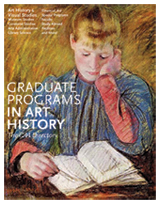 CAA is now taking preorders of Graduate Programs in Art History: The CAA Directory. This easy-to-use directory includes over 260 schools and English-language academic programs in the United States, Canada, Great Britain, and elsewhere worldwide. An index lists schools alphabetically and by state and country for quick reference.
Member Rate: $39.95 + shipping and handling
Nonmember Rate: $49.95 + shipping and handling
Please visit our online store to reserve your copy of the directory today. If you are ordering on behalf of an institution or department within a university, please use this form and submit via fax or post. At this time, online purchases can only be processed for individuals.
The directory is your indispensable, comprehensive guide to schools offering master’s, doctoral, and related degrees in art studies, including:
- History of Art and Architecture
- Visual Studies
- Museum Studies
- Curatorial Studies
- Arts Administration
- Library Science
Listings provide:
- Descriptions of specialized courses
- Number, names, and specializations of faculty
- Facilities such as libraries, image libraries, and labs
- Student opportunities for research and work
- Information on financial aid, fellowships, and assistantships
- Details on housing, health insurance, and other practical matters
Graduate Programs in the Visual Arts: The CAA Directory, which includes studio art, graphic design, applied arts and design, film production, art education, and conservation, will be available in early 2009.
Art Journal Conference Roundtable: Art and Transnationalism
posted Dec 04, 2008
The editorial board of Art Journal seeks interested CAA members to join us at the 2009 Annual Conference in Los Angeles for a roundtable discussion on art and transnationalism.
Art in the twentieth century has been deeply shaped by exile, travel, and diaspora. Since about 1990, “globalization” has been driven by the trajectory of global finance and transnational capitalism, which in turn have intensified transnational circulation and art practice. Seen through this lens, the contemporary artist is a producer of commodified sameness, and even an unwitting vector for capitalist penetration into the peripheries. But transnational practice and exchange may also foster new imaginaries and solidarities at variance with capitalism. Can such practices transform the local by enabling a more direct social address? Postcolonial theory and globalization studies are enabling new ways of writing histories of modernisms as crossnational cultural forms. Thinking through transnationalism may productively reconfigure the disjunctive relationship between a local or national art history and a “global” art history of the modern and contemporary era.
Led by Art Journal editorial-board member Iftikhar Dadi, the roundtable discussion will be recorded and may provide material for publication in a future issue. The discussion will take place on Thursday, February 26, 2:00–4:00 PM, at a conference location to be announced.
Participation is by invitation. Please send a brief email describing your interest in the topic and how you foresee contributing to the discussion to mid1@cornell.edu. Invitations to participate will be sent around February 1. Deadline: January 20, 2009.
Troubling Study on US Higher Education
posted Dec 03, 2008
 States are making little or no progress in providing affordable college opportunities or improving college completion rates for their residents, says a report released today by the National Center for Public Policy and Higher Education. The findings come as states face massive budget shortfalls that threaten higher-education funding, and the United States continues to lag behind other advanced nations on measures of higher-education performance.
Drawing on nearly two decades of data, the report, Measuring Up 2008, finds that while states have made modest gains in preparing students for college, more students are failing to graduate from high school. While college-enrollment rates for young adults are improving, enrollment rates are declining for older adults. The report also notes that the burden of paying for college is now higher for students in every state, and low college-completion rates have barely improved. Additionally, disparities persist in college access and success by income, race and ethnicity, and state.
According to the study, major gaps include:
- Affordability. The burden of paying for college has increased for all families but has increased substantially more for low- and middle-income families. Nationally, families in the lowest-income group (bottom 20 percent of the population) pay 55 percent of their income to attend public four-year colleges and universities (after accounting for all student financial aid)—a jump from 39 percent in 2000. Families in the middle-income group (middle 20 percent of the population) pay 25 percent of their income (up from 18 percent in 2000), and those in the top income group (top 20 percent of the population) pay 9 percent of their income (up from 7 percent in 2000). (See page 8 of Measuring Up 2008.)
- Additionally, college is more affordable in some states than others. At community colleges, the proportion of family income needed to pay for college expenses, after financial aid, has increased from 18 percent to 25 percent in Florida, and from 20 percent to 25 percent in Washington State. At public four-year institutions, the percentage of income needed to pay costs, after aid, has increased from 17 percent to 20 percent in Minnesota, from 19 percent to 34 percent in New Jersey, and from 29 percent to 41 percent in Pennsylvania. (See page 15.)
- High school completion. In Illinois, 95 percent of white young adults have a high school credential, compared with 82 percent of blacks. In Texas, 93 percent of white young adults have a high school credential, compared with 74 percent of Hispanics. (See page 14.)
- College attendance. In Connecticut and New York, 50 percent of white young adults are enrolled in college, compared with 34 percent of blacks. In California, 45 percent of whites are enrolled, compared with 27 percent of Hispanics. In Arizona, 40 percent of whites are enrolled, compared with 18 percent of Native Americans. (See page 14.)
- College graduation. In Delaware, 73 percent of white students complete a bachelor’s degree within six years of enrolling in college, compared with 41 percent of black students. In New York, 63 percent of whites do so, compared with 43 percent of Hispanics. In New Mexico, 47 percent of whites graduate within six years, compared with 25 percent of Native Americans. (See page 16.)
As a result of these inequities, US higher-education performance has been declining compared to other nations in recent years.
- In college completion, which has never been a strength of American higher education, the US falls in the middle of the pack: fifteenth among twenty-nine countries compared
- The US adult population ages thirty-five and older still ranks among the world leaders (second only to their peers in Canada) in the percentage who have college degrees, reflecting the educational progress of earlier times
- Among twenty-five- to thirty-four-year-olds, however, the US has slipped to tenth in the percentage having college degrees. This relative erosion of our national “educational capital” reflects the lack of significant improvement in the rates of college participation and completion in the US in recent years, compared with other countries
Measuring Up 2008 is the fifth in a series of biennial report cards issued by the National Center, based in San Jose, California. Like the earlier reports, this edition measures the performance of the nation and of each state in providing education and training beyond high school. Each state receives an A-to-F grade in each of five performance areas.
In addition to the national report card, detailed individual report cards are available for each of the fifty states. Upon release of Measuring Up 2008, the national and state report cards will be posted on the National Center’s website.
The National Center for Public Policy and Higher Education promotes public policies that enhance Americans’ opportunities to pursue and achieve a quality higher education. Established in 1998 by a consortium of national foundations, the center is an independent, nonprofit, nonpartisan organization. It is not associated with any institution of higher education, with any political party, or with any government agency. The National Center is solely responsible for Measuring Up 2008.
Troubling Study on US Higher Education
posted Dec 03, 2008
 States are making little or no progress in providing affordable college opportunities or improving college completion rates for their residents, says a report released today by the National Center for Public Policy and Higher Education. The findings come as states face massive budget shortfalls that threaten higher-education funding, and the United States continues to lag behind other advanced nations on measures of higher-education performance.
Drawing on nearly two decades of data, the report, Measuring Up 2008, finds that while states have made modest gains in preparing students for college, more students are failing to graduate from high school. While college-enrollment rates for young adults are improving, enrollment rates are declining for older adults. The report also notes that the burden of paying for college is now higher for students in every state, and low college-completion rates have barely improved. Additionally, disparities persist in college access and success by income, race and ethnicity, and state.
According to the study, major gaps include:
- Affordability. The burden of paying for college has increased for all families but has increased substantially more for low- and middle-income families. Nationally, families in the lowest-income group (bottom 20 percent of the population) pay 55 percent of their income to attend public four-year colleges and universities (after accounting for all student financial aid)—a jump from 39 percent in 2000. Families in the middle-income group (middle 20 percent of the population) pay 25 percent of their income (up from 18 percent in 2000), and those in the top income group (top 20 percent of the population) pay 9 percent of their income (up from 7 percent in 2000). (See page 8 of Measuring Up 2008.)
- Additionally, college is more affordable in some states than others. At community colleges, the proportion of family income needed to pay for college expenses, after financial aid, has increased from 18 percent to 25 percent in Florida, and from 20 percent to 25 percent in Washington State. At public four-year institutions, the percentage of income needed to pay costs, after aid, has increased from 17 percent to 20 percent in Minnesota, from 19 percent to 34 percent in New Jersey, and from 29 percent to 41 percent in Pennsylvania. (See page 15.)
- High school completion. In Illinois, 95 percent of white young adults have a high school credential, compared with 82 percent of blacks. In Texas, 93 percent of white young adults have a high school credential, compared with 74 percent of Hispanics. (See page 14.)
- College attendance. In Connecticut and New York, 50 percent of white young adults are enrolled in college, compared with 34 percent of blacks. In California, 45 percent of whites are enrolled, compared with 27 percent of Hispanics. In Arizona, 40 percent of whites are enrolled, compared with 18 percent of Native Americans. (See page 14.)
- College graduation. In Delaware, 73 percent of white students complete a bachelor’s degree within six years of enrolling in college, compared with 41 percent of black students. In New York, 63 percent of whites do so, compared with 43 percent of Hispanics. In New Mexico, 47 percent of whites graduate within six years, compared with 25 percent of Native Americans. (See page 16.)
As a result of these inequities, US higher-education performance has been declining compared to other nations in recent years.
- In college completion, which has never been a strength of American higher education, the US falls in the middle of the pack: fifteenth among twenty-nine countries compared
- The US adult population ages thirty-five and older still ranks among the world leaders (second only to their peers in Canada) in the percentage who have college degrees, reflecting the educational progress of earlier times
- Among twenty-five- to thirty-four-year-olds, however, the US has slipped to tenth in the percentage having college degrees. This relative erosion of our national “educational capital” reflects the lack of significant improvement in the rates of college participation and completion in the US in recent years, compared with other countries
Measuring Up 2008 is the fifth in a series of biennial report cards issued by the National Center, based in San Jose, California. Like the earlier reports, this edition measures the performance of the nation and of each state in providing education and training beyond high school. Each state receives an A-to-F grade in each of five performance areas.
In addition to the national report card, detailed individual report cards are available for each of the fifty states. Upon release of Measuring Up 2008, the national and state report cards will be posted on the National Center’s website.
The National Center for Public Policy and Higher Education promotes public policies that enhance Americans’ opportunities to pursue and achieve a quality higher education. Established in 1998 by a consortium of national foundations, the center is an independent, nonprofit, nonpartisan organization. It is not associated with any institution of higher education, with any political party, or with any government agency. The National Center is solely responsible for Measuring Up 2008.
Fall Publication Grants Announced
posted Dec 03, 2008
CAA has announced the recipients of its two book-grant programs, the Millard Meiss Publication Fund and the Wyeth Foundation for American Art Publication Grant.
Fall Meiss Grant Winners
CAA has awarded six Millard Meiss Publication Grants for fall 2008. Thanks to the generous bequest of the late Prof. Millard Meiss, these grants are given twice annually to publishers to support the publication of scholarly books in art history and related fields.
The grantees are:
- Mehmet-Ali Atac, The Mythology of Kingship in Neo-Assyrian Art (Cambridge University Press)
- Daniel Connolly, The Maps of Matthew Paris: Medieval Journeys through Space, Time, and Liturgy (Boydell and Brewer)
- Joyce de Vries, Caterina Sforza and the Art of Appearances: Gender, Art, and Culture in Early Modern Italy (Ashgate)
- Finbarr Barry Flood, Objects of Translation: Material Culture and Hindu-Muslim Encounter (Permanent Black)
- Victoria George, Whitewash (Pindar Press)
- Roslyn Hammers, Art, Technology, and Labor in Early Modern China (Hong Kong University Press)
Books eligible for a Meiss grant must already be under contract with a publisher and be on a subject in the arts or art history. Authors must be current CAA members. Application criteria and guidelines are available from the CAA Publications Department. Deadlines: March 15 and October 1 of every year.
Wyeth Publication Grant Winners
CAA is pleased to announce five recipients of the Wyeth Foundation for American Art Publication Grant for 2008. Thanks to a second generous three-year grant from the Wyeth Foundation, these awards are given annually to publishers to support the publication of one or more book-length scholarly manuscripts in the history of American art, visual studies, and related subjects.
The books receiving a grant are:
- Carol Clark, Charles Deas and 1840s America (University of Oklahoma Press)
- William Innes Homer, The Paris Letters by Thomas Eakins (Princeton University Press)
- Anna Indych-López, Muralism without Walls: Rivera, Orozco, and Siqueiros in the United States, 1927–1940 (University of Pittsburgh Press)
- Kirk Savage, Monument Wars: Washington, the National Mall, and the Transformation of the Memorial Landscape (University of California Press)
- Kristina Wilson, The Modern Eye: Stieglitz, MoMA, and the Art of the Exhibition, 1925–1935 (Yale University Press)
Books eligible for the Wyeth Grant have been accepted by a publisher on their merits but cannot be published in the most desirable form without a subsidy. The topic must be in American art; authors must be current CAA members. Application criteria and guidelines are available from the CAA Publications Department. Deadline: October 1, 2009.
NEA Releases Report on Women Artists
posted Dec 02, 2008
The National Endowment for the Arts (NEA) has released a new study in its Research Note series that shows women are making gains in traditionally male artist occupations, but still earn less than male artists. Women Artists: 1990–2005 takes a closer look at female artist employment trends that were previously mentioned in the NEA report Artists in the Workforce: 1990–2005, published in May 2008.
Totaling almost 919,000 artists in 2005, women represented 46 percent of the artist labor force, comparable to their percentage of all civilian workers. The note reveals significant patterns in pay disparity, demographic, and educational trends, and women’s advancement in various art fields over the past fifteen years. This note draws on data from the US Census Bureau’s 2003–5 American Community Surveys, along with the 1990 and 2000 population censuses.
Among the key findings:
Female artists earn less than male artists. Women artists who work full-year, full-time earn $0.75 for every dollar made by men artists. Women workers in general earn $0.77 for every dollar earned by men.
- Women’s pay disparity increases with age. In 2003–5, women artists aged 18 to 24 earned $0.95 for every $1 made by young men artists. This ratio fell to $0.67 for 45-to-54-year-olds. Similar pay gaps by age are found in the overall labor market
- Pay gaps vary by occupation. Men and women had closer earnings parity in lower-paying performing arts occupations (such as musicians and dancers), where women earned an average of $0.92 for every dollar earned by men. The gap tended to be larger in nonperforming art occupations (such as designers and art directors), where women earned 72 percent of what men earn
- Pay gaps vary by state. The pay disparity was smaller in ten states, such as New York and Arizona, where women made 80 percent or more of what men made. Women made less than 75 percent of what men made in twenty-seven states, including Virginia, Michigan, and North Dakota
Women make up just under half of all artists nationwide (46 percent), yet they are underrepresented in many artist professions. In 2003–5, nearly eight out of ten announcers and architects were men.
Women have achieved a greater presence in some artist occupations. By 2003–5, women made up 43 percent of all photographers and 22 percent of all architects—representing gains of 11 and 7 percent, respectively, since 1990.
Women artists are as likely to be married as female workers in general, but they are less likely to have children. In 2003–5, more than half of all women artists and all women workers were married. Yet only 29 percent of women artists had children under 18, almost six percentage points lower than for women workers in general.
Female artists cluster in low-population states. Women made up more than 55 percent of the artist labor force in Iowa, Alaska, New Hampshire, and Mississippi in 2003–5. They represent well below half of all artists in New York (45.8 percent) and in California (42.6 percent).
NEA Releases Report on Women Artists
posted Dec 02, 2008
The National Endowment for the Arts (NEA) has released a new study in its Research Note series that shows women are making gains in traditionally male artist occupations, but still earn less than male artists. Women Artists: 1990–2005 takes a closer look at female artist employment trends that were previously mentioned in the NEA report Artists in the Workforce: 1990–2005, published in May 2008.
Totaling almost 919,000 artists in 2005, women represented 46 percent of the artist labor force, comparable to their percentage of all civilian workers. The note reveals significant patterns in pay disparity, demographic, and educational trends, and women’s advancement in various art fields over the past fifteen years. This note draws on data from the US Census Bureau’s 2003–5 American Community Surveys, along with the 1990 and 2000 population censuses.
Among the key findings:
Female artists earn less than male artists. Women artists who work full-year, full-time earn $0.75 for every dollar made by men artists. Women workers in general earn $0.77 for every dollar earned by men.
- Women’s pay disparity increases with age. In 2003–5, women artists aged 18 to 24 earned $0.95 for every $1 made by young men artists. This ratio fell to $0.67 for 45-to-54-year-olds. Similar pay gaps by age are found in the overall labor market
- Pay gaps vary by occupation. Men and women had closer earnings parity in lower-paying performing arts occupations (such as musicians and dancers), where women earned an average of $0.92 for every dollar earned by men. The gap tended to be larger in nonperforming art occupations (such as designers and art directors), where women earned 72 percent of what men earn
- Pay gaps vary by state. The pay disparity was smaller in ten states, such as New York and Arizona, where women made 80 percent or more of what men made. Women made less than 75 percent of what men made in twenty-seven states, including Virginia, Michigan, and North Dakota
Women make up just under half of all artists nationwide (46 percent), yet they are underrepresented in many artist professions. In 2003–5, nearly eight out of ten announcers and architects were men.
Women have achieved a greater presence in some artist occupations. By 2003–5, women made up 43 percent of all photographers and 22 percent of all architects—representing gains of 11 and 7 percent, respectively, since 1990.
Women artists are as likely to be married as female workers in general, but they are less likely to have children. In 2003–5, more than half of all women artists and all women workers were married. Yet only 29 percent of women artists had children under 18, almost six percentage points lower than for women workers in general.
Female artists cluster in low-population states. Women made up more than 55 percent of the artist labor force in Iowa, Alaska, New Hampshire, and Mississippi in 2003–5. They represent well below half of all artists in New York (45.8 percent) and in California (42.6 percent).
December 2008 Issue of The Art Bulletin Published
posted Dec 02, 2008
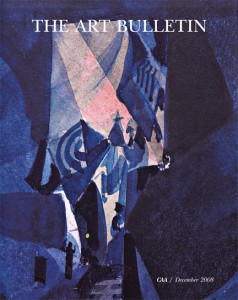 The December 2008 issue of The Art Bulletin, the leading publication of art history in English, has just been published. Your copy will arrive in the mail in the coming days.
In his essay for the journal’s Interventions series, Partha Mitter interrogates the nexus of power and authority that has effectively marginalized non-Western modernism and proposes a revisionist methodology. Alastair Wright, Rebecca M. Brown, Saloni Mathur, and Ajay Sinha write brief responses to Mitter’s text.
For “The Body of Eve in Andrea Pisano’s Creation Relief,” Jack M. Greenstein examines the artist’s treatment of the figures in the fourteenth-century Creation of Eve panel on the campanile of Florence Cathedral, which set a new standard for naturalism in relief sculpture.
With “In Form We Trust: Neoplatonism, the Gold Standard, and the Machine Art Show,” Jennifer Jane Marshall considers the Museum of Modern Art’s 1934 exhibition as a case study for investigating interwar American modernism’s negotiation between meaning, materiality, and value. Also in twentieth-century art, Claude Cernuschi and Andrzej Herczynski clarify the mechanics of Jackson Pollock’s handling of liquid paint under gravity and the broader implications for the meaning and ethos of his work.
The reviews section includes Ellen T. Baird’s assessment of Elizabeth Hill Boone’s recent book Cycles of Time and Meaning in the Mexican Books of Fate, and Kymberly N. Pinder’s evaluation of the exhibition Kara Walker: My Complement, My Enemy, My Oppressor, My Love at the Walker Art Center, among other reviews. Please read the full table of contents for more details.
Show Your Art at the Los Angeles Conference
posted Dec 01, 2008
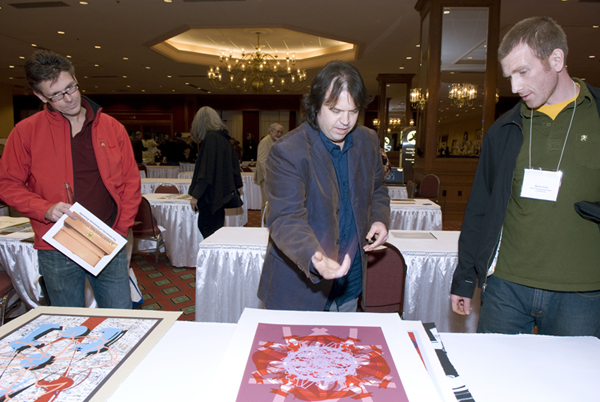 CAA’s Services to Artists Committee invites artist members to participate in ARTexchange, an open forum for sharing work at the Annual Conference. ARTexchange, to be held Friday evening, February 27, at the Los Angeles Convention Center, is free and open to the public; a cash bar is available.
The space on, above, and beneath a six-foot table is available for each artist’s exhibition of prints, paintings, drawings, photographs, sculptures, and small installations; performance, sound, and spoken word are also welcome. Previous ARTexchange participants have found that this parameter sparked creative displays, and the committee looks forward to surprises and inspiring solutions at the upcoming conference. Please note that artwork cannot be hung on walls, and it is not possible to run power cords from laptops or other electronic devices to outlets—bring fully charged batteries.
To participate in Los Angeles, please write to the ARTexchange coordinators, with the subject heading “CAA ARTexchange.” Include your CAA member number and a brief description of what you plan to present. Please provide details regarding performance, sound, spoken word, or technology-based work, including laptop presentations. You will receive an email confirmation. Because ARTexchange is a popular venue and participation is based on available space, early applicants are given preference.
Participants are responsible for their work; CAA is not liable for losses or damages. Sales of work are not permitted. Deadline: December 15, 2008.
Photograph by Teresa Rafidi.
Mentors Needed for Los Angeles Conference
posted Nov 25, 2008
Participating as a mentor in CAA’s two Career Services mentoring programs—the Artists’ Portfolio Review and Career Development Mentoring—is an excellent way to serve the field while assisting the professional growth of the next generation of artists and scholars.
Artists’ Portfolio Review
CAA seeks curators and critics to participate in the Artists’ Portfolio Review during the 2009 Annual Conference in Los Angeles. This program provides an opportunity for artists to have slides, VHS videos, digital images, or DVDs of their work critiqued by professionals; member artists are paired with a critic, curator, or educator for twenty-minute appointments. Whenever possible, artists are matched with mentors based on medium or discipline. Volunteer mentors provide an important service to artists, enabling them to receive professional criticism of their work. Art historians and studio artists must be tenured; critics, museum educators, and curators must have five years’ experience. Curators and educators must have current employment with a museum or university gallery.
Interested candidates must be current CAA members, register for the conference, and be willing to provide at least five successive twenty-minute critiques in a two-hour period on one of the two days of the review: Thursday, February 26, and Friday, February 27, 8:00 AM–NOON and 1:00–5:00 PM each day.
Send your CV and a brief letter of interest to: Lauren Stark, Artists’ Portfolio Review, CAA, 275 Seventh Ave., 18th Floor, New York, NY 10001; or email them to lstark@collegeart.org. Deadline: December 12, 2008.
Career Development Mentoring
CAA seeks mentors from all areas of art history, studio art, art education, film and video, graphic design, the museum professions, and other related fields to serve in CAA’s Career Development Mentoring. Mentors give valuable advice to emerging and midcareer professionals, reviewing cover letters, CVs, slides, and other pertinent job-search materials in twenty-minute sessions.
Interested candidates must be current CAA members, register for the conference, and be prepared to give five successive twenty-minute critiques in a two-hour period on one of the two days of the session: Thursday, February 26, and Friday, February 27, 8:00 AM–NOON and 1:00–5:00 PM each day. Art historians and studio artists must be tenured; critics, museum educators, and curators must have five years’ experience. Curators and educators must have current employment with a museum or university gallery.
This mentoring session is not intended as a screening process by institutions seeking new hires. Applications are not accepted from individuals whose departments are conducting a faculty search in the field in which they are mentoring. Mentors should not attend as candidates for positions in the same field in which workshop candidates may be applying.
Please send your CV and a brief letter of interest to: Lauren Stark, Career Development Mentoring, CAA, 275 Seventh Ave., 18th Floor, New York, NY 10001; or email them to lstark@collegeart.org. Deadline: December 12, 2008.