CAA News Today
Call For Respondents: CAA Copyright + Fair Use Survey
posted by CAA — January 22, 2026
Ten years ago, CAA published the Code of Best Practices in Fair Use for the Visual Arts, providing our community with clear, practical guidance on invoking fair use in scholarship, teaching, artmaking, museum practice, and archival access. This groundbreaking resource emerged from extensive research funded by the Andrew W. Mellon Foundation and the Samuel H. Kress Foundation, and it has been widely endorsed by organizations across the visual arts and cultural heritage fields. The Code of Best Practices has empowered countless scholars, educators, artists, curators, and archivists to confidently make fair use of copyrighted materials in their work—advancing knowledge, creativity, and public access to visual culture.
A decade later, the landscape has shifted dramatically. New technologies, evolving institutional practices, and emerging legal questions—particularly around artificial intelligence and digital platforms—demand that we revisit and refresh this vital resource. The CAA Committee on Intellectual Property is committed to ensuring that an updated publication reflects the real-world experiences, challenges, and needs of the association’s members working across all sectors of the visual arts. Your responses to this survey will directly inform the revision process, will help the committee identify where the current Code of Best Practices has been most useful, where gaps exist, and what new guidance our community needs. Fair use remains essential to the work we do—and your participation ensures that the next iteration will serve our community as effectively as the first.
Survey: Help us frame our new guidelines
posted by Allison Walters — February 02, 2021

Attendees at CAA’s 108th Annual Conference in Chicago, 2020. Photo: Stacey Rupolo
Can you take a few moments to help CAA’s Professional Practices Committee in its efforts to develop guidelines on assessment and evaluation in art and design?
Assessment and evaluation are often thought of and valued (or not valued) in different ways, according to peoples’ diverse academic positions and purposes that these tools will serve. As CAA is not an accrediting agency, the Committee’s guidelines will, in part, focus on providing a broad framework for best practices, clarifying what is a common understanding of assessment and evaluation for art and design, and providing recommendations that will help educators and academic units focus on equity, student success, and improve instruction, research and curricular development.
Please consider replying to the questions that you find most important, timely, or needed to support your work and program. Your time and any feedback you can provide to help frame the Committee’s new guidelines are greatly appreciated.
Please submit your responses by 11:59 PM (EST) Monday, February 8, 2021.
Thank You for CAA 2020! What Did You Think?
posted by CAA — February 17, 2020

See more highlights @caavisual.
Thank you to the thousands of participants who contributed to the 108th Annual Conference! You can see highlights on our Twitter and Instagram feeds and via the #CAA2020 hashtag.
If you attended CAA 2020, we want to hear from you. Let us know what worked, what didn’t, and what you’d like to see next year in our online survey. All survey respondents are eligible to be entered into a drawing for a free year-long membership.
We appreciate your feedback and hope to see you next year in New York, February 10-13, 2021! The submissions portal for CAA 2021 opens March 1.
What Do You Think? On the Victor Arnautoff Murals and Controversial Artworks
posted by CAA — September 09, 2019
Please share your comments using the form at the end of this post.

One of thirteen The Life of Washington murals by Victor Arnautoff, George Washington High School, San Francisco. Image courtesy George Washington High School Alumni Association.
CAA invites comments from our members regarding our position on the San Francisco Unified School District and its Board of Education’s decision to destroy, and later its reversal and decision to cover up, WPA-era murals by Victor Arnautoff at George Washington High School.
We spoke out against the initial vote, in opposition to the destruction of works of art and from the hope that creating a contextual reading of the murals might be of some value to the school and its students and an alternative to destroying them.
We also acknowledge that many, including CAA board members, find the murals offensive and damaging to the students’ learning environment, and supported the Board of Education’s decision.
Last month, during a reportedly contentious meeting, the School Board voted to cover up the murals rather than destroy them.
What do you think? Should the murals by Victor Arnautoff be covered up? Should they be destroyed? What are other alternatives?
More broadly, what place do controversial works of art hold in our society? What role do you feel CAA should play in these situations?
We want to know what you think and why. Let us know using the form, below.
See the Results of the 2019 CAA Annual Conference Survey
posted by CAA — April 02, 2019

Registration at the 2019 CAA Annual Conference in New York. Photo: Ben Fractenberg
Thank you to everyone who participated in our 2019 Annual Conference survey! Each year we work to make the Annual Conference better than the year before. It’s a large effort that takes the time of many people. We only do it once year but we need to have it perfect from that first hour registration is open, and your direct feedback helps us make that happen.
Here is what you told us about your experience this year:
- Up from last year, 79% of you were satisfied with the Annual Conference
- 75% liked the content of the sessions but only half of you thought the sessions represented a balance of time periods
- 75% liked your online experience with CAA
- 74% liked the Book and Trade Fair
- 67% thought that the conference was welcoming and inclusive
Here’s what you liked about the conference:
- Professional development offerings and workshops
- Networking opportunities
- Diverse sessions, good variety, good from a scholarly point
- Staff—easy to find someone to help
- Very smooth check-in process
- Pay-as-you-Wish Day Pass
- Conference in one building (as opposed to LA)
- New York is a good destination – museums and galleries
- Length of the sessions, committees’ lunch, opportunity to participate on a panel
- Mentoring
- Welcoming and stimulating, not the “high-brow” style of years’ past; friendly, collegial spirit
- More inclusion of design
- Many people got to participate
- Planning features on website
- Childcare
- Book and Trade Fair
- Convocation
- Open sessions on diversity and other topics
- Tables where people could sit and talk
Here is what you want to think about for next year’s conference:
- Conference was too long, and conference fatigue was inevitable
- Need more offerings for mentoring and interviewing
- Bring back the free paper schedule program
- 90-minute sessions are too short for 5 presenters; 8:30 is too early for some sessions
- Too many things are scheduled at the same time
- Too much for art historians rather than artists
- Not enough for art historians
- New York is always a problem with weather and too expensive ($13 for a glass of wine?)
- Could never find the soul to the conference —leaves me feeling sad about our field
- Very few senior scholars or mid-career attended, making it feel like a graduate student mentoring event
- Too many sessions on the same topics and at the same time
- Needs more transparency on how sessions are selected and put together
- There was a lack of diverse topics
- Way too large and overwhelming—no one had a chance to network—conference is no longer an academic one
- Abstracts should be available online
- The website is very confusing
- Too many presenters read from their papers, looking down
- Nothing to attract scholars or historians
- Why are there almost no artists outside of academia at CAA
Here is what you told us about you:
- About 67% of you are art historians; 24% are practicing artists
- 77% of you are associated with a college or university and nearly half of you are either full-time faculty or department chairs
- 75% of you pay for your membership fees yourself; about half of you are fortunate to have your employer to pay for it
Planning to submit a proposal for CAA 2020? The submissions portal for next year’s Annual Conference in Chicago closes April 30. We invite proposals for sessions, lightning rounds, poster sessions, and workshops from visual arts professionals working across the field in all disciplines.
Take the 2019 Annual Conference Survey
posted by CAA — February 20, 2019

CAA-Getty Scholars at CAA 2019. Photo: Ben Fractenberg
Did you attend the 107th Annual Conference? We want to hear from you. Let us know what worked, what didn’t, and what you’d like to see next year in our online survey.
We appreciate your feedback and hope to see you next year at the 108th Annual Conference in Chicago, February 12-15, 2020. The submissions portal opens March 1.
What Should I Do with My PhD?
posted by CAA — July 03, 2018
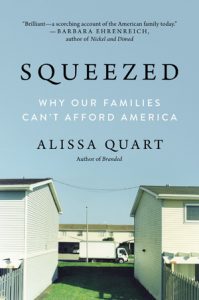 In her new book, Squeezed: Why Our Families Can’t Afford America, author Alissa Quart states what many of us know: People are being squeezed from the middle class at a far greater pace.
Specifically, Quart writes:
“The many other middle-class families running furiously and breathlessly just to find themselves staying in place are a large and varied coterie. It includes highly educated workers like lawyers, professors, teachers and pharmacists, professionals who never expected to be in this situation – often feeling cast aside by a system that seems stacked against them. Their prospects for the future, given the rise of robots and automation within their professions, are likely to dim even further.”
This is a situation that has vexed many CAA members, whether they are recent graduates or those who have seen their livelihoods derailed through the elimination of tenured teaching positions or departmental reorganization.
Faced with a reduction in the number of faculty positions over the last decade, we’ve heard many job suggestions for artists or those with a PhD. Some have suggested teaching abroad, non-profit, foundation or governmental work. There are also opportunities in publishing, museums, literary agencies, libraries, special collections or archives.
We want to hear from you. Have you seen others in the field find fulfilling work in areas outside of academia? What job-hunting suggestions do you have for those with advanced education outside of the typical areas?
Post your comments on the Google document below.
Related: Where Historians Work: An Interactive Database of History PhD Career Outcomes
Take the CAA Professional Development Survey
posted by CAA — June 06, 2018

Professional Development is very important to CAA. We strive to create programs both during the Annual Conference and at other times that address the professional needs of the visual arts field and community.
We ask that you give us your feedback on what kinds of professional development programs would work best for you.
Deadline: July 1, 2018
Arming Teachers? Here’s What Our Members Think
posted by CAA — April 19, 2018
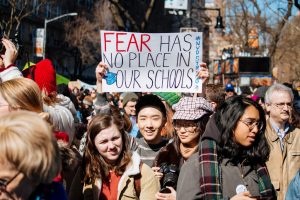
March For Our Lives demonstration, New York City, 2018. Photo: Mathias Wasik/Flickr
In the wake of the Parkland, Florida school shooting in February, President Trump proposed arming teachers as a measure to protect students.
We asked our members what they think about this issue, and got over 150 responses. Here is what they said:
“If teachers in colleges and universities were expected or supposed to be armed, I would leave academia. I don’t want to have to carry a gun to class. I have enough to worry about with teaching content, and creating a strong learning environment, without the added stress of something happening if a weapon were to misfire. Teachers should not be expected to be soldiers on top of being teachers.” — Meghan Bissonnette
“I am a faculty member and would never carry a gun, nor do they belong in a classroom with teachers. I think this is the thinking of a insane person who thinks arming teachers and staff with guns is the answer. I express total OPPOSITION to carrying arms.” — Cianne Fragione
“When I received my terminal degree in design, I never thought terminal would refer to taking someone’s life. I am not a sharp shooter. When a parent sends a child to school there is an assumption that the child will be safe. To put the educator in a policeman’s position doesn’t guarantee success. Outlaw the sale of assault weapons and secure the schools. It’s a much better solution.” — Ferris Crane
“I didn’t pursue my education or career goals with anything remotely like this in mind. We are scholars and educators, not police. The solution to this issue is not guns on campus, but the removal of all assault-type weapons from civilians. They have no place in our society. We also need to find a way to redefine what it means to “act like a man.” Too many innocents have been slaughtered because the shooters felt threatened and dismissed. Art educators won’t necessarily have the answers, but arming us is a risible solution from fools who believe in the tools of death and destruction.” — Bethanie Rayburn
“Teachers should NOT be armed. Their jobs are to educate; putting this burden on them is not fair, on top of the fact that most gun violence is accidental. Teachers and students should be concerned with learning in the classroom while their safety is secure via other means. Perhaps more resource officers on campus, metal detectors, better lockdown procedures and emergency notification systems, etc. More guns will not help the problem.” — Elizabeth Simmons
“I am absolutely against the idea of arming teachers. I would not trust myself or trust any other teacher to carry a gun and use it with poise. The liabilities are endless: is the school or teacher liable if gun goes missing? Who will pay for the insurance costs? If a teacher accidentally shoots a student what is their role in the crime?” — Katrina Chamberlin
“It should be an option for those who already have extensive weapons training or are willing to get it. They also must be aware that when law enforcement arrives, it may not be clear which side they’re on, and they must affirm their awareness of the risks of that situation. Being armed should never be a mandatory part of an educator’s job description, though. Trained professionals who are present exclusively to perform security duties are far more preferable.” — Jill F.
“No guns in school or university classrooms” — Victoria Dickinson
“Arming teachers and professors is a ridiculous idea. Our jobs are to teach, we shouldn’t have have to worry about an armed, troubled individual coming into our schools with a gun in the first place. Background checks need to be made more strict, and certain guns should be taken completely off the market. I can’t believe we even have to have this discussion.” — Margaret J. Schmitz
“Risk Management won’t let faculty climb ladders in my campus, but we are supposed to carry guns? The insurance alone makes this notion impossible to implement, aside from all the obvious reasons. I would refuse.” — Samantha fields
“I think it is ridiculous and a recipe for disaster. Teachers have enough responsibility as it is.” — Kira Jones
“The fewer guns in our schools, the better. The United States can and must change its culture of armed violence, beginning with its teaches and young students.” — Anne Higonnet
“Arming teachers is crazy: more guns does not make for fewer shootings. Think of the horrible accidents that will happen, as children are in spaces with guns and find out their teachers have them.
NO—this is a terrible plan by the NRA and the gun makers, to make their coffers yet more profitable.” — Penny Howell Jolly
“The idea of arming teachers is utter madness. Get rid of the ludicrous number of guns in this country—all of them except for police.” — Jayne Merkel
“Arming teachers is a terrible idea. Having guns in the classroom is antithetical to a productive learning environment and it only opens the possibilities for violence. This idea is so wrong headed that it is unspeakable. I would quit teaching before I would carry a gun at school and I would find a school for my children to attend that banned guns.” — Joni Kinsey Fields
“Making teachers responsible for the armed defense of their pupils is an irrational redefinition of their roles, and bringing more guns into schools is reckless. While it conceivable that an attacker might one day be thwarted by a well-trained and armed teacher, schools will be made less safe every day by the presence of additional guns.” — David Brownlee
“I totally oppose arming teachers. I will never carry a gun in my classroom.” — Jan Arabas
“We need fewer, not more, guns.” — David M. Sokol
“This is an outrageous suggestion by Trump. It is not a teacher’s responsibility to be armed to go to work. It is not their responsibility to shoot or possibly kill someone to protect students. Fighting fire with fire is not the solution here. In order to get guns out of schools we shouldn’t be adding more we should be making them harder to get.” — Corey D’Anna
“I think it is a terrible idea that will just add to the chaos and confusion of an active shooter situation.” — Anonymous
“Teachers go through extensive training to be teachers. They are usually overworked and underpaid. To suggest that a teacher can also act as a security guard and be armed is absurd. This is a scheme by the NRA and others (with Trump being complicit) to push the responsibility for these kinds of tragedies on to the backs of teachers. Never!” — Anne Glaros
“I am opposed to anything that would bring firearms into the classroom environment, where they could intimidate or potentially injure students and teachers. The risks posed by firearms significantly outweigh any argument for arming teachers. The classroom should be an environment defined by safety, consideration, and open debate. Not by weapons that could incidentally or purposefully be used to intimidate or accidentally cause harm.” — Greg Foster-Rice, Associate Professor, Columbia College Chicago
“It’s a horrible, horrifying idea. I do NOT want more guns in school nor do I want to have to use one EVER. An officer with one is fine.” — Kristin Osgood Lamelas
“It is not my duty to be fully trained to assess every situation for a threat and to respond with a weapon. My duty is to the education of my students and their well being. If there is an insistence on having individuals armed at school institutions, then there should be security officers hired specifically for the task. An educator can not be fully committed to their job if they are trying to do the work of two positions at once.
Not only are you threatening a teacher’s focus and ability to respond, but you are also putting the teacher/student relationship at risk. Students may not feel safe in a classroom where an individual in an authoritative position could “retaliate” at them and use lethal force. The same goes for schools that allow firearms to be carried by students (universities). Educators feel threatened that a student could retaliate if they are emotional about the outcome of a grade. Academics and law enforcement should be totally different departments so that there is no potential for legal violations.” — Whitney Bandel
“The more concealed or unconcealed weapons that teachers and/or students have on my campus, the less safe I feel. Surely the number of shootings would be decreased by decreasing the number of available weapons.” — BW-T
“Arming teachers would make no one safer but it would reinforce the insanity of the NRA’s campaign to turn the entire country into an armed camp. I especially share the concern of minority parents that if teachers were armed, school would become more dangerous for their children.” — Alan Wallach
“I strongly oppose arming faculty, as this will only lead to more gun death, especially accidental gun death. This call for guns in school should be taken very seriously. While some may label the call to arm teachers a “politically motivated distraction,” here in Kentucky the bills on the floor of our State Legislature right now (HB210 & SB103) are a deadly reality. These bills would mean that the University of Kentucky, where I work, would no longer be able to restrict guns on campus. A 2008 study showed that 89% of campus police chiefs think that guns on campus make it less safe. In a 20012/23 survey, 94% of faculty said they don’t want guns on campus and 79% of college students said that concealed weapons on campus would make them feel unsafe. However, despite how we at the university feel about guns and our desire for gun restrictions on our campus, we would be beholden to state laws sponsored by the NRA that force guns on our campuses. I am so tired of a small faction of gun fanatics and the greedy gun industry forcing us to live in a society where hundreds of people are killed or injured by guns everyday. ENOUGH IS ENOUGH!!! WE MUST STOP GUN VIOLENCE!!!
My statistics come from:
As an aside, if these bills pass in Kentucky, the university will have to pay for additional security measures on campus. Our budget is already stretched so thin and those funds could be used for scholarships, educational infrastructure, and faculty hires that would support our educational mission.” — Miriam Kienle
“I think you will lose a lot of teachers, as well as students. Most teachers will not be willing to do that. I wouldn’t. I would just teach online. Pretty sad. Anyway, shooters can just go to some other venue, and some may not mind a gunfight. We need to get at the real problem, which is access to guns, especially automated ones. Ban automated weapons. Raise the age limit to buy guns. Make more strict an in-depth background checks. These are the primary problems. This problem has been going on far too long without being fixed and we as Americans are really embarrassing ourselves in that we are more attached to our guns than we are to our children and college students.” — Stacy Berlfein
“The plan is absurd. Teachers are not police officers. Effective gun control laws that include thorough background checks, weapons insurance for gun owners, license renewal standards and banning of all high magazine weapons is a reasonable first step. Other nations do not have these mass shooting problems because they don’t privilege gun owners rights over the pursuit of LIFE, LIBERTY and HAPPINESS.” — Julia Morrisroe
“Absolutely not. Arming teachers would almost certainly lead to more student deaths, and after all, every student has seen their professor struggle to get the projector in the classroom to work – do you want that person to have a gun?” — Lindsay Alberts
“Arming teachers is a terrible idea. We don’t need more guns. I completely disagree with the idea.” — katlin Evans
“We should not be arming teachers. Teachers are hired to teach and that should be their focus, not to be a armed security force.” — Carol Schwartz
“The idea of arming teachers is asinine. It would (1) put an extra burden upon them, (2) not be at all effective, and (3) possibly lead to accidents. I am unequivocally opposed to it.” — Gina McDaniel Tarver
“I do not think teachers should be armed. I think semi-automatic and automatic weaponry has not place in civilian hands. Delay all gun ownership by at least 3 days, and register the owner and the gun. We never know if a sane person will kill, but if they have a gun they can in a heated moment. We are the most violent nation gun-wise. And the most immature in in using and regulating them.” — Phyllis Rosenblatt
“Arming teachers will likely result on more deaths as teachers try both to protect the students and shoot the killer. Police may find it difficult to distinguish between the gun holder who is the killer and the teacher. In short, it’s a bad idea.” — Anita Moskowitz
“Arming teachers is an absolute necessity! “Gun free zones” do not protect people. They only make the people in those areas sitting ducks–defenseless and easy prey for angry cowards. I am sickened by people who will not allow my children and myself and my students to be protected at school in this way. And, stop blaming the NRA for school shootings. CAA MUST advocate for all teaching (grade school and college level) to be allowed to conceal carry!!!” — Stephanie Chapman
“Arming teachers is a truly horrifying, incomprehensible suggestion. As a college teacher and former high school teacher it is glaringly obvious that this move would increase the danger to all parties and deteriorate, probably permanently destroy, the supportive relationship between teachers and students that is imperative for quality (or any) education.” — Darielle Mason
“I teach at a State University in one of the most conservative states in the Union where gun-ownership is ubiquitous. Our campus bans concealed carry – in fact, no one on campus are allowed to have guns. I have no doubt that there are a few secreted in desk drawers, but the policy is no guns. I believe arming teachers – even willing teachers with training – would result in a bloodbath eventually. Even police often shoot the wrong people in a firefight – the idea of encouraging one in a public school with crowds of children around is beyond stupid. Teachers and law makers must veto this ludicrous idea and look for real solutions beginning with banning and confiscating automatic weapons.” — Muffet Jones, Lecturer, Boise State University
“Arming teachers will only raise the level of danger in classrooms, as teachers are not mentally/psychologically infallible, security of the firearm cannot be maintained if said firearm must also be at the ready, and police or others are likely to mistake the armed teacher for the shooter.” — Jaleen Grove
“It is a dangerous proposal for a number of reasons.
- Anyone who points a gun must be prepared to kill. If not, they will risk the weapon being taken and used on them or their students.
- Classroom situations can get tense. There is much empirical evidence that the presence of a firearm actually escalates tensions. So the weapon becomes dangerous to teachers and students outside its use to defend against an armed intruder.
- My job as a teacher is to teach, not provide security. I am trained in emergency procedures and am a certified Black Belt in Taekwondo. This means I can help my students in an active shooter situation. It does not make me temperamentally qualified to use a firearm.
- I asked teenage students in my dojang what they thought about their principal having a gun. They were shocked by the idea, saying he already has anger management issues.
- There is scientific evidence that the more guns there are, the greater the amount of gun violence. Escalation, like any arms race, endangers everyone.” — Anne E. Guernsey Allen
“This is a dreadful idea. The possible consequences are dire. Imagine a teacher firing at an invader but hitting a student instead, whether a hostage or a student who was shoved into or fell into the line of fire. Teachers are not sharpshooters even if they are trained in firearm use. Imagine, too, the rare possibility of a teacher feeling threatened by a student, and then having the teacher fire his/her gun at a young person—something that cannot happen now. The possibility of a teacher being able to shoot an armed invader is small. The teacher’s first job is to save students by leading them to safety, not to take time to pull out a gun from a presumably secure repository.” — Carol Krinsky
“Teachers are not equipped to handle the emotional strain of shooting another human being. We got into this profession to help students develop and to expect them to be the ones responsible for shooting another person is absurd. In addition, having guns in classroom wouldn’t make all students feel safe. There are one that come to the classroom to escape the violence of their homes and having guns their could prove a distraction. Is the plan for the teacher is be locked and loaded? Or will it be stored in a safe in the classroom? Every time there’s a lock down drill, they go through the hallways sweeping for armed students? What would happen if we accidentally shot the wrong student? Also consider the logistics of how the guns would be issued and stored. What about the cost of training them. We struggle with funding just to deliver what is expected of us and the idea that there is money to train, store and arm teacher is ludicrous waste of money. I am against this ill thought out proposal.” — Sarah Merola
“No, I do not want to carry a weapon to class, nor do I want my colleagues or students with weapons on campus. This is an NRA driven idea to obfuscate the real problem and obvious solutions. It only serves to increase sales for gun manufacturers. Teachers in a classroom are not police officers or members of the armed services, nor should we be expected to behave like ones.
The stupidity of this idea is beyond my understanding. No individual needs to own military style weapons. All the data from other countries proves removing them reduces the violence. It may take a generation or two for these weapons to disappear from our society, but that is the real solution. I fear none of this will really change until we remove the money from elections. It’s time to stand for public funded elections.” — Ada Pullini Brown, Professor of Painting & Drawing
“It is dangerous. Just last week a high school student in MA managed to fire a policeman’s pistol in its holster–in the classroom. Teachers, like airline stewards, will be called on to protect students and need to be drilled in emergency procedures. Don’t let us be distracted by this–control access to assault weapons” — Madeline H. Caviness
“A terrible, counterproductive idea. More guns will mean more deaths, including lots of accidental ones.” — Joshua Shannon
“Any suggestion of arming teachers neglects to address the real issue here- the ease and access of anyone to purchase automatic weapons. Until the government takes a stand by passing gun control legislation, this epidemic will continue to worsen.” — Martina Shenal
“I think arming teachers is a dangerous proposal. If there is a shooter and everyone pulls their gun – who is to say a teacher won’t shoot a student by accident? And when the SWAT team arrives, how will they know who is the good guy and who is the bad guy? Law enforcement might target the teacher instead of the attacker.
I would prefer (though I do not advocate) armed security in school buildings over armed teachers – let’s let everyone be experts in their field. I feel like arming teachers follows the contemporary attitude of “everyone’s an artist” or “who needs professional expertise?” trend, when, in reality, not everyone can be properly trained and equipped for every situation, whether that is painting a pleasing picture, or protecting students from an attacker.
School safety should involve in-depth training on a variety of situations: medical, mental health, violence between students, violence against students, non-violent crime, vandalism, etc. Professional security forces will have the time and budget to deal with the possible outcomes and ramifications of all these situations: professors have neither time nor budget to receive this level of training.
The teachers who saved students lives in recent shootings did so by ushering them into back rooms, out of doors, etc. Had they been holding guns they would not have been able grab students and pull them to safe places. Pulling a gun might have hindered their ability to get students out of the way of harm. Teachers are already protecting students WITHOUT using guns- by thinking fast, solving problems and guiding students, as they do every day in the classroom.” — Michelle Paine
“I think that arming teachers would result in more gun violence incidents, an increase in casualties resulting from those, and ultimately a less safe environment for everyone. Guns have no place in civilians hands on schools and campuses. If the President and the NRA are genuine about increasing safety, they should form their recommendations on what our law enforcement professionals and our teachers recommend.” — Emir Bukva
“I can’t think of a worse “solution” to the problem than this. For one thing, how many teachers would want to be armed, or would be capable of being so responsibly. How would law enforcement be able to tell the difference between an armed teacher and a armed assailant? What should be happening is a unified effort to stand up to the NRA (or, really, that portion of the NRA that is actually opposed to any kind of sane gun legislation), Trump, etc., to control or eliminate the circulation of automatic or semi-automatic military-style weapons, and to control gun access more generally speaking in this nation. Responsible gun owners don’t have to fear any of this.” — Bob Haskett
“Our schools need funding for scholarships, for resources, for supplies, for salaries, and for research. We do not need any more money put towards arming ANYONE in this country. I can’t believe I even have to voice my opinion on this issue. I do not want to teach in any environment where a deadly weapon is present. The arming students or faculty or staff will prevent the free expression of thought and expression, and do nothing to protect us.” — Janine Polak
“I am strongly against it because teachers should not have to wield guns if there is a shooter, they are not professionals like law enforcement and it would create a negative atmosphere in the school if teachers or staff have guns.” — Jill Carrington, Professor of Art History, Stephen F. Austin State University, Nacogdoches TX
“No teacher should be required to “protect and serve,” however, if a teacher felt impelled to have a firearm to protect her students, I don’t see a problem as long as students’ families were made aware of it. It is as dangerous as it is safe. If someone is trained and comfortable with a firearm then it can be safer but it can be potentially more dangerous with an unwilling or uncomfortable party. Different communities should have the choice in whether they want firearms implemented into their schools. While guns are a big debate, I cannot think of a more qualified gun owner than an educator who has gone through background checks and loves and cares for the future of our children, but protecting them with a gun should not be a requirement.” — Alyssa Moon
“I think the proposal is not simply ridiculous, but very dangerous. It is evident that is not by adding more weapons that you can solve the problem, but the other way round.” — Matteo Bertelé
“I’ve always wondered how arming teachers could possibly help and tried to imagine for myself a scenario of protection. For it to work, you enter the classroom, pull out the loaded weapon and train it on your students, or available entrances for the entire class. That would be the only way you could catch the determined perpetrator before they caught you. Surely any gun carrier, intent on harm, would take out the armed teacher first to protect her/himself.
Imagine the art history lecturer in a darkened room. Harder to detect entrants, students in the classroom with weapons, and you certainly couldn’t compromise your vigilance with focusing on a slide, to point out salient features of an image. That practice was at the heart of our teaching enterprise, or, perhaps not the NRA tells us.
I vote no.” — Ellen Wiley Todd
“A Disgrace, like everything proposed by this administration and its enabling voters and congressional members, which are gutting our formerly effective government and its institutions. Continue your active protests! Some professional societies shy away from speaking out. I am very glad you and the AHA do not.” — C. M. Pyle (Life Member)
“I absolutely do not want guns in my classroom. I don’t want a gun and I don’t want students carrying guns. The issue is not about hardening our classrooms or schools; the issue is that American culture that is permissive about guns and about violence broadly. “Gun control” should really be replaced with “no guns”; I realize this is a non-starter but more guns in the mix (as in arming people in classrooms and schools) is not the solution.” — Jennifer Germann
“I was hired to teach. If I was interested in carrying a weapon I would be in the military or police work. I live in a state that loves its outdoor sports, including hunting. There are enough guns already in this country. If people understood the politics of academia you don’t want us armed. I’ve sat in too many meetings where tempers flared. There is no reason to have assault weapons. Do you really think a hand gun could stop someone with an assault weapon? Would we really be able to shoot someone that may have taken our class? Instead of arming faculty let’s provide a safe environment where we don’t need to discuss our safety plans in case a shooter arrives in our buildings. Students are anxiety ridden, they live in a country that allows these things. Students stated to me that guns are too much in our culture to do anything about it, and I reminded them that smoking was too, and nowadays it is hard to even find a smoker. We have changed the culture for smoking, we can change gun culture too.” — Diane Bywaters
“We don’t need more guns, we need gun regulation. Teachers need to focus on teaching.” — Satri Pencak
“WE SHOULD ABSOLUTELY NOT ARM TEACHERS. To even entertain the discussion is in some ways to move the “normal” needle that much further to “crazy”. TEACHERS DO ENOUGH. THEY STAND IN FRONT OF BULLETS. DO NOT ASK MORE OF THEM. They are maligned, overworked, underpaid. My partner is a teacher educator and also made the point that to arm particular teachers (teachers of color), would be to ENDANGER THEM MORE in our country, where even being black or brown and being “suspected” of having a weapon on you can get you killed by law enforcement. DO NOT DO THIS. DO EVERYTHING in CAA’s power to stand up IN SOLIDARITY WITH PUBLIC SCHOOL K-12 teachers. Thank you for asking.” — Chris Barnard
“Arming teachers in schools may be the worst, potentially most harmful, disgustingly politically-motived move Trump has made yet and I hope the CAA will join in strong opposition against it.” — Dr. Jan Cavanaugh
“Arming teachers/professors? A misguided notion indeed!!! Proposing that teachers shoulder this burden obfuscates a deeper truth: That putting the attention on arming educators to halt this growing public slaughter of innocents (arguably a horrible consequence of this country’s tsunami of “civil” weaponry) simply ignores a deep and very dangerous social and cultural insanity. Is it not delusional thinking to progressively and systematically diminish support of our mental health AND our educational systems in this country while steadily increasing the number of firearms?! And, where is there ANY evidence to demonstrate that this proposal could possibly lead to greater public safety?!!!” — John R Blosser, Professor of Art Emeritus Goshen College, IN
“No. I do not think this is a good idea at all. We need less guns not more. Why should the message be that things are so dangerous that you have to arm your teachers? That is ridiculous. No to arming teachers. This is the NRA and GOP pushing their agenda once again.” — Tara Spies Smith
“I think this is an awful idea. I will begin looking for another career if if my university allows firearms in our classrooms.” — Carol Magee
“Everything Trump does is ridiculous and dangerous” — Dr. Jean Bundy (38144@alaska.net)
“Arming teachers and school staff is an absurd idea. I totally object to this suggestion. The Congress and the White House should take their obligations of protecting the citizens of our country serious and enact strict gun control.” — Maria Palazzi
“This is obviously a TERRIBLE idea, one put out merely to deflect attention from the reality of the benefits of smart gun control legislation. IF, IF, IF it were true that more guns in the hands of adults in crowded places would make everyone safer, then surely the Republicans in their own 2016 Republican National Convention in Cleveland should have allowed adults to carry guns into their crowded Convention hall, right? In fact, they did NOT allow guns in the main Convention hall, of course!
See Time magazine’s report on this fact: http://time.com/4399500/republican-convention-guns/ . Here is just one relevant quote from the Time article: “Dean Rieck, executive director of the Buckeye Firearms Association, told TIME that in this situation ‘it may not be wise’ to bring firearms along. He added that no serious gun rights group is advocating for that.” So, President Trump, most Republican legislators, and the NRA all now say that they think that it is a good idea to let more guns into public schools, BUT when it comes to their own meetings “no serious gun rights group is advocating for that” at the Republican National Convention itself? Why not? Safety perhaps? Obviously, no one in the Convention hall wanted to deal with a crazy person shooting dozens of people with an assault weapon. The benefits of banning guns at the Republican National Convention hall are as obvious as the benefits of banning guns from public schools.
We ALL need to get serious, like Dean Rieck stated in the Time article. The idea to arm teachers is NOT a serious idea: it is a crazy and TERRIBLE idea.” — Anonymous
“What if a teacher is wounded or killed and a Black student picks up the gun, what if the teacher is Black and the police open the door to her or his room, sees someone they don’t know with a gun aimed at them, it will be a shootout and someone will die, including more than one person. If a student is Black and picks up the gun, the police won’t know whether that person is the shooter or not, that student is likely to lose their life. With each teacher in a room aiming a gun at the door, how can the police know who is a shooter and who is a teacher. I see nothing but violence in this picture. Teachers need to teach and the police have to do their jobs. They need to have stronger security doors at the schools. Each teacher knows his or her students and can meet a lineup of their students in the morning and bring them into the school. All others must go through security at the office. Since Trump and the NRA deem that schools are a target because they are gun free zones, how about congress and the whitehouse. Aren’t they too gun free zones. Why can’t congressional members carry guns, why can’t visitors carry guns. We need to ask congress these questions and the whitehouse too.” — JQTS Smith
“As a former middle and elementary school teacher, now visiting assistant professor, I find this proposal to be alarming, preposterous, and downright terrible. I grew up in west Texas (in a very small town) so grew up with guns. They terrify me — a classmate of mine was accidentally shot and killed by his friends while they were out hunting at the age of 16. I know guns have absolutely no place in our schools. As many military professionals have said, shooting a gun and using it to combat someone who wishes to do you harm are two very different things. It takes years of training and active combat to be able to stand in the face of such terror. Even trained professionals, like the peace officer onsite, refused to confront the shooter within the school. I imagine he’s had more training than many teachers. Teachers should be free to teach and lawmakers should stick to their jobs as well – to make laws to curb gun ownership, especially assault-style rifles, and to support a school environment that is safe for all.” — Victoria
“It’s a terrible idea and I oppose it. As with guns in homes: the likelihood is far higher that a gun on school property will be stolen, used to commit a crime, or misused in a way that will cause an accident, injury, or death than it is the gun will be used to stop a school shooter. And even a well-trained teacher is likely to hurt students and bystanders when trying to use a gun in a chaotic, crowded situation.” — Sarah Miller
“I am a retired teacher living a few miles from Parkland School. Giving guns to teachers is unacceptable. They have enough responsibility already. Never.” — Elaine Abbe
“I hate the idea of militarizing our schools and campuses, it is the complete opposite of what should be done to deal with America’s gun problem.” — Rachel Silberstein
“The very fact that there is even debate about such a ludicrous suggestion demonstrates the depth of rot and insanity in this country and culture. We are doomed.” — Janet Grossman
“Teachers are in the classroom to teach. No way should we be expected to defend our students against an armed attacker bearing an automatic rifle. Schools should arm some of the security guards, after seeing that they are fully trained to use their weapons.” — Mary D. Edwards
“I think that arming teachers is a horrifying idea. The relationship between teachers and students, especially minority students, should be based on trust. A firearm would not only jeopardize that, but it would also create potentially life-threatening situations. It seems to me that the proposal of arming teachers is a way to please NRA by politicians who receive donations from this organization. Arming teachers is not a solution, but it will create more problems.” — Agnieszka Szymanska
“This is insanity. NO.” — Susan Swanson
“NO GUNS IN OUR CLASSROOMS! The same for P-12 schools + colleges and universities. Arming teachers is NOT the answer to the problem of gun violence in our schools. Reducing the number of handguns in America and regulating them is the answer. Look at the rest of the world where there are fewer guns: far fewer incidents of gun violence. The math is easy on that side of the equation. The math falls apart when it comes to Congressional votes.” — Gregory W Shelnutt
“This is a terrible idea. The classroom is a place where all students, teachers, and visitors should feel safe, and the presence of firearms makes the classroom less safe. Whether or not such devices might be used to end attacks, they have the potential to cause grave injury, intentionally or accidentally. Furthermore, the idea that law-abiding citizens should take on the role of vigilantes, or should be asked to make split-second decisions in life-or-death situations, is fundamentally at odds with the kind of society that I want to live in, or that I want my students to live in. Even when police officers – trained law-enforcement professionals – shoot people, the situation is often highly controversial, leading in some cases to rioting and fundamental questions about fairness and justice in our society. Why would we want to ask educators to be in such a position?” — Kathryn Gerry
“Utterly reprehensible idea.” — J Gonzalez
“Terrible idea. It is not just teachers who think it is a bad idea; law enforcement and people with military background also think it is stupid. It is no part of a teacher’s job to be an armed guard and in any case, the evidence is strong that in most cases additional shooters on the scene would be more likely to hit bystanders or get shot by first responders than they would be likely to take out the perpetrator. Many studies have shown that more guns lead to more gun deaths. I am strongly opposed to allowing any weapons on campus except those carried by trained law enforcement personnel. If universities start allowing students and/or faculty to have guns on campus, I am going to quit teaching.” — Anne-Marie Bouche
“Unequivocally a terrible idea to arm teachers and eventually professors too.
- we are all humans and some of our ranks are bound to “lose it” now and and then. What then? If the teacher is armed the consequences would be staggering. The psychological trauma would be exacerbated by the added factor of betrayal by a trusted teacher.
- the risk that if the gun is present in the classroom, on the campus etc. then it goes without saying that there is a risk if it getting into the wrong hands, be it students or otherwise.
- The power balance in the classroom would be detrimental to educating. It essentially would make every interaction about threat assessment. If this rule is enacted, then we will be creating a generation of young people, children who will never feel safe anywhere. One cannot hope to educate in a setting where the focus no longer is teaching and learning.
I am so beyond words, the feeble ones above are my attempt to add to the discourse what my biggest fears are in addition to every argument that is already out there regarding the inappropriateness of this idea of arming teachers. The idea that teachers of color would become instant targets – valid I think. The fact that teachers as a majority are against the idea – logical. The fact that student could get caught in the crossfire and actually could end up accidentally shot by a teacher – imagine the fallout of that?! There is not a single argument that you could present me with that would make arming teachers a good idea. The whole scenario is out of hand!” — Line Bruntse, Associate Professor
“I think it is absurd! The solution is more gun control, not handing out guns. If we had more control over who can purchase guns then we would not need our teachers and librarians to have guns in the classrooms.” — Nicole L
“Absolutely not. Our public safety officers are not even armed. Perhaps we should consider that before a free for all with guns in the classroom.” — Jenny Hanosn
“I was hired as a teacher. Not as a paramilitary.” — Carla Lord
“I do not support teachers being armed in colleges and universities. Statistics demonstrate that when guns are present in an environment, the risk of being injured by the gun increase. Law enforcement officials and combat veterans often explain that even with extensive training active shooter situations are difficult and individuals do not always behave as expected. Instructors with guns could confuse organized responses to active shooter situations and put themselves or their students in danger. Further, they may create a false sense of security. Instructors with guns would raise the chances of accidental injury or death. Guns do not equate safety.” — Kelly Wacker
“Arming teachers/professors is a terrible idea, about the worst I’ve heard in relation to the gun-control issue. We need fewer guns, not more. As a professor, I would not be comfortable carrying a gun to class–it’s ludicrous. More teachers would end up being killed Not to mention that I would have to go through training to learn how to use one. And teachers have enough responsibilities as it is.” — Sarah Mahler Kraaz
“I am opposed to teachers carrying guns in the classroom.” — Margaret Samu
“Arming teachers will increase not decrease risks of gun violence. The only way to end gun violence is to limit gun access. Statistics comparing US gun violence with the rest of the world should suffice as evidence.” — Anonymous
“This is one of the single stupidist ideas I have heard. Ever.
Get rid of the stupid guns, don’t put them in the hands of more untrained, underpaid and overstressed citizens.
Teachers are trained and paid to teach, let them do that. Put the money this would cost into education. How many teachers buy school suppies out of their own money? Will they have to buy guns and ammo too?
Why should teachers have to bear that stress on top everthing they must deal with? Who is to say some teacher wont misuse this power at some point as well? Then what? Who will the guns be put in the hands of next?
The President may fancy himself as a hero who would go into a school during a shooting incident, but really, what is more likely: him saving the day, him getting shot, or him saving himself with a human shield?” — Anonymous
“The notion of arming faculty divides people and diverts attention from regulating and licensing guns, and banning high capacity magazines and assault weapons. Guns are not allowed in the halls of Congress or on board a commercial jetliner, and they certainly do not belong in my lecture hall, seminar room and studio. I lived and taught as a Fulbright Scholar for a year in Australia, and I have never felt safer and more secure. The reason, Australians sensibly regulated weapons after the Port Arthur massacre.” — Timothy Nohe
“This is a terrible idea. The only solution is to block guns from schools, not to add even more.” — Anna Russakoff
“Arming teachers is a horrifying idea, for teachers and for their students. Teachers are partners in our students’ education, not prison guards. Our students need to trust us as their mentors and partners in their education, not fear us as enforcers. This issue is particularly fraught for students and teachers of color. Our schools are not prisons and they never should be seen as such.” — Kristina Arnold
“NO!” — Sara Greenberger Rafferty
“Not only is this proposal a terrible idea given classroom safety concerns (and in assuming most teachers are willing and physically able to use a firearm), it’s reprehensible to expect any educator to take on this responsibility. What kind of ethical and moral territory do we enter when we ask teachers to be burdened with the possibility or obligation of killing one of their students?
We must also recognize the very real power dynamics in many classrooms and schools — with instructors/administrators positioned as unquestionable authoritative and antagonistic figures — and consider how this would only further alienate students in their own educational experiences, or create an environment that cultivates further abuses of power or control.
This proposal is myopic and cruel, and I oppose it in every way.” — Stephanie G.
“When this idea was proposed I thought they were kidding. I thought, “It’s another ridiculous idea from he who has never been in the trenches with the teachers.” Another hair-brained Trump idea. Why in the world would I want to carry a gun? Would I want a teacher next door to have one? No. If there is a deranged student in my classroom and I have a gun—even if I knew how to use one—s/he could disarm me and shoot us all. It’s the most absurd idea this White House has come up with yet. It makes me shudder.” — constance moffatt
“Bad idea” — Karen Wilson
“I strongly believe that the US needs less firearms of every kind, especially in public spaces. Allowing teachers to be armed in classrooms is not the way to prevent mass shootings and the accompanying fatalities. Instead, it would only serve to further normalize the current gun culture which lauds the idea of nearly every citizen carrying a deadly weapon with little to no regulatory oversight.
Teachers are there to help make our children more knowledgeable and inquisitive world citizens, for which they are both poorly paid and supported in many states. We should not expect them to take on the responsibility of protecting our children’s lives against dangerous threats by means of firearms as well. Instead, we should demand that our government enact meaningful gun legislation which protects all citizens, including those who are most vulnerable.” — Teresa Kilmer
“A terrible idea. Guns don’t belong in the classrooms of schools, colleges, or universities, or the grounds of these institutions. Give us gun free zones, secure classrooms, and better mental health services. Give us stronger gun control with universal background checks, 21 as a minimum age, a ban on rapid fire weapons and bump stocks, and no loop holes. Give faculty and teachers the ability to issue an alert that a student is a potential threat so that they will be banned from buying guns. But don’t arm us. That will undermine learning and won’t make anyone safer.” — Emily Kelley
“Please tell me this can’t happen. Guns readily accessible? For persons whose job is to lead children/college students to safety…and whose job is NOT, cannot ever be expected, to have a shoot out in the school corridors. This is nearly as poor an idea as allowing college/university students to carry guns on campus. In re the latter, has no one ever heard of that small, undeveloped lobe until 25? I’m absolutely opposed. NCW” — Nancy Coleman Wolsk, Lexington, KY Emerita, art history Transylvania University
“This is not a good idea.” — Jacquelyn Clinton
“No, teachers should not be armed in colleges or universities or any school. It is yet another a bad idea voiced by an unfiltered and irrational president.” — Kenn Kotara
“This hits home for me, as a Florida resident. Our legislature has just passed genuine gun reform raising the age, adding a waiting period, banning bump stocks, and providing mental health funding. This is a victory against the NRA, and for the students of Stoneman Douglas High School. Nevertheless the bill also includes a provision for a $67 million voluntary school “marshal program” to train and arm “designated personnel on campus.” President Trump says we need to “harden” our schools. That represents a devastating acceptance of violence, and in particular gun violence, as a norm rather than an aberration. I strongly oppose guns in schools. The arming of staff, administrators, librarians, athletic directors, etc. etc. serves only the goals of the NRA, the gun lobby, and gun manufacturers, to sell more guns.” — Karen J. Leader
“Guns in the classroom will only exacerbate the situation. The presence of a gun increases exponentially the likelihood that someone will be shot. With good reason, African American parents fear their children will be shot by pistol-packing teachers. This is a “solution” originating with the NRA and being advanced by right wing politicians. The only real solution is to reduce rather than increase the number of firearms in circulation. We could begin with another ban on the sale of assault rifles.” — Alan Wallach
“This is a terrible idea. As a professor I have so many other things to worry about and having a weapon will not make me or my students safer. It will make us more vulnerable and terrified.” — Dr. Stefanie Snider
“As a contingent faculty member, I already do a tenure-track professor’s job for what barely amounts to a living wage. I refuse to take on additional unpaid labor as a security guard. Our politicians should be granting funding to academics to study gun violence and passing laws to keep guns out of the hands of criminals, not leaving us to fend for ourselves while undercutting our ability to do our jobs at every turn.” — Sarah Beetham
“Arming university and college teachers is a horrible, short-sighted idea to deal with school shootings. It isn’t a real solution, but a twisted attempt to sell more guns. More guns does not equal more safety. I am qualified to teach, not to wield a gun in an emergency situation- I don’t want that responsibility, nor do I think it appropriate to ask it of me. Smarter gun laws are the only solution to this public safety crisis.” — Catharine Wallace
“This is a TERRIBLE idea.” — Linda Kim
“I am against guns in the classroom.” — Victoria Delaney
“Teachers should NOT be armed in schools. All educational institutions should be gun-free. These measures only exacerbate the alienation of minority students (by ethnicity, LGBTQ status, religious beliefs, socioeconomic level, etc.) and could devolve into tragedy. It’s also inadvisable for more citizens in this country to be armed when the police, whose members are supposedly trained to de-escalate situations, suffer from lack of discipline, cool judgement, and problem solving skills.” — Andrea Iaroc
“Everyone should oppose this.” — Alejandra Gimenez-Berger
“If a voluntary program for certifying and training teachers in the effective use of defensive weapons were implemented, it could serve as a deterrent for any would-be shooter. However there are of course drawbacks. If much thought was given to a training program, and not just implemented as a piece of feel good legislation it may have a high rate of success.” — John H
“This is an absolutely horrible idea. No guns should be allowed on any campus except for law enforcement officers.” — Jennifer Shaw
“As a university professor, I am vehemently opposed to the presence of guns on any educational campus, primary school through university. Beyond the folly that arming educators somehow makes the school environment safer is the gross imbalance in power that weapons possession enforces, which is contrary to the open, safe spaces of the classroom and the trust that ideally should exist between teachers and their pupils. I will refuse to carry or use weapons, and I will fight to keep weapons out of my classroom and university campus.” — Allie Terry-Fritsch
“Imagine qualified individuals turned down for a teaching position on account of poor marksmanship.” — Margaret Armbrust
“Armed teachers do not belong in any classroom in the USA” — Faith Pleasanton
“To suggest arming teachers is to concede mass murder with automatic weapons is the new normal. Let’s get rid of the weapons, and it can be done. We pass laws all the time. The number of weapons in circulation is misleading because a large percentage (30%+?) own thirty to seventy weapons each.” — Edward J. Olszewski
“Absolutely not. What a daft idea. It will cause more harm than help. This is not the way to combat the scourge of gun violence that has gripped our nation. I vote NO.” — K. Andrea Rusnock
“I do not think that college/university faculty should be armed. College/universities typically employ security staff who handle security issues.” — Suzanna Simor
“The idea that teachers and professors should/could be armed is a terrible idea. Now retired, I was no longer teaching when the Arkansas legislature, in its wisdom, made concealed carry weapons legal on university campuses. When first proposed ALL campus presidents objected and wanted to opt out. Subsequently, the legislature made carrying permitted weapons not only legal, but uncontested.
More guns make situations more dangerous, not safer. Police no longer know which person with a gun is the criminal.” — Jane Hetherington Brown
“It’s a terrible, terrible idea.” — Martha Dunkelman
“I vehemently oppose to the proposal to arm teachers. It essentially turns our schools into war zones. It naturalizes the presence of guns and teaches our children to combat violence with violence. It will also provide huge revenue for the gun manufacturers and enable NRA to be even more powerful.” — Jocelyn Chen
“NO! I think this is not in the best interest of the educational community. Arming teachers serves only to legitimize guns as an answer to multiple social-economic-mental health issues. The winner of this is the gun industry and their voice in Congress; the NRA. Armed guards, yes; they are what they are. Teachers, teach.” — Roland Salazar Rose
“This is a dangerous proposal that literally brings guns into the classroom by people who will not be, and never be, fully prepared to use them (as deterrents or fatally) against their intended target: their students. Although some educators may have a facility in marksmanship or become certified to handle such a weapon, their primary job is education, not security, and even trained professionals have accidents (like just yesterday in northern California), have their weapons stripped from them by determined attackers, are caught of guard, or actually commit gun violence themselves. Rather than bringing in more guns into the classroom, it makes more sense to make it harder for any gun to enter the school generally — which is to say, the real policy initiatives should be toward making requirements for gun ownership more sensible (age minimums, waiting periods, background checks and national registries, and proof of ability, IE need to prove my ability to drive to get a driver license, but I can buy a gun without ever having shot one before, how is that so?)” — Nicole Scalissi
“A very bad and unconscionable idea!” — Samuel W Kochansky
“Where there are more guns there are more gun deaths. If arming for self protection worked the USA would be the safest country in the world. Toronto Canada, the same size as Chicago had about 60 gun homicides last year. Chicago had over 400. If you compare the rate of murders without guns in Canada and the US the US is slightly higher. The rate of murders with guns is 8 times higher. Americans should give their heads a shake. Arming more people, regardless of the intent, will result in more dead children. Period. And given that half the guns recovered in crime in Canada are smuggled in from the US it will result in more dead Canadian as well as American children. It is ironic that in a country that prides itself in guarding democracy the NRA has bought so many politicians.” — Wendy Cukier
“Arming teachers is a spectacularly bad idea. Schools are spaces of learning, not militarized zones.” — Sheila Crane
“More guns on campus, especially in the hands of those whose everyday business is not to protect others with access to fire arms, is not an effective component of the solution to gun violence on campus.” — Professor Ed Mineck
“Allowing guns in school in any form is such a ridiculous notion it is hard to imagine working in an environment where educators are encouraged to bring guns to work.
The problems that may occur:
1) Mad/Mentally ill/depressed student steals the gun and shoots teacher or other students. How are guns going to be secured/locked up in the classroom?
2) Mad/Mentally ill/depressed teacher shoots the students, other teachers or administration. It happens.
3) Gun is accidentally discharged by teacher or student. My brother-in-law accidentally killed himself with his own gun when he slipped on ice with a loaded gun.
4) A climate of intimidation and fear in the classroom because of the knowledge that the teacher has a gun.
It is not a matter of self defense. Video games have taught kids that a character with a gun is a entity to be challenged. School shooters are not going to be deterred by teachers with guns. They will target teachers with guns and find it a challenge to kill them before the armed teachers kill them. Its a game.
The whole situation is a bigger problem that is not being addressed. There is an increase in mental instability of the students we serve. This has become very apparent at all levels K-12 and college level. Why? and how can we deal with this problem? Art classrooms are in a unique position because students reveal their inner thoughts and the issues they face through the work they produce either orally or visually.
Recently one of my students was so depressed and despondent that I reported it to the college authorities because of my concern of possible suicide. They told me there were walk in hours at the Counseling Center and I told the student she should go there. She told me she had been there many times and as recently as the day before and that it only made her more depressed to talk about her issues. So what do I, as a teacher, do next? I had a graduate student that would occasionally become violent and irrational and “flip out”. We had to call the police a few times in fear of him hurting others or himself. The police talked with him and called a medical professional to adjust his medication but he was right back in school the next day.
My suggestion is NOT to arm teachers but to address the bigger picture:
Kids are being raised in a world of instability, fear and hate. Many are not getting the nurturing and love they need at a young age because of a number of reasons. Many are born with mental illness via genetic heritage. These kids are forced into the mainstream and are often alienated and bullied. Over years of enduring this type of treatment, these individuals become angry and want revenge. Bullying in schools runs rampant and can adversely affect kids’ entire lives. We need strict enforcement of respectful behavior towards one another in the schools. Of course that brings up the issue of good role models which unfortunately our current government does not portray and the trickle down effect is making its way into the classroom.
Anyone that wants to shoot other people, obviously, has emotional/mental illness issues. Deal with the mental instability epidemic and you reduce the possibilities of school shooting and other irrational violence. Deal with the bullying problem and you reduce the angst it creates.
Let’s quit looking for the bandaid to cover up the festering wound. Let’s address the source of the problem.” — Bonnie Mitchell
“I rather move to another country that has sane gun control. Police, military and National Guard have the professional training and the team support to handle guns when necessary if at all. Nobody feels safe today next to an isolated non professional with a gun, specially in urban or areas or mass events. Moreover, the prefrontal cortex, that is, the part of the human brain that deals with judgement, matures on average until age 25: guns need to be as far from schools and Universities as possible. I know it seems like an uphill battle in the US gun porn consumer society, but we need to move guns away from civilian life and all public places, not just music concerts. Guns are either irrelevant as tools for freedom, or obsolete as tools for safety. Guns exacerbate racism also. They only deceive bullies into portraying themselves as sane heroes, which is a dangerous delusion. Education and guns do not mix, and civilized public life is beyond guns. Please CAA, make this statement as clear as possible while we still can.” — Julieta Aguilera
“I am appalled and terrified by the proposal to arm teachers with guns. Guns cause deaths. They should be kept out of people’s hands. All people’s hands. I do not want to read in the news about teachers killing students or students killing teachers or any other scenario that will happen if guns are given to teachers.” — Christina Neilson
“It is ridiculous to arm teachers, who are not experts in firearms and policing. Really the important thing is to regulate guns and get rid of these killing machines. The proposal increases the need for guns, so is very profitable for those businesses who support the NRA. Yes, just what we need is more guns!
However, if we are expected to become armed to protect our campus, we should be trained like undercover police officers and pull an additional overtime salary for doing so—I.e., we should be salaried and should have the pensions and benefits police officers do—this would be very costly as they generally get paid better and retire earlier. You don’t just put guns in the hands of inexperienced individuals and you don’t expand the job description of a full-time employee without due training and compensation.” — Anonymous
“Teachers need to be contemplative, to see all sides of the issue. These qualities do not serve police well.” — Diane Wolfthal
“Arming teachers – ie providing more guns in circulation (!) is not the answer – reducing access to guns in the ANSWER” — Paul Donnelly
“There are so many issues with the idea of academics being armed and expected to assume the responsibility of counter terrorism. I cannot but visualize the repercussions if the few that think this is a good idea are allowed loaded sidearms in the classroom. Schools and Universities of all kinds should remain gun free zones – armed trained guards who’s sole responsibility and attention is to be vigilant and respond in an emergency is rational until the level of available guns in the community drops. No. Just no. Will we next arm every person behind a register? every employee at public events?” — Kathryn Carlyle
“As a professor of art history, a teacher, I would never want to be responsible for a firearm at work. I would feel less safe knowing there was a gun in my classroom. At my job, I am required to be acutely aware of facts, critical thinking, knowing what my students are understanding or confused about, and always thinking about how to present material in a fresh and meaningful way. I am too busy to worry about a gun. Moreover, I would look for another job if I were required to carry a weapon to do this one.” — Anonymous
“I totally agree that the proposal to art teachers is a distraction on the part of NRA. W@e badly need gun control reforms, and I suggest voting in politicians not “purchased” by NRA – who think like you do” — Kyra Belan
“This proposal by 45 is politically motivated and influenced by the gun lobby and not a good idea. I’m against it.” — Bryan Melillo
“Arming teachers is absolutely not the solution to this problem.” — Colleen F.
“We should absolutely NOT arm teachers.” — Colleen F.
“I am a gun owner. Teachers should not be armed in colleges and universities. Carrying guns for self-defense requires ongoing training (even trained experts screw up), it puts a band-aid on the real problems related to gun in the US, and it turns the education profession into a Wild West fantasy with real-life deadly consequences.” — Anonymous
“I would not want to work in a place where teachers could carry firearms. Volatile situations are not helped by additional weapons. I cannot imagine the nightmare combination of panicked students, faculty, and flying bullets. It’s absolutely a ludicrous proposal.” — Laura Crary
“I am strongly AGAINST teachers being armed in colleges and universities. Statistically, firearms cause far more deaths from accidents than from deliberate attacks; students would be far more likely to be maimed or killed by the gun-holding teacher him- or herself than by an armed attacker. It’s unlikely that an instructor with a weapon would be able to engage in a firefight with an attacker to defend a classroom without also injuring students and other bystanders. Even highly-trained soldiers say that a firefight is a chaotic situation–imagine how much more chaotic it would be if the classroom’s “defender” was an amateur with just a few hours of training. Proliferation of deadly weapons will not make students safer.” — Emily Morgan
“The proposal is too misguided and dangerous for words.” — Rachel Zimmerman
“As someone with no special knowledge on this topic besides what I read in the news, it seems to me that while arming teachers may in fact decrease the number of mass-fatality attacks (shall we call them terrorist attacks, no matter who they are committed by?), those attacks are statistically extremely rare and do not account for the majority of gun-related homicides. The majority of gun-related homicides are single or double homicides, the kind which don’t make the front page of the news because they aren’t enough of a spectacle. I am desperately worried that arming teachers would dramatically increase the number of gun-related homicides in schools, whether it ends up increasing, decreasing, or not affecting the number or severity of mass-fatality attacks. I am also desperately worried that arming teachers would dramatically increase the number of accidental gun-related fatalities and injuries. So, in my opinion, there is a minimum to be gained and a great amount to lose by arming teachers.” — Zach Duer
“Not in favor” — Carla Lord
“Ask Gabby Giffords how her Glock helped her defend herself when she was speaking.” — Betsy Schneider
“Guns have only one purpose and that is to kill. If all our educators packed weapons, we would only see a rise in gun related deaths, not a decrease. Since gun related deaths and accidents happen constantly already, we can only expect that with more guns being carried, there will be plenty more deaths and definitely more accidents. No doubt about it.” — Deborah Viles
“It is a terrible idea. I wouldn’t own a gun but if I had one and brought it to school, I would leave it in my purse, locked in a filing cabinet which would be locked in my office on the other side of the building from my classrooms. My fear is that a child or a young person could get ahold of the weapon and wreak havoc.
I believe in much stricter gun control laws.” — Marilyn Murphy
“No guns for teachers.” — Elaine Abbe
“It’s a terrible idea, as the proliferation of weapons increases the consequences of bad judgement.” — Adrean
“Absolutely absurd! I completely oppose this idea.” — Anonymous
“Arming teachers is the stupidest idea I’ve ever heard. This is one of the (many) reasons I now teach ONLINE ONLY!!!” — Roxanne Farrar
“Arming teachers is an absurd idea that will result in more gun deaths, not fewer. Politicians must stop trying to make teachers compensate for politician’s lack of leadership and corruption.” — Andrea Pappas
Feedback on Proposal to Arm Teachers in Gun Control Debate
posted by CAA — February 28, 2018
In the wake of the Parkland, Florida school shooting that killed 17 people, President Trump and the National Rifle Association have suggested a proposal to arm teachers in order to protect their students against another tragedy.
While meeting with survivors at the White House on February 21, Trump floated the idea of arming teachers and school staff. “If you had a teacher who was adept with the firearm, they could end the attack very quickly,” he said, stating that schools could arm up to 20% of their teachers. Since his initial statement, Trump seemingly reversed his stance, and then reiterated support for it once again.
There has been significant pushback against the idea. Law enforcement groups and teacher organizations have expressed opposition, and it has been singled out as a politically-motivated distraction on the part of the NRA.
We want to know what our members think about this issue. The more feedback we receive, the more we can advocate on behalf of educators nationwide.