CAA News Today
Professional-Development Fellowships for Graduate Students
posted by CAA — July 06, 2016
 About the Program
CAA’s Professional-Development Fellowships program supports promising artists, designers, craftspersons, historians, curators, and critics who are enrolled in MFA, PhD, and other terminal-degree programs nationwide. Fellows are honored with $10,000 grants to help them with various aspects of their work, whether it be for job-search expenses or purchasing materials for the studio. CAA believes a grant of this kind, without contingencies, can best facilitate the transition between graduate studies and professional careers.
One award will be presented to a practitioner—an artist, designer, and/or craftsperson—and one award will be presented to an art, architecture, and/or design historian, curator, or critic. Fellows also receive a free one-year CAA membership and complimentary registration to the Annual Conference. Honorable mentions, given at the discretion of the jury, also earn a free one-year CAA membership and complimentary conference registration.
CAA initiated its fellowship program in 1993 to help student artists and art historians bridge the gap between their graduate studies and professional careers.
Are You Eligible?
CAA seeks applications from students who are current members; are citizens or permanent residents of the United States; will receive their MFA or PhD degree in the calendar year following the year of application (2017 for the next fellowship cycle); and have outstanding capabilities and demonstrate distinction in approach, technique, or perspective in their contribution to art history and the visual arts. A jury of artists, curators, and other professionals will review all applications in fall 2016 and announce the recipients in January 2017.
How to Apply
Please visit collegeartassociation.slideroom.com to submit applications to the 2016 MFA and PhD Professional-Development Fellowship programs. The deadline for applications for the PhD fellowships is Monday, October 3, 2016, and Friday, November 11, 2016, for the MFA fellowships. CAA will send notifications in January 2017.
Contact
For more information about the CAA fellowship program, please contact Roberta Lawson, CAA fellowships coordinator, at 212-392-4404.
Photograph: Derrick Woods-Morrow
New Essays in Art Journal Open
posted by CAA — July 05, 2016
Art Journal Open is pleased to announce the publication of “Knight’s Heritage: Karl Haendel and the Legacy of Appropriation: Episode Three, 2013,” by Natilee Harren, and a response to the essay by Nate Harrison. Harren’s three-part essay examines appropriation as an artistic strategy that pressures both the legal and conceptual definitions of authorship through a case study of three specific episodes in the artist Karl Haendel’s practice of recirculating images. Harrison responds to each of Harren’s essays, offering a critical reminder of the historical specificity of postmodernism and appropriation.
2017 Call for Participation Now Open
posted by CAA — July 05, 2016
The 2017 Call for Participation for the 105th Annual Conference, taking place February 15–18, 2017, in New York, NY, is now open.
The 2017 Call for Participation describes approved sessions for next year’s conference which are seeking contributions. CAA and the session chairs invite your participation: please follow the instructions in the link to submit a proposal for a paper or presentation directly to the appropriate session chair(s). A call for Poster Session Proposals is also included in this CFP.
The 2017 Call for Participation is only available as a PDF download; CAA will not mail hard copies of this document.
The deadline for proposals of papers and presentations is August 30, 2016. The deadline for Poster Session Proposals is September 15, 2016.
Contact
For questions about the CAA Annual Conference’s 2017 Call for Participation, please contact Katie Apsey, CAA manager of programs, at kapsey@collegeart.org or Tiffany Dugan, CAA director of programs at tdugan@collegeart.org.
Art In America is CAA’s Featured Member Partner for July
posted by CAA — July 04, 2016
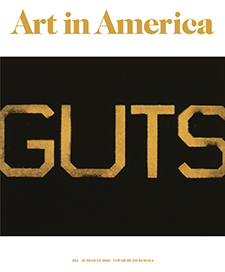
As one of the most venerable American art publications for collectors, artists, art dealers, and art professionals, Art in America is CAA’s featured membership partner for July.
Since 1913, Art in America has been instrumental in defining the many art movements that coalesced over the course of a dynamic century. The magazine works with the finest critics, scholars and reporters, identifying trends and creating a record of key developments in the world of art. Having earned a reputation for the highest journalistic and critical standards, Art in America has helped shape the sensibilities and standards of generations of curators, artists, collectors and dealers.
Each month Art in America, the world’s premiere art magazine, provides in-depth coverage of the global, and often controversial, art scene. Every issue contains articles on both respected and rising talents, and reviews of current exhibitions around the world. Each subscription to Art in America includes the “Guide to Museums, Galleries & Artists,” published in August.
CAA members can receive a special discount (CAA members $24.95; regular $45) on a one-year subscription to Art in America. Simply log into your CAA member page to unlock the special discount code and apply it to checkout on the Art in America subscription page.
New in caa.reviews
posted by CAA — July 01, 2016
Susan Kart reviews Art and Risk in Ancient Yoruba: Ife History, Power, and Identity, c. 1300, Suzanne Preston Blier’s research on the “copious yet contested discourse on the history of Ife” and its thirteenth- and fourteenth-century art objects, and commends the book’s unique dovetailing of place and artistic production. Read the full review at caa.reviews.
Mallory Sharp Baskett examines Christa Clarke’s catalogue of artworks of African origin collected by Albert C. Barnes, African Art in the Barnes Foundation: The Triumph of L’Art nègre and the Harlem Renaissance. A substantial essay, along with images and analyses of all 123 objects, elucidates Barnes’s influential collecting practice and the collection’s role in African American scholarship and arts education from the early twentieth century to the present. Read the full review at caa.reviews.
Nancy Um explores Going Global in Mughal India, Sumathi Ramaswamy’s digital album, which brings together works of calligraphy, paintings, and prints from India, Ottoman Turkey, and Europe. The virtual muraqqa’, or album in the Persianate arts, successfully asserts “the important place of the globe as an integrated element in a dynamic and inclusive royal Mughal iconography.” Read the full review at caa.reviews.
Suzanne Singletary visits the exhibition Discovering the Impressionists: Paul Durand-Ruel and the New Painting at the Philadelphia Museum of Art, which presents the late nineteenth- and early twentieth-century art dealer as “a shrewd strategist undaunted by risky ventures and largely uncharted practices” who shaped the careers of Édouard Manet, Claude Monet, Edgar Degas, and other Impressionist artists. Read the full review at caa.reviews.
Caa.reviews publishes over 150 reviews each year. Founded in 1998, the site publishes timely scholarly and critical reviews of studies and projects in all areas and periods of art history, visual studies, and the fine arts, providing peer review for the disciplines served by the College Art Association. Publications and projects reviewed include books, articles, exhibitions, conferences, digital scholarship, and other works as appropriate. Read more reviews at caa.reviews.
The Getty Foundation to Fund a Reunion for the College Art Association-Getty International Program
posted by CAA — June 28, 2016
The Getty Foundation has awarded the College Art Association (CAA) a major grant to fund the CAA-Getty International Program for the sixth consecutive year. Having completed five successful years of programming, CAA will use the grant to underwrite the cost of bringing twenty alumni to the 2017 Annual Conference for a reunion program. The Foundation’s support will enable CAA to bring these international visual arts professionals to the conference, taking place February 15-18, 2017, in New York City. Funds will support all travel expenses, hotel accommodations, per diems, conference registrations, and one-year CAA memberships.
The reunion will focus on common themes and interests in global art history, its greatest challenges, and what can be done to overcome them. Relying on the geographic and scholarly diversity of the twenty alumni, the reunion program will explore multiple points of view related to the state of the field, including interdisciplinary and transnational approaches to art history, the nature of cross-cultural collaborations, and future directions of the discipline. The 2017 attendees, together with leading art historians from the United States, will participate in several sessions devoted to these topics throughout the conference.
Since the CAA-Getty International Program began in 2012, ninety scholars have participated in CAA’s Annual Conference. Historically, the majority of international registrants at the Annual Conference have come from North America, the United Kingdom, and Western European countries. The CAA-Getty International Program has diversified the Annual Conference, adding scholars from Central and Eastern Europe, Russia, Africa, Asia, Southeast Asia, Caribbean countries, and South America. The majority of the alumni teach art history (or visual studies, art theory, or architectural history) at the university level; others are museum curators or researchers. Prior to participating in this program, none of the alumni had attended a CAA Annual Conference.
A remarkable number of international collaborations have ensued, including an ongoing study of similarities and differences in the history of art among Eastern European countries and South Africa, attendance at other international conferences, publications in international journals, and participation in panels and sessions at subsequent CAA Annual Conferences. Former grant recipients have become ambassadors of CAA in their countries, sharing knowledge gained at the Annual Conference with their colleagues at home.
Building on the evident success of the program, alumni at the 2017 reunion will provide input on how to further strengthen the program. How can CAA better serve international members? How can it cultivate future collaborations among CAA-Getty participants and CAA members? Are there ways to broaden the reach of the program to include artists, designers, and other types of arts professionals? The views and suggestions gathered at this convening will provide valuable insights as CAA works to enlarge its international activities.
For more information on the CAA-Getty International Program and other CAA travel opportunities, visit CAA Travel Grants.
This Week in caa.reviews
posted by CAA — June 24, 2016
Marnin Young reflects on Georges Seurat: The Art of Vision, Michelle Foa’s thematic analysis of Seurat’s seascapes, early figure paintings, later figure paintings, and drawings, and describes it “as almost certainly the most important book on Seurat in over a decade.” Read the full review at caa.reviews.
Derek Burdette reviews Alena Robin’s Las capillas del Vía Crucis de la ciudad de México: Arte, patrocinio y sacralizacón del espacio, a study of the now-dismantled fourteen chapels marking the Stations of the Cross in Mexico City from the late seventeenth to nineteenth centuries, which “attempts to return the chapels to our collective conscious.” Read the full review at caa.reviews.
Brian Rosa examines two urban political ecology publications focused on water: Matthew Gandy’s The Fabric of Space: Water, Modernity, and the Urban Imagination and Erik Swyngedouw’s Liquid Power: Contested Hydro-Modernities in Twentieth-Century Spain. He applauds them for “expanding the scope and depth of contemporary research into the society-nature nexus, political ecology, and environmental history.” Read the full review at caa.reviews.
Caa.reviews publishes over 150 reviews each year. Founded in 1998, the site publishes timely scholarly and critical reviews of studies and projects in all areas and periods of art history, visual studies, and the fine arts, providing peer review for the disciplines served by the College Art Association. Publications and projects reviewed include books, articles, exhibitions, conferences, digital scholarship, and other works as appropriate. Read more reviews at caa.reviews.
Call for Applicants to PIPS Committees for 2017–20 Terms
posted by CAA — June 21, 2016
The Professional Interests, Practices and Standards (PIPS) committees address critical concerns of CAA’s members set out in the goals of CAA’s Strategic Plan. CAA invites members to apply for service on one of these PIPS committees.
Committee on Diversity Practices
http://www.collegeart.org/committees/diversity
The Committee on Diversity Practices supports the development of global perspectives on art and visual culture. The committee promotes artistic, curatorial, scholarly and institutional practices that deepen appreciation of political and cultural heterogeneity, as educational and professional values. To that end, the committee assesses and evaluates the development and implementation of curricular innovation, new research methods, curatorial and pedagogical strategies, and hiring practices that contribute to the realization of these goals.
Committee on Intellectual Property
http://www.collegeart.org/committees/ip
The Committee on Intellectual Property monitors and interprets copyright legislation for the benefit of CAA’s various constituencies. In so doing, it seeks to offer educational programs and opportunities for discussion and debate in response to copyright legislation that affects educators, scholars, museum professionals, and artists.
Committee on Women in the Arts
http://www.collegeart.org/committees/women
The Committee on Women in the Arts (CWA) promotes the scholarly study and recognition of women’s contributions to the visual arts and to critical and art-historical studies; advocates for feminist scholarship and activism in art; develops partnerships with organizations with compatible missions; monitors the status of women in the visual-arts professions; provides historical and current resources on feminist issues; and supports emerging artists and scholars in their careers.
Education Committee
http://www.collegeart.org/committees/education
The Education Committee promotes the visual arts as essential human activity; as a creative Endeavor and subject of cultural and historical inquiry and critical appreciative activity, and encourages excellence in teaching at all levels. Its focus is on pedagogy at the higher education level in art history, visual culture, studio, aesthetics, and art criticism, and on the interface between arts teaching and learning research and practice.
International Committee
http://www.collegeart.org/committees/international
The International Committee seeks to foster an international community of artists, scholars and critics within CAA; to provide forums in which to exchange ideas and make connections; to encourage engagement with the international student community; to develop relationships between CAA and organizations outside the United States with comparable goals and activities; and to assist the CAA Board of Directors by identifying and recommending advocacy issues that involve CAA and cross national borders.
Museum Committee
http://www.collegeart.org/committees/museum
The Museum Committee provides a bridge between scholars and arts professionals in the academic and museum fields. It offers a forum for the discussion of issues of mutual interest and promotes museum advocacy issues within CAA. The committee lends support and mentorship for both seasoned and emerging professionals to protect and interpret the arts within museums.
Professional Practices Committee
http://www.collegeart.org/committees/professional
The Professional Practices Committee responds to specific concerns of the membership in relation to areas such as job placement and recruitment, tenure and promotion procedures, scholarly standards and ethics, studio health and safety, and artists’ practices. The Professional Practices Committee also oversees CAA’s Standards and Guidelines.
Services to Artists Committee
http://www.collegeart.org/committees/services
The Services to Artists Committee (SAC) was formed by the CAA Board of Directors to seek broader participation by artists and designers in the organization and the Annual Conference. SAC identifies and addresses concerns facing artists and designers; creates and implements programs and events at the conference and beyond; explores ways to encourage greater participation and leadership in CAA; and identifies ways to establish closer ties with other arts professionals and institutions. To this end, committee members are responsible for the programming of ARTspace and its related events.
Student and Emerging Professionals Committee
http://www.collegeart.org/committees/student
Established in February 1998, the Student and Emerging Professionals Committee is comprised of CAA members who are students, recent graduates, and experienced arts professionals with the intention of better representing students and emerging professionals within the larger CAA and academic framework.
In the past year the Committee on Diversity continues to address how CAA as an association can positively address diversity awareness, training and implementation and maintains a site for resources on diversity practices: http://www.collegeart.org/diversity/; the Committee on Intellectual Property has organized conference sessions on the new Fair Use Code and maintains a resource cite on intellectual property: http://www.collegeart.org/ip/; the Committee on Women in the Arts provides CWA Picks: http://www.collegeart.org/committees/picks and supports scholarship on women in the arts; the Education Committee organizes conference panels on issues in education, and in 2017 will examine Teaching Art and Art History to Non-Majors; the International Committee promotes interactions between scholars on a global basis and continues to support the CAA/Getty International Travel program that brings international scholars to the annual conference; the Museum Committee focuses on the history and theory of art museums and academia and has implemented its project—Resources for Academic Art Museum Professionals (RAAMP) supported by the Andrew W. Mellon Foundation; the Professional Practices Committee updates and develops important guidelines for the profession; Services to Artists Committee plans and organizes ArtSpace at the annual conference that presents prominent artists and designers, discussions on artist/designer concerns from safety in the workplace to professional development; the Student and Emerging Professionals Committee organizes panels related to emerging professionals and holds mentoring and mock job interviews at the conference. All committees are seeking new members with expertise in these areas.
New this year, each PIPS Committee may propose and present one session on a subject related to their committee charge. If a Committee wishes to propose a second session, that session must be vetted and approved by the Annual Conference Committee.
Committee members serve three-year terms (2017–20), with at least one new member rotating onto a committee each year. Candidates must be current CAA members and possess expertise appropriate to the committee’s work. Members of all committees volunteer their services without compensation. It is expected that once appointed to a committee, a member will involve himself or herself in an active and serious way.
The following vacancies are open for terms beginning in February 2017:
- Committee on Diversity Practices: 3–4 members
- Committee on Intellectual Property: 3–4 members
- Committee on Women in the Arts: 3–4 members
- Education Committee: 3–4 members
- International Committee: 6 members
- Museum Committee: 5 members
- Professional Practices Committee: 7 members
- Services to Artists Committee: 4–5 members
- Student and Emerging Professionals Committee: 3–4 members
CAA’s president, vice president for committees, and executive director review all candidates in the fall, and announce the appointments after November 1, prior to the Annual Conference. New members are introduced to their committees during their respective business meetings at the conference.
Nominations and self-nominations should include a brief statement (no more than 150 words) describing your qualifications and experience and an abbreviated CV (no more than 2–3 pages). Please send all materials to Vanessa Jalet, CAA executive liaison at vjalet@collegeart.org. Deadline: Friday, September 30, 2016. Kindly enter subject line in email: 2017 PIPS Applicant.
Subscribe to CAA’s YouTube Channel!
posted by CAA — June 20, 2016
CAA’s YouTube channel is the home of videos from our Annual Conference, tutorials and presentations on fair use, and content on a variety of other topics. We ask our members “Why are you a CAA Member?” at our 2016 conference. Longtime conference attendees reflect on the impact of their experiences over the years in “In Their Own Words.”
Immerse yourself in social-practice art from our 2016 Distinguished Artists’ Interviews (Joyce Scott with George Ciscle and Rick Lowe with LaToya Ruby Frazier) and watch colleagues and friends honor art historians Richard Powell of Duke University and Linda Nochlin of the Institute of Fine Arts, New York University.
The Cuban artist and activist Tania Bruguera is interviewed by Rachel Weiss, professor of arts administration and policy at the School of the Art Institute of Chicago. William “Bro” Adams, chairman of the National Endowment for the Humanities, talks with Jane Chu, chairman of the National Endowment for the Arts; and Jarl Mohn, president and CEO of National Public Radio, speaks about his personal connection to the arts.
Subscribe to CAA’s YouTube channel to stay up to date on all our videos!
Committee on Women in the Arts Picks for June 2016
posted by CAA — June 16, 2016
Each month, CAA’s Committee on Women in the Arts selects the best in feminist art and scholarship. The following exhibitions and events should not be missed. Check the archive of CWA Picks at the bottom of the page, as several museum and gallery shows listed in previous months may still be on view or touring.
June 2016
In this online database, the curated compilation Facing the Self: Program 2 bring together artists working with the female form, particularly the face. “Using at times elaborate, but more often very limited, visual means and divergent visual and theatrical strategies, each tape explores, asserts, withholds and/or claims power over the representations of the artist’s body, its appearance and experiences.”
Facing the Self is part of the Video Data Bank, founded at the School of the Art Institute of Chicago in 1976. Included in this compilation of early video works are: Hermine Freed, Two Faces (1972); Lynda Benglis, Now (1973); Steina Vasulka, Let it Be (1972); Linda Montano, Mitchell’s Death (1977); Susan Mogul, Take Off (1974); and Eleanor Antin, The Adventures of a Nurse (1976).
“I was writing an essay at the time comparing male artists’ representations of their sexuality with female artists,’” Mogul explains of Take Off. In response to Vito Acconci’s work Undertone, where the artist was supposed to be masturbating while seated at a table, the video that Mogul created posits the artist at the end of a table, directly confronting the viewer and “with a good deal of ironic humor, she transforms the ‘girl’ into a woman and an artist, who positions herself not under the table (as in Acconci’s Undertone) but directly across from the viewer’ alternately discussing the ‘history’ of her vibrator and occasionally using it.”
Louise Fishman: Paper Louise Tiny Fishman Rock
Institute of Contemporary Art
University of Pennsylvania, 118 South 36th Street, Philadelphia, PA
April 29–August 14, 2016
Conceived as a studio visit, Paper Louise Tiny Fishman Rock, at the Institute of Contemporary Art in Philadelphia presents a selection of sketchbooks, miniature paintings, and small sculptures by Louise Fishman, known for her abstract paintings “with an athletic reach of scale and gesture.”
Miniature canvases, as small as two by three inches, accompany sculptures made from found objects, and cast in bronze from plaster models, along with books whose mark making “burst with narrative drive like Amazonian comics rendered abstract.”
Fishman describes her formative years in the 1960s New York scene: “Franz Kline and Willem de Kooning were big for me—Joan Mitchell too. Then Minimalism came along and I was looking at Sol LeWitt and making hard-edge grid paintings. My group encouraged me to see that everything I was doing as a painter—even using stretched canvas and a paintbrush—was male, and this was problematic.”
Paper Louise Tiny Fishman Rock concentrates on the intimate and potent concerns of the artist: her Philadelphia roots, her feminist and queer politics, her Jewish identity, her friendships with Agnes Martin and Eva Hesse, and her meditations on the grid.
Sama Alshaibi: Silsila
Scottsdale Museum of Contemporary Art
7374 East Second Street, Scottsdale, AZ
June 4–September 18, 2016
Named for the Arabic word silsila, or “link,” the exhibition at the Scottsdale Museum of Contemporary Art by the Iraqi-born artist Sama Alshaibi represents the joining of individuals to one another, humans with the natural works, and the self to the divine.
Inspired by the fourteenth century explorer and scholar Ibn Batutah, Alshaibi retraced his path through the Middle East, North Africa, and the Maldives. Her large-scale photographs and videos “provoke contemporary questions about borders, migration, and environmental demise in relation to the human body.”
Working in predominantly Muslim countries since 2009, Alshaibi presents the feminine form as a “metaphor for humanity and the natural world, using jewel-like colors, geometric patterning, mirroring and symmetry to reference the formal qualities of Islamic art traditions.”
No play_Feminist Training Camp
neue Gesellschaft für bildende Kunst (nGbK)
Oranienstraße 25, 10999 Berlin, Germany
May 21–June 24, 2016
In 2013, the nGbK group investigated the pronoun “we” with the project WIR SPIELEN (WE PLAY). Their practice is informed by the idea that the structure of HOW we come together strongly influences WHAT we can do together. Following the group statement and an urgent need to “revive old as well as to develop new feminist and anti-fascist strategies of resistance, survival, and collective action,”nGbK has turned into a Feminist Training Camp: No play, a proposal toward a new social structure seeking to spatially and thematically integrate the space of art as space for action.
This site for activity and exchange is organized in training units developed by international actors from the fields of art, literature, performance, activism, martial arts, health, and film, and includes formats dealing with language as a weapon in political resistance, employing both creative strategies and practice-oriented workshops such as self-defense courses and a feminist repair café. Knowledge exchange from lived experiences is the key. A radio broadcasting system is set up that will allow the recapitulation of the conversations going on in the training camp as form of dissemination.
Based on a queer understanding of feminism, whose issues go far beyond women’s equality, the Feminist Training Camp is structured by zones of different means of production, such as documentary and archival sound and video recordings, a work table, sports mats, and artistic installations. Works and materials are made available in the exhibition space during the course of the training camp and form an infrastructure for planning and training.
At the end of the year a publication of the outcome of the Feminist Training Camp will be released. No Play aims to be developed as a poetic-political manual compiling the strategies, discussions, and experiences of the project.
Michèle Lemieux: The Whole and Its Parts: From Drawings to Animated Films
Canadian Cultural Centre
5, rue de Constantine, Paris, 75007 France
April 15–September 2, 2016
The Canadian Cultural Center in Paris presents The Whole and Its Parts: From Drawings to Animated Films, an exhibition of work by Michèle Lemieux, an illustrator of children’s books, an animated filmmaker, and an educator. The project proposes a reflection on the representation of reality, time, and the human condition.
The Whole and Its Parts: From Drawings to Animated Films invites the viewer to discover the visual experimentations, working methods, and aesthetic of an exceptional artist, the director of films, the latest of which, Here and the Great Elsewhere, was produced at the National Film Board of Canada between 2010 and 2012 with a remarkable instrument—the pinscreen—that was invented in France by the filmmakers Alexandre Alexeïeff and Claire Parker during the 1930s.
Born in Quebec in 1955, Lemieux is a world expert in the technique of pinscreen and will share process and devices in the show. Ephemeral images of the pins and shadows are projected onto a white surface. A fixed camera photographs each drawing and then transmits it to a computer, which records the successive images produced by the tiny changes made to the support. The pinscreen naturally lends itself to morphing one image into another but within the confines of a fixed frame.
This exhibition is both a reflection on Lemieux’s practice and an introduction to her creative process, aiming to open a wider debate beyond the use of drawing in art making, and in film animation in particular, addressing the implications of the use of an archaic tool in contemporary art and design.
Andra Ursuţa: Alps
New Museum of Contemporary Art
235 Bowery, New York, NY 10002
April 27–June 16, 2016
The New Museum presents Alps, the first museum exhibition in New York of Andra Ursuţa.
Born in Romania in 1979, Ursuţa immigrated to the United States in the late 1990s, and yet many of the narrative facets of her upbringing, such as folk traditions and nationalist propaganda, remain evident throughout her work. Since her early practice, Ursuţa has used a fatalistic dark humor to expose power dynamics that inquire the vulnerability of the human body and examine modes of desire.
For her exhibition at the New Museum, Ursuţa debuts a new sculptural installation, Alps (2016), presented in dialogue with the artist’s recent sculptures, including her series Commerce Exterieur Mondial Sentimental (2012) and Whites (2015), which will have their American premiere in this show.
Alps evokes a specific geographical feature, Europe’s major natural barrier that has taken on a new significance in light of current efforts by migrants to cross into Western Europe. The installation seen alongside Whites—a squadron of forlorn obelisks patrolling the premises like ghosts of bygone imperialist ambitions—suggests a commentary on the impulse to guard and fortify borders.
Commerce Exterieur Mondial Sentimental (2012) includes life-sized marble figures adorned with coins glare. Informed by a socialist-realist aesthetic and inspired by a news image of a Roma woman being deported from France, these sculptures evoke lifeless women trapped in an economy in which the value of both human beings and commodities is determined by foreign powers.