CAA News Today
Books Published by CAA Members
posted by CAA — June 15, 2016
Publishing a book is a major milestone for artists and scholars—browse a list of recent titles below.
Books Published by CAA Members appears every two months: in February, April, June, August, October, and December. To learn more about submitting a listing, please follow the instructions on the main Member News page.
June 2016

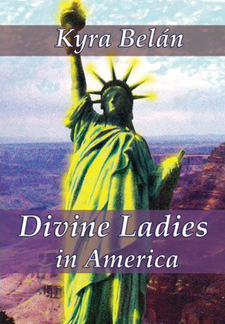
Kyra Belán. Divine Ladies in America: Cultural Icons of the New Millennium (Cape Coral, FL: Astarte Books, 2016).

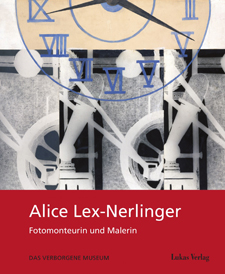
Rachel Epp Buller. Alice Lex-Nerlinger 1893–1975: Fotomonteurin und Malerin / Photomontage Artist and Painter (Berlin: Lukas Verlag and Das Verborgene Museum, in cooperation with Akademie der Künste, 2016).

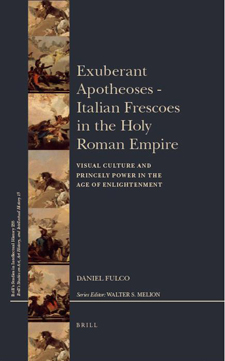
Daniel Fulco. Exuberant Apotheoses – Italian Frescoes in the Holy Roman Empire; Visual Culture and Princely Power in the Age of Enlightenment (Leiden, the Netherlands: Brill, 2016).
New Faces for CAA’s Publications
posted by CAA — June 15, 2016
The president of the CAA Board of Directors, Suzanne Preston Blier, has confirmed new appointments to the editorial boards of CAA’s three scholarly journals and to the Publications Committee, in consultation with the vice president for publications, Gail Feigenbaum.
The Art Bulletin
A new member-at-large has joined the Art Bulletin Editorial Board. Laura Weigert is an associate professor at Rutgers University in New Brunswick, New Jersey, whose area of specialization is Northern European art of the late Middle Ages and Renaissance. Her term on the editorial board runs through June 2020.
Art Journal
Three new at-large members have joined the Art Journal Editorial Board. Tatiana E. Flores, associate professor at Rutgers University in New Brunswick, New Jersey, with a joint appointment in the Department of Art History and the Department of Latino and Caribbean Studies, specializes in Latin American and contemporary art. She is also active as an independent curator. Amelia G. Jones, a historian and theorist of contemporary art and performance studies, is Robert A. Day Professor of Art and Design and vice dean of critical studies at the University of Southern California’s Roski School of Art and Design in California. Derek Conrad Murray, associate professor of contemporary art and visual culture at the University of California, Santa Cruz, focuses on the junctures of African American and African diasporic art, postblack art and aesthetics, cultural theory, and identity and representation. The term for each new editorial-board member goes through June 2020.
In addition, Tirza T. Latimer, chair of the graduate program in visual and critical studies at California College of the Arts in San Francisco and a member of the Art Journal Editorial Board since 2014, will now serve as its chair. Her term extends through June 2018.
caa.reviews
The caa.reviews Editorial Board welcomes Juliet Bellow, associate professor of art history at American University in Washington, DC, as editor designate for the journal. She will begin a three-year term as editor-in-chief on July 1, 2017. Bellow has been a field editor for books on nineteenth-century art and served on the journal’s editorial board for the past four years. Andrei Pop, associate professor for the Department of Art History and the John U. Nef Committee on Social Thought at the University of Chicago in Illinois, has joined the caa.reviews Editorial Board after serving as field editor for books on theory and historiography.
caa.reviews recently added design history as a subject area, and Karen Carter, an associate professor from the Kendall College of Art and Design at Ferris State University in Grand Rapids, Michigan, will be the first editor to commission books on the subject. In addition, Iris Moon, visiting assistant professor of architecture at Pratt Institute in Brooklyn, New York, has joined the journal’s Council of Field Editors to commission reviews for books on eighteenth-century art. Alpesh Kantilal Patel, assistant professor and director of the MFA program in visual arts at Florida International University in Miami, currently serves as field editor for books on contemporary art.
Publications Committee
Emily Shapiro has joined CAA’s Publications Committee as member-at-large for a term of three years. Shapiro is managing editor of the Archives of American Art Journal, after serving as executive editor for American Art.
Lead a Professional Development Workshop at CAA 2017
posted by CAA — June 14, 2016
Do you have a knack for sharing your knowledge with others and are enthusiastic about doing so? CAA seeks active members who are well established in their fields to serve as leaders for 90-minute Professional Development Workshop offerings at the 2017 Annual Conference at the New York Hilton Midtown from February 15-18.
The Annual Conference Committee and Programs Department aims to provide CAA members with re-vamped, affordable, and relevant professional development opportunities for 2017. But we need your help to do it! We encourage your collaboration and we welcome your proposals! Sample titles and/or subjects could run from, “Creating Online Exhibitions” to “Thinking Outside the Tenure Track.”
For more details, requirements, and submissions please visit the submissions page.
Workshop leaders will receive complimentary conference registration, a complimentary ticket to the 2017 Opening Reception, and one year of Premium Level Membership (renewal or upgrade to commence upon current membership’s expiration date) in exchange for their work as a leader.
Deadline for submissions: Monday, July 18, 2016.
For questions and more information please contact Katie Apsey at kapsey@collegeart.org
This Week in caa.reviews
posted by CAA — June 10, 2016
James M. Córdova on sixteenth-century murals in Mexico: Penny Morrill, The Casa del Deán: New World Imagery in a Sixteenth-Century Mexican Mural Cycle.
Lynne Ellsworth Larsen on the relationship between art and language in Yoruba art: Rowland Abiodun, Yoruba Art and Language: Seeking the African in African Art.
Terri Weissman reviews the inaugural exhibition at the new Whitney Museum of American Art, America Is Hard to See.
James Merle Thomas on collaborations between artists and corporations at the Los Angeles County Museum of Art: From the Archives: Art and Technology at LACMA, 1967–1971.
BOOKFORUM IS CAA’S FEATURED MEMBER PARTNER FOR JUNE
posted by CAA — June 08, 2016
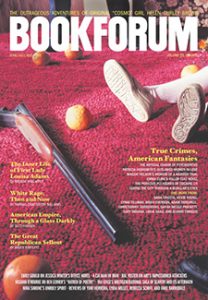 For over 20 years, Bookforum has showcased daring writing about the important ideas of our time, with incisive essays on politics, pop culture, literature, and the arts. Bookforum follows in the rich tradition of Artforum, its sister magazine, featuring reviews and criticism by both distinguished figures and exciting new voices.
Bookforum’s Summer issue on “True Crimes, American Fantasies” with writing from Gary Indiana, Terry Castle, Dana Spiotta, and more is on newsstands now.
As a CAA member, subscribe today and take advantage of the CAA member rate, PLUS get the True Crimes Summer issue free! Subscribe to Bookforum, and receive six issues of the best in literature and cultural affairs for just $15.
If you live in the US, you can also receive Bookforum at no additional cost with your subscription to Artforum. Subscribe to Artforum at the member rate of $45 per year. CAA members, please log into your account to access the special discount code and unlock both offers.
Former CAA President Marvin Eisenberg Dies
posted by CAA — June 06, 2016
 Marvin Eisenberg, professor of history of art at the University of Michigan in Ann Arbor and president of the CAA Board of Directors from 1968 to 1970, died on May 18, 2016. He was 93 years old.
In 1943 Eisenberg earned a BA from the University of Pennsylvania in Philadelphia, after serving in the Army Signal Corps during World War II. Upon earning both an MFA and PhD from Princeton University in Princeton, New Jersey, he began teaching at Michigan, where he worked for his entire career. Eisenberg won CAA’s Distinguished Teaching of Art History Award in 1987. He retired in 1989.
Read more about Eisenberg’s life and career on the website of the University of Michigan’s College of Literature, Science, and the Arts.
2016–2017 Nominating Committee Members
posted by CAA — May 31, 2016
CAA is pleased to announce the members of the 2016–2017 Nominating Committee, which is charged with identifying and interviewing potential candidates for the Board of Directors and selecting the final slate of candidates for the membership’s vote. The committee members, their institutional affiliations, and their positions are:
- Jim Hopfensperger, Vice President for Committees and Nominating Committee Chair, Professor, Frostic School of Art, Western Michigan University
- Jesús Escobar, Harold H. and Virginia Anderson Chair, Department of Art History, Northwestern University
- Helen C. Frederick, Professor, School of Art and Design, George Mason University
- Carmenita D. Higginbotham, Associate Professor, Program in American Studies, University of Virginia, Department of Art
- Thomas Lawson, Dean, School of Art, Jill and Peter Kraus Distinguished Chair in Art, California Institute of the Arts
- Sarah A. Lichtman, Assistant Professor, Director, Design-Curatorial Studies, Parsons School of Design
- Gunalan Nadarajan, Professor and Dean, Stamps School of Art and Design, University of Michigan
- David C. Terry, Director of Programs, Curator, New York Foundation for the Arts
Hunter O’Hanian, CAA’s incoming executive director and CEO, will also serve on the Nominating Committee as an ex-officio member.
CAA publishes a call for nominations and self-nominations for Nominating Committee service on the website in late fall of every year and publicizes it in CAA News and via social media. Please direct all queries regarding the committee to Vanessa Jalet, CAA executive liaison.
In Conversation: DeWitt Godfrey with CAA President Suzanne Preston Blier
posted by CAA — May 26, 2016
 Earlier this month Suzanne Preston Blier of Harvard University succeeded DeWitt Godfrey, an artist and professor at Colgate University, as president of the CAA Board of Directors. To commemorate the passing of the CAA torch, Godfrey has interviewed Blier about what lies ahead for the organization.
DeWitt Godfrey: First, before we start the interview, I’d like to congratulate you on the being elected president of CAA. I can think of no one who is more ready to take on the role. I take comfort in handing the reins over to you.
Suzanne Preston Blier: Thank you so much! I’ve been involved with CAA for a long time and this feels like a culmination of many years of new engagement with the organization.
DG: As an historian of art who specializes in the arts of Africa, how will this interest shape your role as president of CAA?
SPB: CAA’s 2015-2020 strategic plan emphasizes the need to think more internationally – more globally. A key part of this strategy is to explore how CAA can better serve art and scholarly constituencies outside of the U.S., as well as projects here that address these wider sets of issues and concerns. It is important that artists and art historians in Africa, Latin America, and Asia are central part of the mix, along with our many colleagues in Europe and Australia. In a field such as art history that historically has been so Western-centric, the idea that CAA selected an Africanist as its new President also speaks volumes in terms of how far our field, and the Association itself, has come since its founding.
DG: We are in an important moment in CAA’s history characterized both by unique challenges and potentials. What are your perspectives on the organization as we go forward?
SPB: Being part of an organization of this complexity, one that is over a hundred years old is pretty awesome. Although in many ways it is a difficult time to be in this position of leadership, it is also a moment that carries real pluses in thinking about how we can renew and reshape the Association going forward. As to some of the challenges, we recently replaced two long-standing and really excellent senior staff members through retirement. Fortunately, we were able to find two great new leaders who I am excited to work with – people who bring new ideas, potential, and energy to the organization (Hunter O’Hanian and Tiffany Dugan). At the same time, many professional organizations, including ours, have seen financial challenges, due to budget cut-backs in university funding for not only professors but also support for things like research and travel. Because of these factors, we have to make CAA even more relevant and important as we begin to think more about both advocacy, and the kinds of intellectual and social sustenance that makes it not just worth participating, but also essential to do so. There is a lot we can do better, and I look forward to hearing from members (and non-members) about their specific suggestions and concerns.
DG: You do a fair amount with social media – and you helped found a website at Harvard on digital mapping. Do these interests extend to CAA and its digital presence?
SPB: Yes. I confess to being a fan of Facebook (indeed, I am active!). For many in my generation it has been important professionally. It is one of the ways I keep up with what is happening in my field and others. It is also a great means to bring in people internationally. I follow one group, African Art University, that has over 22,000 members, most of whom are in Africa. New technologies are coming into play and building on them as we go forward will be important. Being part of the team at Harvard that helped build Worldmap, an online digital mapping system that is readable in some 30-40 different languages, offered seminal insight. This nourished a passion for not only maps, but also digital tools, and the importance of both collaborative and cross-disciplinary work in building something that will serve a wide variety of needs and interests. In many ways I see this kind of experience offering insight for an organization like CAA as we move forward. New social media engagements and software technologies will be a key part of CAA’s future! For example, CAA Connect is scheduled to launch in the early fall of 2016.
DG: You have been involved with CAA for much of your career. How have you seen the Association change over time? What have been some of the real highlights for you?
SPB: Alas, some of it is a blur! Of course, it is hard to forget the trauma of job interviews in strange hotel rooms at the Annual Conference. I remember traveling up the elevators with other applicants – including artists – and thinking, not only did they look much better, but they had it far worse since decisions were based on works they chose to carry with them in their portfolios. On a better note, I remember being accepted for and giving my first paper at CAA. It was totally intimidating – a panel on semiotics, chaired by my future colleague Henri Zerner. Still today the CAA ballrooms tend to be really intimidating. I also remember the intellectual clashes that shaped earlier CAA conferences – Material Culture (labor, class, feminism) versus more traditional approaches. What I mostly remember however is meeting amazing scholars and artists over my years of service – many of whom are now good friends
 DG: CAA has long brought artists and art historians together. What do you see as some of the advantages going forward of having such a broad wingspan organizationally?
SPB: As an organization we are clearly much broader in our interests and “wingspan” now than we were at the outset – including not only artists and art historians, but also museum professionals, critics, and designers. One of the great things about CAA is its very breadth. While today some of us are housed in different departments, many of us are visiting the same galleries, sharing the same social media posts, and interested in the same larger intellectual and social issues. In this period of economic uncertainty it is all the more important that we find ways to address shared interests and concerns collectively. Whether it is trivializing arts and culture through the recent STEM focus or finding tangent ways to help artists and art historians in our professional and other lives, there is clearly strength in numbers. One of the most important – and revolutionary – endeavors I have been part of at CAA is the Mellon Foundation-funded Code of Best Practices in Fair Use for the Visual Arts, which brought together artists and art historians in an effort to not only impact policy but also to change the law to help save time and money for many members of our group. In many ways it was a model.
DG: You chaired the task force on the Annual Conference that formulated substantial changes to the conference. What did you learn from that process? What are some of the impacts this will have on the conference itself and on the organization?
SPB: This was a great experience, working with a diverse group of people who helped to rethink the whole conference format. Basically, mine was more of a listening role and one of encouraging people to think creatively and outside the box. On a practical note, the time frame between proposal submission and presentation goes from nearly two years to eight months, and we are now encouraging members to present or participate in other ways multiple years in a row. In addition to a new time grid (shorter and a greater number of panels) we also have a Saturday suite of panels on key themes for the organization. Equally importantly we now have an Annual Conference chair (the first is Judith Rodenbeck) and with our new director of programs, Tiffany Dugan, we will be seeing lots of interesting things happening. I encourage everyone to keep making suggestions – and to come!
DW: “CAA is welcoming on board a new executive director to CAA, Hunter O’Hanian. What are your thoughts on this and other changes as you both begin this journey?”
SPB: I am really excited about being able to work with someone as skilled, knowledgeable, and energetic as Hunter. We share a similar vision about CAA, its potential, and how key changes might help. He is coming to the organization with lots of experience in areas that are important to both administration and the arts. In meetings with him he has stressed how much he looks forward to finding new and improved ways for CAA to support and encourage the professional lives of visual artists, art historians, designers, and curators. As he has said to me “We have to make CAA even more meaningful in terms of various aspects of our professional lives and engagements.” I feel the same way. Moreover, it is clear he not only listens deeply but thinks deeply, and I have found him very insightful in thinking through how to best get from where we are now to where we want to be in the years ahead.
DW: “You earlier chaired The Art Bulletin editorial board and later served as Vice President for Publications during a key moment of change – plus you publish extensively – how has this changed and what does the future hold for publishing in the organization?
SPB: Publishing great journals has long been a CAA strength and it will continue to be so. It has been exciting to watch the growth of a new CAA journal – caa.reviews, which is now one of the most productive journals anywhere in terms of the sheer volume of content, and the global reach of its reviews. It is also great to see how much the content and scope of The Art Bulletin has grown since I began to read it. Art Journal too has grown in so many interesting ways. What I hear too often (and would love to shake up) is the idea that X CAA journal only publishes articles in Y areas or Z subjects. I know the CAA journal editors are searching for new and provocative works that don’t fit any pre-conceived frame. Now that we have turned the digital corner with the journals, I hope we can see new kinds of digital writing – whether informal discussions in social media, posts on CAA Connect, blogs, and other content that can be brought together. In addition to expanding the journals’ reach, what the digital revolution and the Internet make possible is a revolution in how we think about, engage, and make available new kinds of textual and image engagements.
Exclusive CAA Member Discount for JSTOR Access
posted by CAA — May 25, 2016
 With more than 2,000 scholarly journals, JSTOR is one of the world’s leading academic databases.
As part of your CAA membership, save 50% on a yearly JPASS, your personal access to the JSTOR archive. This fee includes unlimited reading access and 120 PDF article downloads. JSTOR adds new titles every month so you’ll have a growing collection of the world’s leading peer-reviewed journals only a click away. Plans start at $19.50.
Don’t miss this exclusive offer:
http://jpass.jstor.org/?soc=CAA3&mc=mMvU69P2M3
The Arts journals available in JPASS may be of particular interest to CAA members. Highlights include:
Publications from the College Art Association
Artibus Asiae
Journal of the Society of Architectural Historians
And much more! The complete list is available here.
Thank you for your continued membership support.
Support the Visual Arts Community: Give to CAA’s Annual Fund
posted by CAA — May 24, 2016
 Thank you for being a member of the College Art Association, the world’s leading professional association for the visual arts. As a dedicated member of CAA, you know firsthand about the important work that CAA does to serve and enhance the visual-arts community. We could not do this without your support.
Today, I ask that you join me in celebrating all that CAA does with a gift to the Annual Fund.
Beyond CAA’s ongoing advocacy efforts; vital professional documents like CAA’s Standards and Guidelines; critical projects like the Code of Best Practices in Fair Use for the Visual Arts; prestigious publishing grants for book manuscripts; career-development resources including the Online Career Center; Professional-Development Fellowships in support of promising artists, designers, craftspersons, historians, curators, and critics; important new writing and scholarship published in The Art Bulletin, Art Journal, and caa.reviews; and CAA’s central forum for exchange of creative work and scholarly research at the Annual Conference—CAA does a great deal more to support its members, the lifeblood of the association.
CAA subsidizes over half of its members through discounted membership and registration fees for students, retirees, part-time faculty, and independent artists and scholars. CAA has made part-time faculty issues a priority, recommending that tenured faculty and administrators in the visual arts implement its Guidelines for Part-Time Professional Employment and also providing a resources section on its website for part-time faculty. At the conference, CAA offers Professional-Development Workshops and mentoring opportunities for artists, art historians, designers, and students. CAA is also dedicated to strengthening its support of its international members. Recently CAA launched a section on its website devoted to international topics, the International Desk, which includes reports from around the world and listings of international grants, conferences, and residencies.
In fall 2016, CAA will also launch CAA Connect, the digital social community where CAA members can discuss the latest in visual arts news and practices and collaborate on projects. CAA Connect will boast a number of private and public communities, each with its own discussion threads and resource libraries for multimedia content. We see it as an important tool in bringing together our members and the wider visual arts and humanities fields. Look for CAA Connect to launch in the fall of 2016.
Voluntary support from CAA members is critical to our collective advancement and your contribution to the Annual Fund will enable CAA to continue providing invaluable resources to its members.
On behalf of CAA’s diverse community of artists, art historians, curators, critics, collectors, designers, educators, and other arts professionals, I thank you for your commitment to CAA. Please give generously!
Sincerely,

Doralynn Pines
Vice President for External Affairs