CAA News Today
New in caa.reviews
posted by CAA — March 16, 2018

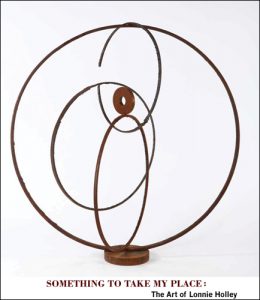
Lisa Lee reviews Something to Take My Place: The Art of Lonnie Holley by Bernard Herman. Read the full review at caa.reviews.
Frédérique Baumgartner examines Delacroix and His Forgotten World: The Origins of Romantic Painting by Margaret MacNamidhe. Read the full review at caa.reviews.
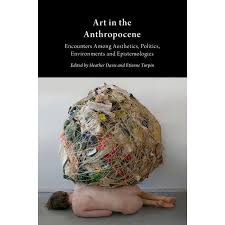
Scott Volz writes about Art in the Anthropocene: Encounters Among Aesthetics, Politics, Environments and Epistemologies edited by Heather Davis and Etienne Turpin, as well as Against the Anthropocene: Visual Culture and Environment Today by T. J. Demos. Read the full review at caa.reviews.
Alison Syme discusses Otherwise: Imagining Queer Feminist Art Histories by Amelia Jones and Erin Silver. Read the full review at caa.reviews.
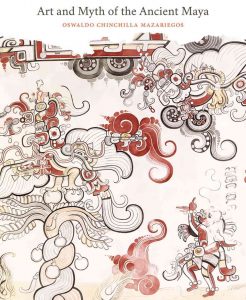
James A. Doyle considers Art and Myth of the Ancient Maya by Oswaldo Chinchilla Mazariegos. Read the full review at caa.reviews.
Ryan Donovan Purcell explores The Urbanism of Frank Lloyd Wright by Neil Levine. Read the full review at caa.reviews.
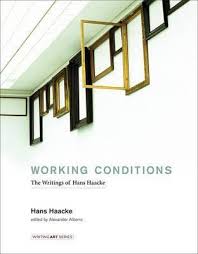
Chelsea Weathers writes about Working Conditions: The Writings of Hans Haacke edited by Alexander Alberro. Read the full review at caa.reviews.
Seung Yeon Sang reviews Public Properties: Museums in Imperial Japan by Noriko Aso. Read the full review at caa.reviews.
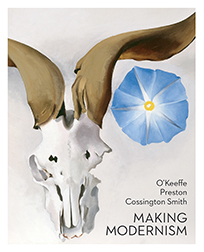
Louise Mayhew examines O’Keeffe, Preston, Cossington Smith: Making Modernism edited by Lesley Harding and Denise Mimmocchi. Read the full review at caa.reviews.
CAA at 2018 Arts and Humanities Advocacy Days in Washington, DC
posted by CAA — March 16, 2018
CAA staff in Washington, DC (left to right): Joelle Te Paske, media and content manager, Alison Chang, sponsorship and partnership manager, Aakash Suchak, grants and special programs manager, Hunter O’Hanian, executive director, and Nick Obourn, director of communications, marketing, and membership.
Earlier this week CAA staff traveled to Washington, DC for Americans for the Arts’s Arts Advocacy Day and National Alliance for the Humanities’s Humanities Advocacy Day.
After a day of breakout sessions and briefings on Monday, staff visited congressional offices on Tuesday to advocate for continued funding for NEA, NEH, IMLS, CPB, and support for the arts, humanities, and higher education. See our on-the-ground updates.
We visited 18 congressional offices representing three different states, with positive responses from both Democrats and Republicans. We meet with staff or dropped off materials with:
New York
Sen. Chuck Schumer (D-NY)
Rep. Grace Meng (D-NY 6th District)
Dropped off materials with Rep. Nydia Velázquez (D-NY 7th District)
Dropped off materials with Rep. Hakeem Jeffries (D-NY 8th District)
Rep. Yvette Clarke (D-NY 9th District)
Rep. Jerrold Nadler (D-NY 10th District)
Dropped off materials with Rep. Eliot Engel (D-NY 16th District)
Rep. Nita Lowey (D-NY 17th District)
Rep. Sean Maloney (D-NY 18th District)
Wisconsin
Sen. Ron Johnson (R-WI)
Rep. Mark Pocan (D-WI 2nd District)
Rep. Sean Duffy (R-WI 7th District)
Rep. Mike Gallagher (R-WI 8th District)
Connecticut
Sen. Richard Blumenthal (D-CT)
Rep. John Larson (D-CT 1st District)
Rep. Joe Courtney (D-CT 2nd District)
Rep. Jim Himes (D-CT 4th District)
Rep. Elizabeth Esty (D-CT 5th District)
Learn more about Advocacy Days below.
ARTS ADVOCACY DAY
March 12 – March 13, 2018
Hosted by Americans for the Arts
Arts advocates from across the country convene in Washington, DC for Americans for the Arts’s annual Arts Advocacy Day each year. Arts Advocacy Day brings together a broad cross section of America’s cultural and civic organizations, along with more than 700 grassroots advocates from across the country, to underscore the importance of developing strong public policies and appropriating increased public funding for the arts. Learn more.
HUMANITIES ADVOCACY DAY
March 11 – March 13, 2018
Hosted by National Alliance for the Humanities
Humanities Advocacy Day provides the opportunity to connect with a growing number of humanities advocates from around the country. Together, advocates will explore approaches to year-round advocacy on college campuses and in local communities while also preparing for Capitol Hill visits. On March 13, they will visit House and Senate offices to make a persuasive case for federal funding for the humanities. Learn more.
WHY DID CAA ATTEND?
For two years in a row, we’ve offered our complete and total opposition to efforts to eliminate funding for the National Endowment for the Arts (NEA), the National Endowment for the Humanities (NEH), and other domestic programs that fund education, arts, and humanities initiatives, as outlined in the 2018 and 2019 White House budget proposals.
Over the last year, we’ve also solicited feedback from our members on a variety of issues that impact the arts, humanities, and higher education, including:
- Gun control and the proposal to arm teachers
- Tax reform and its effect on higher education
- Embracing and supporting diverse voices in the arts
- Hiring standards for part-time faculty
- Removing or preserving Confederate monuments
- The Muslim Travel Ban
For more on our advocacy efforts, click here.
We encourage you to be vocal about your support for the arts and humanities. Click here to access the CAA Arts and Humanities Advocacy Toolkit.
An Interview with Artist Serhat Tanyolacar on Censorship at Polk State College
posted by CAA — March 15, 2018
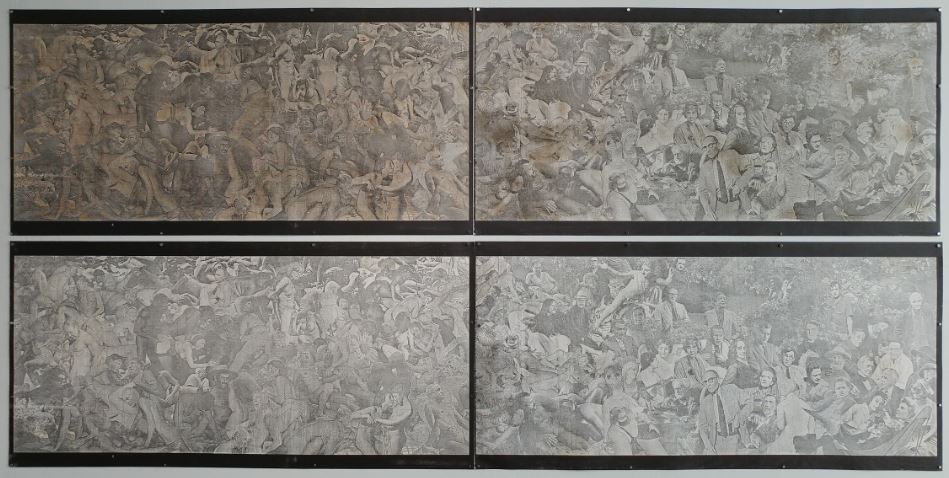
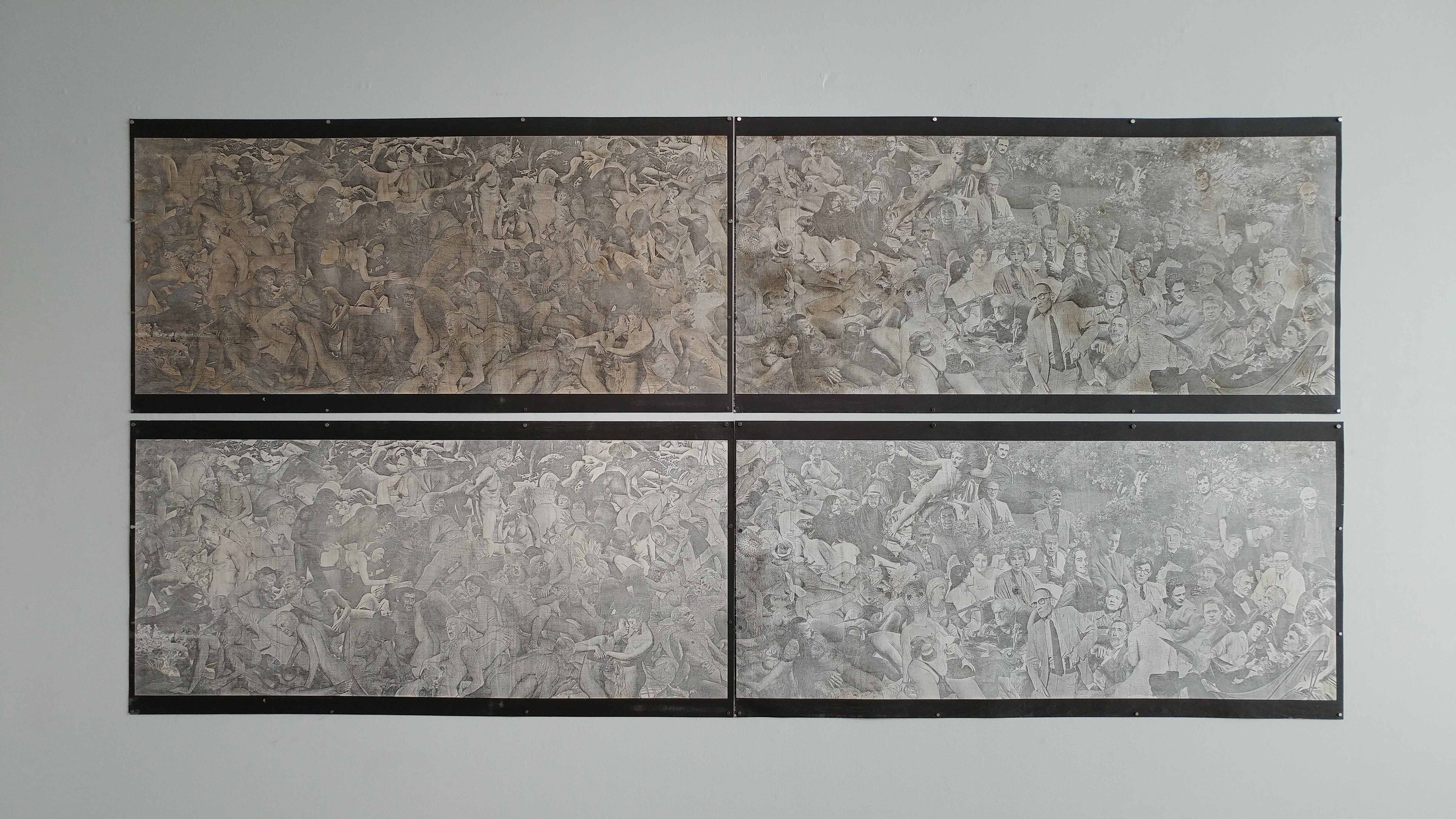
Serhat Tanyolacar, Death of Innocence, 2018. Courtesy the artist’s website. serhattanyolacar.com
In January, Serhat Tanyolacar, an adjunct faculty member in the art department at Polk State College in Florida, was invited to submit artwork to an open faculty show. The work he submitted, Death of Innocence, was subsequently rejected by the college as being “too controversial” to display. The artwork juxtaposes sexually explicit images of political figures such as Donald Trump, Betsy DeVos and Vladimir Putin —”the world as it is” in Tanyolacar’s words—with “the world as we could be,” featuring artists, poets, and writers, like T.S. Eliot and his wife Vivienne Haigh, Neal Cassady, Sylvia Plath, Bertolt Brecht, Nâzim Hikmet, and fictional characters such as Atticus Finch and Cyrano de Bergerac.
CAA media and content manager Joelle Te Paske spoke recently with Tanyolacar via phone about his experience.
“As you may already know, three months ago, all Polk State College art faculty received an email from Holly Scoggins, the art department head. Basically, we were being asked to participate in an art faculty exhibition on the Lakeland campus. There was no criteria listed.”
Tanyolacar said he responded the same day in an email with pictures of two of his works, including Death of Innocence, and was assured verbally by Scoggins, ‘We always support controversial work.’ As Tanyolacar explains, “To be extremely honest, I don’t think she looked at the work until the very last moment. This is what I feel.”
He continued: “Then, I waited. I didn’t hear anything until February 6th, and February 8th was the deadline. I received an email saying: ‘After review by the gallery committee’—and there was no committee, no nothing, until this moment—’the committee has decided Death of Innocence should not be displayed in the faculty art show. It will be too controversial to display at this time, and we would be happy for you to display some of your other artwork.'”
Subsequently Tanyolacar says he received criteria after the deadline, and then a phone call from the dean of academic affairs to schedule a meeting between himself, Scoggins, and the college president, Angela Garcia Falconetti. During the meeting Falconetti apologized, but maintained the work would not be shown.
“Meanwhile,” Tanyolacar continued, “I started receiving friend requests and messages from very disturbing individuals, on social media, on Facebook and Twitter, as well as private phone numbers. I think I received six or seven phone calls. I answered two of them, but nobody said anything.”
Tanyolacar has since reached out to FIRE, National Coalition Against Censorship, and PEN America for support on the issue. “Polk State should be an example.” he said. “[It’s] not only Polk State—other schools, other institutions, they are all dealing with academic freedom issues and oppression, but people chose to be passive and silent.”
FIRE and the National Coalition Against Censorship wrote to Falconetti last month, asking her to re-evaluate the decision, but a university spokesperson said they had no comment.
Summer Lopez, PEN America Senior Director of Free Expression Programs, issued the following statement:
Having provided no criteria for works to be included in their exhibit, Polk State College cannot retroactively determine that certain topics or viewpoints are off limits. Artistic freedom must be protected on our college campuses in particular, as it is there that open debate and the sharing of diverse viewpoints contributes most directly to intellectual growth and freedom. At a moment when universities around the country are struggling with deeply challenging issues around free expression and young people are actively engaging in public debate on these and other crucial matters, Polk State College does its students a disservice by suggesting they cannot handle a little controversial art in their hallways.
Tanyolacar is no stranger to controversy surrounding his work. He was also involved in a censorship debate in 2014, over a public artwork at the University of Iowa. He says: “I don’t give up on academia. I know that I have a voice in [it]. I take necessary risks. That’s a big part of my process, because otherwise, you cannot challenge the authority and display its flaws. That is my strategy—taking risks, and exposing the corruption, whether it is in academia or in politics.”
Read more: Polk State College deems explicit anti-Trump art “too controversial” for campus display (Tampa Bay Times)
This interview has been edited for length and clarity.
caa.reviews Seeks TEN Field Editors – Deadline Extended!
posted by CAA — March 15, 2018
CAA invites nominations and self-nominations for TEN individuals to join the caa.reviews Council of Field Editors for a three-year term, July 1, 2018–June 30, 2021. An online journal, caa.reviews is devoted to the peer review of new books, museum exhibitions, and projects relevant to art history, visual studies, and the arts.
The journal seeks ten field editors in the following areas:
- Latin American Art NEW CATEGORY
- Ancient Greek and Roman Art, Ancient Egyptian and Near Eastern Art
- Contemporary Art
- Digital Humanities
- Islamic Art
- Photography
- South/Southeast Asian Art
- Twentieth-Century Art
- Exhibitions: New York
- Exhibitions: Southwest
Working with the caa.reviews editor-in-chief, the caa.reviews Editorial Board, and CAA’s staff editor, each field editor selects content to be reviewed, commissions reviewers, and considers manuscripts for publication. Field editors for books are expected to keep abreast of newly published and important books and related media in their fields of expertise, and those for exhibitions should be aware of current and upcoming exhibitions (and other related projects) in their geographic regions.
The Council of Field Editors meets annually at the CAA Annual Conference. Field editors must pay travel and lodging expenses to attend the conference. Members of all CAA committees and editorial boards volunteer their services without compensation.
Candidates must be current CAA members and should not be serving on the editorial board of a competitive journal or on another CAA editorial board or committee. Nominators should ascertain their nominee’s willingness to serve before submitting a name; self-nominations are also welcome. Please send a cover letter describing your interest in and qualifications for appointment, a CV, and your contact information to: caa.reviews Editorial Board, CAA, 50 Broadway, 21st Floor, New York, NY 10004; or email the documents to staff editor Joan Strasbaugh, jstrasbaugh@collegeart.org.
Deadline extended! New deadline is: Tuesday, May 1, 2018.
News from the Art and Academic Worlds
posted by CAA — March 14, 2018
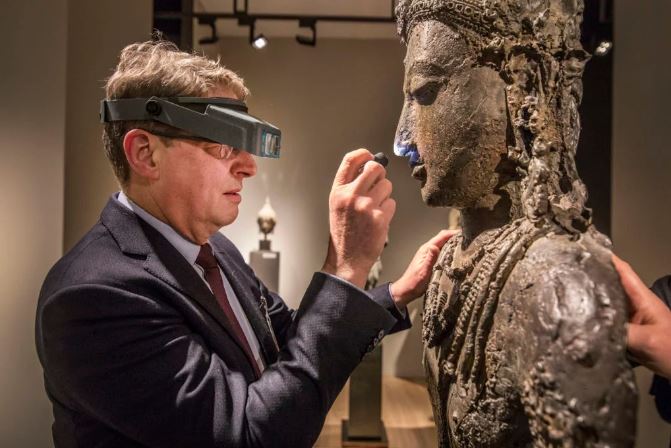
Vetting at the 2018 TEFAF Maastricht fair. Photo: Loraine Bodewes, courtesy of TEFAF via Artnet News.
Each week CAA News summarizes articles, published around the web, that CAA members may find interesting and useful in their professional and creative lives.
National School Walkout: Live Updates
Thousands of students walked out of their schools today in a nationwide demonstration, one month after a gunman killed 17 people at a high school in Florida. (The New York Times)
MOCA Fires Chief Curator Helen Molesworth for ‘Undermining the Museum,’ According to Report
The reasons behind the firing comes via artist and MOCA trustee Catherine Opie. (Artnet News)
New Adventures in Old Masters: How Art Historical Detective Work Gives Dealers at TEFAF an Edge
See how three TEFAF dealers found Canova’s “fake” self-portrait of Giorgione and a Munch better than MoMA’s. (Artnet News)
Picasso Painting Offered in Money-Laundering Scheme, US Feds Say
Earlier this month the US Department of Justice unveiled a multi-count indictment in a federal court. (The Art Newspaper)
Lost Art: Field of the Cloth of Gold
Noah Charney shares the stories behind some of art history’s most important works—those that we can no longer see. (The Art Newspaper)
Trump Nominates New Chairman for the National Endowment for the Humanities
President Trump on Friday nominated Jon Parrish Peede as chairman of the NEH, bringing to an end speculation about who would take the helm at an agency he has repeatedly targeted for elimination. (New York Times)
The Gray Market: Why Art Censorship Is Built into Facebook’s DNA
In late December, Facebook censored a user’s personal post featuring an image of the Venus of Willendorf. (artnet News)
Someone Yarn-Bombed a Guggenheim Museum Toilet with Gold Crochet
“We can confirm an intervention of a crocheted piece that covered a toilet on the museum’s Ramp 4.” (Hyperallergic)
Kelly Boehmer and Matt Toole
posted by CAA — March 12, 2018
The weekly CAA Conversations Podcast continues the vibrant discussions initiated at our Annual Conference. Listen in each week as educators explore arts and pedagogy, tackling everything from the day-to-day grind to the big, universal questions of the field.
This week, Kelly Boehmer and Matt Toole discuss teaching teaching 3D and sculpture.
Kelly Boehmer lives in Pooler, GA and teaches as a Lecturer at Georgia Southern University. She makes large-scale, soft sculpture installations (often depicting unicorns) and is a member of the performance art band, Glitter Chariot.
Matt Toole lives in Savannah, GA and was a professor at the Savannah College of Art and Design from 2006 to 2016. He is a sculptor who works with a variety of materials and processes including performance works focusing on rituals associated with making.
New in caa.reviews
posted by CAA — March 09, 2018
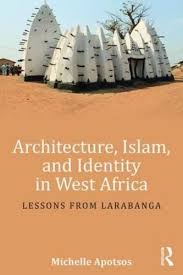
Itohan Osayimwese reviews Architecture, Islam, and Identity in West Africa: Lessons from Larabanga by Michelle Apotsos. Read the full review at caa.reviews.
Alice Heeren explores the exhibition catalogue México 1900-1950: Diego Rivera, Frida Kahlo, José Clemente Orozco, and the Avant-Garde by Agustín Arteaga. Read the full review at caa.reviews.
Joseph Leo Koerner writes about Albrecht Dürer and the Epistolary Mode of Address by Shira Brisman. Read the full review at caa.reviews.
Elizabeth Robles examines British Black Art: Debates on Western Art History by Sophie Orlando. Read the full review at caa.reviews.
CAA Goes to Washington
posted by CAA — March 07, 2018
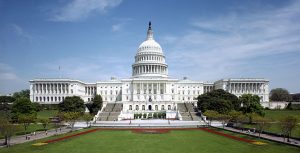
See live updates on Twitter and Instagram
Early next week, staff members from CAA will be attending Arts Advocacy Day and Humanities Advocacy Day in Washington, DC.
ARTS ADVOCACY DAY
March 12 – March 13, 2018
Hosted by Americans for the Arts
Arts advocates from across the country convene in Washington, DC for Americans for the Arts’s annual Arts Advocacy Day each year. Arts Advocacy Day brings together a broad cross section of America’s cultural and civic organizations, along with more than 700 grassroots advocates from across the country, to underscore the importance of developing strong public policies and appropriating increased public funding for the arts. Learn more.
HUMANITIES ADVOCACY DAY
March 11 – March 13, 2018
Hosted by National Alliance for the Humanities
Humanities Advocacy Day provides the opportunity to connect with a growing number of humanities advocates from around the country. Together, advocates will explore approaches to year-round advocacy on college campuses and in local communities while also preparing for Capitol Hill visits. On March 13, they will visit House and Senate offices to make a persuasive case for federal funding for the humanities. Learn more.
WHY IS CAA ATTENDING?
For two years in a row, we’ve offered our complete and total opposition to efforts to eliminate funding for the National Endowment for the Arts (NEA), the National Endowment for the Humanities (NEH), and other domestic programs that fund education, arts, and humanities initiatives, as outlined in the 2018 and 2019 White House budget proposals.
Over the last year, we’ve also solicited feedback from our members on a variety of issues that impact the arts, humanities, and higher education, including:
- Gun control and the proposal to arm teachers
- Tax reform and its effect on higher education
- Embracing and supporting diverse voices in the arts
- Hiring standards for part-time faculty
- Removing or preserving Confederate monuments
- The Muslim Travel Ban
For more on our advocacy efforts, click here.
We encourage you to be vocal about your support for the arts and humanities next week (and beyond!). Click here to access the CAA Arts and Humanities Advocacy Toolkit.
News from the Art and Academic Worlds
posted by CAA — March 07, 2018
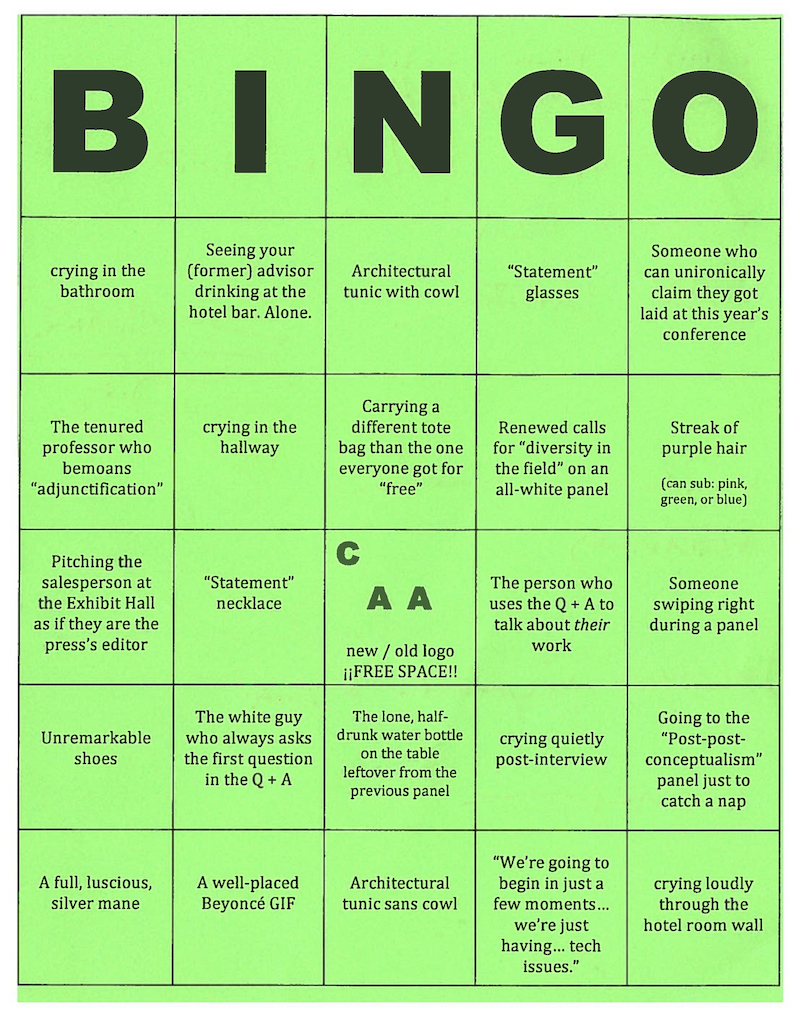
Anonymous bingo card from 2018 Annual Conference, featured in “Sans Cowl” by Andy Campbell.
Each week CAA News summarizes articles, published around the web, that CAA members may find interesting and useful in their professional and creative lives.
Sans Cowl
“Sometime in the middle of the day on Friday, neon-colored CAA bingo cards started to appear on the ephemera table…’Statement’ glasses? Check. Architectural tunic sans cowl? It’s my new uniform. Carrying a different tote bag than the one everyone got for ‘free?’ Wouldn’t leave home without it.” Read Andy Campbell’s great, and hilarious, takeaway from CAA 2018. (Artforum)
Uncovering the Secrets of the Girl With a Pearl Earring
Using new exploratory technologies, the Mauritshuis museum is conducting a two-week public study of Vermeer’s most famous artwork. (New York Times)
New Cooper Union President Is Focusing on Free Tuition’s Return
New president Laura Sparks aims to get the college back to free tuition in ten years time. (The Villager)
Neanderthals Made Cave Paintings before Modern Humans Even Reached Europe
The paintings appear to predate the arrival of modern humans in Europe by 20,000 years. (Hyperallergic)
All of West Virginia’s Teachers Have Been on Strike for over a Week
Thousands of public school teachers across West Virginia have been on strike for more than a week in protest over their pay and benefits. (Vox)
Giant Monet Painting Discovered in Louvre Storage and Returned to Japan
Missing for almost 60 years, the painting was found severely damaged in a Louvre storage facility. (Hyperallergic)
The 106th Annual Conference in the Rearview Mirror
posted by CAA — March 05, 2018
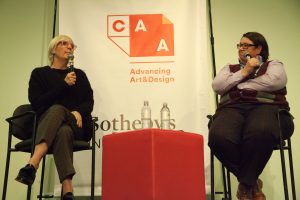
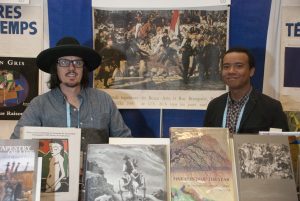
Many thanks to everyone to made it to the 106th Annual Conference at the end of February. We had more than 4,200 people attend. Members enjoyed their sessions, as well as many of the opportunities to visit locations in LA outside of the Convention Center. We have also received lots of positive feedback on the new logo and the Cultural and Academic Network Hall.
We will be sending out a survey to the participants in the very near future. We are interested in your feedback about everything from session contact to the price of local coffee. So keep notes of your impressions so you can let us know.
In the meantime, you can:
Watch the videos of select sessions and main events.
Access Abstracts and the Directory of Attendees via the CAA membership portal.
Read these takeaways from the 2018 conference:
Sans Cowl (Artforum)
Sam Durant and Anne Ellegood reflect on being in the hot seat of museum controversies (The Art Newspaper)
Scholars weave craft into the art history canon at CAA (The Art Newspaper)
Photo of Helen Molesworth and Catherine Opie: Rafael Cardenas
Photos of conference attendees and book and trade fair: Allison Walters
Instagram: Joelle Te Paske