
CAA News Today
Taking Down Statues and Public Art? Here’s What our Members Think
posted by CAA — September 12, 2017
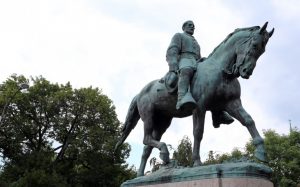
Public art, statues, and monuments have seldom been in the news more than in the past few weeks. Figures from Christopher Columbus to Robert E. Lee, from Peter Stuyvesant to Stonewall Jackson have been topics for debate. Regardless of one’s political or cultural point of view, nearly everyone seems to have an opinion.
We asked our members what they think about preserving or removing statues and public works of art. This is what they said:
“I do not believe these monuments should be destroyed, though finding appropriate housing and creating proper and instructional context for them will pose many challenges. Erasing history and art history is not the answer to this situation. I believe each monument’s fate should be determined at the local level in a case-by-case basis and only with the help of art historians. This is not something we should leave to politicians or the general public without our help since it is only our training that can help situate these artworks within a broader context. Some of these monuments are indeed closely tied to the actions of the historical figures they represent, but this is not always the case. There is no “”one size fits all”” solution to this problem and this problem is not limited to monuments showcasing figures from the Confederacy.” — Tiffany Elena Washington
“This premise seems to take for granted assumptions about what criteria is for evaluating public art, especially monuments or statues in public settings. They were not created apart from a very specific political structure and embedded with social and cultural codes about what kinds of historical narratives are valued, erased, or repressed. Naming them works of art, a term already loaded with hierarchies and judgments, does not mean they should be treated as apart from these same issues today. In fact, if anything, we should be even more willing to challenge the inclination. It would be a privilege to do otherwise, and not understand or be aware of the particular ways this privilege of separating art from the maker, its history, and its employment of these very terms from the real impact that systemic oppression enforces. Steven Lubar has an interesting proposal for what to do with removed statues (please see his most recent Medium post on the subject), as well as Aleia Brown, who discusses in an article in Slate Magazine why simply moving such objects into museum settings (keeping in mind the ritual- or treasured-like tone of exhibitionary spaces) is actually very far from simple.” — Anni Pullagura
“Confederate monuments need to be removed. I think it’s a stretch to consider them “art” and if there is a desire to study them it can be done in another venue other than public space.” — Lynn Clement
“I believe all historical art should be saved, not destroyed. But they must be placed in the context of their time by installing in an art gallery or a park dedicated to such monuments with accompanying didactic material that offers the complex and sometimes nuanced meaning the work has to different constituents. Southerners who retain an allegiance to the Confederacy might be quoted alongside with those opposed to it. Curators, however, must feel free to insert the work within the larger historical context down to our own days.” — Anita Moskowitz
“I read with interest the Daily News article written by my Stony Brook colleague Michele Bogart.
http://www.nydailynews.com/opinion/defense-racist-monuments-article-1.3436672
Although I agree that one need not be “pro-Trump, pro-Confederacy or insensitive to the horrors of slavery and its legacy” in advocating against the removal of confederate statues, I disagree with her conflation of “removal and destruction” in the discussion of these monuments.”
It is my impression that most scholars and thinking individuals advocate displacing (not destroying) the monuments to a museum or designated park with contextual didactic information (difficult and often impossible to place at their present sites). On a recent spring break my husband and I took our California grandson, a freshman at Davidson college in North Carolina, on a trip to South Carolina and visited a slave holder’s mansion in Charleston, a former plantation, and the Confederate Relic Museum in Columbia, all of which had insightful and fair didactic information about living quarters, the treatment of slaves, and the meaning of various symbols. It was a truly educational experience for all of us, but especially for our 19-year old grandson.
In the public spheres that Confederate monuments now occupy, it is not possible to offer context; this can be done only in a more neutral and accessible location. General Lee himself was opposed to the erection of such statues precisely because of the divisive impact they would have on the country. Indeed, most of the confederate statues were installed beginning in the 1890s, considerably after the end of the Civil War. Their message would seem to have been to reaffirm Jim Crow and intimidate its opponents; and that is not acceptable.
On the other hand, each statue or symbol should be given serious review by a committee of art historians, historians, and (in the case of NYC) the Public Design Commission (formerly the City Arts Commission) or other civic body, and/or other informed spokespeople, and in no case should a statue be destroyed. Photographs of the original site and other didactic material should be displayed alongside each work, and controversial and diverse opinions should be included. We must respect the artistic and historical value of the monuments and, at the same time, recognize the pain such images inflicted and continue to inflict on the people who were not part of those “regional civic groups” that worked for their installation.
Most people, including art historians and museum personnel, are used to seeing works of art out of context (think Parthenon Museum, Pergamon Altar, Nike in the Louvre, etc., etc., not to mention sacred images and relics in museums). It is the job of art historians and museum curators to contextualize and analyze the original function and meaning of the monuments and symbols both for scholars and the public at large.” — Anita Moskowitz
“Public works of art should not be destroyed, but they should be removed from places where no critical discourse surrounds their presence. Unless critical discourse is put in place around them, such monuments should be removed and re-situated in places and in exhibitions where they can be critiqued and contextualized. In this way, the public will be engaged and will produce questions of their own about histories and their construction.” — Anonymous
“I believe these monuments are works of art that are part of an important moment and particular community in American culture. They are not representative of all of American culture. Their significance has changed over time. I agree that they should be removed from the public squares and parks, but should not be destroyed or defaced. They were created by late 19th- and early 20th-c sculptors working in the academic tradition, many of whom are little known today. We have few large-scale works by these artists. Destroying these works is destroying part of our nation’s artistic heritage. Still, because of the ideology that the sculptures represent, I believe they should not be out in public squares. They should be moved to local art museums, history museums, or park preserves that can do a better job of contextualizing them for visitors. Public places should be maintained for monuments that speak to the entire community, not just a small segment of it.” — New York City Art Historian
“Many art historians see important statues while people of color see perpetrators of continuing oppression and white supremacy. And at the end of the day I’m not sure how much it matters what art historians think about it. I’ve seen the argument from art historians that we need to take this process slowly, and my question is: why are art historians just thinking about this now, when they’ve had the opportunity to determine this process for over 100 years? Again, it demonstrates the overwhelming whiteness of a field that has allowed itself to be complicit in the continuing oppression of Black people *through these monuments* (and in 100 other ways but you’re only asking about the monuments.) Art historians should consider whether their opinions really matter here, because they all seem to think they do, and they almost entirely counter the experiences of Black people on a daily basis in the US. Black people are saying these monuments represent the persistence of slavery, Jim Crow, and mass genocide. For Black Americans these monuments do not represent an intellectual exercise; they are not objects to discuss dispassionately. It depresses me how many art historians and other academics want to act as if the monuments exist in a vacuum, rather than in the context of mass incarceration, violent policing, voter suppression, and generalized, violent discrimination that Black people face on a daily basis. Well-known art historians, such as Michelle Bogart, argue that moving these monuments destroys their context. I wish that simply moving monuments could destroy the context of white supremacy and systemic oppression of Black people in the United States. I doubt that will be the case.” — Renee McGarry
“These outrageous acts of cultural iconoclasm in 2017: targeting monuments that mark the our civic memory are nothing less than censorship and vandalism perpetrated by hysterical mobs who display the very fascistic mentality they claim to oppose. Significantly this type of violence is a form of public terror without any due process or rational discussion and is also typical of radical Islam that seeks to obliterate everything that opposes its narrow ideology. Conflating every vestige and symbol of the Confederate States with an endorsement of slavery is idiotic and historically inaccurate.” — Professor James Langley, SCAD
“They should be removed, and ideally placed in a separate park or museum designed to PROPERLY contextualize them. That means an unflinching look both at the cruelty of the institutions these figures supported, AND at the actual circumstances in which the statues were raised (and their intended impact on people of color).” — Eva
“I believe public works of art that inspire negativity or harmful attitudes, should be removed. The fact that confederate monuments are still standing today promotes the idea that it is okay to support the antiquated and prejudiced views of these historical figures. If these monuments promote views that exclude systematically oppressed groups, then they should be taken down. Public art is wonderful, and it is important to remember history, and not erase it; however, there is a difference between remembering history and celebrating it.” — Maylen
“These works (except for Stone Mountain’s bas-relief, which is too large) need to be removed and preserved in museums that contextualize their role in Jim Crow America, anti-semitism, and the history of slavery and white supremacy movements. As someone born and raised in the South, who grew up in the Civil Rights era, I know from experience that these monuments give off the wrong message for our contemporary multi-cultural society.” — Gail Levin
“Iconoclasm is deeply problematic in so many ways, but if the objects are conserved, then they do not get erased. I think the monuments should be kept in museums as a way to preserve them as historical objects. While I disagree with pretty much everything the president has to say, I worry, like him, that public monuments of all kinds will become the targets of such destruction and erasure. If we do not have reminders to teach us not to repeat history, then we will continue to do things all over again, as we are seeing presently.
The Tretyakov Gallery and other locales in the former Soviet Union have done it correctly, in so many ways. The toppled statues of Lenin and Stalin have been turned into broken statues encased in the sculpture garden. This, I believe, is a very effective way to undo their power, but also to say that Russia has a history that cannot be forgotten. Similarly, the many collections of fascist and socialist realism have not been destroyed as it is important to be able to study the paintings and sculptures, but they have been relegated to store rooms and special galleries so that they do not become places of pilgrimage.” — Anonymous
“I think we need to ask first if the monuments are meant to honor someone for an activity which we would not honor today, if someone was honored especially for his actions in the slave trade for example. In this case it seems clear, that we could not let this continue. But for the majority of monuments the persons will be honored for something else, for livelong actions that are correct etc. In this case we need to ask if we will find someone without false. Does we need to ban everyone who did not work for women emancipation? From the beginning of history until the 19th century we would need to remove lots of monuments. This could not be the solution. And do we want to erase this part of our history? Wouldn’t it be better to add an information or a second monument to explain the context? We need to have more monuments for our multicultural history. But it would not be a good beginning to remove everything else…. and when would we stop to remove…. What is about fortresses and castles as monuments of monarchy etc…. Lets give a context to history and not erase it.” — Philippa Sissis
“Public art should be balanced with community identity. When a community no longer feels that the art represents its values, that community is justified in removing the art, preferably to a new space that allows visibility to those who still seek the object. History is tied to all objects, and while there is always danger in forgetting history, there is no shame when a community decides that it does not want to be publicly associated with a particular chapter in history. In regards to statues of war figures, those are fundamentally about the figures’ actions of war and personal traits that led the figures to participate in one side of a war. Again, if a community does not support the actions, values, and traits as represented in a war figure, then that community should not feel obligated to support art that commemorates that figure. Public art that does not align with the current profile of the community should be removed as a community identifier–though not destroyed.” — Loretta Ramirez
“I honestly think that most commemorative statuary is uninspired, and, in general, the persons being commemorated are exemplary of colonialism, Anglo-European hegemony, and serve to reify ideas about dominance and conquest that have proven detrimental to a better social vision. I wouldn’t mind seeing them all come down. They could take photographs of them to archive, melt them down, and make something more useful (or more artful, if that’s what’s desired) out of the materials. These kinds of monuments commemorate more ways of thinking than actual individuals. It’s not like the person depicted will know the difference, so it’s obviously a symbol more than a portrait. This is why works like Maya Lin’s Vietnam Memorial carry more power, since they involve the viewer, and do not reproduce relations of domination and oppression.” — Laura Crary
“Watching the statue of the Confederate soldier taken down with ropes in front of the Court House in Durham, North Carolina one cannot help remembering the toppling of the statue of Saddam Hussein and the removal of the Lenin statues in Soviet bloc states. These gestures may seem violent, unplanned acts of vandalism, but they are in fact just the opposite. They are expressions of consensus that these monuments have outlived their usefulness as public monuments. Their dismantling marks a shift or turn in a nation’s history, a rupture with the past, and a new understanding of what now shapes the civic realm. The idea of using the public sphere as a metaphor of rejuvenation is a practice that started in the Roman Forums. As Gregor Kalas argued in his book, The Restoration of the Roman Forum in Late Antiquity, the Romans of Late Antiquity used, reused and sometimes removed statues as a physical strategy to form a consensus over whom should be remembered and thus whom should continue to have influence. This attitude toward civic memorials is at work today and when the call for the removal or destruction of Confederate leaders comes forward it should be read not as wanting to erase history but of making space in the civic sphere for all to inhabit it without fear of history reviving itself.
Monuments like that of the Confederate General Robert E. Lee in New Orleans and Charlottesville or the statue of the armed Confederate soldier in Durham North Carolina, when seen as involved in creating a civic consensus about who we are as Americans, are not just markers of historical facts, but also exist in the present moment shaping and ordering our nation’s social space. This strategic function of such physical monuments needs to be part of the larger public discourse on monuments and how making and breaking them are acts that guarantee or remove the sense of shared public space. From this perspective the monuments to the leaders and soldiers of the Confederacy can be seen as damaging symbols that have continued to haunt public space and the consciousness of African American citizens, leading many to feel a sense of estrangement rather than enfranchisement.
Therefore, when local governments working with the blessings of white citizens choose to clear the public sphere of these ghosts of history they should be seen as gesturing toward making this space open to all. These acts of removal, whether sanctioned by city hall or a sudden reaction to the violence of white supremacy, must be judged as a show of a concern and care for giving African-American citizens, a willingness to make space and come to a common consensus of what it means to live free and be an American.” — Santhi Kavuri-Bauer
“It would be good to know how the monument came to be erected in the first place. Who advocated for them? What were their justifications. Who paid for them? Monuments have a history and an intention. Yale university made a good decision to rename Calhoun college (Calhoun an advocate of slavery…) Students do not need to be reminded of dark history in their daily living environment. Public works of art that promote racism, sexism, agism, homophobia, etc. should be removed. Hate crimes are too prevalent today; monuments that are complicit in hate of any kind are not the values we should promote with public art.” — Martha Gorzycki
“I was present at the tearing down of the Durham statue. I was proud to have taken part, even in my limited role as a member of the crowd, and I would do it again and take an even more active role if welcomed by the organizers to do so. We know there are more than enough of these monuments that if we wish to preserve some in a historically appropriate way (as in, drawing sharper or total focus to their role as racist fearmongering), that we have more than enough to fill that capacity and still destroy the bulk of them. I also like the idea of marking them as destroyed monuments–for example, tearing them down but leaving the torn down parts at the site, or constructing a new anti-racist monument from the parts and putting it at the site. A friend suggested creating one museum that was just a large airplane hangar with all of them in it, with the historical framing done by some of our many great POC museum and historical experts. After what I’ve seen in this country and in North Carolina over the last 20 years, I feel strongly that keeping the statues as is, even with a new plaque, is white supremacy and delusion in action.” — Kirstin Ringelberg
“We should proceed with extreme caution when removing public artworks. There are circumstances when no other solution proves adequate, but often providing a new context for an existing work may meet everyone’s needs better than removal. I clearly understand that a society cannot continue to honor unambiguously in bronze people whose actions have caused their reputations to alter. Monuments to Confederate leaders, for example, must change. But removing monuments entirely further erodes our sense of history, which already is in short supply. If as historians we believe that understanding the past helps us to make sense of the present, then surely we do not want to encourage deliberate erasure of reminders of that past. I would prefer monuments remain in place as stimulants to discussion. That discussion can take many forms, for example commissioning other artworks that challenge existing monuments and/or problematize their honorific function. Recent events in Charlottesville suggest the discourse sometimes may require enforced moderation. Perhaps artworks that become too controversial could be removed to semi-public spaces. But in general, our nation does not suffer from a surfeit of public art or an excess of historical self-understanding. What monuments we do have should be brought into a relevant dialogue to stimulate public awareness of our difficult national story.” — William Ambler
“This is an important and timely subject and one that CAA should make space for in the 2018 annual meeting. I discussed the importance of public monuments in my recent book, American Faces: A Cultural History of Portraiture and Identity [ http://www.upne.com/1611688924.html] and strongly urge the program committee to make space for it in the upcoming meeting. It is a wonderful example of why art and history matter.” — Richard Saunders, Director, Middlebury College Museum of Art; Professor, History of Art and Architecture
“Many monuments belong in museums, not on public squares. The actions that a person undertook (or committed) during their lifetimes should be considered, as well as the major thing(s) for which s/he is known. Robert E. Lee wouldn’t be remembered today if he hadn’t led the Confederate army. George Washington and Thomas Jefferson did hold slaves, but they are also remembered for helping establish the US as a country: there is an actual contribution that we can discuss and weigh against questions of whether they fully supported what we now think of as American ideals.” — E. Evans
“I think the works should not be destroyed but moved to historical museums where they can be studied in historical context. As a society it is important to continue to learn from our history. Many monuments were erected 40-60 years after the war to ease tension. These artifacts can teach society much like the Egyptian and Greek statues.” — Sabre Esler
“Put civil war monuments in a historical museum or park dedicated to history.” — Margaret Herke
“They should not be destroyed. Removing them from view will not change the past or current social injustices that they celebrate and reinforce, but will further create the mistaken impression that racism, misogyny and bigotry are dead. History, the history of he people who erected the monuments in the not so distant past and who embraced the hatred that they embody, needs to be remembered. However, we need to creatively subvert the power of the monuments to empower their hateful messages. This might be through artistic and/or explanatory additions, or removal to museum settings.” — Rachel Zimmerman
“This is a very difficult and complicated issue. Generally, I favor providing context where possible for monuments that were commissioned works (not mass-produced by foundries and ordered from a catalogue). The context should address how and why the work was commissioned. In many instances, white women, particularly members of the United Daughters of the Confederacy, organized memorial or monument associations, raised funds for the monument, selected the artist, and organized the dedication ceremony—-all at a time when women were discouraged from participating in the civic sphere. Those organizational skills extended beyond monument-making to advocacy for better working conditions, suffrage, and education. White women were the primary proponents of the myth of the Lost Cause, but veterans, north and south, also bought into the romantic notion of a “band of brothers.”
Further, commissioned works represent a significant output by American sculptors who operated within a tradition of heroic sculptural works. Further, the context should provide, wherever possible, the voices of dissent that were raised when the monuments were being commissioned and installed to reinforce that dissent and debate are always present. That would lead, hopefully, to a civil discussion about the concept of power, who wields it, etc.” — Barbara C. Batson
“Though often ignored, public monuments are, like all works of art, living and evolving objects, yet they are embedded in the matrix of urban life, politics, historiography, and morality in a way that few other artworks are. We should not be surprised that opinions about them should change and at times violently erupt into public consciousness, nor that those opinions should be contested. I do not, therefore, believe that public monuments are permanent immovable objects. Their removal can be, and historically has been, a powerful symbolic action that condenses and represents otherwise amorphous public sentiment. Yet even in cases when removal seems to be collective catharsis, there are opposing parties, and that should not come as a surprise to anyone. Removal should not be taken lightly, it should be fully debated and precisely justified in each community that undertakes it (as actually seems to have been the case in Charlottesville). That said, there are few historical figures whose opinions, personal lives, and actions would stand up to contemporary values, even if the contributions to society for which their monuments were raised in the first place continue to be considered valuable decades or centuries later—something that is not the case with leaders of the Confederacy. In more ambiguous cases, like Christopher Columbus, historical contextualization is key and possibly an alternative to removal. I believe that acknowledging the hypocrisy and violence of history in a text or counter monument can be just as powerful as toppling the offending object. It can, moreover, bring the complexity and cost of history to light rather than erasing it’s offending aspects altogether.” — Marina Kliger
“I believe that the Confederate statues depicting military leaders should be removed from places of honor and put in other locations, museums, etc. where they can be interpreted revealing the historical context of their making. I think ones that simply honor the Confederate dead should remain in place. As a fervent objector to the Vietnam War, I was unable to reconcile myself average soldiers until the Vietnam Memorial was put up. That memorial made it possible for me to honor the war dead without honoring the war or its leaders. Seeing this monument was very important for me and my attitudes to my country and the military. Plaques that explain that many of the monuments honoring the Civil War dead were put up in the 20th-century could explain the previous use of these monuments as a means of strengthening Jim Crow could be attached to these monuments, but they do still have meaning as marking the deaths of the average soldier. I realize that there are a lot of monuments that will need to be moved. I suggest that duplicates could be destroyed. Since a lot of these are in bronze, I’m assuming that there were multiple casts. A panel of art historians could decide, which is the finest cast among the many and save those. I think these monuments represent a teachable moment for our nation, plus many of them do have artistic merit. Thus I do not think they should be destroyed.” — Julie R. Meyers, Ph.D
“After careful review by the community, offending monuments should be removed from places of prominence, where they take on a social imprimatur, and preserved and contextualized elsewhere.” — Christine Filippone
“I’m Jewish and I’d have trouble living in the shadow of monuments and commemorations to the people and ideas that wanted to kill me, enslave me, and terrorize me. That’d be perpetually traumatizing. Jewish education on the Holocaust focuses on the premise to never forget. We can and should continue to fulfill the mission of remembrance and vigilance while removing public declarations of racism, hate, and violence to locations more conducive to pedagogical methods for social betterment.” — Sara Picard
“The destruction of a work of art should never be taken lightly. Yet the preservation of art should never take precedence over the preservation of life. These monuments are not only artifacts of the past; they speak strongly to – indeed, provide ammunition for – the economic, social, psychological and indeed bodily violence that so many Americans of color are subject to every day. For that reason, their status as works of art is not a good enough reason for them to remain public monuments, which are symbols of America’s most deeply-held values. If to remove a public statue from its original site is to destroy it, I think that destruction is warranted in this case.
That said, these monuments are not all the same. Some of them are copies, and can be destroyed without significant artistic loss. Some of them are great works of art, or historically significant ones, which should be moved to a less public site: perhaps a sculpture park reserved for this purpose. Some of these works are even by minority artists. Those monuments, particularly those by black artists and architects, seem to me the best candidates for the compromise of “contextualization”: leaving the original in place, while significantly changing its meaning. A flat bronze plaque on the horrors of slavery is insufficient for this; new works, new stories, will have to be added, so that the original cannot function in its original messaging. History is not simple. Why should our public sculpture be?
As an art historian speaking to other art historians, I am sure I do not even need to state that I am dedicated to the preservation of art and cultural heritage. But it seems to me hypocritical to worry more about injustice against art than against human beings.” — Julia Pelta Feldman
“There’s no “one size fits all” solution in the matter. Confederate monuments must be evaluated on a case by case basis, and in many cases, they should be removed and relocated to less prominent positions within their communities or to specially designated parks or museums that can properly contextualize them. Should every single Confederate memorial plaque and monument come down? Not necessarily. Questions that should be asked about each memorial relate to location (cemetery or front lawn of the town hall?), date of the commission and dedication, and role in the community. While many are ignored and forgotten, some monuments evolve to play new roles in their communities, perhaps in some cases even among the ancestors of those whom they were originally intended to oppress. Has new signage already been added? Do locals find the new interpretation of the monument useful in teaching the history of racism or needless fuel for the white supremacist fire? Can contemporary artists reinterpret the monuments? Once removed, can the pedestals be used for rotating public art exhibits? Other sculptures of historic figures may be different. Dr. Marion Sims was honored by a sculpture on 5th Avenue for his role in the development of modern gynecology. Perhaps the sculpture should stay in place but new signs and didactics should be added that explain how he performed experimental surgery on slaves without anesthesia. Most of our heroes from earlier eras would not deserve pedestals today. We can’t remove them all just as we can’t repatriate every piece of art in the Met and the Getty that was removed from its place of origin due to imperialism and colonialism. History can not be fixed by removing monuments, instead the problematic histories embodied by the statues should be confronted and questioned and taught in local curricula.” — Anonymous
“Public art takes a range of forms and finds its way into the public through a variety of processes. I believe that communities should have the right to a discussion of the value and function of a work of art and that such discussions should be informed by evidence about how and why a work came to be erected and, if important, the subsequent use of that work to promote or oppose a political position. These discussions should also include information about what other communities have done to move, alter, contextualize and/or destroy controversial works of public art. Ideally, art historians and historians will be involved in contributing to and helping to shape these discussions. If communities choose to move or destroy works rather than contextualize them, I would endorse the replacement of the work with a small plaque that offers some information about the work and why it was removed; it is essential that we keep history in view, especially historical political positions grounded in the unequal distribution of power and rights, to help ensure our progress toward a more-democratic society.” — Elizabeth Hutchinson
“Removal, not destruction, is important. Ideally, a museum repository would house these offensive past historical figures. A museum setting would provide the context for each of the works. Art history should be contextualized, not erased. What were the circumstances surrounding these commissions? Who paid for the monument? What was the public’s reception of the unveiling? Were there protests? How many people attended? Who were they? Where did they come from? How were the artists chosen? Who were the artists? Did their viewpoints clash with those of their subjects? etc., etc. Statues and public monuments have gone up and been pulled down or defaced or destroyed for millennia. Each work reveals so much information about the time in which it was created and erected or placed in a public square, park, or building. A single work examined from its commission to today (or until the day it was destroyed) reveals a great deal about changing ideals.” — Dr. Leanne Zalewski
“I favor “re-contextualizing” confederate monuments in a different setting, such as a museum, historical society, or sculpture garden. Leaving them in a public place keeps the confederate leaders “on a pedestal.” This isn’t a one-size-fits-all recommendation, however. Gettysburg, for example, isn’t going to take every confederate monument down – nor should they. Some common sense must be used, and each community needs to discuss this together.” — Anonymous
“I’m skeptical that art professionals have some sort of different or special stake in this debate by dint of their disciplinary sensitivity to a statue’s status as art. It sounds like the urge to preserve these statues as ~art~ means affording them a dubious sense of aesthetic autonomy, one that allows them to stand outside their social/political/historical function. I don’t think a statue’s existence as art ever separates it from the fact it is designed and erected to instil a particular historical/political/ideological order, a function that goes well beyond the object’s institutional/cultural/disciplinary boundaries. The aesthetic and political questions are one in the same. I’m very much in favour of devaluing the legitimacy of racist figures by undoing their canonization as statue-worthy. I think their removal demonstrates a necessary intervention in the construction of public and social space, affirming art’s agency in doing so. I think there’s a big difference between removing statues and erasing them: rather than wipe away historical artefacts which testify to a troubling history (to put it vulgarly, “censoring” them), the visible removal of a statue can exhibit that intervention in effective ways.” — Edward B.
“As a student of German art history, the Germans have, after a generation following World War II, dealt admirably with their difficult history. Following both the defeat of the Nazi regime and the fall of the GDR (communist East Germany), street names were changes, statues dedicated to problematic leaders were generally relegated to museums, though some were destroyed. The monuments of the Nazi past were dealt with more harshly, and rightfully so, than monuments dedicated to Marx, Engels, and Honecker. The Germans prohibit the publication of Mein Kampf (though an authorized and heavily annotated edition was published by historians recently). Monuments to the Holocaust have replaced Nazi monuments and they serve a didactic purpose as well as an aesthetic one. Obviously, the destruction of monuments does not prevent racist and anti-semitic violence and ideologies from emerging. And putting discredited leaders’ statues in museums for context (like the Monuments Park in Budapest) can serve as a good teaching tool.” — Marion Deshmukh
“I feel that removing the Confederate monuments is the right thing to do, no matter how divisive the far right might consider removal. In consideration of the fact that most of the monuments were put up in the 20th century, rather than in the immediate aftermath of the war, and that Lee himself didn’t want to be memorialized thus, I believe that it’s clear that these monuments were an expression of WASP hegemony during the Jim Crow era. I think that it’s important to continually remind our public of Confederate Vice President Alexander Stephen’s remarks that secession was indeed about preserving slavery. We should encourage the use of real facts in studying the war and its aftermath, rather than allowing the perspective to be clouded by spin minimizing the culpability of the Confederacy and their apologists. I look to Germany as setting the example of the right thing to do, both in terms of monuments and educating their citizens.” — Bethanie Weber Rayburn
“I’m definitely conflicted here. I certainly see how some of the statues are offensive to certain groups of people. On the other hand, we cannot erase or ignore or rewrite history. Where do we stop when removing them? Some statues, such as those along Monument Ave. in Richmond are an integral part of an urban plan. Emotions are so rame now that I think we need to back off and take time to reflect. Knee-jerk responses seldom result in the best solutions . Furthermore the real problem isn’t the statues themselves but ideology for which they stand. If we can make headway on the more productive issues of overcoming hatred, bigotry, misogyny, and racism those statues wouldn’t have as much emotional charge.” — Sara James
“Are any of these statues works of art? The intention of these statues is clearly to honor the person represented. A work of art, such as the Vietnam Veterans Memorial in WDC, can present a more complex history. Replace statues with works of art.” — Janna Eggebeen
“I immediately think of the actions of the Taliban in Afghanistan and Isis in Syria. Were their actions justified?” — Richard Woodfield
“These statues were all erected before civil rights. They are the works of an oppressive government that insisted on telling their hegemonic version of history. There is a possibility of having some input from our diverse population and we need to respect all our races, not just the European — especially since the white population is going to be a minority soon.” — J. Quick-to-See Smith
“1. It seems crucial for Art historians to help tease out which of these public cultural objects are “art” and which are not. While originality is not determinate of “art”, the fact that many of these objects are identical, “factory-produced” suggests that they really ought to be viewed as a set rather than in isolation. That is, to challenge your prompt: many of the objects at stake right now are not related to specific historical figures and make no substantial claims for their depiction of specific people (only of generic ideas, like, problematically, “heroism”).
2. It seems crucial for Art historians to more firmly establish the context in which so many of these objects were commissioned, made, erected, and celebrated – so often these truths do not match public perceptions. That so many Confederate monuments post-date the war by SO many decades, and that they coincide with a cultural campaign to recuperate the “lost cause” of the Confederacy and reassert white supremacy in the Jim Crow era, should be more clearly articulated. Not teaching about the history of these kitsch objects (on grounds that they lack aesthetic value, perhaps?) has allowed for mythologies of their historical value to circulate amongst white publics.
3. These objects often APPEAR to be monuments to individuals (or groups of individuals), but so many of these are actually more like flags – generic symbols of collective hate. They may wear the white costumes of a Beaux-Arts aesthetic, but these statues form a perpetual and stationary KKK march through our public lands. It is a particular cruelty that they are in state-sponsored spaces. The state, in a rather patronizing interpretation of First Amendment “freedom”, thus sanctions these hate-objects (in the same way that hate-speech is sanctioned); because that which appears to be “speech” or “expression” (even if it is instead violence, and regardless of the context of its speech-power) is protected from government censoring, those who are within the public space of that speech or expression are forcibly compelled by the state to hear or see (or leave the space of the public, removing themselves from the public).
4. It is IMPERATIVE that we all listen when people of color say that they are harmed by the presence of these objects in public spaces. What imagination of “public” do we have for the 21st century if it excludes the feelings of so many Americans? Not listening to people of color is how white people perpetuate white supremacy (even if unknowingly). Those of us who wish to disavow white supremacy must TAKE ACTION to stop it. Whenever possible, we must follow POC-led movements in THEIR proposed solutions for dismantling white supremacy.
5. Given the manner of the production (and attendant aesthetic value) of these cultural objects AND the circumstances of their commissions or original reception as “commemorative monuments” AND the present performativity of these monuments (as ongoing glorification of white supremacy), many of the Confederate monuments should come down. Most (if not all) of these marble and bronze white supremacist flags should be destroyed. History is, we know, not lost by the destruction of any single object (and that destruction would itself be an historical event anyway!). Our public spaces and the objects we place therein must strive to help us reconcile with our violent and hateful past. We need to do this urgently. We need to do it with some speed (not overnight, but certainly not in a slow, gradual way). Our capacity to give this nation over to our young people as a thing they can possess, rather than an institution that reminds them constantly of their oppression, is at stake. To that end, I am in favor of some manner of truth and reconciliation commission with wide-reaching jurisdiction to reevaluate all of the monuments (and so-called monuments) in our public spaces, beginning with those related to the Confederacy and any other public cultural objects commemorating colonization, subjugation, and the violence of oppressors.” — Jessica Santone
“The monuments should not be destroyed, nor should they necessarily be removed from view. Their historical specificity and frequently painful meanings will come to light and perform important educational work if a process of re-signage, re-contextualization and if possible in certain cases a move to a new location is engaged. The collection of relocated problematic monuments in Budapest is an impressive model. As colleagues have noted, it was dispiriting to see very few art historians consulted on this topic by the major media during the immediate post-Charlottesville emergency period.” — S. Hollis Clayson
“The scholarly community has long recognized the fraught politics of these monuments, but it is divided over their fate. Some of the monuments have garnered copious academic analysis, others only recently attracted attention, and yet others are entirely absent from scholarly literature. Some of these statues bear aesthetic value and facilitate our understanding of the trajectory of the American monumental landscape; they also often represent significant moments in an artist’s career. The art historical community might be surprised at the broad participation of northern artists and sculptors, particularly in the 20th century, who served as jurors in these monumental competitions, or who submitted designs for Confederate monuments. Well-known artists in the 20th century, such as Paul Manship, and lesser known-ones, among them women, such as Laura Fraser, participated actively and enthusiastically in the creation of the monumental landscape of the Confederacy, although they did not necessarily share in their ideological implications. For some artists and the architects who created the pedestals upon which the monuments stand, these were professional opportunities that allowed them to showcase their artistic skills. Having researched and published on the monuments, I appreciate their value in allowing us insights into the time and the setting for which they were created and their political utility at the time of their creation. A blanket agenda has been thrown over their creation, although in reality the motivations for individual monuments was quite complex. Some of the monuments were decades in the making, but they were eliminated from public view overnight. Detailed photographic records of most of these monuments, that are instrumental in discussing their iconography are often lacking. Art historians have not been invited to the decision-making processes, to archiving recent debates, or to recording the removal of the monuments. Their removal compromises our ability to continue to engage with their discursive function on the sites for which they were created and to tell the complete story of their impact throughout their existence. Once, removed from public, their fate lies with bureaucratic agencies who are not committed to their preservation or their contextualization, although again there are some who have suggested that neither their preservation, nor their contextualization is necessary . Getting information about their ultimate fate is now impossible. Their relocation is equally problematic as their eventual accommodation in cemeteries, federal battlefields, and museums is yet to be decided. These monuments present serious financial challenges to their prospective recipients as to their proper display, and raise serious ideological concerns for museum curators and boards who will have to negotiate their contextualization. As art historians we have capitalized on the experiential value of visiting these monuments in situ prompting meaningful, transformative conversations among our students. Their removal addresses our most urgent social concerns but does not rectify them; these are only signifiers of deeper social and racial divisions that we are called to address at the local and national level. And herein lies the problem of their displacement; their presence became a thorn on the side of the body politic; let’s hope that its removal is not going to give us a false sense of gratification that we have successfully denounced the divisive ideals that occasioned their establishment.” — Evie Terrono
“My wish would be for every community that has one of these to organize a ‘truth and reconciliation’ style grappling with its past and present, in order to build buy-in for a de-polarized future. Removing oppressive expression has never managed to change hearts, minds, and realities. Only MORE (much) better speech can do that.” — Amy Werbel
“Public monuments show pride for a historical figure’s accomplishments. Therefore, no figure that is not honorable to the general public should have this prestige. However, destroying any historical documentation, whether literature or art, is doing humanity a large disservice by censoring history.” — Alyssa Hardy
“Confederate monuments are artworks created to appear as beautiful war memorials while doing more treacherous work: interjecting an ideology of white supremacy into the public sphere. The United Daughters of the Confederacy and others commissioned artists to make their monuments look beautiful and somber to sugar-coat the terrifying ideology of white supremacy and the reality of a racist social order. That so many of these monuments resemble memorials to Union soldiers further obfuscates the ideology they represent with a cloak of national unity. Therefore, it is important that we recognize Confederate monuments for the propaganda they are. We take pride in public art that represents our ideals, whether by celebrating great achievements, mourning our losses, or reckoning with our mistakes. Confederate monuments celebrate the victory of white supremacy over the black citizens of the South whom it disenfranchised. Confederate monuments mourn the soldiers who fought a war to defend slavery, a cause most Americans have long recognized was wrong. Confederate monuments obscure our mistakes by refusing to acknowledge that slavery, the terrorism of lynching and the Klan, unconstitutional Jim Crow laws and practices that disenfranchised black citizens are wrong. It is therefore right that we remove them from public spaces. Perhaps they should be housed in museums so that we can study the use of art for propaganda. Repurpose the bases and spaces freed up by their removal for art that more accurately and honestly represents us.” — John P. Bowles
CAA Statement on Rescinding DACA
posted by CAA — September 05, 2017

Members of the University Leadership Initiative hold a press conference at the Capitol on Wednesday, February 18, 2015, concerning the recent DACA ruling. DEBORAH CANNON / AMERICAN-STATESMAN
The College Art Association believes students of all backgrounds have a right to the benefits of higher education and a place in society. President Trump’s recent decision to wind down the Deferred Action for Childhood Arrivals program (DACA) is a denial of the foundational beliefs of the United States of America. Congress must now act in the best interest of the entire country, rather than in response to a political base, in forming new immigration policies.
Last fall, 646 college and university presidents signed a letter encouraging colleagues and other leaders across the business, civic, religious, and nonprofit sectors to uphold DACA. We stand with those higher education leaders today and stress how important it is for our members and all advocates to stand up for basic human rights in this country. Learn more about the DACA Program.
Sign the United We Dream petition to keep DACA.
Defend DACA on social media using the hashtags #heretostay, #DACA, and #dreamers.
Taking Down Public Art – What do Art Historians and Scholars Think?
posted by CAA — August 24, 2017
Public art, statues, and monuments have seldom been in the news more than in the past few weeks. Figures from Christopher Columbus to Robert E. Lee, from Peter Stuyvesant to Stonewall Jackson have been topics for debate. Regardless of one’s political or cultural point of view, nearly everyone seems to have an opinion.
We want to know what CAA members think about preserving or removing public works of art. How closely tied are a historical figure’s actions to a depiction of the person? How important are these pieces of public art to preserve? Should they be removed? Should they be destroyed? We want to know what you think and why.
We will compile the results of this form and report back CAA members’ thoughts and feelings on these monuments at this moment in history.
House Subcommittee and Full Committee Approve Bill to Fund the Endowments
posted by CAA — July 14, 2017
On Wednesday the U.S. House Appropriations Subcommittee on the Interior, Environment, and Related Agencies approved a bill that would provide funding of $145 million each for the National Endowment for the Arts and the National Endowment for the Humanities in FY2018.
For many of us, this provides a respite of relief as it is a stark contrast to President Trump’s prior call to zero out the agency.
Although the $145 million figure is a $4.8 million drop from the FY2017 budget, this is a reassuring step by Congress in recognizing the value of the arts in America and the need for a strong public arts agency.
While the subcommittee’s proposal brings us hope, our work is not done. In fact, we at CAA will continue to step up our efforts to educate, communicate, and of course, advocate for the artists, art historians, critics, curators, designers, scholars, librarians, educators, students, conservators, and many other professionals in the visual arts world who make up our membership and affiliates.
UPDATE: On July 18, the full House Appropriations Committee approved the bill in its current state. These earmarked funds may be voted on by the full House of Representatives after the summer recess. The Senate will consider funds for the endowments later in the year also.
We encourage you to regularly check out our advocacy page to learn more about CAA’s stance on the issues and how you can join us in mobilizing and championing the field of arts and culture in our country.
An Interview with Linda Nochlin
posted by CAA — June 08, 2017
CAA is proud to launch our newest initiative for fostering academic discussions about art and its purpose through conversations with diverse scholars and practitioners from our community. Every month, executive director Hunter O’Hanian will interview a notable scholar or artist who is making or has made progressive change in his or her field, with the goal to not only learn more about their craft, but to understand the artist or scholar behind it.
Our first interview in this series is with renowned feminist art historian Linda Nochlin, a long time CAA member and author of the pioneering essay “Why Have There Been No Great Women Artists?” We caught up with Linda at her home on the Upper West Side, where art and inspiring works lined every wall of her apartment. Read the full conversation below (or click the video!) to hear Linda recount the early beginnings of her career, her thoughts on feminism then and now, her advice to young scholars, and a sneak preview of her upcoming book, Misère.
| Hunter O’Hanian: | Hello, my name is Hunter O’Hanian, and I’m the Director of the College Art Association. I’m here today with Linda Nochlin. Hello Linda. |
| Linda Nochlin: | Hello. |
| Hunter O’Hanian: | How are you? |
| Linda Nochlin: | I’m okay. |
| Hunter O’Hanian: | You’ve been a member of CAA for a long time. It’s great to have this opportunity to chat with you. Let’s talk a little bit about your background. I know you grew up here in New York, in Brooklyn. You earned degrees from Vassar, Colombia, and NYU. You taught at Colombia, Vassar, Yale. You’ve won many awards from CAA. Most recently you won the 2006 Distinguished Lifetime Achievement Award for writing in art. I know you’ve won a Guggenheim Fellowship. I know you’re a fellow at the American Academy of Arts and Sciences. You’ve got an honorary doctorate from Harvard. A lot of it’s really been about what you’ve been doing as far as thinking about, writing about, teaching about art. What brought you to art? |
| Linda Nochlin: | 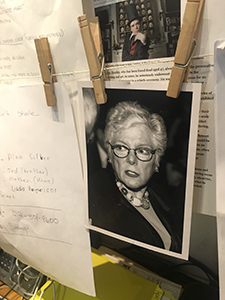 I was always interested. When I was a little kid, I liked to paint and draw. I was very much encouraged to paint and draw both by mother and by my school. Being in New York, I had all these museums. There were a lot of other people who were interested in art that were around me, that were my friends. It seemed sort of natural to go to museums. I enrolled myself when I was 12 in the class for talented children at the Brooklyn Museum. A very interesting place. I was always interested. When I was a little kid, I liked to paint and draw. I was very much encouraged to paint and draw both by mother and by my school. Being in New York, I had all these museums. There were a lot of other people who were interested in art that were around me, that were my friends. It seemed sort of natural to go to museums. I enrolled myself when I was 12 in the class for talented children at the Brooklyn Museum. A very interesting place. |
| Hunter O’Hanian: | You enrolled yourself you said? |
| Linda Nochlin: | I went with a portfolio and they said, “Come on.” |
| Hunter O’Hanian: | Great. |
| Linda Nochlin: | I was always interested in art, music, dance. I loved to dance. The arts. |
| Hunter O’Hanian: | Apart from your writing, have you been drawing and making work through your adult life as well? |
| Linda Nochlin: | No, I quit. |
| Hunter O’Hanian: | How come you quit? |
| Linda Nochlin: | Well, I don’t know. I just got interested in writing about it rather than making it. |
| Hunter O’Hanian: | You have a very long history of publishing. There’s certainly a lot of work that you’ve done with Realism and Courbet. What attracted you to that particular period and that particular genre? |
| Linda Nochlin: | Probably it was political I think. It was during the McCarthy period that I came to maturity. I went to the Institute. I really wanted to work on something that was anti-McCarthy. That was left. I was a person of the left and Courbet was the ideal subject in that. |
| Hunter O’Hanian: | Tell me about what you remember of the McCarthy era and what was going on at the time and how artists and writers were dealt with. |
| Linda Nochlin: | It really was a very oppressive period for people in intellectual and artistic pursuits. Even if they didn’t come and get you, that was always a threat lying over. I remember I began my Frick talk with a long quotation from Karl Marx. People were dumbfounded. I remember my teacher said, “Linda, you’re so brazen.” It was scary times. |
| Hunter O’Hanian: | Watching the news today, do you see any similarities? |
| Linda Nochlin: | No. I think it’s a different thing now. It’s scary in a different way, but you can say what you want. Unless you’re in government. I think it is a different take. It’s not good and it’s not pleasant, but I think it’s different. |
| Hunter O’Hanian: | I noticed…. I’ve read that you said you were introduced to feminism in the late 1960s. You were probably in your 30s at that time. You wrote that you became a feminist virtually overnight. Tell me about that. |
| Linda Nochlin: | I had been in Italy in ‘68, ‘69. I came home and a friend came with all these publications and said, “Do you know about feminism”? It was called the women’s movement. I said, “No.” She said, “Read this.” She left me Off Our Backs and rather the somewhat crude broadsheets of the early feminist movement. I stayed up all night reading and I was a feminist the next day. Certainly I always had been to some degree, but I could see now I could become formally as part of an organization, as part of a movement. Yes, I was a feminist. |
| Hunter O’Hanian: | Do you see the movement alive today? |
| Linda Nochlin: | Mm-hmm [affirmative] yes. But, of course, a lot of people I know happen to be feminists. I don’t know how alive it is otherwise. I think it still is. |
| Hunter O’Hanian: | It’s interesting. I meet a lot of male feminists, too, which back in the beginning of the movement…. |
| Linda Nochlin: | It would be unheard of. |
| Hunter O’Hanian: | It would be unheard of for a man to say he was a feminist. Now there’s many of us who are actually happy to say that. |
| Linda Nochlin: | You think of the Women’s March after the inauguration this year. It was enormous. Enormous. Not every one of those people might be a self-pronounced feminist, but they’re all feminists in the sense that they gathered together to show that they believed in something and were against other things. |
| Hunter O’Hanian: | Of course there’s the essay “Why Have There Been No Great Women Artists?” that you wrote in 1971. I think ARTnews published that? |
| Linda Nochlin: | Yes. |
| Hunter O’Hanian: | First of all, tell me about the title. How did you end up with that title? Why have there been no great women artists? |
| Linda Nochlin: | I was at a Vassar graduation the year before and I think … I can’t remember who it was. He had a gallery. He was a well known gallerist. He said, “Linda, I would love to show women in my gallery, but why are there no great women artists?” I started really thinking about it and one thought followed another. It almost wrote itself. It seemed all so hitched together, so logical. |
| Hunter O’Hanian: | You address the question in the beginning of the essay about how many great artists there are regardless of their gender, the fact of what actually makes a great artist. Talk a little bit about that. |
| Linda Nochlin: | I refuse to say it’s something inborn, a golden nugget I would say, but artistic greatness, artistic production depends so much on time, place, situation, etc. It was no accident that up through the Renaissance, even the 18th century that artists came in families. Father artists, mother artists. You think of the Bach, Johann Sebastian Bach family, family practice. |
| Hunter O’Hanian: | You write in here “The problem lies not so much with some feminist concept of what femininity is, but rather with their misconception shared with the public at large of what art is with the naïve idea that art is the direct personally expression of individual, emotional experience, a translation of personal life into visual terms. Art is almost never that. Great art never is.” |
| Linda Nochlin: | Well that says what I mean. It always takes place within a context, within a setting, certain training, certain standards. What might be considered great art in one period might not be in others. It’s interesting. There’s a certain agreement in the Renaissance. They knew it was Raphael Michelangelo, etc., very little question. |
| Hunter O’Hanian: | You also write here, “the fact of the matter is that there have been no supremely great women artists as far as we know.” I’m happy you added that in, “as far as we know,” although there have been many interesting and very good ones who remain insufficiently investigated or appreciated. |
| Linda Nochlin: | I think that’s been corrected to a certain extent today. |
| Hunter O’Hanian: | Tell me about the ones who have been discovered or investigated. |
| Linda Nochlin: | I suppose Artemisia Gentileschi would be a primary one. Who else? |
| Hunter O’Hanian: | What about women artists in the latter part of the 20th century or beginning part of the 21st century? |
| Linda Nochlin: | I think women artists have definitely caught up as leaders, as being the interesting ones making art and so on. I’m thinking of somebody like Joan Jonas, for example. I’m thinking of somebody like Louise Bourgeois. |
| Hunter O’Hanian: | I was just going to ask you about Louise. |
| Linda Nochlin: | Obviously. |
| Hunter O’Hanian: | Judy Pfaff |
| Linda Nochlin: | The list itself is so long. I’m not saying they’re all Michelangelo, but I’m personally not a Michelangelo person. They’re really interesting and dynamic and have changed the way we look at art, which I think is important. |
| Hunter O’Hanian: | I guess it’s in part because society has allowed them to some degree to be able to do that. |
| Linda Nochlin: | Yes, of course. They had to fight for it, too. |
| Hunter O’Hanian: | Of course. One last quote that I thought was interesting. There’s so much of this essay. I hadn’t read it for years. It’s just so dense. It so wonderful. |
| Linda Nochlin: | It is. I tried to squeeze a lot in. |
| Hunter O’Hanian: | You say “most men despite lip service to equality are reluctant to give up the natural order of things in which their advantages are so great. For women, the case is further complicated by the fact that unlike other oppressed groups or castes, men demand of them not only submission, but unqualified affection as well.” |
| Linda Nochlin: | It’s sort of hard. Say in terms of color, nobody demands that black people love and adore and cater to white people. It’s only gender that does that. It’s very confusing if on the one hand there is somebody you love, live with, etc., yet who is part of a group or caste that is really denying you equality and denying you self-expression. It’s confusing to put it mildly. |
| Hunter O’Hanian: | As we said, we have made progress…. |
| Linda Nochlin: | I think so. |
| Hunter O’Hanian: | But how much progress to do you think that we’ve made? How tough do you think it is for a young woman, 30 years old, starting out today? |
| Linda Nochlin: | I think it’s undeniably better. The conditions are better for a woman succeeding, and a lot of the major artists now certainly are women, but there’s still a boys’ club feeling about certain types of art and certain types of artists. I think you know equality has gone so far and no further maybe. |
| Hunter O’Hanian: | It’s interesting when you think about it in the sense that we think women have had the right to vote for 100 years, but still they don’t get paid the same wage. It’s been 135 years since the Emancipation Proclamation has been signed. |
| Linda Nochlin: | No, it isn’t just done by words or by the progress of a few superstars either. |
| Hunter O’Hanian: | Switching gears, but also on this one a little bit, obviously you’ve been involved in the academy and artistry for many, many years. What is your sense about the future for people graduating out of a master’s programs or PhD programs and getting jobs in higher education today? What do you think about that? |
| Linda Nochlin: | 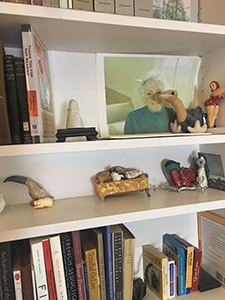 I think it’s a difficult market as far as I can see. Although there are now galleries and museums throughout the country. It’s not just a question of the east coast and the west coast and Chicago. I think there is a sort of spreading, or a spread of art which allows for some jobs, but being an artist is tough no matter how you take it. I think it’s getting ahead, finding a gallery, getting a proper amount of publicity, making sure you show. It’s hard. I think it’s a difficult market as far as I can see. Although there are now galleries and museums throughout the country. It’s not just a question of the east coast and the west coast and Chicago. I think there is a sort of spreading, or a spread of art which allows for some jobs, but being an artist is tough no matter how you take it. I think it’s getting ahead, finding a gallery, getting a proper amount of publicity, making sure you show. It’s hard. |
| Hunter O’Hanian: | What about for scholars, for those getting their PhD about being able to move their careers along? What advice would you have for them? |
| Linda Nochlin: | What advice would I have for them? Be very, very smart. Write a lot. Have strong opinions. Just don’t be a little library worm. |
| Hunter O’Hanian: | It seems your strong opinions have done you well for your career. |
| Linda Nochlin: | I wouldn’t know how to not have them if you know what I mean. That’s what I’m about is my opinions. You have to know something. Frankly I know a great deal. There are very good…. I was a very good student, very good. I worked very hard. I really took pains and energy with my research, not just opinions. They have to be based on something. |
| Hunter O’Hanian: | Can you think of an opinion that you had out there in some of your writing that you looked at it years later and thought, “I wouldn’t have come to the same conclusion?” |
| Linda Nochlin: | I’m sure there are. |
| Hunter O’Hanian: | It’s so interesting how we develop those opinions based upon what we believe at a given time. |
| Linda Nochlin: | Oddly enough I’ve remained more or less consistent. I’ve added some artists in, subtracted some, but the ones that I like are still the ones that I’m interested in. At least many of the issues that I was committed to, I’m still committed to. |
| Hunter O’Hanian: | What are you working on now? |
| Linda Nochlin: | I’ve just finished a large book called Misère about the representation about misery in the second half of the 19th century in France and England. |
| Hunter O’Hanian: | Wonderful. |
| Linda Nochlin: | That’s at the publisher right now. |
| Hunter O’Hanian: | When should we expect to see it? |
| Linda Nochlin: | In the fall I should think. Thames & Hudson as usual.* *Update: Misère is slated for release after Spring 2018. |
| Hunter O’Hanian: | Are you excited about it? |
| Linda Nochlin: | Yeah, I am. I laughingly said to my editor, “Are you going to be able to sell a book called Misère?” He said, “Misère by Linda Nochlin, yes.” It was fascinating, really interesting. It pulls together a lot of things I’ve been interested in all along. It’s both new territory, but based on elements that I’ve been interested in for a long time. |
| Hunter O’Hanian: | Any nuggets that you want to give away from that that come to mind? |
| Linda Nochlin: | Let me think. There’s been relatively little in investigation of the representation of the poor and oppressed. Middle class Impressionism, etc., upper class before that, religious high-minded themes, battles, just the everyday lives of the poor and “uninteresting,” so to speak, not much setting. |
| Hunter O’Hanian: | It’s interesting because that seems like a very timely topic for us. |
| Linda Nochlin: | Exactly I thought of that too. |
| Hunter O’Hanian: | As we think of how elections change and how government change and how the education system changes about access, I think it seems.… |
| Linda Nochlin: | Absolutely. It was certainly true in the 19th century, early 20th. I think it’s an interesting book. I hope other people find it interesting. |
| Hunter O’Hanian: | I look forward to seeing it. Thank you so much for allowing us here in your home. It was great to chat with you about these things. |
| Linda Nochlin: | Good. |
| Hunter O’Hanian: | I look forward to seeing you at another CAA event soon I hope. |
| Linda Nochlin: | I hope so. |
| Hunter O’Hanian: | Thank you. |
| Linda Nochlin: | I would love to. Thank you. |
CAA Statement on May 23, 2017 Trump Proposed Budget
posted by CAA — May 23, 2017
In early May, we recognized that your advocacy matters. Calls, letters, and visits from our members and arts and humanities supporters changed the fate of the NEA, the NEH, and the CPB for the remainder of the 2017 fiscal year. The federal agencies even got a little bump in funding.
With the release of the more detailed White House FY2018 budget this morning, we now know that we at CAA, our members, and advocates for the arts and humanities must renew our efforts to fund these agencies through another fiscal year.
The proposed budget put forth by the White House is nothing short of a gutting of federal support for the arts and humanities. The proposed budget asks for $29 million for the NEA, $30.45 million for the CPB, and $42 million for the NEH. These sums are intended as wind-down amounts resulting in the shuttering of the agencies in 2019. Yet, these are only three agencies among a long list facing cuts under the Trump FY2018 budget. Arts education through the Department of Education is zeroed out and the IMLS would see a 90-percent drop in funding, from $231 million to 23 million in FY2018. Social services agencies assisting the financially insecure are some of the hardest hit with cuts.
Though these numbers are disheartening, we do know from our advocacy efforts on Capital Hill this year that the arts and humanities garner bipartisan support. Many of our elected officials understand the importance of these programs. They see the impact in their own districts through the work of non-profits, higher education institutions, and others who receive grants from the federal agencies.
But the fight is far from over.
Once again, it is imperative that all those who have been touched by the arts and humanities renew the fight to keep these agencies alive and thriving. We urge our members and supporters to make contact with your local representative and tell them the NEA, NEH, and CPB are an integral part of your lives and society.
If you would like to hear what Holly Hughes, one of the NEA Four thinks about the rationale for defunding the NEA, click here.
Use our toolkit to contact your local representative.
Read our March 16, 2017 Statement on the FY2018 skinny budget.
CAA Amicus Brief on Trump’s Travel Ban
posted by CAA — May 22, 2017
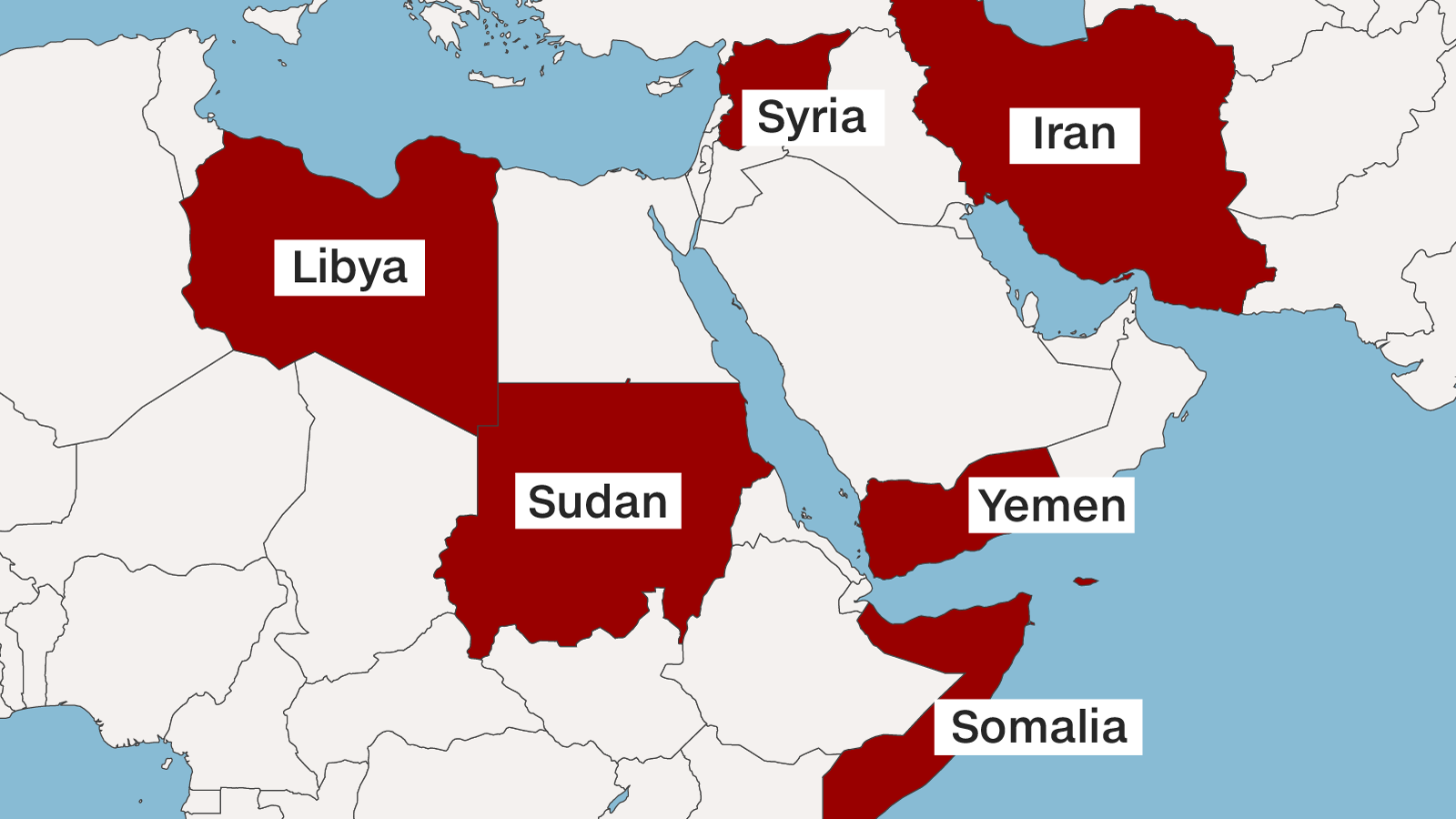 CAA added its name to two amicus briefs in opposition to the United States president’s travel ban, officially known as Executive Order 13,780. We joined the Association of Art Museum Directors and American Alliance of Museums, along with ninety-four art museums. The cases are: International Refugee Assistant Project v. Donald J. Trump in the United States Court of Appeals for the Fourth Circuit; and State of Hawaii and Ismail Elshikh v. Donald J. Trump in the United States Court of Appeals for the Ninth Circuit.
The brief argues that the travel ban inhibits the work of museums. “The negative effects of the Order are already being felt,” the document reads, “as several museums have postponed or canceled future exhibitions that require foreign artists, lenders, collectors, curators, scholars, couriers, and others whose ability to contribute can no longer be assured.” Specific examples include the Cleveland Museum of Art, which canceled a music performance, and the Museum of Fine Arts, Houston, which has doubts about securing loans for an exhibition of Persian art.
We consider joining this amicus brief as inherent to our advocacy efforts and our international reach at CAA. The travel ban impacts the international attendees of our Annual Conference, it impinges on the flow of information and discussion between colleagues, and it harms the practice of research more broadly.
An Interview with Holly Hughes of the NEA Four
posted by CAA — May 11, 2017
Hunter O’Hanian, CAA executive director, recently spoke to the artist Holly Hughes about proposed budget cuts for the National Endowment for the Arts. Hughes is known for being one of the NEA Four—artists whose work was described by Republican lawmakers as controversial and even pornographic. The debacle over the NEA Four led to the closing of the federal agency’s program of giving grants to individual artists.
O’Hanian and Hughes discuss ten points that originated with the Heritage Foundation, a conservative think tank that advised Trump on his recent federal budget proposal. The two take on each suggestion point by point, offering a rebuttal to the Heritage Foundation’s logic.
Though we know the most recent budget does fund the NEA and NEH through the fall of 2017 with a small increase in funding—and we are thrilled about that—we do not believe we are in the clear. When funding is allocated again in the fall this conversation should serve as a reminder to why the arts and humanities are so important to our world.
Advocacy Matters
posted by CAA — May 05, 2017
 Back in January, CAA was one of the first national organizations to speak against the threatened cuts to the NEA and NEH by the new administration. We participated in the national advocacy days for both the NEA and NEH and CAA staff made more than 20 visits to Congressional offices. In addition, we put together an Advocacy Toolkit to help CAA members reach out to their elected representatives to make their voices heard.
We were pleased to learn that the both the NEA and NEH (along with many other important Federal agencies) will continue to be funded in the current fiscal year. In fact, they even received a slight increase. Importantly, we saw strong bipartisan support for these programs in Congress as they understood the importance of art and culture in the lives of so many people in this country.
However, we don’t believe that these programs are out of the woods yet. Later this summer the president will offer a more detailed budget for the next fiscal year which will begin this fall. We are concerned that the president’s proposal will try to make the same cuts we saw in the budget he prepared last March. We ask you to stay alert to the news and to continue to reach out to your elected representatives to let them know how important these agencies are to our well being.
In advance, many thanks for all of your support.
Best,
Hunter O’Hanian
Executive Director
Art Professors of America Interview
posted by Christopher Howard — April 25, 2017
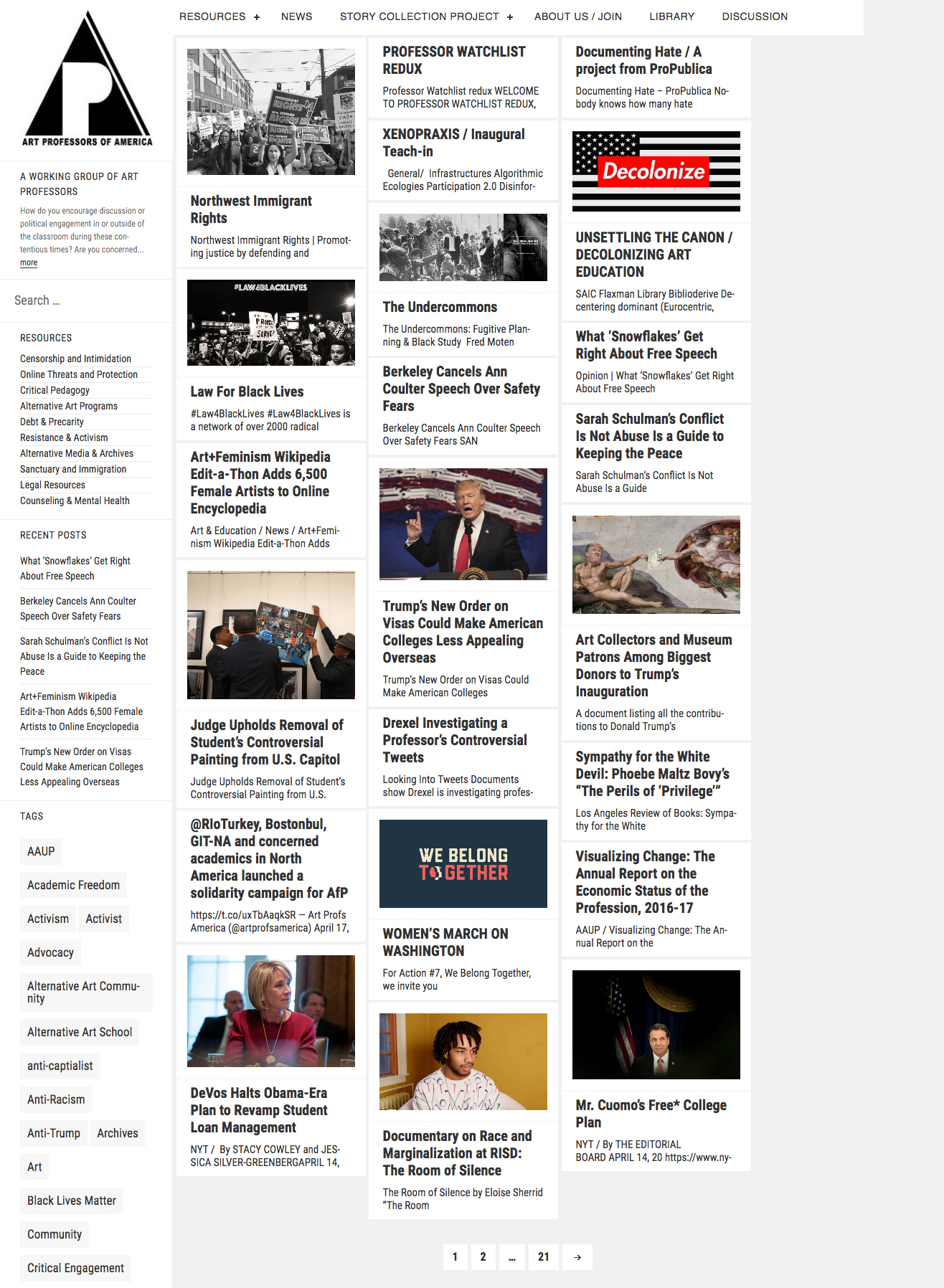 CAA recently corresponded with Marc Handelman, an artist and assistant professor of visual arts for the Mason Gross School of the Arts at Rutgers University in New Brunswick, New Jersey, about a new grassroots organization concerned with advocacy issues, called the Art Professors of America.
When and why did the Art Professors of America form? What are its goals?
A couple of dozen art professors from several schools in the Northeast came together in the wake of the election initially to discuss how we might respond to a right-wing campaign to blacklist liberal and progressive faculty by smearing them as un-American. Simultaneously, many of us were seeing a troubling uptick both of threats and attacks on Latino, Muslim, and LGBTQ students, and of anti-Semitism on campuses. Some of us were also experiencing increased feelings of anxiety and self-censorship. Most of all, we felt the urgency and need of being together and sharing our experiences as artists and educators and citizens. We decided to meet every two weeks in New York and continue the conversation. Because colleagues from around the country reached out to be part of the dialogue, we started an email group that now represents professors in well over a dozen states. We are currently working on expanding this network to all fifty states, welcoming art professors of all ranks and teaching status, including TAs and those between positions. Our primary goal right now is to be a platform that connects people nationally and shares critical information. Our latest project was the launch of our website that features news related to education in our political climate and a critical resource page.
What is the purpose of the advocacy resource APA is building?
There are many potential and actual threats that faculty are facing increasingly. Some of these issues begin at the state level, where funding for classes or entire programs are being cut due to their political content. Other issues range from online harassment to deceptively progressive legislation for free-speech protection on campus. Meanwhile, higher education in general continues to foster crippling student debt as institutions struggle to deal with increasing demands for greater diversity, inclusion, and equity. The resource page we launched and continue to build on modestly attempts to provide critical information and tools to help us deal with some of these problems, from distributing information about student loans for undocumented students to debt models in art education. Other items provide online security protocol and consent laws for recording in classrooms. Some of the categories include Censorship and Intimidation, Critical Pedagogy, Alternative Art Programs, Debt and Precarity, Sanctuary and Immigration, and Legal Resources, among others.
Where do the resources come from?
Nearly all of the content already exists online in some form, from other organizations and studies. Populating the website was an extensive three-month process of collecting information and links and aggregating them in these categories. We have been so grateful to other working groups and colleagues for sharing their resources as well.
What are the most urgent issues confronting art professors in the United States today?
Clearly we don’t assume to speak for every program. But in the immediate context, the travel ban and ICE deportations may have the most immediate effects on our students, faculty, and visiting artists. Academic freedom has been under various levels of threat for a long time, and it remains to be seen how deeply and broadly new threats develop. But economic precarity and inequality remain the most pressing structural issue in education both for art schools and the larger university system. This affects part-time adjuncts who, already underpaid, are increasingly asked to do things such as decrease their course loads so as not to trigger contingent benefits, the end of tenured lines, and students who suffer under crippling debt or have no access to higher education at all. Critical and progressive curricula can’t make up for the undergirded issues of access, which are directly tied to geography, race, and class.
Under this current political regime, arts faculty may actually have a greater deal of security than professors and departments researching and teaching social justice, antiracism, and climate change. We need to continually find ways to support our colleagues in other fields.
How can CAA members get involved?
We welcome new arts-affiliated adjuncts, TAs, and professors into our organization and dialogue—the more voices represented, the better. Members will have access to group documents and files, as well as The Story Collection Project, which shares and archives testimonials and stories about what is happening in different corners of our campuses and in classrooms across the country. Meanwhile, the Art Profs America website, offering news, links, and resources, is live and available to anyone online. Please feel free to share with other colleagues as well. You can visit us, or join at http://artprofsamerica.com.
To request to join the discussion, please visit https://groups.google.com/d/forum/art-profs-america. You may also follow APA on Twitter.