Donate
Join Now      Sign In
 

CAA News Today

Women’s suffragists parade in New York City in 1917, carrying placards with the signatures of more than a million women. (New York Times Photo Archives)

In collaboration with the Committee on Women in the Arts, CAA seeks to offer a selection of sessions, papers, speakers, and related programming for the 2020 Conference in celebration of the Centennial of Women’s Suffrage in the US, while also acknowledging the discriminatory practices that limited voting rights for Indigenous women and women of color, even after the passage of the 19th amendment in 1920.

We hope 50% of the conference’s content will be focused on women-centered research, artistic presentations, and discourse, and addresses the intersectional and transnational complexity of race, ethnicity, class, age, body size, disability, gender and sexual orientation in the arts. Reinforcing inclusivity beyond binary understandings of gender, this initiative seeks to advance a forum for increased dialogue within the context of this historical moment.

The submissions portal for the 2020 CAA Annual Conference is now closed.

EXPLORE WOMEN-CENTERED CONTENT AT CAA 2020

Filed under: Advocacy, Annual Conference — Tags:

Annual Conference Committee Seeks Next Chair

posted by March 15, 2019

CAA invites nominations and self-nominations for the Annual Conference Chair. This at-large member of the Annual Conference Committee serves a two-year term, beginning February 2020, immediately following the 108th Annual Conference. The Annual Conference Chair Designate shall begin their orientation to the role in May 2019. They will be invited to meetings of the Annual Conference Committee as a non-voting ex officio member at that time.

The Chair oversees the Council of Readers and reports back to the Annual Conference Committee on session topics, including identifying possible areas of content and interest to members that are missing from the submissions received. With CAA staff, the Chair recruits Council of Readers members to read, review, and rank proposals. The Chair shapes the content to the Annual Conference from the submissions as reported back by the Council.

Deadline: April 29, 2019

As a member of the Annual Conference Committee the Chair:

  • Works with CAA staff and oversees the execution of the overall goals of the conference
  • Ensures that the Annual Conference reflects the goals of the Association
  • Makes the Annual Conference an effective place for intellectual, aesthetic, and professional learning and exchange
  • Reflects the diverse interests of the membership
  • Suggests conference content based on member interest
  • Assists in scheduling the variety of chosen sessions, workshops, talks, etc.
  • Proposes ways to increase conference participation and attendance
  • Proposes new initiatives for the conference
  • Proposes candidates for distinguished speakers

The Annual Conference Committee meets three times a year: February – in person at the Annual Conference to examine and discuss the operational aspects of the conference which recently concluded and ideas for the upcoming conference; May/June – on a conference call to review the recommendations by the Council of Readers for the upcoming Annual Conference; October – on a conference call to review final plans and any existing changes for the Annual Conference up to two years out.

Please send a 150-word letter of interest and a CV to Mira Friedlaender, CAA Manager of Annual Conference. Deadline: April 29, 2019.

Filed under: Annual Conference, Service

Apply to Join the CAA Council of Readers

posted by March 12, 2019

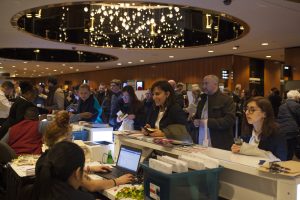
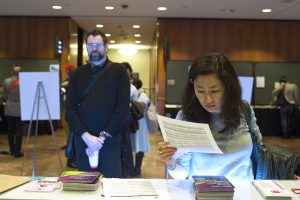
Attendees at the 2019 Annual Conference in New York. Photo: Ben Fractenberg

Beginning this year, we are pleased to announce a new opportunity to help shape Annual Conference session content. In preparation for the 2020 Annual Conference in Chicago, the Annual Conference Committee will appoint a Council of Readers to read proposals submitted by CAA members and serve a crucial role in the review process.

The Council will be tasked with reading proposals with a focus on their specialty and will provide the knowledge and expertise of their fields to help shape the conference.

Requirements for Readers

  • Current CAA membership
  • Time commitment to read and review up to 60 proposals online in May 2019. Proposal lengths range from a single 250-word abstract to a complete session with multiple presentation abstracts totaling, for example, 1000 words. Readers will review no more than 60 proposals each.
  • Ability to participate as a Council of Readers member for three years
  • Readers are required to read and abide by CAA’s Statement on Conflict of Interest and Confidentiality

APPLY HERE

Deadline to apply: April 18, 2019

Review Process

  • The Council of Readers is group of 50 to 75 CAA members from Professional Committees, Affiliated Societies, and general membership overseen by the Annual Conference Committee chair.
  • Readers will be asked to review proposals in their areas of interest or specialty, as well as other fields they designate. Readers with broad areas of interest are encouraged to participate.
  • The proposals will be distributed in the first week of May and must be completed by May 31.
  • Each proposal is read and reviewed in the online portal by three different Council members.
  • Each member of the Council of Readers reviews no more than 60 proposals.
  • Proposal lengths range from a single 250-word abstract to a complete session with multiple presentation abstracts totaling, for example, 1000 words. For CAA 2019 the Committee reviewed over 1500 abstracts.
  • For each proposal, readers will use a scale of 1-5 to answer five questions and also enter a short comment for the Annual Conference Committee’s review.
  • 2020 Readers will each access abstracts to review in our online system, with orientation and support from the Annual Conference Committee and CAA staff members.
  • Members of the Council of Readers serve a three-year term on a rotation so that each year, one third of the council is new.
  • Review is independent; the Council of Readers does not meet together in-person or electronically.
  • After proposals are read and reviewed by the Council, the chair reports to the Annual Conference Committee on session topics, including identifying possible areas of content that are missing from the submissions received.
  • The chair shapes the conference content based on the reviewed submissions.

Pleas email Mira Friedlaender, Manager of Annual Conference, mfriedlaender@collegeart.org, or Tiffany Dugan, Director of Programs and Publications, tdugan@collegeart.org, with any questions.

Filed under: Annual Conference, Service

CAA 2020 Submissions Portal Now Open

posted by March 01, 2019

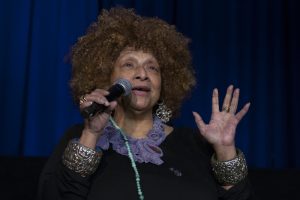
2019 CAA Annual Conference Keynote, Joyce J. Scott. Image by Ben Fractenberg.

The submissions portal for the 2020 CAA Annual Conference in Chicago, February 12-15 is now open.  

CAA invites proposals for sessions, lightning rounds, poster sessions, and workshops from visual arts professionals working across the field in all disciplines. 

The CAA Annual Conference is the largest gathering of art historians, artists, designers, curators, arts administrators, museum professionals, and others in the visual arts.  

Submit Your Proposal

Proposals must be submitted by April 30, 2019. 

Please note, this year individuals will have the opportunity to submit proposals for several types of opportunities at the Annual Conference before the April 30 deadline. Please review the full proposals page to decide which type of submission best fits your needs. 

The Annual Conference Committee members reviewed over 1,000 submissions for the 2019 Annual Conference. They take into account subject areas and themes that arise from accepted proposals to present as a broad and diverse a program as possible. Last year the committee selected roughly 300 sessions and it must, at times, make difficult decisions on submissions of high merit. 

Please contact Member Services at membership@collegeart.org or at 212-691-1051, ext. 1 with any questions. 

Take the 2019 Annual Conference Survey

posted by February 20, 2019

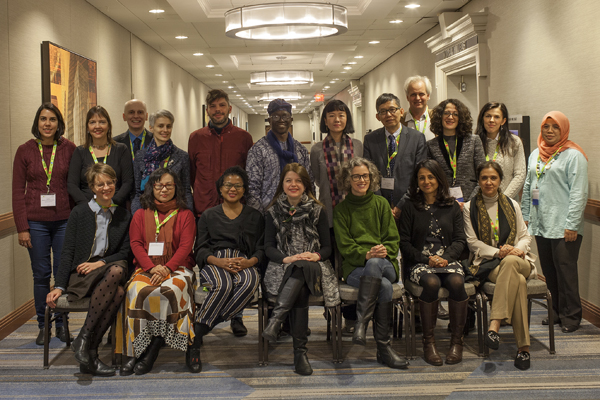
CAA-Getty Scholars at CAA 2019. Photo: Ben Fractenberg

Did you attend the 107th Annual Conference? We want to hear from you. Let us know what worked, what didn’t, and what you’d like to see next year in our online survey.

TAKE THE SURVEY

We appreciate your feedback and hope to see you next year at the 108th Annual Conference in Chicago, February 12-15, 2020. The submissions portal opens March 1.

Filed under: Annual Conference, Surveys

Thank You for CAA 2019

posted by February 18, 2019

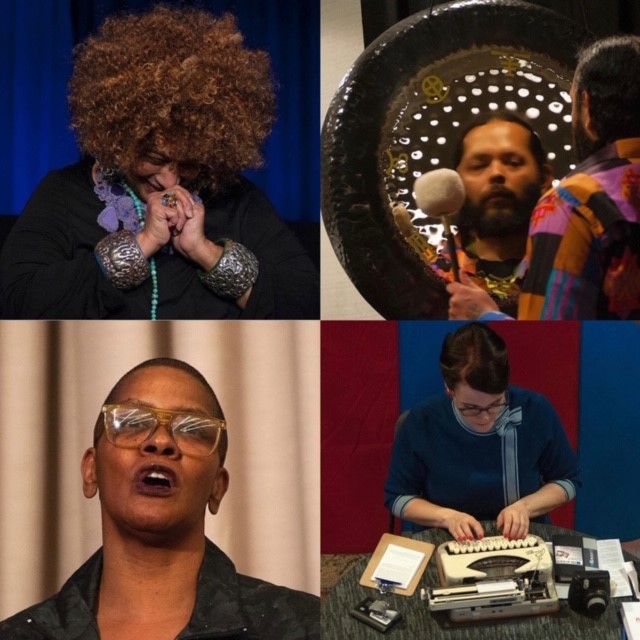
Clockwise from top left: Keynote Speaker Joyce J. Scott, Distinguished Artist Interviewee Guadalupe Maravilla, artist Sheryl Oring, and poet Pamela Sneed at CAA 2019. Photos by Ben Fractenberg

Thank you to the thousands of participants who contributed to the 107th CAA Annual Conference! It is always inspiring to come together in person. You can see highlights via #CAA2019 and #CAANYC and our accounts on Twitter and Instagram.

We hope to see you next year in Chicago, February 12-15! The submissions portal for CAA 2020 opens March 1.

Filed under: Annual Conference, Social Media

Welcome to the 2019 Annual Conference

posted by February 13, 2019

As of yesterday evening, the 107th CAA Annual Conference is in full swing in New York City. Welcome to the thousands of CAA members, colleagues, and friends attending! If you’re attending, make sure you have downloaded the 2019 CAA app, which is your go-to resource for personalizing your schedule and connecting with others at the conference.

Would like to attend but haven’t registered? Onsite registration is available, and for the third year in a row we’re happy to offer a Pay-as-you-Wish Day Pass.

Not at the conference? See what’s happening on Twitter, Instagram, and Facebook, and join in the discussion online using using #CAA2019 and #CAANYC. Select events are being recorded and will be shared afterwards, too.

CAA staff is on-the-ground at the New York Hilton Midtown, so website updates and email replies may be delayed. Thanks for your understanding!

Filed under: Annual Conference

Pay-as-you-Wish Is Back for CAA 2019

posted by February 05, 2019

The Pay-as-you-Wish Day Pass is back for the CAA 2019 Annual Conference in New York City, February 13-16! For the third year in a row we are happy to offer the pass as a way for students, adjunct faculty, or anyone not able to afford a full conference registration to attend any part of the conference for a full day.

Pay-as-you-Wish is available onsite only at the New York Hilton Midtown. It is open to everyone, CAA members and non-members alike, with no advance registration needed. Pay-as-you-Wish purchases can be made with any registration staff or the Pay-as-you-Wish helpers in the registration area. 

Suggested Pay-as-you-Wish Day Pass price: $25 

The Pay-as-you-Wish Day Pass allows for full, one-day access to the conference, and if you want to return the next day, a full day pass must be purchased. 

The Annual Conference will feature over 300 sessions, a bustling Book and Trade Fair, and the free and open to the public Academic and Cultural Network Hall with professional development workshops, Idea Exchange, and booths of leading cultural non-profits and educational institutions.  

Browse the Full Conference Schedule  

The Keynote Speaker for 2019 will be Joyce J. Scott, sculptor, craftsperson, and 2016 MacArthur Fellow. The Distinguished Artist Interviews will feature Julie Mehretu interviewed by Julia Bryan-Wilson and Guadalupe Maravilla interviewed by Sheila Maldonado. The Distinguished Scholar for the 107th CAA Annual Conference is Dr. Elizabeth Boone, the Martha and Donald Robertson Chair in Latin American Studies at Tulane University. 

Meet the 2018 Professional Development Fellows

posted by January 28, 2019

CAA has awarded two 2018 Professional Development Fellowships—one in art history and one in visual art—to graduate students in MFA and PhD programs. In addition, CAA has named one honorable mention in art history and two in visual art. The fellows and honorable mentions both receive a complimentary one-year CAA membership and registration for the 2019 Annual Conference in New York City.

The recipient of the $10,000 fellowship in art history is C.C. McKee, a dual PhD candidate in the Department of Art History at Northwestern University and the École des hautes études en sciences sociales in Paris. Accepting the $10,000 fellowship in visual art is Camila Labarca Linaweaver, a MFA candidate in Printmaking at the University of Oklahoma.

The honorable mention for art history goes to Julia Vázquez, a PhD candidate in the Department of Art History & Archaeology at Columbia University. The honorable mentions in visual art are awarded to Kira Dominguez Hultgren, who is earning a MFA/MA in Fine Arts and Visual and Critical Studies at California College of the Arts, and Rowan Renee, who is currently pursuing their MFA at the University of Michigan.

The two fellows and three honorable mentions will be formally recognized at the 107th Annual Conference during Convocation on Wednesday, February 13, 2019.

CAA’s fellowship program supports promising artists and art historians who are enrolled in MFA and PhD programs nationwide. Awards are intended to help them with various aspects of their work, whether for job-search expenses or purchasing materials for the studio. CAA believes a grant of this kind, without contingencies, can best facilitate the transition between graduate studies and professional careers. The program is open to all eligible graduate students in the visual arts and art history. Applications for the 2019 fellowship cycle will open in the late spring.

FELLOW IN ART HISTORY

C.C. McKee

C.C. McKee is a dual doctoral candidate in the Department of Art History at Northwestern University (advised by Huey Copeland) and the École des hautes études en sciences sociales in Paris (advised by Anne Lafont). McKee received his BA from the University of California, Berkeley as a double major with honors in the history of art and highest honors in history.

McKee’s current dissertation project takes up art and visual culture from the francophone Caribbean during the long nineteenth century, arguing that, on the one hand, painting could bolster imperial authority by eliding the coeval inhumane violence and ecological brutality of colonialism. On the other, these artworks are inadvertent repositories for parallel ecologies opening onto embodied African diasporic knowledge of the Caribbean landscape.

This project represents one facet of McKee’s broader investment in the transhistorical relationship between colonialism (particularly during the seventeenth through nineteenth centuries) and its continued effects in the present. These interests include, art of the Atlantic World, contemporary African and African diasporic art, and queer aesthetic practices; all of which are indebted to black feminist, ecocritical, postcolonial, and psychoanalytic theories. McKee has developed these perspectives in various pieces of art criticism; with exhibitions at the Block Museum, Iceberg Projects (Chicago, IL), and the Ghetto Biennale (Port-au-Prince, Haiti); as well as in a forthcoming article for Art Journal. Moving forward, McKee will pursue a scholarly and curatorial practice that challenges the boundaries between the university classroom and the museum, between academic publication and exposing a broad public to the rich artistic traditions of the Caribbean.

FELLOW IN VISUAL ART

Camila Labarca Linaweaver

Camila Labarca Linaweaver was born in Santiago, Chile and immigrated to the United States at the age of 7. She lived and studied in Texas and holds a BFA from The University of Houston Clear Lake. She is a first-generation college graduate and is currently an MFA Printmaking candidate at The University of Oklahoma. While pursuing her graduate studies she has taught undergraduate courses in Printmaking and Drawing. Linaweavers focus within the printmaking medium is almost exclusively on singular and experimental prints. Using the landscape as a metaphor, she crafts narratives of immigrant displacement, loss, and alienation. Recently she has delved into time-based work, subjecting monotypes to various stop motion processes. Her unique approach to confronting her personal history as an immigrant results in highly nuanced imagery that aims to bridge opposing sides and create positive discourse within the context of global immigration issues.

As an emerging artist, Linaweaver has exhibited extensively throughout the US and has chosen to pursue a career in academia. In the future she aspires to participate in residencies and exhibitions that focus on community engagement and the intersection of landscape, identity, and culture.

HONORABLE MENTION IN ART HISTORY

Julia Vázquez

Julia Vázquez is a PhD candidate in the Department of Art History & Archaeology at Columbia University, where she is currently completing a dissertation titled “The Artist as Curator: Diego Velázquez, 1623-1660.” Her dissertation reconsiders the curatorial career of Diego Velázquez at the court of King Philip IV of Spain. It examines the major redecoration projects that Velázquez executed for galleries in the Spanish royal palace, considering the ways that his ambitions and interests as a painter found a new expression in this medium. It also analyzes significant paintings that Velázquez made in response to the royal art collection, considering the impact on his painting practice not only of its contents, but also of its display. Her research therefore proposes the career of Diego Velázquez at the Hapsburg court as a major episode in the history of the artist-curator, ultimately arguing that Velázquez’s simultaneous creative identities as painter to the king and curator of his art collection were mutually transformative.

Previously, Julia has held internships and fellowships at the Musée du Louvre, the Whitney Museum of American Art, the Meadows Museum, the Museo Nacional del Prado, and the National Gallery of Art. While at the Meadows, she curated two exhibitions: “Picasso’s Dream and Lie of Franco: The Spanish Civil War in Print” (summer 2017) and “Murillo at the Meadows: A 400th-Anniversary Celebration” (2017-2018). She is currently the Hilla Rebay International Fellow at the Solomon R. Guggenheim Museum, the Museo Guggenheim Bilbao, and the Collezione Peggy Guggenheim.

HONORABLE MENTIONS IN VISUAL ART

Kira Dominguez Hultgren

Kira Dominguez Hultgren (b. 1980) is a California-, Utah-, and Minnesota-based textile artist. She studied French postcolonial theory and literature at Princeton University (BA Comparative Literature, 2003), and performance and fine arts in Río Negro, Argentina from 2010-2012. While in Patagonia, she apprenticed with master weaver Mary Coronado, where Dominguez Hultgren studied the process and history of indigenous warp-faced weaving of Mallín Ahogado on a Mapuche vertical post loom.

Today, Dominguez Hultgren combines her interests in postcolonial theory and weaving in both her art and writing-research practice. In her third year at California College of the Arts, Dominguez Hultgren is earning a dual-degree MFA/MA in Fine Arts and Visual and Critical Studies. Her research interests include material and embodied rhetorics, loom technologies, decolonizing material culture, and analyzing textiles as a performative critique against the visual. She has won numerous awards including California College of the Art’s All College Honors Graduate Fine Art Award, the Edwin Anthony and Adalaine Boudreaux Cadogan Scholarship, and the Lenore Tawney Fiber and Material Studies Scholarship. Dominguez Hultgren is represented by Eleanor Harwood Gallery in San Francisco, where she had her first solo show, Wingspan, in 2018.

Rowan Renee

Rowan Renee is a genderqueer artist who uses photography to interrogate how sexual bodies are gendered, victimized, policed and punished. Through photographic, printmaking and sculptural techniques, they produce and appropriate images that intervene on issues of authorship, the representation of queer and feminine bodies within the art-historical canon, and the intersection of homophobia and misogyny in sex law and copyright law. The disjunctures of pleasure and abjection, felt through jouissance, informs their manipulation of images. Through artistic labor, they see a means to construct transformative meaning from experiences of violence, persecution and erasure that threaten queer and feminine subjects.

Currently pursuing their MFA at the University of Michigan, Renee works between Ann Arbor, Michigan and  Brooklyn, NY. Their career began in 2006, when they joined The Miss Rockaway Armada, a collaborative flotilla of thirty people who floated down the Mississippi river on junk rafts built from NYC construction waste. Recently, they have received awards from the Aaron Siskind Foundation, the Rema Hort Mann Foundation and the Anchorage Museum of Art, as well as fellowships from the Jerome Foundation and the McColl Center for Visual Art. In 2018 they were named an Elsie Choy Lee Scholar by the University of Michigan. Their solo exhibitions include Z at Pioneer Works (2015), Bodies of Wood at The Aperture Foundation (2017), and No Honor No Heart at the Center for Visual Arts Toledo (2019). Their work has been profiled on NPR, in The New York Times, VICE, Hyperallergic, Huffington Post, American Photo Magazine and Guernica, among many other publications.

Meet the 2019 Student Scholarship Winners

posted by January 25, 2019

CAA Student Scholarships
with support from tf-logo
blick-utrecht-logo-bw-prof

For the third year in a row, CAA is proud to partner with our sponsors, multinational publisher, Routledge, Taylor & Francis, and art materials specialist, Blick Art Materials, on student scholarships to assist CAA student members with conference costs.

Routledge, Taylor & Francis Student Scholarship

CAA Annual Conference Premier Sponsor, Routledge, Taylor & Francis supports four CAA student members with a $250 scholarship. The 2019 winners are:

Jonathan Anderson

Jonathan Anderson is an artist and art critic, and is currently working on a PhD at King’s College London. His research focuses on modern and contemporary art, with a particular emphasis on its relations to religion and theology. He is the coauthor of the book Modern Art and the Life of a Culture: The Religious Impulses of Modernism (2016), and he has contributed to various books and journals, including essays on John Cage, Francis Alÿs, Kris Martin, Rachel Whiteread, and others.

Noni Brynjolson

Noni Brynjolson is a PhD Candidate in Art History, Theory & Criticism at the University of California, San Diego. Her research analyzes socially engaged art projects in US cities. She is interested in looking at how artists address the politics of housing and gentrification through their work, as well as the informal communities that emerge within these projects. Noni is a member of the editorial collective of FIELD: A Journal of Socially Engaged Art Criticism, and her writing has been published in FIELD as well as in Hyperallergic, Akimbo, Geist and Craft Journal. She has also published chapters in two edited books: “From Mentorship to Collaboration: Art, Feminism and Community in Winnipeg” (in Desire Change: Contemporary Feminist Art in Canada, McGill Queen’s University Press, 2017), and “The Making of Many Hands: Artisanal Production and Neighbourhood Redevelopment in Contemporary Socially Engaged Art” (in Craft on Demand: The New Politics of the Handmade, I.B. Tauris, forthcoming 2019). Noni’s dissertation research was supported by a SSHRC doctoral fellowship, and she is currently a graduate fellow at UC San Diego’s International Institute as part of the 2018-19 Sawyer Seminar focused on the theme of ‘Reclaiming the City.’

Anton Lee

Anton Lee teaches in the Department of Art History, Visual Art and Theory at the University of British Columbia, Vancouver BC, where he completed his doctorate in November 2018. A specialist in the history and theory of photography, his work focuses on the contested understandings of the medium’s identities in European and Anglo-American countries from the early 20th century to the present. His current research prioritizes transforming his doctoral dissertation into a book, provisionally titled Nouvelle Photographie Amériaine: The Rise of Photographic Sequence in the United States and France, 1968–1989. Lee was the Kenneth J. Botto Research Fellow at the Center for Creative Photography in Tucson in 2016 and a Visiting Researcher at the Université Paris-Sorbonne in 2015.

Candace Smith

Candace Smith currently studies Art History at the University of North Texas where she is working towards an MA under Dr. Nada Shabout in the field of Modern and Contemporary Art of the Middle East. Her current research explores issues of power, identity politics, and built space in the context of postwar Lebanese Art institutions and reconstruction (1990-present). Smith has presented and lectured on politics, power, and space, both as a university level and at the Texas Sculpture Symposium with NY-based artist Wafaa Bilal. She has also spent time abroad meeting and working directly with some of Beirut’s most prominent art collectors and foundations as well as emerging Beirut-based artists such as Hiba Kalache. Smith received a BA from Texas Tech University after completing undergraduate thesis work on 21st-Century street art created during times of conflict in central Cairo and the West Bank. Working directly with published photojournalists and prominent, local artists, Smith addressed local agency and perceptions of space in direct contrast with American and European activity in the area. Smith was the director of social media for AMCA and collaborated with Selections Magazine on their Winter 2018 Art Pages.

Blick Art Materials Student Scholarship

CAA Annual Conference Supporter Sponsor, Blick Art Materials supports four CAA student members with a $250 scholarship. The 2019 winners are:

Margot Bernstein

Margot Bernstein is an advanced PhD candidate at Columbia University with a specialization in eighteenth-century art and material culture. Her dissertation, “Carmontelle’s Profile Pictures and the Things that Made Them Modern,” examines hundreds of portraits on paper by Louis Carrogis called Carmontelle (1717-1806), a French amateur draftsman. Margot holds a BA (2010) in art history and history from Williams College and an MA (2012) in the History of Art from the Courtauld Institute of Art. She also holds an MA (2014) and an MPhil (2015) in art history from Columbia University. In recent years, she has worked at the Metropolitan Museum of Art, the Frick Collection, the Morgan Library & Museum, the New-York Historical Society, the Calder Foundation, and the Williams College Museum of Art. Currently, Margot is a Chester Dale Fellow in the Department of Drawings and Prints at the Metropolitan Museum of Art.

Jessica Crocker

Jessica Rae Crocker lives and works in Prescott, AZ. She is currently pursuing her PhD in Philosophy, Aesthetics, and Art Theory through IDSVA (Institute for Doctoral Studies in the Visual Arts). She is a ceramic artist focusing on the role of craft as a means to develop intimacy. Her recent work explores relationships and limerence through the use of imbedded interactive technologies. She works in both figurative and functional paradigms embracing the historical symbolism of the clay material in its many forms. This generous gift is allowing her to attend the CAA conference for the first time.

Kimberly Minor

Kimberly Minor is a doctoral candidate in Art History at the University of Oklahoma. Her research broadly focuses on American art, with interests in material culture, art of the early American West, and Northern Plains Indian drawings. Her dissertation “Pictographic Motifs: Memory and Masculinity on the Upper Missouri” engages the visual, material, and experiential sources of military imagery produced by the Mandan and Hidatsa during the early nineteenth-century. She studies how indigenous male identity was negotiated through constant confrontation (both physical and spiritual) with war and warriors, adding to a growing body of scholarship that emphasizes and affirms the importance of indigenous histories. Her research has been supported by the Smithsonian Institute of Museum Anthropology and the ACLS/Luce Dissertation Fellowship in American Art.

Laura Stowell

Laura Stowell is a third-year PhD Student in Art History at the University of Washington, Seattle. She received her MA in Contemporary Art from Sotheby’s Institute of Art, New York. Her research explores intersections of performance, affect, aesthetics, and trauma in art from 1945 to the present, with specific emphasis on feminist approaches to the body. In 2018 she presented a paper titled “Listening to the Body in Pain: Regina José Galindo’s (279) Golpes” at UC San Diego’s Graduate Visual Arts Symposium, and a paper titled “Pathography and the work of Alina Szapocznikow” at the Legacies of the Enlightenment Workshop at Michigan State University. She worked as the Curatorial Assistant at the Henry Art Gallery, Seattle, and plans on continuing to work in the curatorial field.

Criteria for the Scholarship

Awardees were chosen at random and fulfilled the following criteria:

  • Individuals were registered for the Annual Conference by the Early Registration deadline
  • Individuals are current CAA members with proof of student status
  • Individuals did not receive conference registration or travel reimbursement from their institution or employer

We look forward to seeing you in New York City next month! The 107th Annual Conference is February 13-16, 2019. Click here to explore the conference program.