CAA News Today
Alberto De Salvatierra
posted by Allison Walters — December 02, 2020

Statement
As an intersectional minority, I understand, first-hand, the challenges that underrepresented groups face in higher education—whether as a student or an academic. For this reason, I have endeavored to specifically address diversity and inclusion inequities through my teaching and service initiatives.
I first had the pleasure to deep-dive into these issues when, while at Harvard University, I was part of a small cohort of university leaders across the entire university tapped to join the Presidential Task Force on Inclusion and Belonging—a one-year working group of key faculty and administrators selected to 1) analyze the pedagogical and infrastructural landscape of the university, and 2) catalyze a set of recommendations that have since started to be implemented. Since then, I’ve continued my advocacy through my scholarship on teaching—especially as it relates to interdisciplinary pedagogy and practices—using art and design as a point of departure and cross-fertilization with other disciplines. Most recently, I was invited be an official delegate and speaker at the 2019 Hispanic Leadership Summit at the United Nations in New York City. Part of the summit’s opening panel (“Access to Education for Hispanics/Latinxs”), I was the youngest speaker sharing the stage with such leaders as Emmanuel Caudillo (Senior Advisor at the White House Initiative on Educational Excellence for Hispanics), Raquel Tamez (CEO of the Society of Hispanic Engineers), and Nancy Lee Sanchez (Executive Director of the Kaplan Education Foundation). In the presence of 500 delegates, I advocated for an emphasis on STEAM (rather than STEM) disciplines, more decisive support at the university level, and renewed legislation with regards to DACA students.
With this context in mind, and building on the CAA’s previous advocacy in enhancing equity, diversity, and inclusion initiatives in higher education, I believe a strong path forward for the College Art Association is to establish a renewed commitment to bringing the arts to underrepresented populations, in particular black and indigenous students, and catalyze them in existing STEAM conversations—promoting unconventional program partnerships and university-to-job pipelines. An interdisciplinary education, with creativity, design thinking, and the arts at the core, will be key to careers responsive to existing climate-change challenges and resilient to the coming technological upheaval of the “4th industrial revolution.” Moreover, due to the challenges wrought on by the on-going global pandemic, the CAA will need strong and visionary leadership on part of its Directors to help the organization navigate the uncertain times ahead. The arts have always been the soul of civilization, and to avoid their continued defunding across colleges in North America, innovative thinking will be crucial to forge a strong tomorrow.
Patricia Childers
posted by Allison Walters — December 02, 2020
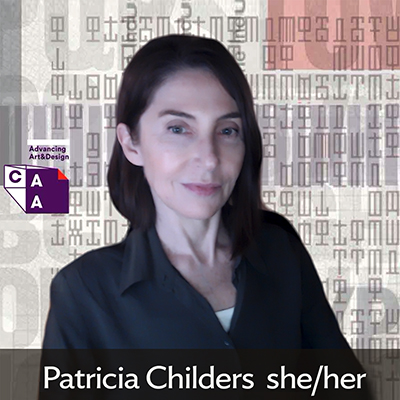 Statement
My career has been in the educational environment, focusing on graphic design and critical studies. I see intellectual engagement as a place of possibilities. In addition to teaching design, I practice professionally, and am an active member of many design organizations. But the structure of life has changed. The global pandemic, compounded with continuing issues of basic human rights and a deteriorating climate, has affected much that we value.
The MFA class of 2020 has experienced not only a loss of employment opportunity, but a loss of the support that contributed to our wellbeing. Loss, like the disbanding of The Type Director’s Club, an organization that I’ve actively supported for years, contributes to our overwhelming isolation. I am a member of the first class to graduate into this state of precarity. But uncertainty weighs heavily on the entire profession. When I facilitated a round-table discussion at the AIGA Design Educators conference, our chat box overflowed with requests for resources and advice to help navigate in isolation.
Apprehension during the transition from student to professional is not a recent phenomenon. The scarcity in teaching positions existed long before this pandemic. And a lack of guidance in writing and publishing, continuing to make work without a deadline, the expectations of maintaining scholarship and service, can daunt.
Resources like CAA assist by providing everything from creating CVs to webinars on interviewing, with efforts to demystify salaries, create mentorship programs, adjunct and labor advocacy, and sessions such as “Get Up, Stand Up: Contingent Faculty and the Future of Higher Education in the Visual Arts.” In CAA’s Art Journal Open (AJO) Kristen Galvin and Christina M. Spiker addressed the system itself. “The Cost of Precarity: Contingent Academic Labor in the Gig Economy” stated that robust discourse depends on a viable institutional ecosystem—healthy interaction and balance between populations to ensure resilience to various types of external stressors.
Today, our resilience is being tested as COVID-19 social distancing magnifies existing issues and forces us to adapt. However, our adopted platforms for communication have integrated and flattened traditional hierarchal structures of engagement. Event participation, although limited by technological advantage, is no longer limited by location. This expanded engagement has diversified communities as isolated transactions grow into ongoing relationships. Many of our “wicked problems” are being addressed through this immediate connection of people, ideas, and action.
I offer the first-hand experience of a recent student and emerging professional navigating the unpredictable. If elected, I will represent the organization’s future leaders, a group honed by adopting to crisis. But I’ve found this crisis to be a catalyst for possibilities. Platforms that provide social fraternization and leadership can build stable foundations for the future. These systems not only build relationships—but build platforms that allow others to build relationships. Through engagement, we can build for the new normal.
Roland Betancourt
posted by Allison Walters — December 02, 2020
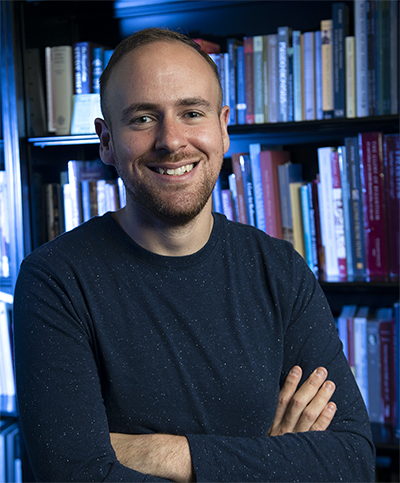 Statement
As a queer Latinx medievalist, I am intimately aware of the challenges faced by art historians of color. These challenges extend from the systematics of graduate training and the tenure and promotion system, as well as the unique precarities faced by BIPOC and LGBTQIA+ scholars doing research in the field. Recognizing my place as a tenured, full Professor, my aim is to use the privileges afforded to me to support early career scholars. My goals on CAA’s Board of Directors are twofold: first, to champion the needs and successes of BIPOC scholars, offering my understanding of the challenges faced particularly by Latinx scholars; second, to speak to the needs of pre-modern art historians, particularly from my expertise as a Byzantinist working across the medieval Mediterranean world.
Having received my PhD in 2014, I have faced the realities of today’s academy with dwindling job prospects and newfound publishing challenges amidst unchanging demands. At the same time, I have also moved swiftly through the tenure and promotion process at a large public institution. In my commitment to early career scholars, I wish to lead conversations as to how we rethink publication and peer review processes for a more ethical, equitable, and constructive scholarly landscape. As a medievalist, I also recognize that the needs of my field are severely underrepresented within CAA, which in past years has led to steep drops in membership due to a lack of representation and also in protest of said lack. My goal is to revitalize the visibility of and avenues of conversation for our constituents working on the ancient and medieval worlds.
Over the past ten years and since my early graduate school days, I have been committed to service responsibilities that enrich our field, from programming to administration. Currently, I am the Director of the PhD Program in Visual Studies at the University of California, Irvine, where I am also a Professor of Art History and Chancellor’s Fellow. Starting next year, I am the Series Editor for the Viewpoints book series, run in conjunction with the International Center for Medieval Art (ICMA) and the Pennsylvania State University Press. I have an extensive record of serving on the governing boards and steering committees of a host of organizations, including the Medievalists of Color (MoC), the Byzantine Studies Association of North America (BASANA), and the Gender in Byzantium Bibliography Project at Dumbarton Oaks / Harvard. And, at the Medieval Academy of America, I serve on the Inclusivity and Diversity Prize Committee. At UC, Irvine, I have served on three search committees for positions diversifying our curriculum in the areas of Armenian history, Iranian archaeology, and Latinx art history, film, and media studies. Additionally, my efforts have been focused on largescale fundraising for my institution, including our new LGBTQ+ Fundraising Committee, the Faculty Development Committee for the School of Humanities, and the department of Art History’s fundraising committee.
As we look ahead, my goal is to make CAA a safe, supportive, and affirming space for BIPOC, queer, and trans scholars working across our organization’s multifaceted areas. I intend to use my extensive service background alongside my extensive research and publication experience to guide CAA into the coming decade, acknowledging my personal experience in the field as a queer Latinx art historian.
Meet the New CAA Board Members
posted by CAA — February 24, 2020
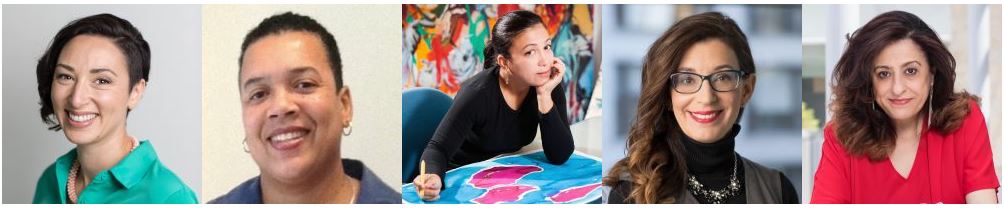
From left to right: Lara Ayad, Mora Beauchamp-Byrd, Scherezade Garcia-Vasquez, Tiffany Holmes, and Nada Shabout
The results of the 2020 CAA Board of Directors Election were presented at the CAA Annual Business Meeting, Part II on Friday, February 14 at 2:00 PM at the 108th CAA Annual Conference in Chicago.
We are grateful to all the candidates who put forward their names for consideration this year. The 2019-20 Nominating Committee selected six candidates for election for four-year terms, and—new this year— two Emerging Professional candidates, who were eligible for a two-year term. Voters were asked to select four of the six candidates for four-year terms, and one candidate in the Emerging Professional category.
CAA Board of Directors Election
We congratulate Mora Beauchamp-Byrd, Scherezade Garcia-Vasquez, Tiffany Holmes, and Nada Shabout on their election by CAA membership for four-year terms and Lara Ayad on her election for a two-year term as the inaugural Emerging Professional board member.
Learn more about the new members:
• Lara Ayad
Assistant Professor, Art History
Skidmore College
• Mora Beauchamp-Byrd
Visiting Assistant Professor of Art History
Oklahoma State University
• Scherezade Garcia-Vasquez
Interdisciplinary visual artist
Assistant Professor, Parsons School of Design
• Tiffany Holmes
Vice-Provost for Undergraduate Studies
Maryland Institute College of Art
• Nada Shabout
Professor of Art History
University of North Texas
About the Board of Directors
The Board of Directors is charged with CAA’s long-term financial stability and strategic direction; it is also the Association’s governing body. The board sets policy regarding all aspects of CAA’s activities, including publishing, the Annual Conference, awards and fellowships, advocacy, and committee procedures.
Thank you to all those who voted!
Vote for CAA’s 2020 Board of Directors
posted by CAA — January 06, 2020
As a CAA member, voting is one of the best ways to shape the future of your professional organization. Thank you for taking the time to vote! Scroll down to meet this year’s candidates and submit your online voting form.
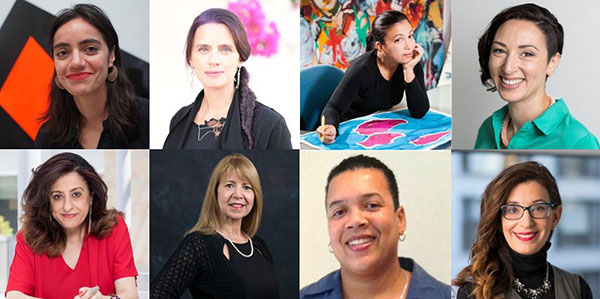
2020 CAA Board of Directors candidates, clockwise from top left: Ixchel Ledesma, Janet Bellotto, Scherezade Garcia-Vasquez, Lara Ayad, Tiffany Holmes, Mora Beauchamp-Byrd, Robin Landa, and Nada Shabout
2020 CAA Board of Directors Election
The CAA Board of Directors comprises professionals in the visual arts who are elected annually by the membership to serve four-year terms. The Board is charged with CAA’s long-term financial stability and strategic direction; it is also the Association’s governing body. The board sets policy regarding all aspects of CAA’s activities, including publishing, the Annual Conference, awards and fellowships, advocacy, and committee procedures. For more information, please read the CAA By-laws on Nominations, Elections, and Appointments.
Meet the Candidates
The 2019–20 Nominating Committee has selected the following candidates for election to the CAA Board of Directors. Click the names of the candidates below to read their statements and resumes before casting your vote.
Board of Director Candidates (Four-Year Term, 2020-2024)
• Mora Beauchamp-Byrd
Visiting Assistant Professor of Art History
Oklahoma State University
Stillwater, Oklahoma
• Janet Bellotto
Professor
College of Arts & Creative Enterprises,
Zayed University, Dubai, United Arab Emirates
• Scherezade Garcia-Vasquez
Interdisciplinary visual artist
Assistant Professor, Parsons School of Design
New York, New York
• Tiffany Holmes
Vice-Provost for Undergraduate Studies
Maryland Institute College of Art
Baltimore, Maryland
• Robin Landa
Distinguished Professor of Design
Kean University
Union, New Jersey
• Nada Shabout
Professor of Art History
University of North Texas
Denton, Texas
Emerging Professional Board of Director Candidates (Two-Year Term, 2020-2022)
• Lara Ayad
Assistant Professor, Art History
Skidmore College
Saratoga Springs, New York
• Ixchel Ledesma
Independent Curator
Mexico City, Mexico
CAA members must cast their votes for board members online using the form below; no paper ballots will be mailed. The deadline to vote is 6:00 p.m. (Central Time) on Thursday, February 13, 2020.
Submit Your Vote Below
Use the scroll bar on the right side of the form to scroll down, make your choices, and submit.
Questions? Contact Vanessa Jalet, executive liaison, at (212) 392-4434 or vjalet@collegeart.org
Notice of CAA 108th Annual Business Meeting
posted by CAA — December 11, 2019
College Art Association
Notice of 108th Annual Business Meeting
Hilton Chicago, 720 S. Michigan Ave., Chicago, Illinois 60605
Wednesday, February 12 and Friday, February 14, 2020
The 108th Annual Business Meeting of the members of the College Art Association will be called to order at 6:00 p.m. CDT on Wednesday, February 12th, during Convocation at the 2020 Annual Conference, in the Grand Ballroom (2nd Floor) of the Hilton Chicago.
CAA President, Jim Hopfensperger, will preside. As is CAA’s custom, the Annual Business Meeting will be held in two parts:
AGENDA
The Agenda for the first part of the Annual Business Meeting is as follows:
I. Welcome – Jim Hopfensperger, CAA President
II. Interim Executive Directors Report – David Raizman – Presentation of CAA Awards for Distinction
III. 2019 Professional Development Fellowships in Visual Arts and Art History — Anne Collins Goodyear, Suzanne Blier, DeWitt Godfrey
IV. Keynote Address – Amanda Williams
After the Keynote Address, the Annual Business Meeting will be recessed and will re-convene on Friday, February 14, from 2:00 – 3:30 p.m. CDT on the 4th floor, Room 4A of the Hilton Chicago. The Agenda for Part II of the Annual Business Meeting is as follows:
V. Approval of Minutes of 107th Annual Business Meeting, February 23, and 25, 2019
See: https://www.collegeart.org/news/2019/12/12/caa-107th-annual-business-meeting-minutes/
VI. Financial Report: Roberto Tofolo, CAA Chief Financial Officer
VII. Old Business
VIII. New Business
- Results of Election of New Directors — Jim Hopfensperger, CAA President
IX. Open discussion with members, Board and staff
Proxies
If you are unable to attend the Annual Business Meeting, kindly complete a proxy online to appoint the individuals named thereon to (i) vote, as directed by you, for directors, and, at their discretion, on such other matters as may properly come before the Annual Business Meeting; and (ii) to vote in any and all adjournments thereof. CAA Members will be notified when the proxy for casting votes becomes available — online in late December 2019. A proxy, with your vote for directors, must be received no later than 6:00 p.m. CDT, Thursday, February 13, 2020.
Next Meeting – 2021
The 109th Annual Business Meeting of the College Art Association will be held in New York in 2021, and again will be divided into two parts – Part I at Convocation on Wednesday, February 17, and Part II a meeting and open discussion on Friday, February 19, 2021.
December 6, 2019
CAA 107th Annual Business Meeting Minutes
posted by CAA — December 11, 2019
COLLEGE ART ASSOCIATION 107TH ANNUAL BUSINESS MEETING
MINUTES
NEW YORK HILTON MIDTOWN
1335 AVENUE OF THE AMERICAS
NY, NY 10019
FEBRUARY 13, 2019: CONVOCATION, 6:00 P.M. – PART I
GRAND BALLROOM EAST
FEBRUARY 15, 2019: ANNUAL BUSINESS MEETING, 2:00 P.M. PART II
HUDSON ROOM
Annual Business Meeting – Part One
Wednesday, February 13, 2019
6:00–7:30 p.m.
Hunter O’Hanian, CAA’s Executive Director and CEO, welcomed attendees to the Convocation and to the Association’s 107th Annual Meeting of its members.
O’Hanian introduced Thomas Finkelpearl, Commissioner of New York City’s Department of Cultural Affairs, who greeted the attendees on behalf of Mayor Bill de Blasio.
O’Hanian then introduced N. Elizabeth Schlatter, CAA’s Vice President for Annual Conference, who extended greetings on behalf of CAA President, Jim Hopfensperger, who was unable to attend due to the cancellation of his flight.
Awards were presented by past CAA presidents: Paul Jaskot, Nicola Courtwright, Dewitt Godfrey, Judy Brodsky and Anne Collins Goodyear.
The keynote address was given by Joyce C. Scott, sculptor, craftsperson and 2016 MacArthur Fellow.
Annual Business Meeting – Part Two
Friday, February 15, 2019
2:00–3:00 p.m.
On Friday, February 15, 2019, at 2:00 p.m., President Hopfensperger called to order Part Two of CAA’s Annual Business Meeting.
Hopfensperger called on Executive Director, Hunter O’Hanian, to report the number of proxies received by the Executive Committee from CAA’s membership. The Executive Committee received 247 proxies, thus creating a quorum to allow voting at the meeting.
Hopfensperger called for the approval of the minutes of the February 21, 2018 Annual Business Meeting held in Los Angeles, California. Tiffany Dugan moved to approve the minutes and Nick Obourn seconded the motion; the minutes were approved.
O’Hanian called on Teresa Lopez, CAA’s Chief Financial Officer, to give the financial report for
Fiscal year 2018. Lopez stated that the Association ended fiscal year 2018 with a deficit of $58,145.
The deficit was lower than the preceding two years since the Association, in 2018, made a 25% reduction in permanent staff costs. CAA’s efforts to match budget expenses to projected revenues continue.
As of June 30, 2018, there were 8,435 individual members, 461 organizational members, and an additional 651 subscribers to The Art Bulletin and/or Art Journal handled through CAA’s co-publisher, Taylor & Francis.
The fair market value of CAA’s investment portfolio on June 30, 2017 was $9,838,150. On June 30, 2018 the balance was $9,514,313.40. The portfolio continues to be handled by the investment firm of Boston Trust and Investment Management Company under the supervision of the Finance Committee of CAA’s Board of Directors.
Copies of the audited financial statement for FY 2018 compared with FY2017 are available from Ms. Lopez or as a pdf on CAA’s website.
The Board of Directors has elected a new Treasurer, David Raizman, for a four-year term beginning in October 2018.
The number of attendees for this Annual Conference stood at 5,462 as of Friday afternoon, February 15th, 2019.
Hopfensperger called for Old Business. There was none.
Hopfensperger called for New Business and announced the results of the election for new members of the Board of Directors. With 416 votes cast by the CAA membership, the following four individuals were elected to the Board to serve a 4-year term starting in May 2019.
Lynne Allen
Niku Kashef
Ugochukwu-Smooth C. Nzewi
Jennifer Rissler
Hopfensperger expressed appreciation for the candidates’ willingness to serve CAA.
Hopfensperger then reported on the resolution to amend the by-laws. With 416 votes cast by the members, the proposed amendments passed, as presented, with 82% of those voting voted in favor of the amendments, 5% voted against and 13% abstained. Therefore, the by-laws of College Art Association were amended as presented.
With all official business completed, and no other discussion items proposed, President Hopfensperger called the meeting to a close.
Respectfully submitted,
Melissa Hilliard Potter, Secretary
College Art Association
March 6, 2019
Next Meeting
Part One of the 108th Annual Business Meeting of the College Art Association in 2020 will take place in Chicago, Illinois – Part I during Convocation on Wednesday, February 12, 2020 at 6:00 p.m. and Part Two on Friday, February 14, 2020.
Nada Shabout
posted by CAA — December 03, 2019
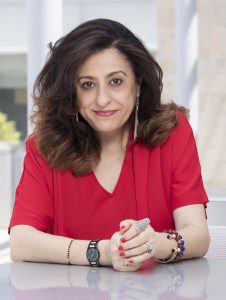
STATEMENT
As a member of CAA, I have been a witness to its progress in different directions and aspects. At this moment of time, however, I am more interested to see CAA further grow in diversity and inclusion of subjects, membership and global connections. Given the current worldwide calls to decolonize art history and practice, CAA can play a pivotal role to facilitate this in the US, and consequently in a wider sphere of influence. For the survival, strengthening and to remain effective, this is the future direction I see for CAA. Moreover, my goal as an art historian who specializes in modern Arab art is to continue to reinforce the field of study that I helped build in academia and push for its further recognition and inclusion in the canon of art history as an equal sphere of knowledge, history and production. It is within these two interrelated scopes that I would locate my contributions and accomplishments as a board member. I want to see CAA become a more active participant in exacting change in the fields it represents and I want to see Arab art become part of its mainstream representation.
Scherezade Garcia-Vazquez
posted by CAA — December 03, 2019
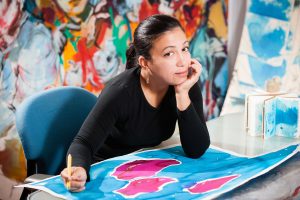
STATEMENT
I am running for the CAA Board because, as both an artist and an educator, my mission is to cultivate a creative space for all further. Working under an art institution as an Assistant professor and mentor regularly teach me this; that creative opportunity, freedom, and accessibility are of utmost importance. One of the most rewarding experiences for me has been teaching diverse groups of first-year students, and senior thesis students from all over the world and developing lesson plans for inter-disciplinarian practices and Art History. This environment profoundly resonates with my creative work around the politics of inclusion within my own art practice. In addition to serving as an educator, I have extensive advising experience with students of color as coordinator of the Altos de Chavon/Parsons partnership, advising Dominican and Latinx students through their college experience. Through this mentoring experience, I have also reached out to African American, Asian, and Middle Eastern students to navigate them through school and make sure their communities are represented. I also organize lectures and activities to both maintain and cultivate those communities within the university to help expose them to opportunities within their fields. As a board member, my immediate priorities would include diversifying our membership through community outreach, artistically and politically engaging more people, and facilitating more democratic decision-making within a renowned association. I am eager to play a role in utilizing the CAA’s resources to continue supporting artists, aligning myself with its academic, creative, and professional values. I believe the CAA needs more artists serving on its board to ensure a cohesive, effective, and grounded advocacy of the arts. The CAA is the body that ties our art advocacy work to our communities. I wish to uphold its inclusive legacy.
Ixchel Ledesma
posted by CAA — December 03, 2019
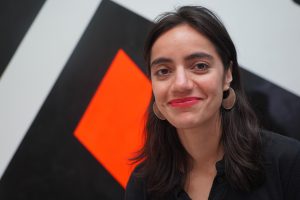
STATEMENT
I am an independent curator from Mexico City with vast experience in assembling international transdisciplinary exhibitions. My curatorial practice mainly revolves around exploring the relationships between body and territory through different artistic mediums. My research touches on topics of migration, feminism, politics of visibility and space. I am interested in assembling exhibitions that put into question gender binary concepts and propose alternative dynamics of power between bodies and spaces. A very important aspect of my practice is to gather artists from different backgrounds in order to observe how they approach the concept of territory. From my ongoing research about bodies and spaces I have become very interested in the notion of representation.