CAA News Today
Propose a Paper or Presentation for the 2013 Annual Conference
posted by Emmanuel Lemakis — March 28, 2012
 The 2013 Call for Participation for the 101st Annual Conference, taking place February 13–16 in New York, describes many of next year’s programs sessions. CAA and the session chairs invite your participation: please follow the instructions in the booklet to submit a proposal for a paper or presentation. This publication also includes a call for Poster Session proposals and describes the eight Open Forms sessions.
Listing more than 120 panels, the 2013 Call for Participation was mailed to all individual and institutional members in late March; you can also download a PDF of the twenty-five-page document from the CAA website immediately.
The deadline for proposals of papers and presentations for the New York conference is May 4, 2012.
In addition to dozens of wide-ranging panels on art history, studio art, contemporary issues, and professional and educational practices, CAA conference attendees can expect participation from many area schools, museums, galleries, and other institutions. The Hilton New York in midtown Manhattan is the conference headquarters, holding most sessions, Career Services, the Book and Trade Fair, ARTspace, special events, and more. Deadline: May 4, 2012.
Contact
For more information about proposals of papers and presentations for the 2013 Annual Conference, please contact Lauren Stark, CAA manager of programs, at 212-392-4405.
CAA Salutes Donors in the Annual Acknowledgments
posted by Nia Page — March 15, 2012
Since membership fees cover less than half of CAA’s operating costs, voluntary contributions from members significantly help to facilitate the wide range of programs and services that the organization offers. In the Acknowledgments section of its website, CAA recognizes the distinguished contributors for each of the following in calendar year 2011:
- The Centennial Campaign celebrates CAA’s one hundredth anniversary, a celebratory landmark for any organization but particularly so for CAA given its dynamic influence in shaping the study and practice of the visual arts
- The Donors Circle of Patron, Sponsoring, and Sustaining Members includes individuals who contribute to CAA above and beyond their regular dues
- Life Members are individuals who make one-time payments of $5,000 and remain active CAA members for life
- The Art Bulletin Publication Fund supports the production of CAA’s preeminent scholarly journal covering all areas and periods of art history
- The Art Journal Publication Fund supports the production of CAA’s cutting-edge quarterly of contemporary art and ideas
- The caa.reviews Publication Fund supports the production of CAA’s online journal devoted to critical reviews of books, exhibitions, and projects in all areas and periods of art history and visual studies
- The Annual Conference Travel Grants help cover expenses for graduate students in art history and studio art, and for international artists and scholars, who attend the CAA Annual Conference
CAA offers additional ways to contribute to the organization. Through Planned Giving, you can include CAA in your will. You can also purchase Benefit Prints by the artists Willie Cole and Buzz Spector or a collection of Art Journal Artists’ Projects by Barbara Bloom, Clifton Meador, Mary Lum, and William Pope.L. For general inquiries on CAA’s campaigns and funds, please contact Hannah O’Reilly Malyn, CAA development associate, at 212-392-4435.
Applications for Spring Grants from the Millard Meiss Publication Fund
posted by CAA — March 14, 2012
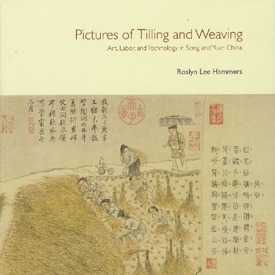 CAA is accepting applications for spring 2012 grants through the Millard Meiss Publication Fund. Thanks to a generous bequest by the late art historian Millard Meiss, the twice-yearly program supports book-length scholarly manuscripts in any period of the history of art and related subjects that have been accepted by a publisher but require further subsidy to be published in the fullest form.
The publisher, rather than the author, must submit the application to CAA. Awards are made at the discretion of the jury and vary according to merit, need, and number of applications. Awardees are announced six to eight weeks after the deadline. For complete guidelines, application forms, and a grant description, please visit the Meiss section of the CAA website or write to nyoffice@collegeart.org. Deadline: April 1, 2012.
Image: Hong Kong University Press received a Meiss grant in fall 2008 to help publish Roslyn Lee Hammers’s book, Pictures of Tilling and Weaving: Art, Labor, and Technology in Song and Yuan China (2011).
March 2012 Issue of The Art Bulletin Introduces Three New Article Series
posted by Christopher Howard — March 13, 2012
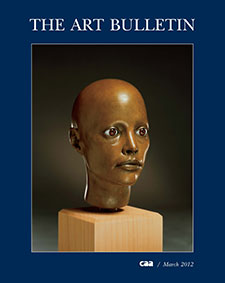 Three new series of features are introduced in the March 2012 issue of The Art Bulletin. They will appear in the next two volume years of the journal, along with the long-form essays and reviews that have made it the leading publication of international art-historical scholarship. In her introductory editor’s note, Karen Lang writes that she created the new features “to reflect the vibrancy of art history today and to stimulate dialogue across fields and with neighboring disciplines.”
In the first new series, “Regarding Art and Art History,” a leading scholar offers a short personal reflection on what it means to write art history; the inaugural writer is Anne M. Wagner, whose essay takes the form of a letter. “Notes from the Field” will present short texts on a given topic by ten authors from a variety of disciplines; the first topic is anthropomorphism, with texts by the artist Elizabeth King, the philosopher J. M. Bernstein, and eight other scholars, including Finbarr Barry Flood, Jane Garnett, and James Meyer. Each issue will feature an interview as well; the first is a dialogue between the curator Hans Ulrich Obrist and the art historian Philip Ursprung. Julia Gelshorn launches the feature with a critical essay on the techniques, strategies, and study of the artist interview.
The March issue also features three essays on diverse topics. In “Henry Fuseli: Greek Tragedy and Cultural Pluralism,” Andrei Pop examines the art of the Anglo-Swiss painter Henry Fuseli in relation to the eighteenth-century revival of Greek tragedy and the formation of the modern liberal version of cultural pluralism. Yukio Lippit’s article, “Of Modes and Manners in Japanese Ink Painting: Sesshū’s Splashed Ink Landscape of 1495,” explores a single work by the Zen monk painter Sesshū Tōyō in the context of the ink painting tradition and artistic transmission in medieval Japan. In her essay, “Agent Provocateur? The African Origin and American Life of a Statue from Côte d’Ivoire,” Monica Blackmun Visonà studies the “biography” of a statue, sculpted near the Lagoon region of Ivory Coast and later donated to Fisk University by Georgia O’Keeffe, as a microcosm of American art history in the twentieth century.
In the Reviews section, Sheila Dillon evaluates Richard Neer’s book, The Emergence of the Classical Style in Greek Sculpture, and Julian Gardner considers The Likeness of the King: A Prehistory of Portraiture in Late Medieval France by Stephen Perkinson. Next, Gerhard Wolf looks at the temporality of Renaissance art as described in Alexander Nagel and Christopher S. Wood’s Anachronistic Renaissance. Finally, Marc Fumaroli reviews Walter S. Melion’s book, The Meditative Art: Studies in the Northern Devotional Print (1550–1625).
Please see the full table of contents for March to learn more. CAA sends The Art Bulletin to all institutional members and to those individuals who choose to receive the journal as a benefit of their membership.
The next issue of The Art Bulletin, to be published in June 2012, will feature a “Notes from the Field” section on appropriation and an interview with the art historian Linda Nochlin. The long-form essays will examine artifacts from a tenth-century cave in northwestern China, portraiture and narrative in the 1605 Shahnama (Book of Kings), theater architecture in the 1914 Werkbund exhibition, and Pablo Picasso’s 1912 paper construction Guitar. The Reviews section will include analyses of books on Caravaggio, Jean-Léon Gérôme, Spanish portraiture, the art of early modern China, and the temporality of architecture.
Winter Art Journal Explores and Exploits Print
posted by Christopher Howard — March 02, 2012
 The latest issue of Art Journal, mailed in February, is dedicated to manifestations of print, from the cultural roles of published artifacts in the nineteenth and twenty-first centuries (by Michael Leja and the editors of the collective Triple Canopy respectively) to artist’s projects by Richard Tuttle and Matthew Brannon that exploit the physical conditions of the printed journal itself.
The final Art Journal Centennial essay by Sarah Suzuki surveys up-to-the-moment practices in printmaking, while a piece by Harper Montgomery focuses on a Mexico City street exhibition of prints in 1929 as an instance of the political dimensions of distributing art prints. Finally, an essay by Bruce Hainley, “Store as Cunt,” explores the subversive 1960s work of the artist Sturtevant.
The Triple Canopy essay, “The Binder and the Server,” which received the 2012 Art Journal Award at the CAA Annual Conference last month, and Seth McCormick’s review of Hiroko Ikegami’s book The Great Migrator: Robert Rauschenberg and the Global Rise of American Art are featured as free content on the journal’s website.
Important Conference Information: Registration, Parking, and More
posted by CAA — February 20, 2012
CAA’s 100th Annual Conference takes place this week: Wednesday–Saturday, February 22–25, 2012 at the Los Angeles Convention Center.
Checking In
Early, advance, complimentary, exhibitor, and press registrants can check in at the registration area in Concourse Foyer, Level 1, at the Los Angeles Convention Center beginning Tuesday, February 21, at 5:00 PM. Each registrant is entitled to a conference tote bag, the Conference Program, the Directory of Attendees, online access to Abstracts 2012, and entry to the Book and Trade Fair (open Thursday–Saturday). Your tickets to special events and workshops will be included in your registration packet. If you have not yet purchased tickets for the Centennial Reception and for professional-development workshops, you can do so at registration. These tickets are subject to limited availability.
Registration days and hours are:
- Tuesday, February 21, 5:00–7:00 PM
- Wednesday-Friday, February 22–24, 8:00 AM–7:00 PM
- Saturday, February 25, 8:30 AM–2:30 PM
Plan Ahead
Two large, non-CAA events—ceremonies for newly naturalized US citizens—will take place on Wednesday, February 22, at 9:00 AM and at 1:30 PM. Approximately ten thousand new citizens and their guests are expected to attend each ceremony. CAA strongly recommends that you check in at registration on Tuesday evening. If you arrive on Wednesday, please allow yourself ample time before your first session.
Parking
Parking at the convention center is available in either the West Hall or the South Hall parking lots. The West Hall parking is closest to the conference and located off LA Live Way, between 11th Street and Pico Boulevard, The entrance to South Hall parking is off Venice Boulevard, west of Figueroa Street. Convention-center parking costs $12 per day (subject to change). Overflow parking areas can be found nearby—please download and review this map. Parking rates vary from $10 to $25 per day, and most lots have a daily rate of less than $20 per day. All parking is first-come first-served. For more information, contact the Los Angeles Convention Parking Office at 213-741-1151, ext. 5850.
Hotel Discounts and Shuttle
The Millennium Biltmore has a few rooms left in the CAA block. Prices start at $120 per night for students. Call 800-245-8673 to make your reservation. CAA offers a free shuttle-bus service between the convention center and the Westin Bonaventure and the Millennium Biltmore. The JW Marriott Los Angeles L.A. LIVE and the Figueroa Hotel are within easy walking distance of the convention center.
Abstracts
Your conference registration includes access to the Abstracts 2012, which is available online as a PDF. This publication is not available in print. Log into your CAA account using your CAA User/Member ID# and password and click the Abstracts 2012 icon on the welcome screen to download the 1.9 MB document. If you do not know your User/Member ID# or password, follow the help instructions on the log-in screen.
Download Abstracts 2012
posted by Christopher Howard — February 16, 2012
 Registrants for the 2012 Annual Conference in Los Angeles can now download Abstracts 2012. This publication, available as a PDF, summarizes the contents of hundreds of papers and talks that will be presented in program sessions.
Reading the abstracts in advance can help you plan your daily schedule at the conference. Program sessions are alphabetized by the chair’s last name and appear in the contents pages (4–10). An index in the back of the publication names all the speakers. Alternatively, use your Adobe Reader to conduct a keyword search for terms relevant to your interests.
After conference registrants log into their CAA account, they can click the “Abstracts 2012” image in the middle of the screen to download the PDF (1.9 MB). Abstracts 2012 is part of the registration package; there is no added cost to paid or complimentary registrants for this publication.
Conference attendees who purchase single-time slot tickets, or those who want Abstracts 2012 but are not coming to Los Angeles, may attain the document for a charge: $30 for CAA members and $35 for nonmembers. Abstracts 2012 will remain on the CAA website for download or sale through July 31, 2012.
Beginning with the 2010 conference in Chicago, CAA offers its Abstracts exclusively as a PDF download. Past issues of the printed publication from 1999 to 2009 are also available. The cost per copy is $30 for CAA members and $35 for nonmembers. For more information and to order, please contact Roberta Lawson, CAA office coordinator.
caa.reviews Seeks Field Editors for Books and Exhibitions
posted by Alyssa Pavley — February 13, 2012
 caa.reviews invites nominations and self-nominations for six individuals to join its Council of Field Editors, which commissions reviews within an area of expertise or geographic region, for a three-year term: July 1, 2012–June 30, 2015. An online journal, caa.reviews is devoted to the peer review of new books, museum exhibitions, and projects relevant to art history, visual studies, and the arts.
The journal seeks three field editors for books in contemporary art, Iberian and colonial Latin American art, and Precolumbian art. Two field editors are needed to commission reviews of exhibitions in the Midwest and Southeast, covering the art of all periods, and one field editor for exhibitions on the West Coast covering art before 1800. Candidates may be artists, art historians, critics, curators, or other professionals in the visual arts; institutional affiliation is not required.
Working with the caa.reviews editor-in-chief, the caa.reviews Editorial Board, and CAA’s staff editor, each field editor selects content to be reviewed, commissions reviewers, and reviews manuscripts for publication. Field editors for books are expected to keep abreast of newly published and important books and related media in his or her field of expertise, and those for exhibitions should be aware of current and upcoming exhibitions (and other related projects) in their geographic regions. The Council of Field Editors meets annually at the CAA Annual Conference. Field editors must pay travel and lodging expenses to attend the conference.
Candidates must be current CAA members and should not be serving on the editorial board of a competitive journal or on another CAA editorial board or committee. Nominators should ascertain their nominee’s willingness to serve before submitting a name; self-nominations are also welcome. Please send a statement describing your interest in and qualifications for appointment, a CV, and your contact information to: caa.reviews Editorial Board, College Art Association, 50 Broadway, 21st Floor, New York, NY 10004; or email the documents to Alyssa Pavley, CAA editorial assistant. Deadline: April 25, 2012.
Updated on March 26, 2012.
Join the Editorial Boards for The Art Bulletin, Art Journal, and caa.reviews
posted by Alyssa Pavley — February 07, 2012
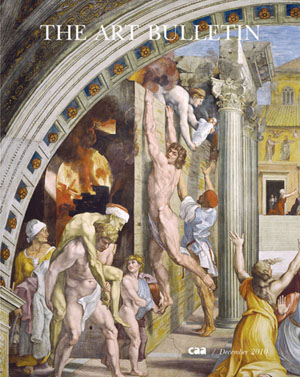 Art Bulletin Editorial Board Seeks One Member
CAA invites nominations and self-nominations for one individual to serve on the Art Bulletin Editorial Board for a four-year term, July 1, 2012–June 30, 2016. The ideal candidate has published substantially in the field and may be an academic, museum-based, or independent scholar; institutional affiliation is not required. The Art Bulletin features leading scholarship in the English language in all aspects of art history as practiced in the academy, museums, and other institutions.
The editorial board advises the Art Bulletin editor-in-chief and assists him or her to seek authors, articles, and other content for the journal; guides its editorial program and may propose new initiatives for it; performs peer review and recommends peer reviewers; and may support fundraising efforts on the journal’s behalf. Members also assist the editor-in-chief to keep abreast of trends and issues in the field by attending and reporting on sessions at the CAA Annual Conference and other academic conferences, symposia, and other events in their fields.
The Art Bulletin Editorial Board meets three times a year: twice in New York in the spring and fall and once at the CAA Annual Conference in February. CAA reimburses members for travel and lodging expenses for the two New York meetings in accordance with its travel policy, but members pay these expenses to attend the conference. Members of all editorial boards volunteer their services to CAA without compensation.
Candidates must be current CAA members and should not be serving on the editorial board of a competitive journal or on another CAA editorial board or committee. Members may not publish their own work in the journal during the term of service. Nominators should ascertain their nominee’s willingness to serve before submitting a name; self-nominations are also welcome. Please send a statement describing your interest in and qualifications for appointment, a CV, and your contact information to: Chair, Art Bulletin Editorial Board, College Art Association, 50 Broadway, 21st Floor, New York, NY 10004; or email the documents to Alyssa Pavley, CAA editorial assistant. Deadline: April 16, 2012.
 Art Journal Editorial Board Seeks Two Members
CAA invites nominations and self-nominations for two individuals to serve on the Art Journal Editorial Board for a four-year term: July 1, 2012–June 30, 2016. A candidate may be an artist, art historian, art critic, art educator, curator, or other art professional; institutional affiliation is not required. Art Journal, published quarterly by CAA, is devoted to twentieth- and twenty-first-century art and visual culture.
The editorial board advises the Art Journal editor-in-chief and assists him or her to seek authors, articles, artist’s projects, and other content for the journal; guides its editorial program and may propose new initiatives for it; performs peer review and recommends peer reviewers; and may support fundraising efforts on the journal’s behalf. Members also assist the editor-in-chief to keep abreast of trends and issues in the field by attending and reporting on sessions at the CAA Annual Conference and other academic conferences, symposia, and other events in their fields.
The Art Journal Editorial Board meets three times a year: twice in New York in the spring and fall and once at the CAA Annual Conference in February. CAA reimburses members for travel and lodging expenses for the two New York meetings in accordance with its travel policy, but members pay these expenses to attend the conference. Members of all editorial boards volunteer their services to CAA without compensation.
Candidates must be current CAA members and should not be serving on the editorial board of a competitive journal or on another CAA editorial board or committee. Members may not publish their own work in the journal during the term of service. Nominators should ascertain their nominee’s willingness to serve before submitting a name; self-nominations are also welcome. Please send a statement describing your interest in and qualifications for appointment, a CV, and your contact information to: Chair, Art Journal Editorial Board, College Art Association, 50 Broadway, 21st Floor, New York, NY 10004; or email the documents to Alyssa Pavley, CAA editorial assistant. Deadline: April 16, 2012.
caa.reviews Editorial Board Seeks One Member
CAA invites nominations and self-nominations for one individual to serve on the caa.reviews Editorial Board for a four-year term, July 1, 2012–June 30, 2016. Candidates may be artists, art historians, art critics, art educators, curators, or other art professionals with stature in the field and experience in writing or editing book and/or exhibition reviews; institutional affiliation is not required. The journal also seeks candidates with a strong record of scholarship and at least one published book or the equivalent who is committed to the imaginative development of caa.reviews. An online journal, caa.reviews is devoted to the peer review of new books, museum exhibitions, and projects relevant to the fields of art history, visual studies, and the arts.
The editorial board advises the editor-in-chief of and field editors for caa.reviews and helps them to identify books and exhibitions for review and to solicit reviewers, articles, and other content for the journal; guides its editorial program and may propose new initiatives for it; and may support fundraising efforts on the journal’s behalf. Members also assist the editor-in-chief to keep abreast of trends and issues in the field by attending and reporting on sessions at the CAA Annual Conference and other academic conferences, symposia, and other events in their fields.
The caa.reviews Editorial Board meets three times a year: twice in New York in the spring and fall and once at the CAA Annual Conference in February. CAA reimburses members for travel and lodging expenses for the two New York meetings in accordance with its travel policy, but members pay these expenses to attend the conference. Members of all editorial boards volunteer their services to CAA without compensation.
Candidates must be current CAA members and should not be serving on the editorial board of a competitive journal or on another CAA editorial board or committee. Nominators should ascertain their nominee’s willingness to serve before submitting a name; self-nominations are also welcome. Please send a statement describing your interest in and qualifications for appointment, a CV, and your contact information to: caa.reviews Editorial Board, College Art Association, 50 Broadway, 21st Floor, New York, NY 10004; or email the documents to Alyssa Pavley, CAA editorial assistant. Deadline: April 16, 2012.
Updated on March 6 and 13, 2012.
CAA Seeks Editor-in-Chief for The Art Bulletin
posted by Joe Hannan — February 06, 2012
 The Art Bulletin Editorial Board invites nominations and self-nominations for the position of editor-in-chief for a three-year term: July 1, 2013–June 30, 2016 (with service as incoming editor designate, July 1, 2012–June 30, 2013). Candidates should have published substantially in the field and may be an academic, museum-based, or independent scholar; institutional affiliation is not required. The Art Bulletin features leading scholarship in the English language in all aspects of art history as practiced in the academy, museums, and other institutions. From its founding in 1913, the quarterly journal has published, through rigorous peer review, scholarly articles and critical reviews of the highest quality in all areas and periods of the history of art.
Working with the editorial board, the editor-in-chief is responsible for the content and character of the journal. Each issue has approximately 150 editorial pages (135,000 words), not including book and exhibition reviews, which are the responsibility of the reviews editor. The editor-in-chief reads all submitted manuscripts, refers them to appropriate expert referees for peer review, provides guidance to authors concerning the form and content of submissions, and makes final decisions regarding acceptance or rejection of articles for publication. The editor-in-chief also works closely with the CAA staff in New York, where production for The Art Bulletin is organized. This is a half-time position. CAA provides financial compensation to the editor’s institution, usually in the form of course release or the equivalent, for three years. The editor is not usually compensated directly. The three-year term includes membership on the Art Bulletin Editorial Board.
The editor-in-chief attends the Art Bulletin Editorial Board’s three meetings each year—held twice in New York in the spring and fall and once at the CAA Annual Conference in February—and submits an annual report to the CAA Board of Directors. CAA reimburses the editor-in-chief for travel and lodging expenses for the two New York meetings in accordance with its travel policy, but the editor-in-chief pays these expenses to attend the conference взять займ онлайн без отказа.
Candidates must be current CAA members and should not be serving on the editorial board of a competitive journal or on another CAA editorial board or committee. Members may not publish their own work in the journal during the term of service. Nominators should ascertain their nominee’s willingness to serve before submitting a name; self-nominations are also welcome. Please send a statement describing your interest in and qualifications for appointment, a CV, at least one letter of recommendation, and your contact information to: Chair, Art Bulletin Editorial Board, College Art Association, 50 Broadway, 21st Floor, New York, NY 10004; or email the documents to Joe Hannan, CAA codirector of publications. Deadline: April 10, 2012; finalists will be interviewed in early May.
Updated on March 16, 2012.