CAA News Today
News from the Art and Academic Worlds
posted Feb 24, 2016
Each week CAA News publishes summaries of eight articles, published around the web, that CAA members may find interesting and useful in their professional and creative lives.
How Can Nonprofits Improve Their Governance?
Governance is coming up more frequently as a subject of conversation and concern among executives and managers in nonprofit organizations. The topic’s rising prominence coincides with more acute financial stresses and vexing strategic conundrums, both of which traditional governance bodies are finding difficult to handle. Executives are duly concerned. (Read more from the Scholarly Kitchen.)
Help Desk: Institutional Bias
I freelance in a museum in a major metropolitan area with a diverse population, but the racial demographics of the institution’s staffing seem glaringly segregated. The white-collar office employees are mostly white, while black and brown employees make up almost all of the security department. While I haven’t felt any discrimination, the racial dynamics seem obvious and weird to me. What should I do? (Read more from Daily Serving.)
Testing the Possibilities of Online Education with Museum MOOCs
Massive open online courses (MOOCs) have been hailed as a possible solution to providing low-cost, high-quality education and derided as a destructive reallocation of resources from public education to private corporations. Much existing debate is centered on replacing a physical experience of education with a virtual one; the dispute is also entangled with rising educational costs in the United States. (Read more from Hyperallergic.)
No Rush to “Go Digital”
Quality, cost, and reputation are the top three factors that influence how faculty members pick which textbooks and course materials they assign, according to results from a survey of faculty at two- and four-year institutions. Virtually every respondent for “Going Digital” said their own assessment of the quality of a textbook is an important or a very important factor influencing their course material selection process, followed by the cost and a near tie between comments from colleagues and students or teaching assistants. Less than one-third of respondents said the availability of digital supplements played an important role. (Read more from Inside Higher Ed.)
Librarians Find Themselves Caught between Journal Pirates and Publishers
The rise, fall, and resurfacing of a popular piracy website for scholarly-journal articles, Sci-Hub, has highlighted tensions between academic librarians and scholarly publishers. Academics are increasingly turning to websites like Sci-Hub to view subscriber-only articles that they cannot obtain at their college or that they need more quickly than interlibrary loan can provide. (Read more from Chronicle of Higher Education.)
How Digital Storage Is Changing the Way We Preserve History
A few years ago, I started using a digital diary platform called Oh Life. I’d relied on a notebook to jot down daily reflections for years, but this was infinitely more elegant. It was more private than a notebook and less clunky, and the platform even let users upload entries by sending an email. But when I logged on recently, searching for something I’d written on Oh Life years ago, all of my entries had vanished. In fact, the whole site had been shut down, and years of my personal history were gone. (Read more from Vice.)
A Strategy Guide for Second-Round Interviews
Interviewing for an academic job is a grueling, anxiety-ridden, and all-around intense experience for candidates, and the competition at the campus-interview stage is stiffer than ever. The key to staying in the game is to focus on what you can control and carry on when things don’t go your way. (Read more from Vitae.)
What Is SoTL?
Art History Teaching Resources’s 2015 survey found that many art historians are unfamiliar with the Scholarship of Teaching and Learning (SoTL). This relative new area of research originated in the 1990s, growing out of the Carnegie Foundation for the Advancement of Teaching and the recognition, elegantly expressed in Ernest Boyert’s Scholarship Reconsidered: Priorities of the Professoriate, that teaching is an essential part of scholarly activity. (Read more from Art History Teaching Resources.)
Case Studies and Examples for Evaluating Digital Scholarship
posted Feb 23, 2016
Strong case studies of digital humanities scholarship exist, and compelling resources continue to proliferate. Scholarly societies, including the American Historical Association (AHA), Modern Language Association (MLA), and more recently the College Art Association (CAA), and Society of Architectural Historians (SAH) have developed guidelines for use by institutions and individuals. Funded by a grant from the Andrew W. Mellon Foundation, CAA and SAH formed a joint task force that explored existing guidelines and literature, surveyed faculty and administrators, and developed Guidelines for the Evaluation of Digital Scholarship in Art and Architectural History. Adopted by the boards of both societies, the guidelines are available for download on the SAH and CAA websites and we encourage their adoption and use. The task force reviewed many resources in the course of eighteen months. Some of these are described below to provide a context for current digital evaluation in addition to the recently published CAA/SAH guidelines.
Sources such as the Journal of Interactive Pedagogy and Pedagogy and Manifold Scholarship, and sites such as Mapping Gothic France, HyperCities, and ArtHistoryTeachingResources.org are places where digital scholarship is being practiced, peer reviewed, and successfully included in promotion and tenure portfolios. Benchmark portals such as the NINES (Networked Infrastructure for Nineteenth-Century Electronic Scholarship) NEH Summer Institutes (Storify of the proceedings can be found here) offer useful white papers: “Digital Humanities Scholarship: Recommendations for Chairs in Language and Literature Departments“; “Guidelines for Promotion and Tenure Committees in Judging Digital Work”; and “Statement on Authorship.” Kristine M. Bartanen’s excellent “Digital Scholarship and the Tenure and Promotion Process“ contains valuable guidance. Published to Academic Commons in July 2014, Bartenan provides a comprehensive literature review and resource portal for the evaluation of digital scholarship. The review contains both model guidelines for promotion and tenure and appendices for a range of resources, literature, and organizations pertinent to understanding and developing evaluation methods.
In the fall of 2012 the Journal of Digital Humanities published their fourth issue, which centered on the “importance of assessment and the scholarly vetting process around digital scholarship.”[1] (The full journal issue can be accessed here.) The issue addresses the need for guidelines and dialogue for assessing digital scholarship in the humanities, offers case studies and examples, and reflects on the successes, issues, and failures of the methods employed. Though much of the content is not art or architectural history-specific, it is still relevant to CAA’s and SAH’s memberships. A broad overview of the contents of this journal issue is provided below so that readers can zero in on the material most germane to their own needs. Readers are encouraged to make use of the excellent bibliographies attached to each of the issue’s essays.
The issue is divided into four major sections: “The Problem Stated,” “Approaches,” “Institutional Guidelines,” and “Resources.” In the introductory section of “Living in a Digital World: Rethinking Peer Review, Collaboration, and Open Access,” Sheila Cavanagh highlights the importance of retraining processes and expectations of evaluation around digital scholarship, including “encouraging faculty who hire, tenure, and mentor junior scholars to acknowledge the complicated factors in the world of digital scholarship . . . for example, faculty often have difficulty identifying appropriate experts to participate in more traditional peer review processes.”[2] In “Evaluating Collaborative Digital Scholarship (or, Where Credit is Due),” Bethany Nowviskie highlights the inability of many humanities evaluative committees to adequately understand and appropriately review and reward the type of collaborative work that digital scholarship is often predicated upon. She contends that “the T&P [tenure and promotion] process is a poor fit to good assessment (or even, really, to acknowledgement) of collaborative work, because it has evolved to focus too much on a particular fiction. That fiction is one of ‘final outputs’ in digital scholarship.”[3]
The “Student Collaborators’ Bill of Rights“ from UCLA’s Digital Humanities program provides important guidance about how to understand, review, and reward collaborative digital humanities scholarship, especially in light of hierarchies of power experienced by student and “alt-ac” collaborators.[4] Nowviskie hails certain aspects of the AHA Guidelines for Evaluation of Digital Scholarship, particularly their underscoring of collaborative digital work as a type of perpetual peer review. At a National Endowment for the Humanities “Off the Tracks” workshop in 2011, Nowviskie, Matt Kirschenbaum, Doug Reside, and Tom Scheinfeldt collaborated on a provocative “Bill of Rights” for collaborators that might serve as a guidepost for promotion and tenure committees to consider. In Nowviskie’s words, “We drew on our experience administering MITH [Maryland Institute for Technology in the Humanities], the Scholars’ Lab, and the Roy Rosenzweig Center for History and New Media—three centers that are sites for a great deal of collaboration among people who may have similar backgrounds as scholars and technologists, but whose formal institutional status may vary a great deal. We drafted something we called a ‘Collaborators’ Bill of Rights,’ which was later endorsed by the full workshop assembly and posted for public comment. Basically, it’s an appeal for fair, honest, legible, portable (this is important!), and prominently displayed crediting mechanisms. It also offers a dense expression of underlying requirements for healthy collaboration and adequate assessment from the point of view of practicing digital humanists, with special attention to the vulnerabilities of early-career scholars and staff or non-tenure-track faculty.” Their recommendations are as follows:
- Committees must consider not only the products of digital work but the processes by which the work was (and perhaps continues to be) co-created;
- Scholars (even while they ask to have their critical agency as individuals taken seriously in tenure and promotion cases) are obligated to make the most generous and inclusive statements possible about the contributions of others;
- Credit should be expressed richly and descriptively, but also in increasingly standardized forms, legible within a variety of disciplines and communities of practice;
- We must negotiate expressions of shared credit at the outset of projects and continually, as projects evolve;
- We must promote fair institutional policies and practices in support of shared assertion of credit, such as those which make collective and individual ownership over intellectual property meaningful and actionable;
- And, finally, we must accept that collaborators themselves, regardless of rank or status, have the ultimate authority and responsibility for expressing their contributions and the nature of their roles.
Other relevant literature includes Todd Presner’s essay “How to Evaluate Digital Scholarship,” directed at the audiences within the art and architectural history-specific community: “The document is aimed, foremost, at Academic Review Committees, Chairs, Deans, and Provosts who want to know how to assess and evaluate digital scholarship in the hiring, tenure, and promotion process. Secondarily, the document is intended to inform the development of university-wide policies for supporting and evaluating such scholarship.”[5] Presner offers a succinct and clear checklist for promotion and tenure boards, engaging them in dialogue around initial review, crediting, intellectual rigor, impact, peer review, and experimentation, among other topics.
Geoffrey Rockwell’s “Short Guide to Evaluation of Digital Work” deepens and extends Presner’s checklist in compelling and practicable ways, and Laura Mandell’s essay “Promotion and Tenure for Digital Scholarship” offers a useful and clear coda full of concrete examples such as the HyperCities project and Voyant, a software text analysis tool. It is not overstating the importance of these three essays alone to suggest that every promotion and tenure board member might be asked to read them to educate themselves on the shifting boundaries of their discipline, and the ways in which their analysis of promotion and tenure portfolios must change and adapt. In addition, in the third section of the journal issue, the MLA’s Guidelines for Evaluating Work in Digital Humanities and Digital Media is similarly designed to “help departments and faculty members implement effective evaluation procedures for hiring, reappointment, tenure, and promotion. They apply to scholars working with digital media as their subject matter and to those who use digital methods or whose work takes digital form.”[6]
James Smithies’s essay “Evaluating Scholarly Digital Outputs: The Six Layers Approach” offers a different style of checklist, a bird’s-eye view of the different types of digital scholarship output, but one that is most useful if the reader—part of a promotion and tenure board or otherwise—is already informed about and open to considering digital scholarship on par with analog modes. Katherine D. Harris’s “Explaining Digital Humanities in Promotion Documents” is a comprehensive and fruitful overview of her foray into learning “how best to sell Digital Humanities, scholarly editing, and Digital Pedagogy to my colleagues.”[7] Harris, associate professor of English literature at San Jose State University, shares her statement for promotion and her approach to the practical question of formatting and outlining her digital scholarship as part of her promotion and tenure binder. With few models to consult, she crowdsourced her questions via Twitter and other channels in order to produce her promotion and tenure document, finally settling on a narrative-based approach that outlines her own collaborative and individual contributions to the field, and includes examples of her concrete research and pedagogy projects in progress and completed, publications, conferences, and supporting quotations from the Digital Humanities Community Wiki and Digital Humanities Now.
While every essay in the fall 2012 Journal of Digital Humanities issue is well worth consultation, the final resource to flag is the MLA’s “Evaluation Wiki of the Committee on Information Technology.” This report takes the form of a checklist of documents that digital scholars should amass as part of preparation for promotion and tenure, and it might be used in tandem with Harris’s model statement.
Both CAA and SAH leadership teams encourage the wide dissemination and adoption of the newly published guidelines, as well as a CAA 2017 panel or forum models that facilitate questions, feedback, and discussion around the issues raised.
Michelle Millar Fisher is a doctoral candidate in Architectural History at the CUNY Graduate Center and a Curatorial Assistant in the Department of Architecture and Design at The Museum of Modern Art.
[1] Daniel J. Cohen and Joan Fragaszy Troyano, “Closing the Evaluation Gap,” Journal of Digital Humanities vol. 1, no. 4 (Fall 2012): i. They continued: “As digital humanities continues to grow and as more scholars and disciplines become invested in its methods and results, institutions and scholars increasingly have been debating how to maintain academic rigor while accepting new genres and the openness that the web promotes.”
[2] Ibid, 9.
[3] Ibid, 17.
[4] Authored by Haley Di Pressi, Stephanie Gorman, Miriam Posner, Raphael Sasayama, and Tori Schmitt, with contributions from Roderic Crooks, Megan Driscoll, Amy Earhart, Spencer Keralis, Tiffany Naiman, and Todd Presner, this document endorses the Collaborators Bill of Rights, developed during the workshop “Off the Tracks—Laying New Lines for Digital Humanities Scholars” held at the Maryland Institute for Technology in the Humanities (MITH), January 20–21, 2011, and described below. The UCLA document adds principles to safeguard students when working on projects with scholars who are senior to them.
[5] Ibid, 36.
[6] Ibid, 91–94.
[7] Ibid, 71.
CAA and SAH Release Guidelines for the Evaluation of Digital Scholarship in Art and Architectural History
posted Feb 23, 2016
The College Art Association (CAA), working jointly with the Society of Architectural Historians (SAH), has released its Guidelines for the Evaluation of Digital Scholarship in Art and Architectural History for Promotion and Tenure. The guidelines are the result of a Task Force convened by the two associations of ten members from the academic community with experience in digital research, publication, and/or scholarly communications and administration. Established by the Board of Directors in October 2014 and supported by funds from the Andrew W. Mellon Foundation, this joint task force of CAA and SAH was co-chaired by DeWitt Godfrey, president, CAA and professor of art and art history, Colgate University; and Kenneth Breisch, SAH president and assistant professor, School of Architecture, University of Southern California.
See the SAH announcement.
The project methodology was developed through a collaborative process involving the Task Force, consultant, researcher, and representatives from CAA and SAH. Research components included results from surveys of CAA and SAH members and department chairs, a similar questionnaire for graduate students, interviews with scholars and administrators, research on existing disciplinary and institutional evaluation guidelines, and a review of relevant literature. Alice Lynn McMichael, PhD candidate in Byzantine art history and digital fellow at the Graduate Center at the City University of New York, and Raym Crow, principal at Chain Bridge Group served as researcher and consultant.
In addition to a review of current guidelines and current literature on the topic, the researcher was charged with balancing broad survey data with more in-depth discussions of topics that resonate with evaluators of digital work. To this end, interviews were conducted with constituents from sixteen institutions across the United States that produce digital work regularly in art and/or architectural history. Institutions were either public and private and research-intensive or teaching-focused. Interviewees at those institutions had varying academic ranks and included department members, librarians, provosts, deans, chairs, and directors of humanities centers or similar.
Highlights from surveys from CAA and SAH members and interviews include the following:
- Most CAA respondents, across all professional ranks, have never used data gathering and imaging tools (83%), data analysis and visualization tools (80%), three-dimensional modeling (75%), digital storage and preservation tools (73%), and geospatial analysis tools (65%).
- Many characteristics of digital resources were generally valued as important, with the highest importance placed on permanent archiving, documentation of the resource, and ease of use; and relatively less importance on the availability of underlying data, financial sustainability, and permanent citation.
- Graduate students report the highest confidence in evaluating digital scholarship.
- Less than 4 percent of total respondents knew of existing evaluative criteria for digital scholarship in their departments.
- The largest barrier to digital scholarship is lack of access to training.
Read the full Guidelines here. An essay, “Case Studies and Examples for Evaluating Digital Scholarship” by Michelle Millar Fisher, a task force member, provides background information on evaluating digital resources and can be found on the College Art Association website.
Members of the Task Force included:
- Suzanne Preston Blier, Allen Whitehall Clowes Professor of Fine Arts and of African and African American Studies, Harvard University
- Kenneth Breisch, SAH President, Assistant Professor, School of Architecture, University of Southern California, and Cochair of Task Force
- Linda Downs (ex officio), Executive Director, College Art Association
- Gabrielle Esperdy, Associate Professor, School of Architecture, New Jersey Institute of Technology, and Editor of SAH Archipedia
- Michelle Miller Fisher, PhD Candidate, Art History, The Graduate Center, The City University of New York, and Curatorial Assistant, Department of Architecture and Design, Museum of Modern Art
- Pamela M. Fletcher, Professor of Art History, Chair of Art Department, and Codirector of Digital and Computational Studies Initiative, Bowdoin College
- DeWitt Godfrey, CAA President, Professor of Art and Art History, Colgate University, and Cochair of Task Force
- Anne Collins Goodyear, Codirector, Bowdoin College Museum of Art
- Paul Jaskot, Professor, History of Art and Architecture, DePaul University, and Andrew W. Mellon Professor, CASVA
- Bruce M. Mackh, Director, Arts and Cultural Management Program, Michigan State University
- Tara McPherson, Associate Professor, School of Cinematic Arts, University of Southern California
- Abby Smith Rumsey, Former Director, Scholarly Communication Institute, University of Virginia
- Pauline Saliga (ex officio), Executive Director, Society of Architectural Historians
- Ann Whiteside, Librarian and Assistant Dean of Information Services, Harvard University
About CAA
The College Art Association is dedicated to providing professional services and resources for artists, art historians, and students in the visual arts. CAA serves as an advocate and a resource for individuals and institutions nationally and internationally by offering forums to discuss the latest developments in the visual arts and art history through its Annual Conference, publications, exhibitions, website, and other programs, services, and events. CAA focuses on a wide range of issues, including education in the arts, freedom of expression, intellectual-property rights, cultural heritage, preservation, workforce topics in universities and museums, and access to networked information technologies. Representing its members’ professional needs since 1911, CAA is committed to the highest professional and ethical standards of scholarship, creativity, criticism, and teaching. Learn more at collegeart.org.
About SAH
Founded in 1940, the Society of Architectural Historians is a nonprofit membership organization that promotes the study, interpretation and conservation of architecture, design, landscapes and urbanism worldwide. SAH serves a network of local, national and international institutions and individuals who, by vocation or avocation, focus on the built environment and its role in shaping contemporary life. SAH promotes meaningful public engagement with the history of the built environment through advocacy efforts, print and online publications, and local, national and international programs. Learn more at sah.org.
Art Journal Editorial Board Seeks New Members
posted Feb 23, 2016
 CAA invites nominations and self-nominations for three individuals to serve on the Art Journal Editorial Board for a four-year term: July 1, 2016–June 30, 2020. Candidates may be artists, art historians, art critics, art educators, curators, or other art professionals; institutional affiliation is not required. Art Journal, published quarterly by CAA, is devoted to twentieth- and twenty-first-century art and visual culture.
The editorial board advises the Art Journal editor-in-chief and assists her or him in seeking authors, articles, artists’ projects, and other content for the journal; performs peer review and recommends peer reviewers; guides its editorial program and may propose new initiatives for it; and may support fundraising efforts on the journal’s behalf. Members also assist the editor-in-chief to keep abreast of trends and issues in the field by attending and reporting on sessions at the CAA Annual Conference and other academic conferences, symposia, and events.
The Art Journal Editorial Board meets three times a year, with meetings in the spring and fall plus one at the CAA Annual Conference in February. The spring and fall meetings are currently held by teleconference, but at a later date CAA may reimburse members for travel and lodging expenses for the two New York meetings in accordance with its travel policy. Members pay travel and lodging expenses to attend the conference in February. Members of all editorial boards volunteer their services to CAA without compensation.
Candidates must be current CAA members and should not be serving on the editorial board of a competitive journal or on another CAA editorial board or committee. Members may not publish their own work in the journal during the term of service. Nominators should ascertain their nominee’s willingness to serve before submitting a name; self-nominations are also welcome. Please send a letter describing your interest in and qualifications for appointment, a CV, and your contact information to: Chair, Art Journal Editorial Board, College Art Association, 50 Broadway, 21st Floor, New York, NY 10004; or email the documents to Joe Hannan, CAA editorial director. Deadline: April 15, 2016.
CAA Announces Formation of Committee on Design
posted Feb 23, 2016
Dear College Art Association Members:
In 2015, CAA established a Task Force on Design charged with suggesting positions the organization might adopt toward design, design studies, designers, design educators, historians, and theorists. The CAA Board of Directors is delighted to announce the approval of a new Committee on Design, approved during the recently concluded 2016 CAA Annual Conference.
The Committee will replace the Task Force and be among CAA’s ten standing Professional Interests, Practices, and Standards Committees. The Committee on Design will promote and advance issues in design practice, design history/theory/criticism, and design education through advocacy, engagement, and a commitment to the diversity of practices and practitioners. The committee will further support discussion and action in these areas to stimulate intellectual curiosity and advance skills that enrich the individual and society.
CAA invites members to apply for service on this inaugural Committee on Design. To apply, kindly forward a statement of interest (250 words or less) and a 3–4 page condensed résumé noting in the subject line Committee on Design to vjalet@collegeart.org. Initial application review begins on March 30, 2016, with appointments to two-year terms anticipated by May 1, 2016.
Until May 1, the Task Force on Design will continue work on revising CAA’s Standards and Guidelines for Retention and Tenure of Art and Design Faculty and seeks input from CAA members. We invite you to review and comment upon the current draft. Please send any comments and/or questions to designfeedback@collegeart.org.
Responses at your earliest convenience, and especially prior to March 15, 2016, are greatly appreciated as the Task Force wishes to complete this project for a May 2016 approval by the CAA Board of Directors.
Thank you in advance for input toward advancing design interests within CAA.
Sincerely,
DeWitt Godfrey,
President
Jim Hopfensperger, Chair,
CAA Task Force on Design
Solo Exhibitions by Artist Members
posted Feb 22, 2016
See when and where CAA members are exhibiting their art, and view images of their work.
Solo Exhibitions by Artist Members is published every two months: in February, April, June, August, October, and December. To learn more about submitting a listing, please follow the instructions on the main Member News page.
February 2016
Abroad

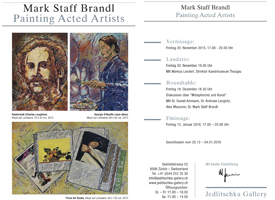 Invitation card for Painting Acted Artists
Mark Staff Brandl. Jedlitschka Gallery, Zurich, Switzerland, November 20, 2015–January 15, 2016. Painting Acted Artists. Painting.
Mid-Atlantic

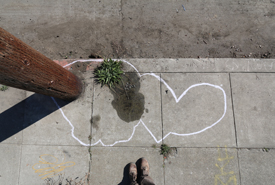 FICTILIS, Wildcat Hauling, January 2015 (artwork © FICTILIS)
FICTILIS (Andrea Steves and Timothy Furstnau). Atrium Gallery, Corcoran School of the Arts and Design, George Washington University, Washington, DC, February 5–March 13, 2015. Wildcat Hauling: Making Waste Public. Social practice and installation.

Reni Gower. Neil Britton Gallery, Virginia Wesleyan College, Norfolk, Virginia, November 13, 2015–January 13, 2016. Strange Loops. Painting, collage, and assemblage.

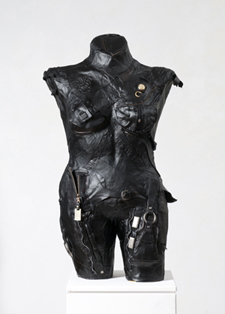 Linda Stein, Defender 696, 2010, leather, metal, and mixed media, 38 x 22 x 14 in. (artwork © Linda Stein)
Linda Stein. Noyes Museum of Art, Stockton University, Oceanville, New Jersey, September 21, 2015–January 3, 2016. The Fluidity of Gender: Sculpture by Linda Stein. Sculpture.
Art Bulletin Editorial Board Seeks a New Member
posted Feb 22, 2016
 CAA invites nominations and self-nominations for one individual to serve on the Art Bulletin Editorial Board for a four-year term, July 1, 2016–June 30, 2020. The ideal candidate has published substantially in the field and may be an academic, museum-based, or independent scholar; institutional affiliation is not required. The Art Bulletin features leading scholarship in the English language in all aspects of art history as practiced in the academy, museums, and other institutions.
The editorial board advises the Art Bulletin editor-in-chief and assists her or him in seeking authors, articles, and other content for the journal; performs peer review and recommends peer reviewers; may propose new initiatives for the journal; and may support fundraising efforts on the journal’s behalf. Members also assist the editor-in-chief to keep abreast of trends and issues in the field by attending and reporting on sessions at the CAA Annual Conference and other academic conferences, symposia, and events.
The Art Bulletin Editorial Board meets three times a year, with meetings in the spring and fall plus one at the CAA Annual Conference in February. The spring and fall meetings are currently held by teleconference, but at a later date CAA may reimburse members for travel and lodging expenses for the two New York meetings in accordance with its travel policy. Members pay travel and lodging expenses to attend the conference in February. Members of all editorial boards volunteer their services to CAA without compensation.
Candidates must be current CAA members and should not be serving on the editorial board of a competitive journal or on another CAA editorial board or committee. Members may not publish their own work in the journal during the term of service. Nominators should ascertain their nominee’s willingness to serve before submitting a name; self-nominations are also welcome. Please send a letter describing your interest in and qualifications for appointment, a CV, and your contact information to: Chair, Art Bulletin Editorial Board, College Art Association, 50 Broadway, 21st Floor, New York, NY 10004; or email the documents to Joe Hannan, CAA editorial director, at jhannan@collegeart.org. Deadline: April 15, 2016.
CAA Celebrates National Fair Use Week
posted Feb 22, 2016
The College Art Association is proud to participate in the 2016 National Fair Use Week. This event is held annually during the last week of February, this year from Monday, February 22, through Friday, February 26. It celebrates the important doctrines of fair use in the United States and fair dealing in Canada and other jurisdictions. In honor of National Fair Use Week, CAA presents the following article about ways its fair use code has been embraced in the year since it was first released.

It’s been exactly one year since CAA published its Code of Best Practices in Fair Use for the Visual Arts. A session at this year’s Annual Conference took stock of the progress made during the past twelve months, and panelists recounted remarkable progress in applying fair use to the visual arts. Chaired by Judy Metro, editor-in-chief at the National Gallery of Art and chair of CAA’s Committee on Intellectual Property, five CAA members described how they or their institutions modified their approach to using copyrighted materials because of CAA’s new Code.
Leading the way was the College Art Association itself, which overturned its copyright policies for authors. As Betty Leigh Hutcheson, CAA’s director of publications, explained, instead of demanding that authors get permissions for all images and indemnify the press, CAA’s contracts now ask authors to read the Code and apply it to their uses. Indemnification is no longer required when asserting fair use.
 Other publishers of artwork also told of changing policy. Patricia Fidler, art publisher at Yale University Press, described how, inspired by the Code, the press has now created its own fair use guidelines specific to scholarly publishing. Just as important for Fidler is the fact that other parts of Yale University, including its museums, are now considering expanding their access to fair use. “It’s a big step,” she said, “to give authors the last word on their fair use. And we are proud that it says at the top of our new author guidelines, ‘Yale University Press supports the fair use of art images in scholarly monographs.’”
Joseph Newland, head of publications at the Menil Collection in Houston, announced new policies at his museum. Thanks to the Code, the Menil has expanded access to fair use throughout the institution by adapting CAA’s policy for internal criteria. He said improvements are already apparent: “It’s really helped work flow, especially at the press office, which often needs to respond to the news cycle in a timely way.”
 Sometimes progress includes learning from frustration. Susan Higman Larsen, head of publications at the Detroit Institute of Arts, talked about having to publish a work in a scholarly catalogue without a relevant image, because of intolerable attempts at controlling content by an estate. “We misunderstood fair use,” she explained. “We didn’t understand that some commercial uses are just as eligible for fair use as non-commercial ones.” The Code helped clear that up, she said, and now the DIA is publishing a new book, in which the author wants to reproduce an image by the same artist. “This time, we’ll claim fair use,” she said. Furthermore, the DIA is considering changing its institutional policies about fair use.
 The last success story of the session was from an artist, Rebekah Modrak, who teaches at the University of Michigan. She recounted the challenges she encountered after creating a work of art that incorporated copyrighted material. She made a video introducing an imaginary company, Re Made Co., that spoofed the overexemplifying hipster-Brooklyn site Best Made Co. After receiving a cease-and-desist letter, she turned for advice to CAA, which steered her to good legal advice at the University of Michigan. Her university’s lawyers welcomed the opportunity to support her fair uses and endorsed her intention to keep her video online. Modrak then published an account of her experience for a Routledge publication, Consumption Markets & Culture. When the editors there initially asked her to get permission to reproduce images from her video, she relied on CAA’s Code to persuade them that fair use would apply.

Another way CAA is measuring the impact of the Code is through annual surveys that provide longitudinal data on how CAA members are relying on fair use. At the conference session, Patricia Aufderheide shared early results from a recent 2,500-person CAA survey, showing broad awareness of the Code. More than two thirds of respondents indicated they knew about the Code, and a third of that group had already shared their knowledge, usually with more than one kind of interlocutor—for example, students, colleagues, and association members. Many of those aware of the Code had already put it to use. Indeed, 11% of all respondents had begun to employ fair use only after the appearance of the Code last year, a big leap and a demonstration of the power of understanding community values and best practice.
Peter Jaszi concluded the session by discussing next steps in CAA’s fair use efforts. Over the coming year he and Aufderheide will work to educate in-house legal counsel about the importance of mission-oriented fair use, resulting in expanded employment of fair use by museums. They will continue to give presentations about the Code to groups of arts professionals around the country, with a special focus on publishing and museum activities. And Jaszi encouraged CAA members to avail themselves of the many resources—FAQs, explainers, infographics, background documents, slideshows and more—available both on the CAA website and at the Center for Media & Social Impact.
 CAA will be posting updates about fair use on its website, including the success stories described above. We would like to hear from any of you whose practices have changed because of the Code, whether you have a success story or a challenge to share. Both types of information will support the field’s efforts to make appropriate reliance on fair use the norm. If you have fair use news to share, please contact me at jlanday@collegeart.org.
Find out more about National Fair Use Week here: http://fairuseweek.org/
Below are links to some of the events taking place around the country:
https://blog.library.gsu.edu/2015/02/23/fair-use-week/
http://www.udel.edu/udaily/2016/feb/fair-use-week-021716.html
A comprehensive collection of fair use codes, articles, videos and teaching materials can be found at the Center for Media and Social Impact, http://www.cmsimpact.org/fair-use
And don’t forget to look at the materials available on CAA’s website, which focus on our fair use code. There you will find Frequently Asked Questions, explanatory videos, infographics, and a five-part webinar, along with the Code itself.
Image Captions
Betty Leigh Hutcheson (photograph by Bradley Marks)
Patricia Fidler (photograph by Bradley Marks)
Joseph Newland, Peter Jaszi, and Susan Higman Larsen (photograph by Bradley Marks)
Rebekah Modrak (photograph by Bradley Marks)
Rebekah Modrak, Fair Use Badge of Honor
Call for Board of Directors Nominations
posted Feb 19, 2016
CAA seeks nominations and self-nominations from individuals interested in shaping the future of the organization by serving on the Board of Directors for the 2017–21 term. The board is responsible for all financial and policy matters related to the organization. It promotes excellence in scholarship and teaching in the history and criticism of the visual arts, and it encourages creativity and technical skill in the teaching and practice of art. CAA’s board is also charged with representing the membership on issues affecting the visual arts and the humanities.
Candidates must be current CAA members. Nominations and self-nominations should include a short statement of interest, a condensed résumé of no more than 3–4 pages, and the following information: the nominee’s name, affiliation, address, email address, and telephone number, as well as the name, affiliation, and email address of the nominator, if different from the nominee. Please send all information by mail or email to: Vanessa Jalet, Executive Liaison, College Art Association, 50 Broadway, 21st Floor, New York, NY 10004. Deadline: March 30, 2016. If sent by email, kindly enter “Nomination for Board of Directors” in the subject line.
CAA Appoints New Committee Members and Chairs
posted Feb 18, 2016
CAA’s nine Professional Interests, Practices, and Standards Committees welcome their newly appointed members, who will serve three-year terms (2016–19). In addition, two new chairs will take over committee leadership. New committee members and chairs began their terms at the 2016 Annual Conference in Washington, DC. CAA warmly thanks all outgoing committee members for their years of service to the organization.
A call for nominations for these committees appears annually from July to September in CAA News and on the CAA website. CAA’s president, vice president for committees, and executive director review all nominations in November and make appointments that take effect the following February. CAA’s vice president for committees is an ex officio member of all nine groups.
New Committee Members and Chairs
Committee on Diversity Practices: Christopher Bennett, University of Louisiana, Lafayette; Kim Blodgett, Westminster Schools; and Radha Dalal, Virginia Commonwealth University in Qatar.
Committee on Intellectual Property: Elizabeth Varner, National Art Museum of Sport, Indiana University.
Committee on Women in the Arts: Andy Campbell, Rice University; Jennifer Rissler, San Francisco Art Institute; and Laura E. Sapelly, Pennsylvania State University.
Education Committee: Dina Bangdel, Virginia Commonwealth University in Qatar; Judy Bullington, Belmont University; Rebecca Easby, Trinity Washington University; Johanna Ruth Epstein, Independent Art Historian and Critic; and Anne Norcross, Kendall College of Art and Design, Ferris State University. The new chair is Richard D. Lubben of South Texas College.
International Committee: Janet Bellotto, Zayed University; Les Joynes, University of the Arts London; and Elisa Mandell, California State University, Fullerton.
Museum Committee: Laura Flusche, Museum of Design Atlanta; Judy Hoos Fox, c2 (CuratorSquared); and Elizabeth Rodini, Johns Hopkins University.
Professional Practices Committee: Michael Bowdidge, Transart Institute, Glasgow; and Meghan Kirkwood, North Dakota State University .
Services to Artists Committee: Joan Giroux, Columbia College Chicago; Alice Mizrachi, Artist and Educator; and Gabriel Phipps, Indiana University, Bloomington. Niku Kashef of California State University, Northridge, is the new committee chair.
Student and Emerging Professionals Committee: Sooyon Lee, Cornell University; Annie Storr, Montserrat College of Art; and Amanda S. Wright, University of South Carolina.