CAA News Today
CAA’s Positions for Arts Advocacy Day
posted Mar 29, 2011
At Arts Advocacy Day 2011, CAA representatives from five states—Connecticut, Georgia, Pennsylvania, New York and Texas—will meet congressional staff to advocate for the visual arts in higher education. Organized by Americans for the Arts, of which CAA is a member institution, the annual event will take place April 4–5, 2011, in Washington, DC. CAA delegates will address the following issues of critical importance and invite you to register and get involved.
As the leading association in the world that represents professional visual-arts practitioners, CAA endorses government support of creativity and innovation that has made this country great.
CAA seeks support for artists and art historians who work in colleges, universities, and art museums, as well as for independent artists and scholars. The federal government must support professionals in the visual arts like it does for practitioners and scholars in other arts, such as dance and music. The professional practice, study, and teaching of the visual arts deserve further support because of the power these disciplines have to educate, inspire, and stimulate independent thinking.
CAA also believes that public and private partnerships should expand not only between schools and communities but also among the academic community in colleges, universities, and art schools.
CAA fully endorses the creation of an art corps comprising professionally educated artists and art historians who will work with students in urban schools on community-based projects, raising an awareness of the importance of creativity and professional artists. CAA also encourages government-sponsored projects such as Americorps and Vista to emphasize the visual arts. Young artists are eager to work on environmental programs that involve community-organized design projects such as, for example, mine-reclamation endeavors in which community recreation centers are established near cleaning pools for toxic mine runoff to help redevelopment the land.
CAA would like to emphasize that, in order to champion publicly the importance of arts education, America must support the preparation of artists and art historians who teach on a primary, secondary, and college/university level. The visual arts are integral to core curricula in each grade and at every stage of education.
CAA fully supports increased funding for the National Endowment for the Arts, the National Endowment for the Humanities, and the Institute for Library and Museum Services. Specifically, professional artists must supported on individual bases. CAA strongly recommends that the NEA reinstate Individual Artist Fellowships, so that visual artists can pursue and develop their work. Similar grants in other areas of the arts and humanities far exceed federal and private foundation grants to professional visual artists, who are often forced to abandon their own work to support themselves and their families. Professional artists desperately need government support.
CAA supports legislation to change tax laws for artists. The organization has worked hard—and will continue to work hard—to support the Artist-Museum Partnership Act, first introduced by Senator Patrick Leahy (D-VT) in 2005. The proposed act would amend the Internal Revenue Code to allow artists to deduct the fair market value of their work, rather than just the costs of materials, when they make charitable contributions. Not only has the current tax laws been harmful to artists, the creative legacy of a whole generation of American visual artists has been lost.
In addition, CAA supports legislation that would allow scholars to publish so-called orphan works, which are copyrighted works—such as books, pictures, music, recordings, or films—whose copyright owners cannot be identified or located. The House of Representatives and Senate has previously introduced orphan-works bills, and CAA hopes Congress will pass one in the coming session. The lack of clear laws and procedures regarding the issue has prevented many art historians from publishing orphan works, causing a great detriment to scholarly publishing and research.
CAA supports cultural diplomacy by enhancing international opportunities, through agencies such as the United States Information Agency, for professional visual artists and art historians to exhibit, teach, research, and lecture. CAA’s international membership testifies to the promotion of cultural understanding that occurs through international cultural exchange. Every year CAA seeks funding to support the travel of international art historians and artists to our Annual Conference. Current Homeland Security laws and a lack of government funding make it difficult for foreign art historians and artists to present their work and research at conferences, symposia, and exhibitions. CAA endorses streamlining the visa process and providing government support for international exchanges of graduate students and professional artists and art historians.
CAA supports providing healthcare to independent artists and scholars—a major concern for those professionals who are not associated with a college, university, or art museum and who attempt to work on their own to support themselves. Each state creates its own health-insurance legislation, and thus differences in laws regulating insurance companies prohibit professional organizations such as CAA from offering national healthcare coverage.
New Officers for the Board of Directors
posted Mar 28, 2011
At its February 2011 meeting, the CAA Board of Directors elected new officers—four vice presidents and a secretary—from among its members to serve one-year terms, from May 2011 to April 2012. Elected officers (other than the president) hold their positions for one year and may be reelected to a second term. For more information about the election process for officers, please read Article VII, Section 5 of the CAA By-laws.
The new vice president for external affairs is Patricia McDonnell, director of the Ulrich Museum of Art at Wichita State University in Kansas. She will work closely with Linda Downs, CAA executive director, and Nia Page, CAA director of membership, development, and marketing, on fund-raising initiatives and advocacy matters. McDonnell succeeds Andrea Kirsh, an independent scholar and curator based in Philadelphia, Pennsylvania, who will rotate off the board in May.
The board reelected Maria Ann Conelli, director of the American Folk Art Museum in New York, to a second term as vice president for committees. She will act as a liaison between the board and the nine Professional Interests, Practices, and Standards Committees and coordinate committee work that advances CAA’s goals. Conelli will also chair the Nominating Committee, the Professional-Development Fellowships jury, and the Appointed Directors Nominating Committee.
Anne Collins Goodyear, who was vice president for publications for two years, has been named vice president for Annual Conference. She will chair the Annual Conference Committee, which determines conference programming and content, and work with CAA staff to devise and implement flexible session scheduling and formats for the event. Goodyear, who is assistant curator of prints and drawings at the National Portrait Gallery, Smithsonian Institution, in Washington, DC, succeeds Sue Gollifer, an artist and principal lecturer in fine art at the University of Brighton in England, who served as vice president for Annual Conference for two years.
Taking over from Goodyear as vice president for publications is Randall C. Griffin, professor of art history at Southern Methodist University in Dallas, Texas. He will oversee CAA’s publications program, serve as chair of the Publications Committee, and be a resource for the editorial boards of The Art Bulletin, Art Journal, and caa.reviews.
DeWitt Godfrey, an artist and associate professor of art and art history at Colgate University in Hamilton, New York, was reelected secretary. This officer informs each board member of upcoming meetings and notifies all CAA members of the Annual Members’ Business Meeting. The secretary also attends the above meetings, as well as all Executive Committee sessions, and records the votes and the minutes of the proceedings in a book to be kept for that purpose.
Join the Wyeth Publication Grant Jury
posted Mar 28, 2011
 CAA seeks nominations and self-nominations for two individuals with expertise in any branch of American art history, visual studies, or a related field to serve on the jury for the Wyeth Foundation for American Art Publication Grant for a three-year term, July 1, 2011–June 30, 2014. Candidates must be actively publishing scholars with demonstrated seniority and achievement; institutional affiliation is not required.
The Wyeth jury awards grants that subsidize the publication of book-length scholarly manuscripts in the history of American art and related subjects. Members review manuscripts and grant applications once a year and meet in New York in the fall to select awardees. CAA reimburses jury members for travel and lodging expenses in accordance with its travel policy.
Candidates must be current CAA members and should not be serving on another CAA editorial board or committee. Jury members may not themselves apply for a grant in this program during their term of service. Nominators should ascertain their nominee’s willingness to serve before submitting a name; self-nominations are also welcome. Please send a letter of interest describing your interest in and qualifications for appointment, a CV, and contact information to: Wyeth Foundation for American Art Publication Grant, College Art Association, 275 Seventh Avenue, 18th Floor, New York, NY 10001; or send all materials as email attachments to Alex Gershuny, CAA editorial associate. Deadline: May 13, 2011.
Rutgers University Hosts a Conference on “Hide/Seek: Museums, Ethics, and the Press”
posted Mar 24, 2011
The Institute of Museum Ethics at Seton Hall and the Institute of Ethical Leadership at Rutgers Business School will hold “Hide/Seek: Museums, Ethics, and the Press,” a public conversation about current ethical challenges in the field, on Saturday, April 9, 2011. Registration begins at 9:30 AM, and the conference takes place 10:00 AM–4:00 PM. Lunch will be served.
Participants will examine the controversy surrounding the recent National Portrait Gallery exhibition Hide/Seek: Difference and Desire in American Portraiture, highlighting the ethical issues involved, discussing the role of print and electronic media and other instances where museums’ ethical practices are interrogated, and exploring related issues such as artists’ rights.
Rutgers University in Newark is the host: 190 University Ave, Newark, NJ. Registration is free, but space is limited. Visit the conference website for more details and to register.
Commission on the Humanities and Social Sciences Established in Response to Congress
posted Mar 23, 2011
 Last month the American Academy of Arts and Sciences announced the creation of the Commission on the Humanities and Social Sciences, a national group dedicated to bolstering teaching and research in the humanities and social sciences—fields that are critical to culture, education, and America’s economic competitiveness.
Leading the commission are two cochairs: Richard H. Brodhead, president of Duke University, and John W. Rowe, chairman and chief executive officer of Exelon Corporation. The group also includes prominent Americans from the humanities, the social sciences, the physical and life sciences, business, law, philanthropy, the arts, and the media, including Chuck Close, George Lucas, Emmylou Harris, Billie Tsien, and John Lithgow. Other representatives come from the Institute for Advanced Study, Lockheed Martin, the Association of American Universities, the J. Paul Getty Trust, the American Council of Learned Societies, TIAA-CREF, and Adobe Systems, among others. Many commission members serve as presidents of universities and colleges nationwide.
The commission formed in response to a bipartisan request from the United States government. Senators Lamar Alexander (R-Tennessee) and Mark Warner (D-Virginia) and Representatives Tom Petri (R-Wisconsin) and David Price (D-North Carolina) gave the following charge:
What are the top ten actions that Congress, state governments, universities, foundations, educators, individual benefactors, and others should take now to maintain national excellence in humanities and social scientific scholarship and education, and to achieve long-term national goals for our intellectual and economic well-being; for a stronger, more vibrant civil society; and for the success of cultural diplomacy in the twenty-first century?
The commission’s findings will serve as a companion to a forthcoming report of the National Academies on the future of the research university and on ways to strengthen the American scientific enterprise. The group will draw on past research efforts, data from the Humanities Indicators, and the experience and expertise of a multidisciplinary group of national leaders to recommend specific, actionable steps to maintain the nation’s excellence in the humanities and the social sciences. The commission expects to complete its work over the next eighteen to twenty-four months.
For more information on the Commission on the Humanities and Social Sciences, please read the National Humanities Center press release.
Propose a Poster Session for the 2012 Annual Conference
posted Mar 23, 2011
CAA invites individual members to submit abstracts for Poster Sessions at the 100th Annual Conference in Los Angeles, taking place February 22–25, 2012. Poster Sessions—presentations displayed on bulletin boards by an individual for small groups—usually include a brief narrative paper mixed with illustrations, tables, graphs, and similar presentation formats. The poster display can intelligently and concisely communicate the essence of the presenter’s research, synthesizing its main ideas and directions. Colorado State University has published useful general information on Poster Sessions.
Poster Sessions offer excellent opportunities for extended informal discussion and conversation focused on topics of scholarly or pedagogical research. Posters are displayed for three days during the conference, so that attendees can view the work even when the authors are not physically present. Poster Sessions take place in a high-traffic area, in close proximity to the Book and Trade Fair and conference rooms.
Proposals for Poster Sessions must include the following:
- Title of Poster Session
- Summary of project, not to exceed 250 words
- Name of presenter(s), affiliation(s), and CAA member number(s)
- A two-page CV
- Complete mailing address and telephone number
- Email address
Proposals are due May 2, 2011—the same deadline as the regular call for papers for the 2012 conference. Send all materials to Lauren Stark, CAA manager of programs. A working group of the Annual Conference Committee selects Poster Sessions based on individual merit and space availability. Accepted presenters must maintain their memberships through the conference.
Displays must be assembled by 10:00 AM on Thursday, February 23, and cleared by 2:00 PM on Saturday, February 25. Live presentations last ninety minutes and are scheduled during the lunch breaks on Thursday and Friday, 12:30–2:00 PM. During this time, presenters stand by their poster displays while others view the presentation and interact with the presenters.
CAA assigns presenters one freestanding bulletin board (about 4 x 8 feet of display space) onto which they can affix their poster display and other materials, as well as a table to place materials such as handouts or a sign-up sheet to record the names and addresses of attendees who want to receive more information. CAA also provides pushpins or thumbtacks to attach components to the bulletin board on the day of installation.
Printed materials must be easily read at a distance of four feet. Each display should include the title of the presentation (104-point size) and the name of the presenter(s) and his or her affiliation(s) (72-point size). CAA recommends a point size of 16–18 or larger for body text. No electrical support is available in the Poster Session area; you must have your own source of power (e.g., a battery).
2011 Nominating Committee Members
posted Mar 22, 2011
CAA is pleased to announce the members of the 2011 Nominating Committee, which is charged with identifying and interviewing potential candidates for the Board of Directors and selecting the final slate of candidates for the membership’s vote. The committee members and their institutional affiliations are:
- Maria Ann Conelli, American Folk Art Museum, Vice President for Committees and Chair
- Jay Coogan, Minneapolis College of Art and Design and CAA Board
- Linda Downs, CAA Executive Director (ex officio)
- Helen C. Evans, Metropolitan Museum of Art
- Jonathan Fineberg, University of Illinois, Urbana-Champaign
- Jacqueline Francis, California College of the Arts and CAA Board
- Patricia Mathews, Hobart and William Smith Colleges and CAA Board
- Clarence Morgan, University of Minnesota
- Norie Sato, Independent Artist, Seattle
The 2010 Nominating Committee chose the new members of the committee at its recent business meeting, held during the 2011 Annual Conference in New York in February. The Board of Directors also appointed three liaisons. CAA publishes a call for nominations and self-nominations for Nominating Committee service in CAA News and on the website in late fall of every year.
Philanthropic Response to the Earthquake and Tsunami in Japan
posted Mar 22, 2011
The Foundation Center is actively collecting and disseminating information about the philanthropic response to the devastating earthquake and tsunami in Japan. You can view this information via an RSS feed. If your organization has made—or is planning to make—any relief funding for the disaster, please take a moment to send your grant data (including specified recipients, their location, a description of the grant, and the amount of funding provided) to Japancrisis@foundationcenter.org. The center will post this information to the RSS feed to help show the public the scope and impact of the philanthropic community’s response.
Join the Millard Meiss Publication Fund Jury
posted Mar 21, 2011
CAA seeks nominations and self-nominations for scholars with a specialization in non-Western subject matter to serve on the jury for the Millard Meiss Publication Fund for a four-year term, July 1, 2011–June 30, 2015. Candidates must be actively publishing scholars with demonstrated seniority and achievement; institutional affiliation is not required.
The Meiss jury awards grants that subsidize the publication of book-length scholarly manuscripts in the history of art and related subjects. Members review manuscripts and grant applications twice a year and meet in New York in the spring and fall to select the awardees. CAA reimburses jury members for travel and lodging expenses in accordance with its travel policy.
Candidates must be current CAA members and should not be serving on another CAA editorial board or committee. Jury members may not themselves apply for a grant in this program during their term of service. Nominators should ascertain their nominee’s willingness to serve before submitting a name; self-nominations are also welcome. Please send a letter describing your interest in and qualifications for appointment, a CV, and contact information to: Millard Meiss Publication Fund Jury, College Art Association, 275 Seventh Avenue, 18th Floor, New York, NY 10001; or send all materials as email attachments to Alex Gershuny, CAA editorial associate. Deadline: April 22, 2011.
Friday Deadline for Applications for Art Bulletin Reviews Editor and Art Journal Editor-in-Chief
posted Mar 21, 2011
The deadline for CAA members to apply for two important positions in the publications program—reviews editor of The Art Bulletin and editor-in-chief of Art Journal—is Friday, March 25, 2011.
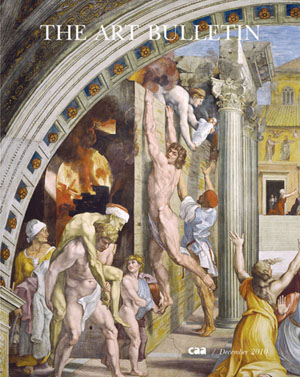 Art Bulletin Reviews Editor
The Art Bulletin Editorial Board invites nominations and self-nominations for the position of reviews editor for a three-year term: July 1, 2012–June 30, 2015, with service as incoming reviews editor–designate in 2011–12. Candidates should be art scholars with stature in the field and experience in editing book and/or exhibition reviews; institutional affiliation is not required. They should also be published authors of at least one book займ на карту срочно без отказа.
The reviews editor is responsible for commissioning all book and exhibition reviews in The Art Bulletin. He or she selects books and exhibitions for review, commissions reviewers, and determines the appropriate length and character of reviews. The reviews editor also works with authors and CAA’s codirectors of publications in the development and preparation of review manuscripts for publication. He or she is expected to keep abreast of newly published and important books and recent exhibitions in art history, criticism, theory, visual studies, and museum publishing. This three-year term includes membership on the journal’s editorial board.
The reviews editor attends the three annual meetings of the Art Bulletin Editorial Board—held twice in New York in the spring and fall and once at the CAA Annual Conference in February—and submits an annual report to CAA’s Publications Committee. CAA reimburses the reviews editor for travel and lodging expenses for the two New York meetings in accordance with its travel policy, but he or she pays these expenses to attend the conference.
Candidates must be current CAA members and should not be serving on the editorial board of a competitive journal or on another CAA editorial board or committee. Members may not publish their own work in the journal during the term of service. Nominators should ascertain their nominee’s willingness to serve before submitting a name; self-nominations are also welcome. Please send a statement describing your interest in and qualifications for appointment, a CV, and at least one letter of recommendation to: Art Bulletin Reviews Editor Search, College Art Association, 275 Seventh Avenue, 18th Floor, New York, NY 10001; or email the documents to Alex Gershuny, CAA editorial associate. Deadline: March 25, 2011; finalists will be interviewed on Friday, April 29, 2011, in New York.
 Art Journal Editor-in-Chief
CAA invites nominations and self-nominations for the next editor-in-chief of Art Journal, to serve a three-year term: July 1, 2012–June 30, 2015, with service on the Art Journal Editorial Board in 2011–12 as editor designate and in 2015–16 as past editor. A candidate may be an artist, art historian, art critic, art educator, curator, or other art professional; institutional affiliation is not required.
Working with the editorial board, the editor-in-chief is responsible for the content and character of the journal. He or she solicits content, reads all submitted manuscripts, sends submissions to peer reviewers, and provides guidance to authors concerning the form and content of submissions. The editor-in-chief also develops projects, makes final decisions regarding content, and may support fundraising efforts on the journal’s behalf. He or she works closely with CAA’s staff in New York.
The editor-in-chief attends the three annual meetings of the Art Journal Editorial Board—held twice in New York in the spring and fall and once at the Annual Conference in February—and submits an annual report to CAA’s Publications Committee. CAA reimburses the editor for travel and lodging expenses for the two New York meetings in accordance with its travel policy, but the editor pays his or her own expenses for the Annual Conference.
The position usually requires one-half of a person’s working time. CAA provides financial compensation for course release, usually to an editor’s employer.
Candidates must be current CAA members and should not be serving on the editorial board of a competitive journal or on another CAA editorial board or committee. Nominators should ascertain their nominee’s willingness to serve before submitting a name; self-nominations are also welcome. Please send a statement describing your interest in and qualifications for appointment, a CV, and at least one letter of recommendation to: Art Journal Editor-in-Chief Search, College Art Association, 275 Seventh Avenue, 18th Floor, New York, NY 10001; or email the documents to Alex Gershuny, CAA editorial associate. Deadline: March 25, 2011; finalists will be interviewed on Thursday, April 28, 2011, in New York.