CAA News Today
A Look at the PhD in Creativity at the University of the Arts, Philadelphia
posted Jun 26, 2018
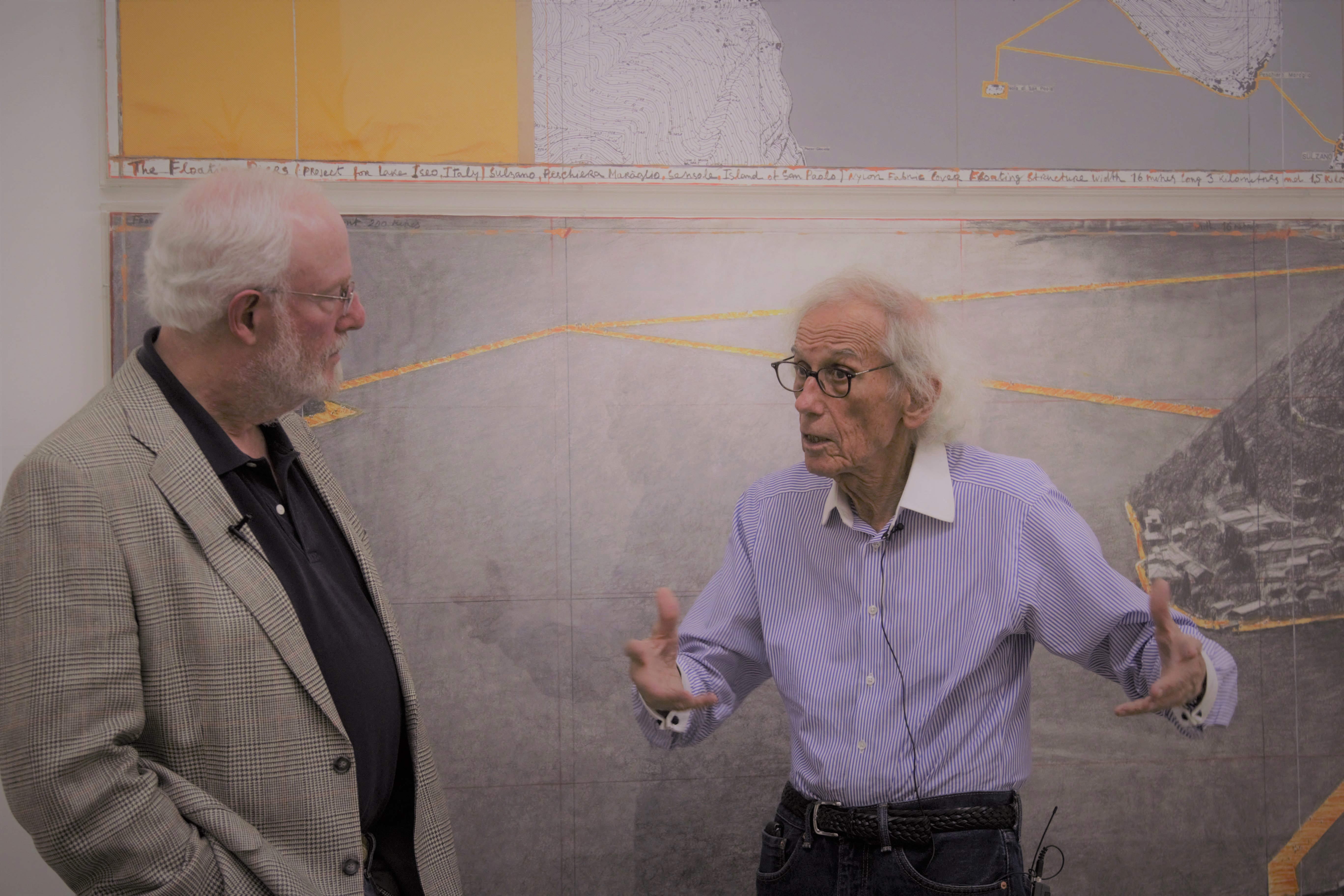
Jonathan Fineberg talking with Christo, a member of the advisory council and a model of the kind of creative thinking to which Fineberg hopes his students will aspire. Image courtesy Jonathan Fineberg.
Earlier this year, the University of the Arts in Philadelphia debuted a PhD program based on the premise that creative thinking lies at the heart of innovation in all fields. A low-residency degree for advanced interdisciplinary research in the arts, humanities, sciences, and social sciences, the PhD in Creativity seeks to fundamentally change the way students think about research problems. The program offers intensive immersion in creative thinking, cross-disciplinary workshops for dissertation development, and a bespoke dissertation committee tailored to best serve each student’s individual dissertation project. The first cohort of students are applying now to begin in the summer of 2019.
HOW DID IT COME ABOUT?
David Yager and Jonathan Fineberg met in 2015 at a conference on cross-disciplinary thinking in art and science sponsored by the National Academies of Science, Engineering and Medicine (part of the National Academies Keck Futures Initiative). Well known for his pathfinding work in medicine and design, the academies had asked David Yager to serve on the steering committee. The organizers asked Jonathan Fineberg to speak about his new book Modern Art at the Border of Mind and Brain, which crosses psychoanalysis and neuroscience with art criticism for a fresh perspective on the nature of creative thinking. At this conference, Jonathan and David began a conversation that led to their collaboration in creating this radically reconceived PhD.
HOW DOES IT WORK?
The PhD in Creativity commences in mid-June each year with an intensive, two-week residency in a curated sequence of arts experiences interspersed with 4 days of methods seminars. Students also begin to workshop their individual PhD projects during this time with support from their cohort and from the Program Director.
The students meet again over a long weekend the following January, and again the following summer as they enter the final stages of research and begin writing in the second year. Most PhD programs commence with two or three years of training in methods and of mastery in the specialized knowledge of a discipline and then they administer a qualifying exam to determine if a student is ready to go on to the dissertation stage of the PhD. At University of the Arts, the PhD program looks at the MA-level training (done elsewhere), together with work experience, and a dissertation proposal as a kind of qualifying “exam” for admission and begins the program at the dissertation stage. The proposal must be interdisciplinary, preferably the kind of hybrid project that would not quite fit another PhD program. In the first summer, the cohort of peers from different fields and the program director critique each proposal in a workshop, set in the midst of a creativity immersion that attempts to break down the hierarchies of conventional training. Then a dissertation committee is formed around the needs of each student’s specific project, recruiting advisors from wherever the right advisors are to be found.
INTERVIEW WITH JONATHAN FINEBERG, Director of the PhD Program
CAA media and content manager Joelle Te Paske corresponded with program director Jonathan Fineberg earlier this year to hear his insights. Read their interview below.
JTP: Who do you see applying to the program? What is the sort of background/research would you like to see them coming in with?
JF: I’m already seeing, in the initial inquiries, exactly the kind of applicant I was hoping for: someone with a solid training in a field, and real experience putting their skills into practice, who then realizes they have an idea of how they might do things differently. I expect they will come with an MA, an MD, a law or business degree and have found a particular, hybrid project they’d like to explore for which they weren’t trained. I spoke with an extremely talented law school provost, for example, who is thinking about how the training of law school deans and presidents shapes the profession and I expect she’ll write an innovative book from this dissertation; a brilliant dancer with great performance experience came to me thinking about how dance companies are increasingly redefining themselves around discrete projects rather than continuing as companies and what that means both for the future of dance and for our culture more broadly; I spoke with a researcher at a drug company looking for a fresh angle on Alzheimer’s disease; and an experienced educator who is thinking about curricula for non-traditional learners. These kinds of projects will all be looking to a range of sometimes completely novel practices to infuse their investigations with fresh air.
JTP: The timeline of three years to completion is impressive.
JF: Both because these students are a little older and highly motivated and because the advising is carefully orchestrated and very hands-on, we expect the dissertations to move along more quickly than is often the case. Though in many programs you can complete the dissertation in three years after you finish the MA; it’s just that we effectively outsource the MA and ask for a little more real world work experience before you start.
JTP: The advisory council for the program is diverse in discipline – how did that come together?
JF: The people on my advisory council are all extraordinarily creative individuals who embody exactly what I hope my students aspire to as innovative researchers. So, these people serve both as inspiration and also as resources for great advice about how to build this program and where to find the right advisors for the students’ projects. Because I’ve had a long and varied career myself, I’ve encountered many remarkable people in a wide variety of fields whom I know well enough to ask for their thoughts.
JTP: How do you see the location of University of the Arts in Philadelphia informing the program?
JF: Although the program will take students in any field, it resides in an art school precisely because no one is better than artists at breaking down conventional thinking. If you’ve been well trained in a field it takes years to get over that training. It’s not a bad thing to be trained well, but we hope to instill more irreverence at the start.
JTP: The “curated sequence of arts experiences for an intense course in creativity” is very intriguing! What sort of arts experiences?
JF: Imagine yourself walking into a session of jazz drummers improvising and then having them hand you the sticks; you’d have to think fast and experiment to take over. That’s the kind of experience. Imagine hearing a major artist relive the thought process from which she or he generated a work or have a gifted theater director show you how to find a character within your own personality in the morning and then trying to create a performance for that character in front your group in the afternoon. Students will by and large have no tools for these kinds of experiences, forcing them to create a structure in their own heads to bring coherence to the experience. University of the Arts in particular has an array of talented artists who can create these sorts of simultaneous baffling and exciting experiences and because they will come one after another in a compressed time period the students will get faster at adapting and responding. This will also reinforce the effect of having really smart non-specialists cross question you about your project: you can’t use field jargon and you have to make sense. That will be happening in the workshops in the midst of the immersion course and the unusual methods readings.
JTP: What made you create this program?
JF: When I met David Yager, he was on his way to become the new President of the University of the Arts after having been a very successful dean at the University of California – Santa Cruz for some years. I had just retired from The Phillips Collection and the University of Illinois where I had been supervising PhDs for forty years. I was thinking about what to do next because I wanted to try something new in a new place just to mix things up for myself. In Modern Art at the Border of Mind and Brain I had attempted to make a scientifically grounded argument that we need works of art to develop our creative response to the world; I tried to show the evolutionary basis of art. That prompted David and I to start talking about how we could teach creativity in a PhD program to produce more creative researchers in whatever field they happened to be in. This is that program.
JTP: What would you say to naysayers of an expanded program like this one?
JF: This program is not for everyone. It’s great to be an outstanding practitioner in an established field. But for this, you have to have had the experience of coming up against the limits of your training, to feel that you have an idea that you weren’t prepared to deal with, and to believe you can create something really new. I’m excited to meet these new students!
New in caa.reviews
posted Jun 22, 2018
Carol Damian reviews Heaven, Hell, and Everything in Between: Murals of the Colonial Andes by Ananda Cohen Suarez. Read the full review at caa.reviews.
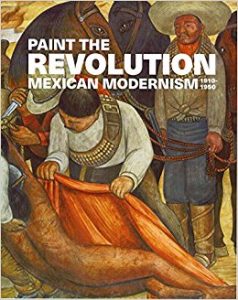
Cindy Teresa Peña writes about Paint the Revolution: Mexican Modernism, 1910–1950 edited by Matthew Affron, Mark A. Castro, Dafne Cruz Porchini, and Renato González Mello. Read the full review at caa.reviews.
Brigit Ferguson discusses Gothic Sculpture in America III: The Museums of New York and Pennsylvania, edited by Joan A. Holladay and Susan L. Ward. Read the full review at caa.reviews.
Wyeth, Terra, and Millard Meiss Publications Grants Open for 2019
posted Jun 21, 2018
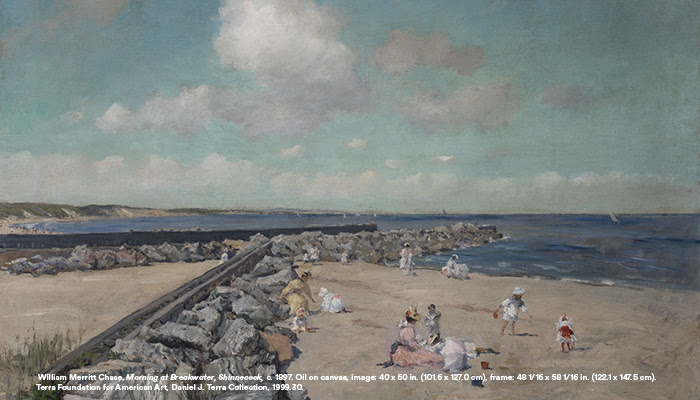
We’re pleased to announce the opening of three publications grants for 2019, the Terra Foundation for American Art International Publication Grant, the Wyeth Foundation for American Art Publication Grant, and the Millard Meiss Publication Fund.
Terra Foundation for American Art International Publication Grant
The 2019 Terra Foundation for American Art International Publication Grant provides financial support for the publication of book-length scholarly manuscripts in the history of American art circa 1500–1980. The grant considers submissions covering what is the current-day geographic United States.
The deadline for letters of intent is September 15, 2018. Awards of up to $15,000 will be made in three distinct categories:
- Grants to US publishers for manuscripts considering American art in an international context
- Grants to non-US publishers for manuscripts on topics in American art
- Grants for the translation of books on topics in American art to or from English.
Learn more about the Terra Foundation for American Art International Publication Grant.
Wyeth Foundation for American Art Publication Grant
Since 2005, the Wyeth Foundation for American Art has supported the publication of books on American art through the Wyeth Foundation for American Art Publication Grant, administered by CAA.
For this grant program, “American art” is defined as art created in the United States, Canada, and Mexico. Eligible for the grant are book-length scholarly manuscripts in the history of American art, visual studies, and related subjects that have been accepted by a publisher on their merits but cannot be published in the most desirable form without a subsidy.
The deadline for the receipt of applications is September 15 of each year. Learn more about the Wyeth Foundation for American Art Publication Grant.
Millard Meiss Publication Fund
Twice a year, CAA awards grants through the Millard Meiss Publication Fund to support book-length scholarly manuscripts in the history of art, visual studies, and related subjects that have been accepted by a publisher on their merits, but cannot be published in the most desirable form without a subsidy. Thanks to the generous bequest of the late Prof. Millard Meiss, CAA began awarding these publishing grants in 1975.
Books eligible for a Meiss grant must currently be under contract with a publisher and be on a subject in the arts or art history.
The deadlines for the receipt of applications are March 15 and September 15 of each year. Learn more about the Millard Meiss Publication Fund.
News from the Art and Academic Worlds
posted Jun 20, 2018

Christo’s floating sculpture The London Mastaba, made from thousands of stacked oil barrels, in Hyde Park, London. Image: David Azia/NYT
Can the Glasgow School of Art Be Saved after Second Fire?
Artists and architects in Scotland say that the school may be beyond repair after a devastating fire tore through the landmark building on June 15th. (The Art Newspaper)
Bronx Museum of the Arts Hires New Director
Deborah Cullen, director of the Wallach Gallery at Columbia University, will be the next director of the Bronx Museum of the Arts. (New York Times)
Artists Support Themselves Through Freelance Work and Don’t Find Galleries Especially Helpful, New Study Says
A study based on a survey of more than 1,000 practicing visual artists sheds light on the economics of making art. (Hyperallergic)
Christo’s Latest Work Weighs 650 Tons. And It Floats.
The London Mastaba, Christo’s first major outdoor work in Britain, is now floating in the middle of Hyde Park. (New York Times)
Behind the Fierce, Assertive Paintings of Baroque Master Artemisia Gentileschi
Gentileschi was as self-made and as independent as was conceivable in her time—and she fought hard for it. (Artsy)
What It Means When Beyoncé and Jay-Z Take Over the Louvre
The surprise music video quickly went viral. (The New Yorker)
Call for Responses | Beyond Survival: Public Funding for the Arts and Humanities
posted Jun 19, 2018
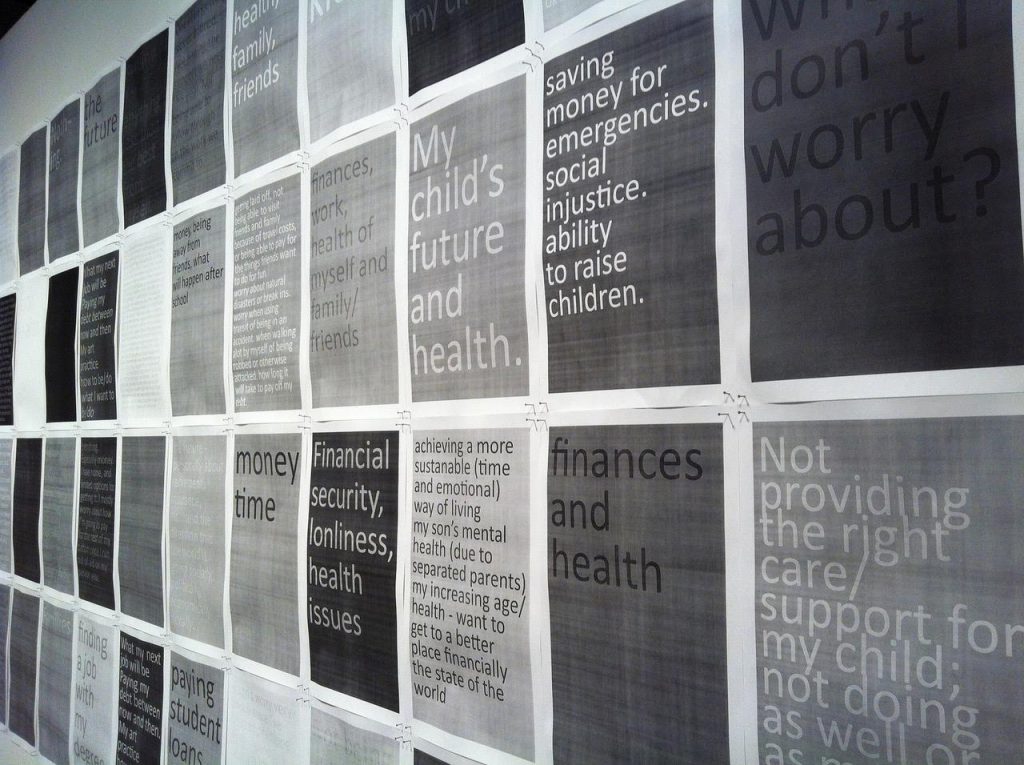
Art Journal Open seeks 500-word responses for a Forum on Public Funding for the Arts and Humanities, convened by Sarah Kanouse, Jeremy Liu, Catherine Morris, and Mimi Thi Nguyen.
Moderated contributions will be posted to an online forum hosted by Art Journal Open. Some respondents may subsequently be invited to expand their text into a longer article.
Responses will be accepted through August 20, 2018 to: publicfundingforum@gmail.com
Beyond Survival: Public Funding for the Arts and Humanities
Three decades into the long culture wars, how are artists, scholars, and cultural organizations navigating shifting political, community, and financial tides? Where have we encountered friction or congruence between federal priorities and our work at state, local, and community levels? Has our work changed – in structure, presentation, or substance – in response to these priorities?
Despite threats of elimination earlier in the year, federal funding for the arts and humanities has been preserved—at least for now. While rightly celebrating this collective accomplishment, we must also acknowledge that ideological pressures on US cultural policy are performed as much through selective funding as outright defunding. Each successive presidential administration has stamped its particular priorities on funding agencies, shaping arts and humanities research through both direct and indirect means. The grantmaking models now used by the National Endowment for the Arts and National Endowment for the Humanities were carefully devised to avoid the headline-grabbing controversies of the 1980s culture wars while articulating the value of the arts and humanities to a non-elite, often skeptical public. Simultaneously, arts and scholarly communities have sometimes struggled for diversity in terms of race, class, and gender. Nonprofit cultural and educational institutions evolved alongside twentieth-century funding models, with diminishing federal funding giving way to support from private philanthropy, and its concomitant priorities. Surviving funding programs often expect artistic and intellectual activities to contribute to community development, shore up fraying social services, or emphasize their policy implications—a challenging charge made more difficult by the patchwork of fragile social, economic, community, and technological infrastructures on which such work rests.
In an environment of heightened scarcity and competitiveness, how do we negotiate the differing audiences, priorities, and compromises that inevitably register in creative, academic, and public discourse? How do we defend our existing, imperfect, imperiled institutions while also calling for—and ultimately achieving—more expansive public funding of a wider range of aesthetic and political voices?
We seek 500-word responses to these questions from communities of art-making, scholarship, and exhibition practice. Moderated contributions will be posted to an online forum hosted by Art Journal Open. Some respondents may subsequently be invited to expand their text into a longer article. Responses will be accepted through August 20, 2018 to publicfundingforum@gmail.com.
Sarah Kanouse
Artist and Associate Professor
Department of Art + Design
Northeastern University
Jeremy Liu
Senior Fellow for Arts, Culture and Equitable Development
PolicyLink
Catherine Morris
Senior Curator for the Elizabeth A. Sackler Center for Feminist Art
Brooklyn Museum
Mimi Thi Nguyen
Associate Professor
Gender and Women’s Studies and Asian American Studies
University of Illinois, Urbana-Champaign
New in caa.reviews
posted Jun 15, 2018
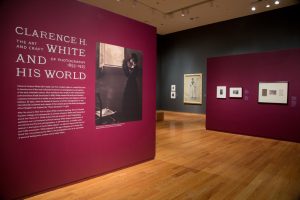
Ellen Handy reviews Clarence H. White and His World: The Art and Craft of Photography, 1895–1925 by Anne McCauley. Read the full review at caa.reviews.
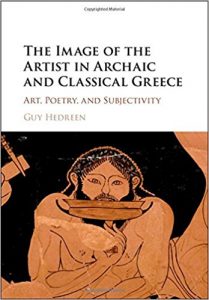
Jenifer Neils writes about The Image of the Artist in Archaic and Classical Greece: Art, Poetry, and Subjectivity by Guy Hedreen. Read the full review at caa.reviews.
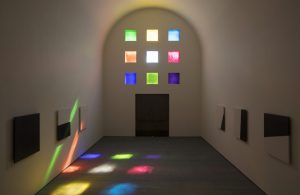
Eric Michael Wolf discusses Austin by Ellsworth Kelly, and the exhibition Form into Spirit: Ellsworth Kelly’s Austin at the Blanton Museum of Art. Read the full review at caa.reviews.
Christopher Kasprzak explores the exhibition Calder: Hypermobility at the Whitney Museum of American Art. Read the full review at caa.reviews.
News from the Art and Academic Worlds
posted Jun 13, 2018
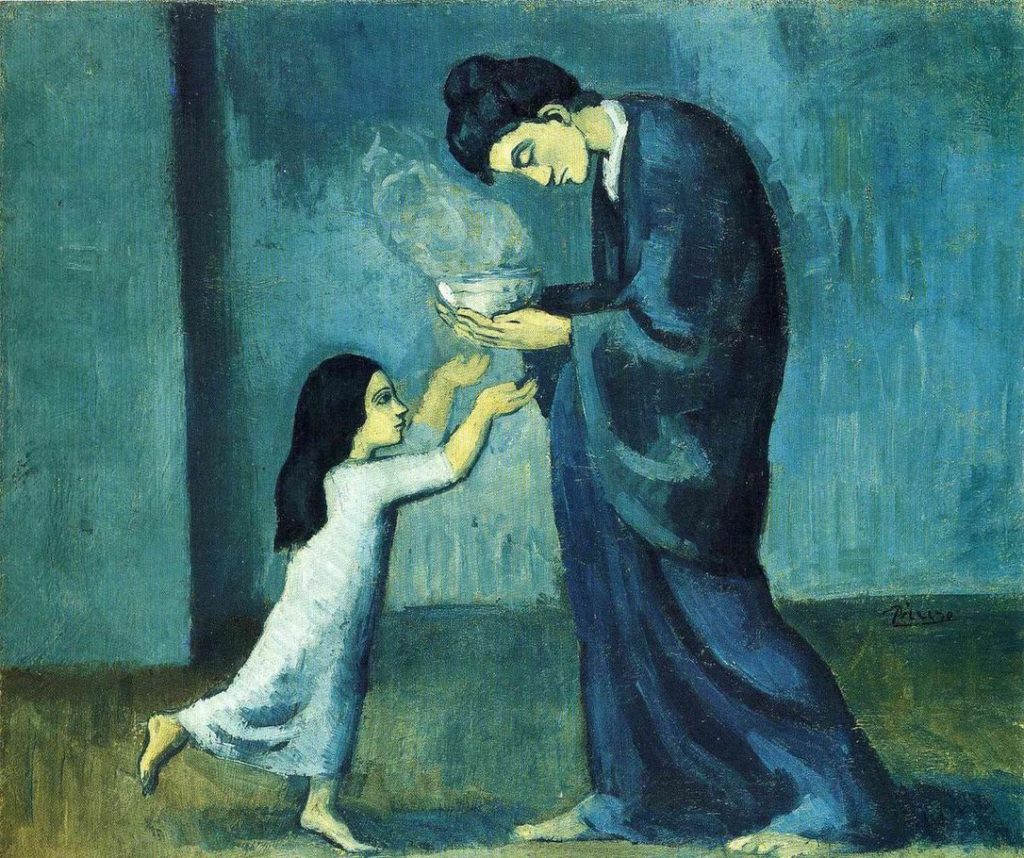
Pablo Picasso, La Soupe (1902–03). Courtesy of the Art Gallery of Ontario, via artnet News.
New X-Ray Images Reveal Just How Carefully Picasso Worked Over His Earliest Blue Period Paintings
Thanks to advanced imaging technology, art historians have new insights into the creative process behind Picasso’s Blue Period. (artnet News)
Curiosity and What Equality Really Means
“Once we lose the desire to understand—to be surprised, to listen and bear witness—we lose our humanity. Among the most important capacities that you take with you today is your curiosity.” Read Atul Gawande’s commencement address at UCLA medical school. (New Yorker)
Over 400 Lichtensteins Go to the Whitney Museum and an Early van Gogh Sells for $8.3M
The Roy Lichtenstein Foundation has initiated a promised gift of more than 400 artworks. (Hyperallergic)
Why the Legal Strategy Behind Masterpiece Cakeshop Gets Art Backwards—and Why It Should Make People Nervous
A look at the role of artistic expression in the recent Supreme Court decision. (artnet News)
CAA Report by America Salomon, Recipient of the Judson-Morrissey Excellence in New Media Award
“Enough cannot be said about the immense benefit of feeling a sense of community in what can seem like a very siloed professional art world, and so going into a large conference like CAA with a new group of colleagues in the New Media Caucus was incredibly reassuring.” Read America Salomon’s report from the 2018 Annual Conference. (New Media Caucus)
What It Takes to Engage Teachers with Digital Museum Resources: Five Lessons Learned
Key takeaways from a two-year study conducted by the Smithsonian Center for Learning and Digital Access. (American Alliance of Museums)
New on Art Journal Open
posted Jun 13, 2018
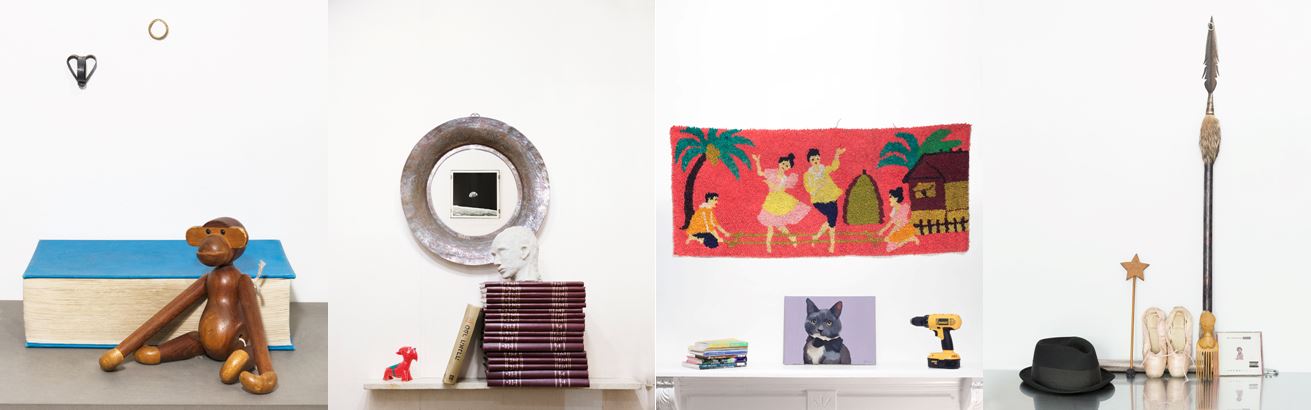
Elisabeth Smolarz, ENCYCLOPEDIA OF THINGS, 2014- (ongoing). Archival inkjet prints, dimensions variable. Courtesy of the artist.
Caitlin Masley-Charlet in Conversation with Elisabeth Smolarz
This interview is the last in a series of conversations led by Caitlin Masley-Charlet, focused on the utility and scope of artists residencies. In this interview, Masley-Charlet sits down with artist Elisabeth Smolarz to discuss Smolarz’s recent residencies and projects, and the importance of failure, artistic community, and cross-pollination between practitioners.
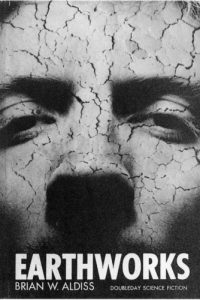
Brian Aldiss, Earthworks, Doubleday cloth edition, 1966
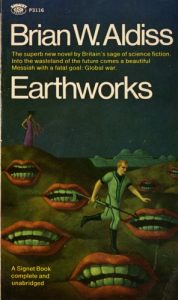
Brian Aldiss, Earthworks, Signet paperback, 1967
Digging into Aldiss’s Earthworks and Smithson’s “Earthworks”
Scholar Suzaan Boettger looks at the generative interplay between the science-fiction novels of the late Brian Aldiss and the Land art works of Robert Smithson, examining the word “earthworks” as a “shared emotional bedrock” between the two artists. In looking at Aldiss and Smithson side by side, Boettger brings Aldiss’s work more into the realm of art history, and Smithson’s work more into the realm of science fiction and environmental degradation.
How to Become an Art Editor: An Interview with Phil Freshman, President of Association of Art Editors
posted Jun 12, 2018
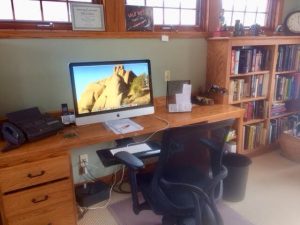
Freshman’s home office. All photos courtesy Phil Freshman.
Phil Freshman is a freelance art editor and president of the Association of Art Editors (AAE). Formerly a staff editor at the Los Angeles County Museum of Art (1980–84), the J. Paul Getty Museum (1985–88), the Walker Art Center (1988–94), and the Minnesota Historical Society Press (1995–99), he has worked on numerous books, exhibitions, and other projects, focusing mainly on art history, architecture, photography, and design.
We were curious what advice Phil might have for aspiring art editors. CAA media and content manager Joelle Te Paske spoke with him in April 2018.
Joelle Te Paske: I’m glad we have a chance to talk, especially to learn more about the Association of Art Editors and take a look at what you do.
Phil Freshman: When I talk to people about the AAE who didn’t know about it previously, they’re typically glad to know it exists.
JTP: It’s great. So, what are you working on nowadays?
PF: The last catalogue I edited was for the Minneapolis Institute of Arts, which recently took the “s” off its name and started calling itself “Mia.” Anyway, the book was about contemporary Japanese lacquer sculpture, and was tied to an exhibition that is on view now and will be up until late June. It’s a field of study I had never thought about much. You think of Japanese pottery, right? But you don’t think of pure sculpture. A very interesting and challenging project.
Right now, I’m editing a memoir by a lifelong friend who recently retired from the law. He spent a year hoofing it around West and East Africa in the early 1970s and thought he would get around to writing a memoir right afterward. Then 45 years went by like the wave of a hand, and here he is, doing it now. So, it’s a pleasure to help him, to know enough to make his manuscript better.
JTP: You’re learning a lot about him, I bet.
PF: I am. And that was a part of his life I hadn’t known much about to begin with.
JTP: How did you become an editor?
PF: I was a Los Angeles lad who first wanted to be a newspaper reporter. But despite trying for several years, it didn’t work out. I then lived for three uninterrupted years in Israel, Iran, East and West Africa, and Spain, finding ESL teaching jobs along the way. I came back home to get an ESL degree at UCLA. During that time, a friend in LA whose firm published books dealing with Western US history hired me part-time to review slush pile manuscripts and proofread book galleys.
A couple of years later, with just that little bit of experience but intrigued by the work, I applied for a copyeditor-proofreader job at the Los Angeles County Museum of Art. I took the required test (along with something like 200 other applicants), was interviewed, and then hired. I thought, “Oh, God. Now I actually have to do something.”
JTP: Yes, now it was real!
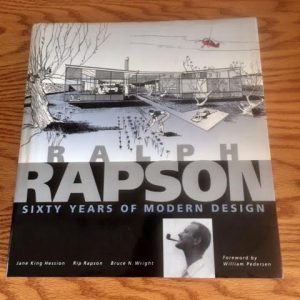
Ralph Rapson: Sixty Years of Modern Design (1999). Freshman edited this and the other books illustrated here.
PF: At first, I had no idea what I was doing. But my senior editor was a great teacher. When he left the museum—too soon, alas—I was the only editor there. I worked on books about American painting and printmaking, 18th-century fashion, contemporary art, and more, plus the monthly members’ magazine, annual reports, lots of brochures, flyers, exhibition labels. It was full immersion and very long weeks until, after six months, I was allowed to hire somebody. Eventually, I had three editors.
JTP: That makes sense. Rather than just one, working at that scale.
PF: Right. But when I was hired from the Getty Museum to be the Walker Art Center’s first-ever editor, in 1988, I was once again a solo act—and remained one for three years. The Walker had an ambitious program of publishing catalogues and presenting exhibitions on the history of graphic design, Russian Constructivist art, contemporary sculpture, and this, and that, and the other thing! All that plus editing for the Walker’s very active film, performing arts, and PR departments. I worked 70 to 80 hours a week, and that didn’t stop even after I was finally able to hire an assistant editor.
JTP: There was no getting around the fact that you had to go through all that material.
PF: Right. Not just going through it all but also needing to be attuned to a constellation of details. That was, as it so often is, the job—the details, as well as panning out for the whole picture. And more often than not, I didn’t receive all the materials I needed at the get-go. Unfortunately, that’s all too typical in this racket. In fact, sometimes you get a little bit, and then some more dribbles in, then a bit more, and you have to assemble the material as it’s unfolding before you, make everything hang together. I had to develop a host of skills over the years, including diplomacy—at which I’ve never been adept.
Beyond all that, one reason I was initially attracted to editing was that I had no patience for formal schooling. I’ve found that editing has provided a rich, ongoing education in which I get a front-row seat to subjects about which I might otherwise never have learned a thing. Not to mention exposure to fascinating people, and to situations I wouldn’t have encountered if I weren’t doing this work. There are certainly things to hate about it, but the balance sheet works out in its favor.
JTP: It’s so detail-oriented, but you are committing your time to new projects and scholarship. It’s integral to the work.
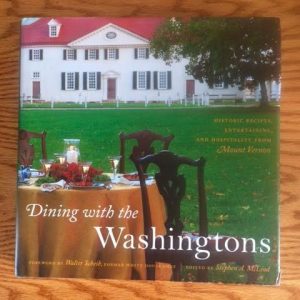
Dining with the Washingtons: Historic Recipes, Entertaining, and Hospitality from Mount Vernon (2011).
PF: Yes. And I also keep coming back to this: you have to keep asking questions. One instinct that made me want to be a reporter applies perfectly to editing. I ask questions, and then ask more, and then ask some more. Often enough, I’ve had authors and curators who are responsive to that. The relationship works best when they understand that I’m on their side, trying cover any holes that open up because they were writing too fast. But some of them are resentful, insecure, brittle, and they can make that sort of thing difficult.
JTP: Yes, I can see it going both ways. I would think, though, that writers with more experience realize having a good editor can be like a good friend, someone who can make your work better before it goes out into the world.
PF: That’s it. I’ve worked with a few pretty well-known authors with whom it felt like a collaboration. They liked the back-and-forth. They didn’t just take all of my suggestions but said, “No, let’s discuss this further.” And then you get to a middle way that’s better than what you thought of, or than what they thought of.
JTP: Would you recommend that editors who are just starting out keep that in mind?
PF: Definitely. Another thing I like to tell aspiring editors is, “Go to the library.” You know, the library?
JTP: I’ve heard of those.
PF: [Laughs] Get hold of exhibition catalogues and other art books on a range of subjects, and then review all the separate essays or chapters, the footnotes and bibliographies, the plates, figure references, checklists, and the rest. And bear in mind, as you’re reading, that it’s highly unlikely that the original manuscript was delivered intact to the editor at beginning of the process. Probably dribbled in over a period of weeks, if not months.
You have to take the bits and pieces and make them fully consistent, factually accurate, grammatically correct, and maybe even interesting! So, I don’t know that someone has to have an art background per se in order to be an art editor. But I would say that having a feel for and a knowledge of language, a willingness to become genuinely invested in a subject, a good visual memory, and an insane attention to detail are all necessary.
JTP: I imagine AAE would be a great resource for people starting out. Where else should they look?
PF: LinkedIn is a good source. The old cold-call approach is not bad. Find people who work where you might want to work and contact them. I recently spoke with an editor friend who, though she had just quit Facebook, found a valuable online organization on it called Editors’ Association of Earth. She described it as a private, heavily moderated group and a place where you can engage with other editors, ask questions freely, and get advice.
JTP: Editors likely want to share their skills—many have devoted their careers to sharing knowledge, after all—and it seems like that would be good for people starting out.
PF: I’d also suggest getting immersed in The Chicago Manual of Style. And finding books about editing. Here are some I recommend:
- The Subversive Copy Editor, by Carol Fisher Saller. University of Chicago Press, 2009. Her monthly online Q & A, via the U of Chicago Press Website is terrific. Need to sign up for it.
- Exhibit Labels: An Interpretive Approach, by Beverly Serrell. Rowman and Littlefield, 2015 (second edition).
- Line by Line: How to Improve Your Own Writing, by Claire Kehrwald Cook. Houghton Mifflin, 1985. (This is the one I have, but there are probably subsequent editions.)
- On Writing Well, by William Zinsser. Collins, 2006 (30th anniversary edition).
- The Copyeditor’s Handbook: A Guide for Book Publishing and Corporate Communications, by Amy Einsohn. University of California Press, 2006 (second edition). A very good primer on the basics. It also includes copyediting exercises and answer keys.
JTP: That’s terrific. Thank you.
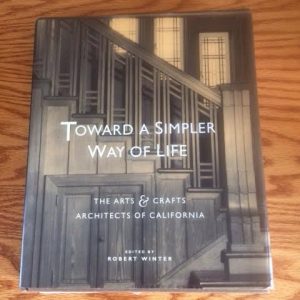
Toward a Simpler Way of Life: The Arts and Crafts Architects of California (1997).
PF: I’d also suggest that if a nearby college offers copyediting classes, take one. It can be very useful to learn the mechanics in a formal way. Such classes also help you see whether or not you have an appetite and instinct for editing.
JTP: This is important, too, because it’s an intensive practice.
PF: Right. Once you get involved in a job, it’s immersive. It is the writer’s book, the museum’s book, the publisher’s book, but you can’t ever say to yourself, “Well, it’s on them. I wash my hands of this,” or, “It’s not going to have my name on it.” You have to feel responsible for whatever project you’re on. In other words, you can’t say, “It’s just a job.”
Another thing to consider: Back in the days when I had stars in my eyes, I’d think, “How wonderful it would be to work for XXX Museum of Art. So prestigious.” But in fact, some of my best experiences have been with smaller institutions and some of my worst with larger, “important” ones.
JTP: That’s good to know.
PF: Usually, there are good people in such places. Sometimes a good attitude. Less bureaucracy. And often you can get things done more fluidly.
Another thing important to me is having solid relationships with graphic designers. I’ve worked with good ones and very bad ones. By good, I mean ones who like to share suggestions about what might work, ones who welcome it when you point out why a certain typeface, or size of type, or caption location in relation to pictures might be reconsidered. It’s a conversation. And then on the other hand, there’s the head-banging-against-the-wall experience of having to deal with the other kind of graphic designer. One of them referred to text as “texture,” something mostly useful as a visual complement to their brilliant layouts!
JTP: As an editor, I can only imagine [laughs]. Do you ever work in tandem with a graphic designer, presenting yourselves to a client as a team?
PF: Yes. Several designers I know will get a job and say to the client, “I know a good editor in Minneapolis. I’d like you to hire him.” By the same token, I’ll get a job and ask, “Do you have a designer for this?” If the client says no, I’ll offer contact information for three or four designers, making my top preference clear.
JTP: Good to know. Keeping track of the designers you like working with would help you establish a mutual-support system.
PF: That’s right. It helps you feel more comfortable going into a project—you know that you can kid around with the graphic designer, and that you can bitch about the client without worrying it’s going to get back to them.
JTP: Can you name a highlight of being president of AAE? Also, how long have you been president?
PF: I’m president for life [laughs].
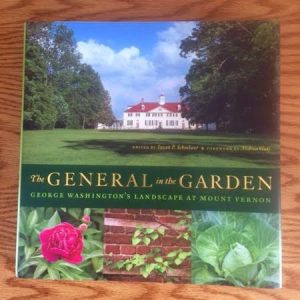
The General in the Garden: George Washington’s Landscape at Mount Vernon (2015).
JTP: [Laughs] Like a Supreme Court justice.
PF: You got it. I’ve occasionally had thoughts of not doing it anymore, but it’s not [too taxing]. Well, creating the first version of our soup-to-nuts style guide, in 2005 and 2006, which I did in tandem with three other editors whom I greatly respect—that did take months. But the result was just wonderful. I’m really proud of having done that. And I get lots of good feedback. Also, I like helping editors find work through the job opportunities page.
There’s also a section [on the AAE site] called Helpful Links. It has many sources you might want to refer to as you’re doing research for a book or an exhibition you’re editing.
The site is an open-source one. Anyone can use it freely. One AAE offering not visible on the site, however, is the rates survey we conduct every five years. It includes questions such as “How much do you charge for editing, proofreading, and other separate tasks?” And “Do you charge extra for working on weekends?” Among numerous others. We sort the answers, and provide a report with graphed percentages and selected verbatim responses.
JTP: That’s terrific. Sounds like it would help editors advocate for themselves.
PF: That’s the idea, of course. I don’t post rates-survey reports on the website because I don’t want potential clients, such as curators, browsing them and thinking, “Wow! Looks like I can get away with paying somebody $20 an hour!” But I’m happy to send the reports out to anybody who requests one.
This interview has been edited for length and clarity.
Apply for the 2019 CAA-Getty International Program
posted Jun 11, 2018
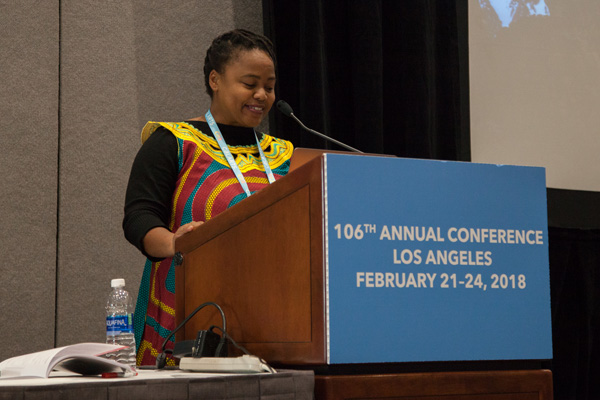
Nomusa Makhubu, University of Cape Town, chair of the “Border Crossings: The Migration of Art, People, and Ideas” alumni panel at CAA 2018. Photo: Rafael Cardenas
The CAA-Getty International Program, generously supported by the Getty Foundation, provides funding to between fifteen and twenty art historians, museum curators, and artists who teach art history to attend CAA’s Annual Conferences. The goal of the project is to increase international participation in CAA, to diversify the association’s membership, and to foster collaborations between North American art historians, artists, and curators and their international colleagues.
ABOUT THE 2019 GRANT
The 2019 CAA-Getty International Program will support fifteen art historians, museum curators, and artists who teach art history to attend the 106th Annual Conference, taking place in New York City from February 13-16, 2019. The grant covers travel expenses, hotel accommodations for eight nights, per diems, conference registrations, and one-year CAA memberships. The program will include a one-day preconference colloquium on international issues in art history on February 12, at which grant recipients will present and discuss their common professional interests and issues. Attendance at the preconference is limited and by invitation only. This year the grant also will fund five alumni from the CAA-Getty International Program to participate in the preconference colloquium and speak at a session during the conference. As they have in previous years, representatives from CAA’s membership will host program participants during the conference week.
ARE YOU ELIGIBLE?
Applicants must be practicing art historians who teach at a university or work as a curator in a museum, or artists who teach art history. They must have a good working knowledge of English and be available to participate in CAA events from February 12-16, 2019. Only professionals who have not attended a CAA conference previously, and who are from countries underrepresented in CAA’s membership are eligible to apply. The grant excludes scholars from North America, Western Europe, and Australia, whose countries are well represented in CAA. It further excludes scholars who have received funds from American foundations or research institutes to participate in conferences or residencies in the United States. Applicants do not need to be CAA members. This grant program is not open to graduate students or to those participating in the 2019 conference as chairs, speakers, or discussants.
HOW TO APPLY
Please review the application specifications and complete the application form. PLEASE NOTE: In order to apply, you need an temporary Member Number, which you get by contacting Member Services. If you have questions about the process or are unsure of your eligibility, please email Janet Landay, project director of the CAA-Getty International Program.
Applications should include:
- A completed application form
- A two-page version of the applicant’s CV
- A letter of recommendation from the chair, dean, or director of the applicant’s school, department, or museum
Applications must be submitted no later than Monday, August 27, 2018. Only applications submitted via the online form will be considered. CAA will notify applicants by Friday, October 5, 2018.