
CAA News Today
Books Published by CAA Members
posted by CAA — June 06, 2017
Publishing a book is a major milestone for artists and scholars—browse a list of recent titles below.
Books Published by CAA Members appears every two months: in February, April, June, August, October, and December. To learn more about submitting a listing, please follow the instructions on the main Member News page.
June 2017

Jeffrey Abt. Valuing Detroit’s Art Museum: A History of Fiscal Abandonment and Rescue (New York: Palgrave Macmillan, 2017).


Matthew Baigell. The Implacable Urge to Defame: Cartoon Jews in the American Press, 1877–1935 (Syracuse, NY: Syracuse University Press, 2017).

Thea Burns. The “Compositiones variae”: A Late Eighth-Century Craftsman’s Technical Treatise Reconsidered (London: Archetype, 2017).

Kim Grant. All about Process: The Theory and Discourse of Modern Artistic Labor (University Park: Pennsylvania State University Press, 2017).


James Housefield. Playing with Earth and Sky: Astronomy, Geography, and the Art of Marcel Duchamp (Lebanon, NH: University Press of New England; Hanover, NH: Dartmouth College Press, 2016).


Ruth E. Iskin, ed., Re-envisioning the Contemporary Art Canon: Perspectives in a Global World (New York: Routledge, 2017).

Tirza True Latimer. Eccentric Modernisms: Making Differences in the History of American Art (Oakland: University of California Press, 2016).

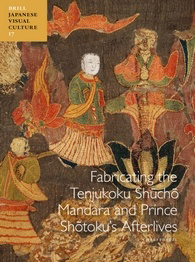
Chari Pradel. Fabricating the Tenjukoku Shūchō Mandara and Prince Shōtoku’s Afterlives (Leiden, the Netherlands: Brill, 2016).

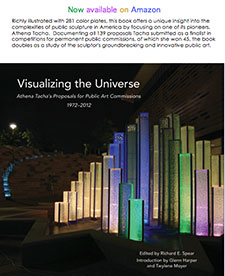
Athena Tacha. Visualizing the Universe: Athena Tacha’s Proposals for Public Art Commissions 1972–2012, ed. Richard E. Spear, introduction by Glenn Harper and Twylene Moyer (Washington, DC: Grayson, 2017).
Getty Supports the CAA-Getty International Program for a Seventh Year
posted by CAA — June 05, 2017
 The Getty Foundation has awarded the College Art Association (CAA) a grant to fund the CAA-Getty International Program for a seventh consecutive year. The Foundation’s support will enable CAA to bring twenty international visual-arts professionals to the 106th Annual Conference, taking place February 21-24, 2018 in Los Angeles, CA. Fifteen individuals will be first-time participants in the program and five will be alumni, returning to present papers during the conference. The CAA-Getty International Program provides funds for travel expenses, hotel accommodations, per diems, conference registrations, and one-year CAA memberships to art historians, artists who teach art history, and museum curators. The program will include a one-day preconference colloquium on international issues in art history on February 20, this year to be held at the Getty Center.
The deadline for applications is August 21, 2017. Guidelines and application.
The CAA-Getty International Program was established to increase international participation in CAA and the CAA Annual Conference. The program fosters collaborations between North American art historians, artists, and curators and their international colleagues and introduces visual arts professionals to the unique environments and contexts of practices in different countries.
Since the CAA-Getty International Program’s inception in 2012, ninety scholars have participated in CAA’s Annual Conference. Historically, the majority of international registrants at the conference have come from North America, the United Kingdom, and Western European countries. The CAA-Getty International Program has greatly diversified attendance, adding scholars from Central and Eastern Europe, Russia, Africa, Asia, Southeast Asia, Caribbean countries, and South America. The majority of the participants teach art history (or visual studies, art theory, or architectural history) at the university level; others are museum curators or researchers.
Earlier this year, CAA organized a reunion to celebrate five successful years of the CAA-Getty International Program. Twenty alumni were selected to present papers at the Annual Conference in New York, held February 15-18, 2017. Organized into four sessions about international topics in art history, these Global Conversations were chaired by distinguished scholars from the United States and featured presentations by the CAA-Getty alumni.
Read Global Conversations: 20 Papers from the 2017 CAA-Getty Alumni
One measure of the program’s success is the remarkable number of international collaborations that have ensued, including an ongoing study of similarities and differences in the history of art among Eastern European countries and South Africa, attendance at other international conferences, publications in international journals, and participation in panels and sessions at subsequent CAA Annual Conferences. Former grant recipients have become ambassadors of CAA in their countries, sharing knowledge gained at the Annual Conference with their colleagues at home. The value of attending a CAA Annual Conference as a participant in the CAA-Getty International Program was succinctly summarized by alumnus Nazar Kozak, Senior Researcher, Department of Art Studies, National Academy of Sciences of Ukraine “To put it simply, I understood that I can become part of a global scholarly community. I felt like I belong here.”
About CAA
The College Art Association is the world’s largest professional association for artists, art historians, designers, arts professionals, and arts organizations. CAA serves as an advocate and a resource for individuals and institutions nationally and internationally by offering forums to discuss the latest developments in the visual arts and art history through its Annual Conference, publications, exhibitions, website, and other programs, services, and events. CAA focuses on a wide range of advocacy issues, including education in the arts, freedom of expression, intellectual-property rights, cultural heritage and preservation, workforce topics in universities and museums, and access to networked information technologies. Representing its members’ professional needs since 1911, CAA is committed to the highest professional and ethical standards of scholarship, creativity, criticism, and teaching.
About the Getty Foundation
The Getty Foundation fulfills the philanthropic mission of the Getty Trust by supporting individuals and institutions committed to advancing the greater understanding and preservation of the visual arts in Los Angeles and throughout the world. Through strategic grant initiatives, it strengthens art history as a global discipline, promotes the interdisciplinary practice of conservation, increases access to museum and archival collections, and develops current and future leaders in the visual arts. It carries out its work in collaboration with the other Getty Programs to ensure that they individually and collectively achieve maximum effect.
New in caa.reviews
posted by CAA — June 02, 2017
Rachel Goshgarian visits Court and Cosmos: The Great Age of the Seljuqs at the Metropolitan Museum of Art. As “the first major exhibition on the Seljuqs in the United States,” the show “sets out to elucidate how the orders of this world and the next were conceptualized and represented in the Seljuq Empire and its successor states,” and, “to a certain extent,” the curators “delivered.” Read the full review at caa.reviews.
 Amy Chun Kim reads They Shall Not Have Me: The Capture, Forced Labor, and Escape of a French Prisoner in World War II, the artist Jean Hélion’s account of his imprisonment and escape from German camps. His “experience of the concrete as a camp inmate consolidated an aesthetic trajectory that was already in motion,” and this “vivid portrait” is “a stylistic testimony to this rejection of abstraction.” Read the full review at caa.reviews.
 Agata A. Gomółka reviews Gretchen E. Henderson’s Ugliness: A Cultural History. The author “ventures on a critical journey through the history of ugliness, viewing the concept through the lens of culture and corporeality” and “packs an abundance of fascinating case studies and thought-provoking insights into a stimulating conceptual framework.” It is a “highly readable, erudite, and compelling account.” Read the full review at caa.reviews.
Rebecca Uchill is the New Web Editor for Art Journal Open
posted by CAA — June 01, 2017
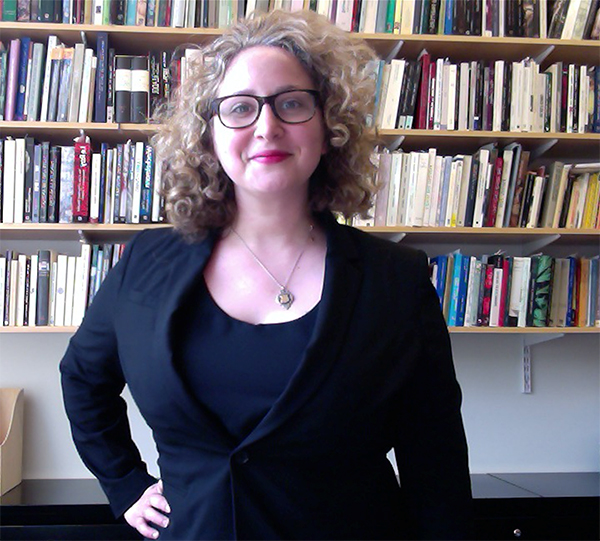
Rebecca Uchill
CAA’s president, Suzanne Preston Blier, has appointed Rebecca Uchill as the new web editor for Art Journal Open, endorsing the recommendation of the editorial board of Art Journal. Uchill, who currently is a Mellon Postdoctoral Fellow with the Center for Art, Science, and Technology at the Massachusetts Institute of Technology, joins the College of Visual and Performing Arts at UMass Dartmouth in September as a full-time lecturer. Uchill’s three-year term for Art Journal Open commences on July 1, 2017; she succeeds inaugural web editor Gloria Sutton, assistant professor of contemporary art history and new media at Northeastern University. During her term, Uchill will be responsible for commissioning and vetting content for the website, including artist projects and essays. She will serve on the Art Journal editorial board.
Uchill is the coeditor (with Caroline A. Jones and David Mather) of Experience: Culture, Cognition, and the Common Sense (MIT Press, 2016), as well as curator of the artist entries for the volume. She organizes interdisciplinary events and programs, including the recent “Being Material” symposium at MIT and a series of curatorial experiments with the collaborative Experience Economies. Uchill has published in journals such as Future Anterior, Museum and Curatorial Studies Review, Visual Resources: An International Journal of Documentation, and Journal of Curatorial Studies. She has curated exhibitions at Harvard University’s Carpenter Center for the Visual Arts, the Indianapolis Museum of Art, and Mass MoCA. Uchill earned her PhD in history, theory, and criticism of art at MIT in 2015.
CAA welcomes Rebecca Uchill to Art Journal Open.
Art Journal Open welcomes proposals for artists’ projects, critical writing, and other contributions, on a rolling basis. Please see the submission guidelines here. Submissions are accepted via e-mail to art.journal.open@collegeart.org.
New in caa.reviews
posted by CAA — May 26, 2017
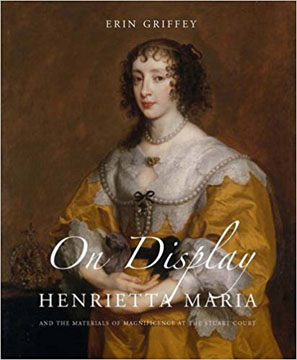 Sarah R. Cohen reads On Display: Henrietta Maria and the Materials of Magnificence at the Stuart Court by Erin Griffey. In this “meticulously researched” and “densely detailed” volume, the author argues that “early modern sovereigns, especially powerful woman such as Queen Henrietta Maria of England, projected their authority through the specific and calculated allure of their material luxuries.” Read the full review at caa.reviews.
 Paisid Aramphongphan reviews Wade Guyton’s One Month Ago, an artist’s book featuring the transposed contents of a Tumblr blog consisting “mainly of photographs of a variety of gay kink scenes.” The reviewer is “inclined to read the book as Guyton’s rebuke to the line of criticism that positions him as basking in the limelight without making a difference in the privileged art world of abstract paintings.” Read the full review at caa.reviews.
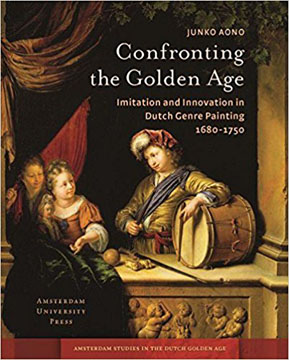 Ellis Dullaart discusses Confronting the Golden Age: Imitation and Innovation in Dutch Genre Painting, 1680–1750 by Junko Aono. The author aims “to investigate how artists working in the waning light of the Golden Age dealt with the illustrious artistic past,” and the book “delivers important insights” and “has the potential to revive interest in and appreciation for a long-neglected period in Dutch art history.” Read the full review at caa.reviews.
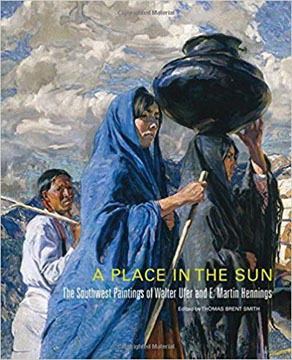 Betsy Fahlman examines the exhibition catalogue A Place in the Sun: The Southwest Paintings of Walter Ufer and E. Martin Hennings, edited by Thomas Brent Smith. Meticulously researched and “handsomely produced,” the volume “accomplishes the authors’ intention to restore these figures as artists of exceptional talent who were engaged with the significant art and historical issues of the day.” Read the full review at caa.reviews.
CAA Statement on May 23, 2017 Trump Proposed Budget
posted by CAA — May 23, 2017
In early May, we recognized that your advocacy matters. Calls, letters, and visits from our members and arts and humanities supporters changed the fate of the NEA, the NEH, and the CPB for the remainder of the 2017 fiscal year. The federal agencies even got a little bump in funding.
With the release of the more detailed White House FY2018 budget this morning, we now know that we at CAA, our members, and advocates for the arts and humanities must renew our efforts to fund these agencies through another fiscal year.
The proposed budget put forth by the White House is nothing short of a gutting of federal support for the arts and humanities. The proposed budget asks for $29 million for the NEA, $30.45 million for the CPB, and $42 million for the NEH. These sums are intended as wind-down amounts resulting in the shuttering of the agencies in 2019. Yet, these are only three agencies among a long list facing cuts under the Trump FY2018 budget. Arts education through the Department of Education is zeroed out and the IMLS would see a 90-percent drop in funding, from $231 million to 23 million in FY2018. Social services agencies assisting the financially insecure are some of the hardest hit with cuts.
Though these numbers are disheartening, we do know from our advocacy efforts on Capital Hill this year that the arts and humanities garner bipartisan support. Many of our elected officials understand the importance of these programs. They see the impact in their own districts through the work of non-profits, higher education institutions, and others who receive grants from the federal agencies.
But the fight is far from over.
Once again, it is imperative that all those who have been touched by the arts and humanities renew the fight to keep these agencies alive and thriving. We urge our members and supporters to make contact with your local representative and tell them the NEA, NEH, and CPB are an integral part of your lives and society.
If you would like to hear what Holly Hughes, one of the NEA Four thinks about the rationale for defunding the NEA, click here.
Use our toolkit to contact your local representative.
Read our March 16, 2017 Statement on the FY2018 skinny budget.
CAA Amicus Brief on Trump’s Travel Ban
posted by CAA — May 22, 2017
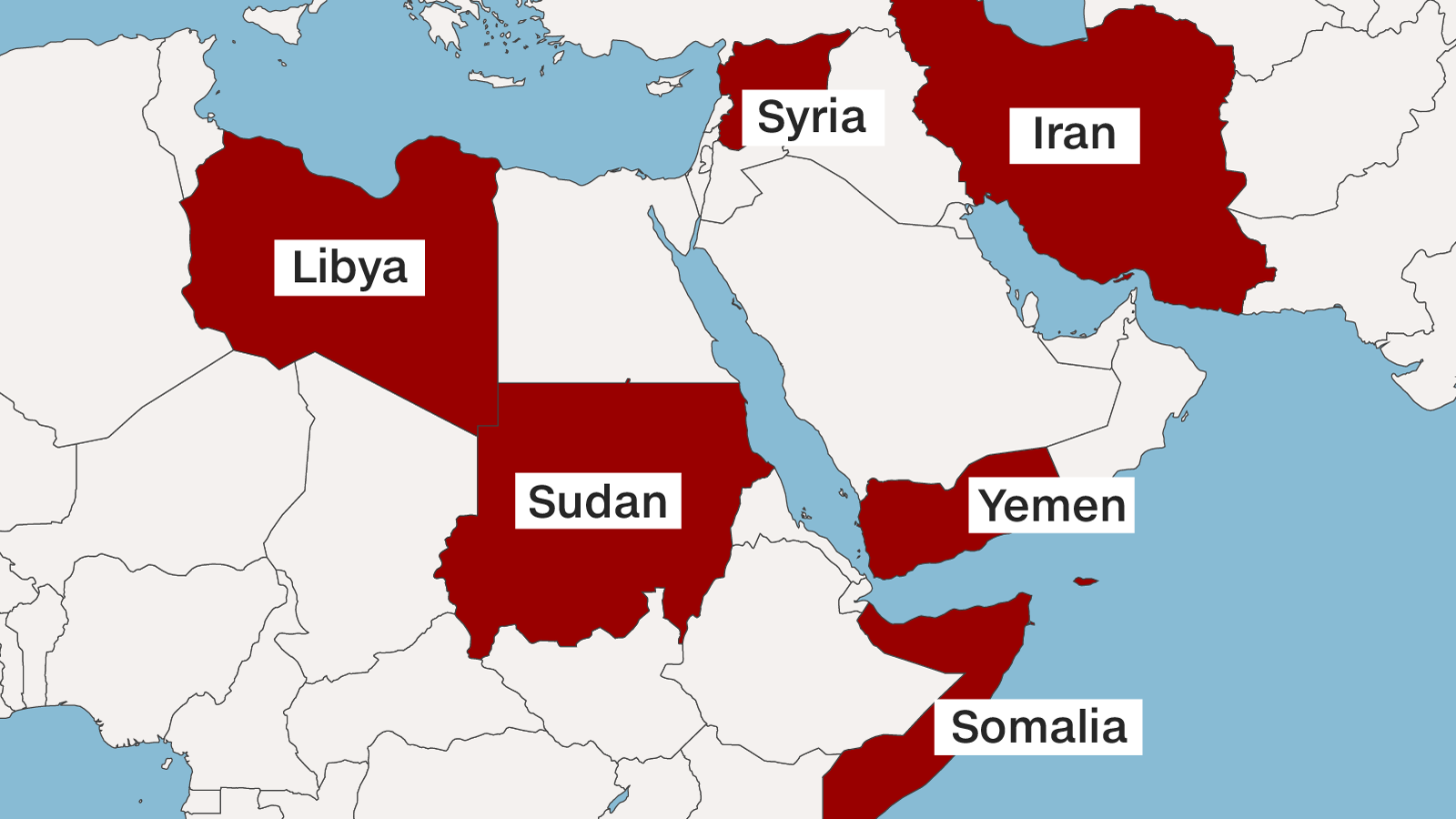 CAA added its name to two amicus briefs in opposition to the United States president’s travel ban, officially known as Executive Order 13,780. We joined the Association of Art Museum Directors and American Alliance of Museums, along with ninety-four art museums. The cases are: International Refugee Assistant Project v. Donald J. Trump in the United States Court of Appeals for the Fourth Circuit; and State of Hawaii and Ismail Elshikh v. Donald J. Trump in the United States Court of Appeals for the Ninth Circuit.
The brief argues that the travel ban inhibits the work of museums. “The negative effects of the Order are already being felt,” the document reads, “as several museums have postponed or canceled future exhibitions that require foreign artists, lenders, collectors, curators, scholars, couriers, and others whose ability to contribute can no longer be assured.” Specific examples include the Cleveland Museum of Art, which canceled a music performance, and the Museum of Fine Arts, Houston, which has doubts about securing loans for an exhibition of Persian art.
We consider joining this amicus brief as inherent to our advocacy efforts and our international reach at CAA. The travel ban impacts the international attendees of our Annual Conference, it impinges on the flow of information and discussion between colleagues, and it harms the practice of research more broadly.
CAA Fair-Use Events in Los Angeles and Saint Louis
posted by CAA — May 19, 2017
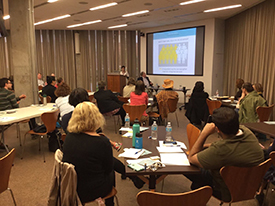
A scene from the fair-use workshop at the UCLA Library (photograph by Sharon E. Farb)
On May 5, 2017, CAA hosted “Fair Use and the Visual Arts,” a presentation and panel discussion at the UCLA Library. The event was made possible by a grant from the Andrew W. Mellon Foundation. Speakers on the panel included Peter Jaszi, the lead investigator on the CAA Code of Best Practices in Fair Use in the Visual Arts and Professor at American University Washington College of Law in the Program on Information Justice and Intellectual Property, and Janet Landay, Program Manager of the Fair Use Initiative at CAA. The pair, who have given presentations across the U.S. and internationally as part of the CAA Fair Use Initiative, talked about why it was important for CAA to undertake the project, their methodology, and the resulting Code of Best Practices in Fair Use for the Visual Arts.
The second half of the event was devoted to a Q&A with the audience of approximately fifty-five people. Question topics ranged from addressing the issue of how the size at which an illustration is produced impacts fair use to indicating in a caption or illustration credits section that I am claiming fair use in the reproduction of an illustration.
A second discussion on CAA’s Fair Use Initiative took place at the American Alliance of Museum’s 2017 Annual Meeting and MuseumExpo in Saint Louis, Missouri. The panel discussion, titled “Copyrighted Material in the Museum: A Path to Fair Use,” took place on May 9. The panel brought together esteemed colleagues from the museum and publishing worlds and was comprised of Patricia Fidler, publisher of art and architecture at Yale University Press; Anne Collins Goodyear, codirector of the Bowdoin College Museum of Art; Judy Metro, editor in chief for the National Gallery of Art; and Joseph Newland, director of publishing for the Menil Collection. Hunter O’Hanian, CAA executive director, was the chair and moderator.
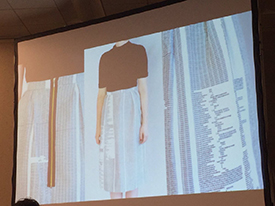
A presenter at AAM’s annual meeting discussed Andrea Wallace’s Still Life Pixel + Metadata Dress (photograph by Anne Young)
About seventy-five to one hundred people attended the standing-room only session and discussion revolved around fair-use issues for museums who want to use their own materials: catalogues, brochures, websites—even wall texts. A key takeaway from the session: museum representatives need to maintain good relations with donor and lenders, and getting approval from their own legal counsel, who tend to approach these matters with caution.
Later in the day Hunter O’Hanian spoke to faculty and students in the Department of Art History and Archaeology at Washington University in Saint Louis.
Learn more about the CAA Fair Use Initiative
Learn more about the 106th CAA Annual Conference in Los Angeles, February 21-24, 2018
GLOBAL CONVERSATIONS 2017
posted by CAA — May 18, 2017
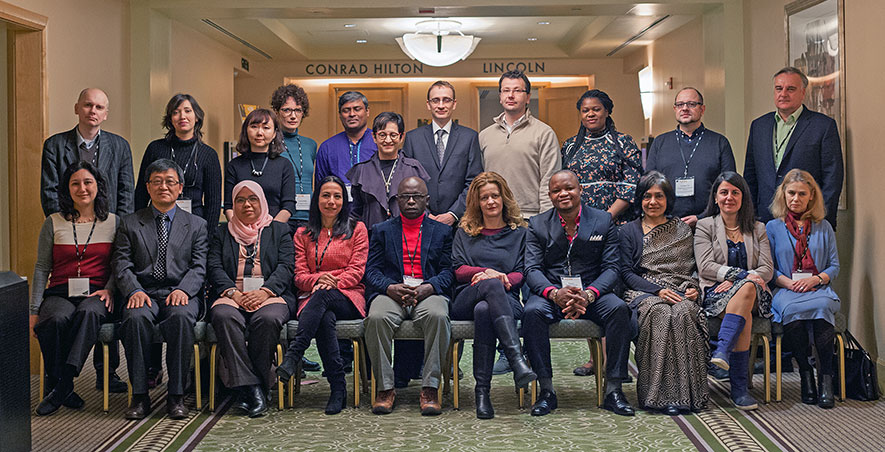
2017 CAA-Getty International Program Reunion Participants
Front row, left to right: Ana Mannarino (Brazil); Ding Ning (China); Sarena Abdullah (Malaysia); Rosa Gabriella Gonçalves (Brazil); Abiodun Akande (Nigeria); Sandra Uskokovic (Croatia); Hugues Heuman Tchana (Cameroon); Parul Mukerji (India); Ceren Ozpinar (Turkey); Irena Kossowska (Poland)
Second row, left to right: Nazar Kozak (Ukraine); Georgina Gluzman (Argentina); Shao Yiyang (China); Ljerka Dulibic (Croatia); Khademul Haque (Bangladesh); Janet Landay (CAA Program Director, USA); Richard Gregor (Slovakia); Davor Dzalto (Serbia); Portia Malatje (South Africa); Cristian Nae (Romania); Laris Boric (Croatia)
The following papers on international topics in art history were presented at four sessions during the 2017 Annual Conference. Organized to commemorate five years of the CAA-Getty International Program, each session includes five alumni scholars from around the world, joined by a distinguished scholar from the United States. The papers can be read in their entirety at the links below.
GLOBAL CONVERSATIONS I
Unsettling the Discipline: Decolonizing the Curriculum
Chair: Michael Ann Holly, Clark Art Institute
Decolonizing the Curriculum: Synthesizing “Multiple Consciousness” into the Art History Curricula of Nigeria and Ghana
Abiodun Akande, Emmanuel Alayande College of Education Oyo, Nigeria
The Emancipatory Potential of Karaman’s Concept of “Peripheral Art”: Still Operative?
Laris Borić, University of Zadar, Croatia
“Does this really matter?” Art History, Feminism, and Peripheral Positions
Georgina Gluzman, Universidad de San Andrés, Argentina
Decolonizing in the Age of Globalization: Experience of a Bangladeshi Art Historian
AKM Khademul Haque, University of Dhaka, Bangladesh
Dangers of Eurocentrism and the Need to Indigenize African and Grassfields Histories
Hugues Heumen Tchana, Higher Institute of the Sahel, University of Maroua, Cameroon
GLOBAL CONVERSATIONS II
Dominant Ideologies and Political Trauma: Can Art History Be Reborn?
Chair: Frederick M. Asher, University of Minnesota
After the Wall: Cultural Trauma and Methodological Challenges in Polish Art History
Irena Kossowska, Institute of Art, Polish Academy of Sciences/Nicolaus Copernicus University, Poland
How My Art History Was Reborn
Nazar Kozak, National Academy of Sciences of Ukraine
d.o.a.
Portia Malatjie, Goldsmiths, University of London (South Africa)
Visible and Invisible: How Art History Can Be Reborn from Dominant Ideology in China
Shao Yiyang, Central Academy of Fine Arts, Beijing, China
“Reconstructing” Art History
Sandra Uskoković, University of Dubrovnik, Croatia
GLOBAL CONVERSATIONS III
The Trouble with (The Term) Art
Chair: Mary Miller, Yale University
SENI MODEN as an Evolving Term and Practice in Malaysian Art
Sarena Abdullah, School of the Arts, Universiti Sains Malaysia
“When Did Beauty Become So F…n’ Ugly?” Troubles with Art and Its Functions
Davor Džalto, The Institute for the Study of Culture and Christianity, Belgrade/American Academy in Rome (Serbia)
Short Introduction on Applying the “Homonymic Curtain” to Recent Exhibitions
Richard Gregor, Trnava University, Slovakia
Art History and Cultural Hegemony in Brazil: the Risks of Misunderstanding Indigenous Art and Colonial Art
Ana Mannarino, Federal University of Rio de Janeiro, Brazil
Why Is the Miniature Painting Not History?
Ceren Özpınar, University of Sussex (Turkey)
GLOBAL CONVERSATIONS IV
Transnational Collaborations and Interdisciplinarity: Generating New Knowledge
Chair: David J. Roxburgh, Harvard University
Tracing the Transfer of Cultural Objects/Challenging the Burdens of the Past
Ljerka Dulibic, Croatian Academy of Sciences and Arts, Croatia
Aby Warburg and the Science Without a Name
Rosa Gabriella de Castro Gonçalves, Universidade Federal da Bahia, Brazil
Decolonizing Mimesis: Mad Metaphors and Slippery Similarities in a Classical Sanskrit Text on Painting
Parul Dave Mukherji, Jawaharlal Nehru University, India
Decolonizing Cartography? Visual Culture and the Poetics of Space in Critical Contemporary Art
Cristian-Emil Nae, George Enescu National University of Arts, Romania
Chinese Blue-and-White Porcelain in Western Painting
Ding Ning, Peking University, China
Affiliated Society News for May 2017
posted by CAA — May 18, 2017
Association for Latin American Art
At ALAA’s annual business meeting held at CAA in New York, a new slate of officers was elected: Michele Greet, President; Ananda Cohen-Aponte, Vice President; and Helen Ellis, Secretary-Treasurer. ALAA presented its 17th Annual Arvey Book Award to George Flaherty for Hotel Mexico: Dwelling on the ’68 Movement (University of California Press, 2015). Alessandra Russo, Gerhard Wolf, and Diana Fane, eds., received honorable mention for their book, Images Take Flight: Feather Art in Mexico and Europe 1400–1700 (Kunsthistorisches Institut-Max-Planck Institut and the Museo Nacional de Arte, 2015).
The prize for the best dissertation in Latin American Art History was given to Sara Ryu for “Calendar, Column, Crucifix: Material Reuse in the Early Modern Transatlantic World” (Yale University). ALAA’s sponsored session for 2017 was “The Evolving Canon: Collecting and Displaying Spanish Colonial Art” chaired by Ilona Katzew and Ellen Dooley. Elisa C. Mandell, Georgina G. Gluzman, and Ana Mannarino chaired the “Open Session for Emerging Scholars of Latin American Art.” ALAA currently has 460 members (up from 377 last year) from universities, museums, and foundations in the United States, Canada, Costa Rica, Brazil, Mexico, Argentina, Peru, Bolivia, Chile, and Spain. Members conduct research in all major time periods and geographic regions of Latin America, as well as on Latino/a art of the United States.
FATE (Foundations in Art: Theory and Education)
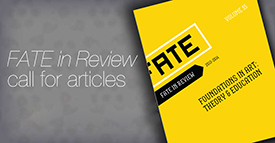 Thank you to all who attended the 16th Biennial FATE Conference, “To the Core and Beyond” in Kansas City in April! We had an excellent turn out! And, please welcome the new and returning board members elected during the conference.
In Episode 9 of Positive Space, FATE’s monthly podcast, Valerie Powell has a thoughtful conversation with FATE’s 2017 keynote speaker, artist and author Enrique Martinez, about the artistic process and the ongoing choice to live a creative life.
More info here and listen to episodes on our Apple iTunes page.
In addition, FATE in Review seeks thoughtful articles relating to all areas of foundations education, including expanding the practicum, flexing the core, and re-visioning visual culture. Conference papers and/or presentations, as well as papers written solely for publication, may be submitted throughout the year. We are also interested in reviews of newer books that inform foundations discussion and curriculum. Contact FATE in Review Editor, Michael Marks.
Upcoming for CAA 2018: FATE’s CAA Affiliate representative, Naomi J. Falk, is looking for panelists for FATE’s affiliate conference session, entitled, “Let’s Dance, But Don’t Call Me Baby: Dialogue, Empathy, and Inclusion in the Classroom and Beyond.” Feeling welcome, acknowledged, and heard encourages learning. Fostering inclusiveness and empathy on behalf of minority students legitimizes perspectives. How do we build trust and empathy between faculty, students, peers, and others in our classrooms and communities? How do we create a welcoming and inclusive environment? What has worked? What has gone terribly wrong? Where do we go from here? Examples of readings, projects, tools, and exercises for building inclusive, encouraging, and productive dialogues are all of interest. More info? Please contact: Naomi J. Falk.
The Feminist Art Project
 The Feminist Art Project is pleased to announce that the second issue of Rejoinder is now available. The theme of the issue is Borders, Bodies, Homes. Contributors explore how these concepts shape our understandings of selfhood and exile in an environment marked by migratory population flows, resurgent nationalisms, and state-sanctioned violence. Rejoinder features essays, fiction, and artwork by Joshua G. Adair, Connie Freid, Yishay Garbasz, Uddipana Gosswami, Leigh Johnson, Elinor Meeks, Vukasin Nedeljkovic, Jeffrey Shandler, Rachida Yassine, and Helena Zeweri. Sarah Tobias is the editor.
Rejoinder is an online journal published by the Institute for Research on Women in partnership with The Feminist Art Project, both at Rutgers, The State University of New Jersey. Please subscribe in order not to miss out on future issues!
Historians of Netherlandish Art
The Historians of Netherlandish Art are pleased to announce their new officers for the term 2017–2021: President: Paul Crenshaw; Vice-President: Louisa Wood Ruby; immediate past president: Amy Golahny. Please visit our website for more information.
The current issue of the Journal of the Historians of Netherlandish Art (JHNA vol. 9:1, Winter 2017) is dedicated to Walter Liedtke and includes seventeen articles that reference works in the Metropolitan Museum of Art under his care. The formal deadline for submissions to the Winter 2018 and Summer 2018 issues is August 1, 2017, although the editors accept submissions throughout the year.
From Thursday 24 May to Saturday 26 May 2018, the three-day conference of the Historians of Netherlandish art will take place at Het Pand in Ghent (BE). The call for sessions and workshops can be found here.
For further information, visit: www.hnanews.org.
The International Center of Medieval Art
Newly-elected officers Helen Evans (President), Nina Rowe (Vice President), and Anne Rudloff Stanton (Secretary), and several other new board members, have begun their three-year terms.
The ICMA invites submissions for their annual Book Prize, to be awarded to the best single-authored book on any topic in medieval art published in 2016 (deadline May 31). Through the generosity of the Samuel H. Kress foundation, they also award Research and Publication Grants (deadline August 31) as well as Travel Grants supporting the travel of speakers in ICMA-sponsored sessions (rolling deadlines).
Recent print and digital publications include the organization’s peer-reviewed journal Gesta (volume 56, number 1, Spring 2017). The ICMA’s newest digital initiative to go public is Lordship and Commune: A Collaboratory, an interactive digital website about the cathedrals of Reims and Amiens in their medieval and modern contexts. This project is an innovative way to invite conversation and collaboration around the major unfinished study on these two cathedrals by the late Barbara Abou-El-Haj, and is intended to be accessible as a teaching and research resource.
Society of Architectural Historians (SAH)
 The Society of Architectural Historians is now accepting abstracts for its 71st Annual International Conference in Saint Paul, MN, April 18–22, 2018. Please submit an abstract no later than 5:00 p.m. CDT on June 15, 2017, to one of the 45 thematic sessions, the Graduate Student Lightning Talks or the open sessions. SAH encourages submissions from architectural, landscape, and urban historians; museum curators; preservationists; independent scholars; architects; scholars in related fields; and members of SAH chapters and partner organizations. View the call for papers.
SAH is partnering with the Global Architectural History Teaching Collaborative to offer Research-to-Teaching Grants and Field Seminar Travel Grants. These new grants are part of the GAHTC’s nearly $500,000 in funding to build new content for its free, digital platform of teaching materials.
SAH seeks partners to organize tours of the built environment for our youth-oriented American Architecture and Landscape Field Trip program. Created to provide opportunities for underserved students from the third grade through high school, SAH offers grants to not-for-profits to organize tours for young people on the history of architecture, parks, gardens, and town/city planning. Application details here.
Registration is open for the SAH Field Seminar to China led by Chinese architectural historian Nancy Steinhardt. This twelve-day trip (December 26, 2017–January 7, 2018) will offer an in-depth view of South China’s cities, buildings, and sites through the course of two millennia. In addition to the buildings and museums on every tourist itinerary, we will visit UNESCO and World Heritage sites, a second-century BCE tomb, a glass pagoda, churches, a mosque, a rare example of “beamless” construction, memorials to Sun Yat-sen, sixteenth-century merchant residences, nineteenth-century European residences, and a Dong drum tower, and we will meet practicing architect-architectural historians. Fellowship deadline is August 31.
The Society of Historians of East European, Eurasian, and Russian Art and Architecture (SHERA)
SHERA moved to H-SHERA network and is now live in the H-Net Commons. Anyone can browse the site, but you’ll need to log in to post.
SHERA also voiced protest against the close down of the Central European University in Budapest.
The U.S. Latinx Art Forum (USLAF)
USLAF is a new CAA affiliated society. We held our first business meeting at the 2017 Annual Conference and also hosted a plenary session on the state of U.S. Latinx art. The plenary was structured as a two-part discussion beginning with Adriana Zavala (USLAF and Associate Professor, Tufts University) in conversation with Roberto Tejada (secretary, CAA Board of Directors; Professor, University of Houston) and Hunter O’Hanian (executive director, CAA) about the representation of Latinx art history within academia and arts organizations. Curators Rocío Aranda-Alvarado (El Museo del Barrio), Tey Marianna Nunn (National Hispanic Cultural Center) and David Breslin (Whitney Museum of American Art) followed with a discussion on structural barriers impacting the exhibition and acquisition of Latinx art. The session concluded with a roundtable and important interventions from the audience.
For the 2018 Annual Conference, USLAF’s affiliated session will be “Chican@ Art History: Interdisciplinary Foundations and New Directions,” co-chaired by Karen Mary Davalos and Mary Thomas. The session’s CFP will go out in June 2017.
USLAF was founded in 2015 to create a network of artists and scholars committed to expanding and enhancing the visibility of U.S. Latinx art within academia, exhibition spaces, and private and institutional collections. We now boast over 220 members and hope that all CAA members interested in expanding the discipline and/or learning more about US Latinx art will join. To become a member, please visit our website or send an email to info@uslaf.org.
USLAF’s founding Executive Committee is: Adriana Zavala (Director), Rose Salseda (Associate Director), Josh T Franco (Secretary and Membership Coordinator), Sonja Gandert (Social Media), and Sam Romero (Creative Director and Web Developer).
Visual Resources Association (VRA)
The Visual Resources Association (VRA) honored the recipients of the organization’s awards at a Members & Awards lunch on Friday, March 31, 2017, during its 35th annual conference in Louisville, Kentucky. The 2017 Nancy DeLaurier Award was presented to Anne M. Young, Manager of Rights and Reproductions at the Indianapolis Museum of Art. She was honored for the publication, Rights and Reproductions: The Handbook for Cultural Institutions (Indianapolis Museum of Art and American Alliance of Museums, 2015) that she compiled and edited.
For his many years of remarkable dedication, leadership, and service to the VRA and to the visual resources and library professions, the 2017 Distinguished Service Award was presented to Allan T. Kohl, Visual Resources Librarian at the Minneapolis College of Art and Design. As one nomination letter stated, “Allan embodies the professionalism for which we as visual resources professionals strive.” Allan achieved this high honor through his ten consecutive years serving on the VRA Board as president-elect, president, past president, and treasurer. He was a founding director of the VRA Foundation and has chaired and served on many committees and task forces throughout his years as a VRA member. Allan continues to be a leader on VRA’s Intellectual Property Rights Committee, contributing pragmatic tools such as the Digital Rights Computator (DIRC). He generously developed and maintains Art Images for College Teaching (AICT) as an open website populated with his superb photographs depicting world monuments. Allan is a regular presenter and leader in various capacities at VRA conferences. Allan’s “what can I do to help” perspective is a true representation of the VRA community. The recipients and donors of the twelve 2017 Travel Awards were also recognized during the event.