
CAA News Today
Museums Advocacy Day Takes Place in March
posted by Christopher Howard — January 19, 2010
The American Association of Museums (AAM) is organizing Museums Advocacy Day 2010, taking place March 22–23 in Washington, DC, and CAA invites your participation. This event is your chance to receive advocacy and policy training and then take the case to Capitol Hill alongside fellow advocates from your state and congressional district.
AAM is working with sponsoring organizations, which include CAA, to develop the legislative agenda for this year’s event. Likely issues will include federal funding for museums, museums and federal education policy, and charitable giving issues affecting museums.
The entire museum field is welcome to participate: staff, volunteers, trustees, students, or even museum enthusiasts. Museums Advocacy Day is the ideal chance for new and seasoned advocates to network with museum professionals from their state and meet with congressional offices.
Registration
Individual museum professionals, supporters, and trustees may register online. National, regional, and state organizations that would like to register as partnering organizations and individuals who prefer to complete a paper registration may use the Museums Advocacy Day 2010 Registration Form.
Participants are asked to cover the cost of their meals and materials: $75. This amount includes: two breakfasts, one lunch, one evening reception, and all training materials and supplies. Deadline: February 17, 2010.
The event hotel is the Doubletree Hotel Crystal City, 300 Army Navy Drive, Arlington, VA 22202. The Museums Advocacy Day rate is $209, available until February 15 or until sold out. Call 800-222-TREE and reference Museums Advocacy Day or the three-letter reservation code AVD, or reserve a room online and used the group code AVD.
Tentative Schedule
March 22 will be a critical day of advocacy and policy training, to be held at the National Building Museum, featuring:
- A briefing on the museum field’s legislative agenda
- Tips on meeting with elected officials and the stats you need to make your case
- Instruction on how to participate in year-round advocacy and engage your elected officials in the ongoing work of your museum
- Networking with advocates from your state on the following day’s Capitol Hill visits
- An evening reception, with members of Congress and staff invited
On March 23, we will take our message to Capitol Hill. Advocates will gather in groups by state and congressional districts to make coordinated visits to House and Senate offices to make the case for increased federal support for museums.
Museums Advocacy Day Takes Place in March
posted by Christopher Howard — January 19, 2010
The American Association of Museums (AAM) is organizing Museums Advocacy Day 2010, taking place March 22–23 in Washington, DC, and CAA invites your participation. This event is your chance to receive advocacy and policy training and then take the case to Capitol Hill alongside fellow advocates from your state and congressional district.
AAM is working with sponsoring organizations, which include CAA, to develop the legislative agenda for this year’s event. Likely issues will include federal funding for museums, museums and federal education policy, and charitable giving issues affecting museums.
The entire museum field is welcome to participate: staff, volunteers, trustees, students, or even museum enthusiasts. Museums Advocacy Day is the ideal chance for new and seasoned advocates to network with museum professionals from their state and meet with congressional offices.
Registration
Individual museum professionals, supporters, and trustees may register online. National, regional, and state organizations that would like to register as partnering organizations and individuals who prefer to complete a paper registration may use the Museums Advocacy Day 2010 Registration Form.
Participants are asked to cover the cost of their meals and materials: $75. This amount includes: two breakfasts, one lunch, one evening reception, and all training materials and supplies.
We are currently arranging affordable hotel options for participants. Please check back for updated information in the coming weeks about participating hotels.
Tentative Schedule
March 22 will be a critical day of advocacy and policy training, to be held at the National Building Museum, featuring:
- A briefing on the museum field’s legislative agenda
- Tips on meeting with elected officials and the stats you need to make your case
- Instruction on how to participate in year-round advocacy and engage your elected officials in the ongoing work of your museum
- Networking with advocates from your state on the following day’s Capitol Hill visits
- An evening reception, with members of Congress and staff invited
On March 23, we will take our message to Capitol Hill. Advocates will gather in groups by state and congressional districts to make coordinated visits to House and Senate offices to make the case for increased federal support for museums.
Haiti Relief Collaboration of the Vivant Art Collection and the Haitian Professional of Philadelphia
posted by Christopher Howard — January 14, 2010
Greetings:
It has been a difficult night. Many of us are in a state of shock or more fittingly in disbelief. As a business that prides itself in keeping the rich culture of Haiti alive in Philadelphia, I and the Haitian Professionals of Philadelphia (HPP) send our deepest and most sincere condolences to our Haitian family in our area and around the world.
We have secured a private jumbo jet to transport supplies to Haiti, which is leaving in the next 24–48 hours. We are in need of doctors, nurses, and donations to go to Haiti in order to provide medical care. Vivant Art Collection and HPP is currently coordinating with the Haitian Coalition of Philadelphia, the Haitian Clergy of Philadelphia, Beyond Borders, the Mayor’s Office, the Temple Haitian Student Association, the University of Pennsylvania Haitian Student Association, Congressman Brady’s office, the Philadelphia Young Democrats, political officials, and other Haitian organizations in the surrounding area to devise a plan to provide assistance to Haiti. Frequent updates will be made to www.hphilly.org and www.vivantartcollection.com/events, so please check back often. In the meantime, if you wish to provide assistance we urge you to do the following:
- Make a monetary donation to Haitian Professionals of Philadelphia to the Haitian Relief Fund via Paypal. All funds will go toward purchasing items that must be bought in Haiti to defray shipping cost, as well as medical supplies
- Purchase or bring cots and tents that will be instrumental in providing temporary shelter to those who have been displaced
- Medical supplies such as band aids, alcohol, peroxide, etc.
- Water and nonperishable food items
- Generators and industrial supplies for building will be needed for rebuilding
- Supplies for children such as diapers, baby clothes, wipes, and bottles are greatly need as well
- Call elected officials in your area and ask them to partner with HPP
Current Drop Off Sites
The Office of State Senator Leanna M. Washington
1555-A Wadsworth Avenue
Philadelphia, PA 19150
The Office of State Representative Vanessa Brown
4706 Westminster Avenue
Philadelphia, PA 19131
Vivant Art Collections (monetary donations and medical supplies only)
60 North 2nd Street
Philadelphia, PA 19106
For further information on how to help, please call Yve-Car Momperousse, board chair, at 973-280-2307 or Florcy Morisset, community development chair, at 310-612-4636. You can also send an email to vivantartcollection@gmail.com or yvecar@hpphilly.org.
Press contact: Please call Alain Joinville, public-relations chair, at 215-287-7373 to coordinate interviews.
Moving forward,
Florcy Morisset
Vivant Art Collection
vivantartcollection@gmail.com
310-612-4636
Haiti Relief Collaboration of the Vivant Art Collection and the Haitian Professional of Philadelphia
posted by Christopher Howard — January 14, 2010
Greetings:
It has been a difficult night. Many of us are in a state of shock or more fittingly in disbelief. As a business that prides itself in keeping the rich culture of Haiti alive in Philadelphia, I and the Haitian Professionals of Philadelphia (HPP) send our deepest and most sincere condolences to our Haitian family in our area and around the world.
We have secured a private jumbo jet to transport supplies to Haiti, which is leaving in the next 24–48 hours. We are in need of doctors, nurses, and donations to go to Haiti in order to provide medical care. Vivant Art Collection and HPP is currently coordinating with the Haitian Coalition of Philadelphia, the Haitian Clergy of Philadelphia, Beyond Borders, the Mayor’s Office, the Temple Haitian Student Association, the University of Pennsylvania Haitian Student Association, Congressman Brady’s office, the Philadelphia Young Democrats, political officials, and other Haitian organizations in the surrounding area to devise a plan to provide assistance to Haiti. Frequent updates will be made to www.hphilly.org and www.vivantartcollection.com/events, so please check back often. In the meantime, if you wish to provide assistance we urge you to do the following:
- Make a monetary donation to Haitian Professionals of Philadelphia to the Haitian Relief Fund via Paypal. All funds will go toward purchasing items that must be bought in Haiti to defray shipping cost, as well as medical supplies
- Purchase or bring cots and tents that will be instrumental in providing temporary shelter to those who have been displaced
- Medical supplies such as band aids, alcohol, peroxide, etc.
- Water and nonperishable food items
- Generators and industrial supplies for building will be needed for rebuilding
- Supplies for children such as diapers, baby clothes, wipes, and bottles are greatly need as well
- Call elected officials in your area and ask them to partner with HPP
Current Drop Off Sites
The Office of State Senator Leanna M. Washington
1555-A Wadsworth Avenue
Philadelphia, PA 19150
The Office of State Representative Vanessa Brown
4706 Westminster Avenue
Philadelphia, PA 19131
Vivant Art Collections (monetary donations and medical supplies only)
60 North 2nd Street
Philadelphia, PA 19106
For further information on how to help, please call Yve-Car Momperousse, board chair, at 973-280-2307 or Florcy Morisset, community development chair, at 310-612-4636. You can also send an email to vivantartcollection@gmail.com or yvecar@hpphilly.org.
Press contact: Please call Alain Joinville, public-relations chair, at 215-287-7373 to coordinate interviews.
Moving forward,
Florcy Morisset
Vivant Art Collection
vivantartcollection@gmail.com
310-612-4636
Letter on Haiti Heritage Recovery from the ICOMOS President
posted by Christopher Howard — January 13, 2010
The horrifying news about the earthquake in from Haiti give all indications of major devastation and loss. Once the immediate human relief effort is over, I call on all International Council on Monuments and Sites (ICOMOS) to come together in solidarity to help in whatever way we can with the heritage recovery process. It is the right time now to identify individual ICOMOS members and groups of members who would be willing to form part of volunteer teams to be deployed to Haiti as needed when the time comes and the heritage needs are manifested by our Haitian colleagues. For that reason, I ask all National and International Committees to circulate this letter to their full membership. Anyone interested in considering to be a volunteer should drop me a line at gustavo.araoz@icomos.org and let me know who you are so that we may keep you informed about the opportunities that arise as we learn more about the situation.
For those national Committees from countries with disaster recovery experience, we also ask that you urge your government and other national institutions to be generous with their assistance.
For me personally, Haiti is a special place where I began my professional conservation life. It was at the Citadelle and later at the Palais de Sans-Souci in Cap Haitien that I had my very first projects as head of the OAS heritage assistance mission after graduation. I know the Haitians to be a good people, possessing great dignity and generosity while living amid extreme poverty.
For this reason, I put my own name down as the first volunteer to assist in whatever way I can.
Thanks to all,
Gustavo Araoz
ICOMOS Presiden
Letter on Haiti Heritage Recovery from the ICOMOS President
posted by Christopher Howard — January 13, 2010
The horrifying news about the earthquake in from Haiti give all indications of major devastation and loss. Once the immediate human relief effort is over, I call on all International Council on Monuments and Sites (ICOMOS) to come together in solidarity to help in whatever way we can with the heritage recovery process. It is the right time now to identify individual ICOMOS members and groups of members who would be willing to form part of volunteer teams to be deployed to Haiti as needed when the time comes and the heritage needs are manifested by our Haitian colleagues. For that reason, I ask all National and International Committees to circulate this letter to their full membership. Anyone interested in considering to be a volunteer should drop me a line at gustavo.araoz@icomos.org and let me know who you are so that we may keep you informed about the opportunities that arise as we learn more about the situation.
For those national Committees from countries with disaster recovery experience, we also ask that you urge your government and other national institutions to be generous with their assistance.
For me personally, Haiti is a special place where I began my professional conservation life. It was at the Citadelle and later at the Palais de Sans-Souci in Cap Haitien that I had my very first projects as head of the OAS heritage assistance mission after graduation. I know the Haitians to be a good people, possessing great dignity and generosity while living amid extreme poverty.
For this reason, I put my own name down as the first volunteer to assist in whatever way I can.
Thanks to all,
Gustavo Araoz
ICOMOS Presiden
NEA Convenes with Arts-Organization Leaders to Discusses Recent Survey
posted by Christopher Howard — December 11, 2009
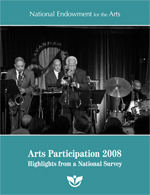 Joan Shigekawa, senior deputy chairman of the National Endowment for the Arts (NEA), convened a roundtable discussion yesterday with national arts service organizations, regional arts organizations, and NEA staff to discuss the NEA’s 2008 Survey of Public Participation in the Arts, the nation’s largest and most representative study of adults’ arts participation habits.
Representatives from forty organizations participated, including Linda Downs, CAA executive director, as well as leaders from the Association of Art Museum Directors, Dance/USA, the Future of Music Coalition, the National Association of Latino Art and Culture, the National Center for Creativity in Aging, the National Network for Folk Arts in Education, and the New England Foundation for the Arts.
The convening began with a greeting from NEA chairman Rocco Landesman, followed by a summary presentation of the survey’s findings from Sunil Iyengar, NEA director of research. Representatives from three organizations offered formal responses—Helen De Michiel from the National Alliance for Media Arts and Culture, Carlton Turner from Alternate ROOTS, and Jesse Rosen from the League of American Orchestras—following which Shigekawa led a frank, freewheeling conversation about how these findings should inform the arts community’s work going forward, as well as how the survey should be expanded and refined in the future.
“It is important that the National Endowment for the Arts have regular conversation with the arts community about how the public participates in the arts, and what we can do to connect more Americans with more art, more often,” said Shigekawa. “Our research shows a strong connection between arts participation and civic participation, but art only works when the public participates. Today was a chance for the NEA staff to hear and learn from the service organizations that work with our country’s arts organizations, and we look forward to many more such opportunities.”
The 2008 Survey of Public Participation in the Arts, which was conducted in partnership with the US Census Bureau, asked more than 18,000 people 18 years of age and older about their frequency of arts engagement. CAA reported on the findings of the survey, which has been conducted five times since 1982, in June. Here are a few more statistics about American participation in the arts:
- Generation Y reports taking fewer arts classes and lessons. When people ages 18 to 24 were asked if they had taken an art class or lesson at some point in their lives, they reported lower rates of participation than previous generations for all art forms compared in this study (by 6 to 23 percentage points, depending on the art form, from 1982 to 2008)
- Arts participation correlates with higher civic participation. People who participate in the arts are two to three times as likely to engage in positive civic and individual activities—such as volunteering, attending sporting events, and participating in outdoor activities—than nonarts participants
- New England and Pacific region residents had some of the highest rates of attendance (42 percent of adults in each region) for the arts activities traditionally measured in the survey. In addition, the Plains states of Kansas and Nebraska have some of the highest participation rates for personal performance or creation of art nationwide. Twenty percent of adults in Kansas said they played a musical instrument. In Nebraska, that rate was nearly 18 percent. (Nationwide, 13 percent—or 29 million Americans—reported playing a musical instrument.)
A related research note on arts participation measured in regions and states will be released soon. The NEA will release additional topic-specific reports on the roles of age, race and ethnicity, arts learning, media use, and arts creation and performance. The survey, geographic research note, questionnaire, raw data, and user’s guide are available on the NEA website.
NEA Convenes with Arts-Organization Leaders to Discusses Recent Survey
posted by Christopher Howard — December 11, 2009
Joan Shigekawa, senior deputy chairman of the National Endowment for the Arts (NEA), convened a roundtable discussion yesterday with national arts service organizations, regional arts organizations, and NEA staff to discuss the NEA’s 2008 Survey of Public Participation in the Arts, the nation’s largest and most representative study of adults’ arts participation habits.
Representatives from forty organizations participated, including Linda Downs, CAA executive director, as well as leaders from the Association of Art Museum Directors, Dance/USA, the Future of Music Coalition, the National Association of Latino Art and Culture, the National Center for Creativity in Aging, the National Network for Folk Arts in Education, and the New England Foundation for the Arts.
The convening began with a greeting from NEA chairman Rocco Landesman, followed by a summary presentation of the survey’s findings from Sunil Iyengar, NEA director of research. Representatives from three organizations offered formal responses—Helen De Michiel from the National Alliance for Media Arts and Culture, Carlton Turner from Alternate ROOTS, and Jesse Rosen from the League of American Orchestras—following which Shigekawa led a frank, freewheeling conversation about how these findings should inform the arts community’s work going forward, as well as how the survey should be expanded and refined in the future.
“It is important that the National Endowment for the Arts have regular conversation with the arts community about how the public participates in the arts, and what we can do to connect more Americans with more art, more often,” said Shigekawa. “Our research shows a strong connection between arts participation and civic participation, but art only works when the public participates. Today was a chance for the NEA staff to hear and learn from the service organizations that work with our country’s arts organizations, and we look forward to many more such opportunities.”
The 2008 Survey of Public Participation in the Arts, which was conducted in partnership with the US Census Bureau, asked more than 18,000 people 18 years of age and older about their frequency of arts engagement. CAA reported on the findings of the survey, which has been conducted five times since 1982, in June. Here are a few more statistics about American participation in the arts:
- Generation Y reports taking fewer arts classes and lessons. When people ages 18 to 24 were asked if they had taken an art class or lesson at some point in their lives, they reported lower rates of participation than previous generations for all art forms compared in this study (by 6 to 23 percentage points, depending on the art form, from 1982 to 2008)
- Arts participation correlates with higher civic participation. People who participate in the arts are two to three times as likely to engage in positive civic and individual activities—such as volunteering, attending sporting events, and participating in outdoor activities—than nonarts participants
- New England and Pacific region residents had some of the highest rates of attendance (42 percent of adults in each region) for the arts activities traditionally measured in the survey. In addition, the Plains states of Kansas and Nebraska have some of the highest participation rates for personal performance or creation of art nationwide. Twenty percent of adults in Kansas said they played a musical instrument. In Nebraska, that rate was nearly 18 percent. (Nationwide, 13 percent—or 29 million Americans—reported playing a musical instrument.)
A related research note on arts participation measured in regions and states will be released soon. The NEA will release additional topic-specific reports on the roles of age, race and ethnicity, arts learning, media use, and arts creation and performance. The survey, geographic research note, questionnaire, raw data, and user’s guide are available on the NEA website.
CAA Joins Coalition Issuing Statement on Censorship in Response to Threats of Violence
posted by Christopher Howard — December 01, 2009
The College Art Association has joined the National Coalition Against Censorship, the American Association of University Professors, and other leading groups in academia, civil liberties, journalism, and free speech to issue a Statement of Principle and Call to Action urging governments, institutions, and private individuals to support freedom of expression and academic freedom, and to resist caving in to threats of violence.
This statement (see below) is a response to a number of incidents, specifically the decision by Yale University officials to remove all images of Mohammed from Jytte Klausen’s book, The Cartoons That Shook the World. This scholarly treatise examines the violent response in 2005 to twelve drawings by Danish cartoonists depicting the prophet Mohammed. While Yale officials cited “generic” fears of violence as the reason for excising all the images, there have been no actual threats of violence.
The statement, which follows a letter sent to Yale in September 2009 regarding the images in Klausen’s book, acknowledges that violence has been a common response to controversial words and images throughout human history and is now threatening the commitment to free speech, raising concerns about “fear-induced self-censorship.”
While the statement is immediately in response to the incident at Yale, religion is only one of a number of prominent issues known to incite violence. Recent examples of self-censorship in the visual arts include an exhibition at the San Francisco Art Institute in 2008 that was cancelled in response to violent threats from animal-rights activists, and an instance in 2006 in which the Whitechapel Gallery in London made the decision not to exhibit twelve works by Hans Bellmer, declaring that they were too dangerous to display because the sexual overtones would offend the Muslim population in the area.
Statement of Principle: Free Expression at Risk, at Yale and Elsewhere
A number of recent incidents suggest that our long-standing commitment to the free exchange of ideas is in peril of falling victim to a spreading fear of violence. Not only have exhibitions been closed and performances canceled in response to real threats, but the mere possibility that someone, somewhere, might respond with violence has been advanced to justify suppressing words and images, as in the recent decision of Yale University to remove all images of Mohammed from Jytte Klausen’s book, The Cartoons that Shook the World.
Violence against those who create and disseminate controversial words and images is a staple of human history. But in the recent past, at least in liberal democracies, commitment to free speech has usually trumped fears of violence. Indeed, as late as 1989, Salman Rushdie’s Satanic Verses continued to be published, sold, and read in the face of a fatwa against its author and in the face of the murder and attempted murder of its translators and publishers. In 1998, the Manhattan Theater Club received threats protesting the production of Terrence McNally’s play, Corpus Christi, on the ground that it was offensive to Catholics. After initially canceling the play, MTC reversed its decision in response to widespread concerns about free speech, and the play was performed without incident.
There are signs, however, that the commitment to free speech has become eroded by fears of violence. Historical events, especially the attacks of September 2001 and subsequent bombings in Madrid and London, have contributed to this process by bringing terrorist violence to the heart of liberal democracies. Other events, like the 2004 murder of Dutch film director Theo Van Gogh in apparent protest against his film “Submission,” and the threats against Ayaan Hirsi Ali, who wrote the script and provided the voice-over for the film, demonstrated how vulnerable artists and intellectuals can be just for voicing controversial ideas. Under such threats, the resolve to uphold freedom of speech has proved to be lamentably weak: in the same year as Van Gogh’s murder, Behzti, a play written by a British Sikh playwright, was canceled days after violence erupted among protesters in Birmingham, England on opening night.
In response to rising concerns about fear-induced self-censorship, in 2005 the Danish newspaper Jyllands-Posten published an article, “The face of Mohammed,” which included twelve cartoon images. The cartoons became the focus of a series of violent political rallies in the Middle East in February 2006 and a subject of worldwide debate pitting free speech against “cultural sensitivity.”
For all the prominence of religion in such debates, threats of violence against words and images are not the sole province of religious extremists. In 2005, a politically controversial professor’s scheduled speech at Hamilton College in Clinton, NY was canceled in response to threats of violence. In 2008, the San Francisco Art Institute closed a controversial video exhibition in response to threats of violence against faculty members by animal rights activists. Later that year, the University of Nebraska-Lincoln canceled a speech by former Weatherman and education theorist William Ayers citing security concerns.
The possibility of giving offense and provoking violence has entered the imagination of curators, publishers and the public at large, generating more and more incidents of preemptive self-censorship: in 2006, for instance, London’s Whitechapel gallery declared twelve works by Surrealist master Hans Bellmer too dangerous to exhibit because of fears that the sexual overtones would be offensive to the large Muslim population in the area; and publisher Random House canceled the 2008 publication of Sherry Jones’ The Jewel of Medina because “it could incite acts of violence.” The suppression of images in Jytte Klausen’s book is the latest, but not likely to be the last in the series of such incidents.
Words and images exist in complex socio-political contexts. Suppressing controversial expression cannot erase the underlying social tensions that create the conditions for violence to begin with, but it does create a climate that chills and eventually corrupts the fundamental values of liberal democracy.
A Call to Action
The incident at Yale provides an opportunity to re-examine our commitment to free expression. When an academic institution of such standing asserts the need to suppress scholarly work because of a theoretical possibility of violence “somewhere in the world,” it grants legitimacy to censorship and casts serious doubt on their, and our, commitment to freedom of expression in general, and academic freedom in particular.
The failure to stand up for free expression emboldens those who would attack and undermine it. It is time for colleges and universities in particular to exercise moral and intellectual leadership. It is incumbent on those responsible for the education of the next generation of leaders to stand up for certain basic principles: that the free exchange of ideas is essential to liberal democracy; that each person is entitled to hold and express his or her own views without fear of bodily harm; and that the suppression of ideas is a form of repression used by authoritarian regimes around the world to control and dehumanize their citizens and squelch opposition.
To paraphrase Ben Franklin, those who would give up essential liberty to purchase a little temporary safety, will get neither liberty nor safety.
Joan E. Bertin, Executive Director, National Coalition Against Censorship
Cary Nelson, President, American Association of University Professors
Endorsed by:
American Association of University Professors
American Civil Liberties Union
American Federation of Teachers
American Society of Journalists and Authors
Center for Democracy and Technology
Center for Inquiry
College Art Association
First Amendment Lawyers Association
First Amendment Project
Foundation for Individual Rights in Education
International Publishers Association
Modern Language Association
National Coalition Against Censorship
National Council of Teachers of English
National Education Association
People For the American Way Foundation
CAA Joins Coalition Issuing Statement on Censorship in Response to Threats of Violence
posted by Christopher Howard — December 01, 2009
The College Art Association has joined the National Coalition Against Censorship, the American Association of University Professors, and other leading groups in academia, civil liberties, journalism, and free speech to issue a Statement of Principle and Call to Action urging governments, institutions, and private individuals to support freedom of expression and academic freedom, and to resist caving in to threats of violence.
This statement (see below) is a response to a number of incidents, specifically the decision by Yale University officials to remove all images of Mohammed from Jytte Klausen’s book, The Cartoons That Shook the World. This scholarly treatise examines the violent response in 2005 to twelve drawings by Danish cartoonists depicting the prophet Mohammed. While Yale officials cited “generic” fears of violence as the reason for excising all the images, there have been no actual threats of violence.
The statement, which follows a letter sent to Yale in September 2009 regarding the images in Klausen’s book, acknowledges that violence has been a common response to controversial words and images throughout human history and is now threatening the commitment to free speech, raising concerns about “fear-induced self-censorship.”
While the statement is immediately in response to the incident at Yale, religion is only one of a number of prominent issues known to incite violence. Recent examples of self-censorship in the visual arts include an exhibition at the San Francisco Art Institute in 2008 that was cancelled in response to violent threats from animal-rights activists, and an instance in 2006 in which the Whitechapel Gallery in London made the decision not to exhibit twelve works by Hans Bellmer, declaring that they were too dangerous to display because the sexual overtones would offend the Muslim population in the area.
Statement of Principle: Free Expression at Risk, at Yale and Elsewhere
A number of recent incidents suggest that our long-standing commitment to the free exchange of ideas is in peril of falling victim to a spreading fear of violence. Not only have exhibitions been closed and performances canceled in response to real threats, but the mere possibility that someone, somewhere, might respond with violence has been advanced to justify suppressing words and images, as in the recent decision of Yale University to remove all images of Mohammed from Jytte Klausen’s book, The Cartoons that Shook the World.
Violence against those who create and disseminate controversial words and images is a staple of human history. But in the recent past, at least in liberal democracies, commitment to free speech has usually trumped fears of violence. Indeed, as late as 1989, Salman Rushdie’s Satanic Verses continued to be published, sold, and read in the face of a fatwa against its author and in the face of the murder and attempted murder of its translators and publishers. In 1998, the Manhattan Theater Club received threats protesting the production of Terrence McNally’s play, Corpus Christi, on the ground that it was offensive to Catholics. After initially canceling the play, MTC reversed its decision in response to widespread concerns about free speech, and the play was performed without incident.
There are signs, however, that the commitment to free speech has become eroded by fears of violence. Historical events, especially the attacks of September 2001 and subsequent bombings in Madrid and London, have contributed to this process by bringing terrorist violence to the heart of liberal democracies. Other events, like the 2004 murder of Dutch film director Theo Van Gogh in apparent protest against his film “Submission,” and the threats against Ayaan Hirsi Ali, who wrote the script and provided the voice-over for the film, demonstrated how vulnerable artists and intellectuals can be just for voicing controversial ideas. Under such threats, the resolve to uphold freedom of speech has proved to be lamentably weak: in the same year as Van Gogh’s murder, Behzti, a play written by a British Sikh playwright, was canceled days after violence erupted among protesters in Birmingham, England on opening night.
In response to rising concerns about fear-induced self-censorship, in 2005 the Danish newspaper Jyllands-Posten published an article, “The face of Mohammed,” which included twelve cartoon images. The cartoons became the focus of a series of violent political rallies in the Middle East in February 2006 and a subject of worldwide debate pitting free speech against “cultural sensitivity.”
For all the prominence of religion in such debates, threats of violence against words and images are not the sole province of religious extremists. In 2005, a politically controversial professor’s scheduled speech at Hamilton College in Clinton, NY was canceled in response to threats of violence. In 2008, the San Francisco Art Institute closed a controversial video exhibition in response to threats of violence against faculty members by animal rights activists. Later that year, the University of Nebraska-Lincoln canceled a speech by former Weatherman and education theorist William Ayers citing security concerns.
The possibility of giving offense and provoking violence has entered the imagination of curators, publishers and the public at large, generating more and more incidents of preemptive self-censorship: in 2006, for instance, London’s Whitechapel gallery declared twelve works by Surrealist master Hans Bellmer too dangerous to exhibit because of fears that the sexual overtones would be offensive to the large Muslim population in the area; and publisher Random House canceled the 2008 publication of Sherry Jones’ The Jewel of Medina because “it could incite acts of violence.” The suppression of images in Jytte Klausen’s book is the latest, but not likely to be the last in the series of such incidents.
Words and images exist in complex socio-political contexts. Suppressing controversial expression cannot erase the underlying social tensions that create the conditions for violence to begin with, but it does create a climate that chills and eventually corrupts the fundamental values of liberal democracy.
A Call to Action
The incident at Yale provides an opportunity to re-examine our commitment to free expression. When an academic institution of such standing asserts the need to suppress scholarly work because of a theoretical possibility of violence “somewhere in the world,” it grants legitimacy to censorship and casts serious doubt on their, and our, commitment to freedom of expression in general, and academic freedom in particular.
The failure to stand up for free expression emboldens those who would attack and undermine it. It is time for colleges and universities in particular to exercise moral and intellectual leadership. It is incumbent on those responsible for the education of the next generation of leaders to stand up for certain basic principles: that the free exchange of ideas is essential to liberal democracy; that each person is entitled to hold and express his or her own views without fear of bodily harm; and that the suppression of ideas is a form of repression used by authoritarian regimes around the world to control and dehumanize their citizens and squelch opposition.
To paraphrase Ben Franklin, those who would give up essential liberty to purchase a little temporary safety, will get neither liberty nor safety.
Joan E. Bertin, Executive Director, National Coalition Against Censorship
Cary Nelson, President, American Association of University Professors
Endorsed by:
American Association of University Professors
American Civil Liberties Union
American Federation of Teachers
American Society of Journalists and Authors
Center for Democracy and Technology
Center for Inquiry
College Art Association
First Amendment Lawyers Association
First Amendment Project
Foundation for Individual Rights in Education
International Publishers Association
Modern Language Association
National Coalition Against Censorship
National Council of Teachers of English
National Education Association
People For the American Way Foundation