
CAA News Today
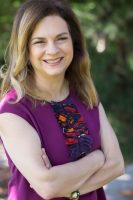
Board of Directors Candidate: Sharon Hecker
posted by CAA — December 22, 2022
Bio
Sharon Hecker (BA Yale University cum laude, MA and PhD UC Berkeley) is an art historian and curator specializing in modern and contemporary Italian art. A member of CAA since 1993, she is a leading authority on Italian sculptor Medardo Rosso and has a special interest in material history. She has published extensively on key twentieth-century Italian artists, including essays and articles on Lucio Fontana, Luciano Fabro, Marisa Merz, Giuseppe Penone and Francesco Lo Savio. She was Project Coordinator for Jenny Holzer, the first woman to represent the US at the Venice Biennale, winner of Golden Lion Award for Best Pavilion (1990) and was the liaison between Luciano Fabro and SFMoMA for his US retrospective at SFMoMA, for which she translated his theoretical writings into English.
Hecker’s books include A Moment’s Monument: Medardo Rosso and the International Origins of Modern Sculpture (UC Press, 2017, awarded CAA’s Millard Meiss Publication Fund and translated into Italian); with Marin R. Sullivan, Postwar Italian Art History: Untying the Knot (Bloomsbury, 2018); with Silvia Bottinelli, Lead in Modern and Contemporary Art (Bloomsbury, 2020); Finding Lost Wax: The Disappearance and Recovery of an Ancient Casting Technique and the Experiments of Medardo Rosso (Brill, 2020); with Peter J. Karol, Posthumous Art, Law and the Art Market: The Afterlife of Art (Routledge, 2022); with Raffaele Bedarida, Curating Fascism: Exhibitions and Memory from the Fall of Mussolini to Today (Bloomsbury, 2022); with Catherine Ramsey-Portolano, Female Cultural Production in Modern Italy: Literature, Art and Intellectual History (Palgrave, 2023); and with Arianna Arisi Rota, Disguising Disease: Italian Political And Visual Culture From Post-Unification To Covid-19 (2023, Routledge, awarded the Columbia University Seminars in Modern Italy Prize).
Hecker has received fellowships from the Getty, Fulbright, and Mellon Foundations. Her exhibitions include Medardo Rosso: Second Impressions, with Harry Cooper (Harvard University Art Museums, catalogue Yale University Press, 2004); Medardo Rosso: Experiments in Light and Form, with Tamara H. Schenkenberg (Pulitzer Arts Foundation, 2017–18); Medardo Rosso: Sight Unseen, with Julia Peyton-Jones (Galerie Ropac, 2018). She is currently organizing an exhibition on Lucio Fontana’s ceramics at the Peggy Guggenheim Collection, Venice (2025).
Hecker is Series Editor of Bloomsbury Visual Arts’ Visual Cultures and Italian Contexts Series; Deputy Chair of the International Catalogue Raisonné Association (ICRA); member of ICOM; TEFAF Vetting Committee for Sculpture (19th-century to the present), Maastricht/New York (Chair); and Coordinator of the Expert Witness Pool for the Court of Arbitration for Art. She trademarked The Hecker Standard®, a best practices approach for conducting due diligence on artworks. She lives in Milan, Italy.
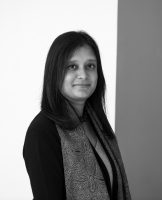
Board of Directors Candidate: Radha Dalal
posted by CAA — December 22, 2022
Statement
CAA has been a constant in my professional journey from the time I was an art history graduate student at the University of Minnesota. Since then, I have served on CAA’s International Committee (2012-2015) followed by the Committee on Diversity Practices (2016-2020). As part of the former, I helped host members of one of the earliest cohorts of the CAA-Getty International Program. For the latter, I co-chaired the IDEA Exchange Roundtable “From Diversity to Decolonization: International Art History and its Pedagogy” (2020). I am now deeply honored to be selected by the Nominating Committee as one of the candidates in the upcoming Board of Directors election. It would be a privilege to collaborate with colleagues on the Board, and the membership at large, to support ongoing efforts and to activate new initiatives in advancing CAA’s vision and mission.
As a historian of Islamic art, my career brought me to Qatar where I now serve as the Director of the Art History Program at Virginia Commonwealth University School of the Art’s international campus. Leading an art history department within an art and design institution has made me keenly aware of the challenges the visual arts and humanities collectively face today. In this regard, structures and systems in higher education that provide equitable teaching, learning, and research environments, that foster diversity and inclusion in the truest sense, and that focus holistically on the needs of emerging and established professionals are of great interest to me. As we encounter pressures from pandemics to wars, the demands on educators and the burdens on students, especially in the visual arts, have become all the more acute. Since a good percentage of CAA’s membership falls under those categories, I believe CAA can play a much larger role in facilitating dialogue and actionable outcomes toward more robust and resilient educational and professional models.
In the last two decades, my own field of Islamic art history has grown tremendously. New methodologies and approaches take into account the complex history of the discipline, its innovative engagement with collections and museums, the strengthening of relationships with creative fields, and the increasing efforts to decolonize curricula and to embrace a path informed by social justice concerns and the climate crisis. Such issues are mirrored across disciplines represented by CAA’s membership, placing the organization at the nexus of pivotal changes and exchanges throughout the visual arts.
As a board member, I would advocate for expanding and reinforcing CAA’s international engagement, developing more support for emerging professionals and adjunct faculty, and nurturing a space for transdisciplinary scholarship and creative practice. The most important duty of a board member is to serve the membership with care and integrity. I look forward to discussions on how CAA might meaningfully engage upcoming generations of visual artists, designers, curators, art historians, and others. I recognize that CAA cannot be involved in everything for it will lose its ability to function properly, but we can more closely align with the needs of today’s membership and those who will join in the near future. With your support, I hope to work toward that goal.
View CV
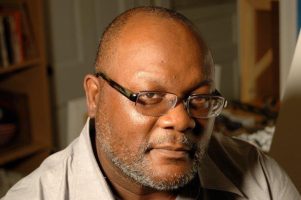
Board of Directors Candidate: Alex Bostic
posted by CAA — December 22, 2022
Statement
I believe the future direction of College Art Association should have more diversity. We should look into new and ever-changing field of art by exploring every available technology. I hope to bring new ways of teaching and educating students to think more globally in this industrial and complex world of ours. We must not only think outside of the box, but we can “be” the box. We should find new pathways for our young artists to follow and to explore limitless ways on how all art is made or produced. We need to look into the profession as well as the business of art and how we can connect how art is made and sold and marketed. I think we should bring the business side of creativity to our students. This must be a part of our agenda, namely, to look at many ways to educate our students on how to get work.
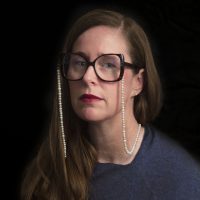
Board of Directors Candidate: Denise Baxter
posted by CAA — December 22, 2022
Statement
I am honored to be nominated to serve on CAA’s Board of Directors. I believe strongly in CAA’s fundamental purposes and want to participate as actively as possible to assure its continued relevance and strength—for the good of its membership, its potential membership, and the broader needs of art and design.
By training and academic discipline, I am a historian of eighteenth- and nineteenth-century art, primarily French and British, with a focus on material culture, in particular the history of dress. I have been active in the professional organizations associated with my research, particularly the Historians of Eighteenth-Century Art and Architecture and the Costume Society of America, and with CAA as a member of the Education Committee and a member, then chair, of the Professional Practices Committee. In my career at the University of North Texas I have served as department chair, Associate Dean in the College of Visual Arts and Design, and currently as Associate Dean of the Toulouse Graduate School, where my charge is the professional development of the nearly 12,000 graduate and professional students of a tier-one research university that is minority-serving and recognized as a Hispanic Serving Institution.
My goal if elected to serve on the board is simple: to be of service. The mission of CAA as an organization is compelling, the moment is challenging, my expertise and skills are relevant, and I want to be of use.
CAA 110th Annual Business Meeting Minutes
posted by CAA — December 16, 2022
CAA Annual Business Meeting Minutes
Friday, February 18, 2022
- Welcome + Call to Order – N. Elizabeth Schlatter, CAA President
- N. Elizabeth Schlatter called the meeting to order at 1:05 p.m. CT.
- Land acknowledgements.
- Thanks paid to staff for their hard work bringing the 2022 Annual Conference to fruition.
- Executive Director’s Report – Meme Omogbai, CAA Executive Director + CEO
- Meme Omogbai welcomed everyone to the 110th Annual Business Meeting and expressed regrets that this could not be an in-person convening as the pandemic necessitated a pivot to virtual meeting.
- CAA staff remains focused on meeting commitments to members, based on quantitative and qualitative analysis, surveys and other feedbacks consistent with the fundamentals of our strategic repositioning plan.
- CAA’s aim for the 2022 Annual Conference was to create a smaller, more digestible program of 200 vetted and guaranteed sessions in two components, in-person in February and virtual in March, based upon membership feedback.
- Throughout the pandemic, the health and safety of members has been CAA’s primary concern. Based on the information and the feedback received from members, specifically concerns about an in-person convening, and close monitoring of the COVID pandemic and omicron strain as well as CDC guidelines, it was decided that the CAA 2022 Annual Conference would pivot to an entirely virtual format while also maintaining the scheduled dates: February 16-19 and March 3-5, with all recordings available through April 14.
- It is important to note that during the decision-making process, while the Hilton Chicago remained open, CAA 2022 registration statistics were drastically below what was needed to fulfill the negotiated room block contractual obligations and registration goals.
- The pivot to virtual has provided increased access to virtual content, allowing conference attendance to expand and embrace a global audience. In this flexible and accessible format, individuals can hear session content on their own schedule between teaching, family care, and other obligations, including acknowledgement of the climate crisis.
- Pricing was also adjusted for virtual access. Everyone registered for all access/in-person was automatically converted to virtual from a rate of $249 to $199 and directed back to portal for self-service options: 1) credit $50 to the next membership renewal; 2) $50 tax deductible donation to CAA; or 3) refund of $50.
- This year’s pivot exemplifies our model of constant learning and improvement where we adjust our plans based on feedback and data received. This is just the beginning; as we continue with our repositioning, we will be able to improve our responsiveness and agility in the process of supporting CAA members.
- Approval of Minutes of 109th Annual Business Meeting [ACTION ITEM]
- Jennifer Rissler, CAA VP for External Relations, moved to approve the 109th Annual Business Meeting minutes. Niku Kashef, CAA VP for Diversity & Inclusion, seconded the motion.
- 81% of attendees (25 people) voted to approve; 19% of attendees (6 people) abstained. The minutes were approved.
- Financial Report – Georgia Harrell, CAA Treasurer + Robert Tofolo, CAA Head of Operations
-
- As of June 30, 2021, the association posted a breakeven operating budget with revenue including investment spinoff matching expenses and meeting our forecasts and budget expectations. The association continues to manage expenses within revenue means. Operating revenue totaled $3,001,778 verses prior year $3,321,000.
- Excerpts of the audited financial statements for fiscal year 2021 will be posted on the Association’s website. Complete audited financial statements have been provided and made available via guidestar.org and charitiesnys.com.
- In March of 2021, the association received a second payroll protection loan of $352,195 as part of the national CARES Act. This loan was fully forgiven in February 2022.
- As of June 30, 2021, there were 6,095 individual members down 9% from 6,699 prior year; this is reflective of continued systemic and pandemic impacts. There were also 367 institutional members versus prior year numbers of 443.
- The market value of the association’s investment portfolio as of June 30 was $11,946,566 versus a prior year balance of 9,825,458 million. The portfolio continues to be managed by investment managers at Boston Trust, now named Boston Trust Walden Company, under the supervision of the finance committee of the CAA Board of Directors.Georgia Harrell presented the financial report for the fiscal year ending June 30, 2021.
- Robert Tofolo presented an update on conference attendance and CAA’s strategic plan.
- As of today, February 18, 2022, 2038 attendees have registered for the 2022 conference. We will provide a final tally for attendance after March 5, 2022.
- In 2020, CAA implemented a five-year strategic plan to create a sustainable business model that can support operations and allow for endowment growth through responsible and streamlined operations. Although we are now operating within our means, we know that membership dues no longer support the operations of the association: combined revenues of dues, Annual Conference, and publications in fiscal 2021 only covered 63% of our operating expenses.
- In response to this, we are working to redesign our membership tiers in order to provide an accessible entry point to CAA.
- In November 2021 we introduced a new user portal which will function as a central nervous system for the member experience, enabling a unique “myCAA” experience tailored to each individual’s member journey.
-
- Old/New Business
- No old/new business was raised.
- Board Member Election Results – N. Elizabeth Schlatter, CAA President
- Gregory Gilbert, Nazar Kozak, Karen Leader, and Adity Saxena were elected to serve a four-year term on the Board of Directors, beginning in May 2022.
- Victoria McCraven was elected as an Emerging Professional Board member and will serve a two-year term.
- Adjourn
Respectfully submitted by Maeghan Donohue, CAA Manager of Strategic Planning, Diversity, and Governance.
CAA 50th Anniversary of Feminism + Art
posted by CAA — September 19, 2022
CAA has engaged in a yearlong 50th anniversary celebration of feminism and art, culminating in a program and reception at Boston University’s Joan and Edgar Booth Theatre at 4 p.m. ET on Friday, September 23, 2022. This program will reflect on the incredible history of feminist pioneers at the organization while looking toward a more inclusive, equitable future. Along with the Women’s Caucus for Art and The Feminist Art Project, CAA is committed to ensuring our crucial work continues during this moment of precarity for women’s rights.
To expand national and global reach, CAA is partnering with ArtTable, along with Women & Their Work (Austin, TX) and Pen + Brush (NYC) who will serve as satellite locations for the 90-minute Boston program. We hope to introduce a new generation to the intersection of art and feminism at CAA and beyond.
To RSVP for the Boston program and reception, please contact development@collegeart.org.
To RSVP for the livestream of the Boston program, please visit caafeminism50.eventbrite.co.uk.
If you are unable to attend but would like to contribute to the 50th Anniversary of Feminism Honorary Fund to ensure this vital work continues at CAA, please visit collegeart.org/donate.
HOSTS
Meme Omogbai, CAA Executive Director & CEO
Jennifer Rissler, CAA President
CAA Board of Directors
HONORARY COMMITTEE
Lynne D. Allen
Laura Anderson Barbata
Charlene Villaseñor Black
Judith K. Brodsky
Scherezade García-Vázquez
Joanna Gardner-Hugget
Laura Hall
Ann Sutherland Harris
Margo Hobbs
Donna Jackson
Denali Kemper
Leslie King-Hammond
Laura Morrison
Denise Mullen
Ferris Olin
N. Elizabeth Schlatter
Lowery Stokes Sims
Anne Swartz
Connie Tell
Freida High Wasikhongo Tesfagiorgis
Susan Unterberg
PARTNERS
ArtTable
The Feminist Art Project
Pen + Brush
Women & Their Work
Women’s Caucus for Art
Women’s History Month and Art Journal Open
posted by CAA — March 21, 2022
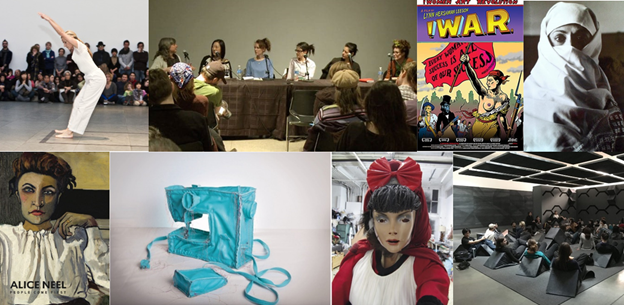
Each week this Women’s History Month, we highlight the rich scholarship and programs produced at CAA that celebrate women in the fields of visual arts and the humanities. This week, we are sharing a bibliography of articles from our open-access journal Art Journal Open that feature women artists.
This Women’s History Month is also especially significant this year, which is the 50th anniversary of feminism at CAA. To learn more about this history, visit this page. CAA is also collecting archival materials to better understand and document the history of its Committee of Women in the Arts, including the committee’s many collaborations with other affiliate committees and groups, such as the Women’s Caucus for Art, The Feminist Art Project, the Queer Caucus, and many more. Visit this page for more information.
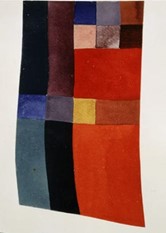 |
Andrew, Nell. “DadaDance: Sophie Taueber’s Visceral Abstraction.” Art Journal Open (July 3, 2014).
Sophie Taueber-Arp, Free Vertical-Horizontal Rhythms (Rythmes verticaux-horizontaux libres), 1919, gouache, 11 15⁄16 x 8 9⁄16 in. (30.3 x 21.8 cm). Stiftung Hans Arp und Sophie Taeuber Arp e.V., inv. 003.205 (artwork in the public domain; photograph provided by Stiftung Hans Arp und Sophie Taeuber Arp) |
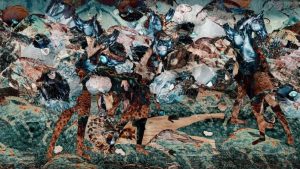 |
Barakeh, Zeina. “Projections for the Third Half [Cloud Storm].” Art Journal Open (August 6, 2020).
Zeina Barakeh, Projections From The Third Half [Cloud Storm], 2020, animation, 3 min. (artwork © Zeina Barakeh) |
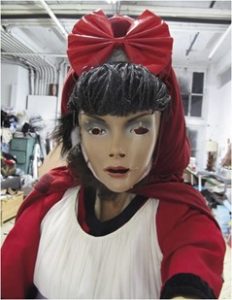 |
Barber, Tiffany E. “Narcissister, a Truly Kinky Artist.” Art Journal Open (March 11, 2020).
Narcissister, Red Riding Hood, 2014, mixed media (photograph provided by the artist) |
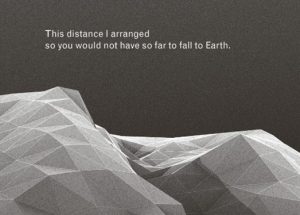 |
Berrigan, Caitlin and Sasha Engelmann. “Fault Lines and Fractures: A Conversation about Imaginary Explosions.” Art Journal Open (December 17, 2020).
Caitlin Berrigan, excerpt from Imaginary Explosions, 2018 |
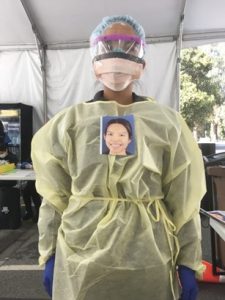 |
Bryan-Wilson, Julia and Mary Beth Heffernan. “Facing Social Practice: Mary Beth Heffernan in conversation with Julia Bryan-Wilson.” Art Journal Open (June 30, 2020).
Stanford Express Care nurse Anna Chico, who was among the first providers to use PPE Portraits for COVID-19 care, March 2020 (photograph by Cati Brown-Johnson) |
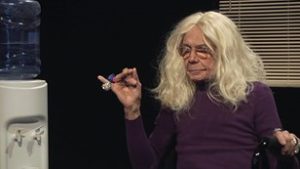 |
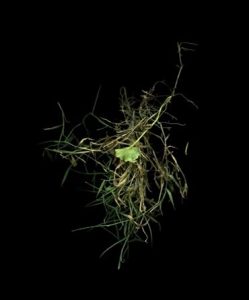
Burns, A.K. and Melissa Ragain. “Scripting A Smeary Spot.” Art Journal Open (December 8, 2017).
The late Jack Doroshow performs as Mother Flawless, a clairvoyant psyche. In this scene she recites an excerpt from Joanna Russ’ sci-fi novel We Who Are About To. . . , A.K. Burns, video still from A Smeary Spot, 2015, four-channel video installation, HD color, six-channel sound, TRT 53:13 (artwork © A.K. Burns; image provided by the artist, Callicoon Fine Arts, NY, and Michel Rein Gallery, Paris/Brussels) |
 |
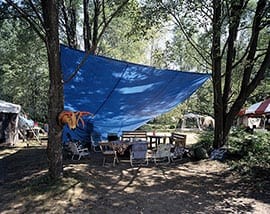
Cancelmo, Amy. “Roots and Ramble Kija Lucas and Amy Cancelmo in Conversation.” Art Journal Open (August 30, 2016).
Kija Lucas, Bristol 30, 2013, archival pigment print, 20 x 24 in. (50.8 x 60.9 cm), from In Search of Home, (artwork © Kija Lucas) |
 |
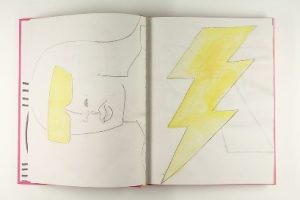
Carland, Tammy Rae and Ann Cvetkovich. “Sharing an Archive of Feelings: A Conversation.” Art Journal Open (October 24, 2013).
Tammy Rae Carland, Galz Living Room, MWMF, from Outpost, 2004, color photograph, 20 x 24 in. (50.8 x 61cm) (artwork © Tammy Rae Carland) |
 |
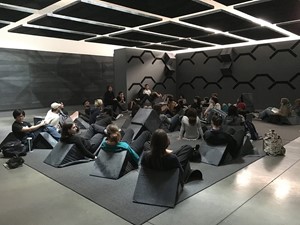
Costello, Kate. “P&P .” Art Journal Open (November 3, 2016).
Still from Kate Costello, P&P, 2016, video, 1 min., 26 sec. (artwork © Kate Costello) |
 |
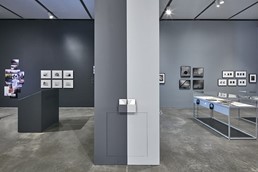
Craycroft, Anna. “To Listen.” Art Journal Open (October 25, 2017).
Sophomore Seminar with Meg Cranston and Marlena Donohue, April 5, 2017: Meg Cranston and Marlena Donohue’s class met with Anna Craycroft to discuss Tuning the Room in relation to Umberto Eco’s essay “The Open Work.” (artwork © Anna Craycroft) |
 |
Craycroft, Anna. “To Record, to Interpret, to Comment.” Art Journal Open (March 1, 2017).
Anna Craycroft, The Earth Is a Magnet, 2016, installation view, part of The Artist’s Museum, Institute of Contemporary Art Boston, November 16, 2016–March 26, 2017 (artwork © Anna Craycroft; photograph by Charles Mayer) |
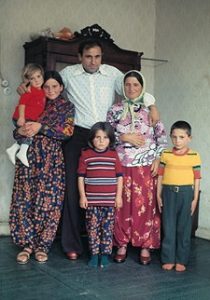 |
DaPonte, Amy A. “Candida Höfer’s Turken in Deutschland as ‘Counter-publicity’.” Art Journal Open (January 6, 2017).
Candida Höfer, Untitled from Türken in Deutschland 1979, 1979, color slide projection, 80 slides, approx. 7 min., dimensions variable (artwork © Candida Höfer, Köln/VG Bild-Kunst, Bonn 2016) |
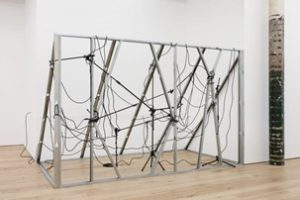 |
Fuenmayor, Jesús. “Barricades of Silence: Nikita Gale in Conversation with Jesús Fuenmayor.” Art Journal Open (August 20, 2020).
Nikita Gale, INTERCEPTOR, 2019, installation view, Fall Apart: Nikita Gale & Pat O’Neill, Martos Gallery, New York, January 11–February 24, 2019 (artwork © Nikita Gale; photograph by Charles Benton/Martos Gallery, provided by the artist) |
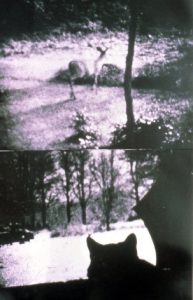 |
Goodeve, Thyrza Nichols. “The Cat is My Medium: Notes on Writing and Art of Carloee Schneemann.” Art Journal Open (July 29, 2015).
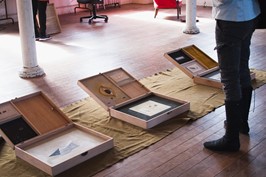
Carolee Schneemann, Kitch’s Last Meal, 1973–76, Super 8mm film, double projection, vertical, sound on cassette, ca. 5 hrs., two installation views (artwork © Carolee Schneemann; photographs provided by the artist) |
 |
Goulish, Matthew. “A Clear Day and No Memories: Neurology, Philosophy, and Analogy in Kerry Tribe’s HM.” Art Journal Open (February 5, 2014).
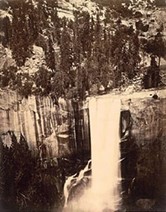
Eadward Muybridge, Pi-Wi-Ack, Valley of the Yosemite (Shower of Stars), “Vernal Fall,” 400 Feet Fall, No. 29, 1872, wet-plate collodion photograph (photograph in the public domain) |
 |
Graham, Amanda Jane. “Space Travels: Trisha Brown’s Locus.” Art Journal Open (July 22, 2016).
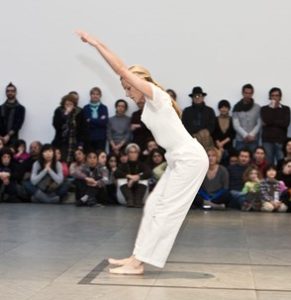
Trisha Brown, Locus Solo, 2011, performed by Diane Madden in “Performance 11: OnLine/Trisha Brown Dance Company” in conjunction with the exhibition On Line: Drawing through the Twentieth Century, Museum of Modern Art, New York, January 2011 (photographs © Yi-Chun Wu; photographs provided by Museum of Modern Art/Licensed by SCALA/Art Resource, NY) |
 |
Jenkinson, Monique. “Diva Maw.” Art Journal Open (October 29, 2020).
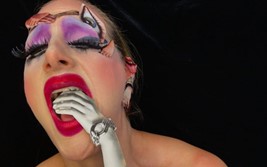
Monique Jenkinson (Fauxnique), Diva Maw, 2020, digital video, 5:35 min.; soundtrack by Marc Kate, Untitled (“Diva Maw” Soundtrack), 2020, audio file (video © Monique Jenkinson; soundtrack © Marc Kate) |
 |
Kauffman, Vanessa. “Outside of Time: Patricia Fernández Carcedo in Conversation with Vanessa Kauffman.” Art Journal Open (August 12, 2016).
Visitors in Patricia Fernández Carcedo’s studio during Headlands’ Fall 2015 Open House (artwork © Patricia Fernández Carcedo; photograph by Rebecca Puretz, provided by Headlands Center for the Arts) |
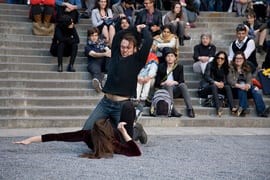 |
Laser, Liz Magic and Christopher Y. Lew. “InterAct: a reenacted interview.” Art Journal Open (May 4, 2011)
Liz Magic Laser, Flight, 2010, performance, MoMA PS1, Long Island City, April 10, 2010 (artwork © Liz Magic Laser; photograph by Mia Tramz, provided by Derek Eller Gallery). The performance was developed in collaboration with actors Lindsey Andersen, Nic Grelli, Elizabeth Hodur, Michael Wiener, Max Woertendyke, and Lia Woertendyke |
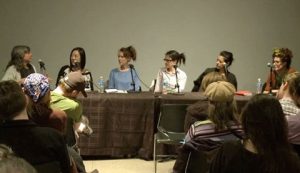 |
Lee, Young Jean. “Women in Downtown Theater.” Art Journal Open (August 26, 2012). |
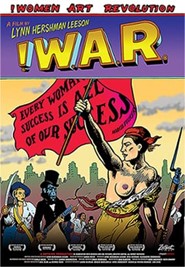 |
Leeson, Lynn Hershman. “Excerpts from the Graphic Novel !Women Art Revolution—A Secret History.” Art Journal Open (May 29, 2011) |
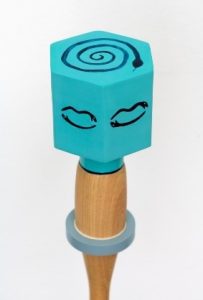 |
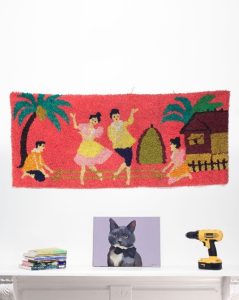
Mann, Elana. “One day I will make a mace, but for now I have a mouth.” Art Journal Open (September 30, 2021).
Elana Mann, Unidentified Bright Object #61, 2021, clay, wood, and glass, 14 ½ x 3 ½ x 3 ¾ in. (36.8 x 8.9 x 9.5 cm) (artwork © Elana Mann; photographs by Brica Wilcox) |
 |
Masley-Charlet, Caitlin. “Caitlin Masley-Charlet in Conversation with Elisabeth Smolarz.” Art Journal Open (June 5, 2018).
Elisabeth Smolarz, ENCYCLOPEDIA OF THINGS, ongoing 2014–2017. Archival inkjet prints, dimensions variable. Courtesy of the artist. |
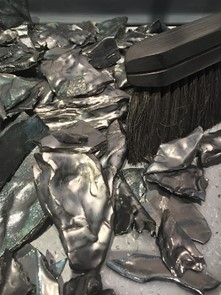 |
Masley-Charlet, Caitlin. “Caitlin Masley-Charlet and Diana Shpungin in Conversation.” Art Journal Open (July 8, 2016).
Diana Shpungin, detail of A Break in One and Several Places, 2015, graphite pencil, horsehair broom, glazed porcelain and stoneware, 24 x 43 x 14 in. (60.9 x 109.2 x 35.5 cm) (artwork © Diana Shpungin) |
 |
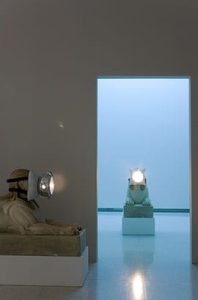
McKee, C.C. “‘a salting of sorts’: Salt, Sea, and Affective Form in the work of Deborah Jack.” Art Journal Open (July 30, 2019).
Deborah Jack, SHORE, 2004, nylon screens, video projection, rock salt, reflecting pool, dimensions variable, installation view, Big Orbit Gallery, Buffalo, New York (artwork © Deborah Jack; photograph provided by the artist) |
 |
McClure, Michael Jay. “If it Need Be Termed Surrender: Trisha Donnelly’s Subjunctive Case.” Art Journal Open (July 29, 2013).
Trisha Donnelly, Untitled, 2008, plaster, horsehair, paint, pillow, belts, lamp, two parts, ea. 36 x 60 x 22¾ in. (91.4 x 152.4 x 57.8 cm), installation view, The Quick and the Dead, Walker Art Center, 2009 (artwork © Trisha Donnelly; photograph provided by Casey Kaplan, New York) |
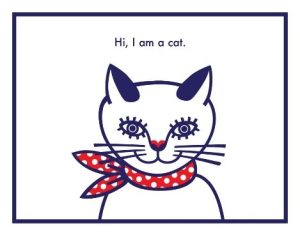 |
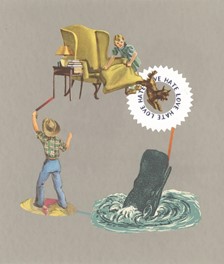
Ohsawa, Asuka. “Squares, Triangles, and Cats.” Art Journal Open (December 31, 2020). |
 |
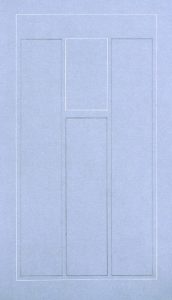
Porges, Maria. “Shortest Stories.” Art Journal Open (December 20, 2018). |
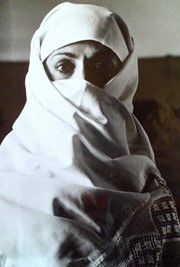 |
Rosa, María Laura. “Questions of Identity: Photographic Series by Alicia D’Amico, 1983–86.” Art Journal Open (July 2, 2019).
Alicia D’Amico photograph of Liliana, a performance by Liliana Mizrahi, 1983, scanned copy of original negative, reproduction from original 35mm negative contact (photograph © Archivo Alicia D’Amico, Buenos Aires) |
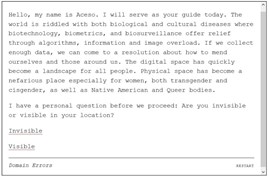 |
Santos, Dorothy R. “ Domain Errors.” Art Journal Open (July 24, 2020). |
 |
Schiff, Karen L. “Imprinting Agnes Martin.” Art Journal Open (December 19, 2014).
Karen L. Schiff, Agnes Martin, El País, 21 December 2004, II, 2005, graphite and stylus on vellum, 17 x 12 inches (artwork © Karen L. Schiff) |
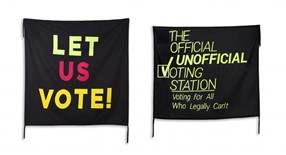 |
Sifuentes, Aram Han. “Official Unofficial Voting Station: Voting for All Who Legally Can’t.” Art Journal Open (October 1, 2020).
Protest Banner Lending Library, Let Us Vote! and Official Unofficial Voting Station, 2020, textile banners (photograph by Thaib A. Wahab) |
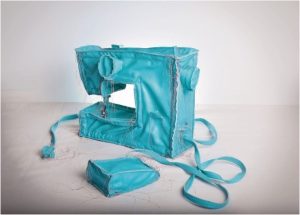 |
Szymanek, Angelique. “Haptic Encounters: Margarita Cabera’s Space in Between.” Art Journal Open (October 15, 2020).
Margarita Cabrera, Sewing Machine (Blue-Green), 2016, vinyl, thread, copper wire, and appliance parts (artwork © 2020 Margarita Cabrera/Licensed by VAGA at Artists Rights Society [ARS], NY; photograph provided by the artist) |
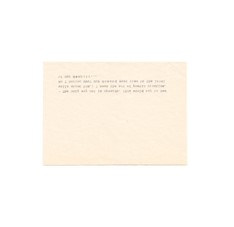 |
Vlassopoulou, Penelope. “No water, Athens, Greece, 2015: Twenty-four hours with nothing to eat or drink, only smelling the jasmine.” Art Journal Open (October 26, 2016).
Excerpt from Pandelis Prevelakis, I Kefali tis Medousas [The Head of Medusa] (Athens: Friends’ Editions, 1963), trans. the artist and Markus Nystrom |
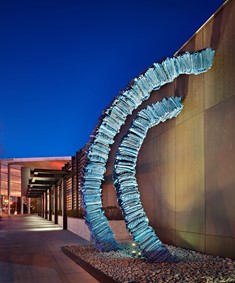 |
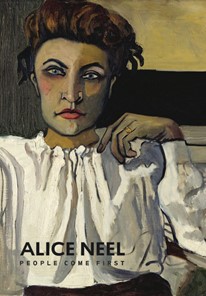
Watt, Marie. “In Conversation with Marie Watt: A New Coyote Tale.” Art Journal Open (October 19, 2017).
Marie Watt, Blanket Stories: Transportation Object, Generous Ones, Trek, 2014, cast bronze, 18 x 4 x 6 ft. (5.49 x 1.22 x 1.83 m). Permanent installation, Tacoma Art Museum, Tacoma, Washington (artwork © Marie Watt; photograph by Benjamin Benschneider/OTTO) |
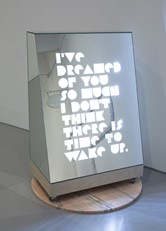
 |
Wilson, Siona. “Portraits (and) Matter.” Art Journal Open (January 13, 2022). |
 |
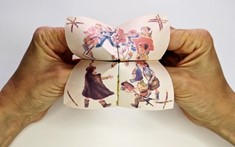
Yoshitake, Mika. “Humans have been Human for so long: Shana Lutker and Mika Yoshitake in Conversation.” Art Journal Open (August 2, 2016).
Shana Lutker, A handsome confused puppet, 2015, mirrored glass box, fluorescent lights, wood, marble, casters, 49 x 30 x 19 in. (124.4 x 76.2 x 48.2 cm) (artwork © Shana Lutker; photograph by Cathy Carver) |
 |
Yurshansky, Jenny. “Hide and Seek.” Art Journal Open (March 25, 2021).
Jenny Yurshansky, Hide and Seek (folded view), 2021, interactive sculpture, inkjet print, 3 3/4 x 3 3/4 x 3 in. (9.5 x 9.5 x 7.6 cm) (photograph provided by the artist) Folk tradition meets revisionist storytelling in Jenny Yurshansky’s printable sculpture |
Announcing New CAA Board Members for 2022!
posted by CAA — March 08, 2022
The results of the 2022 CAA Board of Directors Election were presented at the CAA Annual Business Meeting, Part II on Friday, February 18 at 2:00 p.m. (CST) at CAA’s 110th Annual Conference.
We are grateful to all the candidates who put forward their names for consideration this year.
ABOUT THE BOARD OF DIRECTORS
The Board of Directors is charged with CAA’s long-term financial stability and strategic direction; it is also the Association’s governing body. The board sets policy regarding all aspects of CAA’s activities, including publishing, the Annual Conference, awards and fellowships, advocacy, and committee procedures.
Thank you to all those who voted!
We would like to congratulate Gregory Gilbert, Nazar Kozak, Karen J. Leader, Adity Saxena, and Victoria McCraven on their election to CAA’s Board of Directors.
Gregory Gilbert
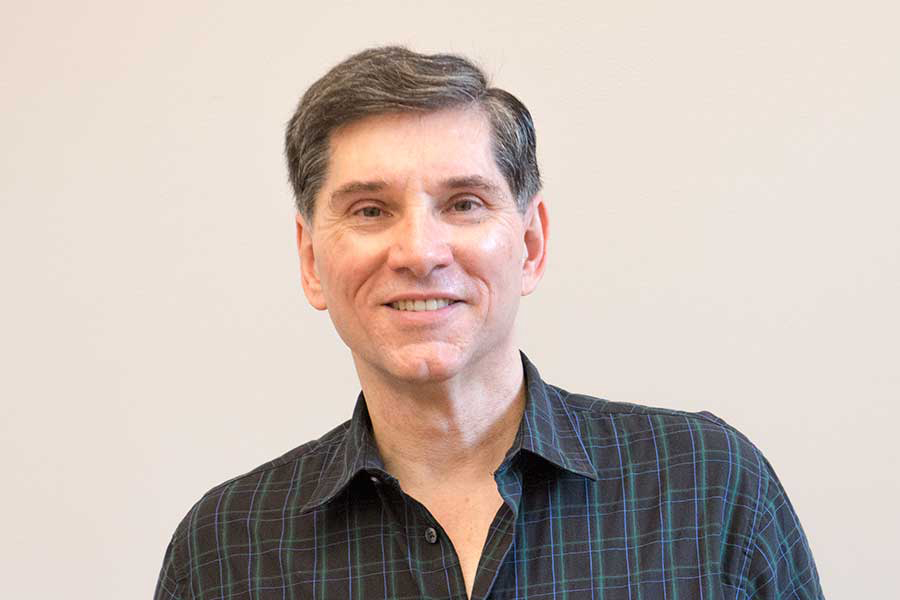 Gregory Gilbert received his BFA degree in Art History from the University of Kansas and his MA and PhD degrees in Art History from Rutgers University. He has taught at Rutgers University, Purdue University and Western Illinois University. He is currently Professor of Art History and Director of the Art History and Art Museum Studies programs at Knox College in Galesburg, Illinois. He also earned MA certification in Museum Studies from Rutgers University and has worked in several art museums, most recently as senior curator at the Figge Art Museum in Davenport, Iowa. His primary area of research is 20th century American art, specifically Abstract Expressionism. He is currently researching the relationship of Robert Motherwell’s art to Pragmatist philosophy and American poetics and in 2015 received a Dedalus Foundation Visiting Scholar at the Archives of American Art Fellowship for this project. He is also writing a book on Abstract Expressionism and the mass visual culture of World War II and has published articles in the Oxford Art Journal and Arts on this topic. In addition, he has written critical exhibition and book reviews for The Art Newspaper.
Nazar Kozak
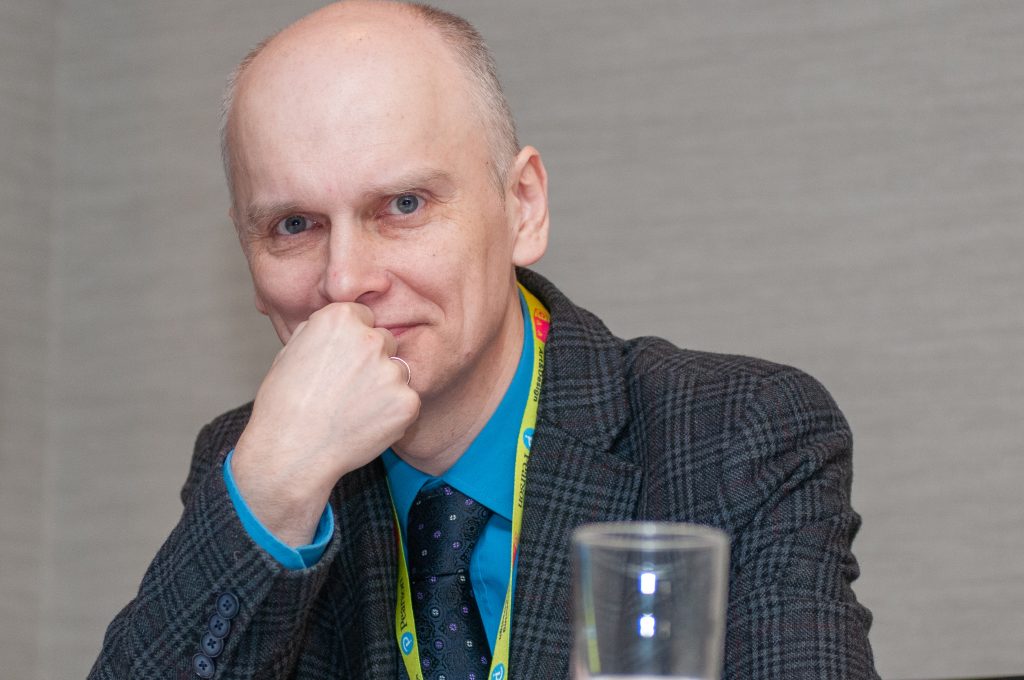 Nazar Kozak is Senior Researcher at the Department of Art Studies at the Ethnology Institute of the National Academy of Sciences, Ukraine and Associate Professor of Art History at Ivan Franko University of Lviv. Kozak received a PhD from Lviv Academy of Arts in 2000. His research was supported by scholarships and grants from the Fulbright Scholar Program, Getty Scholar Program, the American Council of Learned Societies, and other organizations. Kozak is working in two subfields of art history simultaneously: medieval and contemporary. His research on the medieval period concerns political iconography and art exchanges in Byzantine and post-Byzantine cultural spheres. He has authored the book (Lviv: Liha-Pres, 2007). In contemporary art studies, Kozak is exploring art’s agency in crisis situations. His essay on the art interventions during the Maidan Revolution in Ukraine (2013–14) received an honorable mention as a finalist for 2018 Art Journal Award. Currently, Kozak is writing a book about global artistic responses to the 1986 Chernobyl nuclear disaster.
Karen J. Leader
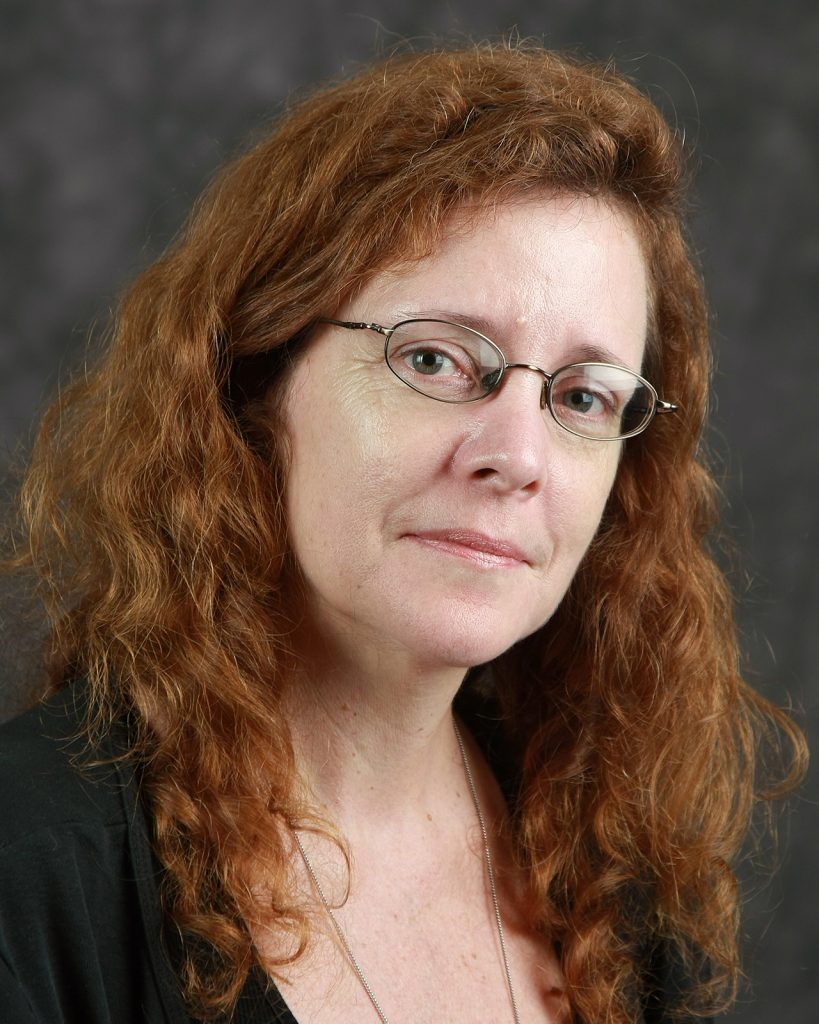 Karen J. Leader is Associate Professor of Art History and Faculty Associate in the Center for Women, Gender and Sexuality Studies at Florida Atlantic University. She received her BA from the University of California, Berkeley and her MA and Ph.D. at the Institute of Fine Arts, New York University. Her areas of interest include art and popular culture in the 19th-21st centuries, feminist theory and practice, and the history and future of the discipline of art history, the humanities, and higher education. She has published on the artist Gustave Courbet, representations of women in popular culture, and 21st-century tattoo culture. She directs the Barb Schmidt Fellowship: Cultivating Community Involvement, Advocacy and Social Change, and is currently the chair of CAA’s Services to Historians of the Visual Arts Committee.
Victoria McCraven
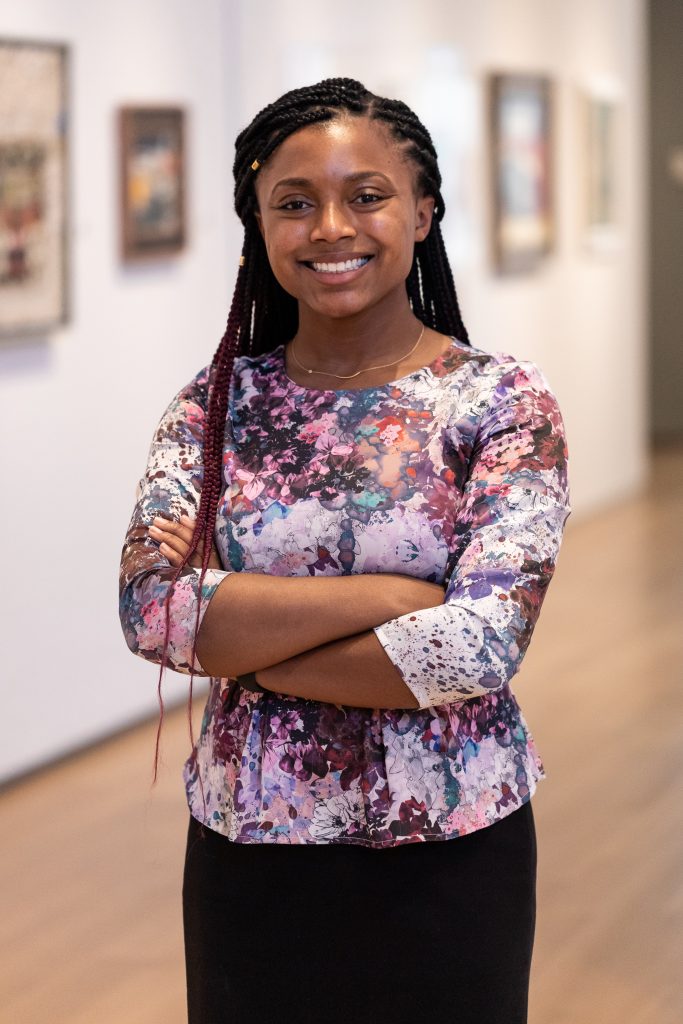 Victoria McCraven is the Programs Manager at NXTHVN, where she recently co-curated the Fall Exhibition Christian Curiel: Between Reveries. Based in New Haven, Connecticut, NXTHVN is an arts non-profit which invites emerging artists from all over the world to participate in its curatorial and studio fellowships. She is passionate about expanding historical narratives through the visual arts and creating community-based dialogue. Victoria earned her bachelor’s degree from Dartmouth College, majoring in Geography with a minor in Art History. While at Dartmouth, she worked at the Hood Museum of Art where she curated the exhibition Black Bodies on the Cross which included works by Romare Bearden, Kara Walker, and Ashley Bryan. In 2019, Victoria was selected as a U.S.-U.K. Fulbright Postgraduate Grantee to complete her master’s degree in History of Art at the School of Oriental and African Studies, University of London. Previously, Victoria was the 2020-2021 Romare Bearden Graduate Museum Fellow at the Saint Louis Art Museum, where she worked on education and audience development projects across the museum. While completing her fellowship at the Saint Louis Art Museum, she co-curated the current New Media Series Nuotama Frances Bodomo: Afronauts which is currently on view through May 1, 2022.
Adity Saxena
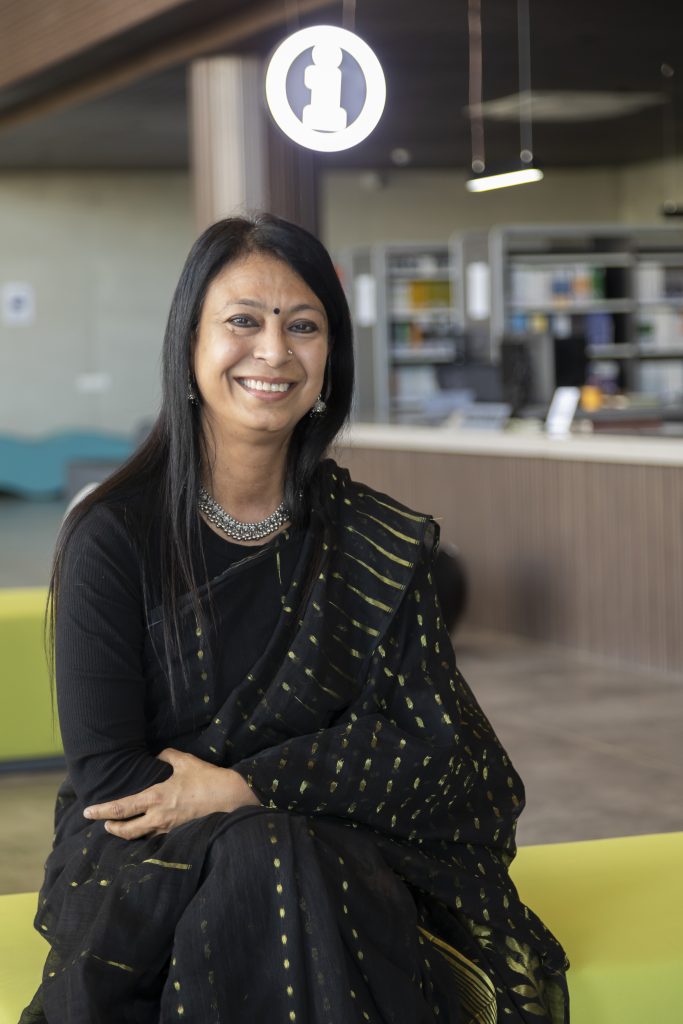
I call myself a messenger of happiness and believe in empathy. Mind-map is my tool for plotting ideas and communicating through stories. In the past 18 years of my professional journey, I have progressed from a design educator of a vocational training institution to a Dean of the Woxsen School of Arts and Design, India. In addition, I have expanded my path from teaching to academic coordination to academic leadership.
Being a first-generation graduate, I have many pauses, slow and fast pace in my journey path, which gives me an understanding of people, culture, and power of empathy. I am a teenage girl’s mother, a certified design thinker, and a mentor.
My experience includes allied fields like working as a Restorative Justice co-facilitator in a school project in the United States and many global research projects. I am India representative of Restorative Justice Education, USA, a nonprofit, 501(c)(3) corporation) is to promotes the practice of Restorative in school education to create a culture of care.
The social role of art, wellbeing and education are the areas that interest me more. My research has been published globally and many of my research are the outcome of global collaborations. I have been invited to share my thoughts about the challenges in online education, corporate storytelling, and design thinking on many international platforms.
I have been featured in The Academic Woman Magazine, the UK, in Jan-March, 2022 issue. In addition, recently, I have been invited to work as an external member in Design Thinking for Social Change, a project funded by the European Union.
I am privileged to be connected with a global network and believe in the power of collaborations. My dream is to create an enjoyable learning space for students and teachers.
Committee on Women in the Arts (CWA) Picks: January/February
posted by CAA — January 31, 2022
The January/February “Picks” selected by the Committee on Women in the Arts reflect on the difficult pursuit of creative freedom through idiosyncratic yet careful explorations of color, form, genre, and medium as well as voice and address. The results are odd, anxious atmospheres that test reality’s bodily contours and lament the strange alienations and lurking injustices that constitute normalcy.
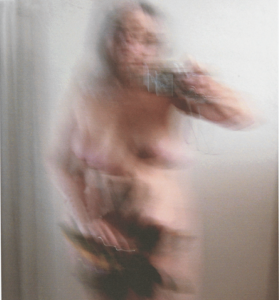
Joan Semmel, Untitled (Fem Folio), 2007, Digital Print, 12 x 12 inches, copyright©Joan Semmel/Artists Rights Society (ARS) New York
Mika Tajima: You Must Be Free
January 22 through March 12, 2022
Kayne Griffin, Los Angeles
From an early investigation into the regulatory and relational structures of human bodies in built environments, Mika Tajima’s recent work extends her inquiry into the conditions of human agency and self-determinacy. This exhibition focuses on the necessity and impossibility of freedom in our contemporary moment. The title, You Must Be Free, appears as an external command to achieve freedom and produces a contradictory tension that reveals a social limit to its practice. The speech act presents freedom as a pressing desire and controlling demand on the subject, underlining the entwinement of control and freedom. The animating force of this paradoxical directive is manifested in this exhibition as air pressure and its circulation through contained and porous objects and architecture.
Brittany Tucker: Burnout
January 8 through February 5, 2022
Steve Turner Gallery, Los Angeles, California
Burnout is a solo exhibition by Vienna-based Brittany Tucker featuring new large-scale loosely rendered paintings, half of which incorporate text that was spray-painted on in a street-tag manner. Tucker’s works of the past few years often juxtaposed a realistic likeness of the artist interacting with cartoon-like characters. In these works, her principal cartoon nemesis of the past, a smiling, often taunting white man, is featured in but one canvas, where he is spilling black paint off the bottom edge of the canvas. Hand prints and foot prints mark the background around him, but Tucker is otherwise absent from the scene. When Tucker’s likeness appears in other works, she appears to be uncomfortable, contorted, or obscured. According to the artist, these works represent her desire to shut out the world’s expectations of a Black female artist and to work more impulsively. As a consequence, they represent an unrestrained portrait of her psychological state as an expat living, working and studying in Vienna in which confusion, sadness, emotional fragility, self-reflection, honesty and ultimately courage and optimism are portrayed.
Joan Semmel: Skin in the Game
October 28, 2021 through April 3, 2022
Pennsylvania Academy of Fine Arts, Philadelphia, Pennsylvania
Joan Semmel: Skin in the Game includes approximately 40 paintings that show the remarkable continuity and assiduity of Semmel’s practice, and focus on four main themes—erotic abstraction; the self; expressive figuration; and photography and painting—that traverse five decades of work and reveal a strong counter narrative to the traditional telling of the history of painting in the United States from the late 1960s to today. Semmel’s work reflects the ongoing struggle for women’s equal representation and power to make decisions about their own bodies and sexuality while centering female empowerment through the self. In Semmel’s own words: “I do not pretend to address the problems of all women in the world. My work is personal and I speak for myself. Women artists have to speak for themselves and then unite to fight the political fight.”
Allison Katz—Artery
January 14 through March 13, 2022
Camden Art Centre, Arkwright Road, London
Attending to the idiosyncratic and eccentric, to personal mythologies and embodied experience, painter Allison Katz treats her own biography as source material, as well as drawing from dream objects, art historical references, and the texture of everyday life. Her exhibition unfolds through a series of biographical anecdotes and moments of synchronicity, opening the world up to a game of allusions, double entendre, slips and wordplay.
Emily: Desert Painter of Australia
January 21 through March 12, 2022
Gagosian, Paris, France
Emily: Desert Painter of Australia is the first solo exhibition in France of the work of Emily Kame Kngwarreye (1910–1996). Emily is unique among Indigenous Australian painters for her rapid and systematic exploration of different styles and for her bold inventiveness with regard to form and color. Over time, her mesmerizing early “dot” paintings ceded to more gestural canvases, reduced in their detail and liberated in their formal qualities. Until her death in 1996, she painted prolifically on both intimate and grand scale, with brushes, sticks, and fingertips on unstretched linen laid flat on the ground, sitting beside or within the composition itself
Laurie Anderson: The Weather
September 24, 2021 through July 31, 2022
Hirshorn Museum and Sculpture Garden, Washington D.C.
Laurie Anderson: The Weather is the largest-ever U.S. exhibition of artwork by celebrated multimedia artist Laurie Anderson. Spanning her groundbreaking video and performance works from the 1970s to recent years, the exhibition guides visitors through an immersive audiovisual experience in the Museum’s second-floor galleries. This dynamic survey showcases the artist’s boundless creative process by highlighting time-based media, including To the Moon (2018), a 15-minute virtual reality work, as well as the largest exhibition of her paintings to date.
Lucy Kim: Skin Might See
January 24 – March 5, 2022
University Gallery, UMASS Lowell
Skin Might See includes the first gallery showing of Kim’s Knife Paintings, as well as work from her Auto-Synthetic series. Kim is a visual artist who uses mold making and illusionistic painting to create hybrid objects that navigate the borderlands between painting and sculpture. She describes mold making and casting as a “sculptural surrogate for photography.” In both bodies of work there is intrigue in the tension between skin and cast surface. Curator Julie Poitras Santos wrote that in Kim’s oeuvre “the surface skin competes for visual primacy with the three dimensional form…“ These startling integuments often seem at odds with the kitchen accoutrements and other structures that lie beneath, creating a frisson and a place of interrogation between media and meaning.
CAA Then & Now: Reflections on the Centennial Book and the Next Century
posted by CAA — November 15, 2021
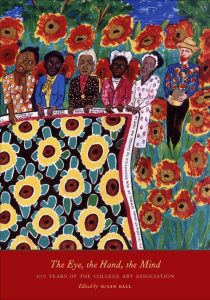
Cover of The Eye, the Hand, the Mind: 100 Years of the College Art Association, edited by Susan Ball (Rutgers, 2011) featuring detail of Faith Ringgold, The Sunflower Quilting Bee at Arles, 1996
On November 4, CAA had the privilege to host the digital event celebrating The Eye, the Hand, the Mind: 100 Years of the College Art Association. If you were unable to make it, please watch this recording of the event.
Published in 2010, this book documents and examines over a century of CAA’s history. The event features Susan Ball, editor of the publication, and author Julia Sienkewicz, who will discuss their contributions to the project and how topics and issues have shifted and changed in the last decade. A conversation between CAA CEO and Executive Director, Meme Omogbai, and art historian, Anne Higonnet, will reflect on these insights and CAA’s plans for the future. This conversation also will honor Robert L. Herbert, the dedicatee of the book, and will discuss how his legacy has impacted the field and so many at CAA.
Following this event, CAA will release a series of short videos from authors discussing their specific chapters within the book, including Julia A. Sienkewicz, Judith Brodsky, Ellen Levy, and Karen Leader. Their presentations will cover a range of topics concerning CAA’s history, from advocacy and feminist initiatives to CAA’s past exhibition programs and conferences.
About the book:
Susan Ball, editor. The Eye, the Hand, the Mind: 100 Years of the College Art Association (Rutgers University Press, 2011). Copies are available for purchase here.
In 1911 the College Art Association began with a small group of college art teachers whose single mission was to promote “art interests in all divisions of American colleges and universities.” One hundred years later the CAA, as it is commonly known, is as diverse as the decades that witnessed its maturity and growth. As leadership and membership grew dynamically, art and art history professors were joined by non-academic visual artists and art historians, museum professionals, art librarians, visual resource curators, independent scholars and artists, collectors, dealers, conservators, and non-college educators.
The Eye, the Hand, the Mind is a collaborative journey, filled with pictorial mementoes and enlivening stories and anecdotes. In these essays readers discover the important role CAA played in major issues in higher education such as curriculum development, preservation of world monuments, workforce issues and market equity, intellectual property and free speech, capturing conflicts and reconciliations inherent among artists and art historians, pedagogical approaches and critical interpretations/interventions as played out in association publications, annual conferences, advocacy efforts, and governance.
Celebrating the centennial of CAA members and milestones, Susan Ball and renowned contributors honor the organization’s complex history which, in part, also represents many learned societies and the humanities over the last one hundred years.
About the speakers:
Susan Ball, Ph.D.: Susan Ball edited The Eye, the Hand, the Mind. Ball holds a Ph.D. in art and architectural history from Yale University and holds over 35 years of professional experience – as a professor, scholar, museum professional and nonprofit agency director. Ball served as Interim Director of Programs at the New York Foundation for the Arts (NYFA). Prior, she was Executive Director at the College Art Association, Professor of Art History at the University of Delaware, the Director of Government and Foundation Affairs at the Art Institute of Chicago, and a consultant with the Shelley and Donald Rubin Foundation. As an author and editor, she has contributed significant works of scholarship in her field, such as The Profitable Artist: A Handbook for All Artists in the Literary, Media, Performing, and Visual Arts with Peter Cobb and Felicity Hogan (Allworth Press, 2011), and has served on many boards.
Julia A. Sienkewicz, PhD: In The Eye, the Hand, the Mind, Sienkewicz authored the chapter, “Uniting the Arts and the Academy: A History of the CAA Annual Conference.” Sienkewicz, an Associate Professor of Art History at Roanoke College, holds both an MA and PhD from the University of Illinois and a BA from Mt. Holyoke College. She is the author of Epic Landscapes: Benjamin Henry Latrobe and the Art of Watercolor (2019). Currently, she is at work on the monograph Forms of White Hegemony: Transnational Sculpture, Racialized Identity, and the Torch of Civilization, 1836-1865, research that has been recognized with the award of a Terra Foundation Fellowship at the American Academy in Rome. She recently edited a special issue of the Art History Pedagogy and Practice journal entitled, “Teaching and Learning the Art History of the United States.” Sienkewicz served in leadership roles at CAA for more than a decade, most recently concluding a term on the Board of Directors as the VP for Committees.
Anne Higonnet, Ph.D.: Anne Higonnet is now Professor of Art History at Barnard College of Columbia University. She received her BA from Harvard College in 1980 and her PhD from Yale University in 1988 under Robert Herbert. Her work has been supported by Getty, Guggenheim, and Social Science Research Council fellowships, as well as by grants from the Mellon, Howard and Kress Foundations. In 2019-2020 she was a Fellow at the Harvard-Radcliffe Institute. She has published many essays, five print books, and two book-scale digital projects, is a prize-winning teacher, and has lectured widely, including in the Live Arts program of the Met Museum. One of her courses, Clothing, is among the most popular at Barnard and Columbia. She is now writing a book under contract with Norton: Three Fashion Stars and the Revolution They Wore; Joséphine Bonaparte, Juliette Récamier, Térésia Tallien.
Meme Omogbai, CAA Executive Director and CEO: Before joining CAA, Omogbai served as a member and past board chair of the New Jersey Historic Trust, one of four landmark entities dedicated to preservation of the state’s historic and cultural heritage, and Montclair State University’s Advisory Board. Named one of 25 Influential Black Women in Business by The Network Journal, Meme has over twenty-five years of experience in corporate, government, higher education, and museum sectors. As the first American of African descent to chair the American Alliance of Museums (AAM), Omogbai led an initiative to rebrand the AAM as a global, inclusive alliance. While COO and trustee, she spearheaded a major transformation in operating performance at the Newark Museum. During her time as deputy assistant chancellor of New Jersey’s Department of Higher Education, Omogbai received legislative acknowledgment and was recognized with the New Jersey Meritorious Service award for her work on college affordability initiatives for families. Omogbai received her MBA from Rutgers University and holds a CPA. She did postgraduate work at Harvard University’s executive management program and has earned the designation of Chartered Global Management Accountant. She studied global museum executive leadership at the J. Paul Getty Trust Museum Leadership Institute, where she also served on the faculty.