
CAA News Today
Grants, Awards, and Honors
posted by CAA — December 15, 2012
CAA recognizes its members for their professional achievements, be it a grant, fellowship, residency, book prize, honorary degree, or related award.
Grants, Awards, and Honors is published every two months: in February, April, June, August, October, and December. To learn more about submitting a listing, please follow the instructions on the main Member News page.
December 2012

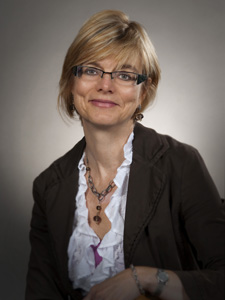 Anna Sigrídur Arnar
Anna Sigrídur Arnar of Minnesota State University, Moorhead, has received the Robert Motherwell Book Award for the best publication in the history and criticism of modernism in the arts—including the visual arts, literature, music, and the performing arts. The $20,000 prize, administered by the Dedalus Foundation, based in New York, recognizes The Book as Instrument: Stéphane Mallarmé, the Artist’s Book, and the Transformation of Print Culture (Chicago: University of Chicago Press, 2011). Nominations are made by publishers, and the winner is chosen by a panel of distinguished scholars and writers.

Oskar Bätschmann of the Schweizerisches Institut für Kunstwissenschaft in Zürich, Switzerland, has been named Samuel H. Kress Professor at the National Gallery of Art’s Center for Advanced Study in the Visual Arts in Washington, DC.
Nina Berson has used a National Endowment for the Humanities (NEH) grant to produce a summer institute, “Mesoamerica and the Southwest: A New History for an Ancient Land,” which took place June 17–July 23, 2012. This NEH institute, sponsored by the Community College Humanities Association and held in Mexico, Arizona, and New Mexico, examined the interconnections among Mesoamerican and ancient Southwestern archaeological, anthropological, and art-historical studies.

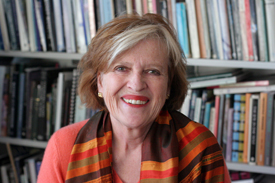 S. Hollis Clayson
S. Hollis Clayson, Bergen Evans Professor in the Humanities and Professor of Art History at Northwestern University in Evanston, Illinois, has been named the 2013–14 Samuel H. Kress Professor at the National Gallery of Art’s Center for Advanced Study in the Visual Arts in Washington, DC. Clayson will be the senior member of the center and counsel postdoctoral fellows. She will also complete her book, Electric Paris: The Visual Cultures of the City of Light in the Era of Thomas Edison (to be published by the University of Chicago Press).

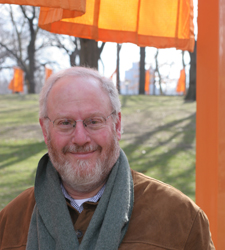 Jonathan Fineberg
Jonathan Fineberg, professor of art history emeritus at the University of Illinois in Urbana-Champaign, has received a 2012 Craft Research Fund Project Research Grant, administered by the University of North Carolina’s Center for Craft, Creativity, and Design in Hendersonville. He will use the $5,000 award to conduct research for the first scholarly monograph on the work of Robert Arneson.
Julia P. Herzberg has received a 2012–13 Fulbright Scholar grant. From March to May 2013, she will teach a graduate course, “Latin American Artists in the US from 1995: Globalism and Localism,” at the Universidad Diego Portales in Santiago, Chile, and work on a curatorial project at el Museo de la Memoria y los Derechos Humanos, also in Santiago.
Alexander Brier Marr of the University of Rochester in Rochester, New York, has earned an Ailsa Mellon Bruce Predoctoral Fellowship for Historians of American Art to Travel Abroad. The fellowship is administered by the National Gallery of Art’s Center for Advanced Study in the Visual Arts in Washington, DC.
Constance Moffett has used a National Endowment for the Humanities (NEH) grant to produce a summer institute, “Leonardo da Vinci: Between Art and Science” which took place June 25–July 13, 2012. This NEH institute, sponsored by the University of Virginia and Kunsthistorisches Institut in Florenz, explored how Leonardo melded art and science by using geography and cartography to begin his study of military engineering, canalization, and architecture.
Rachel Silberstein, a doctoral student in oriental studies at the University of Oxford in England, has earned a student and new professionals scholarship from the Textile Society of America. The award provided free registration for the society’s symposium, which was held September 19–23, 2012, in Washington, DC.

 Carol Solomon
Carol Solomon, visiting associate professor of art history at Haverford College in Haverford, Pennsylvania, has received a 2012–13 Fulbright Award in the Middle East and North Africa Regional Reserach Program. She will undertake research in Tunisia and Morocco on contemporary art of the Maghreb, focusing on issues of national memory, culture, and identity.
Jenni Sorkin, assistant professor of contemporary art history at the University of Houston in Texas, has received a 2012 Craft Research Fund Project Research Grant from the University of North Carolina’s Center for Craft, Creativity, and Design in Hendersonville. Her $12,500 award will go toward research on a book-length study that recovers the gendered history of weaving and its uncertain disciplinary status within the mid-twentieth-century university.
Catherine Whalen, assistant professor at the Bard Graduate Center for Studies in the Decorative Arts, Design, and Culture in New York, has accepted a 2012 Craft Research Fund Project Research Grant, administered by the University of North Carolina’s Center for Craft, Creativity, and Design in Hendersonville. She will share the $8,000 award with a colleague, working toward a book on Paul Hollister, a critic and historian of the studio glass movement.
Teresa Wilkins, a doctoral student at Indiana University in Bloomington, has earned a 2012 Craft Research Fund Graduate Research Grant for $8,285 from the University of North Carolina’s Center for Craft, Creativity, and Design in Hendersonville. She will conduct dissertation research investigating the construction, use, and sociopolitical meaning of the modern feather arts of Hawai‘i.
Yanfei Zhu, a doctoral student in the Department of History of Art at Ohio State University in Columbus, has been named an Ittleson Fellow for 2011–13 by the National Gallery of Art’s Center for Advanced Study in the Visual Arts in Washington, DC. His project is titled “Transtemporal and Cross-Border Alignment: The Rediscovery of Yimin Ink Painting in Modern China, 1900–1949.”
Exhibitions Curated by CAA Members
posted by CAA — December 15, 2012
Check out details on recent shows organized by CAA members who are also curators.
Exhibitions Curated by CAA Members is published every two months: in February, April, June, August, October, and December. To learn more about submitting a listing, please follow the instructions on the main Member News page.
December 2012
Julia P. Herzberg. Iván Navarro: Fluorescent Light Sculptures. Patricia and Phillip Frost Art Museum, Florida International University, Miami, Florida, November 17, 2012–January 2, 2013.

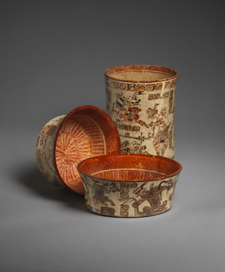 Maya, Motul de San José or vicinity, Petén Guatemala, Late Classic, ca. 755, Service Set with Wahy Figures, ceramic with polychrome slip, h. 20.4 cm., diam. 16.3 cm (largest). Princeton University Art Museum, museum purchase, Fowler McCormick, Class of 1921, Fund (y1993-17, 18, and 19) (artwork in the public domain; photograph by Bruce M. White)
Bryan R. Just. Dancing into Dreams: Maya Vase Painting of the Ik’ Kingdom. Princeton University Art Museum, Princeton, New Jersey, October 6, 2012–February 17, 2013.
Larissa Leclair and Leslie J. Ureña. Captured by a Portrait: 20 Photobooks from the Indie Photobook Library. GautePhoto, Guatemala City, Guatemala, November 7–25, 2012.
Jennifer McComas. Pioneers and Exiles: German Expressionism at the Indiana University Art Museum. Indiana University Art Museum, Bloomington, Indiana, October 6–December 23, 2012.

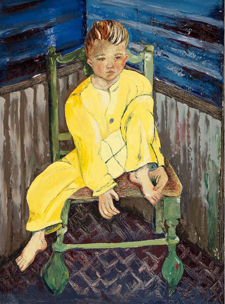 Gertrude Fisher-Fishman, Joe in Yellow Pajamas, 1948, oil on Masonite, 24 x 18 in. (artwork © Gertrude Fisher-Fishman; photograph provided by the Louise Fishman Foundation)
Matthew Palczynski. Generations: Louise Fishman, Gertrude Fisher-Fishman, Razel Kapustin. Woodmere Art Museum, Philadelphia, Pennsylvania, October 13, 2012–January 6, 2013.

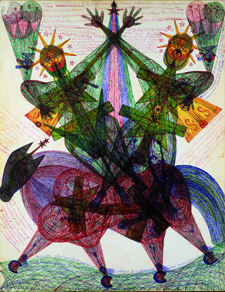 Janko Domsic, Untitled, no date, ballpoint pen on cardboard, 25¾ x 19¾ in. abcd Collection, Paris (photograph provided by Valérie Rousseau)
Valérie Rousseau and Barbara Safarova. Collectors of Skies. Andrew Edlin Gallery, New York. September 13–November 3, 2012.
Leslie J. Ureña. The In-Between Space. Tina Keng Gallery, Beijing, China, June 9–July 15, 2012.
Books Published by CAA Members
posted by CAA — December 15, 2012
Publishing a book is a major milestone for artists and scholars—browse a list of recent titles below.
Books Published by CAA Members appears every two months: in February, April, June, August, October, and December. To learn more about submitting a listing, please follow the instructions on the main Member News page.
December 2012

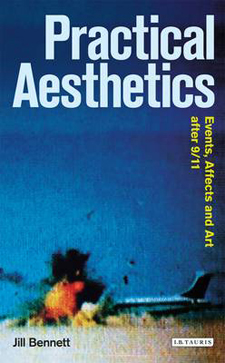
Jill Bennett. Practical Aesthetics: Events, Affects, and Art after 9/11 (London: I. B. Tauris, 2012).

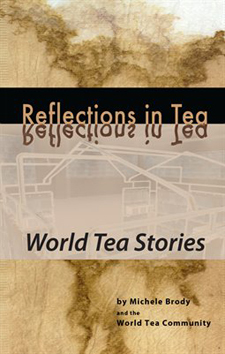
Michele Brody and the World Tea Company. Reflections in Tea: World Tea Stories (New York: Magcloud, 2012).

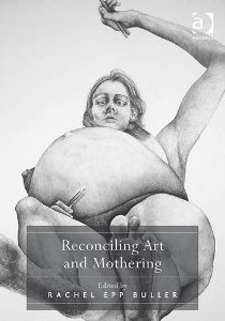
Rachel Epp Buller, ed. Reconciling Art and Mothering (Burlington, VT: Ashgate, 2012).

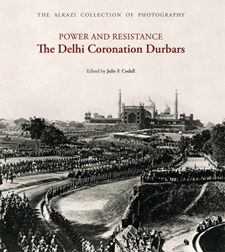
Julie Codell, ed. Power and Resistance: The Delhi Coronation Durbars (Ahmadabad, India: Mapin Publishing, 2012).

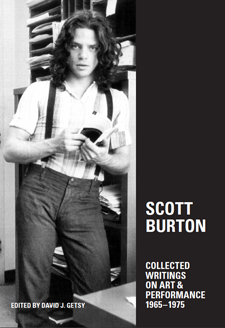
David Getsy, ed. Scott Burton: Collected Writings on Art and Performance, 1965–1975 (Chicago: Soberscove Press, 2012).

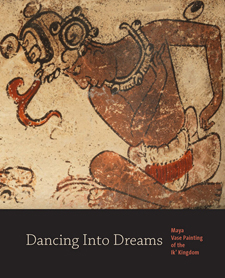
Bryan R. Just. Dancing into Dreams: Maya Vase Painting of the Ik’ Kingdom (Princeton, NJ: Princeton University Art Museum, 2012).

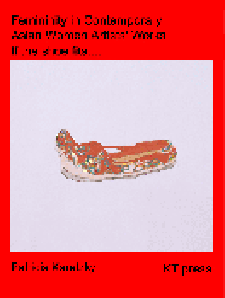
Patricia Karetzky. Femininity in Asian Women Artists’ Work from China, Korea, and USA:
If the Shoe Fits (London: KT Press, 2012).

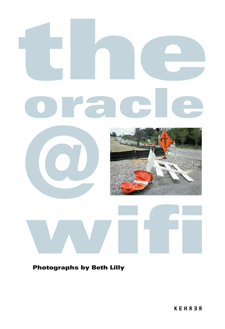
Beth Lilly. the oracle @ wifi: Beth Lilly (Heidelberg, Germany: Kehrer Verlag, 2012).

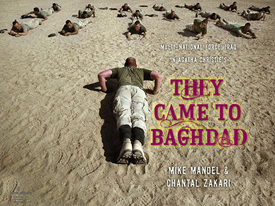
Mike Mandel and Chantal Zakari. Multi-National Force: Iraq in Agatha Christie’s “They Came to Baghdad” (Boston: Eighteen Publications, 2012).

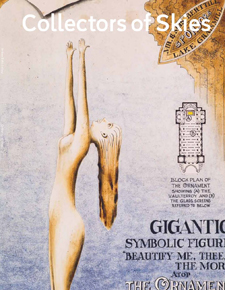
Valérie Rousseau (ed.), Barbara Safarova, and Champfleury. Collectors of Skies (New York: Andrew Edlin Gallery, 2012).
Committee on Women in the Arts Picks for December 2012-January 2013
posted by CAA — December 10, 2012
Each month, CAA’s Committee on Women in the Arts selects the best in feminist art and scholarship. The following exhibitions and events should not be missed. Check the archive of CWA Picks at the bottom of the page, as several museum and gallery shows listed in previous months may still be on view or touring.
December 2012–January 2013
Mickalene Thomas: How to Organize a Room around a Striking Piece of Art
Lehman Maupin Gallery
540 West 26th Street, New York, NY 10001; and 201 Chrystie Street, New York, NY 10002
November 14, 2012–January 5, 2013
The two-part Mickalene Thomas: How to Organize a Room around a Striking Piece of Art is a the artist’s third solo exhibition at Lehmann Maupin Gallery. The Lower East Side space will present new large-scale paintings depicting landscapes and interior scenes and a series of short films created during her recent travels in Europe. In Chelsea, Thomas’s first documentary film, Happy Birthday to a Beautiful Woman, will be shown alongside photographs of her mother and long-time muse, Sandra Bush. The film is an emotionally raw and loving portrait of Bush as she reflects on her life experiences, including her personal struggles and battle with chronic illness. Thomas will also re-create one of her tableau environments in the gallery, allowing viewers to fully immerse themselves in the artist’s world while watching the film.

Deborah Kass, Before and Happily Ever After, 1991, oil and acrylic on canvas, 72 x 60 in. (artwork © Deborah Kass)
Deborah Kass: Before and Happily Ever After
Andy Warhol Museum
117 Sandusky Street, Pittsburgh, PA 15212
October 27, 2012–January 6, 2012
Before and Happily Ever After is the first midcareer retrospective of Deborah Kass at the temple of the artist who unleashed her potent turn to pop culture in order to explore first her “absence” and then her “presence” in it as a lesbian Jewish woman, as she has recently said. Consisting of seventy-five works, the exhibition unites the abstraction of her early and most recent work, unravels the development of Kass’s audiovisual mining of art history and pop culture through breakthrough painting series (such as The Warhol Project, The Jewish Jackie, and her latest, feel good paintings for feel bad times), and offers an incredible opportunity to be marveled by the variety of politics—and pleasures—that underpin her affective yet multilayered dialogue with pop culture and the exploration of (her) identity through it. As Kass sheds her own light on Andy Warhol through her work, and as her work continues to defend the potent ways in which women artists have engaged pop culture, the show promises to pave the way for other dialogues between women (neo-Pop or Pop) artists with (American) Pop or Warhol at his museum.
Ann Hamilton: the event of a thread
Park Avenue Armory
643 Park Avenue, New York, NY 10065
December 5, 2012–January 6, 2013
Ann Hamilton’s enchanting installation, the event of a thread, conducts a powerful, affective weaving of sounds, words, textures, and motions that shrouds the visitors with the intimacy of touch—the hand of cloth as the artist puts it—while translating the bodily intimacy of the “lap” and the daydream-like state of mind of “being read” into architectural scale and public experience. A multisensorial site-specific piece that is titled after a line from a definition of weaving by Anni Albers, the event of a thread is reminiscent of the artist’s childhood memories of daydreaming while being read in her grandma’s lap. Comprised of a field of swings, the installation is divided by an enormous silk glacial curtain whose motion is determined by the move of the swings and bracketed by a textile metaphorically being woven by the sonic threads of reading, writing, and live and recorded song. At the front of the installation two actors, covered with textured capes, read to caged birds, improvising combinations of Aristotelian excerpts that further elaborate on the role of touch in our self-awareness, weaving a tapestry of whispers that reach the visitors through separate speakers packaged in paper bags throughout the installation space. At the other end, rotating authors respond to the world outside and behind, weaving words into letters addressed to Far, to Near, to Time, to Sadness, and so on. In effect, the event of a thread reinstills belief in the viability and power of “relational” art as art literalizing its political claim to restoring the social bond by creating proximities through a strikingly intimate and poetic manner.
Caroline Burton: Prey
Accola Griefen Gallery
547 West 27th Street, No. 634, New York, NY 10001
December 7, 2012–January 12, 2013
In her first solo exhibition at Accola Griefen Gallery, Caroline Burton is exhibiting sculpture, painting, and drawing inspired by objects left behind or discarded. Her sculptural pillows in neutral tones allude to rest but render that impossible by the Hydrocal, wire, and canvas forms. Two rabbit’s feet cast in bronze hang on one wall and refer to the exhibition title. The exhibition also includes oil paintings on canvas, which depict discarded papers and rags.
Doing What You Want: Marie-Louise Ekman Accompanied by Sister Corita Kent, Mladen Stilinovic, and Martha Wilson
Tensta Konsthall
Taxingegränd 10, Box 4001, 163 04 Spånga, Stockholm, Sweden
October 18, 2012–January 13, 2013
Maria Lind, director of Tensta Konsthall, has interestingly used the work of a variety of artists, including Corita Kent and Martha Wilson, to flesh out the rebellious politics and feminist strategies of the work of Marie Louise Ekman, a fascinating and at times controversial figure of the Swedish art scene since the 1960s. Though a prominent artist who has worked in various media, celebrated in her home country mostly for her films, Ekman has not yet received the attention she deserves for her multifarious work that bridges Pop art and feminism from an idiosyncratic and often absurdist “girlie” point of view, radically exploring feminine identity and attacking bourgeois conventions. The exhibition focuses on her work from the 1960s to the 1980s, bringing together her transgressive objects that range from environments of Disney dolls and doll-occupied canvases, sewn silk, and pink fur objects to paintings on silk that straddle a variety of themes with her characteristic childish cartoony style.

Brooke Moyse, Mount, 2011, oil on canvas, 72 x 80 in. (artwork © Brooke Moyse; photograph by Jason Mandella)
To Be a Lady: Forty-Five Women in the Arts
1285 Avenue of the Americas Art Gallery
1285 Avenue of the Americas, New York, NY 10019
September 24, 2012–January 18, 2013
Curated by Jason Andrew and organized by Norte Maar, this cross-disciplinary, cross-generational exhibition includes work by forty-five artists born over the last century “who happen to be women.” Those included are: Alma Thomas, Charmion von Wiegand, Louise Nevelson, Alice Neel, Barbara Morgan, Irene Rice Pereira, Janice Biala, May Wilson, Lenore Tawney, Louise Bourgeois, Edith Schloss, Grace Hartigan, Ruth Asawa, Betye Saar, Pat Passlof, Jay DeFeo, Susan Weil, Lee Bontecou, Viola Frey, Judy Dolnick, Kathleen Fraser, Hermine Ford, Mimi Gross, Nancy Grossman, Elizabeth Murray, Judy Pfaff, Genesis Breyer P-Orridge, Mira Schor, Mary Judge, Nancy Bowen, Lindsay Walt, Michelle Jaffé, Elisabeth Condon, Tamara Gonzales, Jessica Stockholder, Brece Honeycutt, Ellie Murphy, Julia K. Gleich, Austin Thomas, Ellen Letcher, Rachel Beach, Vanessa German, Kirsten Jensen, Brooke Moyse, and Nathlie Provosty.
Rosemarie Trockel: A Cosmos
New Museum of Contemporary Art
235 Bowery, New York, NY 10002
October 24, 2012–January 20, 2013
Curated by Lynne Cooke, A Cosmos is a truly remarkable exhibition, both as a survey of Rosemarie Trockel’s work and as a combination of different curatorial and museum-display models that pertinently structure, interweave, and contextualize the artist’s signature themes and media, illuminating her multifarious work in a productive and enchanting way.
Kate Davis: Not Just the Perfect Moments
Drawing Room
Tannery Arts, 12 Rich Estate, Crimscott Street, London SE1 5TE, United Kingdom
December 4, 2012–February 2, 2013
Kate Davis, a New Zealand–born artist based in Glasgow, has produced a new body of commissioned work for her solo exhibition at Drawing Room. Questioning how to bear witness to the complexities of the past, her artwork is an attempt to reconsider, reclaim, and reinvent what certain histories could look, sound, and feel like. This has often involved responding to the aesthetic and political ambiguities of historical artworks and their reception. Working across a range of media, Davis has kept drawing at the critical core of her visual vocabulary, and this exhibition is the first time she addresses her relationship to the medium, its activity, and its history so directly. Focusing on ideologies perpetuated through certain approaches to the teaching of drawing, Not Just the Perfect Moments will attempt to stand alongside the late artist, Jo Spence, to reexamine and unpick some of the ways in which a representational practice, such as drawing, has constructed perceptions of the individual. Spence’s groundbreaking photographic works often asked who owns images—especially images of the body. In this exhibition, as with much of Davis’s practice, photography and drawing are brought into close relation and questioned as techniques for challenging, and caring for, a past and future.
The Female Gaze: Women Artists Making Their World
Pennsylvania Academy of the Fine Arts Museum
118–128 North Broad Street, Philadelphia, PA 19102
November 17, 2012–April 7, 2013
With great treasures and many surprises, The Female Gaze: Women Artists Making Their World consists of works from the museum’s recently acquired Linda Lee Adler Collection of Art by Women, which boasts close to five hundred works of art (including paintings, photographs, drawings, watercolors, pastels, collage, prints, fabric pieces, ceramics, bronze, wood, and sculpture in other media) by over 150 artists. The gift includes works by artists not previously represented in the museum, such as Louise Bourgeois, Joan Brown, Viola Frey, Ana Mendieta, Christina Ramberg, Kiki Smith, and Beatrice Wood, as well as complementary works by artists already in the collection, including Gertrude Abercrombie, Edna Andrade, Diane Burko, Sue Coe, Janet Fish, Sarah McEneaney, Alice Neel, Louise Nevelson, Gladys Nilsson, Elizabeth Osborne, Betye Saar, and Nancy Spero. A fully illustrated catalogue, with contributions from Glenn Adamson, Anna C. Chave, Robert Cozzolino, Joanna Gardner-Huggett, Melanie Herzog, Janine Mileaf, Mey-Yen Moriuchi, Jodi Throckmorton, and Michele Wallace, is something to covet.
RECIPIENTS OF 2013 CAA INTERNATIONAL TRAVEL GRANTS
posted by CAA — November 20, 2012
CAA is pleased to announce this year’s recipients of its International Travel Grant Program, generously funded by the Getty Foundation. Twenty art historians, including professors, curators, and artists who teach art history, will attend the upcoming Annual Conference in New York, taking place February 13–16, 2013. This is the second consecutive year that CAA has received a Getty grant to support the program.
In addition to covering travel expenses, hotel accommodations, and per diems, the CAA International Travel Grant Program includes conference registration and a one-year CAA membership. At the conference, the twenty recipients will be paired with hosts, who will introduce them to CAA and to specific colleagues who share their interests. CAA is grateful to the National Committee for the History of Art (NCHA) for its generous support in underwriting the hosts’ expenses. Members of CAA’s International Committee have agreed to serve as hosts, along with representatives from NCHA and CAA’s Board of Directors. This year, the program will begin with a one-day preconference for grant recipients and their hosts in New York on February 12.
The CAA International Travel Grant Program is intended to familiarize international professionals with the Annual Conference program, including the session participation process. CAA accepted applications from art historians, artists who teach art history, and art historians who are museum curators; those from developing countries or from nations not well represented in CAA’s membership were especially encouraged to apply. In September 2012, a jury of CAA members selected the final twenty recipients, whose names, home institutions, and primary areas of scholarly and professional pursuits follow. CAA is delighted by the range of interests and accomplishments of this year’s grant recipients and looks forward to welcoming them in New York.
CAA hopes that this travel-grant program will not only increase international participation in the organization’s activities, but will also expand international networking and the exchange of ideas both during and after the conference. The Getty-funded International Travel Grant Program supplements CAA’s regular program of Annual Conference Travel Grants for graduate students and international artists and scholars.
Joseph Adandé
Joseph Adandé
Joseph Adandé received a PhD in art history from the Université de Paris I, Sorbonne, where he focused on a comparative study of Ashanti stools and the Dahomey royal stools. Since 1986, he has taught art history at the Université d’Abomey-Calavi and at the Institut Supérieur d’Information, de Communication et des Arts (ISICA), at the University of Lomé, Togo. He defended a doctorat d’État in 2012 on “Humor in Traditional and Contemporary African Arts” at the Université de Lomé.
Adandé has taught and lectured in universities in Italy and Germany and served as a resource person for the School of African Heritage in Porto-Novo. He received a fellowship to the Metropolitan Museum of Art in New York to write a book on appliqué cloth in West Africa. Currently active in launching a school of fine arts at his university, Adandé recently obtained a three-month invitation to the Institut National d’Histoire de l’Art (INHA) in Paris, France, from September to November 2012.
Priscila Arantes
Priscila Arantes
Priscila Arantes is a cultural critic, curator, professor and director. She has been director and curator of Paço das Artes (State Secretariat of Culture/SP/Brazil) since 2007 and professor at Pontifícia Universidade Católica de São Paulo (PUC/SP) (Pontifical Catholic University) since 2002. She received her PhD in communication and semiotics from Pontifícia Universidade Católica de São Paulo and conducted postdoctoral research in the Department of Visual Art at the Pennsylvania State University. Between 2007 and 2011 Arantes was associate director of the Museum of Image and Sound in São Paulo, and in 2010 she was a member of the São Paulo Art Biennial’s editorial council of the magazine Polo de Arte Contemporânea. She has published widely about digital aesthetics and also curated exhibitions at Paço das Artes, notably Assim é, se lhe parece, translated as Right You Are! (If You Think So), in 2011 and Projeto 5X5 in 2012. Her research interests include contemporary art, Brazilian and Latin American art, and postcolonial studies.
W. M. P. Sudarshana Bandara
W. M. P. Sudarshana Bandara
W. M. P. Sudarshana Bandara is a lecturer in the Department of Fine Arts, University of Peradeniya, Sri Lanka. Trained as a painter, he received an MPhil in art history in 2009. He is currently pursuing a PhD, exploring how Eastern and Western concepts of art are used in the analysis of modern and postmodern works of art. Bandara is particularly interested in the intersection of art, Marxism, semiotics, and the Indian concept of Rasa.
Bandara teaches undergraduate and graduate courses in fine arts, art history, aesthetics, and criticism. In addition to teaching, he assists and supervises the research work of BA and MPhil students. The author of three academic research books and over twenty research papers, Bandara is also an active painter, exhibiting in solo and group exhibitions in Sri Lanka and internationally.
Marly Joseph Desir
Marly Joseph Desir
Marly Joseph Desir received his PhD in art history from the University of Arts, Haiti. He is a professor at the College La Renaissance, Port-au-Prince, Haiti, specializing in European and American art. As a teacher he uses lectures and multimedia technology to present a rich tapestry of visual information to his students, guiding them through the history of art, connecting historical traditions and practices to techniques through the ages, and linking them to a practical application of these techniques. His most recent publication is “True Art and Pseudo Art: Symbolist Discourse on Autonomy and Value” (2012). Earlier work includes: “Art Ethics: Thomas Kinkade and Contemporary Art” (2011); “National Art from a Local Perspective” (2008); and “Foreign or Native, Perception and Reception of Impressionism in American Art Criticism” (2006). Desir’s research focuses on twentieth-century American history and Byzantine manuscipts from the ninth through fourteenth centuries.
Ding Ning
Ding Ning
Ding Ning graduated with a PhD degree from Beijing Normal University in 1988. He was the British Council’s postdoctoral fellow at the University of Essex from 1993 to 1994. Before moving to Beijing in 2000, he served as professor and chair of the Department of Art History and Theory, China National Academy of Fine Arts in Hangzhou. He is currently a professor and vice dean at the School of Arts, Peking University.
Ding’s publications include Dimensions of Reception; Psychology of Visual Art; Dimensions of Duration: Toward a Philosophy of Art History; Depth of Art; Fifteen Lectures on Western Art History; and Spectrum of Images: Toward a Cultural Dimension of Visual Arts. He has also translated extensively, including Norman Bryson’s Tradition and Desire: From David to Delacroix and Looking at the Overlooked: Four Essays on Still Life Painting; Douglas Kellner’s Media Culture: Cultural Studies, Identity, and Politics between the Modern and the Postmodern; and David Carrier’s Museum Skepticism: A History of the Display of Art in Public Galleries.
Davor Džalto
Davor Džalto
Davor Džalto is a professor of history and theory of art at the Institute for the Study of Culture and Christianity, Belgrade, and the University of Niš. He graduated from the Faculty of Philosophy at the University of Belgrade in Serbia and received his PhD from the University of Freiburg in Germany. He also conducted postdoctoral research at the University of Münster, also in Germany.
A visiting professor at various European and American universities, Džalto has published four books and over thirty scholarly articles and essays in the field of art history and theory, cultural studies, philosophy, and Orthodox theology. He is also an artist, working in the media of painting, objects, installations, performances and video art. He has exhibited in numerous one-man and group exhibitions in Europe, Asia, and North America.
Richard Gregor
Richard Gregor
Richard Gregor is an art historian, curator, and visual art critic who studied at Trnava University and Charles University in Prague. Currently the director of Bratislava Old Town Visual Art Centre, he was previously the chief curator of Nitra Gallery and Bratislava City Gallery. He has also served as a professor of art history and theory at the Academy of Art in Banská Bystrica and as a consultant on gallery issues at the Ministry of Culture of Slovak Republic.
Between 2007 and 2008 and again in 2011, Gregor was the head of the Cultural Department at Bratislava–Old Town City Council. Through his initiative, the Cyprián Majerník Gallery, originally established in 1957, reopened in 2008 as part of the Visual Art Centre. Gregor has curated more than thirty exhibitions in Slovakia and abroad, and has written numerous critical articles and studies in catalogues and books, including Slovak Painting since 1918, published on the official governmental website.
AKM Khademul Haque
AKM Khademul Haque
AKM Khademul Haque is an associate professor of Islamic art and architecture in the Department of Islamic History and Culture, University of Dhaka, Bangladesh. After completing his undergraduate and MA degrees from the same department, he joined his alma mater as a lecturer in 1999 and became an assistant professor in 2004. Haque is currently pursuing his PhD from the same institution, researching weaponry and war techniques in medieval Bengal. His interests include the development of Islamic art and architecture internationally.
In 2007, Haque received the Hamad bin Khalifa Fellowship to attend the Second Biennial Conference on Islamic Art, organized by the School of Arts, Virginia Commonwealth University in Doha, Qatar. In 2010, he received the Indranee Roy Memorial Award for presenting the best paper in the Twenty-Sixth Annual Conference of Paschimvanga Itihasa Samsad (West Bengal History Association), held at the University of Calcutta, Kolkata, India.
Musarrat Hasan
Musarrat Hasan
Musarrat Hasan received an MFA from the Punjab University Lahore, Pakistan, in 1961 and a PhD in art history in 1997. She is a professor, painter, and writer, currently also serving as a member of Provincial Assembly, the highest legislative body of Punjab. In 1972, Hasan established a department of fine arts at the Queen Mary College Lahore. To overcome the language barriers of her students, she translated into Urdu an English-language survey of prehistoric and ancient art, a book based on the college’s curriculum in fine arts.
In 1997 Hasan received her doctorate, publishing her dissertation the following year. All of her five publications since then have been an effort to compile and preserve data about contemporary art in Pakistan. She designed a course of South Asian art for PhD studies in two universities in Lahore and is currently teaching that course at the Punjab University Lahore.
Hlynur Helgason
Hlynur Helgason
Hlynur Helgason is a practicing artist and philosopher residing in Reykjavík, Iceland. He received a doctorate in media philosophy from the European Graduate School in Switzerland and currently holds the post of assistant professor in art theory at the University of Iceland, Reykjavík.
Helgason’s main topic of research is the temporality of contemporary art, drawing inspiration from the philosophy of Gilles Deleuze, Jean-François Lyotard and Michel de Certeau, among others. His current topics of study include the art of Vito Acconci, Andy Warhol, and Christian Marker, as well as the Icelandic contemporary artists Libia Castro and Ólafur Ólafsson, Níels Hafstein, and Ósk Vilhjálmsdóttir.
Bogdan Teodor Iacob
Bogdan Teodor Iacob
Bogdan Teodor Iacob is the director of the Department for Theoretical Disciplines at the University of Art and Design in Cluj–Napoca, where he teaches art history and contemporary art. Between 2008 and 2011, he served as chancellor of the university. Iacob holds a BA in art history from Babes–Bolyai University in Cluj–Napoca, Romania, and an MA in socioanthropology from the same institution.
In 2011, Iacob obtained a PhD in visual arts with the thesis “From Pathos to Cynicism: The Image of History in Modern and Contemporary Art.” Primarily concerned with contemporary artistic practices, he has lectured and published widely, including the book Offline (2010). His current focus is Romanian art criticism during the Communist era.
Peju Layiwola
Peju Layiwola
Peju Layiwola is a visual artist and art historian working in a variety of media including installation, sculpture, printmaking, and jewellery. She began her studies in the arts at the University of Benin, Nigeria, and obtained a doctorate in art history from the University of Ibadan, Nigeria. Layiwola has had several group and solo exhibitions both locally and internationally. In addition to these shows, she has held lectures and workshops in the United States, South Africa, and Austria. Her most recent traveling exhibition and edited book, Benin1897.com: Art and the Restitution Question, present an artist’s impression of the cultural rape of Benin.
Layiwola has also published widely on various aspects of the visual culture of Nigeria. She runs an active studio in Ibadan, Nigeria, as well as a Women and Youth Art empowerment initiative for community development. She is currently an associate professor and teaches art and art history at the University of Lagos, Nigeria.
Parul Dave-Mukherji
Parul Dave-Mukherji
Parul Dave-Mukherji is currently the dean at the School of Arts and Aesthetics, Jawaharlal Nehru University, New Delhi. She holds a PhD in Indology from Oxford University. She is the coconvener of the Forum on Contemporary Theory and coeditor of the Journal of Contemporary Thought.
Dave-Mukherji’s publications include Towards A New Art History: Studies in Indian Art (coedited, 2003) and a special issue on Visual Culture of the Journal of Contemporary Thought, 17 (guest editor, Summer 2003). She also published Rethinking Modernity (coedited, 2005) and “Putting the World in a Book: How Global Can Art History Be Today” in J. Anderson, ed., Crossing Cultures: Conflict, Migration, and Convergence (2009). Her current research focuses on comparative aesthetics, contemporary art in India and Asia, and the impact of globalization on art theory and the discipline of art history.
Venny Nakazibwe
Venny Nakazibwe
Venny Nakazibwe is a textile designer and art historian, currently a senior lecturer and dean of the Margaret Trowell School of Industrial and Fine Arts, Makerere University, Uganda. She holds an MA in textile design and a PhD in art history. She has conducted extensive research on the history of African textiles, focusing on indigenous fabric design and decorative techniques, as well as the contemporary use of these materials in art and design practice.
Nakazibwe is the winner of the 2007 Roy Sieber Award for her outstanding PhD dissertation on bark-cloth of the Baganda of southern Uganda. She has conducted lectures, workshops, and consulting work locally and internationally on the historical and contemporary use of bark-cloth in art and design practice and on design education for creative enterprises.
Sunyoung Park
Sunyoung Park
Sunyoung Park received an MA in art theory from Seoul National University, with a thesis about Gutai art, and received an MA in art history from University College London. She is a doctorate candidate in art criticism at Hongik University in Seoul, Korea. She is currently a lecturer in art history at several universities and plays an active role as an art critic. Her scholarly interests focus on the human body expressed in different contexts and figurative or abstract representation of embodied subjectivity in the field of vision.
Trinidad Pérez
Trinidad Pérez
Trinidad Pérez is an art historian who is currently professor and researcher at FLACSO-Ecuador (Facultad Latinoamericana de Ciencias Sociales), a graduate university system for which she has designed a master of fine arts program to open next year. She has previously taught and directed the art-history program at Universidad San Francisco de Quito and designed art-history master’s programs at other local universities to help develop the field in her country.
Pérez received a BA from the University of Maryland and an MA from the University of Texas at Austin, both in art history. She holds a PhD in cultural studies from Universidad Andina Simón Bolívar in Quito. Her research and publications focus on the emergence of modern art as an institution in Ecuador: the local and international conditions that made it possible, the roll of education, theory, and institutions, and the way this art deals with national identity.
Isabel Plante
Isabel Plante
Isabel Plante is a researcher of the Consejo Nacional de Investigaciones Científicas y Técnicas (CONICET) at the Instituto de Altos Estudios Sociales of the Universidad Nacional de San Martín (IDAES-UNSAM) in Argentina. She also teaches at the Universidad Nacional General Sarmiento (UNGS) and the Universidad Nacional de La Matanza (UNLaM). She received her PhD in art history from the School of Philosophy and Letters, Universidad de Buenos Aires.
Plante’s doctoral thesis is about to be published as Argentinos de París. Arte y viajes culturales en los años sesenta (Argentines of Paris: Art and Cultural Travel during the Sixties). Both her dissertation and current postdoctoral research focus on international art exchanges, cultural identification, and geographical migrations of artists and works of art during the 1960s between Paris and South American cities such as Buenos Aires. It is in this context that she studies this period in terms of artistic legitimization and the institutional critique of Argentine and other South American artists in France.
Ohioma Ifounu Pogoson
Ohioma Ifounu Pogoson
Ohioma Ifounu Pogoson is a senior research fellow at the Institute of African Studies, University of Ibadan, Nigeria, the same university from which he received a PhD in visual arts in 1990. He has studied the social history of Benin arts in Germany and worked with American universities on African-studies-based curricula. In 2006 he won a MacArthur Foundation grant to make a comparative study of Anglophone and Francophone museums across West Africa and Great Britain. This year he is participating in the University of Cambridge/Africa Collaborative Research Program on Art and Museums in Africa.
Pogoson curates exhibitions and writes extensively about the visual arts of southern Nigeria, particularly Yoruba and Edo arts. His more recent publications include three edited books about Dotun Okubanjo, Moyo Ogundipe, and Lamidi Fakeye. He is the consulting curator of Africa’s largest private art collection, Omooba Yemisi Adedoyin Shyllon Art Foundation (OYASAF) in Lagos, Nigeria, and honorary curator of the Museum of the Institute of African Studies.
Marina Vicelja-Matijasic
Marina Vicelja-Matijasic
Marina Vicelja-Matijasic is a professor of art history in the Faculty of Humanities and Social Sciences and the director of the Center of Iconographic Studies at the University of Rijeka in Croatia. With an undergraduate degree in art history and English language and literature from the University of Zagreb, she completed her PhD in art history in 1999 at the same university with a dissertation entitled “Byzantium and the stone sculpture in Istria – origins and influences.” Vicelja-Matijasic’s research interests include late antique and early medieval art, Christian iconography, iconology, and urban studies.
Karen von Veh
Karen von Veh
Karen von Veh is associate professor in art history and theory in the Department of Visual Arts at the University of Johannesburg. She is also the current president of SAVAH (the South African Visual Arts Historians association) and a member of ACASA and CIHA. She studied at WITS University, obtaining BA honors and master’s degrees, and received a PhD from Rhodes University. The title of her PhD thesis is “Transgressive Christian Iconography in Post-apartheid South African Art.”
Von Veh has written several articles and book chapters and delivered national and international conference papers on this and related subjects with reference to works by Diane Victor, Wim Botha, Conrad Botes, Christine Dixie, Majak Bredell, Tracey Rose, and Lawrence Lemaoana, among others. Her research interests include contemporary South African art, religious iconography, gender studies, and postcolonial studies in identity and culture.
A CONVERSATION WITH ANNE COLLINS GOODYEAR
posted by Christopher Howard — November 19, 2012
Anne Collins Goodyear, associate curator of prints and drawings at the Smithsonian Institution’s National Portrait Gallery, became president of the CAA Board of Directors in May 2012. CAA News caught up with her this month to discuss what’s happening in the organization.
Anne Collins Goodyear
CAA just finished its Centennial year at the 2012 Annual Conference in Los Angeles. What’s next?
Marching into its next century, CAA has a number of important initiatives on the docket. Many of these involve taking advantage of new technologies to ease access to CAA’s resources and to enhance the ability of members to connect with one another and to share information. The Board of Directors has just committed to exploring a copublication agreement with an outside publisher that would involve the digitization of Art Journal and The Art Bulletin, albeit retaining print versions of these publications for the foreseeable future. It has also committed to providing open access to caa.reviews within the coming year.
We hope to provide a digital version of our print publications—together with hard copy—by 2014. In addition, a task force formed last year is now reviewing the use of technology at the Annual Conference. At the upcoming 2013 event, we will offer free Wi-Fi for conference goers for the first time. This should make it easier for speakers to bring online resources into the session room and even use Skype or similar services to incorporate talks by artists and scholars who are unable to attend. On the Monday and Tuesday before the conference, we will experiment with the Humanities and Technology Camp—better known as THAT Camp—in order to allow one hundred members to convene for a self-organized discussion on how art, the humanities, and technology intersect.
Of course, one pressing matter that new digital technologies raise—one that “predates” the internet—is obtaining and using reproductions of artwork. This complex issue has important implications for everyone in the visual arts—scholars, curators, and artists. To this end, CAA has undertaken a study that it hopes will lead to a Code of Best Practices for Fair Use of Copyrighted Images in the Creation and Curation of Artworks and Scholarly Publishing in the Visual Arts. Over the course of fall 2012, thanks to funding recently received from the Samuel H. Kress Foundation, CAA will be facilitating a review of the literature in the field and conducting interviews with leaders in the visual arts on the subject of copyright and creativity. We will also develop a survey for CAA members to make their views on the subject known. We are working with Patricia Aufderheide, director of the Center for Social Media at American University, and Peter Jaszi, professor of law and faculty director of the Glushko-Samuelson Intellectual Property Law Clinic at American University’s Washington College of Law, who have successfully developed fair-use codes for other creative disciplines, including for independent filmmakers. Aufderheide and Jaszi are the authors of Reclaiming Fair Use: How to Put Balance Back in Copyright (Chicago: University of Chicago Press, 2011), which describes their work on and approach to the fair use of copyrighted materials. Their efforts will be overseen by a task force of CAA members cochaired by Jeffrey P. Cunard, longstanding CAA counsel and a managing partner in the law firm Debevoise & Plimpton LLP, and Gretchen Wagner, general counsel of ARTstor and a member of CAA’s Committee on Intellectual Property. The committee’s upcoming session at the Annual Conference will provide an update on the task force’s progress to members.
What’s the importance of being a CAA member in 2012, for emerging, midcareer, and established artists and scholars?
To my mind, CAA offers many benefits for artists and scholars at all stages of their careers—though we’re always eager to hear how we can provide more support. CAA delivers top-notch scholarship through its publications and sessions at the Annual Conference and also provides excellent opportunities for artists to discuss and showcase their work at the conference. The Services to Artists Committee, chaired by Sharon Louden, is extraordinarily active in developing terrific programming in ARTspace for 2013.
In addition to these resources, CAA provides valuable guidelines for tenure and promotion, information about navigating copyright, and other best practices. Last year, in response to concern expressed by members engaged with authentication, CAA worked with its insurance broker, which now extends authentication insurance to interested members. CAA also provides great networking opportunities through its committees and its conference. Ultimately, members shape CAA’s identity, from their time as graduate students throughout the duration of their careers. CAA has an incredibly dedicated staff and board, all of whom are committed to serving the membership and addressing matters of professional concern. Members shouldn’t hesitate to reach out to us.
If CAA wishes to be more inclusive of artists and designers, as it has indicated in the 2010–2015 Strategic Plan, how might it do so?
CAA currently has a task force investigating opportunities for designers. As previously mentioned, the Services to Artists Committee produces a lot of conference content. CAA also provides a great forum to present and discuss work outside a commercial framework. Artists have an important hand in the Task Force on Annual Conference Technologies. CAA’s guidelines for artists with respect to academic tenure and promotion, conventions for résumés and CVs, and studio health and safety are highly prized. CAA hopes artists will find much value in the Code of Best Practices for Fair Use of Copyrighted Images. Artist members, like others, should feel encouraged to let the staff and board know if there are other ways in which we can advocate on their behalf or provide services that would be helpful. CAA is also now embarking on the development of its new 2015–2020 Strategic Plan, which will enable the organization to solicit and build upon input from the membership about its evolving needs and priorities and the ways in which CAA can adapt to serve those most effectively.
Digital publications and social networking are among important internet-related issues for artists and scholars. What are your ideas regarding these two areas?
CAA is developing a plan to digitize its print publications, as discussed above, and hopes to offer caa.reviews as an open-access journal in a year. Nia Page, CAA’s director of membership, development, and marketing, recently circulated a study to CAA’s membership to ask how CAA members might benefit from new platforms for social networking related to their professional interests.
How do you envision the relationship between the CAA membership and the president and board?
My hope is for a fluid relationship. The board, which is elected by the membership, is extremely active in the organization. CAA members should feel welcome and encouraged to reach out to anyone who serves on the board, including the president and the executive director. Members should also give serious consideration to becoming personally involved in the governance of the organization. This includes considering running for the board and serving on it, as well as simply taking time to get to know candidates for the board and casting votes in the annual election. The business meeting at the Annual Conference is a great way to get information about recent activities, financial reports, or other matters of interest. Joining one of the Professional Interests, Practices, and Standards Committees is another way for members to have a voice and to shape the organization. Other opportunities for them to contribute to or benefit from CAA’s activities are to serve on an editorial board, the Annual Conference Committee, awards juries, or the Nominating Committee, which is charged with interviewing those who have expressed an interest in serving on the board and developing the final slate of candidates.
What is CAA’s role in relation not only to government, politics, and the freedom of expression, but also to workforce issues and intellectual property?
CAA has the clout and organizational capacity to play an important role advocating issues of significance on behalf of its members and makes every effort to do so. Members should feel free to alert the organization to topics of concern. CAA regularly participates in the national Humanities Advocacy Day and Arts Advocacy Day. It is part of the American Council of Learned Societies and well integrated with other professional organizations. CAA is involved in supporting the interests of adjunct faculty as well as other professionals. CAA is a founding member of the Coalition on the Academic Workforce, which has just published results about part-time professors from its 2010 survey. As noted at the outset of this interview, CAA is currently undertaking a serious study of the fair use of copyrighted materials—including images—by scholars and artists. We hope to clarify how and when nonlicensed reproduction of third-party works can be considered “fair.” A generous grant from the Kress Foundation is supporting preliminary work in this area.
How CAA uses its organization capacity to serve its membership is ultimately the most important concern for the organization. Clearly, that can take many different forms. We welcome the ongoing input of our membership to ensure we are doing that as effectively and meaningfully as possible.
REPORT ON THE CAA BOARD OF DIRECTORS MEETINGS
posted by Linda Downs — November 16, 2012
The CAA Board of Directors convened in New York on Saturday and Sunday, October 27–28, 2012, for its fall meetings. The following report from Anne Collins Goodyear, CAA board president, and Linda Downs, CAA executive director and chief executive officer, summarizes the discussion and the results of the meetings.
As the hurricane of the century approached the northeastern coast during the weekend of October 27, CAA hosted its annual fall meetings for the Board of Directors, the editorial boards of all three journals, and the Publications Committee, all held in New York. The board also gathered for its biannual retreat. All agendas were covered despite the pending storm. One board member found herself stranded in New York, where she rode out Sandy, but all others were able to get home before its arrival. The staff and offices did not fare as well. Many CAA employees were without power for several days, and ten days passed before electricity, heat, telephones, and internet were restored at the office located in Lower Manhattan. Those staff members who did have power donated their time, equipment, chothing, and funds to help the hundreds of thousands in the area who needed assistance. CAA is up and running again with the hope that we will not see another storm like the one that devastated the region. Fortunately, CAA’s website, which relies on servers outside the New York region, was not affected.
The board retreat provided an opportunity for the Directors to focus on critical issues in the visual arts field and the association. This year the focus was on three important areas—the development of a copublications arrangement for CAA’s journals, which will enable the transition from print to online journals; open access for caa.reviews; and the development of a fair use code of best practices in the visual arts for creative work and scholarly publishing.
CAA’s consultant on the transition to online journals, Raym Crow of the Chain Bridge Group, presented his analyses of The Art Bulletin, Art Journal, and caa.reviews and his recommendations. The analyses are based on a survey distributed to members in April 2012 to determine the value of the journals and interest in an online format. The analyses included an extensive financial projection of resources needed over the next five years for print and online journals. Crow also provided business models to support caa.reviews on an open access basis. The discussion at the retreat as well as at the editorial board meetings reviewed the analyses and the resolution, adopted by the Board of Directors, to distribute a request for proposal (RFP) to potential publishing partners and to pursue the distribution of caa.reviews on an open access basis next year.
As announced earlier in CAA News, CAA is now pursuing research into the fair use of copyrighted materials by artists, scholars, and curators, thanks to funding from the Kress Foundation (see http://bit.ly/QGktD9). To this end, the board heard from Peter Jaszi, Professor of Law and Faculty Director of the Glushko-Samuelson Intellectual Property Law Clinic, American University, and Patricia Aufderheide, Professor, School of Communications and Director of the Center for Social Media, American University, who are lead investigators on CAA’s project to develop a code of fair use for creative work and scholarly publications made possible through a grant from the Samuel H. Kress Foundation. Jaszi and Aufderheide described their research methodology, which focuses on consensus-building within a field to develop codes of fair use. Their method has resulted in fair use codes for many other academic fields such as documentary filmmaking, dance, and research libraries. (See: www.centerforsocialmedia.org.)
Jaszi and Aufderheide divided the Board and staff into two groups to gather information about situations where copyright issues occur in the creation of artwork and in scholarly research and publication. Over the next two months they will interview CAA members—art historians, artists, museum curators, visual resources personnel, publishers, image rights holders, CAA Affiliated Society members, and many others—to establish an issues report for the visual arts field. The objective is to reach consensus on best practices of fair use for creative work and scholarly publishing in the visual arts.
Jaszi and Aufderheide will report on a regular basis to the CAA Task Force on Fair Use, which is cochaired by Jeffrey Cunard, CAA Counsel and Managing Partner at Debevoise & Plimpton LLP; and Gretchen Wagner, a member of the CAA Committee on Intellectual Property and General Counsel for ARTstor. Members of the Task Force include: Anne Collins Goodyear (CAA President and Associate Curator, Prints and Drawings, National Portrait Gallery, Smithsonian Institution); Linda Downs (CAA Executive Director and CEO); Suzanne Preston Blier (CAA Board Member and Allen Whitehill Clowes Professor of Fine Arts and of African and African American Studies, Harvard University); DeWitt Godfrey (CAA Vice President for Committees and Director, Institute for the Creative and Performing Arts, Colgate University); Randall C. Griffin (ex-officio as CAA Vice President for Publications, Professor, Division of Art History, Meadows School of the Arts, Southern Methodist University); Paul Jaskot (CAA Past President and Professor of History of Art and Architecture, DePaul University); Patricia McDonnell (CAA Vice President for External Affairs and Director, Wichita Art Museum); Charles Wright (CAA Board Member and Chair, Department of Art, Western Illinois University).
The Board’s Audit Committee reviewed the annual audit and it was accepted by the Board. The 2012 CAA Audit will be presented at the Annual Members’ Business Meeting at the Annual Conference on Friday, February 15, 2013.
The Finance and Budget Committee heard a presentation by CAA’s investment manager, Domenic Colasacco of Boston Trust. The investments have followed the association’s investment policies and are continuing to recover from the economic recession of 2008.
The Board approved a resolution presented by President Goodyear to establish a Task Force for CAA’s 2015–2020 Strategic Plan. The current plan will conclude June 30, 2014. We anticipate that the next strategic plan will begin immediately after that, at the beginning of CAA’s 2015 Fiscal Year.
Deputy Director, Michael Fahlund, and Karol Ann Lawson, Chair, CAA Museum Committee, presented a resolution to support the Museum Best Practices for Managing Controversy. This statement was initiated by the National Coalition Against Censorship and representatives from the Association of Art Museum Directors, Association of Art Museum Curators, and American Alliance of Museums. Fahlund discussed the need for the guidelines given the increase in art museum controversies. Lawson indicated the support of these guidelines by the CAA Museum Committee. The resolution was adopted by the board.
Two associations were welcomed to CAA’s Affiliated Societies bringing the total number of affiliates to seventy-eight: the American Society of Appraisers: Personal Property Committee and the European Postwar and Contemporary Art Forum. See: www.collegeart.org/affiliated.
The Vice President for Committees, DeWitt Godfrey, and the CAA Chair of the Professional Practices Committee, Jim Hopfensberger, presented resolutions to adopt the following guidelines: Artist Résumé: Recommended Conventions (written in 1999); Visual Artist Curriculum Vitae: Recommended Conventions (written in 1999); and Revised Standards for Professional Placement (formerly revised in 1992). All three resolutions were approved and are available at: www.collegeart.org/guidelines.
The Vice President for Publications, Randall Griffin, presented the Resolution to Provide Online Journals Through a Copublisher. This resolution affirms that a Request for Proposals will be developed by the CAA consultant, Raym Crow, in cooperation with an Advisory Group, the staff, and CAA Counsel and be reviewed by the Publications Committee and approved by the board. It also states that caa.reviews will be provided on an open access basis beginning in the fall of 2013 supported by ads and/or click through purchases of books. The resolution was approved.
Committee on Women in the Arts Picks for November 2012
posted by CAA — November 10, 2012
Each month, CAA’s Committee on Women in the Arts selects the best in feminist art and scholarship. The following exhibitions and events should not be missed. Check the archive of CWA Picks at the bottom of the page, as several museum and gallery shows listed in previous months may still be on view or touring.
November 2012

Susan Hamburger, detail of a cartouche in the installation of Creeping Ornamentalism, 2012, acrylic-painted collage on paper with foam-board molding, dimensions variable (artwork © Susan Hamburger; photograph provided by the Visual Art Center of New Jersey)
Susan Hamburger: Creeping Ornamentalism
Mitzi and Warren Eisenberg Gallery
Visual Art Center of New Jersey, 68 Elm Street, Summit, NJ 07901
September 14–December 2, 2012
In Creeping Ornamentalism, Susan Hamburger creates a Rococo period room complete with faux moldings and intricate hand-painted panels that focus on the destruction caused by Hurricane Irene in 2011. The three states she depicts in the panels—New Jersey, Vermont, and Massachusetts—are all places where the artist has lived in the past. Imagery of flora and fauna suggests growth and destruction, and Hamburger includes likenesses of each state’s endangered animals: the osprey, the vesper sparrow, and the blue-spotted salamander. Like previous period rooms by Hamburger, the installation at Eisenberg Gallery borrows designs from eighteenth- and nineteenth-century European decorative and fine arts to address current social, political, and economic issues.
Materializing “Six Years”: Lucy R. Lippard and the Emergence of Conceptual Art
Brooklyn Museum
200 Eastern Parkway, Brooklyn, NY 11238
September 14, 2012–February 3, 2013
Superb in its conception and realization, Materializing “Six Years” pays homage to the influential art critic and feminist pioneer, Lucy R. Lippard, by exploring the role that her 1973 book on conceptual art, Six Years, played in the critical construction of the emergent art movement back then and its historical perception today. Organized by Catherine Morris of the museum and Vincent Bonin, an independent curator, the exhibition—itself a prime example of feminist curatorial practice—brings together the work of approximately ninety international artists, including Vito Acconci, Eleanor Antin, and Richard Serra, to illuminate how Lippard’s curatorial projects, critical writing, and politics contributed to art making, writing, and display in the United States and beyond.

Mickalene Thomas, Origin of the Universe 2, 2012, rhinestone, acrylic paint, and oil enamel on wood panel, 44 x 48 in. Private collection, New York (artwork © Mickalene Thomas; photograph by Christopher Burke Studio and provided by the artist, Lehmann Maupin Gallery, New York, and Suzanne Vielmetter Los Angeles Projects)
Mickalene Thomas: Origin of the Universe
Brooklyn Museum
200 Eastern Parkway, Brooklyn, NY 11238
September 28, 2012–January 20, 2013
In her first solo museum exhibition, Origin of the Universe, now on view at the Brooklyn Museum, Mickalene Thomas places her jewel-encrusted paintings in four living-room installations into addition to hanging them traditionally. She also presents, for the first time, a new twenty-three minute biographical film, Happy Birthday to a Beautiful Woman, which chronicles the life of the artist’s mother, Sandra Bush, who also serves as a model and muse in other works. Highlights of the show include several versions of the painting Origin of the Universe, a reimagining of Gustave Courbet’s provocative L’Origine du monde (1866) both as an intimate self-portrait and as a portrait of the Thomas’s wife. References to the old masters mix freely with a painted collage aesthetic, bringing together art history, folk art, and mural painting.
Sandra Ramos: Viaje al “Sueno Americano”
Accola Griefen Gallery
547 West 27th Street, New York, NY 10001
October 18–November 24, 2012
The Cuban artist Sandra Ramos plays with the motifs of childhood, fantasy, and travel in three series that address life in her native Havana, the wider world of the United States, and the disconnect between fiction and reality in which both countries are complicit. In Collectibles, Ramos has created books and dioramas that depict the artist as a small doll-like figure among silhouettes of famous skyscrapers. In Travel to the American Dream, the artist adds collaged elements and graphite drawing to digital prints of American passports and immigration documents. In Habana Mirage, curved pieces of mirrored Plexiglas pairing depictions of the skylines of Manhattan and Havana hug the corners of the gallery, evoking a self-reflective convergence.

Penny Slinger, Bookworm (An Exorcism), 1977, unique photocollage, 13½ x 20 in. (artwork © Penny Slinger; photograph provided by the artist and Broadway 1602, New York)
Penny Slinger: An Exorcism Revisited, 1977–2012
Broadway 1602
1181 Broadway, Third Floor, New York, NY 10001
September 11–November 30, 2012
Penny Slinger is one of the few women artists to have gained recognition for her work despite the sexism of the British art world in the 1960s, due partly from the support of her mentor, the poet and Surrealist art historian Sir Roland Penrose. Slinger, still active as an artist today, is known for her employment of Surrealist tropes (collage, self-transgression, sexual symbolism) from a woman’s point of view. She has also enjoyed a varied career outside the art world, as a set designer and director for a radical feminist theater collective in London called Holocaust, and as the author of the popular collage novels 50% – The Visible Woman (1971) and Exorcism (1977). In addition to presenting her mixed-media work, the exhibition at Broadway 1602 will display archival material that illuminates other sides of her art practice, such as an unrealized film project.
Under Pressure
Joslyn Art Museum
2200 Dodge Street, Omaha, NE 68102
October 6, 2012–January 6, 2013
Under Pressure is a group exhibition that includes stellar modern and contemporary prints by Hung Lui, Kara Walker, Lorna Simpson, Helen Frankenthaler, Vija Celmins, Ellen Gallagher, Jennifer Bartlett, Barbara Krueger, and Kiki Smith. Organized by Toby Jurovics, chief curator of the Joslyn Art Museum, the show is culled from the collection of Jordan D. Schnitzer and his Family Foundation and will travel to Kansas, Utah, and Montana through 2014.
Kiki Kogelnik: I Have Seen the Future
Kunstverein Hamburg
Klosterwall 23, Hamburg, Germany 20095
September 15–December 30, 2012
I Have Seen the Future, an exhibition devoted to the Austrian artist Kiki Kogelnik, is the latest in a series of shows at the Kunstverein that seeks to reevaluate marginalized women artists associated with the male-dominated Pop art movement of the 1960s. Kogelnik, like her peer Evelyne Axell, the subject of a 2011 retrospective at the museum, made work about the female body in assemblage, painting, and sculpture. She is remembered within feminist art circles primarily for her super heroines—silhouettes with caricatured facial features often evoking the artist herself. Kogelnik’s work also addressed the political and cultural changes of the decade with topical paintings such as Heavy Clouds over the Cuba Crisis (1964) and Hit the Moon (1969), and through a series of colorfully painted bomb sculptures.
Solo Exhibitions by Artist Members
posted by CAA — October 22, 2012
See when and where CAA members are exhibiting their art, and view images of their work.
Solo Exhibitions by Artist Members is published every two months: in February, April, June, August, October, and December. To learn more about submitting a listing, please follow the instructions on the main Member News page.
October 2012
Mid-Atlantic

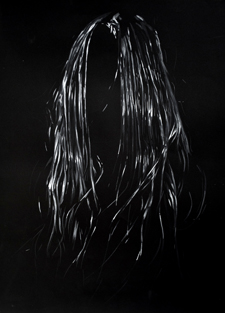 Terence Hannum, Empyrean, 2012, gouache on paper, 30 x 22 in. (artwork © Terence Hannum)
Terence Hannum. Stevenson University Art Gallery, Stevenson, Maryland, August 27–October 6, 2012. Veils. Drawing and collage.
Midwest

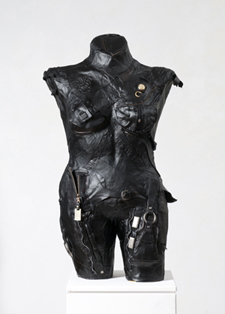 Linda Stein, Defender 696, 2010, leather, metal, and mixed media, 38 x 22 x 14 in. (artwork © Linda Stein)
Linda Stein. George A. Spiva Center for the Arts, Joplin, Missouri, July 19–September 7, 2012. The Fluidity of Gender: Sculpture by Linda Stein. Sculpture.
Northeast

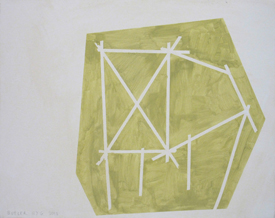 Sharon Butler, Rooftop Structure (Green), 2012, pigment and binder on prestretched canvas, 18 x 24 in. (artwork © Sharon Butler)
Sharon Butler. Real Art Ways, Hartford, Connecticut, September 20–November 11, 2012. Sharon Butler: Gone Wrong. Painting.
Cora Cohen. Heather Gaudio Fine Art, New Canaan, Connecticut, September 29–November 29, 2012. Another Blank Space: Recent Paintings by Cora Cohen. Painting.

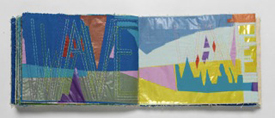 Dianna Frid, The Waves, 2011, unique book with canvas, cloth, embroidery floss, adhesives, paper, acrylic paint, and cellophane, 7½ x 11½ in. open, 7½ x 21½ in. closed (artwork © Dianna Frid)
Dianna Frid. BravinLee Programs, New York, September 6–October 13, 2012. “The Waves” and “The Comets.” Artist’s books.

 John William Keedy, It’s Hardly Noticeable XV, 2012, archival pigment print, 27 x 40 in. (artwork © John William Keedy)
John William Keedy. Genesee Center for the Arts and Education, Rochester, New York, September 14–October 27, 2012. It’s Hardly Noticeable. Photography.

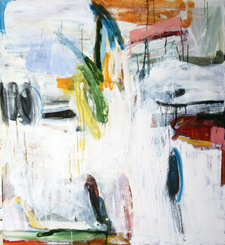 Michael Rich, First Signs of Spring, 2011, oil and wax on canvas, 40 x 36 in. (artwork © Michael Rich)
Michael Rich. Chace-Randall Gallery, Andes, New York, September 21–November 4, 2012. Traveler. Painting.

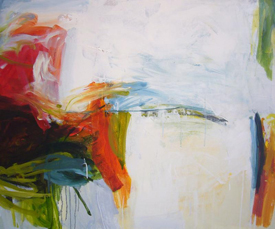 Michael Rich, All Is Quiet, 2012, oil and wax on canvas, 29 x 35 in. (artwork © Michael Rich)
Michael Rich. Old Spouter Gallery, Nantucket, Massachusetts, August 10–23, 2012. Restoration. Painting.

 Lorna Ritz, Darkness Falling, 2010, oil on canvas, 40 x 50 in. (artwork © Lorna Ritz)
Lorna Ritz. Augusta Savage Gallery, University of Massachusetts, Amherst, Massachusetts, September 10–28, 2012. Falling into the Night Sky. Painting.
Fotini Vurgaropulou. A Repeat Performance, Antiques etc, Greenwood Lake, New York, October 8–November 2, 2012. Cast & Reel. Cast glass sculpture and mixed media.
South

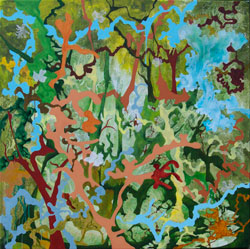 Heather Deyling, detail of Color Sprawl, 2012, acrylic on felt (artwork © Heather Deyling)
Heather Deyling. Cochenour Gallery, Georgetown College, Georgetown, Kentucky, August 24–September 16, 2012. Color Sprawl: Works by Heather Deyling. Painting, collage, and installation.

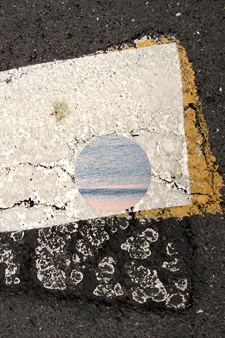 Corinne Diop, Circle, 2012, photomontage, 30 x 20 in. (artwork © Corinne Diop)
Corinne Diop. Smith House, Arts Council of the Valley, Harrisonburg, Virginia, September 7–October 1, 2012. Surface. Photomontage and mixed media.

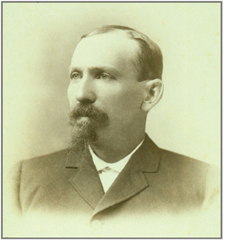 Rev. James Randolph Denton
Beauvais Lyons. Downtown Gallery, University of Tennessee, Knoxville, Tennessee, September 7–8, 2012. The Legacy of Rev. James Randolph Denton: Performance and Installation. Printmaking and taxidermy.

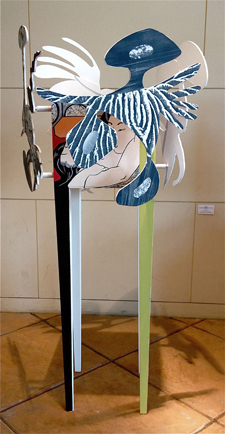 Judith Pratt, Shunga, 2011, acrylic and magnets on wood, 60 x 28 x 28 in. (artwork © Judith Pratt)
Judith Pratt. Charles E. Beatley Jr. Central Library, Alexandria Commission for the Arts, Alexandria, Virginia, August 1–December 27, 2012. Judith Pratt: Portable Apparitions. Sculpture.

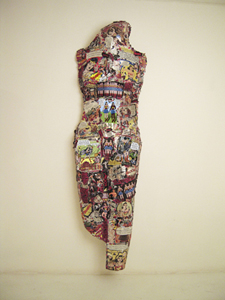 Linda Stein, Justice for All 698, 2010, acrylicized metallic paper, archival inks, and mixed media, 79 x 40 x 9 in. (artwork © Linda Stein)
Linda Stein. Alexandria Museum of Art, Alexandria, Louisiana, September 21–November 24, 2012. The Fluidity of Gender: Sculpture by Linda Stein. Sculpture.
People in the News
posted by CAA — October 17, 2012
People in the News lists new hires, positions, and promotions in three sections: Academe, Museums and Galleries, and Organizations and Publications.
The section is published every two months: in February, April, June, August, October, and December. To learn more about submitting a listing, please follow the instructions on the main Member News page.
October 2012
Academe

 Steven Bleicher
Steven Bleicher, an artist and professor of foundations in the Department of Visual Arts at Coastal Carolina University in Conway, South Carolina, has been promoted to associate dean of the Thomas W. and Robin W. Edwards College of Humanities and Fine Arts at his school.
Lucy Bradnock, formerly managing editor of the Getty Research Journal and a research associate at the Getty Research Institute in Los Angeles, California, has been appointed lecturer in art history at the University of Nottingham in England.
Blane De St. Croix, an installation artist and sculptor, has been appointed to head the Sculpture Department with the rank of tenured associate professor at the Henry Radford Hope School of Fine Arts at Indiana University in Bloomington. De St. Croix was formerly associate professor of sculpture at Florida Atlantic University in Boca Raton.
Andrea Giunta has been appointed to the newly established endowed chair in Latin American art history and criticism in the department of art and art history at the University of Texas at Austin. Her position is partially endowed by a $1 million grant from the Longhorn Network and an anonymous matching donation. Giunta founded the school’s Center for Latin American Visual Studies program in 2009.
Elisa P. Korb, assistant professor of humanities at Anderson University in Anderson, Indiana, has accepted a position as assistant professor of fine arts at Misericordia University in Dallas, Pennsylvania.

 Jason LaFountain
Jason LaFountain, a recent PhD graduate from Harvard University in Cambridge, Massachusetts, has joined the Art History Department of Northwestern University in Evanston, Illinois, as the Terra Foundation Postdoctoral Fellow in American Art. LaFountain specializes in colonial American and early modern British subjects.
Alix Lambert, an artist and filmmaker, has been named visiting assistant professor at the Henry Radford Hope School of Fine Arts at Indiana University in Bloomington.
Richard Meyer, formerly an associate professor of art history and fine arts at the University of Southern California in Los Angeles, has been appointed professor of art history at Stanford University in Stanford, California.
Guna Nadarajan, formerly vice provost for research and dean of graduate studies at Maryland Institute College of Art in Baltimore, has been selected as the new dean of the School of Art and Design at the University of Michigan.
Howard Paine, associate professor of printmaking at the Memphis College of Art in Tennessee, has been released from the faculty. The controversial decision to eliminate several positions, in June 2012, was made as a result of the college’s financial burden.
Museums and Galleries
Ethan Lasser, a former curator of the Chipstone Foundation in Milwaukee, Wisconsin, has been appointed Margaret S. Winthrop Associate Curator of American Art in the Harvard Art Museums’ Division of European and American Art, where he is currently developing two new exhibitions, The Practice and Poetics of Repair and Makers: Craft and Industry in American Art.

 Melissa Jordan Love
Melissa Jordan Love has been appointed the first academic curator of the Fralin Museum of Art at the University of Virginia in Charlottesville. Love holds a joint appointment in the McIntire Department of Art in the College of Arts and Sciences and will participate in the new Institute of the Humanities and Global Cultures.

 Elizabeth Milroy
Elizabeth Milroy, professor of art history and American studies at Wesleyan University in Middletown, Connecticut, has joined the Division of Education at the Philadelphia Museum of Art in Pennsylvania as Zoë and Dean Pappas Curator of Education for Public Programs. Milroy is a specialist in the history of the city of Philadelphia and a scholar of cultural institutions in the United States.
Mary Morgan Darby Radcliff has served as a summer 2012 intern at the National Gallery of Art in Washington, DC, where she assisted the Development Office. Radcliff is pursuing an MA in visual arts administration at New York University.

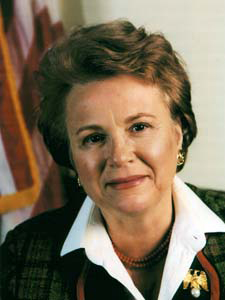 Anne-Imelda Radice (photograph by Dennis Brack)
Anne-Imelda Radice, a senior consultant for the Dilenschneider Group and a member of the CAA Board of Directors, has been named the director of the American Folk Art Museum in New York.

 David Russick
David Russick has joined the staff of the Milwaukee Art Museum in Wisconsin as its new exhibition designer. Russick formerly was the chief designer at the Indianapolis Museum of Art in Indiana.