
CAA News Today
FIELD REPORT
posted by Linda Downs — November 16, 2011
Notes on the Panel “The Reluctant Doctorate: PhD Programs for Artists?”
Debates about PhD programs for artists should be welcomed, the artist and educator Ellen K. Levy declared, as a way of addressing several pressing professional considerations that artists face in academia. To help advance the discussion, she moderated a panel called “The Reluctant Doctorate: PhD Programs for Artists?” and hosted by the School of Visual Arts in New York. Held on November 3, 2011, “The Reluctant Doctorate” was not organized to debate the pros and cons of such programs, though the participants did bring up several of each. Instead, the event focused on how such programs can expand opportunities for artists, from the intellectual advantages of philosophical explorations of their own work (and that of others) to the practical concerns of academic status.
Levy, who is completing doctoral work on the art and neuroscience of attention at Z-Node in Zurich, Switzerland, in collaboration with the University of Plymouth in England, spoke first. She believes that the development of PhD programs in the visual arts is inevitable. She also noted the recent discussions at the CAA Annual Conference on the topic, such as an Education Committee session in New York earlier this year and an upcoming panel at the 2012 conference in Los Angeles, as evidence of increasing urgency to validate the academic credentials of the artist’s doctorate. Levy cited CAA’s MFA Standards, last revised in 2008, noting that the organization continues to endorse the MFA as the terminal degree for artists. As to whether the MFA should retain this status, she said that a change will likely be decided not by a vote but by the momentum that PhD programs in the United States for studio artists might gather in forming a critical mass. Other panelists concurred.
Levy clearly stated that an artist does not need a PhD to make art, nor is a PhD program appropriate for many artists. For some—and here she included herself—advanced study has offered numerous benefits. Because of their art, some practitioners have been able to develop special skills and gain access to expertise and to equipment that grants cannot cover. Another benefit is the validation of artists’ writings.
George Smith, founder and president of the Institute for Doctoral Studies in the Visual Arts, based in Portland, Maine, described his program as a philosophy degree that does not challenge the MFA. Students carry out research and write dissertations on a broad spectrum of philosophical concerns that inform contemporary art.
Mary Anne Staniszewski, a cultural historian and associate professor at Rensselaer Polytechnic Institute in Troy, New York, described the ten-year process of developing the PhD program in the Department of the Arts at her school, which provides artists with similarly broad academic resources enjoyed by students in other fields. She compared the development of the PhD in music, established in 1945, and how many other institutions now offer doctoral degrees in music composition and practice in addition to history and theory. Staniszewski also addressed the degree’s practical advantages to artists. She recalled a study carried out in 1972 in which 59 percent of artists with MFAs who wanted to apply for the position of dean, or for comparable jobs in higher administrative, were barred from doing so because they lacked a doctorate. She believes that the PhD will bring greater heft as artists move into important decision-making positions in the academy.
Ute Meta Bauer described her European academic history at the New Bauhaus (now the Institute of Design at the Illinois Institute of Technology in Chicago) and at the University of Vienna in Austria, where she taught before becoming an associate professor and head of the Program in Art, Culture, and Technology in the School of Architecture and Planning at the Massachusetts Institute of Technology in Cambridge. Since academies in Europe perceive the arts and artists more positively, the need for PhD programs to help advance artists’ careers has not been pressing. Artists are free to take postgraduate courses, and the academy supports an interdisciplinary approach reaching into many fields as well as the practical application of artistic production. Another major difference between American and European institutions for artists is the price of education: European students pay little for their undergraduate degrees, but tuition increases dramatically for graduate school. The opposite, Bauer noted, can be true in the US. She views MFA coursework as leading to a PhD, with the curriculum for each being complementary, not necessarily in competition.
Tim Gilman-Sevcik characterized the PhD program at the European Graduate School in Switzerland, where he is a doctoral candidate, as the most inexpensive and expansive program he could find. The goal of the PhD there, he explained, is to be a catalyst for creative work. The dissertation is a philosophical thesis that adds to the intellectual disorientation, risk, and eventual potency of an artist’s future work. At the same time, this research is a discourse based in text and situated in extensive research, as opposed to a studio practice.
After the presentation, Levy engaged the panelists in a Q&A, asking “What are the most valuable reasons for artists to pursue a PhD?” Smith responded by saying that a doctoral program provides a rigorous study of philosophy, sharpens the eye and mind, and eventually contributes to the visual dynamism of the arts in the US. Staniszewski underscored the value of artists collaborating with scholars in diverse fields and providing an alternative to the drive to create work for galleries and the market. Bauer countered with her own question, “Why not? Why wouldn’t artists want to pursue research and have the opportunity to expand their investigations in an academic setting?” Gilman-Sevcik agreed that programs for artists expand the limited opportunities currently available to artists: teaching in the academy, showing in galleries, or designing practical applications.
Levy posed two more questions to the panelists: “Does an artist perusing a PhD need the MFA? What will the PhD do to the status of the MFA?” Smith asserted that no MFA is required for the PhD at IDSVA, since his program offers a degree in philosophy. The other speakers, though, confirmed that the MFA is a precondition for all other PhD programs for artists.
The panelists dispelled the concern that artists generally have less ability to carry out research and write. While the speakers acknowledged that the MFA has fewer research and writing requirements than other master’s level graduate programs in the visual arts, they indicated that PhD programs provide just that opportunity, for artists to better develop these skills.
The last question from Levy was, “What utility is given to the institution with a PhD program for artists?” Staniszewski emphasized the value of the PhD to reposition the visual arts as a valuable intellectual endeavor. In the past few years, some groups have promoted the economic impact and service function of the arts to gain higher esteem by the public and governmental entities. She also claimed that the PhD in the visual arts will restore academic and public standing without placing art in service to the economy or commercial design. Bauer stressed the relatively small size of PhD programs in the US and abroad, in which the average number of admissions is one student at a time. The panelists generally agreed that the PhD program was not for everyone, but those who wish to enroll in one and are qualified to do so should be given the chance to pursue this degree. Institutions that offer PhDs are highly selective in admitting students and have an obligation to help to place them in positions once students complete the degree.
Committee on Women in the Arts Picks for November 2011
posted by CAA — November 10, 2011
Each month, CAA’s Committee on Women in the Arts selects the best in feminist art and scholarship. The following exhibitions and events should not be missed. Check the archive of CWA Picks at the bottom of the page, as several museum and gallery shows listed in previous months may still be on view or touring.
November 2011

Patti Smith, Walt Whitman’s Tomb, Camden, NJ, 2007, unique Polaroid, 4¼ x 3¼ in. (artwork © Patti Smith; photograph provided by the artist, Robert Miller Gallery, and the Wadsworth Atheneum)
Patti Smith: Camera Solo
Wadsworth Atheneum Museum of Art
600 Main Street, Hartford, CT 06103
October 21, 2011–February 19, 2012
With seventy photographs, one multimedia installation, and a video, Patti Smith: Camera Solo is the largest presentation of this artist, poet, and performer’s visual work in the United States in nearly ten years. The exhibition highlights the connection between Smith’s photography and her interest in poetry and literature. Actual objects that appear in the many black-and-white Polaroids will also be on view.
Patti Smith: 9.11 Babelogue
Bertha and Karl Leubsdorf Art Gallery
Hunter College, City University of New York, East 68th Street at Lexington Avenue, New York, NY 10065
September 8–December 3, 2011
Mounted in conjunction with the tenth anniversary of the destruction of the World Trade Center, Patti Smith: 9.11 Babelogue comprises twenty-six works on paper created between 2001 and 2002 as a response to the tragic event in New York. Organized by Michelle Yun, curator of the Hunter College Art Galleries, the exhibition is the first presentation of the entire series.
Second Annual Feminist Art History Conference
Katzen Arts Center
American University, 4400 Massachusetts Avenue NW, Washington, DC 20016
November 4–6, 2011
Following the success of last year’s inaugural event, the Art History Program in the Department of Art at American University has organized the second annual Feminist Art History Conference. Speakers in twelve sessions will deliver fifty-one papers that span a broad range of topics and time periods, from the medieval era to contemporary art. The presentations will also demonstrate the ways in which feminist research and interpretation have spread across the spectrum of art-historical analysis and scholarship. In her keynote address, Mary D. Sheriff, a distinguished professor of art history at the University of North Carolina in Chapel Hill who specializes in eighteenth and nineteenth-century French art and culture, will speak on “The Future of Feminist Art History: Where Have We Come From, Where Are We Going?” The conference is free and open to the public; online registration (by October 28) is recommended.

Francesca Woodman, Untitled, New York, 1979–80, chromogenic print, 3⅜ x 3½ in. (photograph © George and Betty Woodman)
Francesca Woodman
San Francisco Museum of Modern Art
151 Third Street, San Francisco, CA 94103
November 5, 2011–February 20, 2012
This survey of works by the photographer Francesca Woodman, known for her black-and-white self-portraits from the late 1970s, is the first in more than two decades and comes thirty years after her death at age twenty-two. Organized by Corey Keller, associate curator of photography at the San Francisco Museum of Modern Art, the exhibition includes prints, artist’s books, and videos.
Sherrie Levine: Mayhem
Whitney Museum of American Art
945 Madison Avenue, New York, NY 10021
November 10, 2011–January 29, 2012
Sherrie Levine has been the subject of much critical discourse for the past thirty years. This exhibition, developed as a project by the artist, includes works ranging from her well-known 1981 photograph, After Walker Evans: 1-22, to recently created objects, such as Crystal Skull: 1-12, from 2010. Levine and the curators—Johanna Burton, Elisabeth Sussman, and Carrie Springer—will juxtapose old and new works in order to provoke fresh associations and responses.
Solo Exhibitions by Artist Members
posted by CAA — October 22, 2011
See when and where CAA members are exhibiting their art, and view images of their work.
Solo Exhibitions by Artist Members is published every two months: in February, April, June, August, October, and December. To learn more about submitting a listing, please follow the instructions on the main Member News page.
October 2011
Abroad

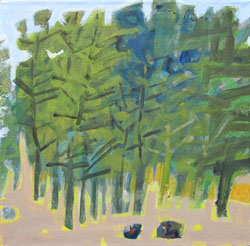 David Holt, Landscape with Bird, 2011, acrylic on linen, 20 x 20 in. (artwork © David Holt)
David Holt. Loop Gallery, Toronto, Ontario, Canada, October 12–November 6, 2011. Landscapes and Subjects from Natural History. Painting.

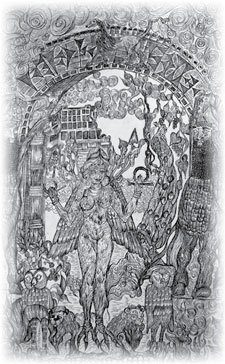 Reynolds, title not known, 2011, intaglio, dimensions not known (artwork © Reynolds)
Reynolds. Museum MAN, Berlin, Germany, August 4–13, 2011. Antiquarian Adventurers: Dreamers of a New Day. Intaglio etching.

 Patricia Villalobos-Echeverría, mesoparasitio <13°41'33"N 89°14'30"W>, 2011, EPS foam on wall, audio, and custom-designed furniture, dimensions variable (artwork © Patricia Villalobos-Echeverría)
Patricia Villalobos-Echeverría. Museo de Arte de El Salvador, San Salvador, El Salvador, July 22–September 25, 2011. mesoparasitio <12˚41’33"N 89˚14’30"W>. Installation, sculpture, and audio.
Mid-Atlantic

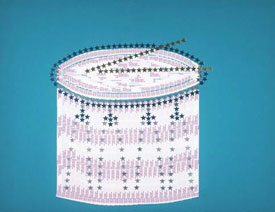 Lisa Blas, After Johnny Shiloh, Then Lincoln, 2005, chromogenic print mounted on Sintra and framed, 20¾ x 26¾ in. (artwork © Lisa Blas)
Lisa Blas. Schmucker Art Gallery, Gettysburg College, Gettysburg, Pennsylvania, August 31–October 7, 2011. Meet Me at the Mason Dixon Line. Painting, photography, and installation.

David C. Driskell. David C. Driskell Center for the Study of the Visual Arts and Culture of African Americans and the African Diaspora, University of Maryland, College Park, MD, September 15–December 16, 2011. Creative Spirit: The Art of David C. Driskell. Sculpture, drawing, painting, and mixed media.
Midwest

 Les Barta, Rock Phenomena, 2011, computer photoconstruction (artwork © Les Barta)
Les Barta. Novak Gallery, Butler Institute of American Art, Youngstown, Ohio, November 27, 2011–January 29, 2012. Digital Constructions. Photographic collage.
Northeast
Jean Bundy. Pleiades Gallery, New York, September 6–October 1, 2011. Portraiture of People and Dwellings. Painting.
Sharyn Finnegan. Blue Mountain Gallery, New York, September 6–October 1, 2011. Evolution: Self-Portrait Retrospective 1973–2010 and Recent Work. Painting and drawing.

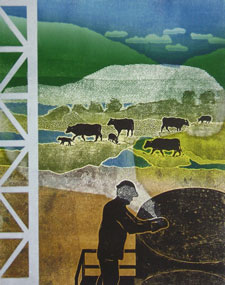 Barbara McPhail, Unnatural Gas, Morning Mist, 2010, monoprint, 14 x 11 in. (artwork © Barbara McPhail)
Barbara McPhail. Lightner Gallery, Keuka College, Keuka Park, New York, August 19–October 6, 2011. Shadows in the Water. Monoprint and collage.

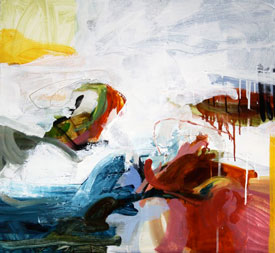 Michael Rich, Lotus II, 2011, oil and wax on canvas, 24 x 26 in. (artwork © Michael Rich)
Michael Rich. Old Spouter Gallery, Nantucket, Massachusetts, August 12–26, 2011. Before Summer Rain. Painting.

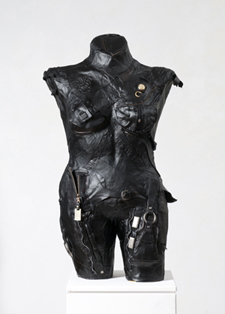 Linda Stein, Justice for All 698, 2010, acrylicized metallic paper, archival inks, and mixed media, 79 x 40 x 9 in. (artwork © Linda Stein)
Linda Stein. Martin Art Gallery, Muhlenberg College, Allentown, Pennsylvania, November 21–December 17, 2011. The Fluidity of Gender: Sculpture by Linda Stein. Sculpture.
South

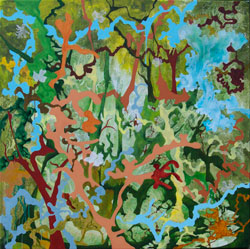 Heather Deyling, Locus 5, 2011, acrylic and rice paper on canvas, 48 x 48 in. (artwork © Heather Deyling)
Heather Deyling. Gallery S.P.A.C.E., Savannah, Georgia, August 5–September 16, 2011. Symbiosis. Painting, collage, and installation.

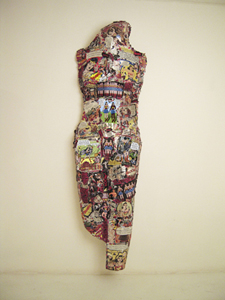 Linda Stein, Justice for All 698, 2010, acrylicized metallic paper, archival inks, and mixed media, 79 x 40 x 9 in. (artwork © Linda Stein)
Linda Stein. GCSU Museum, Georgia College and State University, Milledgeville, Georgia, October 3–November 4, 2011. The Fluidity of Gender: Sculpture by Linda Stein. Sculpture.

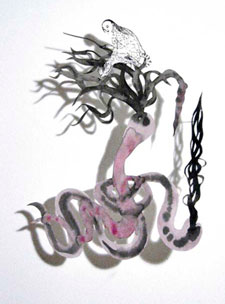 Mary Ting, Snake Girl, cut-paper drawing (artwork © Mary Ting)
Mary Ting. Charlotte and Philip Hanes Art Gallery, Wake Forest University, Winston-Salem, North Carolina, August 29–October 4, 2011. Installations and Drawings. Installation and drawing.
West

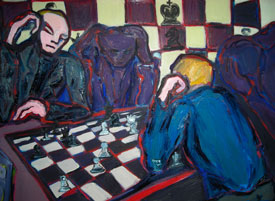 Jan Wurm, Game, 2011, oil on canvas, 36 x 48 in. (artwork © Jan Wurm)
Jan Wurm. Kolligian Library, University of California, Merced, California, August 25–December 16, 2011. Paintings and Drawings. Painting and drawing.
People in the News
posted by CAA — October 17, 2011
People in the News lists new hires, positions, and promotions in three sections: Academe, Museums and Galleries, and Organizations and Publications. sftp://caaorg:@64.49.219.228/includes/membernews/bookspublished-2011-10.inc.php
The section is published every two months: in February, April, June, August, October, and December. To learn more about submitting a listing, please follow the instructions on the main Member News page.
October 2011
Academe

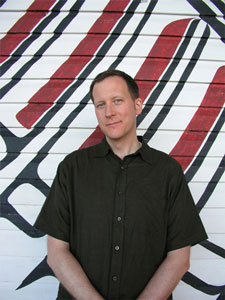 Alan C. Braddock (photograph by Karen Sherry)
Alan C. Braddock, an art historian specializing in American art, has been promoted to the rank of associate professor in the Department of Art History at Temple University’s Tyler School of Art in Philadelphia, Pennsylvania.
Christopher M. Cassidy, an artist and associate professor of design at the University of North Carolina in Greensboro, has been awarded tenure in his school’s Department of Art.
Jeff McMahon, a performance artist and writer, has received tenure and been promoted to associate professor in the School of Theatre and Film at the Herberger of for Design and the Arts at Arizona State University in Tempe. He will be on sabbatical for the 2011–12 academic year.
Adele E. Nelson, a writer and art historian specializing in the modern and contemporary art of Brazil, has been appointed a visiting assistant professor of art history at Southern Methodist University in Dallas, Texas, for the 2011–12 academic year.
Museums and Galleries

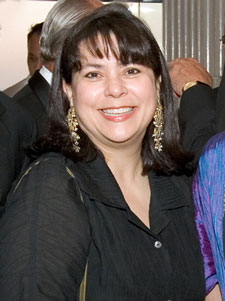 Margarita Aguilar
Margarita Aguilar, a senior specialist in Latin American art at Christie’s, has been appointed the director of El Museo del Barrio in New York. Aguilar worked in the curatorial department at El Museo from 1998 to 2006.
Wassan Al-Khudhairi, a specialist on contemporary art from the Arab world with an emphasis on Iraq and chief curator of Mathaf: Arab Museum of Modern Art in Doha, Qatar, has been named one of six joint artistic directors of the ninth Gwangju Biennal, taking place in 2012 in South Korea.
Elizabeth Brown has stepped down from her position as chief curator and director of exhibitions and collections of the Henry Art Gallery at the University of Washington in Seattle. She was responsible for many innovative exhibitions over her ten-year tenure, including solo shows of work by Lari Pittman, Brian Jungen, Kiki Smith, Eirik Johnson, and William Kentridge.

 Douglas Druick
Douglas Druick, a curator and department chair at the Art Institute of Chicago in Illinois, has been named president and Eloise W. Martin Director of the museum. A member of the Department of Prints and Drawings since 1985, he joined the Department of Medieval to Modern European Painting and Sculpture in 2006, leading both departments.
Natasha Egan, associate director and curator of the Museum of Contemporary Photography at Columbia College in Chicago, Illinois, has been promoted to director. An eleven-year veteran of the museum, Egan hopes to amplify the visibility of the institution in her new position and to continue supporting international dialogue.

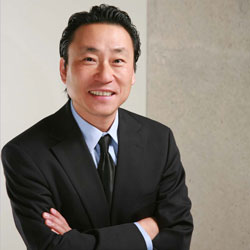 Paul Ha
Paul Ha, director of the Contemporary Art Museum St. Louis in Missouri since 2002, has been appointed as the new director of the Massachusetts Institute of Technology’s List Visual Arts Center in Cambridge, Massachusetts, effective December 1, 2011.

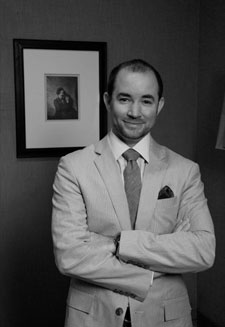 Russell Lord
Russell Lord, a scholar, curator, and writer, has been named the Freeman Family Curator of Photography at the New Orleans Museum of Art in Louisiana. He will begin work on October 17, 2011.
Will South, chief curator of the Dayton Art Institute in Ohio, has been appointed the chief curator at the Columbia Museum of Art in South Carolina. He succeeds Todd Herman, who has become executive director of the Arkansas Arts Center in Little Rock.

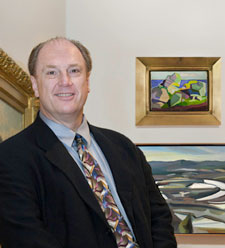 John R. Stomberg
John R. Stomberg, formerly deputy director and chief curator at the Williams College Museum of Art in Williamstown, Massachusetts, has become the next Florence Finch Abbott Director of the Mount Holyoke College Art Museum in South Hadley, Massachusetts.

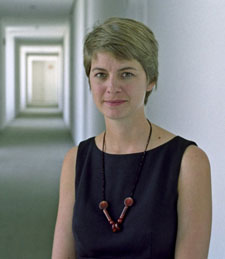 Kristina Van Dyke
Kristina Van Dyke, curator for collections and research at the Menil Collection in Houston, Texas, has been named director of the Pulitzer Foundation for the Arts in Saint Louis, Missouri, succeeding Matthias Waschek. She begins her new position on November 7, 2011.
Organizations and Publications

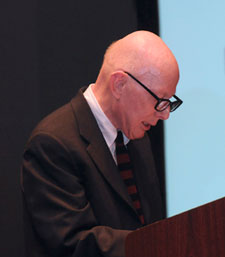 Holland Cotter (photograph by Bradley Marks)
Holland Cotter, an insightful writer and recipient of the 2009 Pulitzer Prize in criticism, has been named the co–chief art critic for the New York Times. He will share the position with his fellow critic at the newspaper, Roberta Smith.

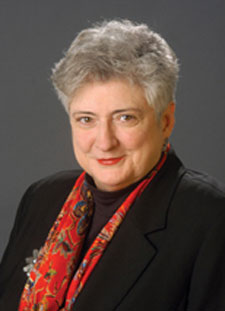 Ofelia Garcia
Ofelia Garcia, an artist and professor of art at William Paterson University in Wayne, New Jersey, has been appointed chair of the New Jersey State Council on the Arts, succeeding Sharon Burton Turner.
Deborah Solon, a renowned scholar, educator, and curator, has been named the West Coast director of American art at Heritage Auctions. A specialist in American Impressionism, she will work in the auction house’s office in Beverly Hills, California.
Institutional News
posted by CAA — October 17, 2011
Read about the latest news from institutional members.
Institutional News is published every two months: in February, April, June, August, October, and December. To learn more about submitting a listing, please follow the instructions on the main Member News page.
October 2011

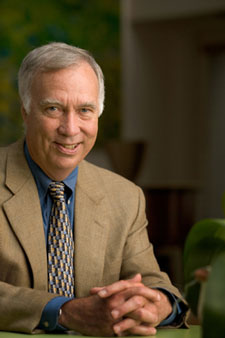 George L. Bunting Jr., trustee emeritus (photograph by Bruce Weller)
Maryland Institute College of Art in Baltimore has received a $10 million endowment gift from a longtime trustee, George L. Bunting Jr., and his wife, Anne Bunting, which will help expand the school’s graduate studies by providing scholarships, supporting the creation of art, and acquiring technological resources for research. The gift will also fund robust programs of visiting artists, faculty–student research collaborations, and engagement with community partners.

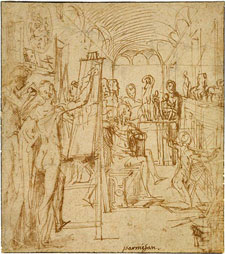 Parmigianino, Studio Interior, pen and brown ink on paper (framing lines in pen and black ink), 5½ x 4⅞ in. Purchased by Pierpont Morgan, 1910; IV, 46 (artwork in the public domain)
The Morgan Library and Museum in New York has created a new Drawing Institute, which will present exhibitions, sponsor annual fellowships, host seminars, and organize public and academic programs. It will also collaborate with other institutions, sharing artworks and resources with the Menil Drawing Institute and Study Center in Houston, Texas, and the International Museum and Art Foundation Center for Drawings at the Courtauld Gallery in London, England. A Morgan trustee, Eugene V. Thaw, donated $5 million to begin the project.
The Smithsonian American Art Museum in Washington, DC, has received a gift from Fleur Bersler, an art patron and collector of textiles and objects of turned wood, to create an endowment to support a curatorial position at the museum. Nicholas R. Bell, curator at the museum’s Renwick Gallery, has been named the Fleur and Charles Bresler Curator of American Craft and Decorative Art.

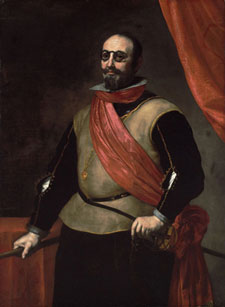 Jusepe de Ribera, Portrait of a Knight of Santiago, 1630–38, oil on canvas, 57½ x 42 in. Meadows Museum, Algur H. Meadows Collection, 77.02 (artwork in the public domain)
Southern Methodist University has launched a new PhD program in the rhetoric of art, space, and culture, supervised by the Department of Art History in the Meadows School of the Arts. The new doctorate, which emphasizes historical and new media, race, gender, performance, and technology used for visual communication, will have a particular focus on the art of Latin America, Iberia, and the Americas, facilitated by the Meadows Museum, the Bridwell Library, and the DeGolyer Library.

 Kitagawa Utamaro, Three Beauties of the Present Day, ca. 1793, color woodblock print with mica dust, 15¼ x 10 5/16 in. Toledo Museum of Art, Carrie L. Brown Bequest Fund, 1951.290 (artwork in the public domain)
The Toledo Museum of Art in Ohio has received a $500,000 grant from the Andrew W. Mellon Foundation to design and facilitate postdoctoral fellowships targeted at cultivating museum leaders of the future. The program will combine interdisciplinary methods with curatorial studies. The program will accept three fellows, who will start each January from 2012 through 2014, for two-year terms that include annual pay, benefits, and compensated travel for research.

 Maulana Jalal al-Din Rumi, folio from Walters manuscript W.626 depicting a battle scene, 1663, ink and pigments on thin laid paper (probably Kashmiri), 5⅞ x 10 7/16 in. Walters Museum of Art, Baltimore, W.626.54A (artwork in the public domain)
The Walters Art Museum in Baltimore, Maryland, has signed an international memorandum of cooperation with the Roemer and Pelizaeus Museum in Hildesheim, Germany. The agreement will include exhibition exchanges, professional-development opportunities for staff members, long terms loans of art, and discussions of best practices for museums.
Grants, Awards, and Honors
posted by CAA — October 15, 2011
CAA recognizes its members for their professional achievements, be it a grant, fellowship, residency, book prize, honorary degree, or related award.
Grants, Awards, and Honors is published every two months: in February, April, June, August, October, and December. To learn more about submitting a listing, please follow the instructions on the main Member News page.
October 2011

Michael Beitz, an artist based in Attica, New York, has received a 2011 fellowship from the New York Foundation for the Arts in the crafts and sculpture category.

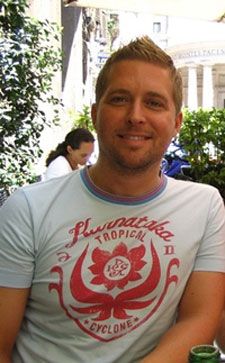 Sinclair Bell
Sinclair Bell, assistant professor of art history in the School of Art at Northern Illinois University in DeKalb, has been awarded a research fellowship from the German Archaeological Institute (Deutsches Archäologisches Institut) and the Archaeological Institute of America. He will conduct research in Berlin this fall.


Rachel Federman of New York University has received a $1,500 library research grant from the Getty Foundation in Los Angeles.
Seth Alexander Feman of the College of William and Mary in Williamsburg, Virginia, has earned a $1,500 library research grant from the Getty Foundation in Los Angeles.
Aglaya Glebova of the University of California, Berkeley, has won the Dedalus Foundation’s 2011 Dissertation Fellowship Award, given annually to a PhD candidate at an American university who is working on a dissertation related to modern art and modernism. The $20,000 award will help support Glebova’s work on her dissertation, “Wilderness and Construction: Three Case Studies of Russian Landscape Representation,” which investigates representations of Russia’s Northern wilderness from the mid-nineteenth century to present.
Wendy Ann Grossman of the University of Maryland in University Park has received a $1,500 library research grant from the Getty Foundation in Los Angeles.
Sonali Gulati, a faculty member teaching photography and film in the School of the Arts at Virginia Commonwealth University in Richmond, has been awarded the Mary Lyon Award from her alma mater, Mount Holyoke College. The award honors a young alumna (no more than fifteen years after graduation) who demonstrates promise or sustained achievement in her life, profession, or community.

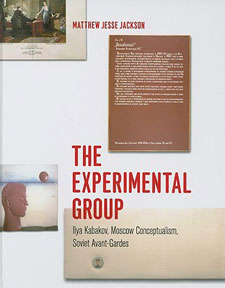
Matthew Jesse Jackson has won the Dedalus Foundation’s tenth annual Robert Motherwell Book Award for his The Experimental Group: Ilya Kabakov, Moscow Conceptualism, Soviet Avant-Gardes (Chicago: University of Chicago Press, 2010). The award, which carries a $20,000 prize, honors an outstanding publication in the history and criticism of modernism in the arts. The Experimental Group documents the life and work of the Russian artist Ilya Kabakov and, through him, the milieu of the Moscow Conceptualists: the “unofficial artists” who worked without state sanction in the post-Stalinist Soviet Union.

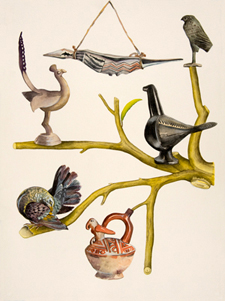 Sue Johnson, Birds without Feathers, 2010, watercolor and pencil on paper, 30 x 22 in. (artwork © Sue Johnson)
Sue Johnson, professor of art at Saint Mary’s College of Maryland in Saint Mary’s City, has been awarded a residency at the Centre d’Art Marnay Art Centre in Marnay-sur-Seine, France. Her residency also includes a grant from the Tenot Fondation. In addition, Johnson was selected as a visiting artist by the American Academy in Rome for June 2011. In 2010–11 she has been a visiting scholar in residence at the Centre for Medieval and Renaissance Studies in Oxford, England.
Holger A. Klein, associate professor and director of graduate studies in the Department of Art History and Archaeology at Columbia University in New York, has been honored with the fiftieth annual Mark Van Doren Award for Teaching, which honors a Columbia professor for commitment to undergraduate instruction and for humanity, devotion to truth, and inspiring leadership. The recipient of the award is selected by the student members of the Academic Awards Subcommittee of the Columbia College Student Council, with administrative support and guidance from the Academic Affairs staff of the college.
JC Lenochan, an artist based in Orange, New Jersey, has received a $6,000 grant from the 2011–12 Franklin Furnace Fund for Decolonizing the Mind, an installation and performance with public interaction that addresses how pedagogy relates to issues of sex, race, and class stratification. For the gallery-based work, Lenochan will hang chalkboards with text and images opposite blank chalkboards for the public’s response. Simultaneously, four high school students will pile of old school desks in the middle of the space and also play sound and audio from Ngugi wa Thiong’o’s book, Decolonizing the Mind.
Margaret Lindauer, an art historian at Virginia Commonwealth University in Richmond, has been recently honored twice, receiving a VCUarts Faculty Achievement Award for 2010–11 and a VCUarts Faculty Award for Distinguished Achievement in Teaching.
Christina Lindholm, associate dean of undergraduate studies in the School of the Arts at Virginia Commonwealth University in Richmond, has earned a 2011 Spirit of Martha Award, which recognizes University of Missouri women who have distinguished themselves in their chosen profession and exemplify the spirit of leadership, particularly in the furtherance of women.
China Marks, an artist based in Long Island City, New York, has been named a Gregory Millard Fellow by the New York Foundation for the Arts. She has also received a 2011 grant in the category for printmaking, drawing, and book arts.
Saloni Mathur, associate professor in the Department of Art History at the University of California, Los Angeles, has received a $44,000 residential grant from the Getty Foundation. As a Getty Scholar, she will work on “Divided Objects: Indian Partition and the Politics of Display.”
Jennifer Ann McComas of Indiana University in Bloomington has accepted a $1,500 library research grant from the Getty Foundation in Los Angeles.
Kristine Nielsen of the University of Illinois, Urbana-Champaign, has received a $661 library research grant from the Getty Foundation in Los Angeles.
Kristina Berrill Paulsen of Ohio State University in Columbus has received a $1,000 library research grant from the Getty Foundation in Los Angeles.
Scott William Perkins of the Bard Graduate Center in New York has received a $1,500 library research grant from the Getty Foundation in Los Angeles.
Corey Piper, curatorial assistant for the Mellon Collections at the Virginia Museum of Fine Arts in Richmond, has received a 2011–12 John H. Daniels Fellowship from the National Sporting Library and Museum. She will work on “The Cast and Characters of the British Sporting Ring,” a scholarly essay for the catalogue of an upcoming exhibition, Catching Sight: The World of the British Sporting Print, at her museum.
Anne J. Regan, an artist who earned her MFA last year at the University of Houston in Texas, has become a resident artist at the Lawndale at Center in Houston. The residency comes with nine months of studio space, $1,500 for materials, and a $500 per month stipend; it will also culminate in an exhibition with two other resident artists in May 2012.
Barbara Smith, an artist based in Rosendale, New York, has received a 2011 fellowship from the New York Foundation for the Arts in the crafts and sculpture category.

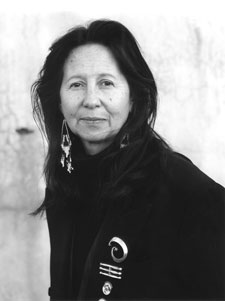 Jaune Quick-to-See Smith
Jaune Quick-to-See Smith, a highly acclaimed American Indian artist based in New Mexico, has been honored with a 2011 Visionary Woman Award by Moore College of Art and Design in Philadelphia, Pennsylvania, for her outstanding contributions to the arts. Elaborating on her heritage and worldview, Smith’s richly layered juxtapositions of text and image in large-scale prints and canvases address today’s tribal politics, human rights, and environmental issues with a sophisticated combination of humor and wit.
Juana Valdes, an artist based in New York, has received a 2011 fellowship from the New York Foundation for the Arts in the crafts and sculpture category.
James Alan Van Dyke of the University of Missouri in Columbia has accepted a $1,500 library research grant from the Getty Foundation in Los Angeles.

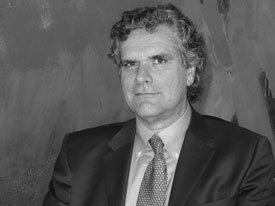 P. Gregory Warden
P. Gregory Warden, University Distinguished Professor of Art History and associate dean for academic affairs in the Meadows School of the Arts at Southern Methodist University in Dallas, Texas, has received a $200,000 grant from National Endowment for the Humanities to work with the Community College Humanities Organization on a 2012 NEH Summer Institute, called “The Legacy of Ancient Italy: The Etruscan and Early Roman City.” As project director, Warden will lead a group of community college teachers in Italy in June of next year.
Corina Alexandra Weidinger of the University of Delaware in Newark has earned a $1,500 library research grant from the Getty Foundation in Los Angeles.
Deborah Wing-Sproul, an interdisciplinary artist and a faculty member at Maine College of Art in Portland, has been named a Maine Arts Commission Media and Performing Arts Fellow for 2011. The recognition comes with a $13,000 grant award.
Brian Scott Winkenweder of Linfield College in McMinnville, Oregon, has received a $1,000 library research grant from the Getty Foundation in Los Angeles.
Sandy Winters, an artist based in New York, has received a 2011 fellowship from the New York Foundation for the Arts in the printmaking, drawing, and book arts category.
Reva Wolf, professor of art history at the State University of New York at New Paltz, has received a 2010–11 State University of New York Chancellor’s Award for Excellence in Teaching, which recognizes consistently superior teaching and sound scholarship.
Karla Wozniak, an artist based in Brooklyn, New York, has received a 2011 fellowship from the New York Foundation for the Arts in the category for printmaking, drawing, and book arts.
Exhibitions Curated by CAA Members
posted by CAA — October 15, 2011
Check out details on recent shows organized by CAA members who are also curators.
Exhibitions Curated by CAA Members is published every two months: in February, April, June, August, October, and December. To learn more about submitting a listing, please follow the instructions on the main Member News page.
October 2011
Jacqueline Baas. Fluxus and the Essential Questions of Life. Grey Art Gallery, New York University, September 9–December 3, 2011.

 Richard Garet, still from Image Blur, 2011, video, 35:59 min. (artwork © Richard Garet)
Laura Bardier. Richard Garet: Espacios No-Euclídeos. Espacio Arte Contemporáneo, Montevideo, Uruguay, August 11–October 30, 2011.
Susan Grace Galassi, Marilyn McCully, and Andrew Robison. Picasso’s Drawings, 1890–1921: Reinventing Tradition. Frick Collection, New York, October 4, 2011–January 8, 2012.
Maribeth Graybill. The Artist’s Touch, the Craftsman’s Hand: Three Centuries of Japanese Prints from the Portland Art Museum.Portland Art Museum, Portland, Oregon, October 1, 2011–January 22, 2012.
Andrew Hottle. Groundbreaking: The Women of the Sylvia Sleigh Collection. Rowan University Art Gallery, Rowan University, Glassboro, New Jersey, August 29–October 1, 2011.
Robert G. La France. Jerusalem Saved! Inness and the Spiritual Landscape. Krannert Art Museum and Kinkead Pavilion, University of Illinois, Urbana-Champaign, Illinois, August 26, 2011–May 12, 2012.

 Kate Millet’s Great Lady Rising Event, in which her sculpture created while a resident artist at the Women’s Building in Los Angeles in 1977 was hoisted to the roof and installed there for the fifth anniversary celebration in 1978 (photographer unknown; photograph from the Women’s Building Archive at Otis College of Art and Design and © the Women’s Building)
Sue Maberry and Meg Linton. Doin’ It in Public: Feminism and Art at the Woman’s Building. Ben Maltz Gallery, Otis College of Art and Design, Los Angeles, California, October 1, 2011–January 28, 2012.
Julia Robinson and Ellen Swieskowski. Fluxus at NYU: Before and Beyond. Grey Art Gallery and Tracey/Barry Gallery, Bobst Library, New York University, September 9–December 3, 2011.
Terezita Romo. Art along the Hyphen: The Mexican-American Generation. Autry National Center, Los Angeles, California, October 14, 2011–January 8, 2012.

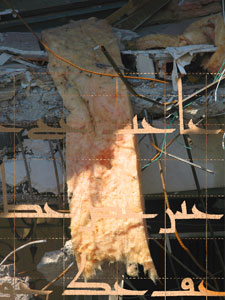 Andrew Ellis Johnson, Formal Graffiti Series: p.34 (Ha’) Insulation, archival digital print on Hahnemühle paper, 20 x 15 in. (artwork © Andrew Ellis Johnson)
Susanne Slavick. Out of Rubble. SPACE, Pittsburgh, Pennsylvania, December 2, 2011–February 5, 2012.

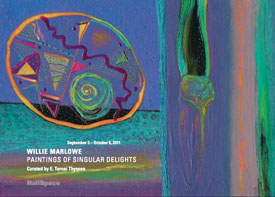 Announcement card for Willie Marlowe: Paintings of Singular Delights
Esther Tornai Thyssen. Willie Marlowe: Paintings of Singular Delights. HallSpace Art Gallery, Boston, Massachusetts, September 3–October 8, 2011.
Books Published by CAA Members
posted by CAA — October 15, 2011
Publishing a book is a major milestone for artists and scholars—browse a list of recent titles below.
Books Published by CAA Members appears every two months: in February, April, June, August, October, and December. To learn more about submitting a listing, please follow the instructions on the main Member News page.
October 2011

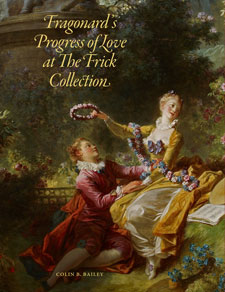
Colin Bailey. Fragonard’s Progress of Love at the Frick Collection (New York: Frick Collection, in association with D. Giles, 2011).

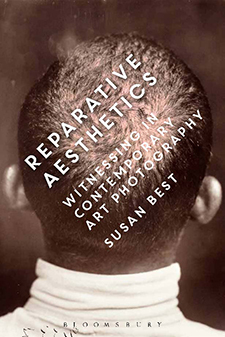
Susan Best. Visualizing Feeling: Affect and the Feminine Avant-Garde (London: I. B. Tauris, 2011).

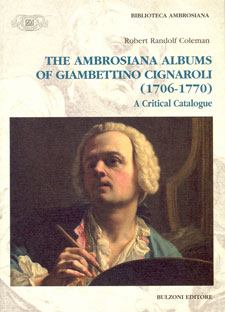
Robert Randolf Coleman. The Ambrosiana Drawings of Giambettino Cignaroli (1706–1770): A Critical Catalogue (Rome: Bulzoni; Milan: Biblioteca Ambrosiana, 2011).

Karen Fraser. Photography and Japan (London: Reaktion Books, 2011).

Luba Freedman. The Classical Myths in Italian Renaissance Painting (New York: Cambridge University Press, 2011).

Maribeth Graybill, ed. The Artist’s Touch, the Craftsman’s Hand: Three Centuries of Japanese Prints from the Portland Art Museum (Portland, OR: Portland Art Museum, 2011).

Rebecca Peabody, ed. Anglo-American Exchange in Postwar Sculpture, 1945–1975 (Los Angeles: Getty Publications, 2011).


Kristin Phillips-Court. The Perfect Genre: Drama and Painting in Renaissance Italy (Burlington, VT: Ashgate, 2011).

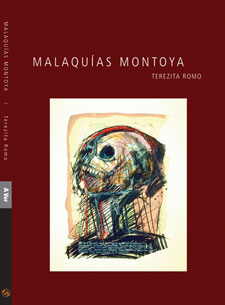
Terezita Romo. Malaquias Montoya (Los Angeles: UCLA Chicano Studies Research Center Press, 2011).

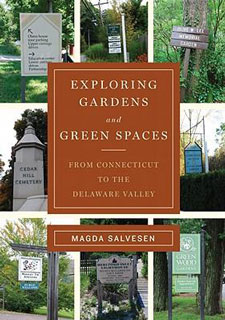
Magda Salvesen, Exploring Gardens and Green Spaces from Connecticut to the Delaware Valley (New York: W. W. Norton, 2011).

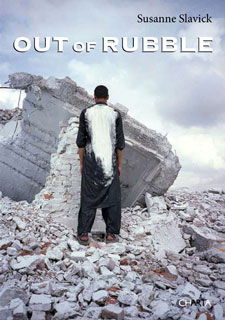
Susanne Slavick, ed. Out of Rubble (Milan, Italy: Charta, 2011).

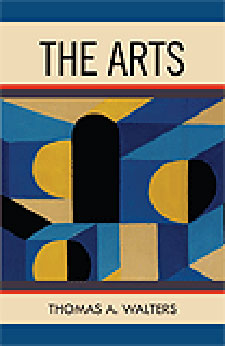
Thomas A. Walters. The Arts: A Comparative Approach to the Arts of Painting, Sculpture, Architecture, Music, and Drama (Bloomington, IN: Xlibris, 2011).

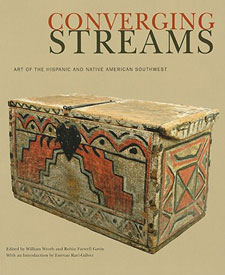
William Wroth and Robin Farwell Gavin, eds. Converging Streams: Art of the Hispanic and Native American Southwest (Santa Fe, NM: Museum of Spanish Colonial Art, 2010).
Report from the October 2010 Board of Directors Meeting
posted by Linda Downs — October 11, 2011
The CAA Board of Directors held its fall meeting in New York on Saturday and Sunday, October 22–23, 2010. Twenty-two board members attended in person or joined by conference call.
President Barbara Nesin organized the biennial retreat for Saturday, which took place in the office of the law firm Debevoise and Plimpton. To bring everyone up to date with governance responsibilities, several board members and outside consultants discussed such topics as fiduciary obligation, directors’ and officers’ insurance, business planning, and diversity. Jeffrey Cunard, longtime CAA counsel, reviewed the board’s key roles: maintaining authority and accepting accountability; setting organizational direction; providing oversight; and ensuring necessary resources. In addition, he discussed how a board acts in accordance with legal standards and its three requirements: duty of care (stay informed and ask questions); duty of loyalty (show undivided allegiance to the organization’s welfare); and duty of compliance (stay faithful to the organization’s mission).
Michael Fahlund, deputy director, covered board-liability and errors-and-omissions insurance regarding publishing. Chinwe Onyeagoro from O-H Community Partners, an economic-development consulting firm, discussed institutional business planning for economic and social value, and Yasmin Ramirez of Hunter College’s Centro de Estudios Puertorriqueños spoke on “The Creative Class of Color and Its Implications for CAA,” which urged the board to engage in community-based artists’ initiatives. David Moughalian, dean of the Art Institute of New York, facilitated the retreat as moderator.
On Sunday, the board convened with seven senior-staff members in a conference room at the Jolly Madison Hotel in New York to discuss current and future CAA business. The meeting addressed financial matters first. Teresa Lopez, chief financial officer, presented a report from the board treasurer, Jack Hyland, Jr., on the annual audit of CAA accounts carried out by Eisner Amper Accountants and Advisors. The board approved the results and, since all was in order, made no recommendations for changes of procedure or controls. Hyland congratulated the staff for achieving a balanced budget in fiscal year 2010 for the first time in seven years. The approved budget for the current fiscal year (2011) is balanced, and programs and publications that saw reductions last year were restored. CAA’s investments as of June 30, 2010, were at $7,136,565—up from $6,760,944. An impending CAA office move next summer, however, will require a draw on investments.
Linda Downs, executive director, reported that CAA has made progress in all seven goal areas in the 2010–2015 Strategic Plan. In particular, a weekly CAA News email introduced in September addressed the first goal of the plan: increased communication with members. In addition, two recently formed groups have been reviewing editorial procedures and investigating publications that meet needs expressed by CAA members. The Task Force on Editorial Safeguards, chaired by Anne Collins Goodyear, vice president for publications, will present formal recommendations at the February 2011 board meeting. Patricia McDonnell, board member and chair of the Task Force on Practical Publications, anticipated that her team will need eighteen months to complete its charge of investigating related publications at other associations, surveying members on specific topics, establishing procedures for determining subjects, soliciting participation, and vetting manuscripts. The board agreed that CAA would need to develop a sustainable business plan if the program moved forward. Goodyear also updated the board on developments for online versions of CAA’s printed Graduate Programs in Art History and Graduate Programs in the Visual Arts, which are currently being assembled and updated. Web-based access will better serve students seeking to apply to graduate programs.
CAA members helped fulfill a strategic goal to develop leadership capacity last February when they voted to change the organization’s By-laws to allow up to three appointed directors from outside the visual arts to join the board. A nominating committee headed by Maria Ann Conelli, vice president for committees, has been formed to identify candidates for these new positions who would bring additional expertise such as marketing, finance, and fundraising to the board.
Paul Jaskot, past president, presented steps needed for agreements to copublish The Art Bulletin and Art Journal with, for example, a university press or other institution, and for online development of the journals. Member surveys, he said, can determine the value of CAA’s publications and the need for online applications, research on possible copublishers, and a business analysis and plan for all three journals. Goodyear recommended that the strategic plan’s priority ranking for digital publications be changed from low to high, which the board approved.
Downs reported on Centennial programs for upcoming Annual Conferences in New York (2011) and Los Angeles (2012). The strategic plan calls on the organization to reimagine and reinvigorate approaches to the conference. As part of that effort, Jaskot has asked major artists, scholars, and professionals in the visual arts to address core concepts of “feminism,” “experience,” “art/technology,” and other broad topics for debate and discussion in special conference sessions. Thus far, Norma Broude, Griselda Pollock, Eduard Duval-Carrié, Robert S. Nelson, Mark Tribe, and Chris Csikszentmihályi have agreed to organize these interdisciplinary sessions. The 2011 conference will also highlight a major Centennial publication, a history of CAA entitled The Eye, the Hand, the Mind: 100 Years of the College Art Association. Edited by Susan Ball with contributions by fourteen authors, the book will be published by Rutgers University Press in January and made available at the conference.
Downs then discussed Centennial publications projects outlined in the strategic plan. The editorial boards of CAA’s three journals are proceeding with their “virtual anthologies” of significant articles, reviews, and projects from the full run of back issues, with introductory material, that will appear on the CAA website. Recommended texts for the two print publications will appear as links to JSTOR; caa.reviews will highlight its selections on its own website. The editorial board for The Art Bulletin has identified thirty-two essays from past issues, with six general introductions explaining how and why they were chosen. (This method was preferred to framing each text individually.) The Art Journal Editorial Board worked in the other direction. Howard Singerman, reviews editor, volunteered to research and write an essay on the history of the journal; editorial-board members will read it and then recommend archival texts, which will likely include artists’ projects as well as essays and reviews. The unique online nature of caa.reviews led the journal’s editorial board to a different approach. By means of analytical information, it determined the most-read review for each of the journal’s twelve years. The project thus has a populist, “readers’ choice” element to it. Editorial-board members are now writing short introductions to each review (200–300 words), and the editor-in-chief, Lucy Oakley, is writing an omnibus introductory essay. Goodyear announced new members of the Publications Committee and the caa.reviews Editorial Board, and presented preliminary plans for a larger web presence for Art Journal. CAA will announce these plans when they are finalized in January 2011.
Sue Gollifer, vice president for Annual Conference, outlined a proposal to create a celebratory event at the upcoming Annual Members’ Business Meeting at the New York conference. In addition to announcing results of the 2011–15 board election, the business meeting will address critical issues in the visual arts to be raised by members.
To determine how CAA may better interact with and address the needs of its affiliated societies, Jean Miller, a new board member, interviewed more that forty affiliate leaders as a follow-up to the first meeting with them held at the Chicago conference in February 2010. She presented a wealth of information from her conversations, which revealed that affiliates have a wide range of needs and interests and are eager to open more lines of communication. CAA staff has also redesigned the website to give affiliates a greater presence on the homepage, and CAA News is running monthly announcements of Affiliated Society News instead of every two months. Miller will lead a second face-to-face meeting with leaders from affiliates at the New York conference in February.
Jaskot, chair of the Task Force on the Use of Animals and Human Subjects in Art, said he is currently forming the group. The task force, established by the board at its February 2010 meeting, will carry out research on guidelines and best practices related to the use of animals and human subjects in visual art and investigate related standards adopted by other organizations.
Since the lease for CAA’s office in New York is ending in July 2011, the staff has been searching for new office space in Manhattan. Downs and Carri Lyon of the real-estate firm Cushman and Wakefield presented several options. Since September 11, the Lower Manhattan Development Corporation has provided incentives to attract nonprofit organizations to the Wall Street area. Judging from square-foot prices elsewhere, the downtown area appears to be the optimal location for the new CAA office. Plans to move in July 2011 are still on track.
The board will next meet for a full-day meeting on Sunday, February 13, one day after the 2011 Annual Conference ends. The directors welcome your thoughts on the above issues and more; please make sure you attend the Annual Members’ Business Meeting to discuss critical issues in the field, welcome newly elected board members, and toast CAA’s one-hundredth birthday.
Committee on Women in the Arts Picks for October 2011
posted by CAA — October 10, 2011
Each month, CAA’s Committee on Women in the Arts selects the best in feminist art and scholarship. The following exhibitions and events should not be missed. Check the archive of CWA Picks at the bottom of the page, as several museum and gallery shows listed in previous months may still be on view or touring.
October 2011

Wendy Stayman, Chairs, 2007, Swiss pear, macassor ebony, bent laminated plywood, and chrome-tanned calfskin (photograph by David Stansbury and provided by the artist and the Fuller Craft Museum)
Furniture Divas: Recent Work by Contemporary Makers
Fuller Craft Museum
455 Oak Street, Brockton, MA 02301
February 19–October 30, 2011
This exhibition celebrates the contributions of fifteen women—Vivian Beer, Polly Cassel, Gail Fredell, Jenna Goldberg, Barbara Holmes, Kristina Madsen, Sarah Martin, Wendy Maruyama, Judy Kensley McKie, Alison McLennan, Sylvie Rosenthal, Rosanne Somerson, Wendy Stayman, Leah Woods, and Yoko Zeltserman-Miyaji—to studio furniture and provides a snapshot of contemporary developments in the field.
Call and Response: From Artemisia to Frida
Koehnline Museum of Art
Oakton Community College, 1600 East Golf Road, Des Plaines, IL 60016
October 6–28, 2011
This annual juried exhibition of works by artists who identify themselves as women is sponsored by the Women’s and Gender Studies Program of Oakton Community College and the Koehnline Museum of Art. The artists in Call and Response have created works that honor, critique, or expand on the techniques and/or content of a groundbreaking female artist.
Charline von Heyl
Institute of Contemporary Art
University of Pennsylvania, 118 South 36th Street, Philadelphia, PA 19104
September 7, 2011–February 19, 2012
This exhibition is a survey of a decade of productivity by Charline von Heyl, a German-born, New York–based painter of vibrant, enigmatic works. Organized by Jenelle Porter, senior curator at the Institute of Contemporary Art in Boston, the presentation includes collage-based works on paper and eighteen paintings.
Real Time
Douglass Library Galleries
Rutgers University, 8 Chapel Drive, New Brunswick, NJ 08901
September 1–December 9, 2011
The Brainstormers art collective was formed in 2005 by a group of women who chose to use public performance, exhibitions, publications, the internet, and video as a means of forcing a discussion about gender inequities in the contemporary New York art world. For Real Time, the group invited artists from across the country to anonymously share intimate details of their daily lives through whatever format they preferred.

Cecil Beaton, Gertrude Stein, 1935, gelatin-silver print. Cecil Beaton Studio Archive at Sotheby’s. CM3794 (photograph provided by the Contemporary Jewish Museum)
Seeing Gertrude Stein: Five Stories
National Portrait Gallery, Smithsonian Institution
Eighth and F Streets NW, Washington, DC 20001
October 14, 2011–January 22, 2012
With more than fifty artifacts from Gertrude Stein’s life and one hundred works by artists from Europe and the United States, the exhibition focuses on her life and work as an artist, collector, and style maker. The exhibition was previously mounted at the Contemporary Jewish Museum in San Francisco, California, and was a CWA Pick in July–August 2011.
Dana Schutz: If the Face Had Wheels
Neuberger Museum of Art
Purchase College, State University of New York, 735 Anderson Hill Road, Purchase, NY 10577
September 25–December 18, 2011
As the recipient of the 2011 Roy R. Neuberger Exhibition Prize, the Brooklyn-based artist Dana Schutz was awarded an early career survey and monographic catalogue at the Neuberger Museum of Art. The show includes thirty paintings and twelve drawings created since 2001.
Doin’ It in Public: Feminism and Art at the Woman’s Building
Ben Maltz Gallery
Otis College of Art and Design, 9045 Lincoln Boulevard, Los Angeles, CA 90045
October 1, 2011–January 28, 2012
As part of the sweeping Pacific Standard Time, a series of exhibitions and events that surveys the history of art in southern California since the end of World War II, Doin’ It in Public focuses on the contributions of feminist artists who came from the women’s liberation movement to found the Woman’s Building, which in the 1970s and 1980s was the center of feminist art and activism in southern California. Otis College of Art and Design is also sponsoring a symposium, “Still Doin’ It: Fanning the Flames of the Woman’s Building,” on October 15–16, which will bring together participants from the Woman’s Building and emerging feminists to instigate dialogue concerning its history and influence.
A Different Temporality: Aspects of Feminist Art Practice in Australia, 1975–1985
Monash University Museum of Art
Monash University, Caulfield Campus, 900 Dandenong Road, Building F, Ground Floor, Caulfield East, VIC 3145, Australia
October 13–December 17, 2011
This exhibition, curated by Kyra McFarlane, revisits the recent history of Australian feminism to focus on dominant modes of creative practice among a generation of feminist artists. Presented in association with the Melbourne Festival, A Different Temporality is organized around the principle of feminist “forms and ideas which continue to resonate in the present.”
Harmony Hammond: Against Seamlessness
Dwight Hackett Projects
2879 All Trades Road, Santa Fe, NM 87507
October 15–November 26, 2011
The legendary artist Harmony Hammond shows her latest work, a series of monumental abstract paintings that explore in new ways what many consider her signature, sculptural sensuality. An accompanying catalogue with essays by Tirza True Latimer and Julia Bryan-Wilson addresses the artist’s relationship with Minimalism, abstraction, feminism, craft, and process.