
CAA News Today
THE STATE OF CAA: A REPORT FROM THE EXECUTIVE DIRECTOR
posted Mar 21, 2012
2012 Annual Conference
Art in Odd Places and Performance Exchange sponsored performances outside the Los Angeles Convention Center as part of ARTspace’s Art in the Public Realm, a daylong event at the 2012 Annual Conference (photograph by Bradley Marks)
The 100th CAA Annual Conference in Los Angeles, held February 22–25, 2012, was a great success with over five thousand attendees, two hundred sessions addressing topics from ancient art to contemporary criticism, a sold-out Book and Trade Fair with more than 120 exhibitors, and a plethora of exciting events throughout southern California. The timing of the conference happily coincided with Pacific Standard Time, a large group of exhibitions and programs focused on modern and contemporary art made in the region, sponsored by the Getty Foundation and involving sixty public institutions and many commercial galleries. California Design, 1930–1965: “Living in a Modern Way” at the Los Angeles County Museum of Art was an eye-opener to place so many familiar modern designs in their original West Coast context.
The atmosphere throughout the conference was collegial and extremely positive. Maybe it was the delicious LA sunshine, or perhaps it was due in part to the presence of over ten thousand new citizens who appeared on Wednesday at the Los Angeles Convention Center for a naturalization ceremony at the start of CAA’s conference. Citizenship, something many of us take for granted, was visibly cherished on their proud faces.
Graduate Public Practice from the Otis College of Art and Design presented “Re/Locating Learning: Public Practices as Art” (photograph by Christopher Howard)
Special Centennial Sessions were organized by a committee under the chairmanship of Ruth Weisberg, an artist and former CAA board president and former dean of the Roski School of Fine Arts at the University of Southern California. One of the highlights of these sessions was “Re/Locating Learning: Public Practices in Art,” presented by Suzanne Lacy, an artist and chair of public practice at Otis College of Art and Design, in which members discussed new approaches to academic teaching and ways to engage the public over the conference’s full four days.
A new presentation technique debuted in “Hot Problems/Cool Solutions in Arts Leadership,” a session organized by the National Council of Arts Administrators in which twelve panelists—in extremely short presentations—proposed solutions ranging from administrative issues such as how to write ninety letters of recommendation in one semester (don’t do it unless they are serious job candidates) or how to be kind in academic interactions for productive and cooperative faculty outcomes.
Rocco Landesman, chairman of the National Endowment for the Arts, spoke at the 2012 Centennial Convocation (photograph by Bradley Marks)
The conference featured two excellent keynote addresses. Rocco Landesman, chairman of the National Endowment for the Arts, spoke at Convocation. Stating that only two newspapers in the United States employ full-time art critics, Landesman presented a new grassroots initiative entitled Knight/NEA Community Arts Journalism Challenge that is fostering art criticism in four cities. This new program provides unique partnerships to expand arts journalism that both informs and engages audiences. April Greiman, a prominent international designer, presented her work at the Annual Members’ Business Meeting, including a gigantic mural in Koreatown in Los Angeles and the design of Miracle Manor Retreat, an intimate hot-springs motel on the edge of Joshua Tree National Park.
The Service to Artists Committee, chaired by Jackie Apple, professor of art at the Art Center College of Design in Pasadena, organized a vast number of programs through ARTspace, including the Media Lounge, ARTexchange, and performance pieces that engaged attendees and the general public alike.
Some of the most packed sessions included the Distinguished Scholar Session, in which Rosalind Krauss’s work was both lauded and critiqued; the Annual Artists’ Interviews with Mary Kelly and Martin Kersels; “‘Your Labels Make Me Feel Stupid’: Museum Labels as Art Historical Practice,” organized by the Association of Art Museum Curators; the performance works inside and outside the convention center; and sessions devoted to the fortieth anniversary of the beginning of feminism.
The art historian Benjamin H. D. Buchloh participated in the 2012 Distinguished Scholar Session honoring Rosalind Krauss (photograph by Bradley Marks)
CAA’s Committee on Intellectual Property presented critical information on copyright and fair use in its session. The group has also reviewed intellectual-property information on the CAA website and will soon publicly post the revised pages.
New publishing platforms and online resources were presented at a session organized by the artist Tara McPherson, called “Art History Meets the Digital Age,” in which new multimedia platforms for publishing were presented following a hands-on workshop that introduced thirty CAA members to the Scalar platform. CAA will use Scalar in demonstration projects in the coming months developed by The Art Bulletin and caa.reviews.
Celebrating the conclusion of CAA’s Centennial year, Susan Ball, former CAA executive director and interim director of programs at the New York Foundation for the Arts, led a panel of five of the fourteen authors who contributed to the recent book on CAA’s history, The Eye, The Hand, The Mind: 100 Years of the College Art Association (New York: College Art Association; New Brunswick, NJ: Rutgers University Press, 2011). The group discussed their revelations about watershed moments and movements in the history of the organization, including characterizations of the differing cultures of the journals and the historical ups and downs of the association. In the former category, the development of visual resources for teaching, advocacy, and the influence of feminism on the structure of the conference were cited. The latter category includes the unfortunate split between CAA and the Society of Architectural Historians in 1940.
CAA gained insights into issues that are of critical importance to members at the two speak-out sessions organized by Anne Collins Goodyear, incoming president of the Board of Directors, and the town-hall meeting organized by Margaret Lazzari, a professor in the Roski School of Fine Arts at the University of Southern California. A separate article will be devoted to the topics raised at these sessions. A predominant theme was contingent faculty concerns—from course loads to the need to teach a wide breadth of courses.
Three recipients of the Getty Foundation International Travel Grant: Shao-Chien Tseng from National Central University in Taiwan; Didier Houenoude of the Université d’Abomey-Calavi in Benin; and Jean Celestin Ky from the University of Ouagadougou in Burkina Faso (photograph by Bradley Marks)
The Getty Foundation awarded CAA a generous grant to organize the CAA International Travel Grant Program, which supported the selection of twenty international art historians from eighteen countries to attend the conference. The grantees were hosted by experienced members of CAA’s International Committee and by representatives from the National Committee for the History of Art. For all but two recipients, the conference was their first introduction to CAA apart from reading the journals. The grant recipients attended sessions, were introduced to fellow CAA members by their hosts, explored the museums and collections in the Los Angeles area, and also carried out independent research. As a result, CAA’s membership now represents almost seventy countries. This program is part of an ongoing effort to provide a wider network of international members, to assess their needs and interests, and to provide an integrated network for the exchange of ideas, research, and creative projects.
Governance
The artist and designer April Greiman spoke at the Annual Members’ Business Meeting (photograph by Bradley Marks)
At the Annual Members’ Business Meeting, Barbara Nesin, the current board president, announced the new board members: Suzanne Preston Blier, Harvard University; Stephanie D’Alessandro, Art Institute of Chicago; Gail Feigenbaum, Getty Research Institute; and Charles A. Wright, Western Illinois University. Teresa López, CAA chief financial officer, then presented a balanced budget. Anyone interested in receiving a copy of CAA’s fiscal year 2011 audit may email López. Nesin reiterated her aspirations for the organization to have greater inclusivity and responsiveness to its members. She also mentioned her commitment to sustainability and communication.
The full Board of Directors met on Sunday, February 26. The most significant action items included the results of a review of three of the nine Professional Interests, Practices, and Standards Committees: the International Committee, the Services to Artists Committee, and the Committee on Women in the Arts. The board commended all three groups for their outstanding work this year.
The election of officers to the board included Patricia McDonnell for a second term as vice president for external affairs; Jacqueline Francis as vice president for Annual Conference; Randall C. Griffin for a second term as vice president for publications; DeWitt Godfrey as the new vice president for committees; and Maria Ann Conelli as secretary.
The board then passed a resolution to revise the Procedures for Task Forces. The revision added the step of the Executive Committee’s review and prioritization of all proposals for task forces before presentation and adoption by the board. Nesin extended thanks to two members who are rotating off the board after four years of dedicated service: Jay Coogan, president of the Minneapolis College of Art and Design; and Judith Thorpe, professor of art and head of the Department of Art and Art History at the University of Connecticut.
Chris Sundt, a former board member, the editor of the journal Visual Resources, and current cochair of the Committee on Intellectual Property, presented the newly drafted Visual Resources Association: Statement on the Fair Use of Images for Teaching, Research, and Study. She presented the history of CAA’s involvement in fair-use issues and explained how the Visual Resources Association statement can clarify how best to use visual resources in the classroom. The board also reviewed the Association of Research Libraries’ newly drafted Code of Best Practices in Fair Use for Academic and Research Libraries, which addresses fair use of visual resources in libraries. The board unanimously adopted both statements.
Looking Forward
Three dedicated leaders who have served as president of the CAA Board of Directors: Paul B. Jaskot, Barbara Nesin, and Nicola M. Courtright (photograph by Bradley Marks)
This Centennial year was a time of reflection for CAA. Hundreds of members participated in delving into the organization’s history and evaluating its present state and possible future. Please see the Centennial Case Statement for the projects and publications that resulted from these investigations.
CAA has changed enormously since its founding in 1911, from a handful of art professors who saw the need to advocate for visual-arts curricula in higher education to its current 14,000 members from over seventy countries. CAA has held to its mission and focus of advocacy, providing a platform for new research and creative expression, job placement, best practices, standards and guidelines, and a place to network with like-minded and not-so-like-minded professionals in the field.
The future for CAA holds a greater use of technology for conferences, publications, and member networking. Under the leadership of Goodyear, incoming board president, the Task Force on Annual Conference Technology will explore ways of extending the conference and increasing member interaction. A consultant from Chain Bridge Group, Raym Crow, has been hired to work with the board, the Publications Committee, and CAA staff to analyze the risk and rewards of developing online versions of The Art Bulletin and Art Journal. Also under consideration is the challenge to find a business model for open access to caa.reviews and an investigation in developing a business model for practical publications. And various networking systems are being explored for future use.
CAA will also have a greater focus on advocacy for the visual arts in the academic and public spheres. As James Leach, chairman of the National Endowment of the Humanities, stated in his Convocation address at the 2011 Annual Conference in New York, it is essential to address not only the intrinsic value of the visual arts, but also its importance to American business and national security. Knowledge and exchange of creative ideas, international cultures, languages, and history are essential to international understanding and security. He addressed the decades-long trend in higher education on the concept of profit-centers and focusing on only those majors that return profits by satisfying the “customer” (student). He warned us of the problems of using reasonable math to determine curriculum instead of emphasizing the intrinsic educational value of the subject. It is time to build defenses of the arts and humanities in universities as well as in the public sphere.
CAA’s Centennial year has deepened the knowledge of our field by reflecting on its history, the current status of the visual arts, and the need to put even more effort into advocating for art and art history in academia and in the public sector. Thank you to the hundreds of members who researched CAA’s history and analyzed its many facets, and who continue to lend their expertise to the future of the field.
CAA Seeks Jury Members for the Awards for Distinction
posted Mar 20, 2012
CAA invites nominations and self-nominations for individuals to serve on seven of the twelve juries for the annual Awards for Distinction for three years (2012–15). Terms begin in May 2012; award years are 2013–15. CAA’s twelve awards honor artists, art historians, authors, curators, critics, and teachers whose accomplishments transcend their individual disciplines and contribute to the profession as a whole and to the world at large.
Candidates must possess expertise appropriate to the jury’s work and be current CAA members. They should not be serving on another CAA committee or editorial board. CAA’s president and vice president for committees appoint jury members for service.
The following jury vacancies will be filled this spring:
- Charles Rufus Morey Book Award: 2 members
- Art Journal Award: 1 member
- Distinguished Teaching of Art Award: 1 member
- Distinguished Teaching of Art History Award: 2 members
- Distinguished Feminist Award: 1 member
- Artist Award for a Distinguished Body of Work: 1 member
- CAA/Heritage Preservation Award for Distinction in Scholarship and Conservation: 1 member
Nominations and self-nominations should include a brief statement (no more than 150 words) outlining the individual’s qualifications and experience and an abbreviated CV (no more than two pages). Please send all materials by email to Lauren Stark, CAA manager of programs; submissions must be sent as Microsoft Word attachments. Deadline: April 20, 2012.
Dear Colleague Letter in Support of the NEA and NEH
posted Mar 20, 2012
US Senator Tom Udall (D-NM) is circulating a Dear Colleague letter that requests funding for the National Endowment for the Art and the National Endowment for the Humanities for fiscal year 2013, as requested in President Barack Obama’s federal budget. CAA encourages you to contact your senators, asking them to sign the letter.
NEA/NEH FY13 Letter to Appropriators
This letter requests funding for the National Endowment for the Humanities (NEH) and the National Endowment for the Arts (NEA) at the level requested in the President’s budget, which is $154 million for each endowment. This is the same level included in the Senate’s FY12 Interior Appropriations mark. More details below:
- The FY12 President’s Request – $146.255 million for each endowment
- The FY12 Enacted – $146.255 million
- FY12 Senate mark – $154 million
- The FY13 President’s Request – $154 million
Staff Contact: Jeanette Lukens, Jeanette_lukens@tomudall.senate.gov.
Deadline for Signatures is COB Monday March 26th.
Dear Colleague Letter
March 27, 2012
The Honorable Daniel K. Inouye
Chairman
Senate Committee on Appropriations
Capitol, S-128
Washington, D.C. 20510
The Honorable Jack Reed
Chairman
Appropriations Subcommittee on Interior, Environment and Related Agencies
SD-131
Washington, D.C. 20510
The Honorable Thad Cochran
Vice Chairman
Senate Committee on Appropriations
Capitol, S-128
Washington, D.C. 20510
The Honorable Lisa Murkowski
Ranking Member
Appropriations Subcommittee on Interior, Environment and Related Agencies
SH-125
Washington, D.C. 20510
Dear Chairman Inouye, Vice Chairman Cochran, Chairman Reed, and Ranking Member Murkowski:
We write to express appreciation for your continued support of the National Endowment for the Humanities (NEH) and the National Endowment for the Arts (NEA), and to urge you to support the President’s funding request for the endowments as outlined in his Fiscal Year 2013 budget proposal. As our nation grapples with economic uncertainty, federal support for the arts and humanities is a vital economic, educational, and cultural priority that impacts communities across the United States.
The NEH is the primary source of federal support for humanities research and related activities in the United States. It provides support for professional development to scholars, educators, curators, librarians, historians, filmmakers, and more. Through the endowment’s efforts, heritage is preserved, civic institutions are strengthened, and Americans are better prepared to address the challenges in a constantly changing world. In addition to appropriated funding, the NEH is able to leverage significant, non-federal contributions through competitive grant awards, with direct matching totaling more than $2 billion over the last few decades.
Federal funding for the NEH includes support for state humanities councils who work in partnership with the endowment to reach millions of Americans each year through teacher institutes, family literacy programs, and thousands of other programs. With this extensive network of state humanities councils and general NEH programming, the endowment reaches every state and territory across the nation.
For over 40 years, the NEA has provided strategic leadership and investment in the arts and has proudly expanded arts activity across the nation with the mission “to bring arts to every American.” For every one dollar spent on federal arts initiatives there are eight non-federal dollars leveraged while at the same time children and communities are enriched through access to the arts that they might not otherwise have.
Federal funding for the NEA acts as seed money that generates massive economic return with the non-profit arts industry generating $166.2 billion annually in economic activity and supporting 5.7 million full-time jobs. Additionally, the federal government enjoys a direct return of $12.6 billion in income taxes, as well as the indirect benefit of improved education, community development, and increased business activity across the country.
The President’s requested funding for FY13 for the NEA will help the endowment maintain its extremely successful programs, including The Big Read, Our Town, Challenge America, The Mayor’s Institute on City Design 25th Anniversary Initiative, Blue Star Museums, Shakespeare in American Communities, and Operation Homecoming. In FY11, the NEA awarded over $124 million in appropriated funds through just over 2,400 grants reaching all 435 congressional districts.
Thanks to your leadership, the NEH and NEA continue to play a vital role in every state. We urge you to continue to support federal funding of the arts and humanities in FY13 by adopting the President’s request level for both endowments in your final appropriations legislation. We appreciate your attention to this vital funding, and look forward to working with you on this and the other important issues facing our nation.
Take the 2012 Annual Conference Survey
posted Mar 19, 2012
Earlier this month, CAA sent an email blast to 2012 Annual Conference attendees, asking for feedback on all aspects of last February’s event. Please complete the survey, which has several fields for open-ended answers, by Friday, March 23, 2012.
The survey asks you to identify yourself (artist, art historian, student, etc.) and your type of institutional affiliation and then to rate your experiences with various conference events and services—from online registration and the conference hotels to session content and Career Services activities. If you attended the Book and Trade Fair or used your conference badge for free museum admission, let CAA know. The survey also asks your thoughts about the conference website and how CAA can better deliver conference information.
Ask Your US Senators to Support the IMLS Office of Museum Services
posted Mar 16, 2012
On Wednesday, March 14, 2012, the American Association of Museums (AAM) sent the following email regarding federal funding for the Office of Museum Services at the Institute of Museum and Library Services. AAM represents the entire scope of museums and their professionals and nonpaid staff: more than 18,000 individual museum professionals and volunteers, almost 3,000 institutions, and 250 corporate members.
Act Now: Ask Your US Senators to Support the IMLS Office of Museum Services
Once again, in conjunction with Museums Advocacy Day, U.S. Senator Kirsten Gillibrand (D-NY) is circulating a “Dear Colleague” letter urging the Senate Appropriations Committee to provide $50 million in FY13 for the Office of Museum Services (OMS) at the Institute of Museum and Library Services (IMLS).
The deadline for Senators to sign on to this letter is THURSDAY, MARCH 22, 2012. Ask your Senators to SIGN THE GILLIBRAND APPROPRIATIONS LETTER today!
“Our collective efforts in the U.S. House resulted in a record number of supporters on the House Dear Colleague letter, with many Members of Congress signing on specifically because they were asked by constituents,” said AAM President Ford W. Bell. “Now we must ask Senators to join the Senate letter. Museums are a wise investment for Congress because they pump $20 billion into the economy and support 400,000 jobs, and Senators need to hear from us.”
Current funding for the Office of Museum Services is $30.8 million, the same amount requested in President Obama’s FY13 budget.
Please visit www.speakupformuseums.org to learn more about advocacy for museums.
CAA Salutes Donors in the Annual Acknowledgments
posted Mar 15, 2012
Since membership fees cover less than half of CAA’s operating costs, voluntary contributions from members significantly help to facilitate the wide range of programs and services that the organization offers. In the Acknowledgments section of its website, CAA recognizes the distinguished contributors for each of the following in calendar year 2011:
- The Centennial Campaign celebrates CAA’s one hundredth anniversary, a celebratory landmark for any organization but particularly so for CAA given its dynamic influence in shaping the study and practice of the visual arts
- The Donors Circle of Patron, Sponsoring, and Sustaining Members includes individuals who contribute to CAA above and beyond their regular dues
- Life Members are individuals who make one-time payments of $5,000 and remain active CAA members for life
- The Art Bulletin Publication Fund supports the production of CAA’s preeminent scholarly journal covering all areas and periods of art history
- The Art Journal Publication Fund supports the production of CAA’s cutting-edge quarterly of contemporary art and ideas
- The caa.reviews Publication Fund supports the production of CAA’s online journal devoted to critical reviews of books, exhibitions, and projects in all areas and periods of art history and visual studies
- The Annual Conference Travel Grants help cover expenses for graduate students in art history and studio art, and for international artists and scholars, who attend the CAA Annual Conference
CAA offers additional ways to contribute to the organization. Through Planned Giving, you can include CAA in your will. You can also purchase Benefit Prints by the artists Willie Cole and Buzz Spector or a collection of Art Journal Artists’ Projects by Barbara Bloom, Clifton Meador, Mary Lum, and William Pope.L. For general inquiries on CAA’s campaigns and funds, please contact Hannah O’Reilly Malyn, CAA development associate, at 212-392-4435.
Applications for Spring Grants from the Millard Meiss Publication Fund
posted Mar 14, 2012
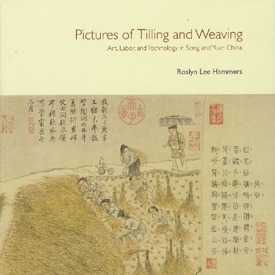 CAA is accepting applications for spring 2012 grants through the Millard Meiss Publication Fund. Thanks to a generous bequest by the late art historian Millard Meiss, the twice-yearly program supports book-length scholarly manuscripts in any period of the history of art and related subjects that have been accepted by a publisher but require further subsidy to be published in the fullest form.
The publisher, rather than the author, must submit the application to CAA. Awards are made at the discretion of the jury and vary according to merit, need, and number of applications. Awardees are announced six to eight weeks after the deadline. For complete guidelines, application forms, and a grant description, please visit the Meiss section of the CAA website or write to nyoffice@collegeart.org. Deadline: April 1, 2012.
Image: Hong Kong University Press received a Meiss grant in fall 2008 to help publish Roslyn Lee Hammers’s book, Pictures of Tilling and Weaving: Art, Labor, and Technology in Song and Yuan China (2011).
March 2012 Issue of The Art Bulletin Introduces Three New Article Series
posted Mar 13, 2012
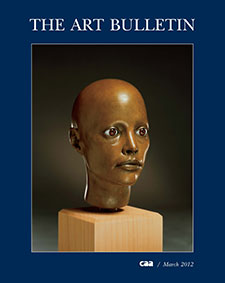 Three new series of features are introduced in the March 2012 issue of The Art Bulletin. They will appear in the next two volume years of the journal, along with the long-form essays and reviews that have made it the leading publication of international art-historical scholarship. In her introductory editor’s note, Karen Lang writes that she created the new features “to reflect the vibrancy of art history today and to stimulate dialogue across fields and with neighboring disciplines.”
In the first new series, “Regarding Art and Art History,” a leading scholar offers a short personal reflection on what it means to write art history; the inaugural writer is Anne M. Wagner, whose essay takes the form of a letter. “Notes from the Field” will present short texts on a given topic by ten authors from a variety of disciplines; the first topic is anthropomorphism, with texts by the artist Elizabeth King, the philosopher J. M. Bernstein, and eight other scholars, including Finbarr Barry Flood, Jane Garnett, and James Meyer. Each issue will feature an interview as well; the first is a dialogue between the curator Hans Ulrich Obrist and the art historian Philip Ursprung. Julia Gelshorn launches the feature with a critical essay on the techniques, strategies, and study of the artist interview.
The March issue also features three essays on diverse topics. In “Henry Fuseli: Greek Tragedy and Cultural Pluralism,” Andrei Pop examines the art of the Anglo-Swiss painter Henry Fuseli in relation to the eighteenth-century revival of Greek tragedy and the formation of the modern liberal version of cultural pluralism. Yukio Lippit’s article, “Of Modes and Manners in Japanese Ink Painting: Sesshū’s Splashed Ink Landscape of 1495,” explores a single work by the Zen monk painter Sesshū Tōyō in the context of the ink painting tradition and artistic transmission in medieval Japan. In her essay, “Agent Provocateur? The African Origin and American Life of a Statue from Côte d’Ivoire,” Monica Blackmun Visonà studies the “biography” of a statue, sculpted near the Lagoon region of Ivory Coast and later donated to Fisk University by Georgia O’Keeffe, as a microcosm of American art history in the twentieth century.
In the Reviews section, Sheila Dillon evaluates Richard Neer’s book, The Emergence of the Classical Style in Greek Sculpture, and Julian Gardner considers The Likeness of the King: A Prehistory of Portraiture in Late Medieval France by Stephen Perkinson. Next, Gerhard Wolf looks at the temporality of Renaissance art as described in Alexander Nagel and Christopher S. Wood’s Anachronistic Renaissance. Finally, Marc Fumaroli reviews Walter S. Melion’s book, The Meditative Art: Studies in the Northern Devotional Print (1550–1625).
Please see the full table of contents for March to learn more. CAA sends The Art Bulletin to all institutional members and to those individuals who choose to receive the journal as a benefit of their membership.
The next issue of The Art Bulletin, to be published in June 2012, will feature a “Notes from the Field” section on appropriation and an interview with the art historian Linda Nochlin. The long-form essays will examine artifacts from a tenth-century cave in northwestern China, portraiture and narrative in the 1605 Shahnama (Book of Kings), theater architecture in the 1914 Werkbund exhibition, and Pablo Picasso’s 1912 paper construction Guitar. The Reviews section will include analyses of books on Caravaggio, Jean-Léon Gérôme, Spanish portraiture, the art of early modern China, and the temporality of architecture.
CAA Wraps Its 100th Annual Conference
posted Mar 12, 2012
CAA hosted its 100th Annual Conference and Centennial Celebration, February 22–25, 2012, at the Los Angeles Convention Center. This year’s program included: four days of presentations and panel discussions on art history and visual culture; Career Services for professionals at all stages of their careers; a Book and Trade Fair; and a host of special events throughout southern California.
Attendance
Five thousand art professionals from throughout the United States and abroad—including artists, art historians, students, educators, curators, critics, collectors, and museum staff—attended the conference.
Sessions
Conference sessions featured presentations by artists, scholars, graduate students, and curators, who addressed a range of topics in art history and the visual arts. In total, the conference offered over 200 sessions, developed by CAA members, affiliated societies, and committees.
Career Services
Career Services included four days of mentoring and portfolio-review sessions, career-development workshops, and job interviews with colleges, universities, and other art institutions. Approximately 200 interviewees and 46 mentors participated in Career Services.
Book and Trade Fair
This year’s Book and Trade Fair presented over 120 exhibitors, including participants from the United States, the United Kingdom, Turkey, Belgium, Mexico, China, Germany, Poland, and Cuba, displaying new publications, artists’ materials, digital resources, and innovative products of interest to artists and scholars. The Book and Trade Fair also featured book signings, lectures, and demonstrations, as well as three exhibitor-sponsored program sessions on art materials and publishing.
ARTspace and ARTexchange
ARTspace, a “conference within the conference” tailored to the needs and interests of practicing artists, presented this year’s Annual Artists’ Interviews with Mary Kelly and Martin Kersels. Over 300 people attended this extraordinary event.
The ARTspace program also featured four days of panel discussions devoted to visual-arts practice, opportunities for professional development, screenings of video work curated and produced by graduate students from six Los Angeles colleges, and a symposium exploring art in the public realm. Programmed by CAA’s Services to Artists Committee, ARTspace was made possible in part by a generous grant from the National Endowment for the Arts.
ARTexchange, an open-portfolio event in which CAA artist members displayed drawings, prints, photographs, small paintings, and works on laptop computers, took place on Friday, February 24. Nearly 50 artists participated in ARTexchange this year.
Convocation and Centennial Awards
More than 400 people attended CAA’s Convocation and presentation of the 2012 Centennial Awards. Rocco Landesman, chairman of the National Endowment for the Arts, delivered the keynote address.
The recipients of CAA’s Centennial Awards are:
- Deborah Marrow, Leadership and Service to the Field. Presented by James Cuno, President and CEO, J. Paul Getty Trust
- Edythe and Eli Broad, Patronage and Philanthropic Support of the Arts. Presented by Steven D. Lavine, President, California Institute of the Arts
- California Lawyers for the Arts, Advocacy for the Arts. Awarded to Maria Seferian, Copresident of California Lawyers for the Arts and presented by Joseph Lewis III, Dean, Claire Trevor School of the Arts, University of California, Irvine
Awards for Distinction
More than 300 people attended CAA’s ceremony for the 2012 Awards for Distinction. The recipients of this year’s awards are:
- David Hammons, Distinguished Artist Award for Lifetime Achievement
- Adrian Piper, Artist Award for Distinguished Body of Work
- Lucy R. Lippard, Distinguished Feminist Award
- Allan Sekula, Distinguished Lifetime Achievement Award for Writing on Art
- David Antin, Frank Jewett Mather Award
- Alexander Nagel, Charles Rufus Morey Book Award
- Maryan W. Ainsworth, Alfred H. Barr Jr. Award
- Roy Flukinger, Alfred H. Barr Jr. Award for Smaller Museums, Libraries, Collections, and Exhibitions
- Jacki Apple, Distinguished Teaching of Art Award
- Gabriel P. Weisberg, Distinguished Teaching of Art History Award
- Francesca G. Bewer, CAA/Heritage Preservation Award for Distinction in Scholarship and Conservation
- Rebecca Molholt, Arthur Kingsley Porter Prize
- Triple Canopy and Colby Chamberlain, Art Journal Award
Centennial Book
Edited by Susan Ball, executive director emerita, The Eye, the Hand, the Mind: 100 Years of the College Art Association surveys the impressive history of the organization from 1911 to the present. The 330-page hardcover book was published jointly by CAA and Rutgers University Press.
Special Events
Following the Centennial Convocation, the Los Angeles County Museum of Art hosted a Centennial Reception on Wednesday evening, February 22. Hundreds of attendees gathered to celebrate CAA’s 100th anniversary and enjoyed exclusive access to the museum’s galleries.
Save the Date
CAA’s 101st Annual Conference will be held in New York, February 13–16, 2013.
About CAA
The College Art Association is dedicated to providing professional services and resources for artists, art historians, and students in the visual arts. CAA serves as an advocate and a resource for individuals and institutions nationally and internationally by offering forums to discuss the latest developments in the visual arts and art history through its Annual Conference, publications, exhibitions, website, and other events. CAA focuses on a wide range of issues, including education in the arts, freedom of expression, intellectual-property rights, cultural heritage and preservation, workforce topics in universities and museums, and access to networked information technologies. Representing its members’ professional needs since 1911, CAA is committed to the highest professional and ethical standards of scholarship, creativity, criticism, and teaching.
Recent Deaths in the Arts
posted Mar 12, 2012
In its regular roundup of obituaries, CAA recognizes the lives and achievements of the following artists, designers, architects, photographers, dealers, filmmakers, and other men and women whose work has had a significant impact on the visual arts. This month was marked by the loss of three major artists: Mike Kelley, Dorothea Tanning, and Antoni Tàpies.
- Leopold (Lee) Adler II, former president of the Historic Savannah Foundation, died on January 29, 2012. He was 88 years old. Born into a wealthy Savannah family, Adler worked all his life to preserve the city’s eighteenth- and nineteenth-century homes, gaining a reputation as a committed preservationist
- Theo Angelopoulos, a celebrated Greek filmmaker whose work placed him in a critical pantheon of auteur directors, among them Michelangelo Antonioni, died on January 24, 2012. He was 76. Angelopoulos’s best-known films include Eternity and a Day (1998), which won the Palme d’Or at the Cannes Film Festival. At the time of his death, Angelopoulos was working on The Other Sea, the last film in a trilogy about Greek history
- Carolyn Autry, an artist, printmaker, and educator who taught at the University of Toledo in Ohio for thirty-six years, died on December 12, 2011, at the age of 71. Autry exhibited her work nationally and internationally and was an avid world traveler in her final years
- Lillian Bassman, a fashion and fine-art photographer, died on February 13, 2012, age 94. Bassman first came to prominence in the 1940s as an art director for Junior Bazaar, a youth-orientated version of Harper’s Bazaar. She also showed her pictures in galleries around the world, influencing several generations of fashion photographers
- Emmanuel Cooper, a ceramicist, died on January 21, 2012, at the age of 73. Cooper was primarily known as potter but also established himself as an art critic, educator, and gay-rights activist. His work is in the permanent collection of the Victoria and Albert Museum in London and the Philadelphia Museum of Art
- Mary Louise Coulouris, a vibrant painter, printmaker, and muralist, died on December 20, 2011, at the age of 72. Born in New York to Greek parents, Coulouris moved to London to attend school, eventually settling in Scotland. Well known for her public artworks in railway stations and hospitals across the United Kingdom, she also showed in galleries in Paris and London and is included in the collections of the New York Public Library, the Bibliothèque National in Paris, and the Ashmolean Museum in Oxford, England
- Peter de Francia, a celebrated artist, intellectual, and professor of painting at the Royal College of Art in London, passed away on January 19, 2012, at the age of 90. De Francia, born in France to an English mother and an Italian father, was multilingual from an early age. He served in World War II and was a lifelong socialist and an active member of the British art scene since the 1950s
- Malcolm Fowler, a fine artist and illustrator who brought artful creativity and humor into the world of advertising, died on January 18, 2012, at age 68. Fowler founded the pioneering illustration and model-making Shirt Sleeve Studio in London with his wife, Nancy Fouts, in the late 1960s. The couple crafted seminal ad campaigns for Tate Gallery, and their work has been collected by the Victoria and Albert Museum
- John Gage, a beloved, freethinking art historian known for his scholarship on J. M. W. Turner, died on February 13, 2012, age 73. Gage taught art history at the University of Cambridge from 1970 to 1996 and was elected a fellow of the British Academy in 1995
- Robert E. Hecht Jr., a controversial American dealer in ancient antiquities died, on February 8, 2012, at the age of 92. Just three weeks prior to his death, Hecht was on trial in Rome for charges of antiquity tomb looting and black-market dealing. A lifelong passion for collecting and selling ancient art began when he was a student at the American Academy in Rome
- John House, an art historian known for his scholarship on Impressionism, specifically Claude Monet, passed away on February 7, 2012. He was 66. House began teaching at the University of East Anglia and University College of London before going to the Courtauld Institute of Art. He often took a radical approach to his subject, challenging previous scholarship with his books and with the popular exhibitions he organized
- Mike Kelley, a groundbreaking artist who put Los Angeles on the map as a contemporary art mecca, committed suicide at the age of 57 on February 1, 2012. Kelley worked in video, installation, painting, and performance, often combining genres to spectacular and grotesque effect. A traveling retrospective of Kelly’s work, originating at the Stedelijk Museum in Amsterdam, will come to the Museum of Contemporary Art in Los Angeles in 2014
- Ricardo Legorreta, the Mexican-born architect known for his design of vibrant, modernist buildings throughout the southwestern United States and internationally, died on December 30, 2011. He was 80
- Steven Leiber, a San Franciscan art collector and rare-book dealer, died on January 28, 2012. He was 54 years old. Leiber operated a website devoted to his collection and knowledge of art ephemera and helped appraise several important archives, including those of Avalanche magazine, Allan Kaprow, and Claus Oldenberg
- John Madin, an architect and planner who transformed the look of postwar England, passed away on January 8, 2012. He was 87. Madin is known for his monolithic designs for commercial buildings in cities throughout the North of England, the West Midlands, and Leeds
- Isi Metzstein, an esteemed Scotish architect and teacher, died on January 10, 2012, at age 83. Metzstein founded the architectural practice Gillespie Kidd and Coia, which designed churches in Scotland, including the Le Corbusier–influenced St. Peter’s Seminary (now falling into ruin), and created buildings for Robinson College and Cambridge University
- Amy Page, a writer and former editor-in-chief of Art + Auction magazine passed away on January 19, 2012, at age 72. A native New Yorker, Page was as comfortable in the rough and tumble world of art journalism as she was with socializing with collectors, gallery directors, and traveling the world to attend art fairs
- Gianfranco Pardi, an Italian artist who created minimalist paintings, died on February 2, 2012, at age 78. Pardi lived and worked in Milan, where he showed at the Gio Marconi Gallery. In 1986 he exhibited at the Venice Biennale, and his 1970s series Architettura combines hard-edge abstraction, drawing, cable wires and aluminum
- Vita Petersen, an artist, teacher, and legendary fixture at the New York Studio School, passed away on October 22, 2011, age 96. Born in Berlin to an aristocratic, art-loving family, Petersen moved to New York in 1938 and became involved in the heady art scene of the 1940s and 1950s. She showed her colorful abstractions at the Betty Parsons Gallery in the 1960s and was known to paint every day of her life
- Jessie Poesch, an art professor at Tulane University’s Newcomb College in New Orleans, died on April 23, 2011, at the age of 88. Poesch was a specialist in decorative arts, pottery, and Louisiana architecture. She taught at Newcomb College from 1963 to 1992 and wrote books and articles that established her as an expert in her field
- Julie Carter Preston, a Liverpool-born ceramicist whose clients included members of the British Royal Family, died on January 6, 2012. She was 85 years old. Preston is best known for her use of sgraffitto, an ancient scratching technique that creates a rich-looking surface texture. She taught for many years at the Liverpool College of Art, and her work is represented by the Walker Art Gallery in Liverpool
- Peter Saunders, a British painter whose favorite subject was the city of London and its people, passed away on November 19, 2011, age 70. Saunders attended Camberwell School of Art, where he studied under Euan Uglow. He later taught at schools throughout London and was a member of the Soho crowd of artists who gathered at the Colony Room in the 1960s and 1970s
- Ian Simpson, an artist and art instructor who was a presenter on the BBC program Eyeline (1968–69), died on December 15, 2011, at the age of 78. Simpson taught at Hornsey College of Art in London and at St Martins School of Art from 1972 to 1988. He was a great believer in demystifying the world of art-making, and that technical skills could be taught to anyone with the dedication to learn them
- Norma Merrick Sklarek, the first African American woman to become a licensed architect, died on February 6, 2012, aged 85. Born in Harlem, Sklarek was one of only two women to graduate from Columbia University with a degree in architecture. She moved to Los Angeles to join Gruen Associates in 1960, where she worked as the project director for Terminal 1 at Los Angeles International Airport and later was a founding partner of Siegel-Sklarek-Diamon, an all-woman architectural firm
- Kazimierz Smolen, the former director and cofounder of the State Museum at Auschwitz-Birkenau and a survivor of the concentration camps at Auschwitz and Mauthausen, died on January 27, 2012, at the age of 91. In addition to founding the State Museum at Auschwitz, he appeared as a witness in many war criminal trials, including the Nuremberg Trials in 1945–46
- Tobi Lim Sonstroem, a graphic-design alumnus of the Tyler School of Art in Pennsylvania, took his own life on February 2, 2012. He was 25 years old. Sonstroem was remembered by friends and teachers as a passionate young man who was dedicated to his burgeoning art and graphic-design career
- Dorothea Tanning, a painter, sculptor, and muse to the Surrealists, died on January 31, 2012. She was 101 years old. Tanning was married for thirty years to Max Ernst and lived with him in New York, Arizona, and France. In addition to an esteemed career as a painter, she published several books of verse and in 1994 established the $100,000 Wallace Stevens Award at the Academy of American Poets
- Antoni Tàpies, the Catalan painter known for large-scale works that often mix oil painting with sand, chalk, and household objects, died on February 6, 2012. He was 88. The critic Roland Penrose described Tàpies as “a painter who was to create mysteries in matter itself.” The Tàpies Foundation in Barcelona, Spain, was created in 1984 as a museum and research center dedicated to the artist’s work and to other international modern artists
- Eugene Weston III, an architect who revolutionized the look of Los Angeles homes in the 1950s, died on January 31, 2012, at the age of 87. Weston’s designs emphasized space, glass windows, and natural light, bringing an elegant, modern sensibility to middle-class family homes. Later commissions include the Scripps College Research Center and the San Diego Zoo
- Erica Wilson, a craftswoman who popularize embroidery and needlework through numerous television appearances, books, and magazine articles, died on December 13, 2011. She was 83. The British-born Wilson moved to New York in 1954, where she taught at Cooper Union and gave private lessons in her apartment. Wilson later opened boutique shops on Manhattan’s Upper East Side and on Long Island, as well as in Palm Beach, Florida, and in Nantucket, Massachusetts
- Althea Wynne, a British sculptor known for her equestrian statues in bronze and ceramic, died on January 24, 2012, at the age of 75. Inspired by Etruscan art and a childhood love of horseback riding, Wynne created sculptures recognized as powerful and graceful monuments. Her best-known commission is the three bronze horses that stand sentinel at Minister Court in the City of London
Read all past obituaries in the arts in CAA News, which include special texts written for CAA. Please send links to published obituaries to Christopher Howard, CAA managing editor, for the April listing.