
CAA News Today
House Subcommittee and Full Committee Approve Bill to Fund the Endowments
posted by CAA — July 14, 2017
On Wednesday the U.S. House Appropriations Subcommittee on the Interior, Environment, and Related Agencies approved a bill that would provide funding of $145 million each for the National Endowment for the Arts and the National Endowment for the Humanities in FY2018.
For many of us, this provides a respite of relief as it is a stark contrast to President Trump’s prior call to zero out the agency.
Although the $145 million figure is a $4.8 million drop from the FY2017 budget, this is a reassuring step by Congress in recognizing the value of the arts in America and the need for a strong public arts agency.
While the subcommittee’s proposal brings us hope, our work is not done. In fact, we at CAA will continue to step up our efforts to educate, communicate, and of course, advocate for the artists, art historians, critics, curators, designers, scholars, librarians, educators, students, conservators, and many other professionals in the visual arts world who make up our membership and affiliates.
UPDATE: On July 18, the full House Appropriations Committee approved the bill in its current state. These earmarked funds may be voted on by the full House of Representatives after the summer recess. The Senate will consider funds for the endowments later in the year also.
We encourage you to regularly check out our advocacy page to learn more about CAA’s stance on the issues and how you can join us in mobilizing and championing the field of arts and culture in our country.
New in caa.reviews
posted by CAA — July 14, 2017
 Emma Natalya Stein reviews the exhibition catalogue Lost Kingdoms: Hindu-Buddhist Sculpture of Early Southeast Asia, published by the Metropolitan Museum of Art. Representing “a watershed moment in the historiography of Southeast Asia, especially in terms of its relationship with India,” the “well-researched and beautifully illustrated catalogue” showcases “a truly remarkable body of material.” Read the full review at caa.reviews.
 Carmen Pérez González reads The Arab Imago: A Social History of Portrait Photography, 1860–1910 by Stephen Sheehi. The author aims “to ‘provincialize’ the history and ‘nature’ of photography,” and the “groundbreaking” volume “is an ambitious and theoretically challenging study, a significant and original work of social analysis of mostly unknown photographic material from the 1860s onwards.” Read the full review at caa.reviews.
The Art Bulletin Reviews Online Collection Catalogs
posted by CAA — July 13, 2017
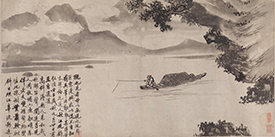
Shen Zhou, Solitary Angler on an Autumn River, 1492, handscroll, ink on paper, 13½ x 411½ in. (34.4 x 1045 cm), frontispiece: 11¾ x 33 in. (30 cm x 83.8 cm). Seattle Art Museum, Gift of Karen Wang, 97.80 (artwork in the public domain; photograph provided by the Seattle Art Museum)
In its June 2017 issue, The Art Bulletin is publishing reviews of six online collection catalogs issued by the National Gallery of Art, Washington DC; the Seattle Art Museum; the Arthur M. Sackler and Freer Gallery of Art, Washington DC; the Art Institute of Chicago; the Tate, United Kingdom; and the Walker Art Center, Minneapolis. This is the first time the quarterly journal has devoted its reviews section to digital scholarship.
Stephen H. Whiteman’s review of the Seattle Art Museum’s Chinese Painting & Calligraphy catalog is available now in an enhanced digital version, published on the Scalar platform and developed in collaboration with Nancy Um and Lauren Cesiro. The open-access project is at http://scalar.usc.edu/works/samosci/index.
New in caa.reviews
posted by CAA — July 07, 2017
Cindy Lisica visits We Chat: A Dialogue in Contemporary Chinese Art at the Asia Society Texas Center. The exhibition features artists “who were of single-digit age during the 1989 Tiananmen Square protest-turned-massacre” and are “self-reflective and uninhibited by conventional social constructions of the past.” It is “a layered, nuanced, and exhilarating presentation of contemporary currents in Chinese art.” Read the full review at caa.reviews.
Alpesh Kantilal Patel reviews Nari Ward: Sun Splashed and Firelei Báez: Bloodlines, both at the Pérez Art Museum Miami. The “first mid-career retrospective of the Jamaican-born” Ward and his “diverse oeuvre” “overlapped with “a smaller solo exhibition of primarily paintings and drawings by the Dominican Republic-born Báez, a former student of Wards,” presenting “a carefully constructed curatorial conceit.” Read the full review at caa.reviews.
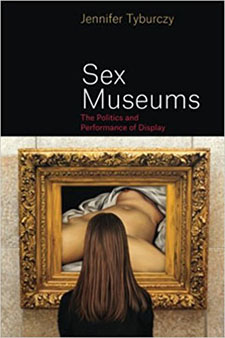 Sampada Aranke reads Sex Museums: The Politics and Performance of Display by Jennifer Tyburczy. In this “dynamic and compelling study,” the author “provocatively weaves together a mode of research and writing that thickens the role of sex in the museum . . . cracking[ing] open an unwieldy composition of narratives, critical approaches, and sensual objects to rethinking the pleasure and politics of display.” Read the full review at caa.reviews.
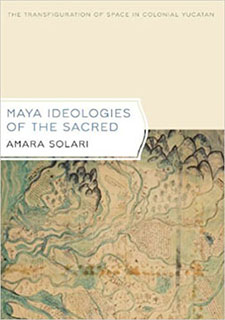 Ana Pulido-Rull discusses Amara Solari’s Maya Ideologies of the Sacred: The Transfiguration of Space in Colonial Yucatan. The author “examines the city of Itzmal” to “illustrate how this project was heavily influenced, even challenged, by deep-rooted Maya traditions and conceptions of space,” providing “a nuanced understanding” of these ideas “and their role in shaping early colonial indigenous identity.” Read the full review at caa.reviews.
Artists’ Legacies Unpacked in Art Journal
posted by CAA — July 05, 2017
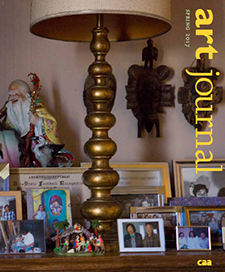 “What to do with all the stuff?” This is one of many questions posed—and provisionally answered—in the most recent issue of Art Journal, in an extensive multiauthor forum that delves into the complex matter of artists’ estates. “The Politics of Legacy,” guest-edited for the journal by Rachel Middleman and Anne Monahan, comprises contributions by no fewer than twenty-one artists and scholars. The texts include interviews (with, for example, Flavin and Rainer Judd, Mira Friedlaender, and Jane Kallir of Grandma Moses Properties, Inc.) and position papers (by Caroline A. Jones, Michael Corris, and Nancy J. Troy, among others). Central to the forum are three commissioned artists’ projects by Danh Vo (on the estate of Martin Wong), Mimi Gross (the estate of her father Chaim Gross, as well as her own legacy as an artist), and Jill Magid (the contested estate of the Mexican architect Luis Barragán).
Elsewhere in the issue, editor-in-chief Rebecca Brown has selected three essays that deal with upheaval. Nazar Kozak details the interventions by Ukrainian artists during the 2013–14 uprising in Kyiv that brought down the nation’s government—artworks that at times literally became part of the armed barricade in the city’s central square. Sherry Buckberrough conjures the early twentieth-century context in which the Robert Delaunay created singular works with themes of androgyny, gender, and political violence. Sophie Landres explores sexual, corporeal, and musical interventions of the groundbreaking performances of Charlotte Moorman in late-1960s, as the new ideas of feminism reached the larger culture.
The issue marks the debut of reviews editor Kirsten Swenson, whose commissions explore books on Carolee Schneemann, on art in postwar South America, and on the trajectory of the choreographer Simone Forti. “The Prehistory of Exhibition History,” a critical bibliography by grupa o.k. (Julian Myers and Joanna Szupinska), completes the section.
CAA sends print copies of Art Journal to all institutional members and to those individuals who choose to receive the journal as a benefit of membership. The digital version at Taylor & Francis Online is currently available to all CAA individual members regardless of their print subscription choice.
Apply for a 2017 Professional-Development Fellowship
posted by CAA — July 05, 2017
Photography by Daniel Seth Kraus, 2016 Professional-Development Fellowship Awardee
CAA Announces the opening of its Professional-Development Fellowship for 2017. The program supports promising artists, designers, craftspeople, historians, curators, and critics who are enrolled in MFA, PhD, and other terminal-degree programs nationwide.
Fellows are honored with $10,000 grants to support their work, whether it be for job-search expenses or purchasing materials for the studio.
One award will be presented to a practitioner—an artist, designer, and/or craftsperson—and one award will be presented to an art, architecture, and/or design historian, curator, or critic. Fellows also receive a free one-year CAA membership and complimentary registration to the 2018 Annual Conference in Los Angeles, February 21-24. Honorable mentions, given at the discretion of the jury, also earn a free one-year CAA membership and complimentary conference registration.
CAA initiated its fellowship program in 1993 to help student artists and art historians bridge the gap between their graduate studies and professional careers.
CWA Picks for July 2017
posted by CAA — July 03, 2017
Each month, CAA’s Committee on Women in the Arts selects the best in feminist art and scholarship. The following exhibitions and events should not be missed.
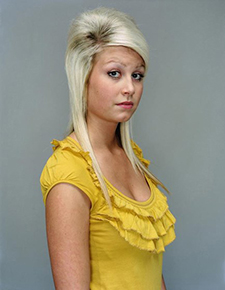
Rineke Dijkstra, Amy, The Krazy House, Liverpool, December 23, 2008, 2008 (collection of the artist)
Rineke Dijkstra: An Ode
Stedelijk Museum
Museumplein 10, 1071 DJ, Amsterdam, Netherlands
May 20–August 6, 2017
In celebration of Rineke Dijkstra’s recent honor of receiving the prestigious Hasselblad Foundation’s International Award in Photography for 2017, the Stedelijk Museum has mounted a small but excellent curated exhibit of this lauded Dutch artist. Twenty-one photographs and four videos are included in An Ode, which showcases Dijkstra’s masterful technique and remarkable sensitivity to her youthful subjects and the delicate process of their coming of age. As the artist noted, “With young people everything is much more on the surface—all the emotions. When you get older you know how to hide things.” Under her keen eye and deft hand, portraits of adolescence become something intimate and lovely and compelling.
The exhibit, which draws from Stedelijk’s own extensive collection of her work, as well as loans from the artist, is meant to be a celebration as well as an amuse-bouche for later offerings in the season. Later this year, the museum will present Dijkstra’s work Almerisa (1994–2008), a series of portraits that follows the life of a young Bosnian refugee girl from her arrival in the Netherlands to her adulthood.
Acolytes of this contemporary photographer can also see an extensive retrospective of her work at the Louisiana Museum (Copenhagen, Denmark) this fall, and then at the Museum de Pont (Tilberg, the Netherlands) in early 2018.
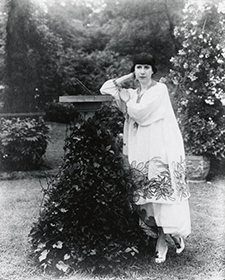
Florine Stettheimer, photograph by Peter A. Juley & Son, ca. 1917–20 (image provided by Peter A. Juley & Son Collection, Photograph Archives, Smithsonian American Art Museum, Washington, DC)
Fahrelnissa Zeid
Tate Modern
Bankside, London SE1 9TG
June 13–October 8, 2017
In the first major retrospective of her work, the Turkish artist Fahrelnissa Zeid, a pioneer in the European avant-garde of the 1940s and 1950s, dazzles. Trained in Paris and Istanbul (one of the first women to go to art school there), she produced work that synthesized historical and contemporary Middle Eastern and European artistic practices. Zeid, a princess and Muslim, cut an unusual figure in the midcentury art world. Her oeuvre is astonishingly diverse, ranging from large abstract paintings to smaller figurative pieces, and from traditional materials to new media such as chicken bones, which she painted, cast into polyester resin, and fashioned into stained-glass-like objects.
Zeid’s vibrant and energetic works were widely exhibited and enjoyed critical success, and yet her work fell into obscurity in subsequent decades. Frances Morris, the director of Tate Modern, told the Guardian of the rediscovery of her work on a 2008 trip to Istanbul, saying: “We were stunned to encounter for the first time in our lives, these huge, ornate, decorative, multifaceted, brilliantly coloured, swirling abstract paintings. We’d never seen her work in our lives and we’d never seen anything like it. It was a really exciting moment.” The retrospective of Fahrelnissa Zeid is part of the museum’s stated commitment to showcase artists of the modern era who have been overlooked and underrepresented in the art world.
Florine Stettheimer: Painting Poetry
Jewish Museum
1109 5th Ave, New York, New York
May 5–September 24, 2017
Writing for Art in America in 1980, the art historian Linda Nochlin made this assessment of Florine Stettheimer’s work: “Florine Stettheimer, the artist, existed in this world, it is true, but still somewhat apart from it––as her painting exists apart from the major currents of her time.” Stettheimer, who was born in Rochester and studied at the Art Student League of New York, is known for her affected paintings (sometimes with accompanying sculptural, scalloped frames), that reflect the comings and goings of her family—most notably her two other sisters—and a host of artists, writers, and other members of New York’s intelligentsia. Marcel Duchamp was a friend, and she was a frequent theater-goer, even designing the sets and costumes for the 1934 production of Gertrude Stein’s opera intended for an all-black cast, Four Saints in Three Acts. Oh, and she wrote poetry, which is a constant presence throughout this exhibition at the Jewish Museum. Reading her poetry, like looking at some of her works, can sometimes feel like an exhausting account of the pleasures of being one of the “haves”: “My attitude is one of Love / is all adoration / for all the fringes / all the color / all tinsel creation / I like slippers gold / I like oysters cold / and my garden of mixed flowers / and the sky full of towers / and traffic in the streets / and Maillard’s sweets / and Bendel’s clothes / and Nat Lewis hose / and Tappé’s window arrays / and crystal fixtures / and my pictures / and Walt Disney cartoons / and colored balloons.” Still, there’s a soulful seeing behind her spindly figures, especially her self-portraits and portraits of her closest family members. Taken together these paintings are a masterclass in forging an artistic path of one’s own.
Star Montana: I Dream of Los Angeles
Beta Main
114 W. 4th St., Los Angeles, CA
May 7–July 23, 2017
Star Montana’s photographs line the walls of the Main Museum’s Beta space—each a portrait of someone who the artist encountered on the streets or met through an open call. Some are friends. Most are strangers. Yet all are given a kind of monumental attention in Montana’s practice. Alongside each photograph is a small piece of writing, reflecting on the circumstances in which the picture was taken, the first time Montana met her subject, or a meditation on the vagaries of dailyness living in East and South Los Angeles. The viewer scans between words and picture, looking for the same vulnerabilities and strengths in the images that appear in the text. The colors of these photographs are lush, and the relationship between sitter and photographer is palpable, close. It is an ode to this great and complex city, as evinced through the people who live in it.
Gray Matters
Wexner Center for the Arts
Ohio State University, 1871 North High Street, Columbus, OH
May 20–July 30, 2017
Now on view at the Wexner Center for the Arts, Gray Matters brings together thirty-seven contemporary women artists exploring the practice of grisaille—the French term for working in shades of gray. “Ranging from emerging to well-established, these artists challenge an all-too-simplistic notion of colorless ‘neutrality’ as they reveal the variegated spectrum of black, white, gray, and everything in between.”
The more than fifty works include a variety of mediums and media, from sculpture to portraiture, video to graphite drawings. Among the works is Mickalene Thomas’s Hair Portrait #20 (2014). Known for her colorful canvasses, Thomas tones down her palette in Hair Portrait #20 “without relinquishing her celebratory use of rhinestones.” Also on view in the exhibition is Bethany Collin’s A Pattern or Practice (2015). In this piece the viewer is confronted with a wall installation of ninety-one blind-embossed portions of the US Department of Justice report on the Ferguson police department. “The show goes incredibly quiet with an idea that is incredibly loud,” Michael Goodson, senior curator of exhibitions, described arriving at the neatly spaced white sheets, with the words of the report pushing up the fibers of the paper.
Other artists in the exhibition include: Tauba Auerbach, Carol Bove, Gisele Camargo, Vija Celmins, Bethany Collins, Marsha Cottrell, Tacita Dean, Tara Donovan, Marlene Dumas, Michelle Grabner, Josephine Halvorson, Mona Hatoum, Roni Horn, Cristina Iglesias, Jennie C. Jones, Toba Khedoori, Laura Lisbon, Suzanne McClelland, Julie Mehretu, Katie Paterson, Joyce Pensato, Amalia Pica, Mary Reid Kelley, Michal Rovner, Nancy Rubins, Arlene Shechet, Erin Shirreff, Amy Sillman, Xaviera Simmons, Diane Simpson, Lorna Simpson, Avery Singer, Michelle Stuart, Mickalene Thomas, Kara Walker, Rachel Whiteread, and Carmen Winant.
A video of the exhibit, behind the scenes with artists’ interviews, can be found on YouTube here: https://www.youtube.com/watch?v=KIcdKkJV3Mg.
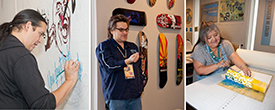
Melanie Yazzie, Gregg Deal, and Walt Pourier
Melanie Yazzie, Gregg Deal, Walt Pourier: Action X Community X Togetherness
Denver Art Museum
100 W 14th Avenue Pkwy, Denver, CO
May 6–September 7, 2017
Alumni of the Native Arts Artists-in-Residence program at the Denver Art Museum return for a summer of collaboration and creation. Melanie Yazzie, Gregg Deal, and Walt Pourier are cocreating through a project titled Action X Community X Togehterness X.
The Native Arts Artists-in-Residence program kicked off in 2012 with Yazzie and has gone on to host many established and up-and-coming artists working across media. Yazzie, a sculptor, painter, printmaker, and installation artist, often collaborates with indigenous artists, including those from groups in New Zealand, Siberia, Australia, and Canada, among others. Her work is informed and shaped by personal experiences and tries to tell many stories about things both real and imagined. It follows the Diné dictum “walk in beauty” literally, creating beauty and harmony.
“My artwork is culturally based in my heritage of being a Diné (Navajo) person. The artworks stem from the thought and belief that what we create must have beauty and harmony from within ourselves, from above, below, in front, behind and from our core. We are taught to seek out beauty and create it with our thoughts and prayers. I feel that when I am making my art, be it a print, a painting or a sculpture, I begin by centering myself and thinking it all out in a ‘good way,’ which is how I was taught from an early age. My work speaks about travel and transformation.”
In the joint projects Yazzi, Deal, and Pourier will host talks, tours, and workshops at two Untitled Final Fridays, on July 28, and August 25. They will hold a hands-on artmaking workshop at the Friendship Powow and American Indian Cultural Celebration on September 9 also.
News about Fractured Atlas
posted by CAA — June 26, 2017
 After nearly a decade of partnership with CAA to offer our members access to their professional resources, Fractured Atlas has decided to discontinue their Open Arts Network as of August 31, 2017.
Through their Open Arts Network program, Fractured Atlas artists and arts organizations access to funding, healthcare, education, and more, to help them function more effectively as businesses. However, due to the changing landscape for the arts community and much reflection, the organization has decided to end the Open Arts Network.
What does this mean for you?
- If you are currently enrolled in the Open Arts Network program (or do so before August 31, 2017), you will get to keep your discount as long as you maintain an active, paid membership.
- After August 31, 2017, you will not longer be able to access the special Open Arts Network subsidized rate.
- Additional questions? Please refer to Fractured Atlas’s help article for more information.
We understand that this is an important resource for many of our members and CAA is actively searching for another healthcare solution to meet our members’ needs. We will keep everyone informed of any updates. If you have any additional questions or wish to share ideas on how our organization can best serve you, please reach out to Membership at membership@collegeart.org. Additionally, you can email support@fracturedatlas.org with any questions or concerns.
New in caa.reviews
posted by CAA — June 23, 2017
Antonella Fenech Kroke reviews Maniera: Pontormo, Bronzino and Medici Florence, an exhibition at the Städel Museum, Frankfurt. “The most substantial exhibition on Mannerism staged in Germany,” the show, with “intellectual exuberance,” “provided a unique opportunity to see the disquieting emergence and flourishing of multiples creative perspectives that the term Mannerism has attempted to unify.” Read the full review at caa.reviews.
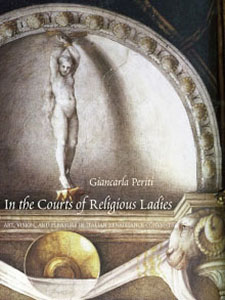 Sally Hickson reads In the Courts of Religious Ladies: Art, Vision, and Pleasure in Italian Renaissance Convents by Giancarla Periti. This volume “about aristocratic nuns and convent patronage offers an interesting characterization of a resulting corpus of ‘seductive images,’” providing “a touchstone for investigations into patrician nuns, their motivations, their artists, and the visual and perhaps didactic functions of such imagery.” Read the full review at caa.reviews.
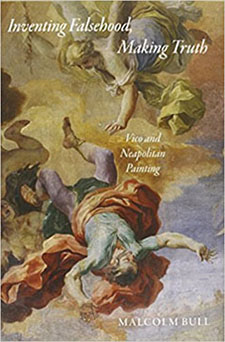 Maria Fabricius Hansen discusses Malcolm Bull’s Inventing Falsehood, Making Truth: Vico and Neapolitan Painting. With the aim of seeing Giambattista Vico “through the painting of his time in order to present and discuss a series of major themes within art history,” this “accomplished, concise, and intelligently focused” book is “a strong proponent for the relevance of rhetoric as a kind of art theory of its present moment.” Read the full review at caa.reviews.
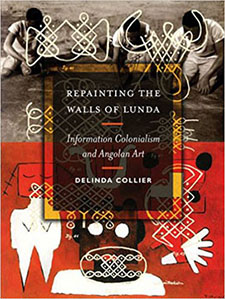 David Riep examines Repainting the Walls of Lunda: Information Colonialism and Angolan Art by Delinda Collier. Centered on a “discussion of the varied intricacies of analog and digital media by tracking Chokwe mural and sand (sona) arts and symbolism,” the text “successfully engages broad theoretical concepts linking art, cybernetics, and media theory, while maintaining its focus on the shifting iterations of Chokwe iconography. Read the full review at caa.reviews.
New in caa.reviews
posted by CAA — June 16, 2017
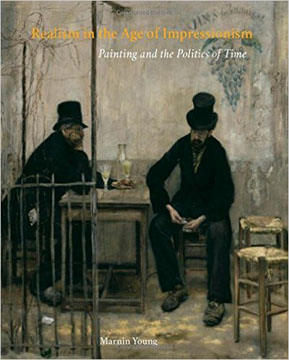 Mary Hunter reviews Realism in the Age of Impressionism: Painting and the Politics of Time by Marnin Young. The author “provides an original, compelling argument about how transformations in the perception of temporality fueled a reengagement with Realist painting in France.” A “smart, engaging” volume, it “will make a lasting mark … on the central role of temporality in the history of modern art.” Read the full review at caa.reviews.
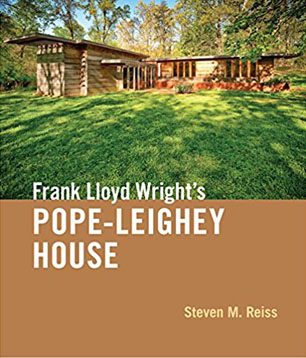 Jane King Hession discusses Steven M. Reiss’s Frank Lloyd Wright’s Pope-Leighey House. This “skillful retelling of the complex history of a 1,200-square foot Usonian house” both “rigorously analyzes site issues” and “reflects on broader topics including changing social attitudes toward housing in the postwar years” and “the nascent yet evolving preservation movement in the United States in the early 1960s.” Read the full review at caa.reviews.
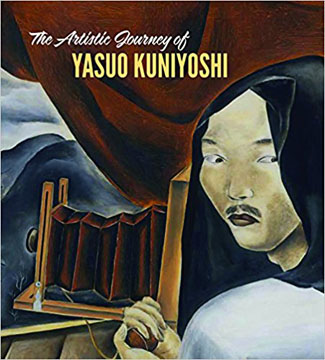 Sybil E. Gohari discusses The Artistic Journey of Yasuo Kuniyoshi, an exhibition and catalogue organized by the Smithsonian American Art Museum. The show “chronicles this important mid-century artist” whose work “combines American folk and Surrealist art with dreamlike perspectives,” highlighting “the figurative dimension” of his art and enhancing “an understanding of the period by presenting its diversity.” Read the full review at caa.reviews.